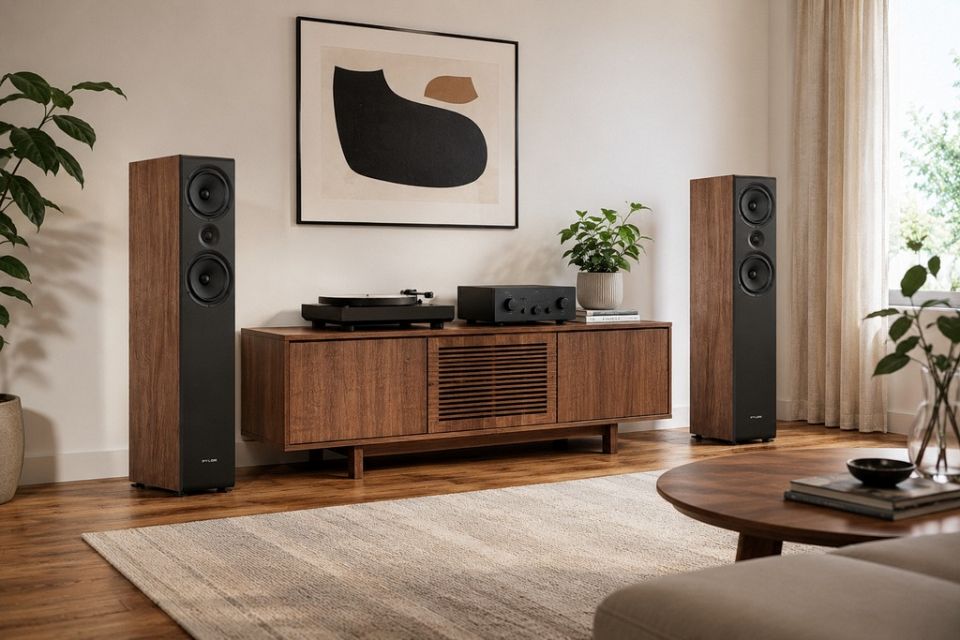
Pylon Audio Opal 23 mkII
Most stereo equipment manufacturers would like us to associate their brands with the products at the very top of their catalogs - the finest, most visually striking models, packed with the most advanced technology. When we buy an affordable pair of bookshelf speakers bearing the shiny Bowers & Wilkins logo, we're supposed to picture the Nautilus or those imposing 801 D3s standing in London's legendary Abbey Road Studios. When we pick up a pair of audiophile headphones from Sennheiser, we're meant to feel as though we're getting a little taste of the Orpheus. Marketing and human psychology have always worked this way. Yet while flagship products shape a brand's image, the vast majority of sales come from the entry-level and midrange segments. Basic economics and the distribution of household incomes tell us everything we need to know about that. The interesting thing is that, at least in my opinion, the best way to judge a company's capabilities and the talent of its engineers is to look at the products rolling off its production lines in the greatest numbers. With an unlimited budget, after all, almost anything is possible - seven-foot-tall speakers with space-age drivers suspended in a silver framework, a million-watt amplifier that unfolds like a futuristic sculpture, or cables as thick as a fully grown python that most people would laugh at. Things become considerably more interesting when we introduce some serious constraints, particularly the most important one - money. That's when we discover who can make intelligent engineering decisions and who can't.