
- Reviews
- Posted
Vienna Acoustics Mozart SE Signature
In the world of loudspeakers, some designs command respect through advanced engineering, exotic materials and impressive specifications. Others do not look like spaceships, make no use of materials seemingly borrowed from z science-fiction film, and yet win people over with beautiful, musical sound and the simple fact that one can imagine living with them every day. Vienna Acoustics belongs firmly to the second group. The Austrian manufacturer has never built its identity around simulations, calculations and graphs alone, focusing instead on what makes its products appealing to the eye and the ear. The company was founded in 1989 by Peter Gansterer and Peter Haferl, whose goal was to bring together two worlds - solid engineering and the kind of aesthetics usually associated with fine furniture. Based in Rust, a small town in Austria's Burgenland region, the company now employs around 40 people. Among audiophiles, it is known for distinctive loudspeakers with exceptional cabinet work. Its catalog is dominated by models designed for stereo systems, and the names chosen for individual models will feel familiar to any music lover. Liszt Reference, Beethoven Concert Grand Reference, Haydn SE Signature, Mozart SE Signature - there is clearly a theme here. The last of these is the latest incarnation of one of the most important floorstanders in Vienna Acoustics' history, and also a very good example of just how differently hi-fi can be understood.
The first Mozart speakers appeared in the early 1990s as slim, elegant floorstanding designs, created in cooperation with local cabinetmakers. Over time, an entire philosophy and a loyal following grew around this model, while the brand itself developed its own family of drivers and a very close relationship with European furniture manufacturers capable of building cabinets to a standard rarely seen at this price level. Vienna Acoustics has never been a company of revolutions. It has not surrounded its new products with an air of mystery, nor has it loudly advertised every achievement. Instead, we have watched a calm, steady evolution - a patient refinement of successive elements and small details, all within the same overall concept. The product line has adapted to what customers actually wanted. For example, today the catalog no longer includes the Bach, a small two-way floorstander with surprisingly powerful sound. That is a bit of a shame, but apparently customers made their expectations clear - if a speaker is going to have only two drivers, you may as well choose the Haydn SE Signature monitors, and if you are going for a floorstanding design, it should be at least a 2.5-way system with two mid-bass drivers.
Today's Mozart SE Signature is the product of exactly that kind of evolution. It is currently the smallest floorstanding model in the Austrian company's lineup. In Vienna Acoustics' nomenclature, it still belongs to the Concert Grand series, alongside the larger Beethovens - the Concert Grand Reference and Baby Grand Reference - and the standmount Haydn SE Signature, which together form the backbone of the classic part of the catalog. On top of that we have more extravagant, more expensive designs with concentric drivers, but it is precisely these more conventional models, with the Mozart at the forefront, that brought the company its widest recognition. The Mozart SE Signature is an attractive proposition for music lovers who already know what they like and have high expectations, who are looking for quality rather than seasonal discounts, but still do not want to venture into the territory of "equipment for lunatics." Depending on the finish, a pair costs $6,995-$8,995. This puts the Mozart in the same neighborhood as higher models from brands such as Spendor (A7), Sonus Faber (Sonetto III), Amphion (Argon 3LS), Opera (Grand Mezza v2), Focal (Aria Evo X N°4), Monitor Audio (Gold 300 6G), DALI (Rubikore 6), KEF (R7 Meta), Bowers & Wilkins (704 S3) and Pylon Audio (Jasper 23). In other words, this is a segment where a loudspeaker must have something to say in terms of engineering, sound and design. Do the Mozart SE Signature speakers have all three?
Design and functionality
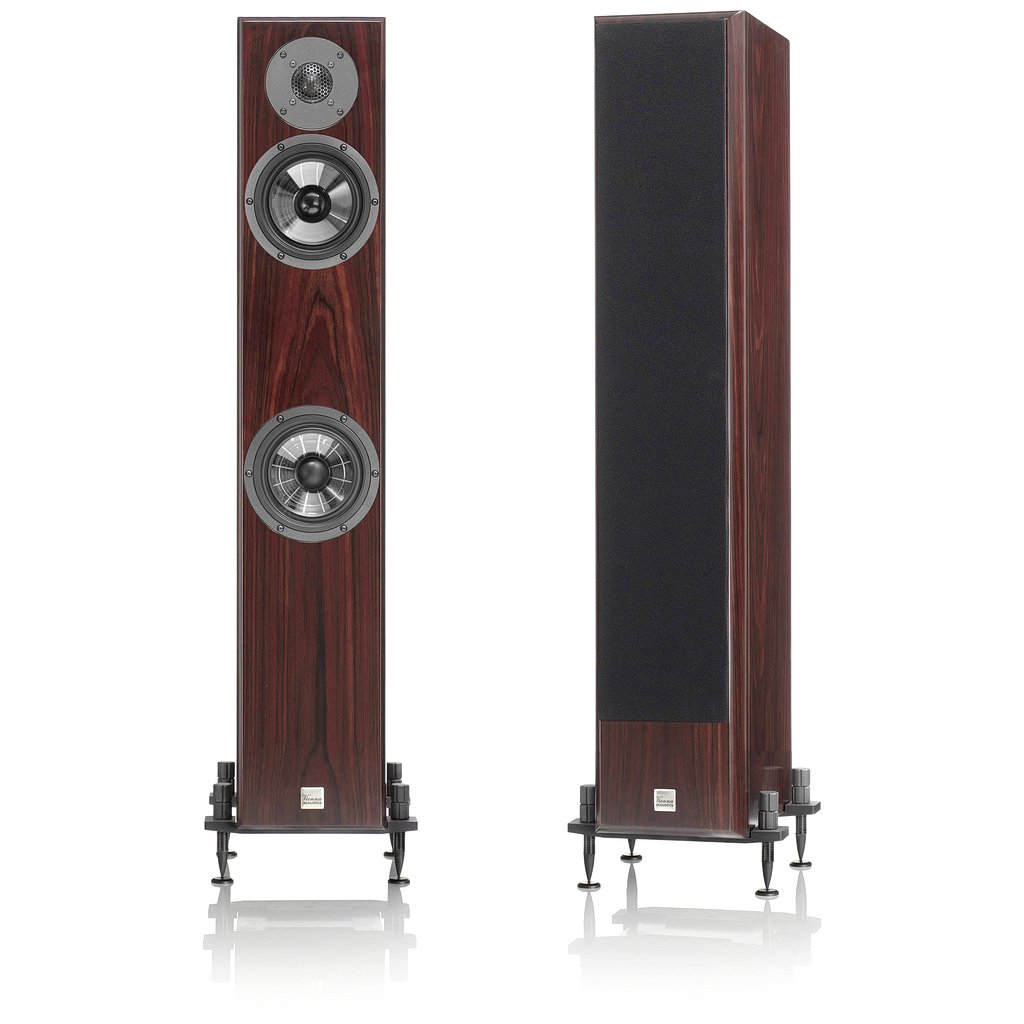
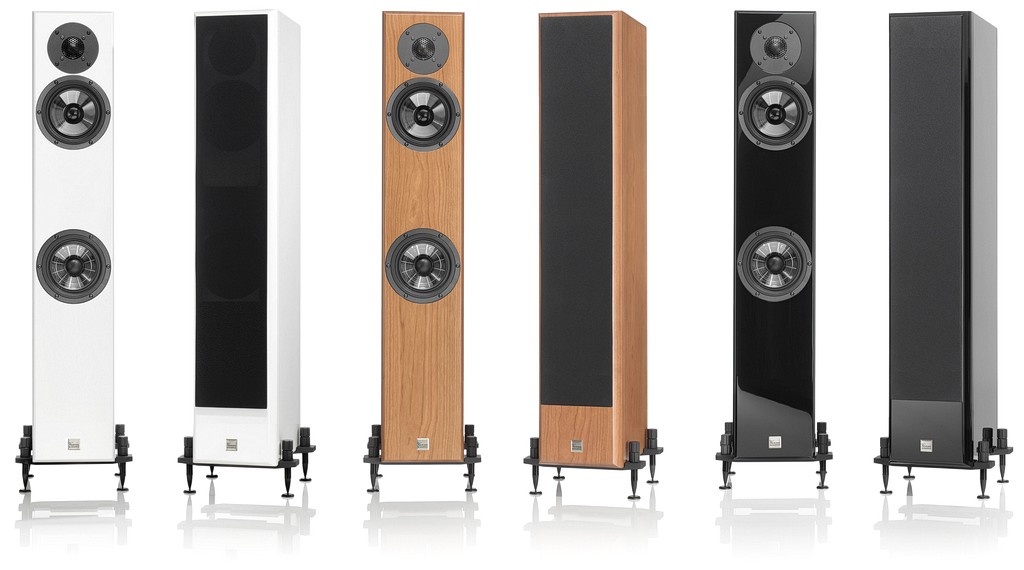
Anyone who has ever spent time with Vienna Acoustics speakers, even models made more than a decade ago, will look at these floorstanders and feel as if they have visited old friends who renovated their apartment without changing the layout of the walls. Externally, the Mozart SE Signature is so similar to its predecessor that, were it not for the revised stabilizing plinth, some might not even notice the difference. It is a narrow, fairly tall, but beautifully proportioned floorstanding speaker that does not overwhelm the room with its size. It is worth noting that technical tables often list two sets of dimensions - 170 x 940 x 295 mm for the cabinet itself, and 260 x 1006 x 295 mm with feet and spikes installed. The overall impression, however, remains the same. This is a slim, elegant, distinctly domestic form that does not impose itself either through size or through aggressive styling. One could even say that in its price range, the Mozart SE Signature is among the most compact floorstanding loudspeakers available. It seems made for customers looking for speakers that will blend gracefully into a listening room, and also for those whose listening space is closer to 15-20 m² than 30-50 m², yet who still strongly prefer floorstanders to monitors.
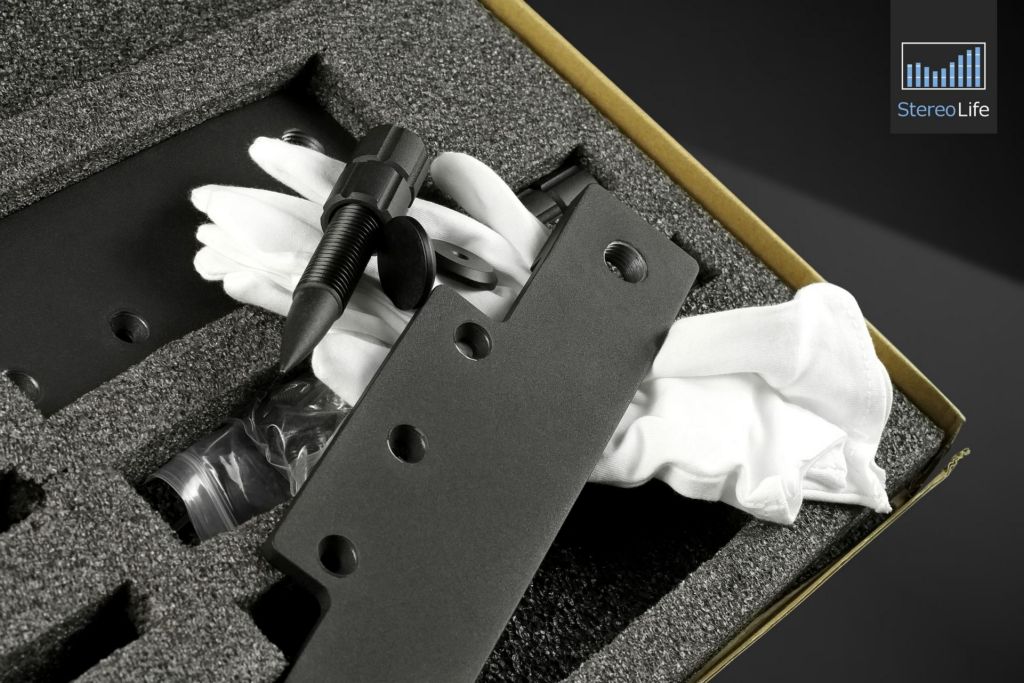
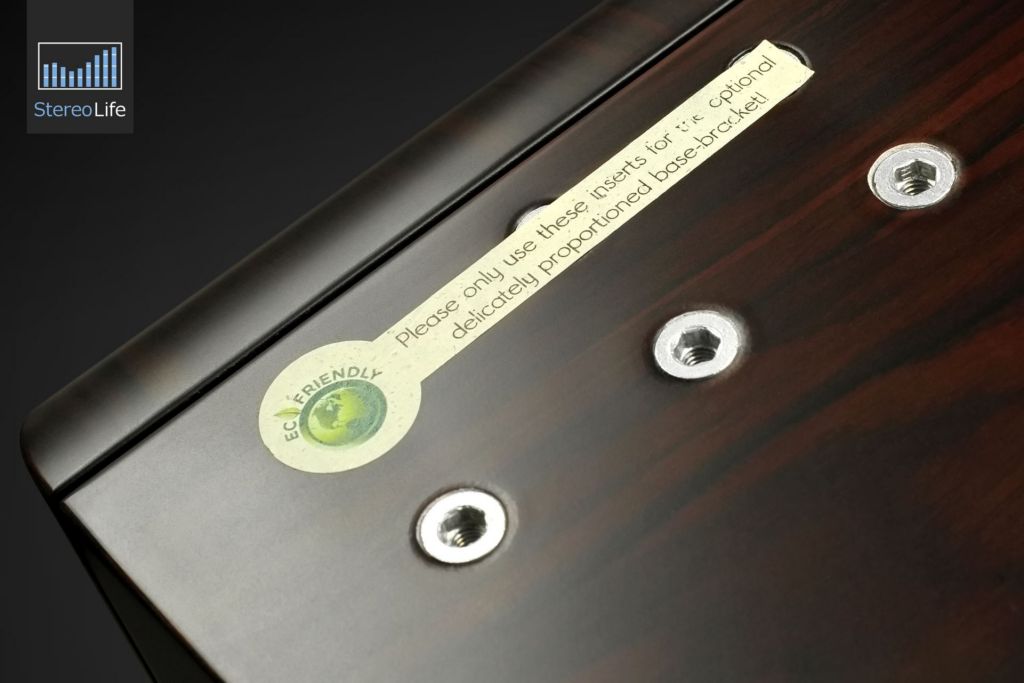
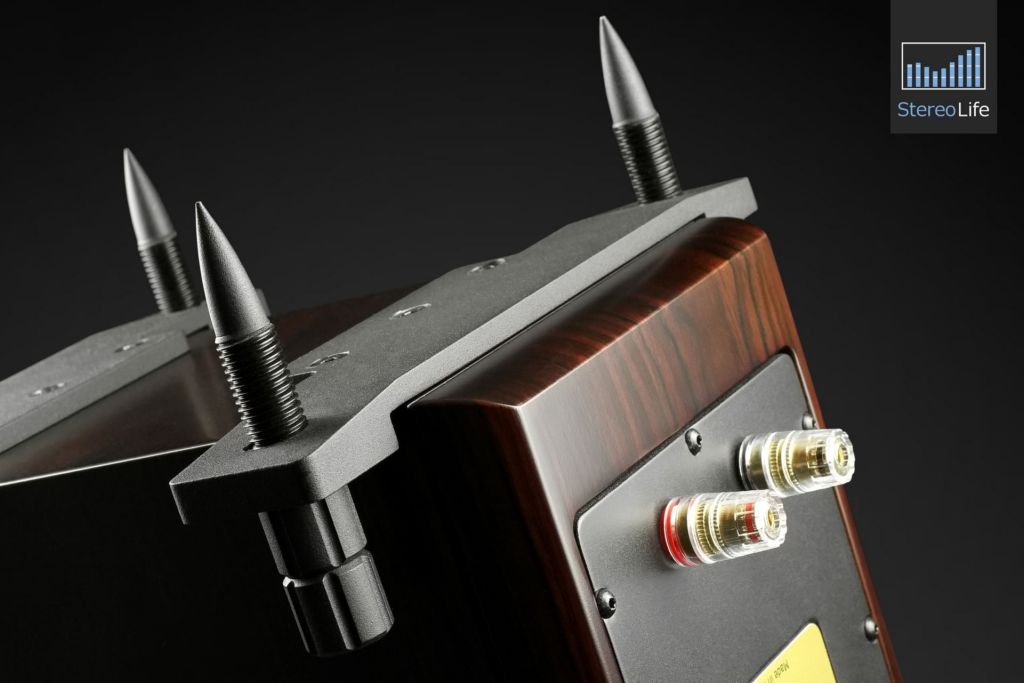
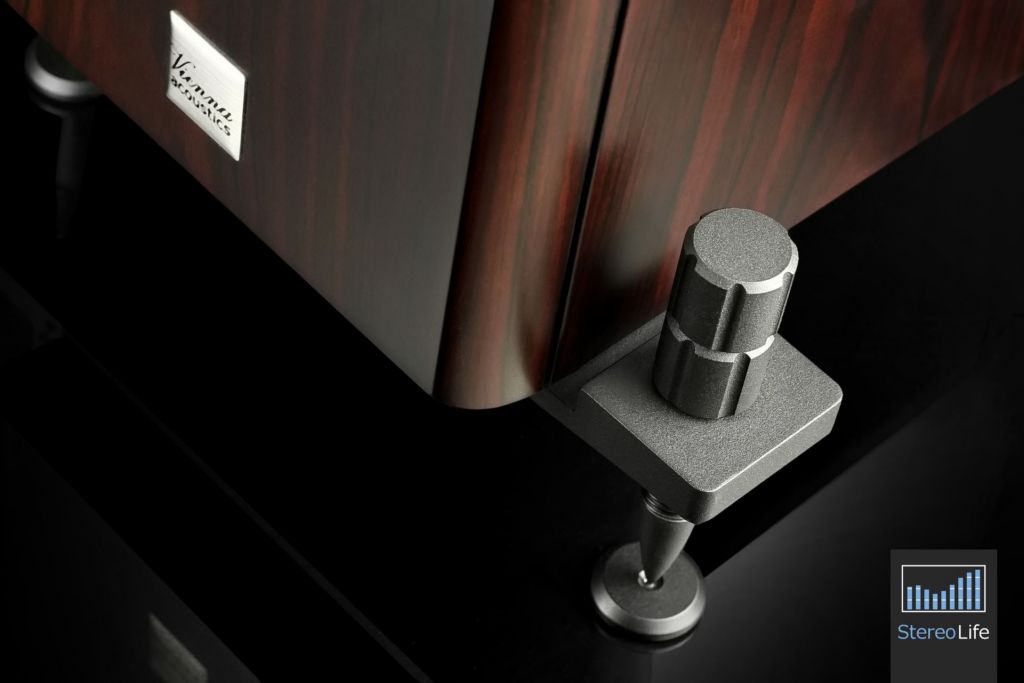
Unpacking the Austrian speakers is a pleasure in itself. The first thing we remove from the box is a separate carton containing the accessories - stabilizing plinths, spikes, washers, screws and, and, of course, the one accessory that simply had to be included here - cotton gloves. Each speaker rests on two substantial beams which, once attached, extend well beyond the side edges of the cabinet. The screws naturally go into metal inserts set into the base. Interestingly, each beam is fixed with three screws, and there are two sets of mounting holes. The wider-spaced holes are covered with tape indicating that they are intended for optional, more discreet supports. I assume these are the supports known from the previous model, positioned closer to the cabinet. Apparently, the company still offers them and has therefore left the choice to the customer. Personally, I prefer the wide beams. Tall, narrow speakers in domestic conditions are most at risk of tipping sideways, even after a casual bump, and these prominent plinths reduce that risk to a minimum. The spikes themselves are equally substantial - thick, sharply pointed screws. They are so long that one can slide not just fingers, but an entire hand under the Mozart SE Signature. One could even be tempted to tilt the cabinets slightly backward.
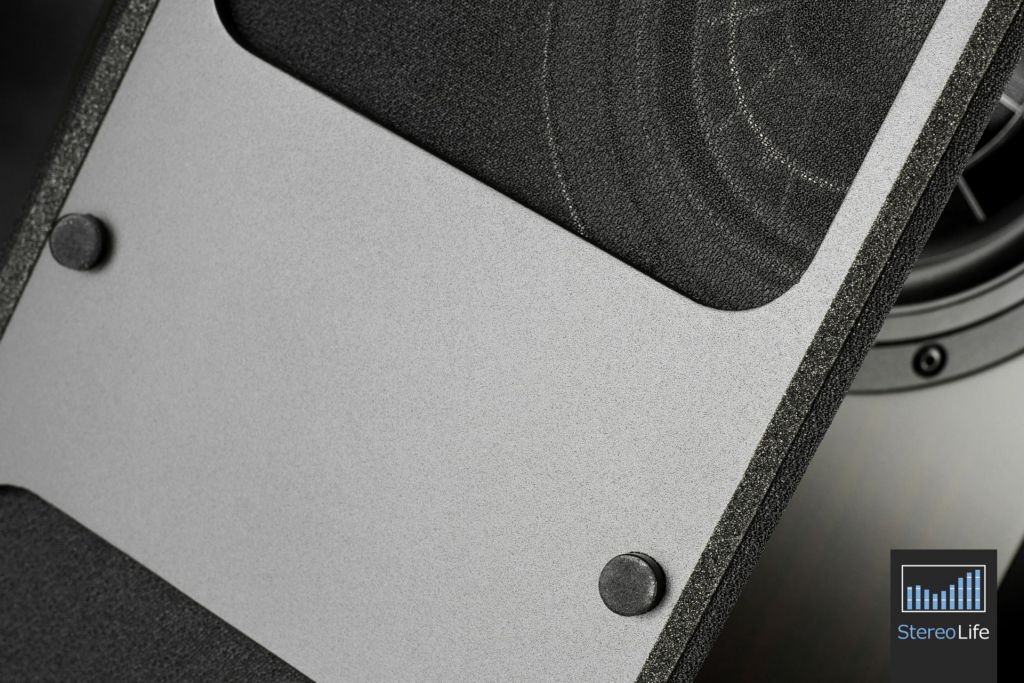
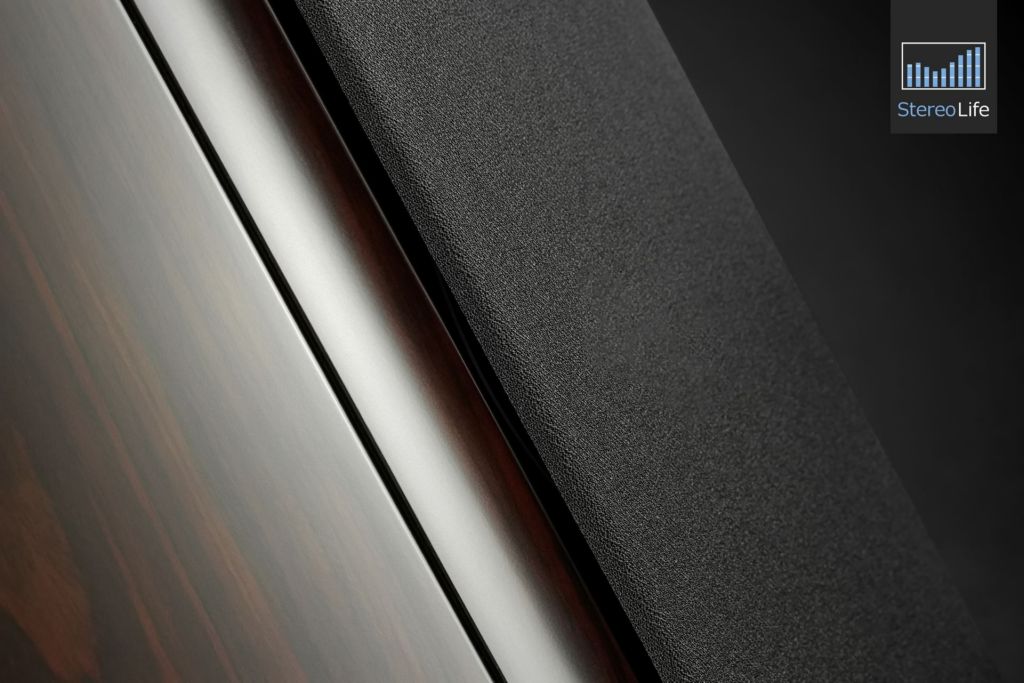
Thanks to the large locking nuts, leveling the speakers is wonderfully easy. On carpet or a rug, the system is essentially ready to go. On a hard floor, however, one has to use the supplied metal discs. This is a common solution, but I have never been its greatest admirer. Move one speaker slightly, hit a tiny uneven spot that prevents the spike from sitting perfectly in the recess, the disc shifts or, to put it bluntly, gets kicked out - and you have a problem. Of course, audiophiles have a solution for everything. One can buy larger and taller floor protectors, place the speakers on granite slabs, or replace the factory spikes altogether. Still, it is a pity that the manufacturer did not include something like additional rubber-backed feet, offering instead the simplest possible solution - metal discs with small recesses in the middle. The grilles are much more impressive. These are light, magnetically attached frames covered with elegant fabric. Felt pads can be seen at the points where they touch the cabinet. Once in place, the grilles hold as if glued on, leaving only a minimal gap between the frame and the front baffle. When removed, there are no holes or pegs in sight. The front remains clean, smooth and elegant. Excellent.
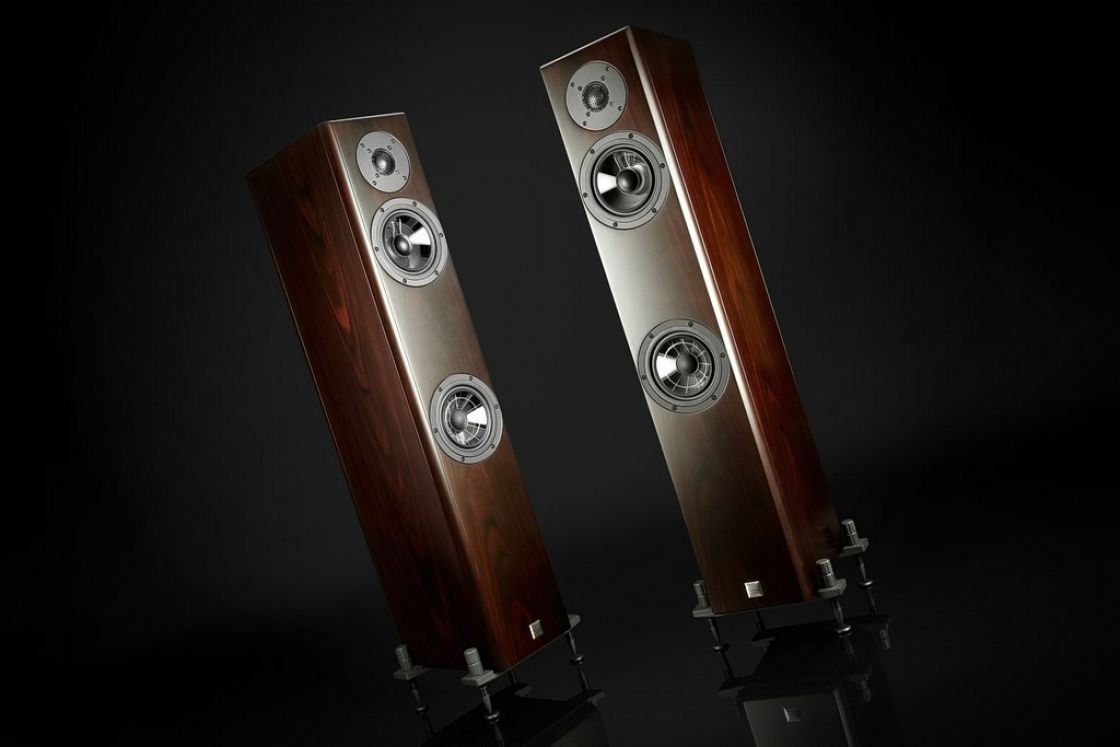
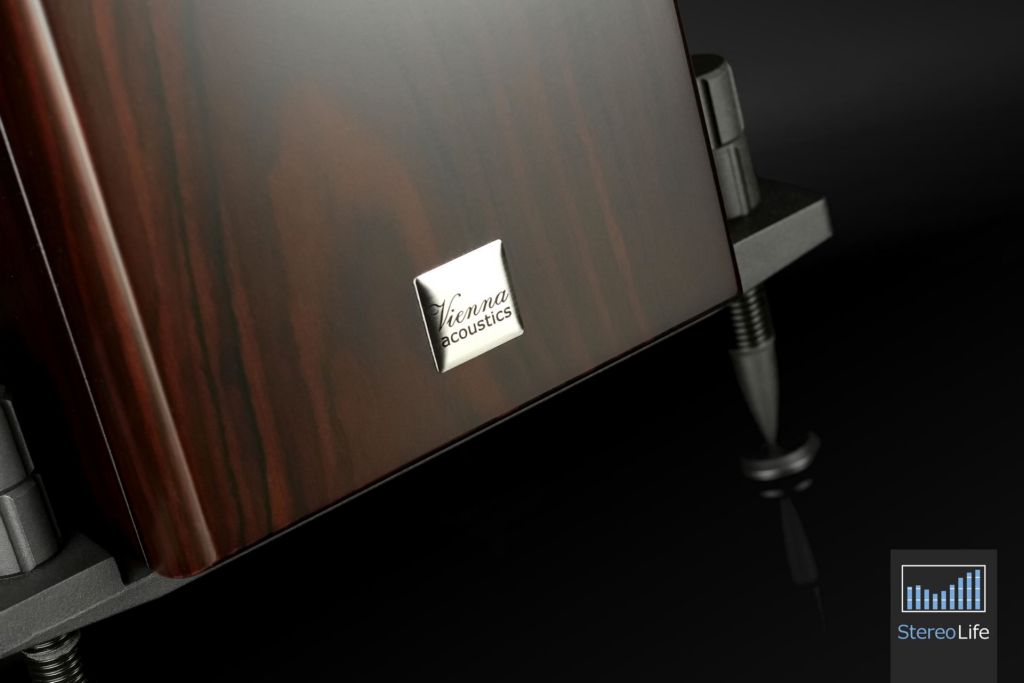
Vienna Acoustics is famous for first-rate cabinetry, and the Mozart SE Signature is no exception. The review pair arrived in the finish which, although it requires an extra payment, I like the most - natural rosewood veneer covered with a clear satin lacquer. Other options include satin black and satin white, as well as three less expensive versions - gloss white, gloss black and cherry veneer. The effect is stunning. Many speakers at similar prices, and even some costing considerably more, look next to the Viennas like a flat-pack supermarket cabinet placed beside custom-made luxury furniture one has to wait weeks to receive. If this does not come across in the photos, let me simply say that in person the Mozart SE Signature looks even better. Having such speakers at home is pure pleasure, even when they are silent. Incidentally, photographing speakers in this finish is a genuine test of character. Many of the images shown in the gallery below the review had to be assembled from two or three frames taken with different lighting positions. The post-processing took many, many hours. Not to make the speakers look different or better than they do in reality, but exactly the opposite - to make them look as they do in real life. I hope the result was worth the effort.
The speakers impress not only with their accessories and exterior finish, but also with their overall solidity and their original drivers. Each speaker weighs around 23 kg, which, given the compact dimensions, makes it clear that instead of "apple crates", we are dealing with cabinets made from thick, dense MDF panels. The manufacturer itself emphasizes that over the years it has developed long-term cooperation with European furniture factories, allowing it to use their production lines and woodworking expertise. That may sound like marketing, but once you look at these speakers, it is easy to believe that the cabinetry for Vienna Acoustics is handled by true specialists. It is enough to notice the thickness of the front and rear panels, which in the brand's characteristic fashion appear visually "separated" from the rest of the enclosure. And that is not all, because these panels are partly recessed into the frame formed by the side, top and bottom panels, meaning their actual thickness is greater than it first appears. This kind of structural separation serves a dual purpose. On the one hand, it creates an impression of solidity and pleasing physical mass. On the other, it increases rigidity in the critical areas where the drivers are mounted. The cabinet edges are gently rounded, which benefits both the appearance and sound-wave dispersion. Inside, the enclosure is reinforced with braces whose placement was determined through measurements. There is no philosophy here of the cabinet acting like the resonant body of an instrument. The manufacturer openly states that a loudspeaker enclosure should be as acoustically inert as possible, with the actual sound emission left to the drivers and bass-reflex system.
For the record, when praising the cabinetry, we are in fact praising not Austrian but Polish craftsmen. It is an open secret that Vienna Acoustics has for some time been using the services of JRC, the company behind the Pylon Audio brand. To make matters even more interesting, the Austrians first commissioned the Polish woodworking company to manufacture the cabinets - apparently a long process that required an absolutely perfect result - after which the Polish side acquired a 70% stake in VA Lautsprechermanufaktur GmbH. The Viennese manufacturer, however, retained its identity. There were no sudden upheavals in the catalog, and an important part of the transaction was the continued active involvement of Peter Gansterer and his family, who have been responsible for the company's development from the beginning, both in terms of management and technology. So even though the cabinets are made in Poland, and even though this is an unusual situation in which the "cabinetmaker" owns a majority stake in the loudspeaker manufacturer rather than the other way around, Vienna Acoustics continues to operate as before. Its speakers are not "Pylons on steroids", but products with a completely different lineage and their own unmistakable character.
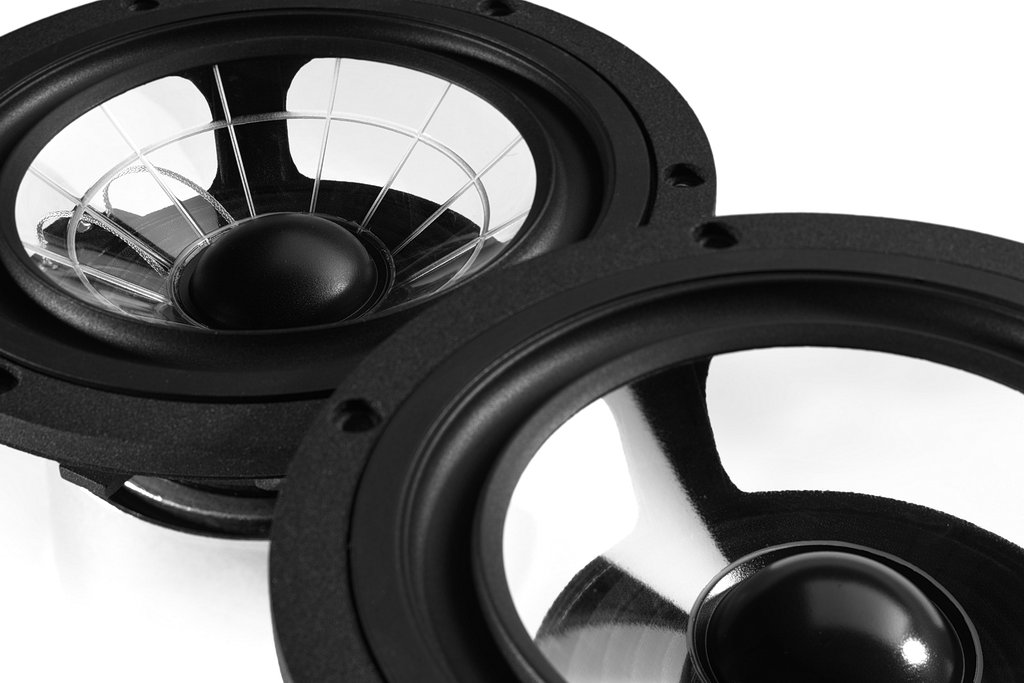
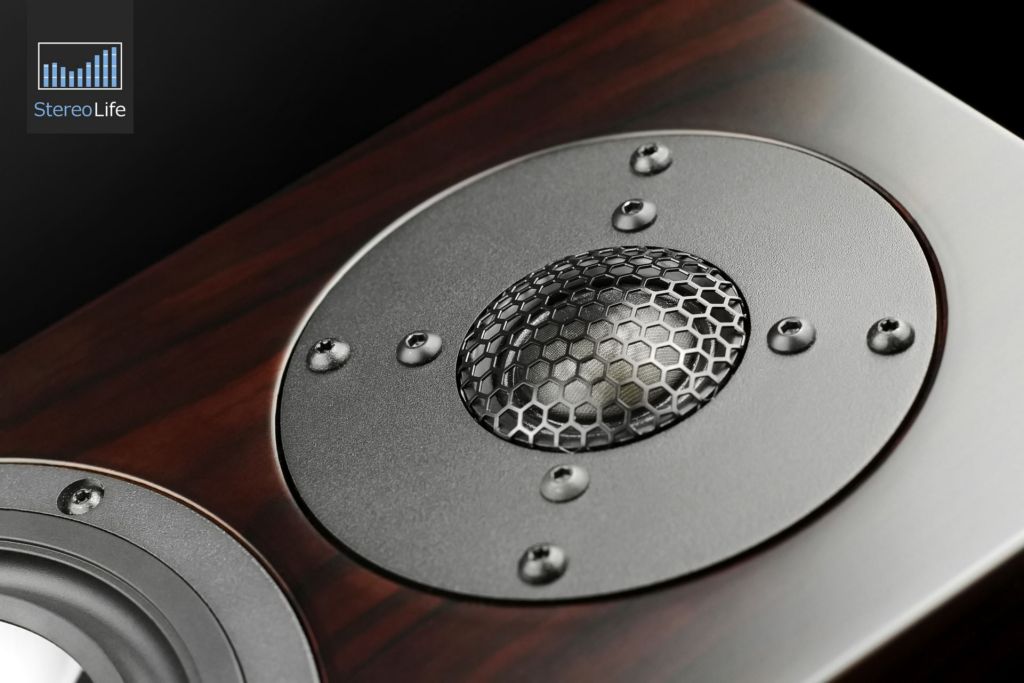
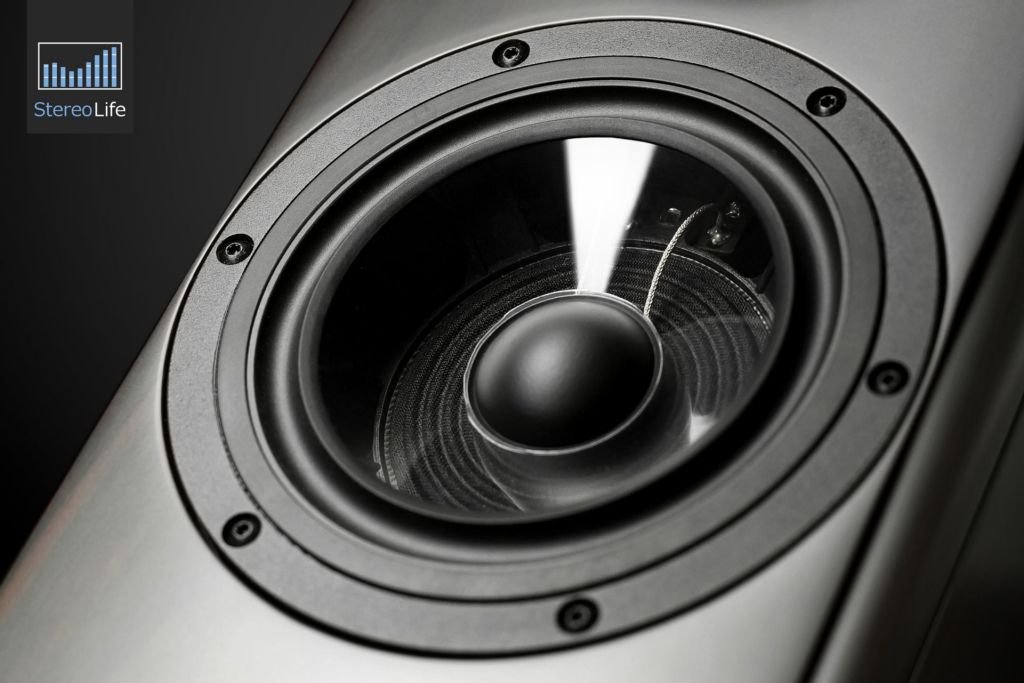
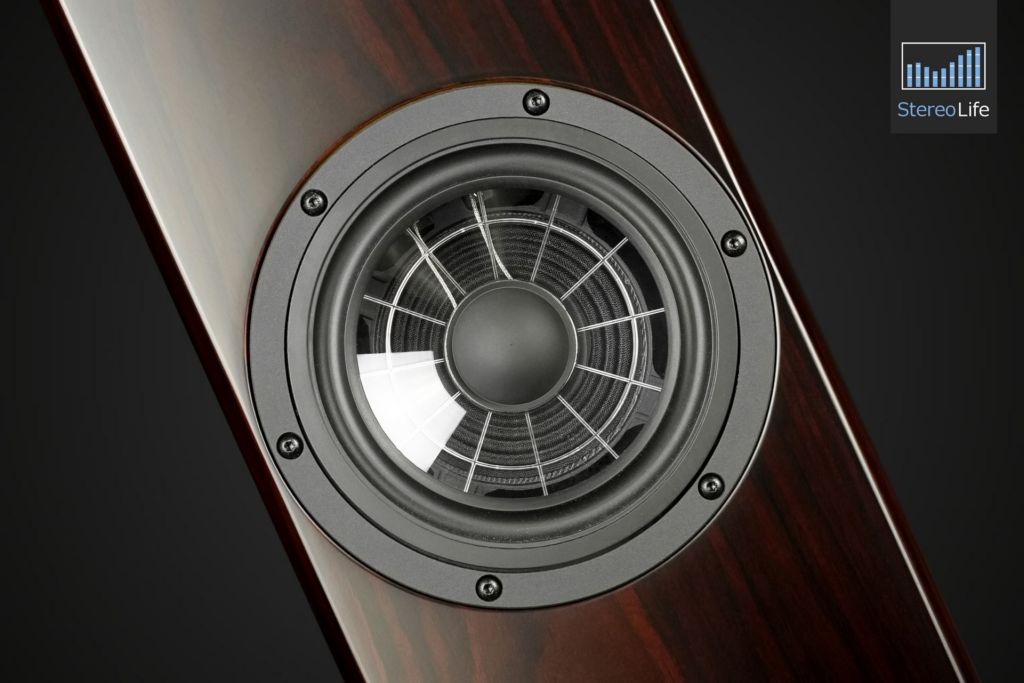
Although we will discuss the construction of these speakers in more detail later, it is impossible not to mention the drivers at this point. The Austrian designers have long used proprietary solutions here, the most recognizable being the transparent diaphragms of the midrange and bass drivers. From a distance, it almost looks as if the speakers have no cones at all. Their presence is revealed only by reflections of light and by the characteristic spiderweb-like reinforcements. The driver arrangement is classic - a silk dome at the top, and below it two 15-cm X3P drivers, although they are not identical. The lower driver, responsible only for the low frequencies, has the aforementioned Spidercone reinforcement, while the upper one has a completely uniform, smooth diaphragm through which the internal elements are clearly visible. One has to admit that this transparency is not only visually striking, but also further proof of the Mozart SE Signature's high standard of execution. In some high-end speakers, it is enough to unscrew a driver to notice imperfections - traces of glue, poorly soldered wires, crookedly seated gaskets, loose wood shavings and other small sins invisible from the outside and, in theory, irrelevant to the sound, although no doubt some golden-eared masters would claim to hear them. Here, however, there is no room for such carelessness. Speakers fitted with drivers like these cannot be assembled casually. The surround cannot be dirty or torn, glue cannot drip onto the inner side of the diaphragm, and the interior cannot look like the floor of a cabinetmaking shop. Everything has to be immaculate. And it is.
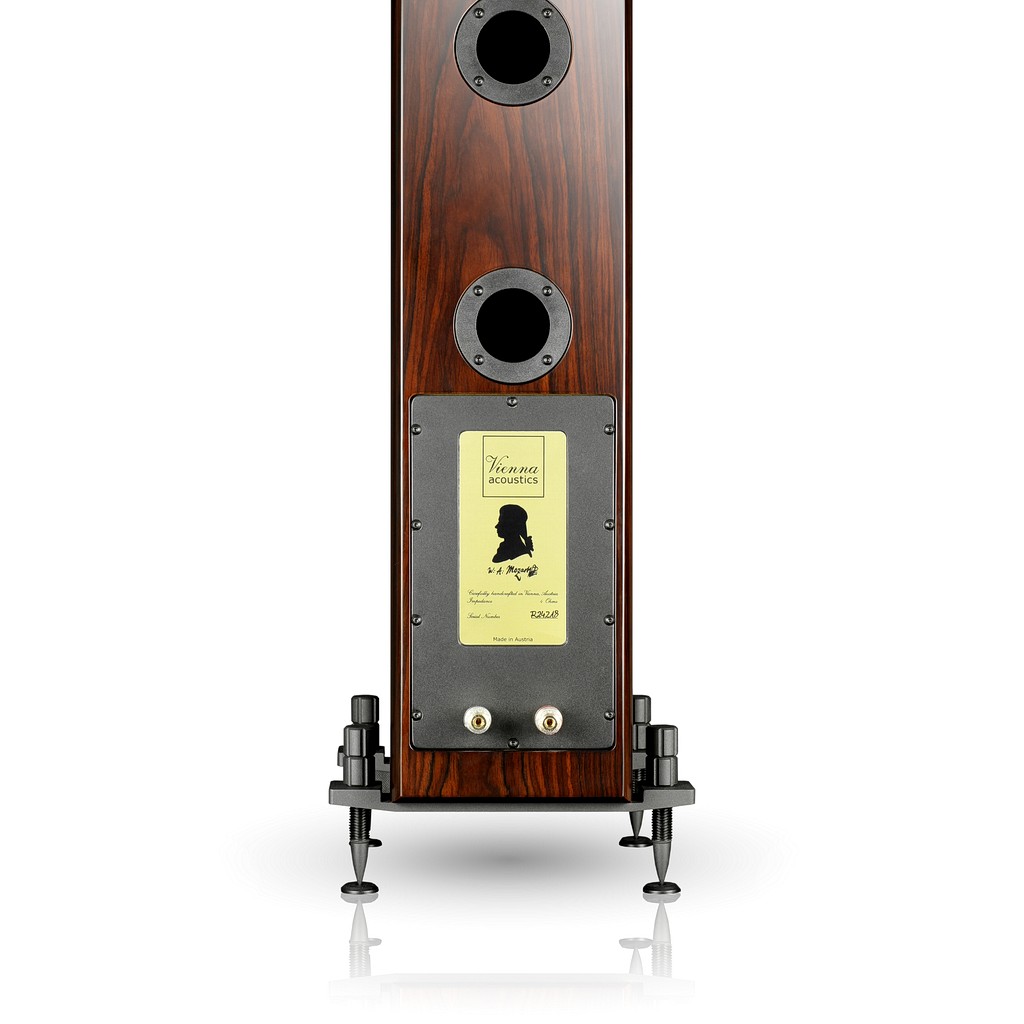
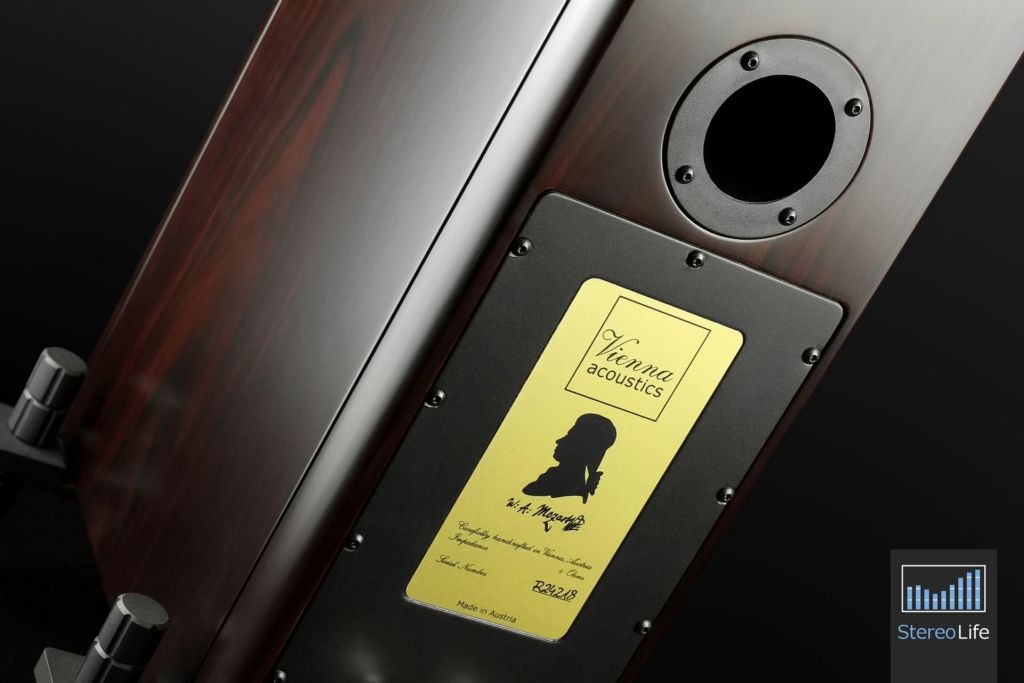
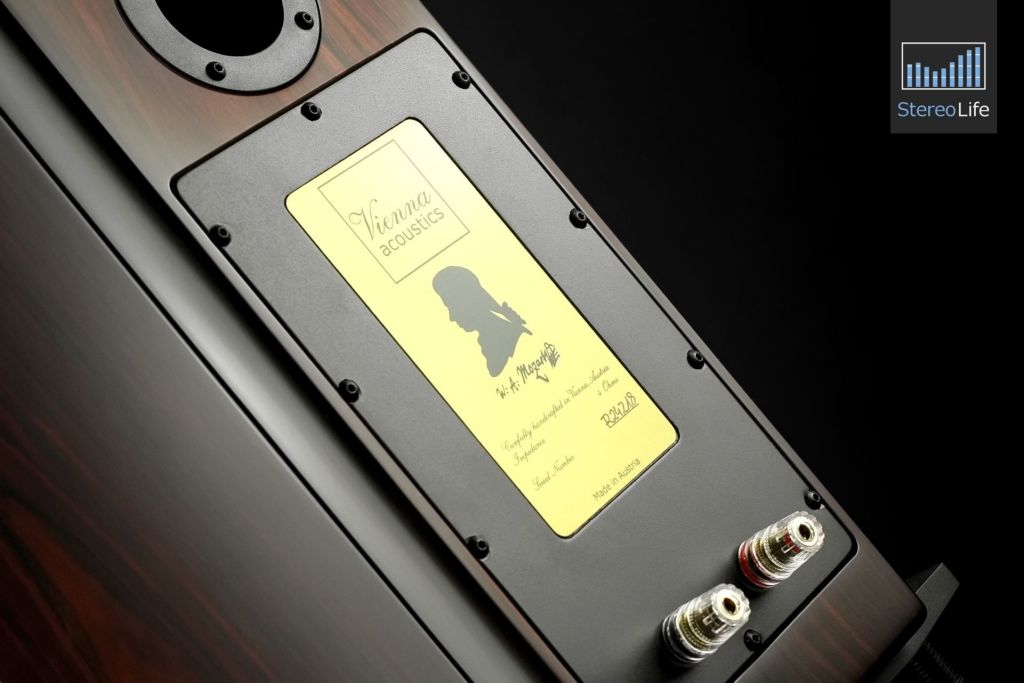
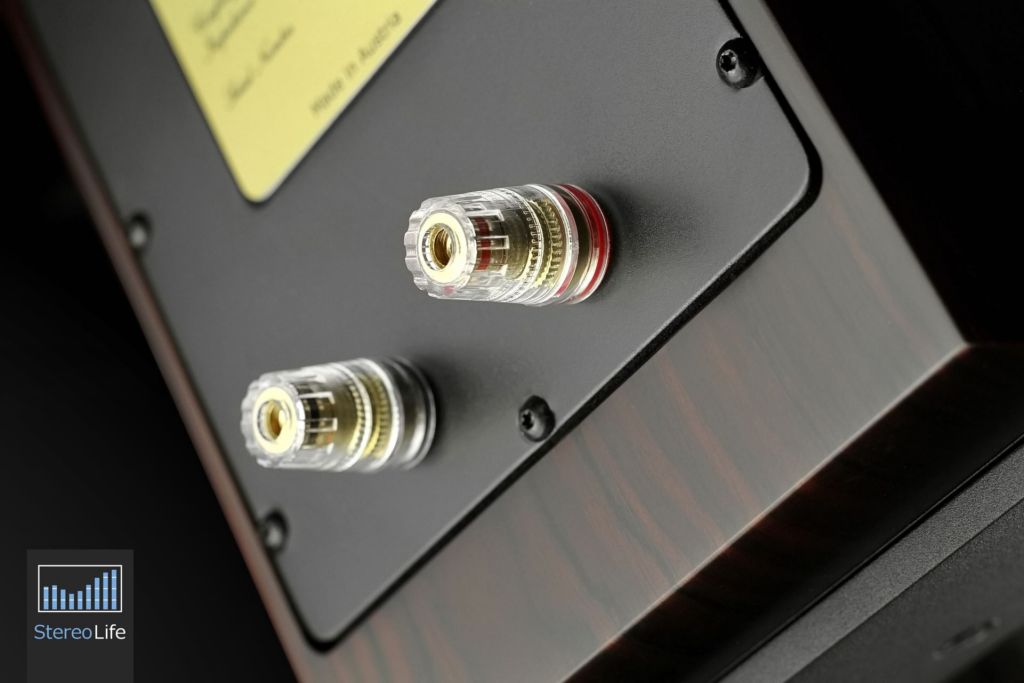
Moving to the back, we find a large metal plate with a gold nameplate, a handwritten serial number, the proud inscription "Made in Austria" and the image of - who else - Wolfgang Amadeus Mozart. The binding posts are single and, for equipment in this price range, fairly standard. They are simply gold-plated terminals set in transparent plastic. What matters is that they will accept any type of connector and are positioned low above the floor, which makes cable routing easier and prevents the ends from being bent if someone uses thick, heavy "garden hoses." Also visible on the rear panel are two reflex ports. By current standards, they are rather unusual - relatively small in diameter and not smoothly flared, but cut flat. Between the main part of the port and the flange sitting flush with the cabinet, there is practically no rounding at all. What is more, each port assembly is screwed to the rear panel with four screws, which I actually approve of. This means that each bass-reflex port can be treated as a firmly attached element one can grip in order to move the speaker safely or turn it upside down, for example when attaching the stabilizing plinths. Why are the ports so unusual - one is tempted to say old-fashioned? The company explains that this is directly related to its Impulse Optimizing QB3, or Quasi-Butterworth, tuning concept, intended to deliver excellent impulse response while significantly extending the bass. It sounds intriguing. How does it work in practice?
Sound performance
Speakers from this brand have always reminded me of a sound composed according to a principle that, I suspect, has never been formally written down - yes, technical correctness and fidelity to the source material matter, but pure listening pleasure matters even more. In practice, this means that the Austrian designers never seemed particularly interested in building reference tools, ideal transducers that disappear from the chain, work with absolutely every type of music and every amplifier, and leave us alone with the recording. They took care of the healthy fundamentals, fulfilled the basic requirements, and made sure their speakers did not sound strange or caricatured. But after that, they moved in the direction they considered optimal from the music lover's point of view. They were not afraid to create loudspeakers that, on the one hand, meet the basic criteria of "objectively good equipment", and on the other have their own character, their own way of presenting music, clearly making it known that their job is not to "disappear and leave us alone with the music" (how many times have we heard that?) but to take part in the listening session as a fully fledged presence. And if polypropylene cones sound warm, and compared with drivers using metal, carbon fiber or some other space-age material may be perceived as slightly slower? Good. Listening is supposed to help a person relax, not make listening feel like work. Besides, what tone, what coherence - real honey for the ears. If silk tweeters sound rather gentle, and in terms of speed and transparency cannot compete with ribbons, for example? Again, perfectly fine. That is exactly the kind of sound expected by someone who plans to listen not for fifteen minutes, but for five or eight hours, with short breaks.
Purists would probably say that this is not the role of loudspeakers, amplifiers, DACs or cables. Each of these elements, they would argue, should be nothing more than a perfectly executed tool, because the recording has already been made. The musicians used specific instruments with unique timbres, the engineers chose specific microphones and made a whole series of decisions that we have no right to alter. Our home stereo system is only the other end of that chain, and at this stage we should not be applying corrections or deliberately bending the final result simply because we feel like it. The trouble is that in real life, people choose the equipment they like anyway and try to arrive at the sound they consider optimal. Neutrality can be boring, and transparency can be tiring. For one's own comfort and satisfaction, it is perfectly possible to choose speakers that will color the sound a little here and there, add flesh and juicy substance to the bass, gently bring the midrange forward and paint it in pastel colors, then polish the treble and smooth it ever so slightly, filing down sharp edges so that listening remains enjoyable even with poorer recordings - because it would be naive to believe that every album sounds the way it should.
That is exactly the approach I have always associated with Vienna Acoustics. Reading some of the technical descriptions of the Mozart SE Signature, I was slightly afraid that this charm might not disappear, exactly, but perhaps fade a little. Thankfully, no. The first sounds, the first seconds of listening, and I already knew I was getting what I had hoped for. The presentation was dense, pleasant, natural, close, intimate, and at the same time gentle, harmonious, cultured and tasteful. No vulgarity, no artificiality, no showing off or making noise over nothing. Instead, there was flow, calm and an outstanding ability to focus on the essence of the music - more on its center, its interior, its substance, than on the edges of each sound and the creation of empty space between instruments.
So is this simply the good old Vienna, end of story? Not quite. The characteristic sound of the Austrian manufacturer has been preserved, but at the same time, in certain areas, dynamics being an obvious example, clear progress can be heard. It is still Vienna, but somehow in better shape. It still has the same temperament, but it is no longer a couch potato or a plush toy to cuddle. It has decided to take care of itself, slimmed down, started running, and when it watches TV series in the evening, instead of a bag of chips it brings lettuce, sprouts, olives or a kale smoothie. On the surface, nothing dramatic has happened, but in practice every small change adds another brick to the structure. These were the thoughts I had when I realized that Vienna had not lost its character. It had not, and thank goodness for that, but it had also worked on the elements that previously might have invited criticism, thereby depriving its critics of their old arguments. It sounds pleasantly and musically because that is what it likes to do. Sometimes it colors, smooths or emphasizes something because it benefits the listener and supports a longer relationship. But if someone wants to complain about sluggishness, poor stereo imaging or blurred detail, I am sorry - those accusations are long out of date.
One of the elements that leaves the strongest impression is the bass. Looking at the slim cabinets and 15-cm drivers, one hardly expects record-breaking extension. Yet the Mozart SE Signature reaches genuinely low while maintaining impeccable control. And here comes another surprise, because two rear-firing bass-reflex ports would suggest that achieving proper tonal balance will require a generous distance from the wall. In reality, the Austrian floorstanders are remarkably flexible in this respect, almost as if we were dealing with sealed speakers or designs equipped with a transmission line. Intrigued by this, I moved the speakers to my study, where I normally use Equilibrium Nano desktop monitors. This is a heavily damped 10 m² room, although one square meter of floor space is permanently occupied by my cat. I moved the Mozart SE Signature speakers close to the wall, first to 40 cm, then 30 cm, and finally even 20 cm. And there was no disaster. In those specific conditions, I would not go below 30 cm, but that is still an excellent result, because the speakers themselves are just under 35 cm deep, so one can comfortably stay within 60-65 cm in total. That remains a very livable figure - a distance that should not interfere with everyday life. If you are looking for floorstanders for a 14, 16 or 20 m² room, do not cross the Mozarts off your list because of the two rear ports. They should cope beautifully.
The key to this success is not trimming the bass, but controlling it exceptionally well. This low end is not loose or bloated, but surprisingly clear and well-defined. At times, almost point-like. It can strike and disappear instantly. Combined with the speakers' friendly nature, this proved so intriguing that I started going through my playlists, setting up a kind of bass obstacle course. The Viennas emerged victorious from every difficult situation. They did not fall into unpleasant booming, nor did they try at all costs to prove that they could venture into regions no subwoofer with a 30-cm driver and a 1000 W amplifier had ever reached. Quite the opposite - they behaved like good sealed-box speakers. I know I am using this comparison for the second time, but I have no better way of describing the effect. First, the Mozart SE Signature knows its limits and operates only within the range that gives it no trouble. That range is still quite broad, so it is not as though we are left only with mid and upper bass, after which the sound suddenly drops off. No - the depth is typical of speakers of similar size, so if you like a dense, rich, purring low end, you will get it. The difference is that many speakers on the market still try to go lower even when this exceeds their physical capabilities. In 90% of cases, the result of the "I won't give up, I can do it!" philosophy is unpleasant booming that contributes nothing and merely spoils what has already been achieved.
Although the Mozart SE Signature's bass impresses with a rare combination of extension and control, the Austrian chefs' signature dish remains the midrange. This is where it is easiest to hear that the designers were not chasing a laboratory ideal. The character of the midrange is slightly warm, dense and saturated. Vocals are closer to the "live in a club" version than to a sterile take from the control room. Acoustic instruments have clear texture and color, but they are not cut out with a scalpel. The tonal palette is captivating. If, in search of a warm, intimate, organic sound, you instinctively turn toward Spendors, Harbeths, Grahams and other classic designs of a similar character, I can guarantee that the Viennas are not inferior to them in any meaningful way. This is all the more interesting because in its press kits the manufacturer repeatedly emphasizes the "high-performance" properties of its drivers. According to Vienna Acoustics, the X3P material used for both woofer cones was developed to combine high internal damping with low mass and high stiffness. The mixture of several types of polypropylene and TPX plastic is intended to suppress unwanted resonances. Then there is the Spidercone reinforcement system - the woofer diaphragm is stiffened from underneath by a pattern of concentric and radial ribs, increasing rigidity and helping it maintain its shape at larger excursions. All of this sounds as though the Mozart SE Signature should deliver sound that is brutally neutral, dynamic and resolving. But relax - no technology can erase the company's DNA. Viennas have always known how to charm with their midrange, and no tricks will change that.
The rest is essentially a formality. The treble is handled by a silk dome which is, in fact, a special, slightly modified version of a well-known Scan-Speak design. Its sound can be described as smooth, open and natural. The high frequencies do not push forward, nor do they glitter as if trying to become the star of the show. Instead, they extend the midrange, joining it so seamlessly that no stitching can be heard. Cymbals do not have that clinical, razor-sharp edge, no sibilants exaggerated beyond reason. What we get instead is air, resonance and a sense of ease that makes long listening sessions possible, including with less-than-audiophile recordings. One can reach for beautifully recorded samplers, older rock albums or contemporary pop. The Austrian speakers will not torture them, but present each recording with a touch of gentleness. The soundstage is wide and pleasantly relaxed. These are not speakers that require the listener to sit with their head clamped in one precise position. You can shift slightly, lean forward, settle deeper into the chair, and the stereo image will remain coherent. Despite vocals being brought slightly forward, the overall impression is more like sitting in a very good seat in a concert hall than occupying the engineer's chair behind the mixing console. Dynamics, including microdynamics, are very good, especially when the speakers are given enough current. Compressed rock recordings do not turn into bland mush. They retain energy and firm rhythm. Small changes in articulation, the guitarist's right-hand work, nuances in the drummer's playing - all of this is clear, but not dragged into the spotlight. If someone dreams of an ultra-fast, clinical presentation that immediately dissects music into its components, perhaps they should consider different speakers. If, however, the priority is for music to flow freely and for the equipment not to distract us with its acrobatics every five seconds, the Mozart SE Signature fulfills that role beautifully. One could even say this is exactly what it was created to do.
Build quality and technical details
The Vienna Acoustics Mozart SE Signature is a 2.5-way floorstanding loudspeaker in a vented enclosure. From a construction standpoint, it is a textbook example of how much can be extracted from an apparently conventional layout when sufficient attention is paid to detail. The system is based on three drivers. High frequencies are handled by a 28-mm hand-coated silk dome made for the Austrian company by Scan-Speak. From the front, it is protected by a metal grille whose role is primarily protective - the manufacturer does not build a story around dispersion shaping or similar refinements. The tweeter does not use rare, original or ultra-modern materials. It is simply a very good, proven unit, slightly modified here according to the requirements of Vienna's engineers. The mid-bass range is covered by two 15-cm drivers with X3P diaphragms. This is the company's proprietary material, created by combining TPX - a specific thermoplastic material used in earlier XPP cones - with three different types of polypropylene. The goal was to achieve maximum internal damping with very low mass, while maintaining control over the diaphragm's density and stiffness. The upper driver works as a mid-bass unit and has a smooth cone profile, while the lower one serves as an additional woofer and has its diaphragm reinforced from underneath with the rib structure known as Spidercone. This construction slightly increases mass, but above all improves stiffness at large excursions, which is crucial in the bass range. The manufacturer explains that such a cone would behave less favorably in the midrange, which is why it was not used in the upper driver.
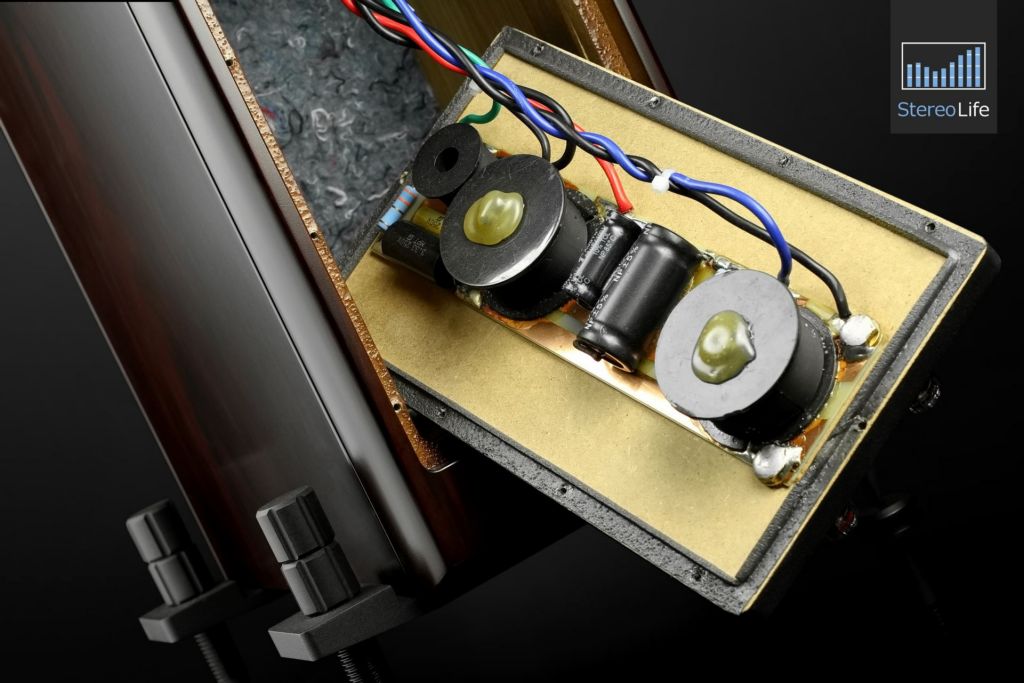
As befits a 2.5-way design, both woofers operate together in the low frequencies, but they are filtered differently. The lower one is rolled off earlier, while the upper one also covers the midrange. This gives the system a larger combined cone area at low frequencies, benefiting dynamics and extension, while avoiding interference problems in the critical midrange, where effectively only one driver is working. One element of which the manufacturer is particularly proud is the crossover. In its technical materials, Vienna Acoustics emphasizes the use of MKP capacitors with 1% tolerance, air-core coils with 0.7% tolerance and metalized resistors with 1% tolerance. These are values more often encountered in high-end designs than in speakers from this price segment. The entire circuit is assembled on a large board into which the classic single speaker terminals are soldered. This integration shortens the signal path, as the signal from the amplifier goes directly into the filters without additional internal wiring or jumper arrangements. At first glance, the crossover appears quite complex, because it uses linearization circuits in the bass range - parallel power resistors reduce the height of impedance peaks, improving control of the resonant system, although this may also slightly reduce efficiency.
The cabinet is a classic rectangular box with gently rounded edges, but internally there is nothing simplistic about it. Reinforcing braces are positioned on the basis of vibration measurements, limiting resonance in critical areas without sacrificing too much usable volume. The damping is also handled in an interesting way. Instead of lining all the walls with a thick layer of material, Vienna uses damping "blocks" placed in selected locations, helping to control standing waves without storing energy and releasing it unpredictably. This continues the philosophy known from earlier versions of the Concert Grand series. The bass-reflex system consists of two rear-firing ports. The manufacturer describes it as Impulse Optimizing QB3, a Quasi-Butterworth tuning system designed to provide good impulse response while achieving a low cutoff frequency.
As for the specifications, nominal impedance is 4 Ω, sensitivity is 90 dB, and frequency response extends from 30 Hz to 22 kHz. These figures look fairly standard, but the recommended amplifier power is also worth noting - 30-200 W. The lower end of this range is nothing unusual, because most loudspeaker manufacturers, even those whose speakers are easy to drive, prefer to list a safe minimum so that no customer complains that his 18-watt tube amplifier is coping only moderately well despite being promised a miracle. The upper end, however, suggests that the Mozart SE Signature, despite its fairly friendly-looking specifications, likes current and will not object to powerful electronics. This was confirmed in practice. My first choice for these speakers would be a strong solid-state amplifier with a neutral character - at least 60-80 W per channel into 8 Ω. Hegel H190v, or better yet H400, Lyngdorf TDAI-2210, Soul Note A-1, Yamaha A-S1200, Audiolab 9000A, or the 9000Q and 9000P separates - that is the direction I would consider optimal here. There is nothing to stop one from trying a hybrid or tube amplifier, or perhaps a "warm transistor." One simply has to be careful not to overdo it, because too much of a good thing is still too much.
System configuration
Audiovector QR5, Equilibrium Nano, Unison Research Triode 25, Hegel H20, Auralic Aries G1, Auralic Vega G1, Marantz HD-DAC1, Clearaudio Concept, Cambridge Audio CP2, Cardas Clear Reflection, Tellurium Q Ultra Blue II, Albedo Geo, KBL Sound Red Corona, Enerr One 6S DCB, Enerr Tablette 6S, Enerr Transcenda Ultimate, Fidata HFU2, Melodika Purple Rain, Sennheiser HD 600, Beyerdynamic DT 990 PRO, Beyerdynamic DT 770 PRO, Meze 99 Classics, Bowers & Wilkins PX5, Pro-Ject Wallmount It 1, Custom Design RS 202, Silent Angel N8, Vicoustic VicWallpaper VMT, Vicoustic ViCloud VMT.
Verdict
The smallest floorstanders from the Austrian manufacturer are not the result of breakthrough discoveries or revolutionary technical solutions - in the audiophile world, hardly anyone still believes such a scenario will ever really happen - but rather the product of a wise, calm evolution lasting more than 35 years. There are no fireworks here in the form of horn-loaded, ribbon or concentric drivers, no cabinets made from aerospace composites, no snail-shell-shaped reflex ports and no grilles knitted from linen and silk. Instead, we get speakers that are almost entirely classic. A slim rectangular MDF cabinet covered with veneer or lacquer, three drivers in a 2.5-way configuration, two rear ports, single binding posts, tall spikes on metal beams - no surprises. The secret lies in how much attention has been paid to each of these elements, and in how carefully they have been combined so that the speakers present themselves very, very well, in some respects almost exemplary.
Their greatest strengths are threefold. The first is the cabinetry and overall build quality. In this budget, one can find speakers that are more extravagant and more attention-grabbing purely in terms of form, but few will look this natural in a normal living room. And if you like examining details, or if you really know what to look for, you will quickly conclude that the kind of finish shown in the photos is now found almost exclusively in speakers from a much higher price bracket - not those costing $5,000, but rather $15,000. The second strength is the sound. Warm, but not dark. Detailed, but not analytical. With bass that reaches low, yet remains perfectly controlled. With a midrange that gently comes toward the listener and can present vocals and acoustic instruments in a full palette of colors. With treble that adds air and elegance instead of driving needles into the ears. This is a presentation that is very easy to like. One can live with this kind of sound for years, changing only electronics, sources and cables.
And finally, the third, perhaps the greatest advantage of these speakers - their functionality and everyday usability. The Mozart SE Signature is not a capricious loudspeaker. Of course, it will reward careful placement, but it does not terrorize the listener by demanding that the armchair be positioned to the nearest centimeter. To make these Austrian floorstanders boom, one really has to try. On paper, we have two rear-firing bass-reflex ports. In practice, leaving 30-40 cm is enough to obtain a healthy, balanced sound. The soundstage remains clear across a broad listening area, and the speakers fill the room with music freely and naturally. Add to this details such as solid feet that give the slim cabinets real stability, or easy-to-use grilles that offer genuine protection for the drivers. All of this means that living with the Mozart SE Signature is simply pleasant. The fact that they are beautiful does not prevent them from being thoroughly practical. For many music lovers, that is worth its weight in gold, because passion is one thing, but at home one should also be able to function normally and provide that same comfort to others.
Weaknesses? Here the matter is fairly obvious. Because of its clearly defined priorities and easily recognizable character, this is not a speaker for everyone. If someone is looking for an absolutely linear "measuring instrument" that will expose every mistake made by musicians and recording engineers without blinking, there is equipment on the market better suited to those expectations. If, however, the ideal is a system that can play in the living room for years without constant speaker changes and endless comparisons, the Mozart SE Signature is a very serious audition candidate - a loudspeaker with its own view of how music should sound if we are to want to listen to it all evening today, tomorrow, next week, next month, and several or even a dozen years from now. During that time, you will experiment with cables, change the source three times, invest twice in a better amplifier, perhaps even move house, while the Austrian floorstanders will remain like your favorite leather shoes, the ones you put on instinctively without worrying whether they suit the occasion. If this sound really clicks with someone, then when the time comes to choose the next pair of speakers, they will not read random reviews or go to the nearest store to find out what's trending. The first thing they'll do is check out what Vienna Acoustics has to offer at the moment. And once again, they will find exactly what they were looking for.
Technical data
Speakers type: Floorstanding, dynamic, 2,5-way, ported
Sensitivity: 90 dB
Impedance: 4 Ω
Frequency response: 30 Hz - 22 kHz
Dimensions (H/W/D): 97.2/21.6/34.3 cm
Weight: 23 kg (piece)
Price: $6,995 (base finish)
Manufacturer: Vienna Acoustics
Sound performance
Editor's rating
8.8Overall9Sound9Functionality9Design8Quality9Price