
- Reviews
- Posted
Fezz Audio Luna
When Fezz Audio, then a small, unknown domestic manufacturer, unveiled its first amplifier ten years ago, very few people believed it stood a chance. Yes, the company was connected to a respected producer of transformers used by prestigious audio brands, but as its own label it simply did not exist in the consciousness of audiophiles. At launch, Fezz brought only a single product to market. It was not a compact digital-to-analog converter, not a lavishly equipped solid-state integrated, but a modest tube integrated that, from the customer's perspective, distinguished itself mainly with its reasonable price and a handful of available color finishes. How was this oddity ever supposed to shake up the tightly sealed hi-fi world? And yet, within just a few months, Silver Luna was on everyone's lips. Reviewers and music lovers quickly took to it, drawn by its honest, fully tube-based sound and its raw, minimalist, slightly industrial styling. It was a straightforward, sensible piece of gear with no gimmicks, no cosmetic frills, no wooden ornaments - just engineering focused on doing one job well. It turned out you really could build tube amplifiers in Europe that didn't cost as much as a new car.
At first, the Polish company concentrated on its home turf, steadily building a dealer network, listening carefully to user feedback, and doing its share in dismantling the old myths about tubes. The real turning point came when foreign distributors discovered Fezz Audio. Classic yet distinctive tube amps from a country that had suddenly become an economic, cultural, and tourist phenomenon? Many distributors decided that they had to at least give it a chance. Orders for full containers of amplifiers began coming in from around the globe. To keep pace, Fezz Audio had to ramp up production, expand its staff, and ultimately move to a new, larger headquarters. This meteoric rise became a source of pride not only for company's founders, Maciej and Tomasz Lachowski, but also for its earliest supporters, who could now watch with satisfaction as a local initiative evolved into one of the most recognizable Polish audio manufacturers.
From that first Silver Luna, Fezz Audio's catalog has expanded dramatically. Other tube amplifiers followed - the more powerful Titania, then exclusive single-ended designs based on legendary triodes (Mira Ceti 300B, Mira Ceti 2A3, and the flagship Lybra 300B), each pushing the sonic and engineering bar higher. In 2017, the company introduced its first headphone amplifier, the Omega Lupi, and soon after came a family of tube phono preamps (Gaia, Gratia). Fezz was never afraid to experiment, and to many people's surprise, it eventually announced work on a transistor design. That project became Torus, Fezz Audio's first solid-state amplifier, launched in three versions with different feature sets. Torus signaled a new design language - minimalist, modern, and clean, instead of the colorful "garage style" of the earlier tube creations. As the designers themselves joked, the ugly duckling had turned into a swan, and audiophiles loved it. At the same time, Fezz took its first steps into other categories. In 2023, the brand's first DAC, the Equinox - developed in collaboration with tube-DAC specialist Łukasz Fikus of Lampizator - finally saw the light of day. For many fans dreaming of a complete Fezz Audio system, this digital-to-analog debut was the missing piece of the puzzle.
As the product range expanded, Fezz Audio's reputation grew in parallel. Its devices began winning awards not only for sound quality but also for industrial design. When management decided to unify the styling of the entire line, the company called on the well-known design studio Kabo & Pydo. The result was the Evolution series, which blends the raw character of the early models with a more refined, contemporary elegance. The new enclosures, made from thick steel plates with hidden screws, looked so convincing that the design picked up a prestigious Red Dot Design Award - very likely the first in the history of Polish hi-fi. Crucially, this visual overhaul did not imply a change in sonic philosophy. Under the skin, the Evolution models remained essentially the same designs, to the relief of long-time owners. Even as Fezz Audio added conveniences such as remote controls, new features, and upgraded components, the company managed for a long time to keep pricing sensible. Ambitious plans, however, were inexorably pulling the brand upward. A few months ago, the company made a spectacular entrance into the hi-end realm with the launch of its Magnetar flagship line. The imposing KT150 tube monoblocks (200 W per channel) paired with a fully balanced preamplifier impressed audiophiles with both their presence and performance. The massive, milled aluminum chassis with glass inlays look like equipment imported from another galaxy. Magnetar proved that a Polish manufacturer could aim very high indeed - and was not afraid to take risks.
After this excursion into the hi-end cosmos, though, it was time to come back down to earth - or more precisely, back to the company's roots. That contrast was vividly on display at Audio Video Show in Warsaw. In the spacious room on the ground floor of Radisson Blu Sobieski hotel, the flagship Magnetars were shown driving Pylon Audio's new top-of-the-line Amethyst Gamma loudspeakers, with a Lampizator Pacific DAC and KBL Sound's Extrema-series cabling. A genuine Polish tour de force. The atmosphere in the smaller room on the second floor was entirely different - more intimate, almost homely. Here, two "entry-level" designs in the old spirit were playing quietly to a steady crowd - Luna and Luna Mini. Both belong to the Evolution family and take over the role of two highly regarded earlier models - the original Silver Luna and the smaller Alfa Lupi.
Luna is, in essence, a thoroughly reworked version of the integrated amplifier that started it all. The new, handsome enclosure hides a class AB tube integrated that develops and refines the sonic concept Fezz has been polishing for years. It uses a pair of EL34s - classics of the genre - to deliver a smooth, spacious, and richly saturated presentation. New to the design is a modular expansion system that lets users add a DAC, Bluetooth connectivity, or a phono stage via plug-in cards. That makes Luna a natural heart of a modern stereo system, especially when you consider features such as an operating mode switch (ultralinear/triode), remote control, HT and Sub Out outputs, and an elegant tube protection cage. According to the company, 40 W in ultralinear mode and 20 W in triode mode are enough for Luna to drive most loudspeakers with ease, while maintaining low distortion and civilized behavior. As ways of celebrating a milestone anniversary go, launching both a showpiece flagship stack and revisiting the amplifier that started the whole story seems particularly fitting. The only question is whether the new Luna can live up to all the expectations.

Design and functionality
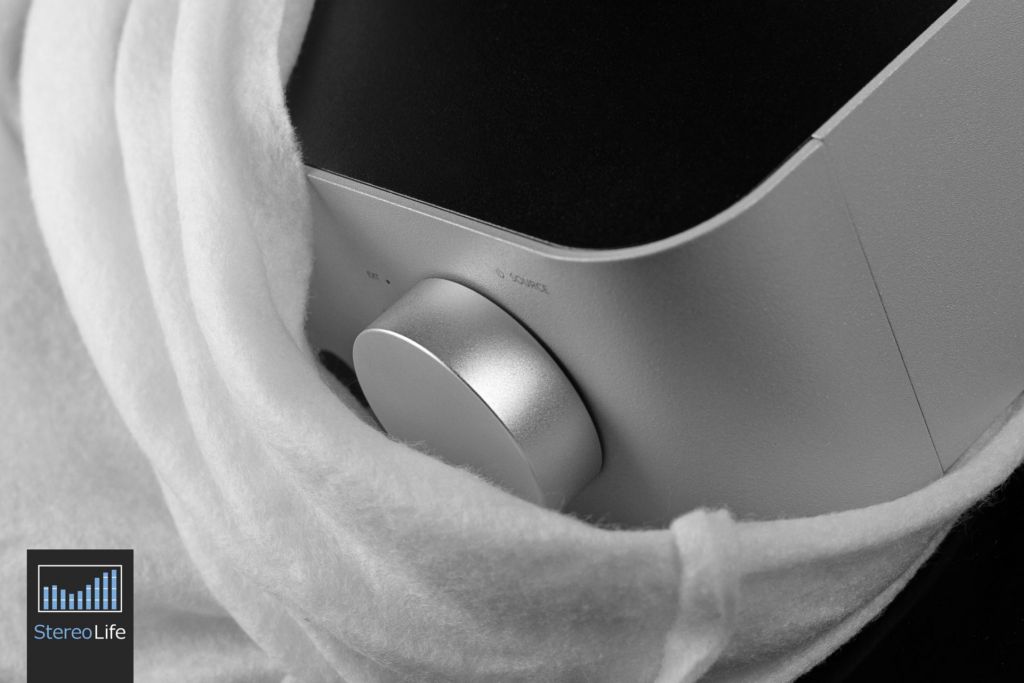
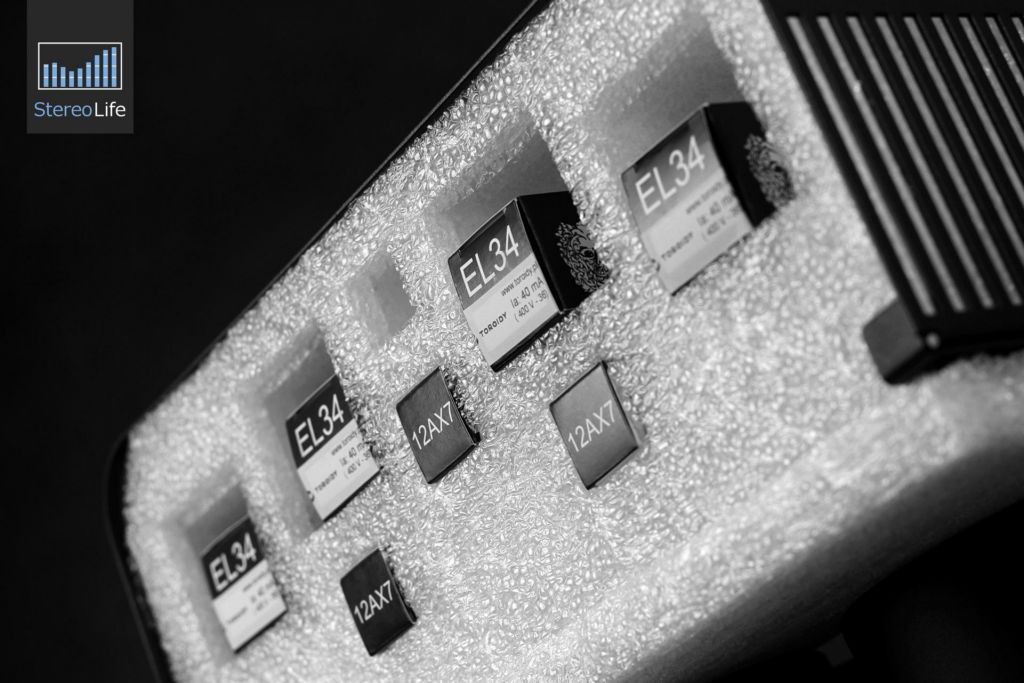
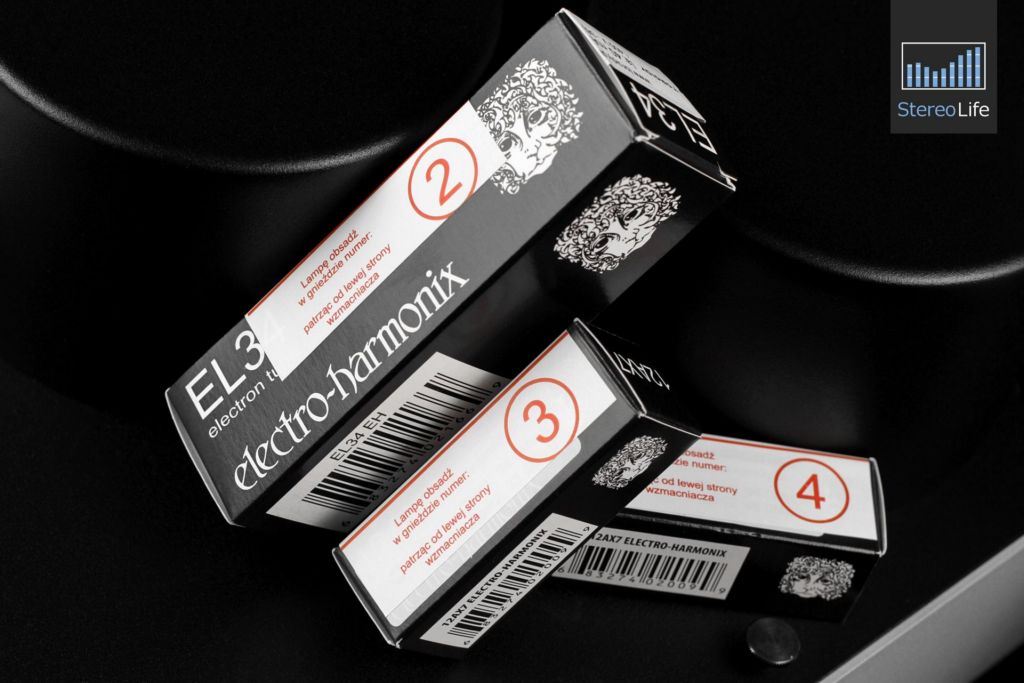
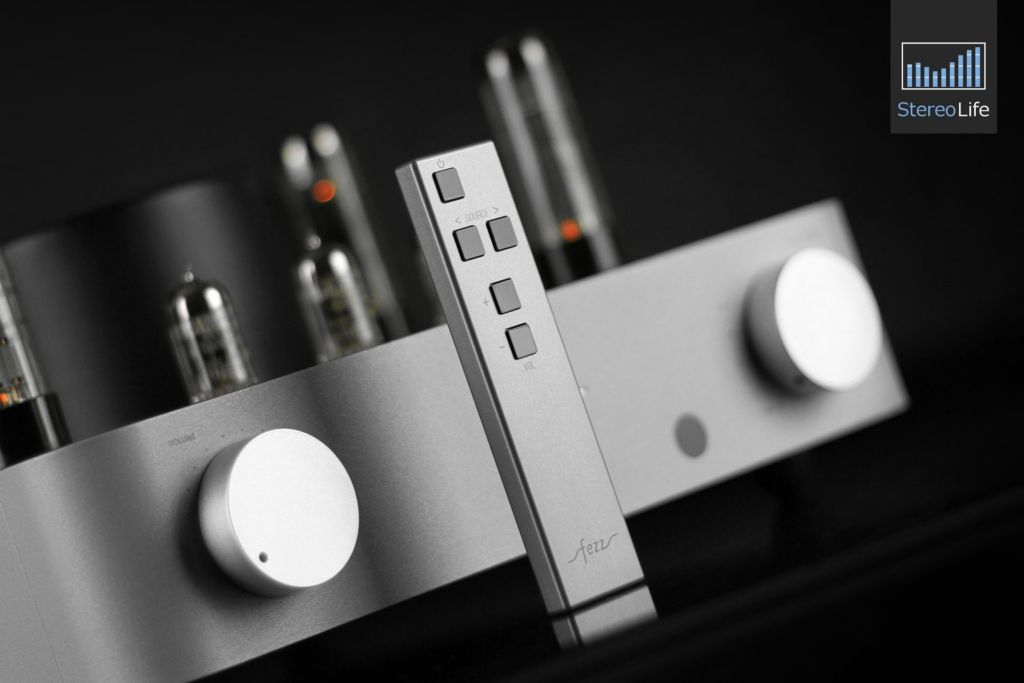
The amplifier arrives packed more like a high-end turntable than a typical integrated amp. Long before you even see the main unit in one piece, you're already appreciating the way each component has been secured for transport. Everything has its place, nestled between layers of vibration-absorbing foam. The manual is not a telephone directory but a compact, well-produced booklet that explains everything succinctly and clearly. Alongside it, you find a pair of cotton gloves in the plastic bag. It's a small gesture, but a thoughtful one - you really shouldn't handle tubes with bare hands, and few people have such accessories lying around at home. The protective cage and tubes arrive locked together as a single assembly, because the designers have used the interior of the cage as a convenient compartment for another foam insert. The whole bundle is wrapped in thick black Velcro, making it easy to lift the "package" out of the box in one go. Three further elements sit in separate recesses - a standard power cord, a metal remote control, and a foil-protected "window" you have to screw onto the tube cover yourself.
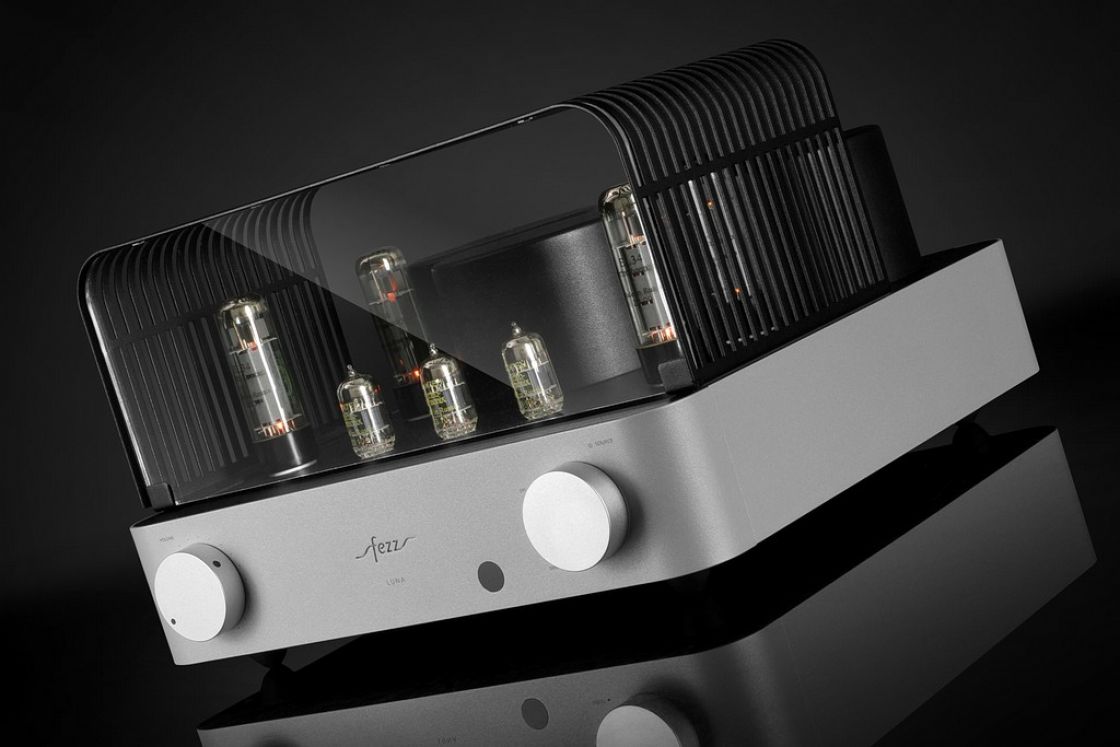
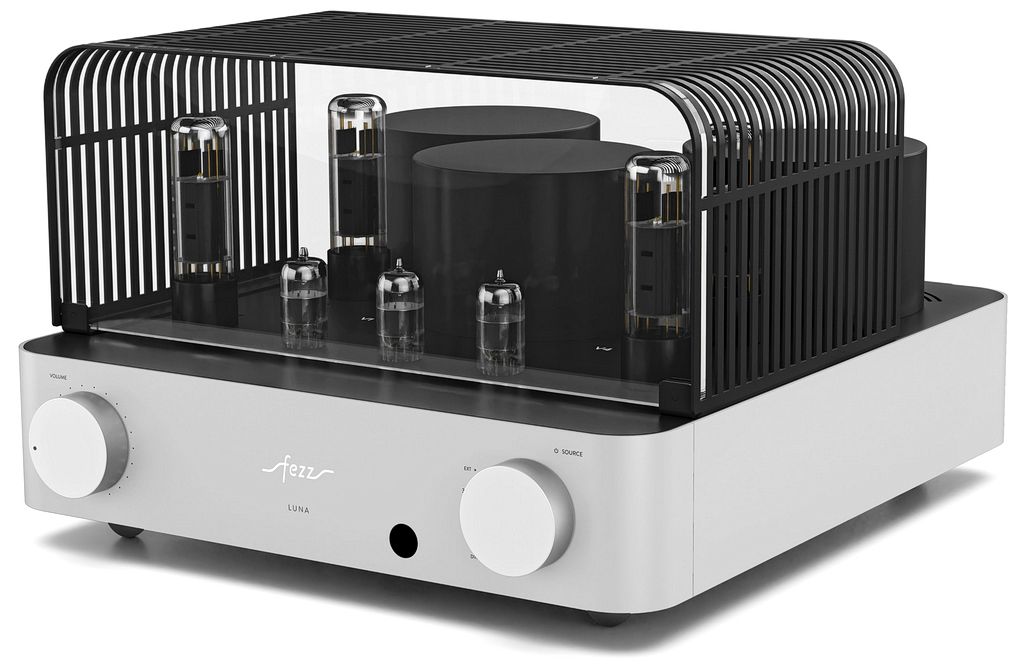
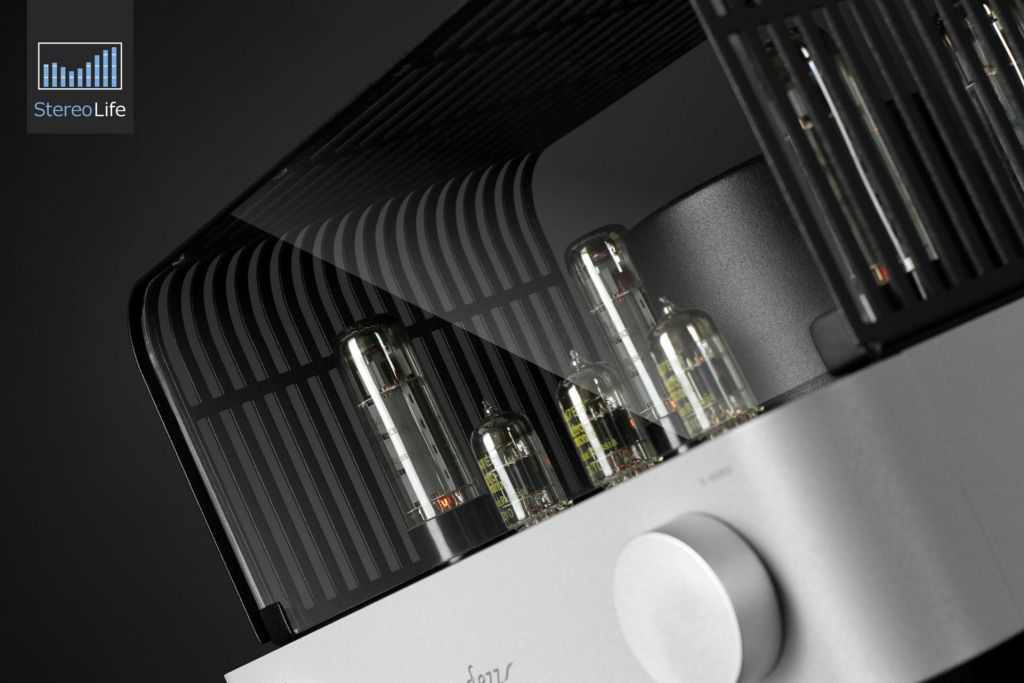
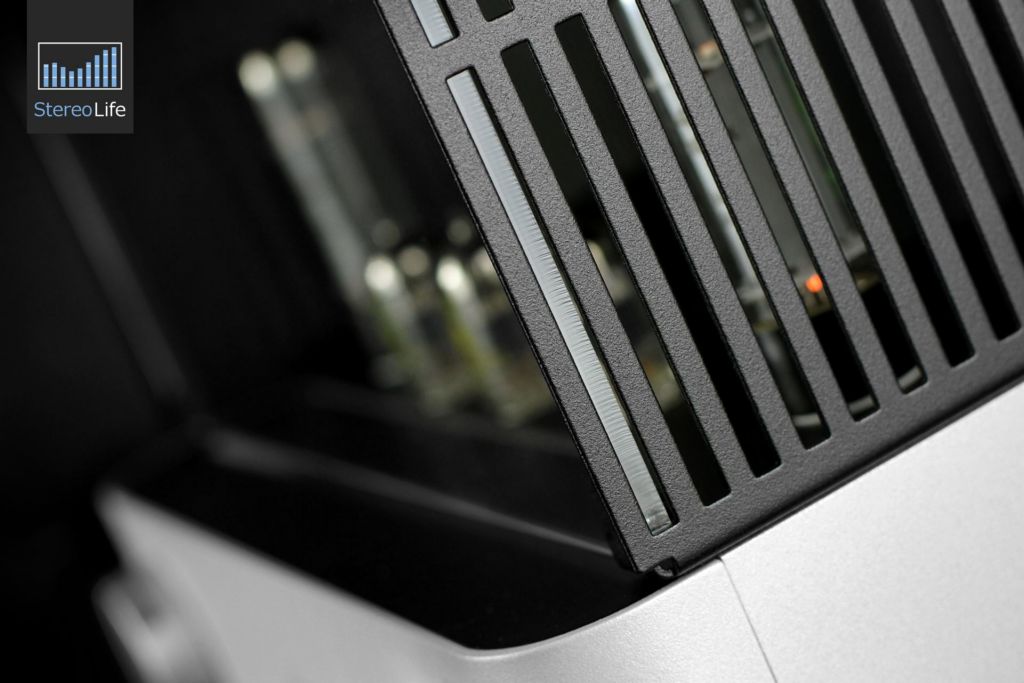
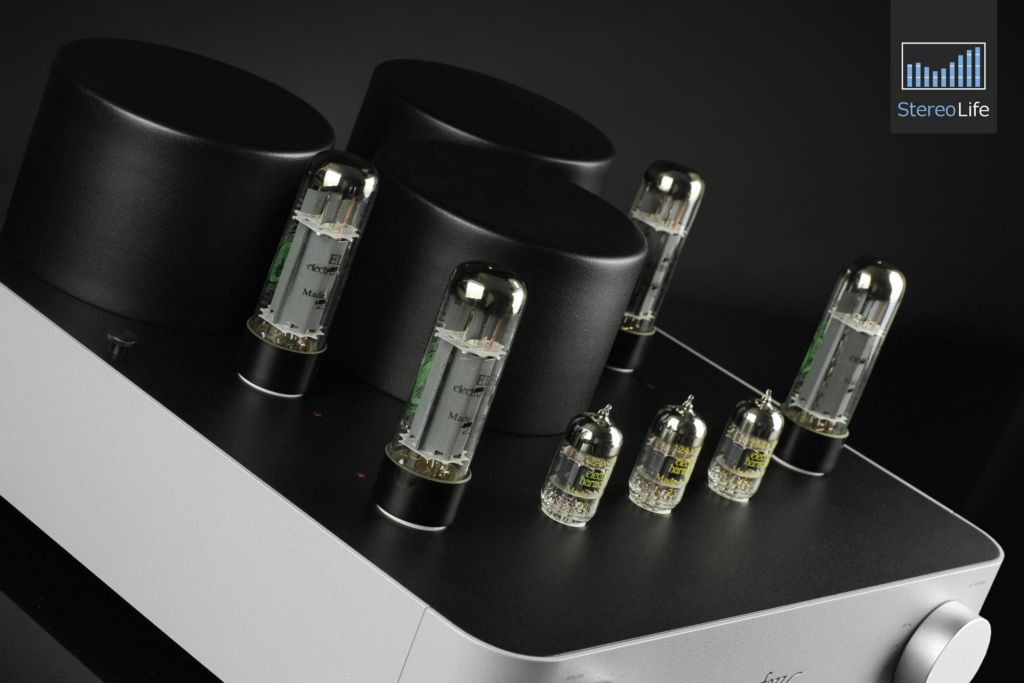
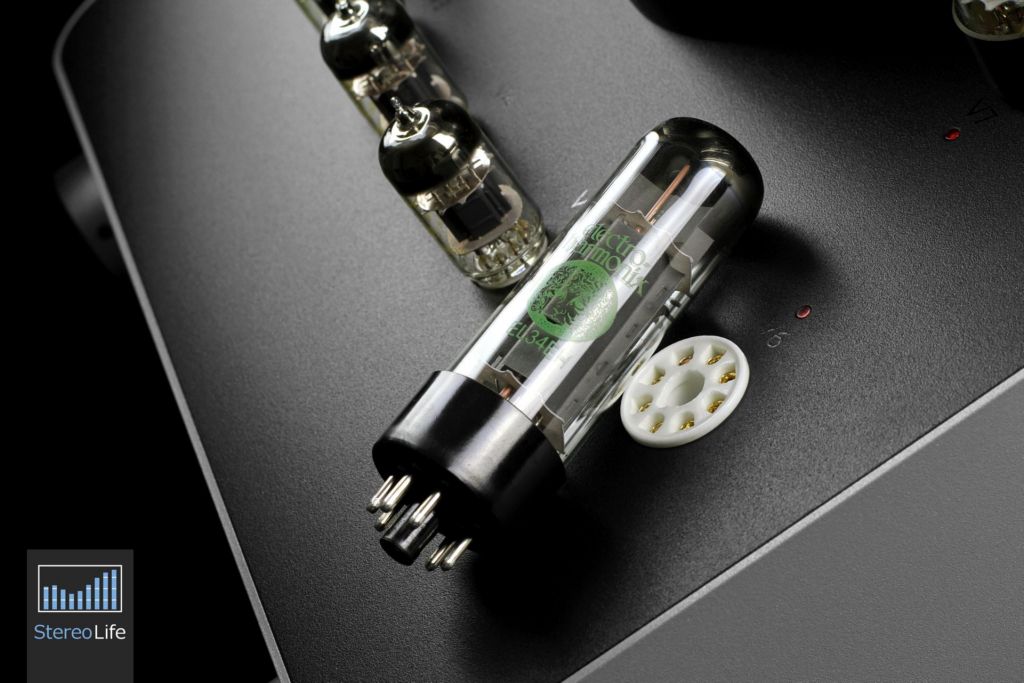
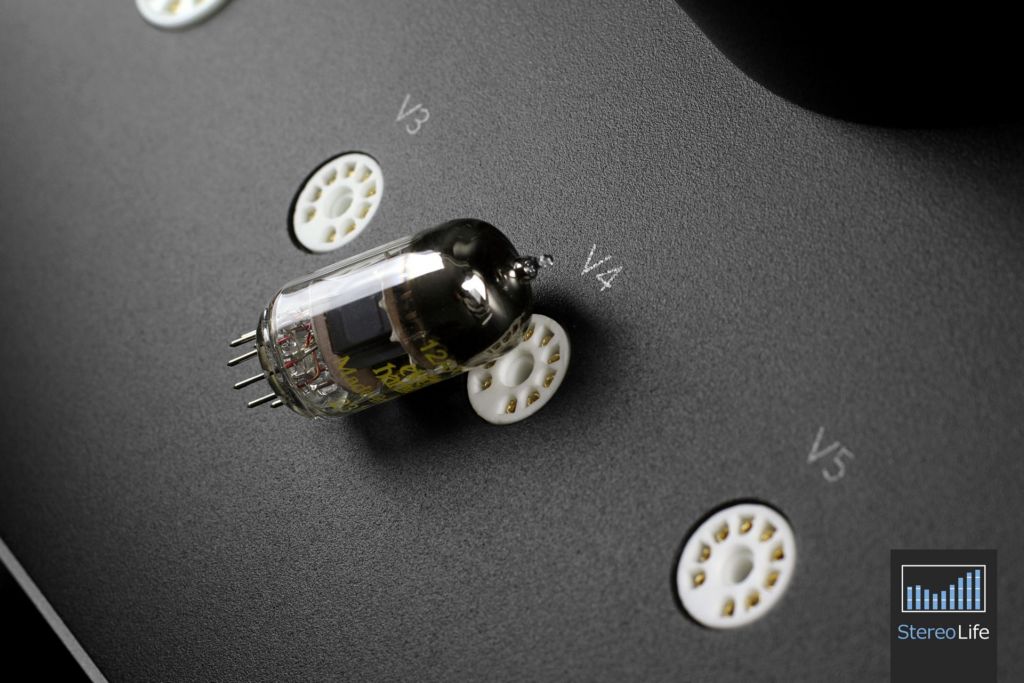
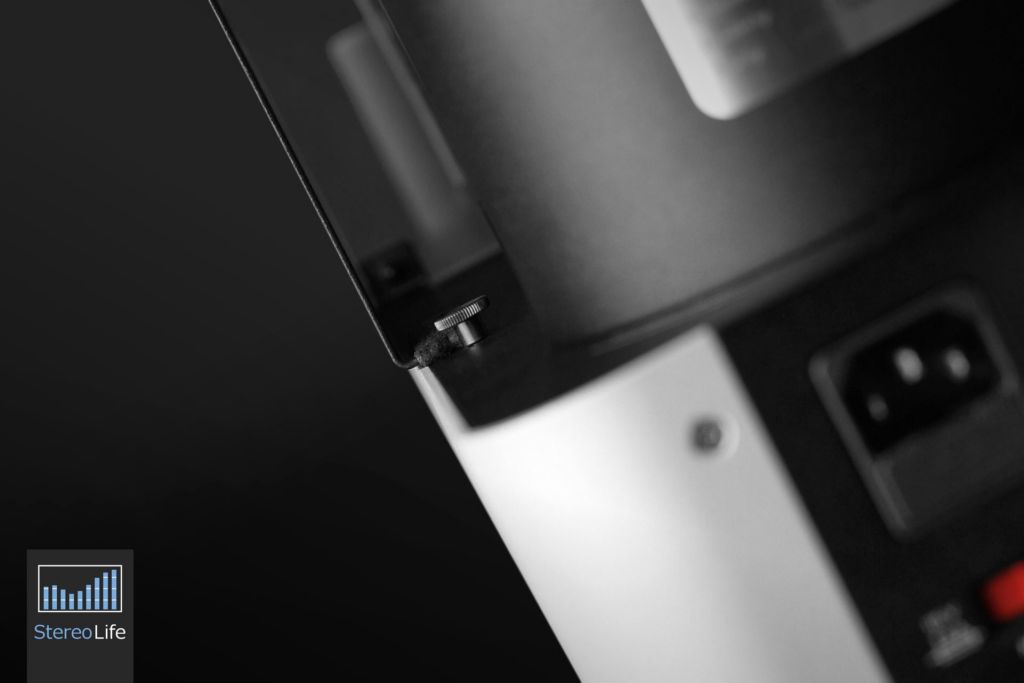
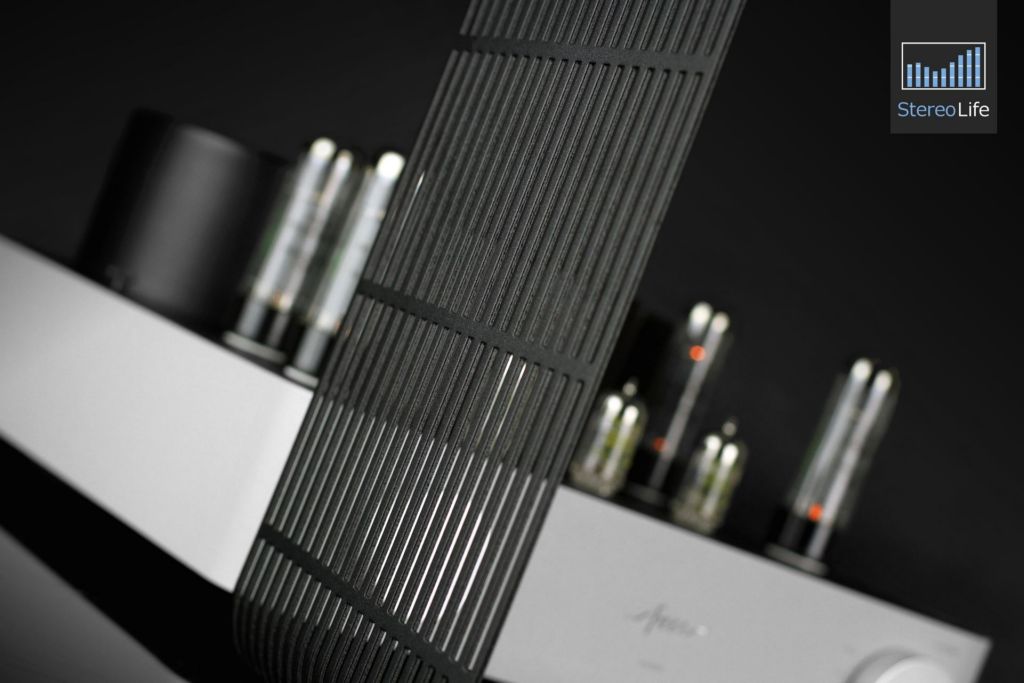
The task is simple enough. You align the elements, fasten the transparent panel with two small screws, and that's it. Why not ship the cage fully assembled from the factory? Most likely, Fezz wanted to give that delicate "window" extra protection in transit, though I won't insist on that interpretation. The black metal grille is lined with felt on the underside and attaches to the amplifier using two hand-tightened screws. The whole system feels thoroughly thought-out. Better yet, the user effectively has three visual configurations to choose from - fully exposed tubes, a complete cage with the "glass" panel in place, or just the metal lattice without the transparent insert (the "glass" is actually acrylic, hence the quotation marks). The unpacking and setup process is further simplified by clear markings on the chassis. Each tube socket has a number that corresponds to the label on its box. Bias is set automatically, and if something goes wrong with any of the power tubes, a red LED next to that socket lights up - a new idea from Fezz. In short, Luna is not only a solidly built machine but also a tube amplifier that embraces its identity while remaining user-friendly. Unpacking, assembling, and hooking it up is genuinely enjoyable.
One glance at the Luna is enough to see how faithfully it extends the Evolution-series design language. The amplifier looks modern and elegant yet retains a certain understated simplicity. Its enclosure is made from thick 2 mm steel sheet, which contributes to an impression of solidity that goes beyond the spec sheet. The device weighs around 20 kg, but the chassis is so rigid it feels as if there's a metal truss framework inside instead of circuit boards and transformers. That may come as a surprise to some, because not all expensive high-end components feel this robust once you start taking them apart. In our editorial office, this becomes obvious not just during unboxing but also at the photo-shoot stage, when disassembled equipment sits upright on a table, propped up by soft supports from all sides. Without going into detail, let's just say this is when many secrets come out. Luna, by contrast, remained completely unfazed even after we removed the base, which doubles as a cover. The thick metal panels, combined with a carefully engineered mechanical structure, work so well that it almost feels like a case milled from a single block of aluminum.
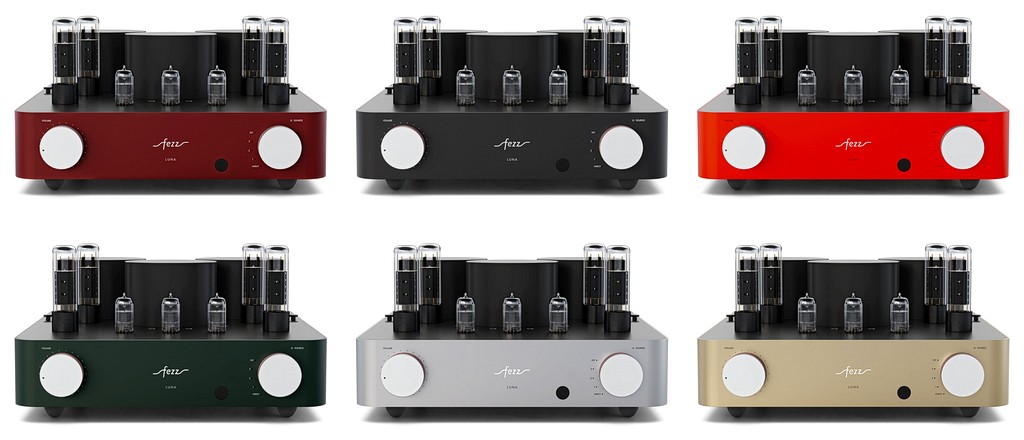
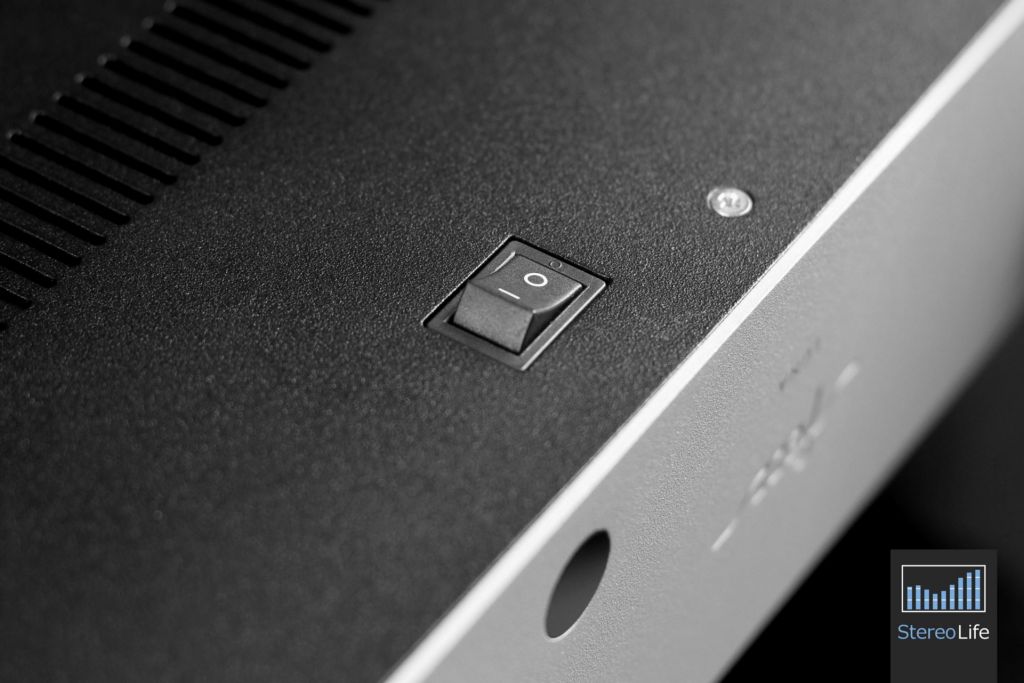
The front panel is defined by a symmetrical layout. The new Fezz Audio logo sits in the center, flanked by two large aluminum knobs. The left knob controls volume, the right one selects the input. It's a simple, functional arrangement that also looks very good. The amplifier's face is calm and relatively minimalist, but the Kabo & Pydo design is so distinctive that you immediately know which brand you're dealing with. As with other Evolution models, the new Luna is available in a full palette of Fezz finishes. Our review unit arrived in the Republika version, an elegant silver-gray, but customers can choose from seven other colors - classic Black Ice, bluish Moonlight gray, dark Sunlight gold, deep Big Calm burgundy, vivid Burning Red, and rich Evergreen. Fezz is famous for these imaginative paint names, and the variety makes it easy to match the amplifier to both personal taste and interior design - especially as there's no surcharge for choosing a color. The quality of the paintwork and overall finish is excellent. Panels line up perfectly, nothing rattles, the knobs turn smoothly and with satisfying resistance - wherever you place your hand, you feel care and attention to detail. In the Evolution models, most of the mounting screws are hidden from view, giving the amplifier a clean, living-room-friendly appearance. A neat touch is the logo, which glows red while the tubes warm up. The only element that faintly echoes the garage spirit of the first Silver Luna is the main power switch hidden under the front edge - a simple black rocker. In practice, though, you won't be using it very often, because standby mode is engaged by pressing the right-hand knob, and the amplifier can also switch itself to standby automatically if it detects no signal at the input.
Functionally, Luna represents a huge step forward compared with its predecessor. This is a fully featured integrated amplifier that's easy to live with day to day. Fezz has also built in a number of technical refinements aimed at extending tube life and simplifying operation. There's a soft-start system, for instance. When you switch the amplifier on, the tubes are heated first, and only after a delay is the high anode voltage applied. The gentler warm-up and cool-down process reduces cathode wear over time. I should add that Luna takes its time here - more than many competing amps. Where others settle on a waiting period of 10 to 30 seconds, Luna warms the tubes slowly. The red logo backlight goes out only after about two minutes. It takes a bit of patience, but I'm convinced it pays off in tube longevity. Fezz Audio knows what it's doing in this area. The parent company, Toroidy, had been supplying tubes long before it built its first amplifier. But that's a story for another day.
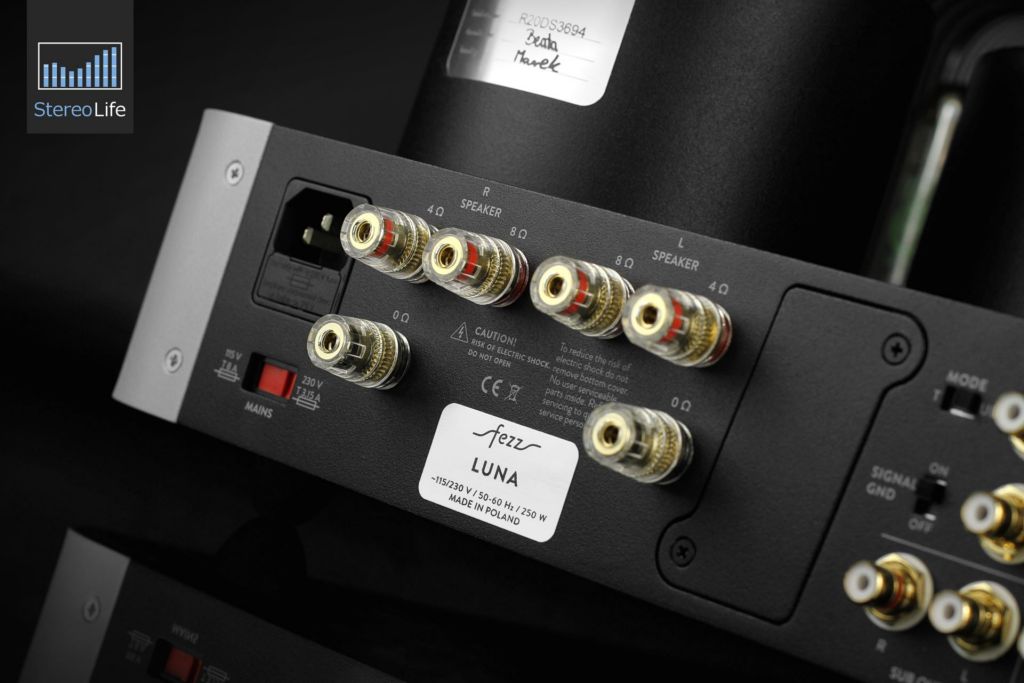
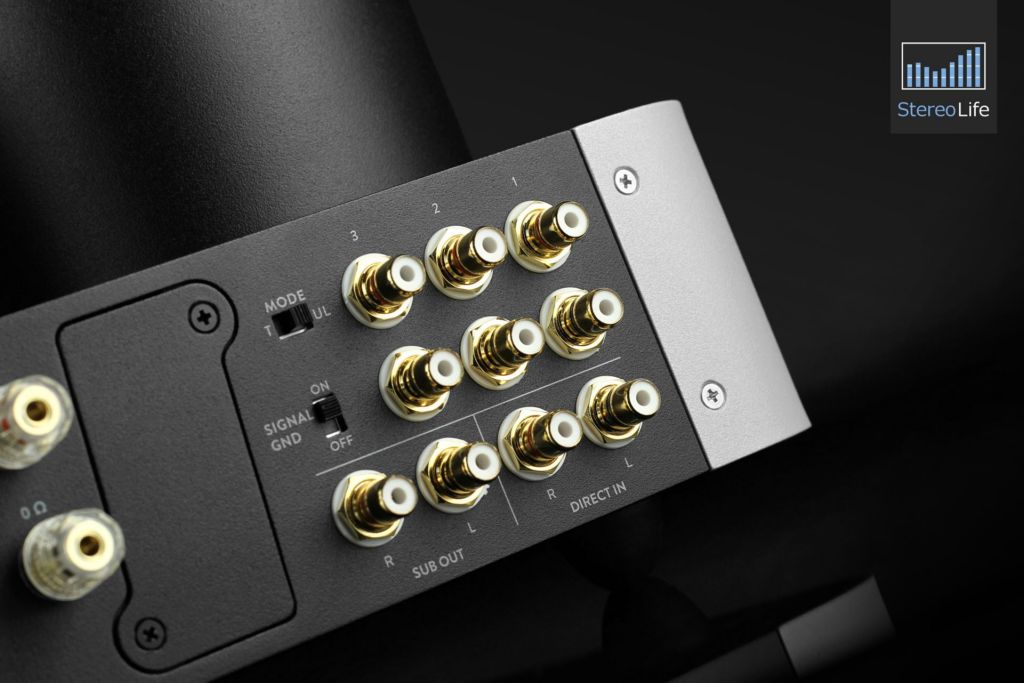
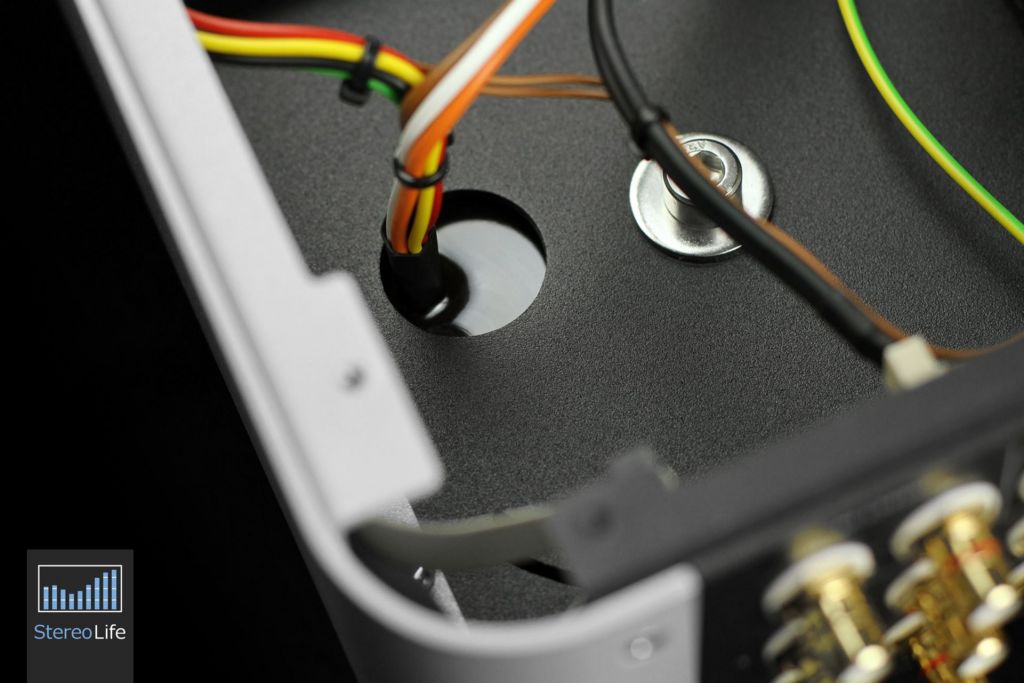
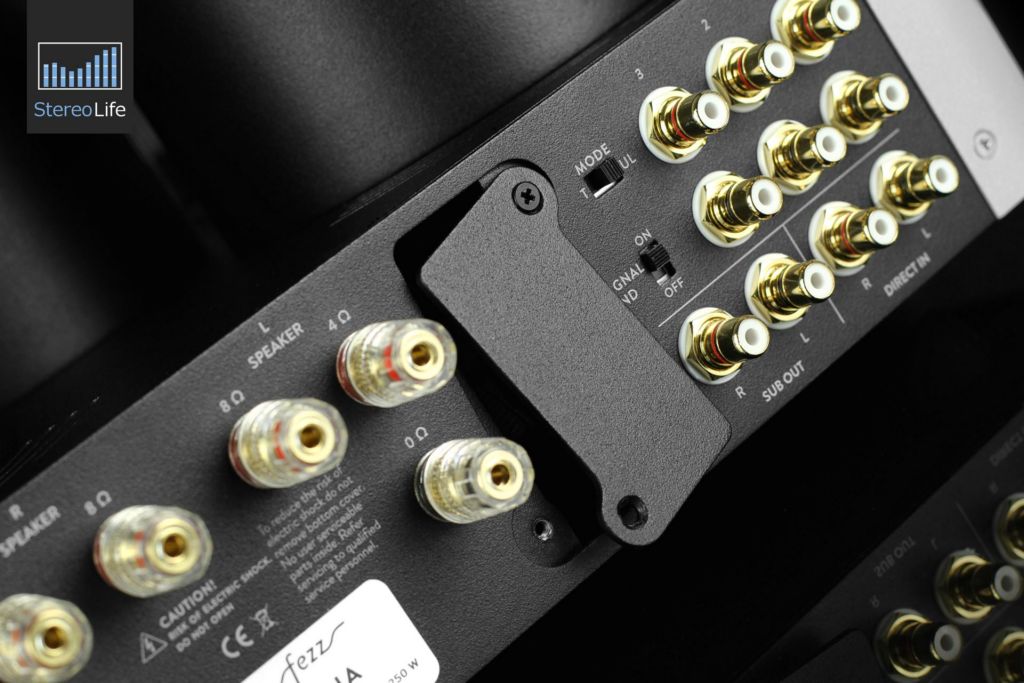
The rear panel of the Luna makes a strong impression. It's another area where you might find yourself wondering what price bracket you're really dealing with - ten, twenty, perhaps thirty thousand zloty? I don't want to exaggerate, but take a look at the photos and, if you haven't yet had a chance to spend time with any of Fezz's recent designs, put that on your to-do list. The Luna's complement of connectors starts with a three-pin IEC inlet and a pair of substantial speaker terminals, each with separate binding posts for 4 and 8 Ω. The analog section is similarly generous. You get three line-level RCA inputs and a direct power-amp input. That last one lets the Polish amp slot into a home-theater system, but it's even more interesting from a pure audio perspective, because it allows you to pair the Luna with a streamer or DAC with variable output, bypassing the preamp stage altogether. If your source is of suitably high quality, this tends to bring clear sonic benefits, and you gain the convenience of controlling volume from the app. There's also a dedicated subwoofer output, which is essentially a pre-out. That's a clear nod to users of compact bookshelf speakers who'd like some help in the lowest octaves. Two small flat switches complete the picture. One selects the operating mode - triode (20 W) or ultralinear (40 W). The other is a ground-lift switch that can help tame ground loops and mains hum if they appear.
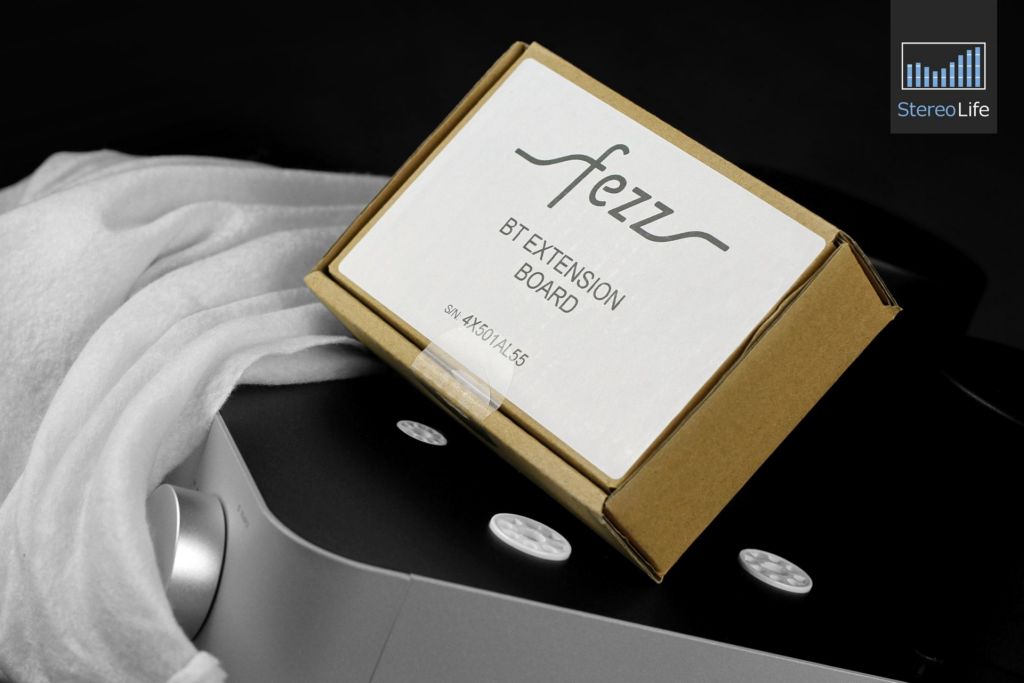
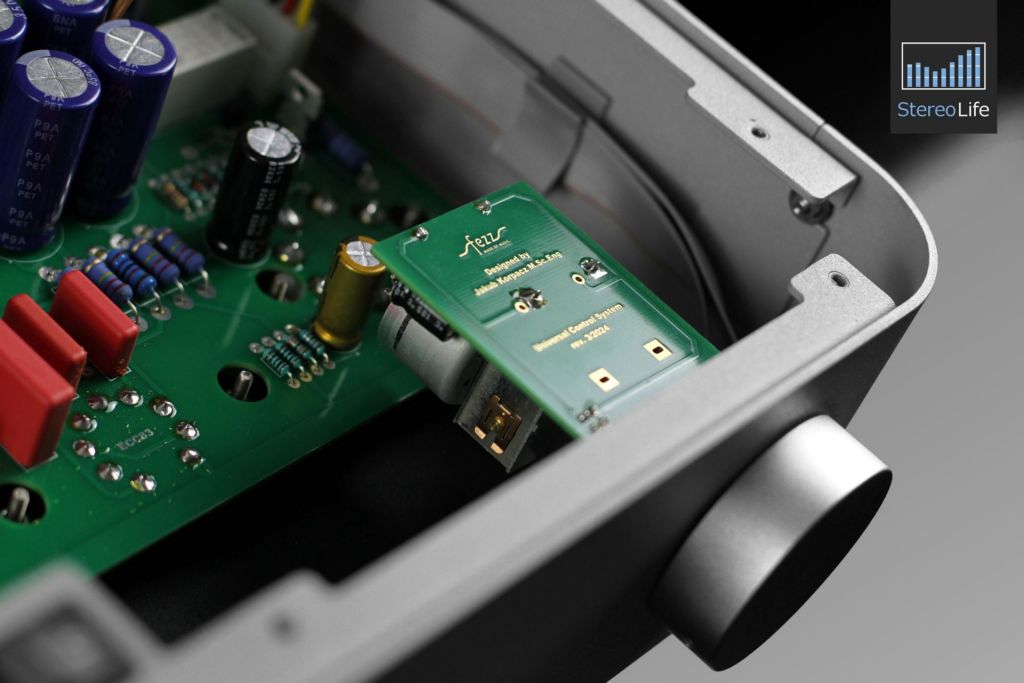
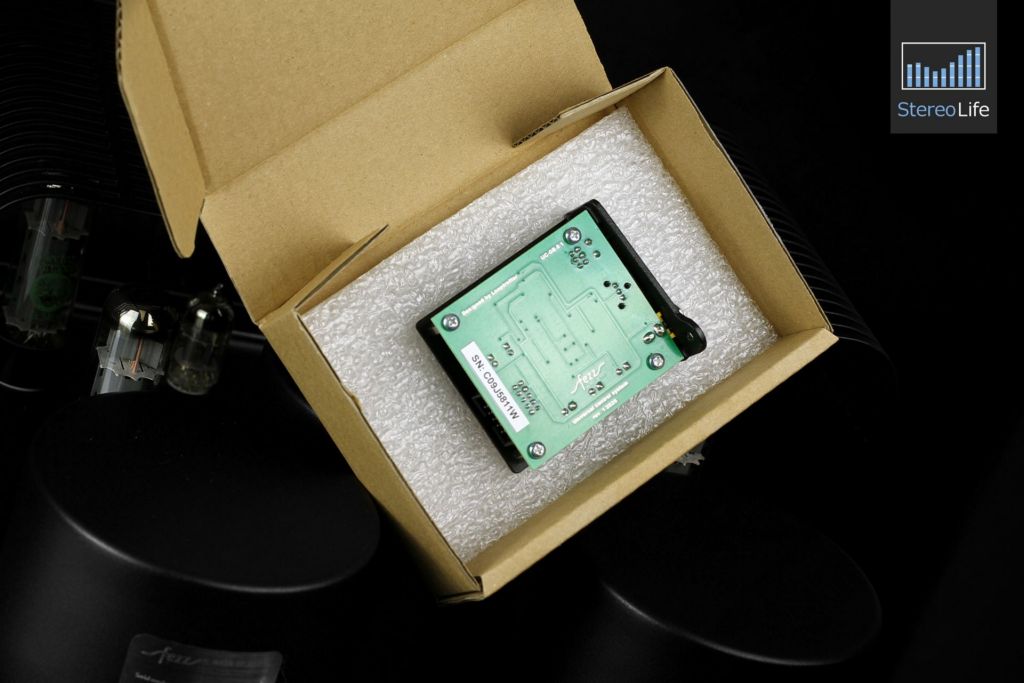
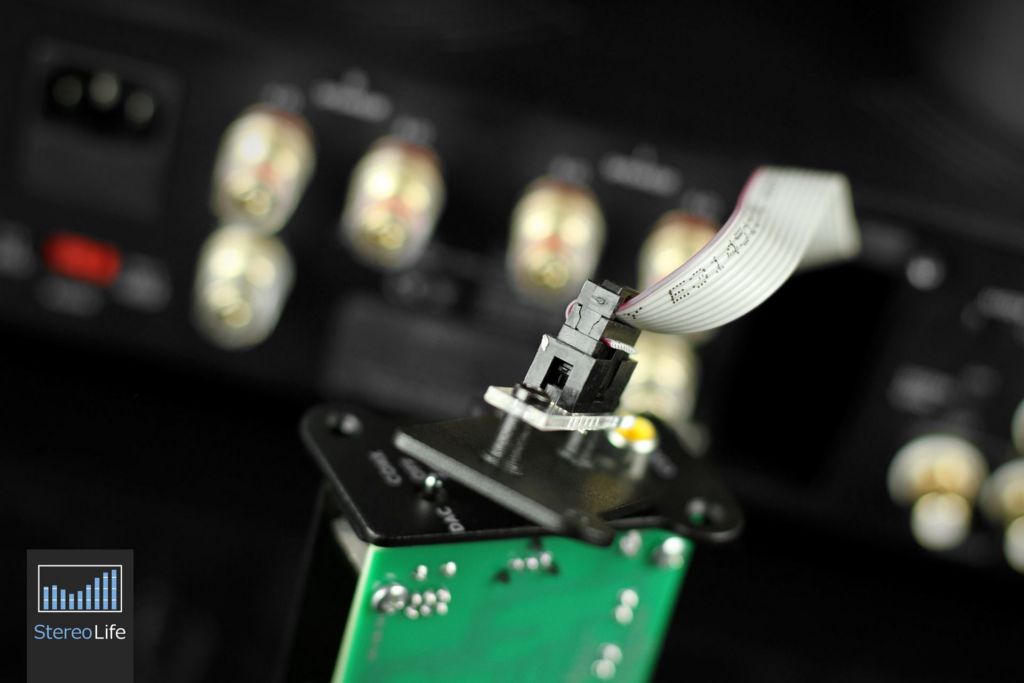
And the good news doesn't stop there. As far as I'm aware, Luna is the first Fezz amplifier to feature a special socket for an optional accessory card (Fezz Extension Boards). Some time ago, the manufacturer announced that its new designs would be able to host a wireless module (Bluetooth), a DAC, a basic streaming card, a phono stage, and perhaps other solutions - for example, an XLR input or a headphone output. It's a smart concept that lets you expand functionality without replacing the amplifier itself. A month or so before the test, I saw photos of the cover plate for this slot on the company's fan page. At the time, I thought it was a clever idea that gave customers lots of options, although it did complicate production and extend lead times. The more decisions you layer onto the configuration - one of seven colors, then the choice of remote control, tube cage, HT input, subwoofer output - the more chaotic it becomes. With Luna, all these elements are now standard. If you don't need anything else to be happy, you simply choose your finish. If you do want extras, Fezz offers three modules - a Bluetooth 5.0 card, a Phono MM card, and a DAC card.
These are not just theoretical promises. For this review, I received two of them along with the amplifier. Each module costs €299 and is very easy to install. After removing the metal cover, you'll find a ribbon cable with a plastic plug attached. All you need to do is replace the blank panel with the chosen module, gently feed the cable inside (it's long enough that nothing is fiddly), and re-attach the two small screws. In this way, Fezz has left us a door open to the future. If you buy a Luna without a turntable in the system, but a year later decide to return to vinyl - or receive a stack of records as a gift - you won't need a separate phono box with a wall-wart power supply, and yet another pair of interconnects. You just order the Phono MM card, plug it in, and you're done. Of course, a €299 module is no substitute for a dedicated high-end source, but that's not the point. No one is claiming the Bluetooth card is the last word in hi-fi, and yet it's already the most popular option. The key is choice - and the fact that you're not forced to buy features you'll never use.
"Luna occupies a special place in the Fezz Audio dictionary. You could say that it all started exactly 10 years ago. During that time, many variations on this theme and the EL34 tubes were created. Silver Luna and Silver Luna Prestige with manual bias, then with automatic bias. Then came the time for big changes, and the Evo specification versions appeared. Years pass, electronics change, and the result of these changes is a completely new amplifier. During the design process, we placed particular emphasis on three aspects - sound, usability, and the price of an entry-level tube device. We were satisfied with the sound relatively quickly, after about three months, but we struggled with the usability for much longer. We managed to create an amplifier that I am simply proud of. While maintaining a more than competitive price, we offer a Polish tube amplifier equipped with a fully functional remote control with the ability to turn the equipment on and off, adjust the volume, and select sources, an automatic bias and tube warm-up control system, standby mode, a protective basket, a sub-out output, and compatibility with Fezz Extension Boards. It is also worth noting our proprietary system for protecting the circuit in the event of a tube failure, with discreet red LED indicators. It is so perfect that despite our best efforts, we have not found a way to damage the amplifier. This, in turn, ensures that the user receives an amplifier from Fezz Audio that will last for years, and the only thing they will have to do is listen to music." - wrote Maciej Lachowski on the company's fan page. After spending time with the Luna, it's hard not to share his enthusiasm.
Looking through the catalog of this manufacturer, it's easy to see why so much care has gone into the Luna and Luna Mini. Both models are crucial to the company's future. The Magnetar components are magnificent and spectacular, but at such high prices, I don't foresee them becoming runaway bestsellers. Like many hi-end showpieces, they serve primarily as a statement of technical capability and as toys for a very select clientele, rather than the foundation of the company's long-term business. Olympia is more attainable, but at €5,4900 it's still out of reach for many music lovers. The Mira Ceti 300B, at €3,800, looks much more approachable on paper, but its modest 8 W per channel will scare off a fair number of potential customers before they even check whether it would work with their speakers - not to mention the limited flexibility it offers if you want to change speakers in the future. This is where the Luna steps in, offering almost everything one could reasonably expect from a mid-priced amplifier at €2,500, while the Luna Mini delivers 10 W per channel in pure class A for €1,950. Both are exceptionally rational choices, with the Luna clearly the more universal and future-proof of the two. It has every chance of becoming a genuine hit. Some observers are already predicting it will be the biggest success in Fezz's history, especially considering open, highly receptive markets such as South Korea and China.
Does this amplifier have any weaknesses? I had to think for a while, but eventually decided to nitpick the expansion modules. First, Fezz could easily offer a card with an HDMI input. I would bet a good deal that, right after Bluetooth, this would become the second most popular option. HDMI ARC turns a stereo system into a far more capable "soundbar replacement," and like it or not, watching films and TV shows through a tube amp and a pair of good speakers is no less fun than listening to music. A DAC with optical and coaxial inputs is a step in that direction, but it's not quite the same thing. Second, instead of one slot for the Fezz Extension Board, Luna could reasonably have two. With only a single slot, you cannot combine, for example, Bluetooth and Phono MM, or Bluetooth and a hypothetical HDMI module. You could argue there's not enough space on the rear panel, but I'm not convinced. I've tested amplifiers with a single analog RCA input, and you know what? For a modern digital-centric system, that's often enough. If it were up to me, a future revision of Luna would ship with three standard RCA pairs placed vertically - a line input, an HT input, and a subwoofer output. That would free up enough space between them and the speaker terminals for two module slots. If someone needed more analog inputs, they could simply buy a card with two or three extra RCA sockets. Such a board would not be expensive - say €100 - because it wouldn't contain any active electronics, just connectors on a painted steel plate plus the usual cost of packaging and logistics. Alternatively, Fezz could offer a board with an XLR input. These are, however, more suggestions for the next generation than serious objections to the current one. In its present form, Luna offers a rare combination of solid engineering, thoughtful ergonomics, and genuine flexibility - a design that feels finished, but not closed.
What else is there to grumble about? The feet? Hardly - they're tall, rubber, practical, with no traces of audio voodoo. Component and build quality? No again - I'll come back to that in the construction section, but the photos speak for themselves. The price, then? After all, ten years ago, Silver Luna cost less than four thousand, and now look what happened - new factory, more staff, awards, and suddenly they've gone crazy? Except that if we look honestly at today's market and the competition, the Luna is at least as compelling now as Silver Luna was at launch. It positions itself comfortably above the mass of Chinese imports while undercutting comparable models from well-known, award-winning brands like the Jadis Orchestra (€3,300) or Unison Research Triode 25 Black Edition (€4,500). All that remains is to find out whether Luna pleases the ear as much as it does the eye.

Sound performance
Describing the sound of tube amplifiers is dangerously easy to reduce to stock phrases - warm, natural, musical, romantic, unique. Fortunately, Fezz Audio's Luna resists such simplistic "tube versus transistor" clichés. It can sound both musical and dynamic, combining qualities commonly associated with tubes and solid-state in an intriguing proportion. From the very first minutes, it was obvious that Luna plays more openly and transparently than many people might expect from a traditional tube design. It's worth remembering, however, that we are dealing with four EL34s operating in a push-pull, class AB configuration. This is not the sort of amplifier that simply serves up soft, syrupy sound to soothe the nerves after a long day. Conceptually and topologically, it may be a tube amp, but philosophically it leans clearly towards the solid-state camp - and it sounds that way too. What you get is a fast, lively, energetic presentation, with a confident, powerful, at times downright rock-like punch in the bass. The original Silver Luna never behaved like this. It offered a natural, well-balanced sound that gave listeners a genuine taste of "real tubes," much as a sensibly built entry-level turntable can remind you why vinyl is special. But no one claimed that this was the end of the journey - the final word beyond which there is nothing more to explore. Charming though it was, Silver Luna had clear limitations. There is no trace of them here. Luna presents itself as a complete, ambitious design with a specific plan and the means to execute it. It doesn't aim for an average, rounded-off sound. It prefers to use its power and, when appropriate, bare its claws. Don't expect it to show up with a cup of tea and a blanket as soon as the tubes warm up, whispering sweet nothing in your ear. Luna knows her worth and has certain expectations. She can sing beautifully, but not anything and not with everything. She is brimming with energy, spirited, sometimes a touch nonchalant. She dislikes boredom, and in her company it is simply not an option. At the same time, she is unmistakably a tube amplifier, a fact that is especially noticeable when you focus on the breadth of the soundstage, the sense of space, and the wealth of detail that fills recordings like plankton in the ocean. Yes - but there's no need to make a cult out of it. That's simply how she was designed.
After just a few minutes of listening, I felt as if I were reconnecting with an old friend. Regular readers will probably guess what's coming next, because in this case the comparison was unavoidable. In terms of both character and overall sound quality, Luna reminds me very strongly of the excellent Unison Research Triode 25. That's hardly surprising. In many respects, the Polish amplifier looks as though its designers took a close, admiring look at the Italian integrated from Treviso. Even the operating mode switch behaves in a similar way in both cases. I'm not accusing anyone of copying - that would be absurd, especially since Luna was designed and built entirely in Poland, including the toroidal transformers manufactured in-house. The kinship, however, is obvious. Most likely, it stems primarily from the choice of EL34s, a tube known for its lively, quick, and refreshing character, here working in push-pull class AB. If you're looking for the stereotypical tube experience, you should also audition the Luna Mini. As its first review noted, it produces a big, warm, harmonious sound in the classic mold. Interestingly, you can coax more warmth and tenderness from the Luna itself simply by switching to triode mode. The sound becomes smoother, calmer, and well suited to long evening sessions. Changing the operating mode doesn't radically reshape tonal balance, apart from slightly trimming the top end in triode mode. The bass remains firm and articulate. Luna prefers a solid kick to a subsonic abdominal massage, so regardless of the mode, the presentation remains rhythmically convincing and anchored to a stable foundation. Even when things get a touch warmer and prettier, the amplifier keeps its composure and doesn't lose its sense of proportion.
The most interesting part is that none of these traits contradict the fact that Luna is a 100% tube design. This aspect of its personality is most pronounced in triode mode. If you visit a dealer or bring Luna home for an audition, I strongly recommend checking how it behaves with your loudspeakers in both settings. While ultralinear mode is more direct and vigorous, the triode's natural, organic character is so beguiling that it's hard to deny yourself the pleasure. At times, it even evokes memories of the Mira Ceti 300B. Of course, Luna doesn't quite achieve that model's level of intimacy and delicacy, but compared with a typical 300B SET it offers significantly more power, dynamics, and clarity. It's also far less intimidated by more demanding speakers or higher listening levels. Bass control, for a tube amplifier, is impressive. Low frequencies may not be as hard-edged as on a good transistor amp, but they reach surprisingly deep, with density and variety. Kick drums have convincing weight, double-bass is springy, and electric bass remains intelligible even in faster rock pieces - not something every tube amp can claim. The treble is another pleasant surprise. It is bright and articulate without crossing into sharpness. Luna brings more air and sparkle than warmly voiced 300B designs, which lends the sound a welcome lightness. The soundstage is wide and orderly, with instruments secured in stable positions. Source separation is strong enough that you can easily "scan" the recording, following individual lines without feeling overwhelmed or losing track of the whole. In this respect, Luna again recalls the Triode 25, which remains one of the best amplifiers in its price bracket.
We should return, though, to the question of whether Luna's sound can be called "tube-like." The answer is undeniably yes - it has not forgotten what makes tube amplifiers so beloved. There is a subtle but clearly perceptible dose of warmth and color that lends music an organic quality. The midrange - home territory for vocals and acoustic instruments - is dense and tangible. Human voices are rendered close, natural, and believable in timbre, so that when you listen to your favorite singers, you feel as though you're almost face-to-face with them. It's in the midband that Luna's affinity with triode aesthetics becomes most evident. The Polish integrated is able to conjure a certain delicate "aura" around instruments and voices, reminiscent of single-ended amplifiers. There is smoothness and sweetness in the presentation, but it never tips into syrupy excess. Where a pure 300B amp can occasionally seem a little too gentle or languid, Luna maintains an excellent balance between musicality and energy. Its overall color palette is slightly pastel, but the edges are sharply drawn. The sound is expressive, detailed, and far from overly sweet. If we were to quantify it, Luna's character might be described as 70% fast, dynamic Triode 25 and 30% charming Mira Ceti 300B. Those proportions turn out to be spot-on, because the result is a highly universal sound that can satisfy listeners with clear sonic expectations as well as tube fans who love the genre precisely for its atmosphere - tolerating all of its classic quirks and charms.
In practice, Luna proved to be remarkably open-minded in terms of musical genre. Unlike some tube amplifiers that openly favor jazz and vocal recordings over rock or electronic material, Fezz's integrated handled everything I threw at it with confidence. With acoustic music, it enchanted with its tonality and midrange richness, revealing the texture of strings, the subtle vibration of bow and finger, and the breath of the performers. Gentle music was intimate and immersive, especially in triode mode, where the soundstage shrinks slightly but the midrange gains a further infusion of tube velvet. Switching to ultralinear and turning the volume knob clockwise, you can feel the amplifier baring its teeth. Rock and symphonic music gain impact and scale, while electronic music benefits from the powerful, rhythmic bass and the level of transparency - genuinely impressive at this price. It's hard to find a recording in which Luna doesn't try to show something interesting. When there's a lot happening in the mix, you certainly won't be bored, and some listeners will quietly admit they did not expect such drive, spontaneity, resolution, and dynamics from a tube amplifier. On calmer material, other qualities move into focus - tone, space, and the sheer culture of the presentation. I doubt owners will flick the mode switch with every album change, but it's good to know that the Polish amplifier allows for a degree of fine-tuning to suit both taste and repertoire.
A few words on speaker matching are also in order. With 40 W per channel, Luna will comfortably drive most normal loudspeakers. If you're convinced that 87-88 dB sensitivity automatically disqualifies a speaker from use with tubes and that you need something in the 91-93 dB range, I would urge you to keep an open mind and, ideally, test your assumptions in practice. Unless you own particularly punishing speakers - such as certain ATC monitors - forty, or even twenty watts, goes a long way. Over the course of the test, Luna proved surprisingly capable and forgiving. It drove Audiovector QR5 floorstanders, Equilibrium Nano desktop monitors, and the large three-way Wharfedale Evo 5.2 standmounts without ever giving me the impression of strain, compression, or lack of power. When choosing speakers, I would focus less on the spec sheet and more on the fundamentals - matching their size to the room and their voicing to your preferences. If you want a more romantic warmth, pair Luna with speakers that have a gentle top end and generous bass. If your priority is maximum clarity and speed, you can confidently choose neutral or even slightly cool-sounding designs. The Luna itself is so balanced and neutral that it does not impose its character on partnering speakers. It provides a strong, well-defined center of gravity for the system, around which the remaining components can be arranged as you see fit. That's a very positive trait, and one that is not especially common in the world of tube amps, where the amplifier often dictates the conditions, both technically and sonically. Here, you get flexibility and musicality in equal measure. A music lover's dream? Not for everyone, of course. Some people simply don't like tube amplifiers, and that's perfectly fine. Others have pushed their hobby into astral territory, investing in exotic power cords and amplifiers that cost as much as a new car. But for a great many music and hi-fi enthusiasts, Luna may well be the amplifier they've been waiting for - a device with a strong personality, but one that doesn't shy away from any repertoire. An amp that can play "normally," without forcing you to wear rose-tinted glasses, that can hum quietly in the background while you work or move around the house, but comes into its own during evening listening sessions, steadily drawing you in, and refusing to let go. Wow.
Build quality and technical details
Fezz Audio Luna is a tube integrated amplifier built around a quartet of EL34 power tubes and three 12AX7 dual triodes. The description on the manufacturer's website is surprisingly concise. Instead of lyrical praise for its sound, Fezz concentrates on styling, engineering solutions, and specifications. "Luna is a continuation of the Fezz Audio philosophy. The classic EL34 tube sound is combined with innovative technical solutions that make it an even more versatile and reliable design. The amplifier is equipped with a slot for a modular expansion card that allows you to increase the functionality of the amplifier (DAC, Bluetooth, Phono), the ability to select the operating mode (ultra-linear or triode), a remote control with source selection, a protective basket, a preamplifier input, and a subwoofer output. The new enclosures are a reference to the raw character of the pre-facelift amplifiers. The material used to make the devices, 2mm-thick sheet metal, has been retained. Thanks to this, the amplifiers are extremely robust. An important design principle was to maintain symmetry, which is recognizable and characteristic of Fezz Audio products. Therefore, the volume and channel selection knobs are symmetrically arranged on the front panel. A new logo has been placed in the center between the knobs, and the model name, which was previously located in the corner, has been moved to the center. One of the most enjoyable activities while listening is watching the glowing tubes. For those who cannot afford to listen without a protective cage, a new one has been designed that does not obscure the tubes. All amplifiers are matte, and the top plate on which the tubes are mounted is black. Thanks to this, the amplifier has become a backdrop for its tubes and does not distract attention from them." - says Fezz Audio.
Beneath the Luna's stylish exterior lies a circuit that builds on established Fezz solutions while introducing several fresh ideas. At its heart is a class AB push-pull output stage based on four EL34 pentodes, which operate nominally in an ultralinear configuration. In this topology, two tubes per channel work in opposite phase, enabling substantial output power with relatively low distortion - 40 W per channel in this case. For purists, there is the option of switching to triode mode, in which the EL34s are reconfigured as power triodes (with adjusted operating points and reduced voltage), yielding 20 W per channel and a more overtly "tube-like" sonic flavor. Unlike many tube amplifiers, Luna does not ask the user to fiddle with output-tube bias. An automatic bias circuit maintains optimal operating conditions for the EL34s. You don't need to reach for a multimeter or trim pots every time you change tubes - the amplifier is essentially maintenance-free in that regard. The driver stage is built around three ECC83 (12AX7) dual triodes, a classic choice in this type of design. The 12AX7s handle voltage amplification and likely serve as phase splitters for the output stage. The standard production version uses Electro-Harmonix tubes, but nothing prevents curious owners from experimenting with alternative sets to further tune the sound. Even changing just the three small-signal tubes can sometimes produce a clearly audible shift in character.
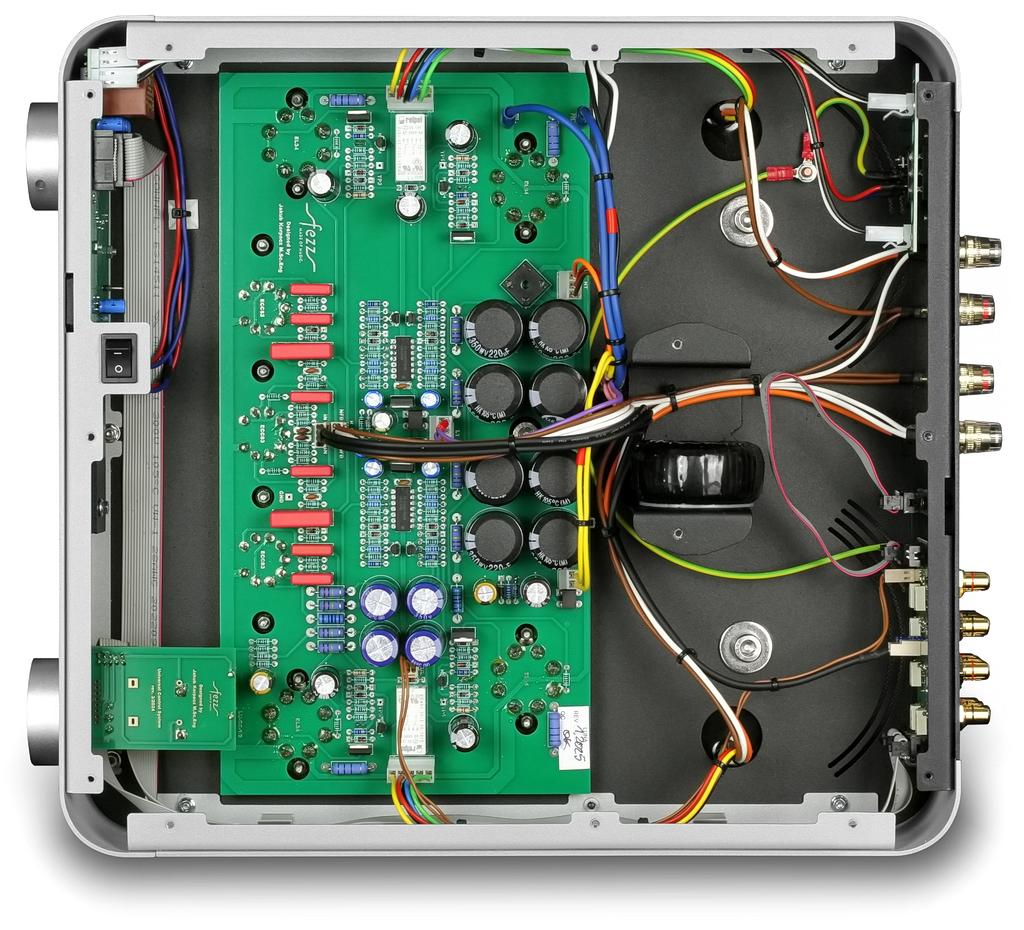
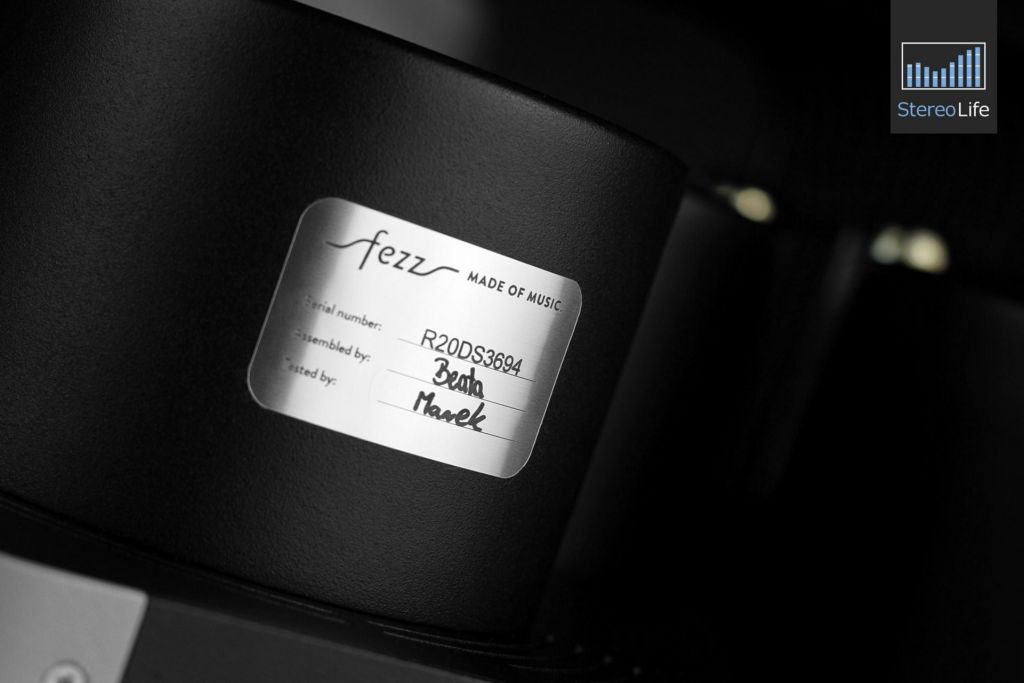
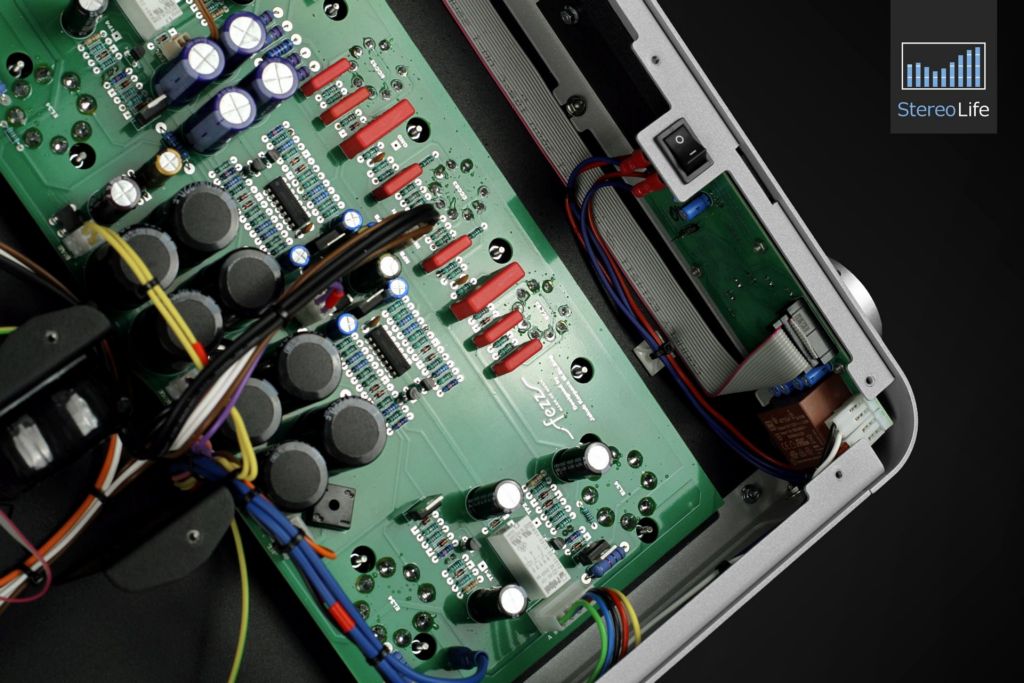
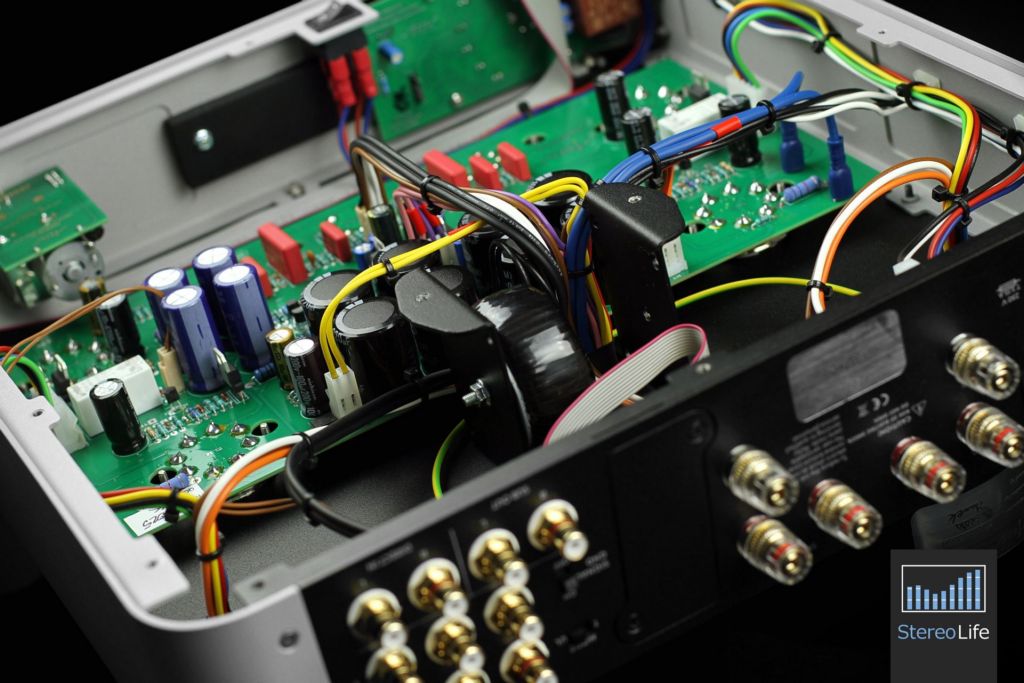
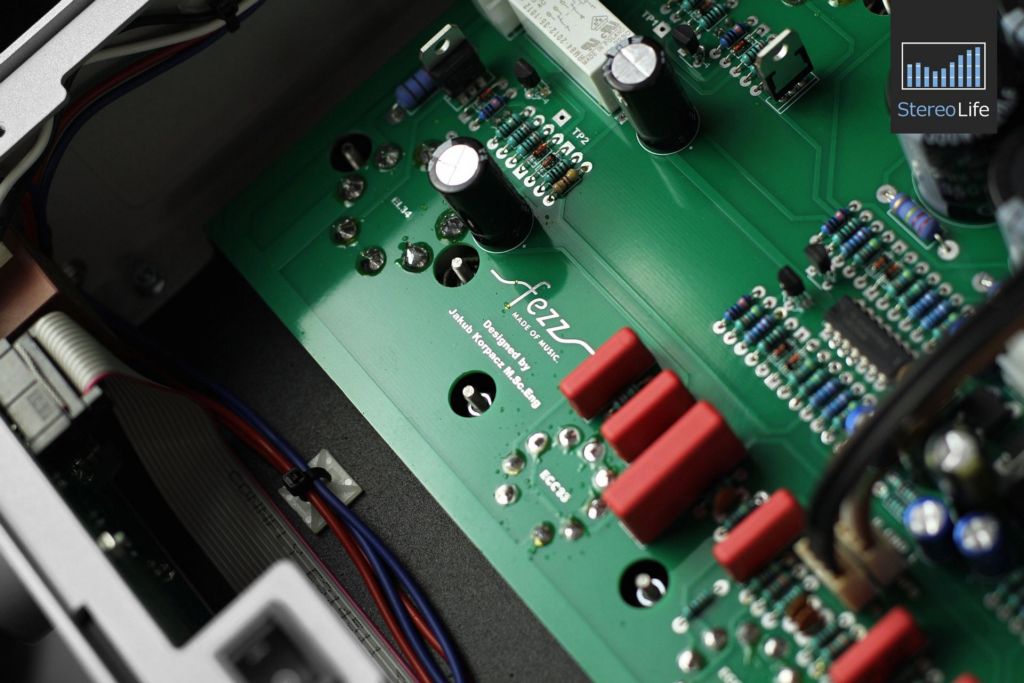
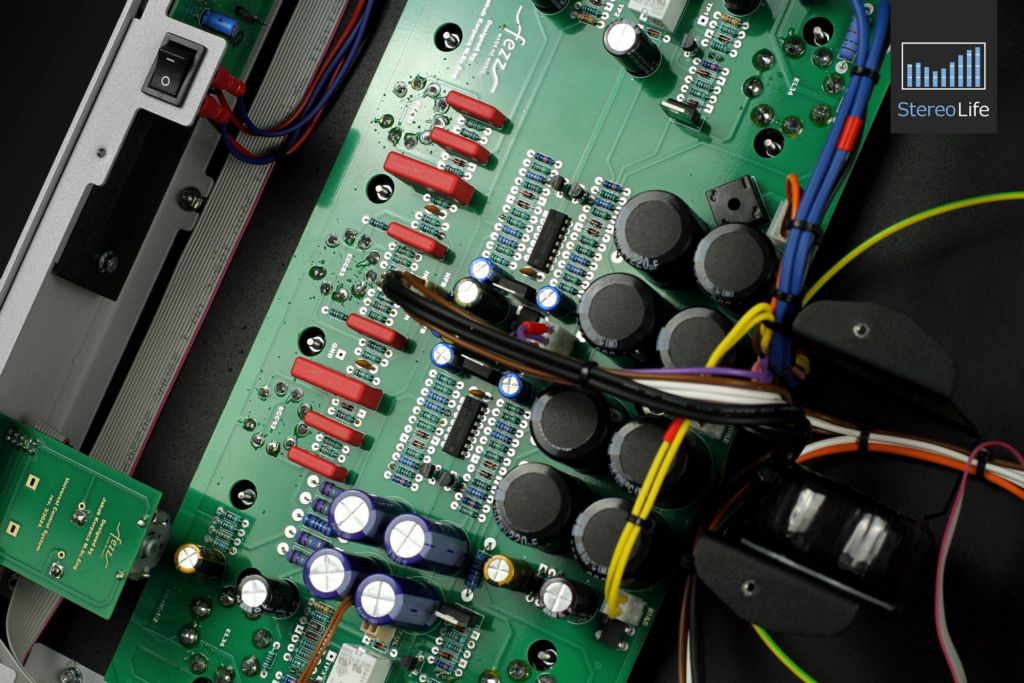
Output transformers have always been one of Fezz Audio's calling cards. In tube amplifiers, they are absolutely critical to both sound and frequency response. Many manufacturers simply outsource their design and production, but Fezz has a major advantage here. The parent company, Toroidy, has been producing highly regarded toroidal transformers for years, and not just power transformers - it has also developed toroidal output transformers with excellent parameters. Luna uses these in-house designs to achieve a wide frequency response and quiet operation. During the test, I didn't hear so much as a hint of mechanical hum from the amplifier. The reason becomes obvious when you look inside the chassis. Luna is one of the first Fezz designs that not only features a new enclosure but also a completely redesigned internal layout. The photos tell the story. The interior is populated with high-quality components and, even more importantly, is laid out with exceptional neatness and discipline. I'm thinking not only of workmanship but above all of architecture. The number of flying leads has been reduced to an absolute minimum. Wherever possible, the designers have used screw terminals and connectors, which makes it easier to disconnect and remove entire modules for servicing. The transformers are encapsulated in resin, something you can see at the points where their leads emerge into the main compartment. One gets the impression that the toroids are potted with a vibration-damping compound inside their metal cans before the entire assembly is installed in the amplifier. Inside the Luna, I also noticed a few other nice details. The main circuit board carries not only the company logo but also the name of the chief designer, Jakub Korpacz. A silver plate on one of the transformer covers bears the amplifier's serial number and the names of two people - the technician who assembled the unit and the one who performed final quality control.
As for day-to-day practicality, Luna draws a maximum of 250 W from the mains, so it's not an energy hog, and it doesn't turn into a space heater. In normal use, the chassis gets warm but never dangerously hot (although it's always wise to treat the tube cage with respect - EL34s can reach fairly high temperatures). The amplifier measures 35.4 cm wide, 42 cm deep, and 23.5 cm high. You'll want to leave enough headroom for ventilation and for removing the tube cage if you choose to listen with the tubes exposed. The 20 kg weight confirms that Fezz did not skimp on transformers or steel. Luna stands firmly on solid anti-vibration feet. Overall build quality and internal organization leave nothing to be desired. In terms of assembly standards, Fezz Audio is easily competing with the world's leading brands - and in some respects surpassing them. The technical specifications are impressive as well. A frequency response of 16 Hz to 115 kHz is remarkable, and total harmonic distortion of less than 0.05% at 1 kHz indicates a very linear output stage. Of course, this being a tube amplifier, distortion increases with power and at the extremes of the bandwidth, but these are mostly even-order harmonics, which the ear perceives as relatively benign (some would even argue they contribute to the tube charm). In short, Luna is a thoroughly modern tube integrated amplifier whose engineering has been thought through with the same care as its sound and appearance.
System configuration
Audiovector QR5, Equilibrium Nano, Unison Research Triode 25, Hegel H20, Auralic Aries G1, Auralic Vega G1, Marantz HD-DAC1, Clearaudio Concept, Cambridge Audio CP2, Cardas Clear Reflection, Tellurium Q Ultra Blue II, Albedo Geo, KBL Sound Red Corona, Enerr One 6S DCB, Enerr Tablette 6S, Enerr Transcenda Ultimate, Fidata HFU2, Melodika Purple Rain, Sennheiser HD 600, Beyerdynamic DT 990 PRO, Beyerdynamic DT 770 PRO, Meze 99 Classics, Bowers & Wilkins PX5, Pro-Ject Wallmount It 1, Custom Design RS 202, Silent Angel N8, Vicoustic VicWallpaper VMT, Vicoustic ViCloud VMT.
Verdict
Fezz Audio Luna is a symbolic product - a return to the company's roots and, at the same time, a clear statement of how far it has come in a decade. The new Luna is a worthy successor to the much-loved Silver Luna, offering better sound, improved usability, and a refreshed aesthetic, all while staying true to the original idea of delivering pure, honest sound at a fair price. It's true that prices have risen over the intervening years, but in exchange, you get a product that feels mature and complete in every respect. Fezz Audio is no longer a niche workshop - it's an experienced player on the global hi-fi stage, exporting its products worldwide. Luna shows that the manufacturer listens closely to users and reviewers. It introduces improvements, refines the design, and adds functionality, yet it keeps the distinctive character that made the brand so popular in the first place.
Does this amplifier have flaws? Certainly - every device does - but I only managed to identify a handful of truly minor quibbles (and I'll freely admit that I had to work hard to find even those). Listeners seeking an exaggeratedly "tubey" sound with a very forward presentation and honey pouring from the speakers may find Luna too neutral. On the other hand, fans of iron-fisted, transistor-style bass and vanishingly low distortion will have to accept certain traits that reveal the amplifier's tube heart - its tonality and its way of shaping space. In return, however, everyone gets that elusive magic that no solid-state amplifier at this price can quite replicate. And that's no accident. Silver Luna was such a pivotal model for Fezz that its successor simply had to fulfill a dual mission - honor the legacy and simultaneously carry the company to the next level. Fans, customers, dealers, and distributors all knew that Fezz could not afford to stumble here. So did Luna rise to the challenge? To put it bluntly, no. It exceeded it.
Luna brings together the best of the tube world - tangibility, color, and a sense of space - while shedding most of its traditional limitations. It plays dynamically, transparently, and with rare versatility. You can enjoy quiet jazz, full-scale symphonic music, electronic soundscapes, and even heavy rock or metal at near-concert volumes. Nothing catastrophic happens. The tubes don't catch fire, the speakers don't beg for mercy, the sound doesn't collapse. On the contrary, Luna is one of the most versatile, universally capable, and cultured amplifiers I've encountered. It's both a tribute to Fezz Audio's own history and the opening of a new chapter in it - one in which the company reinforces its position as one of the brightest names on the tube hi-fi scene, proving once again that it knows exactly how to turn tube technology into musical success. Highly recommended!
Technical data
Tubes: 4 x EL34, 3 x 12AX7
Output power: 2 x 40 W (ultralinear), 2 x 20 W (triode)
Analog inputs: 3 x RCA, 1 x HT
Analog outputs: 1 x sub-out
Equipment: remote control, tube cover
Options: Bluetooth 5.0, Phono MM, DAC (Fezz Extension Board)
Distortion: < 0.05%
Frequency response: 16 Hz - 115 kHz (-3 dB)
Signal-to-noise ratio: 82 dB
Damping factor: >20
Input impedance: 50 kΩ
Bias adjustment: automatic
Power consumption: 250 W (max)
Dimensions (W/H/D): 23.5/35.4/42 cm
Weight: 20 kg
Price: €2,500 (amplifier), €299 (extension board)
Manufacturer: Fezz Audio
Sound performance
Editor's rating
9.4Overall9Sound9Functionality10Design9Quality10Price