
- Reviews
- Posted
Audiomica Laboratory Consequence
The moment comes in every audiophile's life. After enough experimenting with speakers, amplifiers, and source components, once the system finally starts sounding genuinely good, a question begins to nag at us - should we be paying more attention to cables? Some people agree completely, arguing that cables are just as much a part of the signal path as an amplifier or speakers. Others laugh the whole idea off and insist that anyone who believes in cable differences simply should have paid more attention in physics class. In truth, there is only one way to find out - try it and decide for yourself. If we hear no difference, there are really only three logical explanations. The first is that our system still is not revealing enough to expose those nuances, or that the cables we borrowed for comparison, despite their prettier plugs and more upscale appearance, are not actually much different from what we already use. The second is that our hearing is not quite as sensitive as we would like to think, and what others describe as a night-and-day transformation is, for us, barely there at all. The third is that cables have no effect on sound whatsoever and serve only to improve the owner's mood and the manufacturer's cash flow.
Plenty of people would be delighted if that turned out to be the result of their experiment. It would save them a great deal of time, effort, and money. Unfortunately, there is another possibility - the differences are clear enough that we start digging deeper, borrowing more and more cables and trying to assemble the ideal set. At first, the process remains relatively sane. We upgrade from basic wire to something better. Before long, though, we look behind the equipment rack and realize we have created something resembling a parliamentary standoff - four brands, five product lines, different lengths, different sonic signatures, one model that makes no sense at all, and another that was supposed to be the endgame but plainly is not. One cable adds a bit of warmth, another smooths out the top end, another worked well with our previous amplifier and stayed in place simply because we had nothing better on hand. It is not a disaster, of course. The system still works and still sounds pretty good. But we begin to feel that it no longer behaves like a unified whole. Instead, it feels like a collection of compromises. That is usually when another thought creeps in - maybe it would make more sense to hand this whole tangle of wires over to someone who actually knows what they are doing and replace it with cables from one company, one series, designed not only to suit our system but also to work together.
Audiomica Laboratory has been advocating exactly that approach for years. The company's cables do not have to be purchased as full sets, but instead of patching holes with one-off upgrades, the Polish manufacturer encourages users to treat cabling as an integral part of the signal path - a coherent system that runs from the wall outlet all the way to the speaker terminals. Within that philosophy, the Consequence series functions as something like a premium package - a flagship line that makes sense not so much as a single cable, but as a complete loom intended to establish a consistent, repeatable sonic character throughout the system. Since my review of the 4-all-in-1 and 4-all-in-1 PRO sets turned out to be especially interesting, I thought it would be worth wiring up an entire system with Audiomica's upper-tier cables and seeing what happened. Would they work better together than they had on their own? Would I finally hear that much-discussed synergy effect? Would Audiomica's design philosophy - built around OCC copper, multi-layer shielding, elaborate filtering, and a highly disciplined mechanical approach - actually hold up as a convincing recipe for a coherent signal path, or is it the kind of idea best enjoyed in moderation?
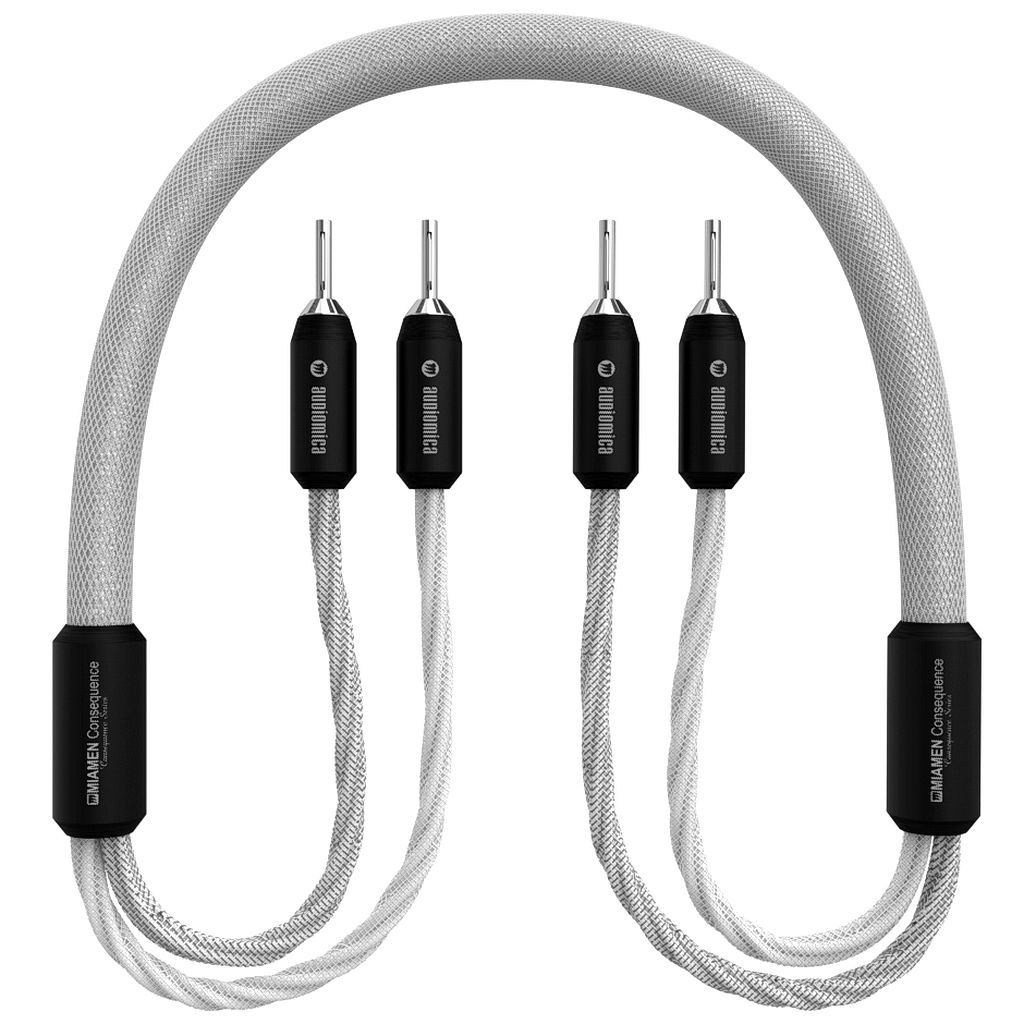
The idea was all the more intriguing because, until quite recently, this series represented the very top of the company's catalog. The Miamen Consequence speaker cable costs €5,290 for a 2 x 2.5 m pair, the Pearl Consequence interconnect is €3,990 for 1 m, the Pebble Consequence USB cable is €1,290 for 1 m, and the Allbit Consequence power cable is priced at €2,750 for 1 m. And that is still not the full story, because the same line also includes the Thasso Consequence tonearm cable, Flint Consequence and Ormus Consequence digital interconnects, the Anort Consequence network cable, the Terra Consequence grounding cable, and the Quan Consequence jumpers. If your system includes several components connected to a conditioner or power strip, and you also need jumpers or at least one additional digital cable, the total can easily climb past one hundred thousand zlotys. There is no sense pretending otherwise - it is a crazy amount of money. Maybe I should not even be dealing with something like this. Then again, past listening sessions with other outrageously expensive cables, including the KBL Sound Himalaya II, Cardas Clear Reflection, and Tellurium Q Statement II, turned out to be fascinating and left me with far more than a few fleeting impressions. They showed just how much cables can really do, and where the limits may lie once cost is taken out of the equation. Would this be one of those cases too?
Design and functionality
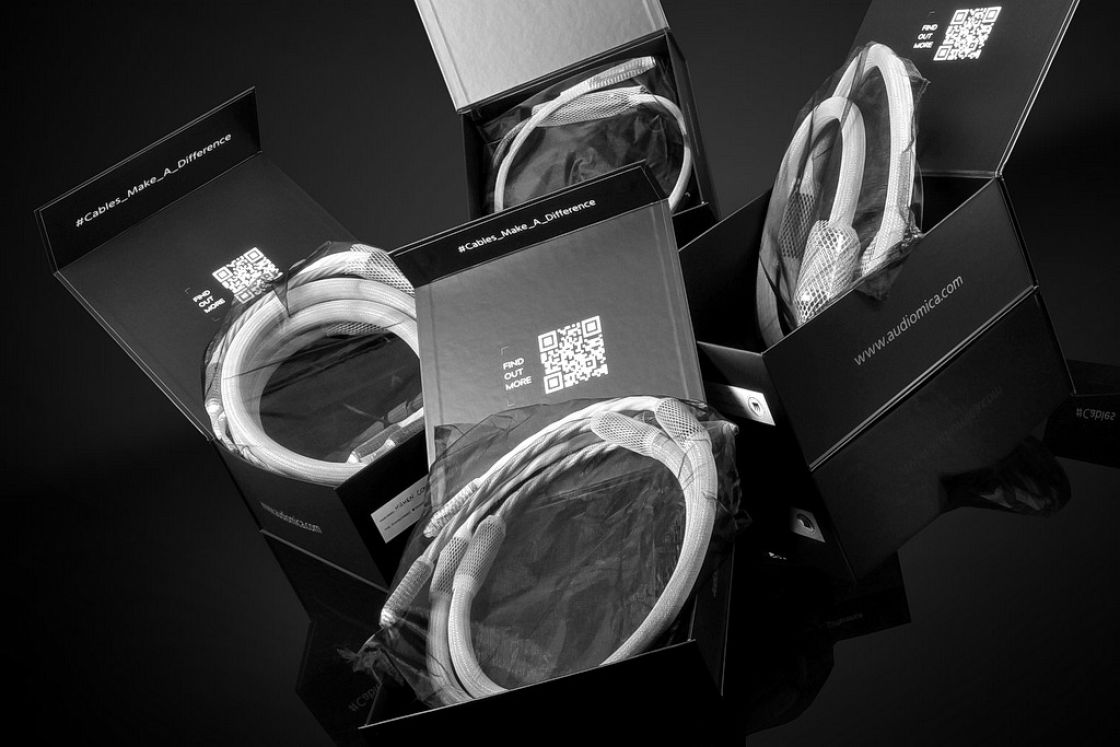
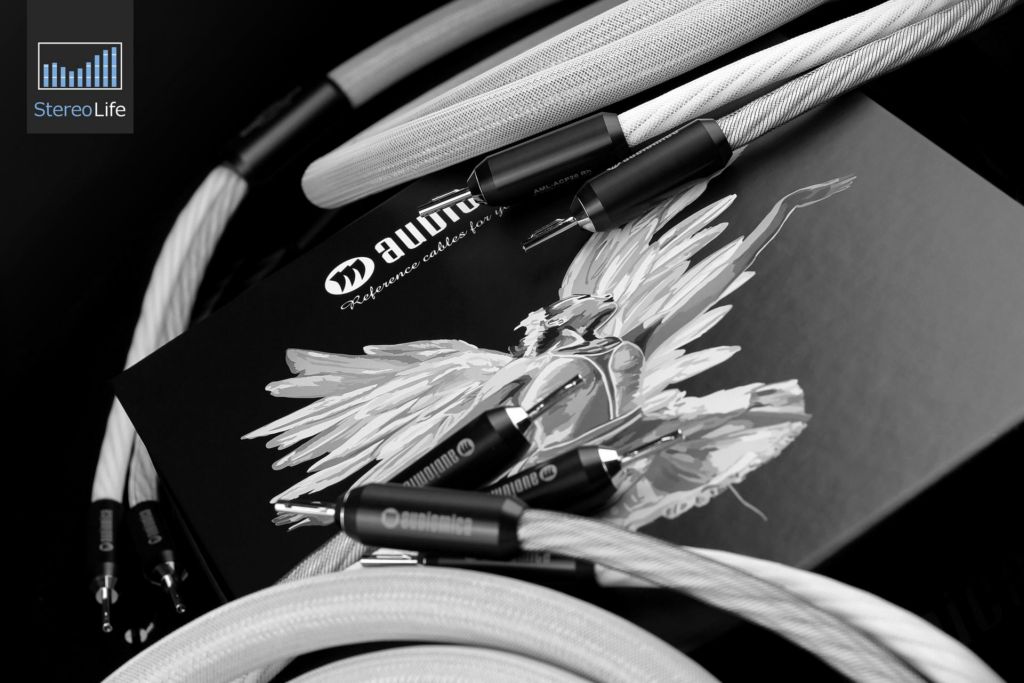
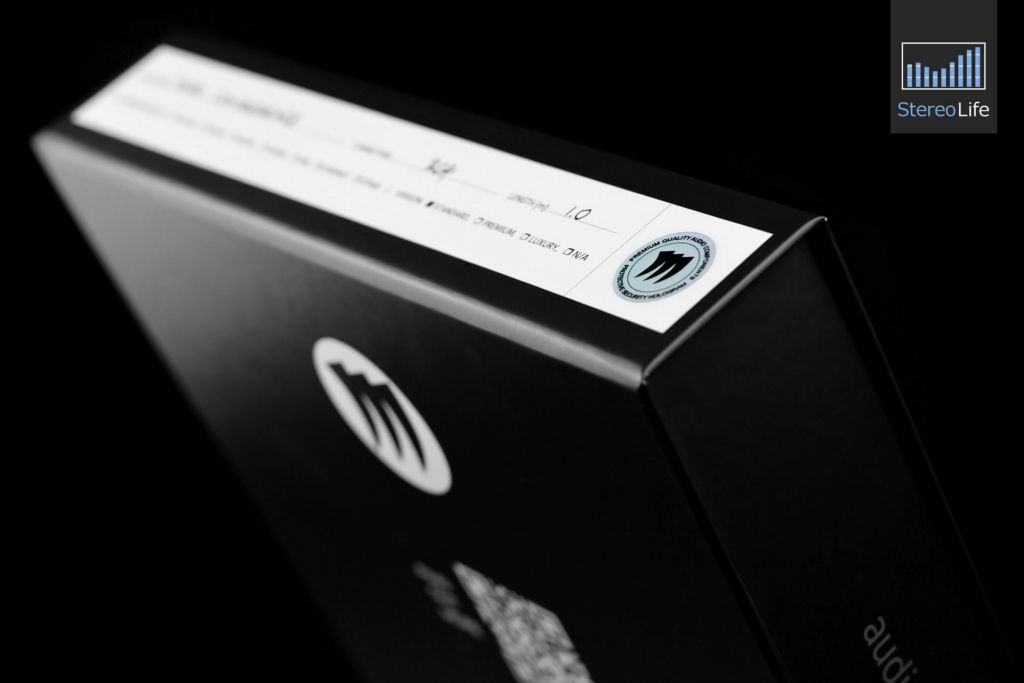
Audiomica has come a long way over the years, even in the way its products are presented. Longtime readers may remember the brand's distinctive wooden boxes, which looked more like jewelry cases than cable packaging. They were elegant, a little old-school, and unmistakably artisanal. Today, the top cables from Gorlice (a picturesque town in southeastern Poland, about 100 km from Kraków) arrive in new boxes - technically cardboard, but executed so carefully in both design and construction that the overall impression is much the same. The packaging uses thick, rigid board, precision-cut foam inserts, clear labeling, and the ballerina motif that has become one of the company's visual signatures. If you enjoy unboxing new equipment and treat it as part of the ritual, part of the anticipation before installation and listening, Audiomica certainly does not deny you that pleasure. Quite the opposite. Each cable under review came protected with silicone mesh sleeves so the plugs and metal splitters would not knock against one another in transit. Every box also contained a hand-completed certificate of authenticity with a serial number and the signatures of the people responsible for assembly and quality control. Similar stickers appear on the outside of the packaging as well.
If someone says there is nothing remarkable about that, because at this price level perfection should be a given, my answer is simple - yes, I agree. But the fact that something should be obvious does not mean every manufacturer actually delivers it. Heavy, stiff Enerr Transcenda Ultimate power cables, priced at €1,899 for 1.5 m, come in plain gray cardboard boxes. Very eco-friendly, no doubt, and perhaps the planet will one day be grateful, but if you were running a pizza delivery business, you would not use packaging like that unless you wanted a flood of negative reviews. Cardas does even worse. The Clear Reflection cables mentioned earlier - €3,899 for a 2 x 2.5 m speaker cable and €1,599 for a one-meter RCA interconnect - come in even flimsier cardboard that practically tears in your hands. Keeping those boxes intact is impossible because the weight of the cables inside causes them to deform before they even reach the dealer. I keep mine in the attic, dry and safe, but in ten or fifteen years, those Cardas boxes will probably have disintegrated. If I ever decide to sell my Clear Reflection cables, the best I will be able to show a potential buyer will be a few scraps of paper with barely legible lettering, while explaining that this used to be the original packaging for cables that cost more than twenty thousand zlotys. The mismatch between the quality of the product and the quality of its presentation is simply distasteful. Audiomica does not make that kind of embarrassing mistake even in its more affordable lines, so the refined packaging of the Consequence models came as no surprise.
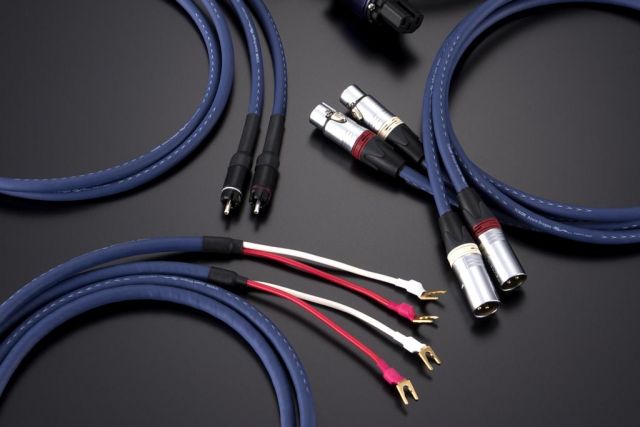
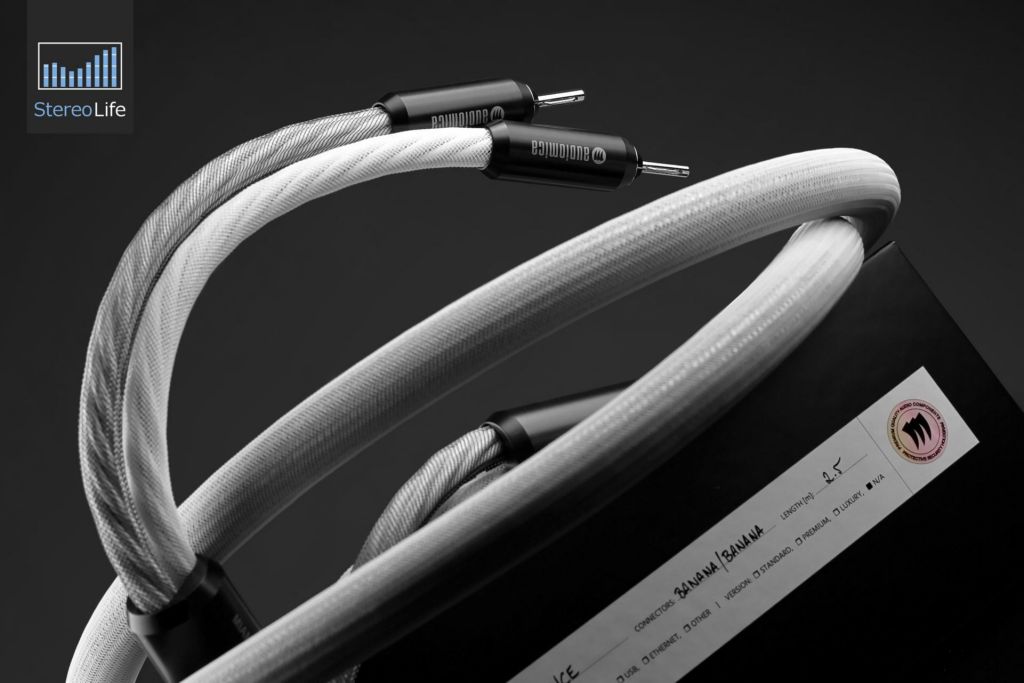
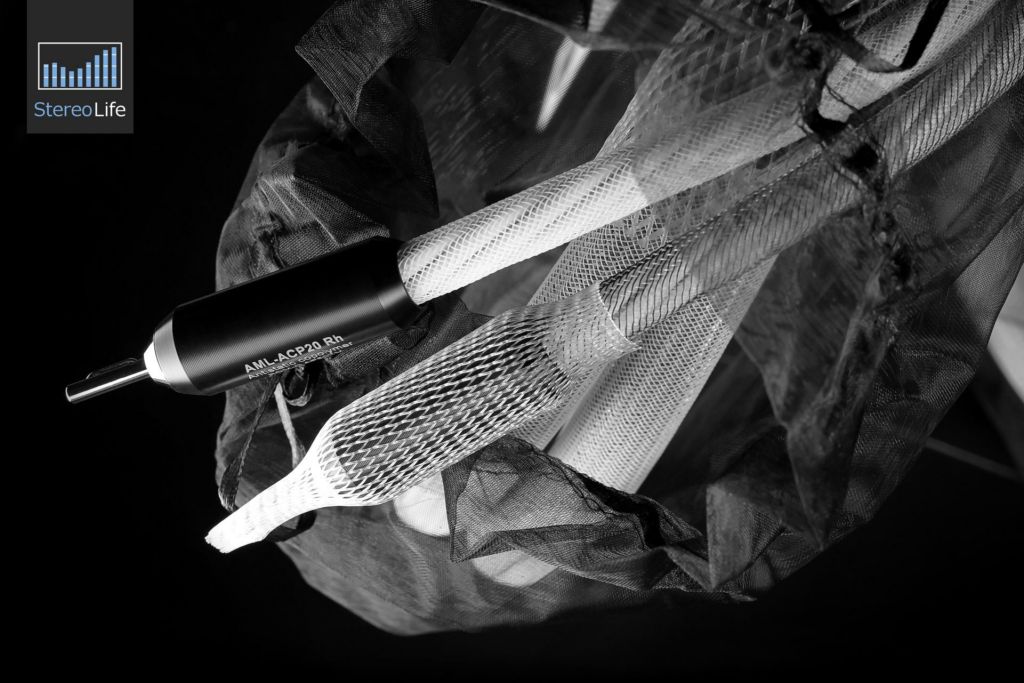
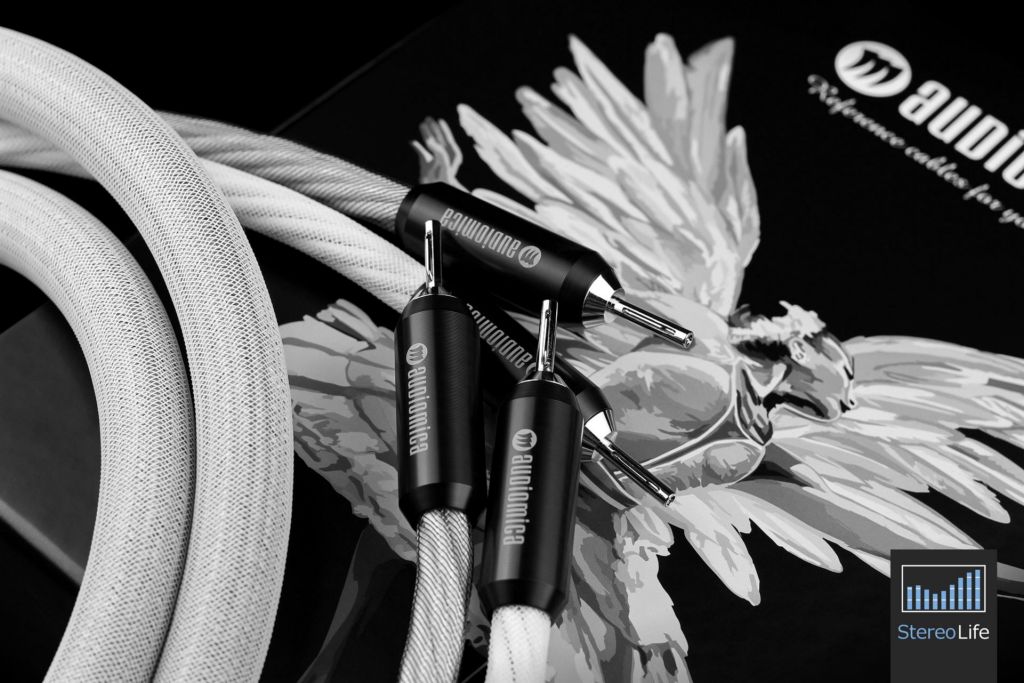
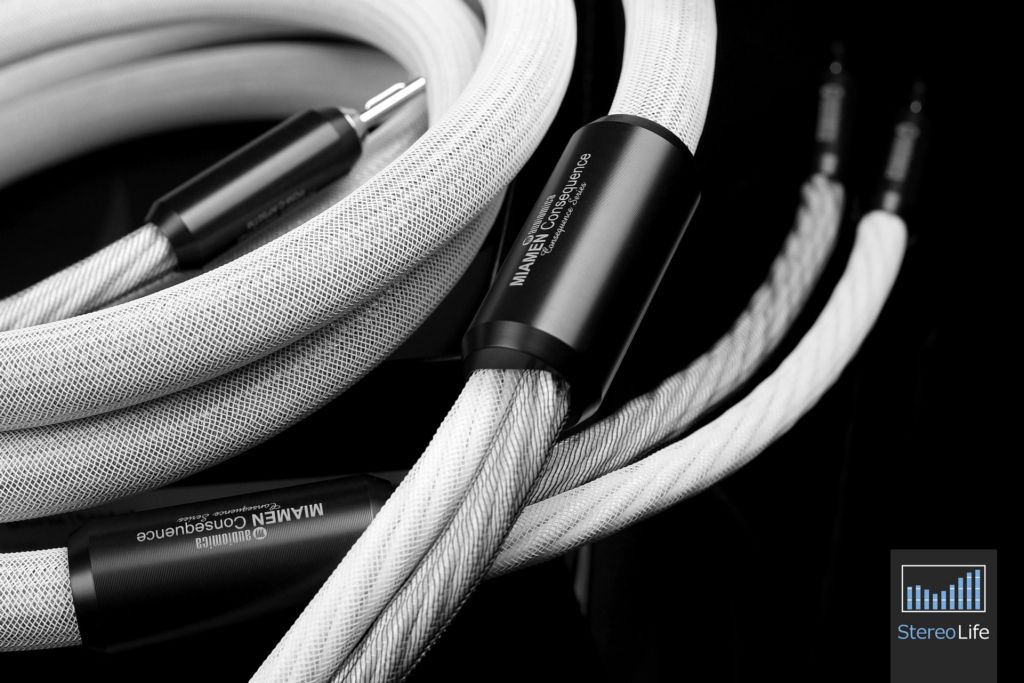
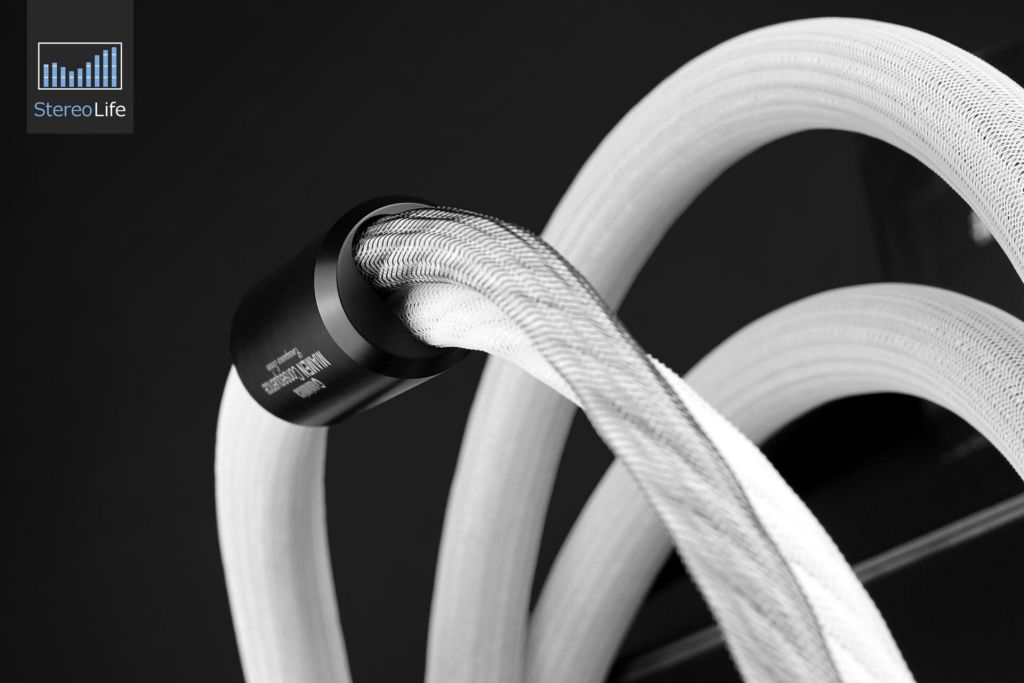
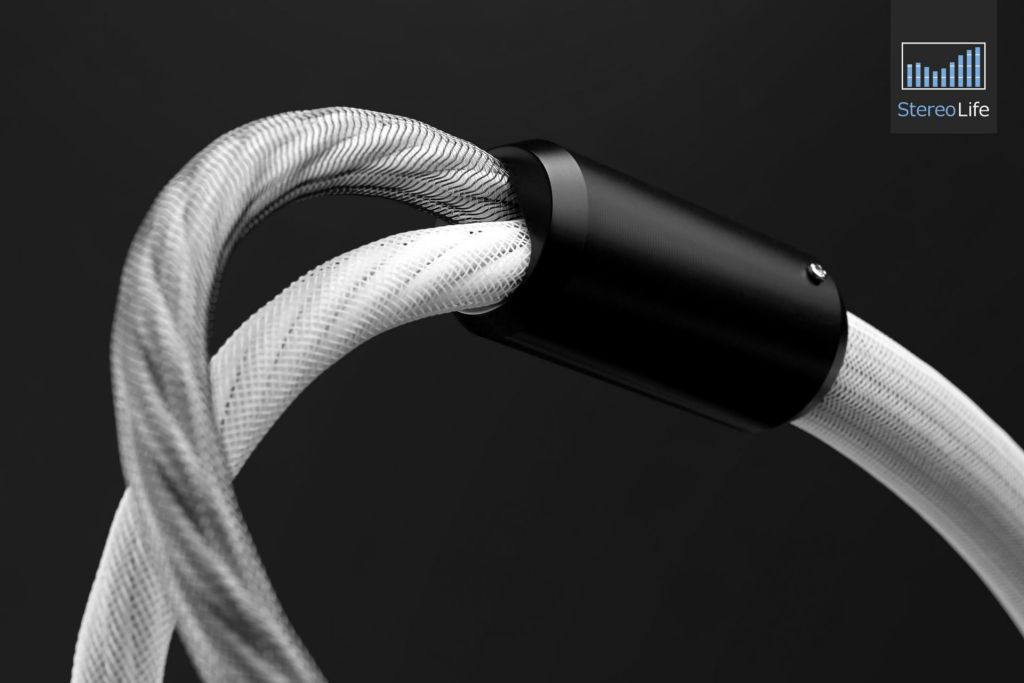
The cables themselves make a superb first impression. The first one on the table was the Miamen Consequence speaker cable, which looks like something that could power a midsize factory or data center. Its diameter, weight, insulation thickness, and dual shielding all contribute to the sense that this is a genuinely top-tier product. And yet, once you accept the fact that it is thick and heavy, its ergonomics turn out to be surprisingly civilized. Because there is a relatively long stretch of more flexible wire between the splitters and the plugs, the cable can be routed in a normal system without wrestling with the terminals or resorting to supports, cable elevators, or other heroic solutions. In the version reviewed here, one end was fitted with handsome banana plugs housed in chunky barrels. It is a solution that combines impressive looks with the everyday practicality of any well-made banana-terminated cable. Nothing needs to be tightened, clamped, or adjusted. New plugs do need a little time to settle in, but there is no need to force the issue - a few insertions and removals are enough. Nor is the Miamen Consequence absurdly heavy. It has substance, certainly, but installing it will not be a serious challenge for any experienced audiophile. There is no risk of the cable pulling an amplifier off the rack or of speaker terminals eventually giving up under the strain.
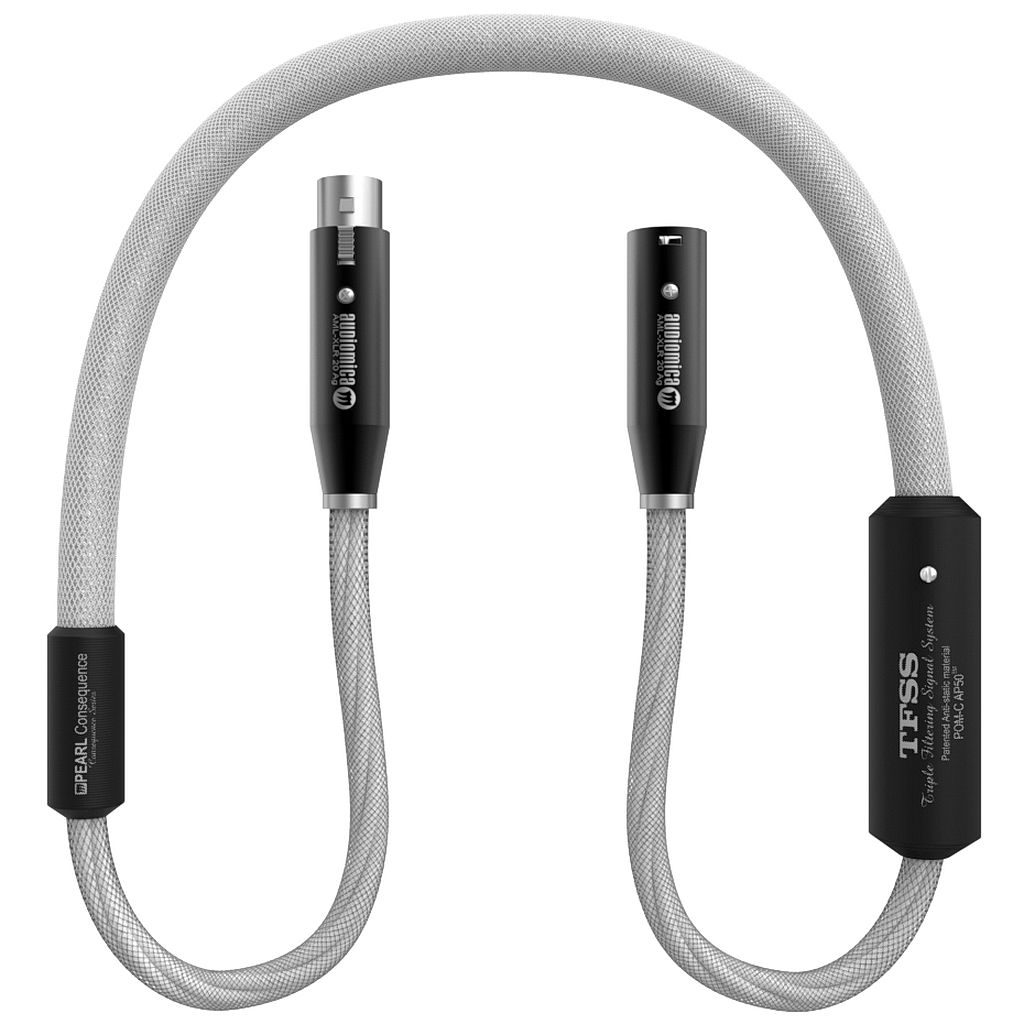
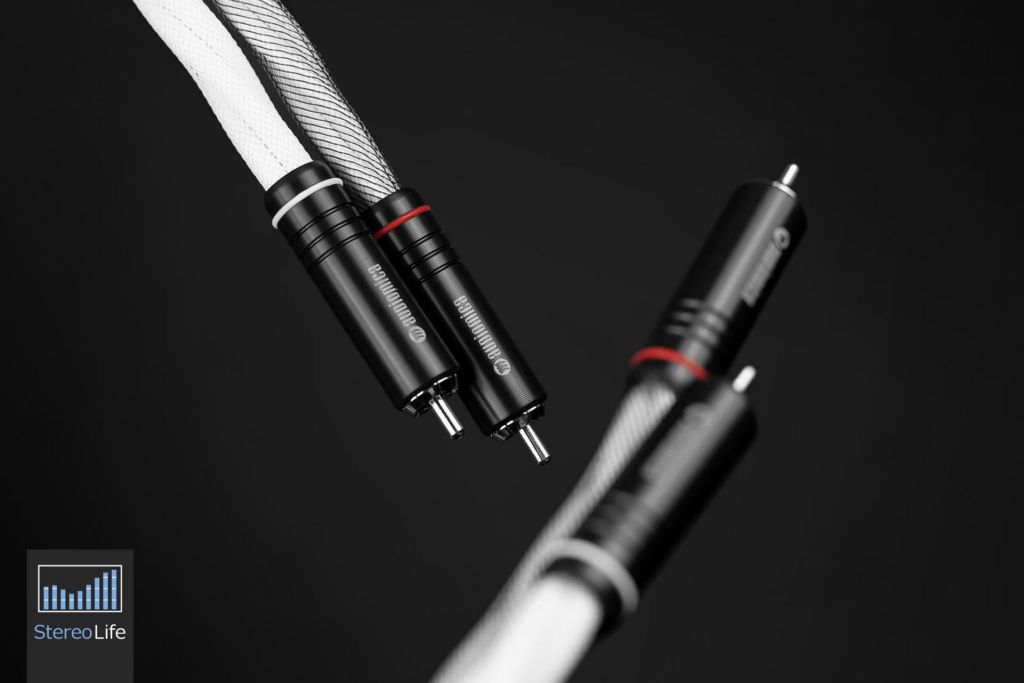
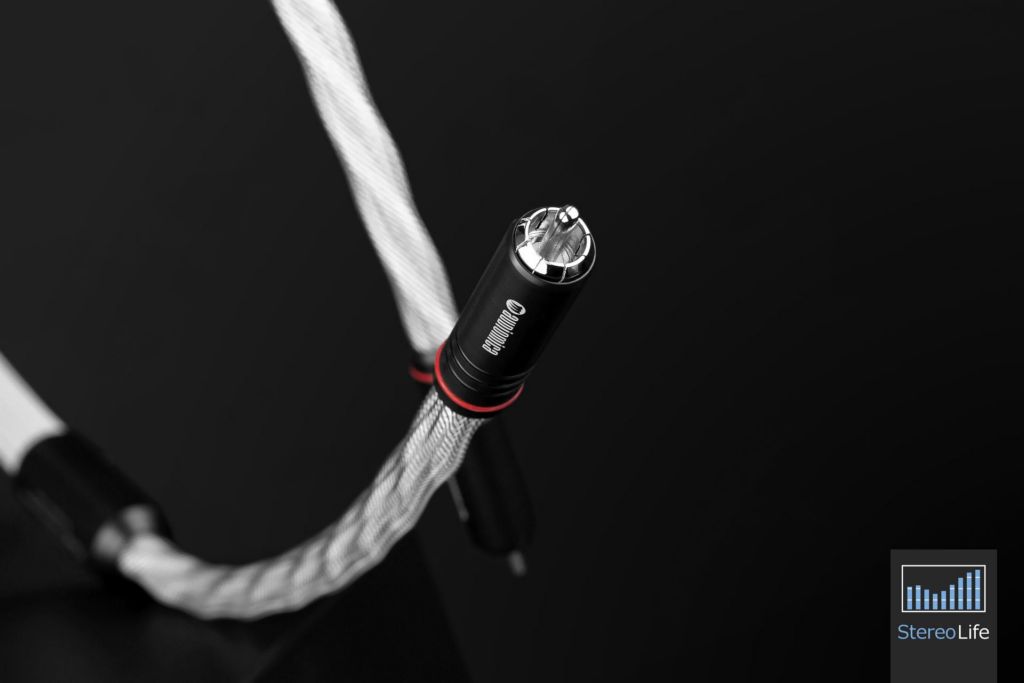
The Pearl Consequence in RCA form is a very substantial interconnect, yet one that remains surprisingly flexible. The cable is thick, but the use of solid-core conductors does not turn it into a rigid metal rod. The outer sleeve, multi-layer jackets, and POM-C barrels - a synthetic material with high rigidity and low moisture absorption - allow it to be routed not only in the ideal scenario behind an open equipment rack, but also inside a more enclosed cabinet if necessary. Some common sense is still required when bending it, of course, but the thick outer sleeve and braided exterior make it pretty obvious when you are pushing things too far. It is also worth noting that the Consequence line is not only one of Audiomica's most important series, but also one of its longest-running. Over the years, it has seen various refinements, both major and minor, without ever acquiring suffixes like "mkII" or "V3". In 2021, for example, the Pearl Consequence interconnect saw its conductor diameter changed from 0.64 to 0.75 mm, while the outer jacket was slimmed down to improve flexibility. The connectors changed as well. Previously, the cable used a fairly standard solution - ready-made plugs from WBT, one of the best-known specialists in the field. It is now terminated with connectors bearing Audiomica's own branding. They are not only elegant, but genuinely practical. They look thick and substantial, with metal housings, yet because their diameter remains sensible, they do not end up fighting for space on crowded rear panels. It is another example of common sense in a hi-end world that is often full of visually dramatic ideas that become irritating by the third use.
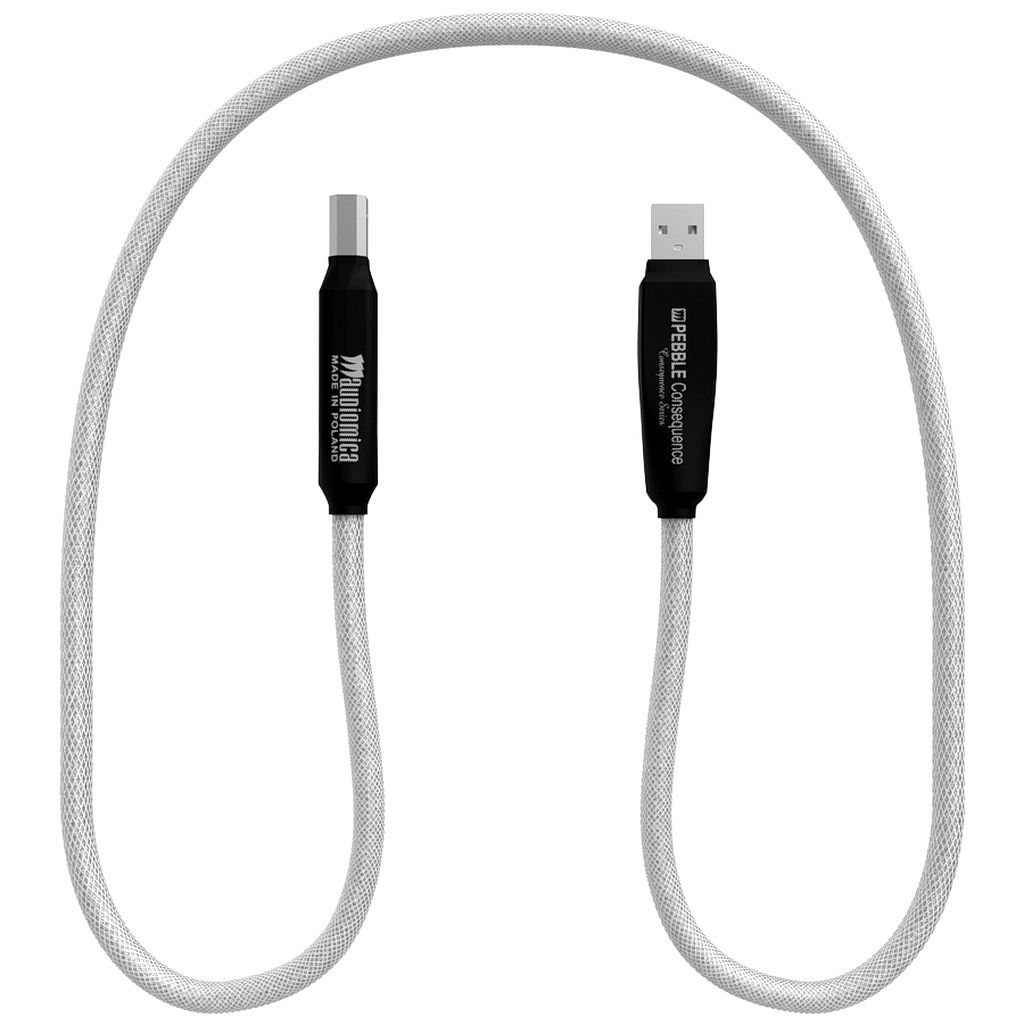
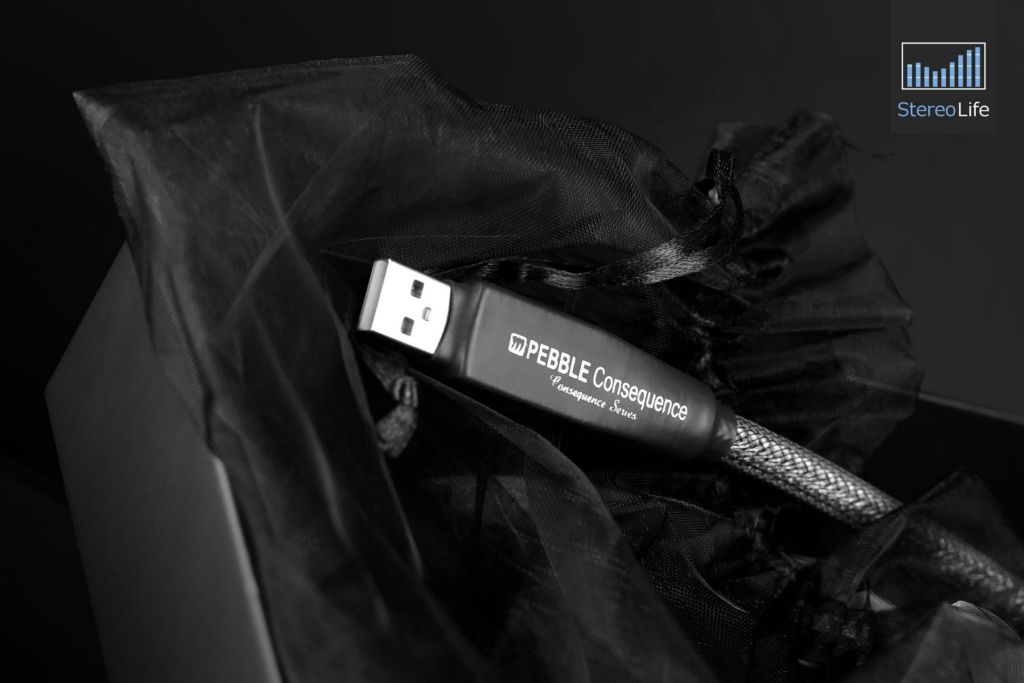
The Pebble Consequence challenges the usual stereotype of what a USB cable is supposed to look like. Instead of a thin computer lead, you get something closer in girth to a serious analog interconnect. Four separately shielded bundles, textile cores for improved flexibility, rhodium-plated plugs, and barrel-shaped elements that double as filters all help the Pebble look like a purpose-built high-end product. Thanks to the textile cores and spiral-twisted bundle geometry, the cable sits naturally both behind an equipment rack and on a desktop, where there may be only a few centimeters of clearance behind a DAC. Here too, we find the signature black barrels, which also serve as housings for the DFSS anti-interference filter system. The most conventional part of the design is the connector itself, since there are obvious limits to how much you can reinvent a USB plug, although the contact elements are rhodium-plated. So while the connectors may look fairly standard at first glance, they are almost certainly more sophisticated than that appearance would suggest.
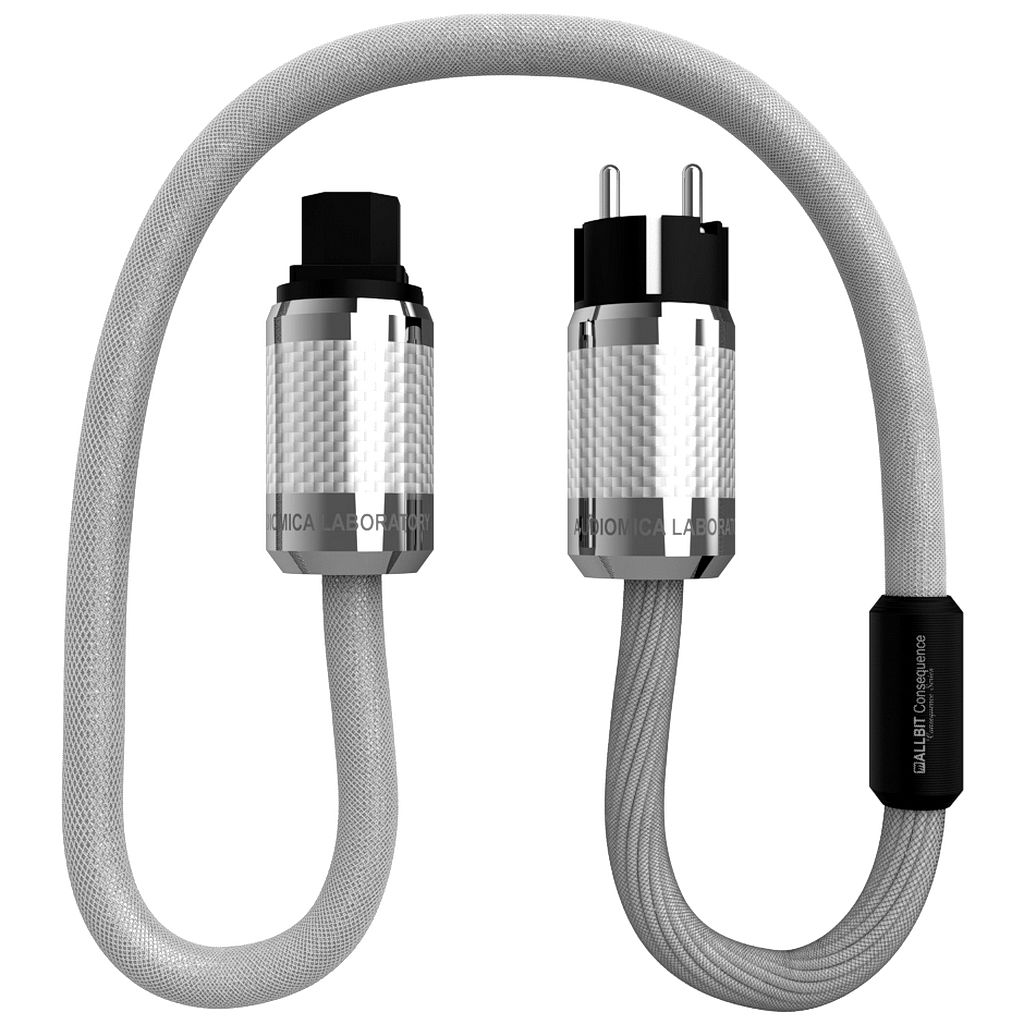
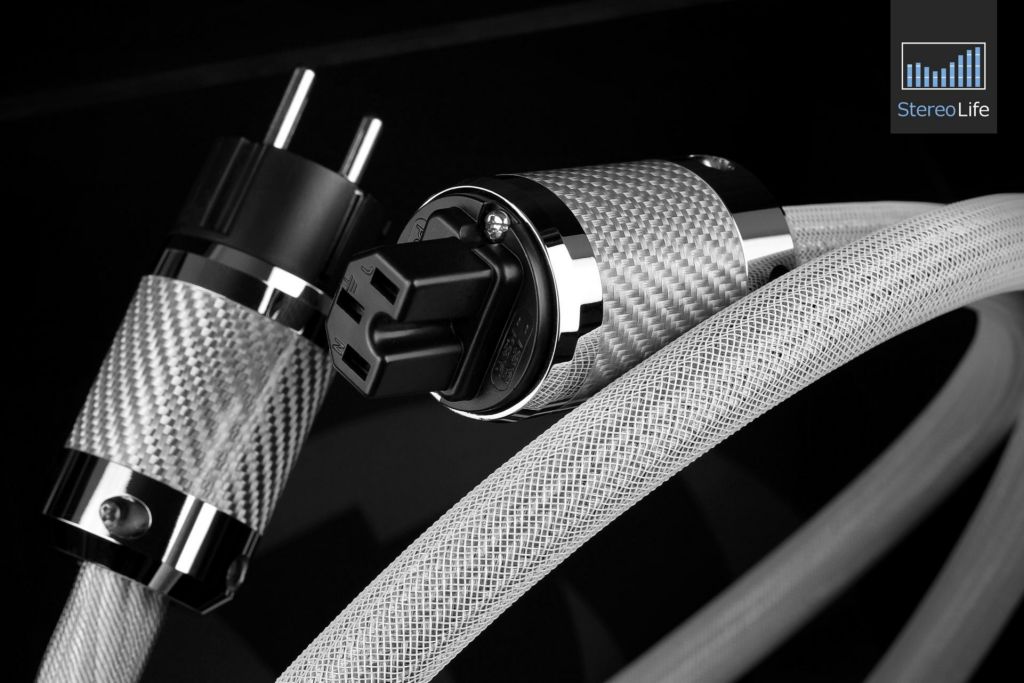
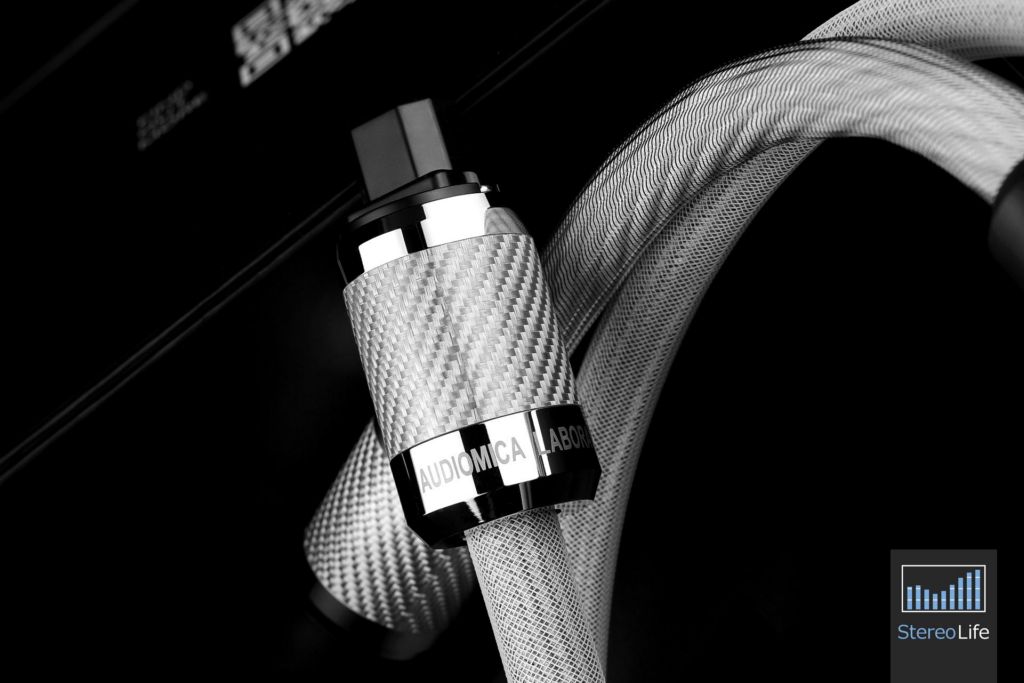
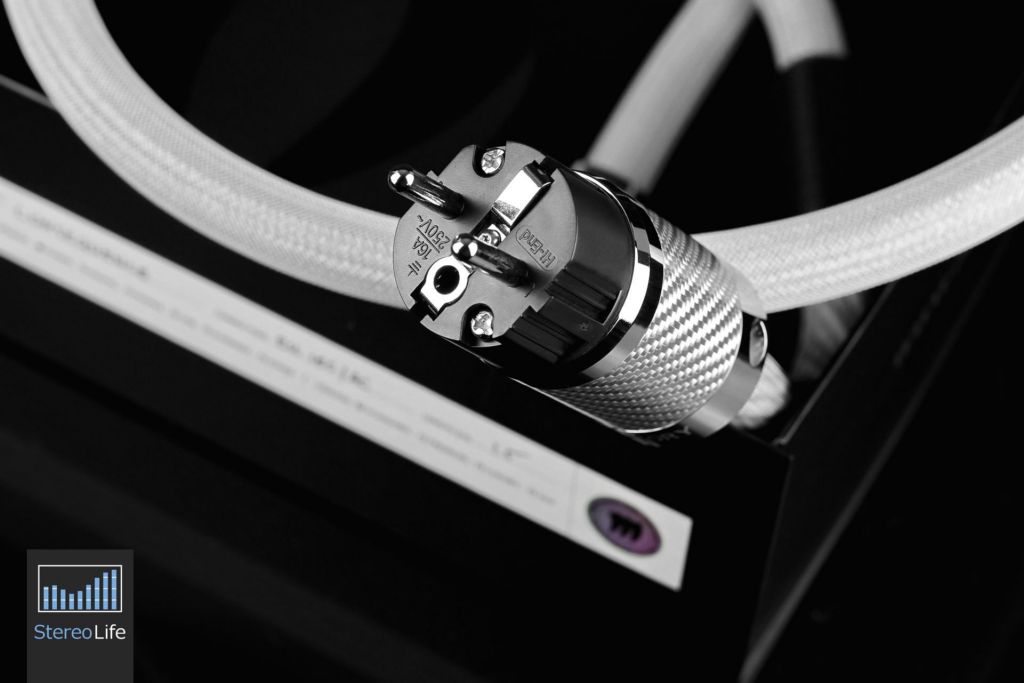
The Allbit Consequence is Audiomica's power cable philosophy in classic form. Thick, substantial, and imposing even without the optional TFCT filter, it is the only cable in this group whose installation is not entirely straightforward, especially if you order it in a length that leaves no slack at all. I have wrestled with thicker, stiffer, and more unruly power cables in my time, so it did not exactly shock me, but if you are unsure which direction the plug will need to face, or you suspect this will be the one cable behind the rack that has to loop around without interfering with more delicate wiring, just order an extra half meter. The plugs are large, but very neatly made, with comfortable grip surfaces and clear branding that suggests they are Audiomica's own design. Even if that is only partly true, and the parts are actually custom-manufactured by one of the established connector specialists, the fact still tells us two things. First, the company cared enough to come up with something better than expensive but widely available connectors that any enthusiastic hobbyist could install on the cord of a bedside lamp. Second, sales of these cables must be healthy enough to justify investing time and money in proprietary connectors. Even if they are made by a well-known supplier, the order would have to be substantial. If you doubt that, try writing to WBT or Furutech and ask if they would be willing to make ten or twenty modified connectors with non-standard markings. I would not expect an answer. The use of proprietary or custom-spec connectors developed to Audiomica's requirements suggests that Consequence cables, despite their high prices, are finding homes in a fair number of serious systems. And from there it is only a short step to the conclusion that they must be doing something right. The question is what, exactly.
Sound performance
The fairest way to find out what a cable set like this can really do is to take a gradual approach - replace one cable with the daily-use equivalent, then a second, then a third, then a fourth, and only at the end listen to the complete set and try to describe its overall character. That was my original plan. I intended to introduce the Consequence cables one by one and work my way slowly toward the final full configuration. In practice, the process unfolded in much the same way, just much faster. This was not my first encounter with cables from this brand, or even with some of the individual models in the set under review. The Miamen Consequence speaker cable appeared in my group test of Polish speaker cables back in 2013, while the Pebble Consequence was reviewed alongside the Carnelian Reference a few months later. So I already had a pretty good sense of what to expect. And once I heard exactly that, I immediately wanted more. What was supposed to be a casual experiment spread over several days turned into a full-scale listening binge that swallowed the entire system in less than two hours. There is no point pretending otherwise - I attacked that set the way a child tears brightly colored wrapping paper off Christmas presents. I regret nothing. After all, it is not every day that you receive a package full of technically advanced and indecently expensive cables that might actually make a familiar system sound better. The chance to find out just how far those changes can go, and how much more performance can be extracted from a given setup when you bring out every last weapon in the arsenal, is deeply tempting. It is enough to stir excitement even in an aging, stooped, gray-haired gentleman like me. To maintain at least the appearance of audiophile restraint, I started with the cables that I expected would make the smallest changes and ended with the one that completed the picture in style.
The first to enter the system was the Allbit Consequence, replacing a very good Enerr Transcenda power cable as the AC lead feeding the Auralic Vega G1 DAC. Later, I also tried it with the Hegel H20 and the Unison Triode 25. The changes were not revolutionary, but the direction was exactly what I associate with Audiomica cables. On paper, nothing dramatic happened. There was no sudden injection of tube-like warmth, no darkening of the treble, no bass boost. And yet, within a few minutes, I knew that if I could keep the Allbit Consequence without financial consequences, I would leave it exactly where it was. What stood out most was the way this cable organizes and settles the sound while remaining completely calm about it, as if delivering those improvements in an atmosphere of total ease - like a relaxed Sunday lunch at your mother's house. If you want to speed up the diagnosis, focus on the bass. In my system, the low-end foundation did not become bigger. It became freer and springier. Kick drums gained more conviction, while their decays were better controlled. Where there had previously been a blur, there was now a fully formed and clearly outlined shape. At the same time, the background grew calmer and darker, so tiny noises, rustles, breaths, and other artifacts arranged themselves into a cleaner, more intelligible whole, but without turning the listening session into an involuntary forensic examination of the recording.
Listening to the power cable was not only a prelude to the rest of the Consequence set, but also a useful reminder for experienced audiophiles who understand that even very expensive cables should not overturn the rules of the game or completely rewire a system's identity. That is not what good cabling is supposed to do. A refined, well-matched cable can improve certain things, reveal strengths more clearly, hide weaknesses more gracefully, and provide that final touch of completion. Some cables deepen the bass and improve spatial presentation, others add a little warmth and depth, and others behave almost like a magnifying glass. But all of that should happen within a limited range, as an enhancement to a well-balanced whole, not as the main event. That applies just as much to affordable cables as it does to products costing tens or even hundreds of thousands. The basic mechanism is the same - if a cable makes changes that are too large, if it stages a revolution inside the system, then something is almost certainly wrong. At first, we may be dazzled by what it does well, but sooner or later, we begin to notice what was sacrificed to get there. If we suddenly hear more detail, the sound becomes astonishingly fast and resolved, the bass moves like a hunting cat, and the soundstage both expands and snaps into sharper focus, we may initially be thrilled. Eventually, though, we may start to notice that tonal color has been badly compromised, overall coherence has suffered, the midrange has lost its density, vocalists sound oddly robotic, the bass may be quick but has become boxy and undernourished, and that electrifying transparency has stopped being exciting and started becoming tiring.
Adding the Pebble Consequence did not change the direction established by the Allbit, but it extended it toward greater three-dimensionality and flow. To carry out this test, I had already split my digital front end, connecting the Auralic Vega G1 to a Silent Angel M1T transport paired with the matching F1 power supply. These components rarely work together in my home, because I normally use them in two different systems. The Auralic typically serves as a standalone source and preamp driving the Hegel H20, while the Silent Angel M1T and F1 feed the DAC section in the Unison Triode 25 or the Marantz HD-DAC1. Audiomica did not have an easy job here, because the Pebble Consequence was not replacing an ordinary USB cable, but the excellent Fidata HFU2, a cable distinguished above all by its dynamics, resolution, and precise spatial focus. What the Polish cable offered instead was a slightly gentler perspective on digital sound. The Pebble Consequence softens signs of nervousness and the sort of fragmentation often associated with certain streamers and DACs, but not by depriving the listener of information. Instead, it civilizes that information. Cymbals decay more naturally - you hear metal with all its shine and complexity, not some vague hissing or sizzling approximation of it. The small details so many audiophiles obsess over - fingers sliding along strings, the mechanism of a piano, clues about the acoustics of the recording space - do not disappear, but they stop demanding center stage. What previously drew disproportionate attention becomes part of a larger, more coherent whole. The impression is not so much that the signal has been smoothed over, but that it has been stripped of unnecessary grain while retaining all of its value.
The Pearl Consequence brought together what the Allbit and Pebble had hinted at separately. And once again, I was not making life easy for it, because in my system, this position is normally occupied by the excellent KBL Sound Red Corona interconnect, priced at €2,099 for 1 m. Inserted between DAC and amplifier, the Pearl primarily brought order to the midrange and soundstage. It has a clear tendency to organize depth. Instead of a flattened image stretched along the plane of the speakers, you get something more like a stage performance, with a slightly advanced front row and subsequent layers arranged more logically behind it. This is not a matter of artificially inflating the stage, but of getting the proportions right between what should feel close and what should feel farther away. Vocals no longer merged into the background, but occupied a more natural perspective. They were neither pushed aggressively forward nor withdrawn behind the speakers. Tonal color improved as well. Strings, brass, piano, voices - all of it sounded as if I had gently increased saturation and shifted the tonal balance slightly toward the lower midrange. Not in an exaggerated way, but certainly without any sense of having thrown a blanket over the speakers. The KBL Sound Red Corona leans toward neutrality, openness, and spaciousness, which works beautifully in this particular system, but spending time with the Pearl Consequence was an enjoyable change of pace, almost like listening to a really good tube amplifier. Even if the sound was no longer quite as quick and airy, it gained in completely different areas, especially in the midrange and in that broad, elusive quality we tend to call musicality. In systems that flirt with glare or treat vocals a little too harshly, an interconnect like this works like a linen scarf on a cold day - it does not smother you in warmth or isolate you from the outside world, but it makes everything more comfortable and a little more elegant. The Pearl Consequence will not erase every flaw or turn the music into syrup. It simply encourages the system to behave with more composure, which in turn allows artists and engineers to come across in a somewhat better light.
The last cable to enter the game was the Miamen Consequence. It was worth saving that pleasure for the end, because it would not be an exaggeration to say that this is where the scale of the effect changed. The stage extended beyond the outer edges of the speakers, but once again the more important development involved depth. The front plane shifted slightly backward, almost perfectly offsetting the mild forward push introduced by the Pearl Consequence. The sound was big, full-bodied, expansive, and touched with a certain ease. The midband remained mildly favored, but not because it had been pushed forward like an equalizer bump. Rather, it was the way the Miamen Consequence directed the listener's attention. I would compare it to the effect often associated with large British monitors - there is no shortage of bass or treble, but the heart of the performance takes place in the region dominated by vocals and lead instruments. Unlike presentations that constantly draw the ear toward the extremes of the spectrum, this one leaves no doubt about where the essence of the music actually resides. At no point does it feel forced or as if the sound has been artificially tailored into something impressive but fundamentally unnatural. On the contrary, the presentation remains coherent and believable, so the only thought that accompanies it is that this is, in fact, how things should sound. The perfect counterweight to everything happening in the mids and treble is the bass - deep, weighty, and satisfyingly substantial, yet still agile and spring-loaded. Even dense, fast passages remain intelligible. The softness that appears in the presentation is not the result of blurred outlines, but of the low frequencies being voiced in a way that matches the rest of the spectrum. Like the midrange, they remain dense, colorful, and gently warm. That does not mean the cable lacks dynamic ability. The Miamen Consequence can reproduce the lowest registers with real force, but it never turns them into the star of the show unless the music truly calls for it.
At that point, the central question had to be answered. Is the Consequence series simply a collection of handsome, thick cables fitted with elegant connectors, or is it something more - a system of interlocking parts that only fully reveals itself when complete and free of foreign elements that disrupt the manufacturer's philosophy? To find out, I spent quite a bit of time experimenting, starting with each of the four cables on its own, then returning to the complete set and removing one link at a time. After a few days of listening, I was certain that each Audiomica model had a distinct personality of its own, but when they worked together, they formed something like a common language. The clearest proof of that lies in the way they handle spatial presentation. In terms of overall tonal and dynamic character, all four cables are quite similar. In stereo reproduction, however, each contributes something slightly different. The Pearl gently brings the front plane forward, the Miamen broadens the stage and nudges it a half step farther back, while the Pebble and Allbit bring order, balance, and a darker background. It should not be surprising, then, that the effect only feels complete when all four are doing their job. It is easy to imagine an even more elaborate system in which the synergy effect would become stronger still. Leaving out the Pebble or Allbit would not cause the whole thing to collapse like a house of cards, so let us not get carried away. But the Pearl and Miamen are like fish and chips - either one can stand on its own, but the full idea only comes together when both are present.
More than anything else, though, this set demonstrates that Audiomica has a fully developed sonic philosophy of its own. These are not cables that disappear entirely from the system. They bring a considerable amount of their own character with them. But that character is not built around a simple recipe of warmth or softening. It is more a matter of combining scale, smoothness, strong dynamics, and unusually coherent tonal color. There is no overcooked analytical edge here, but there is no woolly, cuddly blur either. Resolution does not show up as details pushed unnaturally to the foreground, but as instruments given clear three-dimensional form and a soundstage with real depth and layered structure. Comparing this set to upper-tier models from companies like Cardas, Acoustic Zen, Acrolink, or Van den Hul is not inappropriate at all. On the contrary, at this level, every company has something to say, and Audiomica Laboratory is certainly not some unknown outfit that came out of nowhere. The very longevity of the Consequence series tells its own story. I should also point out that none of the four cables under review enjoyed any special advantage in the form of reference cables chosen to make the outcome predictable. The Allbit replaced an Enerr Transcenda, the Pebble stepped in for the Fidata HFU2, the Pearl replaced the KBL Sound Red Corona, and the Miamen displaced the Tellurium Q Ultra Silver II, as well as the Cardas Clear Reflection in a second system.
So who are these cables actually for? There can be little doubt that they are aimed at well-heeled music lovers with systems advanced enough for this kind of investment to make real sense. If we want to preserve even the last scraps of common sense, that much has to be said plainly. My impression is that the people most likely to fall for these Polish cables are those who have already achieved a great deal and, after countless attempts, built a system in which almost everything is right except for one thing - for some difficult-to-pin-down reason, it still lacks coherence, synergy, and simple listening pleasure. Where did that go? Was it lost while we were wrestling with room acoustics? Or when we swapped an integrated amplifier for a tube preamp and two massive monoblocks? Sometimes it is hard to say. But what do you do then? Replace the speakers yet again with something larger, more expensive, and more imposing? Buy an audiophile network switch for several thousand dollars because perhaps some stray interference has crept into the LAN and stolen your enjoyment? Or backtrack step by step and wait for the magic to return on its own? If you belong to that fortunate group of people who face problems like these, then yes, Audiomica cables are absolutely worth trying. In systems that already sound warm, soft, and very dense, they may not be the ideal answer. In setups that are neutral but emotionally uninvolving, or bright and cool with a tendency to expose every flaw in a recording, they may be exactly what the doctor ordered.
What impressed me most about this set, however, was what I would call its unwavering focus on a clearly defined goal - one that must have been established a long time ago. Even when we know exactly what we want, it is remarkably easy, during the processes of design, testing, and endless hours of listening, to lose sight of that goal. More than one high-end cable manufacturer has taken shortcuts, accepting solutions that were not entirely consistent with the original vision. Bringing a project to the point where the sound feels coherent from beginning to end - whether we are talking about speakers, amplifiers, or cables - takes real determination, because even the most expensive cables are still bound by compromise. You can reach for the finest and most exotic materials, use conductors made from the purest silver on earth, and fit outrageously expensive connectors subjected to endless rounds of plating and cryogenic treatment, and at the end of it all you still have to make a long series of decisions that shape the final result. And while the number of variables involved in designing a high-end cable is enormous, the pool is still finite. You cannot both increase and decrease total conductor cross-section at the same time. There is no point in shielding only half the cable. You do not fit different connectors at either end because one gives you airy treble and holographic space while the other offers beautiful tone and deep, well-controlled bass. In Audiomica's cables, all of those design decisions appear to have been subordinated to three main objectives - improving overall presentation quality, increasing synergy between the elements of the system, and turning listening into a more engaging and pleasurable experience. These are not cables designed to please speaker coils or measurement microphones. They were created for the listener and for that distinctly hedonistic satisfaction that comes from listening to music. That may sound obvious, but defining the task in those terms and actually following through still takes courage, while achieving it demands... consequence.
Build quality and technical details
Anyone who believes that companies making high-end audio cables rely mainly on marketing and fanciful stories about miraculous sonic transformations should take a close look at the descriptions of the cables under review. It is difficult to find any such promises here, or even veiled hints about sound. What you get instead are precise technical descriptions that do not always even make it immediately clear what the cables are intended for. They could just as easily be specifications for medical-grade wiring. The foundation of the Consequence series is supposed to be real engineering, not some mysterious alloy or romantic tale about conductors energized under the moonlight by esoteric methods. The common thread running through all four cables is the use of 7N OCC copper. Ohno Continuous Casting is a Japanese production process developed in 1986 in which wire is drawn slowly from molten metal. As a result, individual copper crystals can exceed 100 meters in length, while the exceptional purity of the conductor is, in a sense, a byproduct of the process itself. Audiomica Laboratory clearly has a particular fondness for this material, and not without reason, because its quality is widely recognized. It is also fair to assume that much of the sonic character of these cables is shaped by the use of OCC copper in the first place.
In the Miamen and Allbit, we are dealing with stranded multi-wire bundles. In the speaker cable, there are twelve bundles, each consisting of forty-five polished micro-conductors. When properly twisted, that structure allows for both a very large effective cross-section and a reduction in undesirable effects such as excessive capacitance or microphony. Twisting the individual strands and complete bundles serves both mechanical and electrical stabilization, which in turn leads to more predictable behavior across the audio band. The conductors are insulated primarily with PTFE and FEP, materials with excellent dielectric properties and strong thermal stability. In the Miamen, each of the twelve conductors is insulated separately, after which the whole structure receives a common PVC jacket and PET braid. After that come two copper-braid shields with very high coverage ratios - 95 percent for the first layer and 98 percent for the second - applied in opposite geometries. The AML-ACP20-Rh spades and banana plugs are Audiomica's own design, based around a large POM-C body and a deliberately limited amount of metal in the immediate vicinity of the conductor. The contact elements are made from pure copper coated with rhodium in a two-stage galvanizing process. The thickness of that plating is said to be many times greater than standard industry practice, while the uniformity of the layers and the additional polishing performed after each stage are intended to ensure long-term stability.
The Pearl takes a different path. It is a classic solid-core design dressed in thick, multi-layer armor. The OCC copper conductors are individually insulated with PTFE and individually shielded with braided screening. Then comes a layer of aluminum foil, another PTFE sleeve, a metallized foil wrapped around the entire bundle, and finally another copper braid. In total, there are four shielding layers of different structures and densities. These not only reduce susceptibility to external interference, but also allow the designers to shape the electrical parameters of the interconnect - its inductance, capacitance, and the way it interacts with source and load. That tells us something important. Rather than manufacture miles of one generic cable and turn it into whatever the occasion demands - speaker cable, digital interconnect, power cord - Audiomica treats each model as a separate project, applying the construction best suited to the intended application. In the Pebble, for example, there are four separate conductor bundles, each surrounded by shielding with full coverage. According to the company, that structure provides excellent separation between signal and power lines, while the spiral twist of all four bundles together helps reduce induced currents between them. Audiomica's own testing suggests that with a structure like this, an additional DFSS anti-interference filter becomes unnecessary, which is why that extra filtering stage was omitted. Instead, the cable uses a special high-density FEP Teflon insulator with very strong dielectric properties. The company also states that carefully selected rhodium-plated USB connectors improve both contact quality and the overall electrical and mechanical performance of the assembly.
The Allbit is based on eight conductors, each with a cross-section of 4.17 mm². These are arranged in a specific geometry, insulated, and shielded within the Multi-Shields system, which uses a multi-strand braid with full coverage, along with additional shielding layers. In versions fitted with the TFCT filter, the cable also receives an external housing containing inductors and capacitors, effectively forming a linear AC filter. Since filters are an important part of Audiomica's approach, it is worth clarifying what they are supposed to do. Depending on the model, the POM-C barrels contain different filtering systems - DFSS in analog and digital interconnects, PFSS in speaker cables, and TFCT in power cables. In DFSS filters, Audiomica uses two specially selected ferromagnetic cores separated by layers of materials with different dielectric properties, including aluminum, PVC, and Teflon. In PFSS systems, the company uses chokes on powdered cores chosen for the appropriate magnetic flux density. The goal is not to "tune" the sound, but to control specific cable parameters, such as impedance, while limiting the effects of RFI and EMI contamination. One particularly interesting detail is Audiomica Laboratory's use of a substance called Mica Security Liquid at solder joints. It acts like a microscopic damper, filling gaps, protecting joints from vibration and oxidation, and extending the lifespan of the connection. It is one of those details you never see at first glance, but one that says a great deal about how carefully the whole thing was thought through. Put simply, if you are looking for cables that are not only thick, visually impressive, and fitted with beautiful connectors, but also engineered with unusual thoroughness and refined all the way down to the treatment of individual strands and solder points, the Consequence series clearly has a lot to offer.
System configuration
Audiovector QR5, Equilibrium Nano, Unison Research Triode 25, Hegel H20, Auralic Aries G1, Auralic Vega G1, Marantz HD-DAC1, Clearaudio Concept, Cambridge Audio CP2, Cardas Clear Reflection, Tellurium Q Ultra Blue II, Albedo Geo, KBL Sound Red Corona, Enerr One 6S DCB, Enerr Tablette 6S, Enerr Transcenda Ultimate, Fidata HFU2, Melodika Purple Rain, Sennheiser HD 600, Beyerdynamic DT 990 PRO, Beyerdynamic DT 770 PRO, Meze 99 Classics, Bowers & Wilkins PX5, Pro-Ject Wallmount It 1, Custom Design RS 202, Silent Angel N8, Vicoustic VicWallpaper VMT, Vicoustic ViCloud VMT.
Verdict
So yes - in the end, I got exactly what I wanted. Not only was I once again reminded that well-executed long-crystal copper cables really do have something a little magical about them, but I also confirmed, yet again, that wiring an entire system with cables from one manufacturer and one series can be one of the most logical ways to achieve the kind of synergy audiophiles talk about so often and forget about just as easily. A full Audiomica Consequence loom asks two things of its owner - system maturity, because this kind of investment only makes sense once the rest of the setup is already in order, and a conscious aesthetic choice. These are not cables that disappear. They have a clearly defined sonic signature of their own. They favor a presentation that is large, stately, and full-bodied, built on deep, powerful bass, a smooth and saturated midrange, calm but still resolved treble, strong dynamics, and an immersive sense of space. In a well-balanced system, their influence is felt less as a move away from detail and more as a move away from technicality toward musicality - not because they hide information, but because they subordinate it to a larger whole. The sense of fragmentation, nervousness, and randomness begins to fade. In its place comes coherence, and with it that particular kind of comfort that appears when you sit down to listen and somehow already know, even before the first notes arrive, that everything is going to be just fine.
Audiomica Laboratory is no longer some anonymous Polish cable company trying to prove it belongs. It is a manufacturer that has spent years building a recognizable identity, both visually and sonically, while steadily expanding beyond its domestic market. The Consequence series is the essence of that philosophy. Each of the four models reviewed here deserves high marks, so I am not going to pretend that buying only the interconnect or only the power cable would somehow make no sense. Even so, adding successive pieces of the puzzle made one thing very clear - the deeper you go, the more meaningful the results become. Not only does the synergy effect strengthen with every additional link, but in some respects, the individual Consequence models also seem to reinforce one another's strongest traits. A set built from the Miamen, Pearl, Pebble, and Allbit makes it abundantly clear that cabling can become more than just a random assortment of wires. It can turn into a fully fledged system component in its own right - one that may still have less to say than the speakers or the amplifier, but has no intention of pretending it does not matter.
There are really only two drawbacks. The first is that cables with priorities this clearly defined will not suit every system. I use two systems myself, and they are configured in very different ways. The first one - the work system - is meant to sound relatively neutral and remain comfortable over long listening sessions. The second - the fun system - offers a more concert-like presentation, with greater drive, resolution, and dimensionality, combining the lively character of the speakers with an amplifier that, in pentode mode, behaves rather like a tube-inspired transistor design. In the first system, I would treat Consequence cables as an occasional indulgence. A musical streamer that already behaves a bit like a good Class A amplifier, a neutral power amp with explosive bass, standmounts with silk-dome tweeters - in that kind of setup, you do have to be careful not to overdo the sweetness. In the second system, though, I would welcome them without hesitation. Very happily, in fact. Not only would listening become even more enjoyable, but those sessions might also go on a lot longer.
Unfortunately, that is where the second drawback enters the picture - the price. I have no intention of analyzing whether these cables are worth the money, let alone participating in the usual debates about whether five, ten, or twenty thousand zlotys represents excellent, average, or absurd value compared with the competition. If I were to wire an entire system with Consequence cables, I would have to spend well over €25,000, which, to me, is simply an absurd amount of money. Even if I had that kind of cash available, I would find other uses for it. But not everyone is me. Some music lovers left financial, moral, and philosophical hesitation behind a long time ago. People like that usually evaluate equipment rather differently from the average audiophile. They care only about what is physically possible. And in that kind of contest, the Consequence series may turn out to be extremely interesting. Will it deliver freakish dynamics, ultimate transparency, and dazzling treble purity? No. Will it produce truly elite bass? To a point, yes, though even there it would still have serious competition. Will it reorganize space in a way that reveals something no one has ever heard from any other cable? No, not that either. What it may very well do, however, is establish a reference point for coherence and sheer listening pleasure. For some people, that category is irrelevant, or perhaps they do not even recognize it as a category at all. For others, it is the central issue - the foundation, the thing that matters most. If you already know which group you belong to, the choice should be easy.


Technical data
Audiomica Laboratory Miamen Consequence
Conductor: 7N OCC copper
Construction: Stranded, multi-wire, 12 x 3.31 mm²
Shielding: 2 x copper braid, 95% and 98% coverage
Outer diameter: 19 mm
Connectors: Banana plugs, spades, AML-ACP20-Rh
Price: €5,290/2 x 2.5 m
Audiomica Laboratory Pearl Consequence
Conductor: 7N OCC copper
Construction: Solid core, 3 x 0.45 mm²
Shielding: Four-layer, 90%, 100%, 100%, and 95% coverage
Outer diameter: 14.5 mm
Connectors: RCA, XLR
Price: €3,990/1 m
Audiomica Laboratory Pebble Consequence
Conductor: 7N OCC copper
Construction: Stranded, 4 x 0.32 mm²
Shielding: Aluminum foil, 100% coverage
Outer diameter: 9.6 mm
Connectors: USB-A, USB-B
Price: €1,290/1 m
Audiomica Laboratory Allbit Consequence
Conductor: 7N OCC copper
Construction: Stranded, 8 x 4.17 mm²
Shielding: Foil plus copper braid, 100% coverage
Outer diameter: 19 mm
Connectors: Rhodium-plated, local standard versions available
Price: €2,750/1 m
Manufacturer: Audiomica Laboratory
Sound performance
Editor's rating
8.6Overall9Sound7Functionality9Design10Quality8Price