- News
- Posted
Matrix Audio ND-1
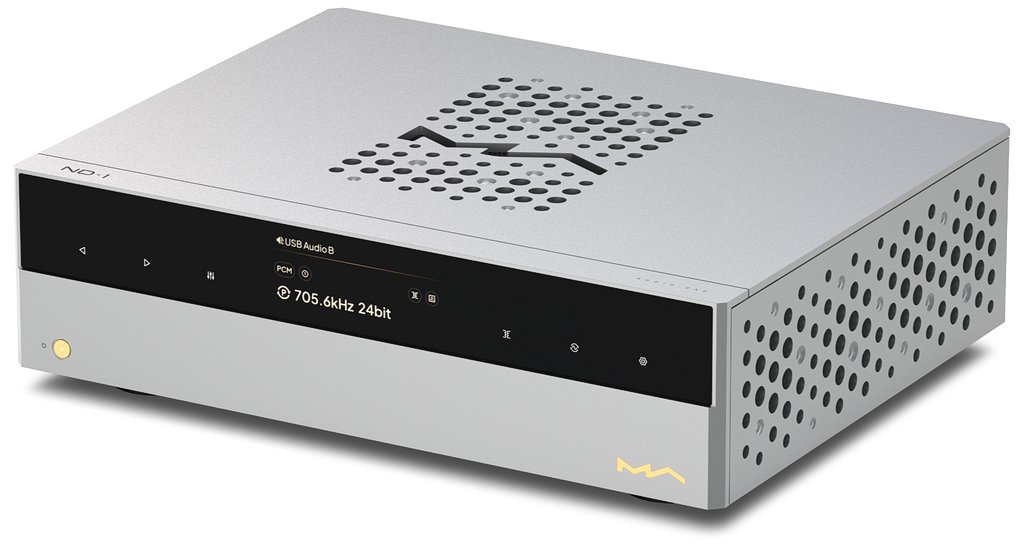
Matrix Audio has introduced the ND-1, a new digital-to-analogue converter in the company's N Series, conceived as a dedicated source component for advanced stereo systems and headphone-based desktop setups. Rather than treating the DAC as one function inside a wider all-in-one platform, Matrix Audio is positioning the ND-1 as a focused, purist design built around one core objective - high-performance digital decoding with a degree of tonal flexibility that remains relatively unusual in this category. Officially unveiled as part of the complete N Series line-up in March 2026, the ND-1 joins the NT-1 digital audio transport and the NA-1 headphone amplifier to form what Matrix describes as a premium desktop separates system.
That wider context matters, because Matrix Audio has spent the last few years building not just individual products, but a fairly coherent ecosystem of streamers, transports, DACs, headphone amplifiers and related accessories tied together by its own hardware and software platform. In the company's current catalog, the N Series is presented as a higher-tier desktop line intended for users who want the separation, flexibility and upgrade logic of a traditional hi-fi system in a more compact footprint. The ND-1 is therefore not meant to be seen as an isolated DAC dropped into the range at random, but as a central decoding stage within a stack that can also include the NT-1 transport, the NA-1 amplifier and, if desired, the SC-1 reference clock or SS-1 Pro network switch.
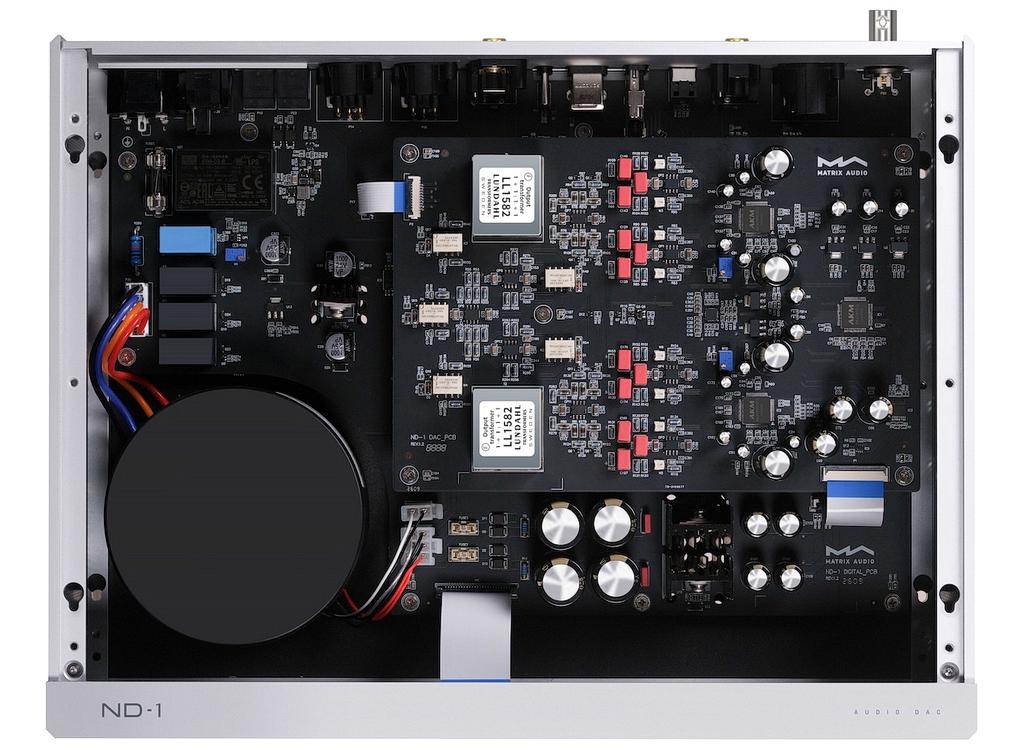
The most distinctive feature of the ND-1 is its switchable analogue output stage. Matrix Audio has built the unit around two selectable output characters, labelled Transformer and Op-Amp, allowing the user to choose between a signal path coupled through Lundahl output transformers and a more conventional operational-amplifier-based stage. In the company's own description, the transformer mode is intended to deliver a warmer, richer and more analogue-like presentation, while the op-amp mode is voiced for speed, high resolution, sharper transients and a more explicitly modern sense of precision. That makes the ND-1 less of a conventional one-voice DAC and more of a component designed to offer two distinct sonic approaches within the same chassis, depending on system matching and personal taste.
At the digital core of the device is a fully balanced dual-DAC architecture based on AKM's flagship AK4191EQ delta-sigma modulator and two AK4499EX DAC chips, arranged in independent left- and right-channel conversion paths. Matrix says this ‘1+2' architecture is intended to improve channel separation, phase consistency and jitter suppression, while also supporting a very high signal-to-noise ratio and dynamic range. In the published specifications, the op-amp output stage is rated at more than 127 dB A-weighted SNR on XLR outputs, with THD+N below 0.0002 percent at 1 kHz. The ND-1 also supports PCM up to 32-bit/768 kHz and native DSD up to DSD512 through its higher-bandwidth digital inputs, placing it squarely in the upper end of the contemporary DAC market rather than in the more mainstream segment of simplified converter designs.
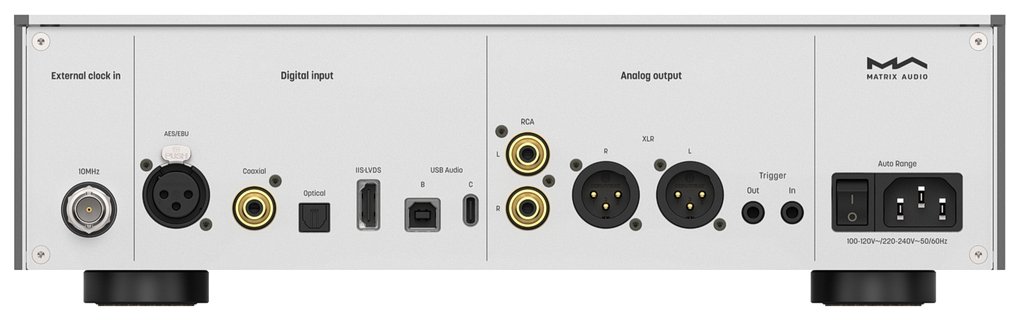
Clocking and power-supply architecture appear to be just as central to the design brief as the DAC chipset itself. Matrix Audio specifies a custom ultra-low phase-noise femtosecond clock inside the ND-1, alongside a high-performance DPLL clock synthesis circuit derived from the company's flagship MS-1. The unit also supports an external clock reference mode and includes a 10 MHz clock input, allowing it to be used with devices such as the Matrix Audio SC-1 reference clock. Internally, the digital and analogue sections are split across two separate PCBs in order to reduce mutual interference, while power is provided by a multi-winding toroidal transformer and multiple low-noise regulators. In other words, this is very clearly a DAC designed according to traditional high-end priorities - isolation, power integrity, clock precision and controlled signal routing - rather than one built around convenience features first.
Connectivity is extensive and reflects the unit's role as a serious standalone decoder. The ND-1 provides coaxial, optical and AES/EBU inputs, as well as IIS-LVDS and both USB Type-B and USB Type-C. Matrix states that all digital inputs use electrical isolation to reduce common-mode interference and ground-loop noise between the source component and the DAC circuitry. On the analogue side, the unit offers both RCA and XLR outputs, and users can select between two output levels in order to match the sensitivity of an amplifier or a pair of active speakers more precisely. A 100-step digital volume control also allows the ND-1 to be connected directly to a power amplifier or active loudspeakers, which means it can function not only as a DAC but, in the right system, as a simplified digital control centre. The device additionally includes PCM resampling and DSD conversion options for users who want to experiment with different digital-processing paths.
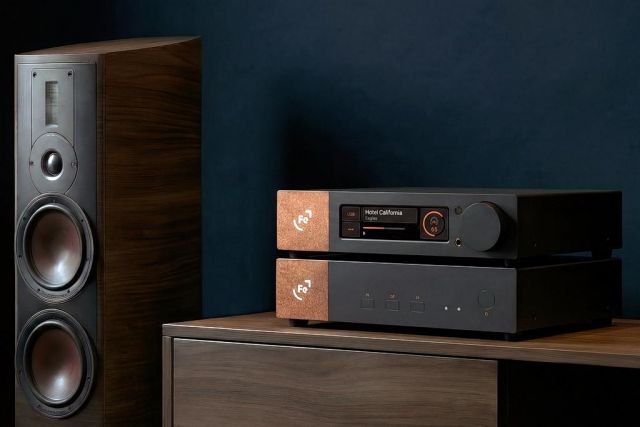
From a design standpoint, the ND-1 continues Matrix Audio's established visual language, with a CNC-machined aluminium chassis, a large front-panel display and a control interface built around a prominent rotary knob. The metal enclosure is not there simply for appearance, as the company also presents it as part of the unit's shielding strategy for both digital and analogue circuitry. Physically, the DAC measures 330 x 267 x 97 mm and weighs 5.6 kg, making it compact by full-width hi-fi standards but substantial enough to feel like a proper separates component rather than a lightweight desktop accessory. Matrix also fits the ND-1 with its MA-DAMPER PRO isolation system, developed with Audio Bastion, as part of a broader attempt to address mechanical resonance and vibration control within the N Series ecosystem.
In practical terms, the ND-1 looks like a product aimed at listeners who already know what they want from a digital source and are willing to pay for a more specialised answer than a streamer-DAC combo can usually provide. Matrix Audio is not selling convenience here so much as control - control over voicing, over system matching, over clocking and over the exact role the DAC will play inside a desktop or compact hi-fi chain. At $2,799 US, the ND-1 enters a competitive part of the market, but its transformer-coupled output option, dual-mode analogue stage and high-spec internal architecture give it a clear identity rather than leaving it to compete on chipset names alone. Info and photos by Matrix Audio.