Reviews

Vienna Acoustics Mozart SE Signature

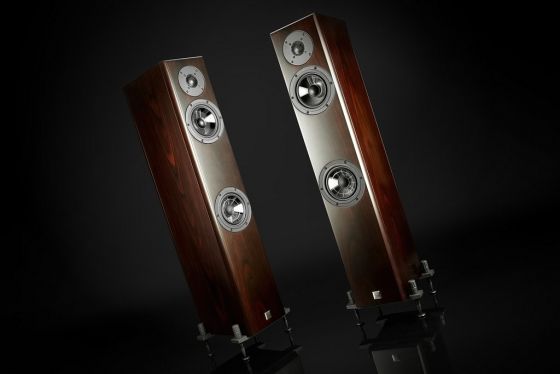
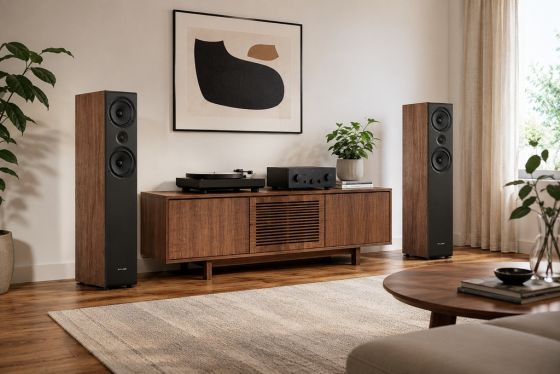
In the world of loudspeakers, some designs command respect through advanced engineering, exotic materials and impressive specifications. Others do not look like spaceships, make no use of materials seemingly borrowed from z science-fiction film, and yet win people over with beautiful, musical sound and the simple fact that one can imagine living with them every day. Vienna Acoustics belongs firmly to the second group. The Austrian manufacturer has never built its identity around simulations, calculations and graphs alone, focusing instead on what makes its products appealing to the eye and the ear. The company was founded in 1989 by Peter Gansterer and Peter Haferl, whose goal was to bring together two worlds - solid engineering and the kind of aesthetics usually associated with fine furniture. Based in Rust, a small town in Austria's Burgenland region, the company now employs around 40 people. Among audiophiles, it is known for distinctive loudspeakers with exceptional cabinet work. Its catalog is dominated by models designed for stereo systems, and the names chosen for individual models will feel familiar to any music lover. Liszt Reference, Beethoven Concert Grand Reference, Haydn SE Signature, Mozart SE Signature - there is clearly a theme here. The last of…

Meze Strada

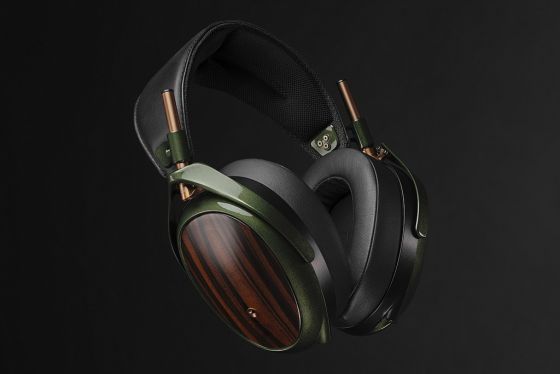
In a surprisingly short period of time, Meze Audio has managed to move from the margins of the market to the center of the premium headphone conversation. The Romanian brand, founded by industrial designer Antonio Meze, built its reputation on a combination of unmistakable design, carefully considered ergonomics, and a warm, natural, easy-to-like sound. Its first major hit, and the model that really changed everything for what was still a tiny workshop at the time, was, of course, the 99 Classics. Over the years, that headphone evolved into several versions and an entire family of related models. The more affordable 99 Neo followed, along with the 12 Classics and 11 Neo in-ear monitors, but that was still only the beginning. Not long after that, the Romanian company stopped playing cautiously and stepped into the world of high-end planar magnetic headphones with models such as the Empyrean, Elite, and Liric. It was a very good decision. The workshop from Baia Mare, already associated with well-made, distinctive headphones thanks to the 99 Classics, suddenly began to be viewed as one of the true leaders in the field, mentioned alongside giants such as Sennheiser, Audeze, and Focal. After several years of building that…

Audiomica Laboratory Consequence

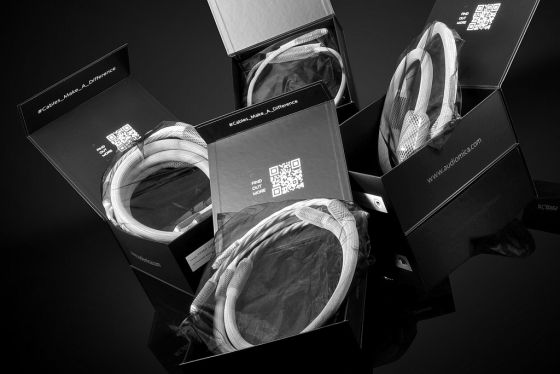
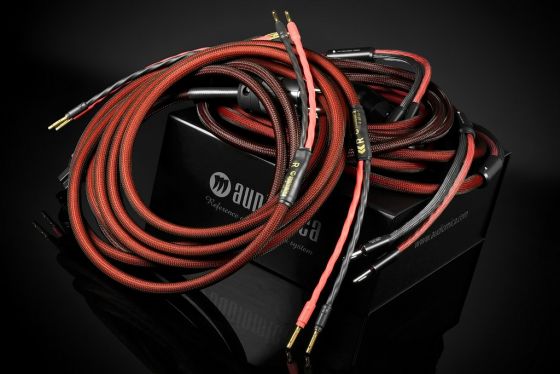
The moment comes in every audiophile's life. After enough experimenting with speakers, amplifiers, and source components, once the system finally starts sounding genuinely good, a question begins to nag at us - should we be paying more attention to cables? Some people agree completely, arguing that cables are just as much a part of the signal path as an amplifier or speakers. Others laugh the whole idea off and insist that anyone who believes in cable differences simply should have paid more attention in physics class. In truth, there is only one way to find out - try it and decide for yourself. If we hear no difference, there are really only three logical explanations. The first is that our system still is not revealing enough to expose those nuances, or that the cables we borrowed for comparison, despite their prettier plugs and more upscale appearance, are not actually much different from what we already use. The second is that our hearing is not quite as sensitive as we would like to think, and what others describe as a night-and-day transformation is, for us, barely there at all. The third is that cables have no effect on sound whatsoever and…

Fezz Audio Titania MK2

In the world of audio equipment, it is not hard to find stories that sound compelling on paper, only to lose their charm the moment they collide with reality. Someone has an interesting idea, solid technical backing, a clear vision, even the right moment to enter the market, and yet after two or three years all that remains are a few mentions in the archives of specialist websites and a handful of products remembered by their owners with a certain fondness, but little real conviction. With Fezz Audio, things were different from the very beginning. Of course, one could look at the brand with caution, as it was entering an industry that loves a good new story on the one hand, but remains deeply conservative and distrustful on the other. When somebody appears on that scene with an original tube amplifier, many music lovers inevitably ask whether it really makes sense. Is this merely another attempt to offer something that looks familiar, glows in the dark and is meant to lure customers with promises of magical sound, without necessarily being backed up by a mature design?

Fezz Audio Luna

When Fezz Audio, then a small, unknown domestic manufacturer, unveiled its first amplifier ten years ago, very few people believed it stood a chance. Yes, the company was connected to a respected producer of transformers used by prestigious audio brands, but as its own label it simply did not exist in the consciousness of audiophiles. At launch, Fezz brought only a single product to market. It was not a compact digital-to-analog converter, not a lavishly equipped solid-state integrated, but a modest tube integrated that, from the customer's perspective, distinguished itself mainly with its reasonable price and a handful of available color finishes. How was this oddity ever supposed to shake up the tightly sealed hi-fi world? And yet, within just a few months, Silver Luna was on everyone's lips. Reviewers and music lovers quickly took to it, drawn by its honest, fully tube-based sound and its raw, minimalist, slightly industrial styling. It was a straightforward, sensible piece of gear with no gimmicks, no cosmetic frills, no wooden ornaments - just engineering focused on doing one job well. It turned out you really could build tube amplifiers in Europe that didn't cost as much as a new car.

Audiomica Laboratory 4-all-in-1 & 4-all-in-1 PRO

The official history of Audiomica Laboratory brand began in 2005, but its founder, Łukasz Mika, had planned this step several years earlier. As someone who always loved music and was fascinated by the equipment used to reproduce it, he eventually decided to explore the topic of cabling and its impact on the sound of his stereo system. What initially seemed like a harmless curiosity completely captivated him. The differences were clear, and observing them brought Łukasz immense joy. However, what intrigued him even more was the question of why this happened - what factors and design aspects made one cable produce phenomenal sound while another lacked that magic?

Hegel H600

In Norse mythology, Thor is known as the god of thunder, lightning, marriage, vitality, agriculture, and the home hearth. He was said to be more sympathetic to humans than his father, Odin, though equally violent. He traveled in a chariot harnessed to goats, Tanngrisnir and Tanngnjóstr. Furthermore, he was usually depicted as a mighty man with a red beard and three key attributes - a belt doubling his power, iron gauntlets, and a great battle hammer called Mjolnir (Mjølner). Whenever Thor hurled his hammer, it would unfailingly come back to him, crushing the target of his master's attack ("Mjøl" in modern Norwegian literally means "flour" or "powder," so "Mjølner" can be understood as "a tool for grinding to powder"). The impact of this unusual weapon was to be accompanied by lightning. How valuable this hammer was to Thor can be seen in the song telling the story of what he went to when a giant named Thrym stole Mjolnir, demanding the hand of the goddess Freya for its return. According to this legend, Thor, at the instigation of Heimdall, the guardian of Asgard, was to disguise himself as Freya, shielding himself with a veil. Thinking that the plan had succeeded,…

Pylon Audio Diamond Monitor 18 mkII

Manufacturers of hi-fi equipment like to brag about their peak performance, but in any company's product lineup, the key role is played by the models that simply sell best. They are the ones that provide funds for further development and indicate what ideas appeal most to customers. Recently, Pylon Audio has been working hard on high-end loudspeakers. Over the past few years, the Polish manufacturer's catalog has included speakers from the Jasper series, including six models, the powerful Amber mkIIs, the old-school Jade 20s, which just got a bigger brother, and the Emeralds 25s. However, diamonds dominate the sales statistics, and I'm not surprised at all. The models in this series offer everything music lovers seek - a discreet and modest design, high-quality craftsmanship, versatile sound, seamless compatibility with a wide range of electronics, a rich variety of color options, and an affordable price. It may not be a piece of equipment that relies on exceptional technical solutions and surprises its owner daily, but it is hard to identify any clear drawbacks. If only we do not save too much on electronics and choose a model that fits the size and acoustics of our listening room, we will get speakers…

Tellurium Q Statement II

If the mainstream media is to be believed, our world is collapsing piece by piece. Paradoxically, with the end of times fast approaching, the market for luxury goods has strengthened, and this includes stereo equipment. Manufacturers of electronic components and loudspeakers are introducing bigger, more powerful versions of flagship models, which just a few years ago they described as their opus magnum, a benchmark that cannot be surpassed. Stereo systems presented at the biggest exhibitions are becoming more expensive every year. The top-of-the-line Tellurium Q cables are a prime example of this. When their second version went on sale about six months ago, I was unable to review them, as they were already scheduled for a "tour", which could not be completed, because every so often the Statement IIs found a new owner. The distributor ordered two more sets, one of which went from dealer to dealer, and the other was sold almost immediately. More sets had to be brought in, and finally, I managed to snatch up an interconnect and speaker cable worth just over €16,500.

Lindemann Move

Whenever I grumble about the fragmentation of the audio equipment market, which translates into a huge variety of equipment available in stores, but also problems for customers to sort it all out in their heads and make a choice, I get a press release about new speakers, amplifier, or wireless headphones. If only these were brands whose existence I was aware of, whose products caught my eye while browsing magazines or reports from exhibitions, but this is not always the case. Later it turns out that we are not at all dealing with a small factory founded by enthusiastic students, but with a company operating continuously for thirty years, boasting many successes, awards, and, of course, a large group of loyal fans. Such was the case with Lindemann.

We use cookies to improve our website and your experience when using it. To find out more about the cookies we use and how to delete them, please see our Privacy Policy.