News

Technics SL-1210MKX

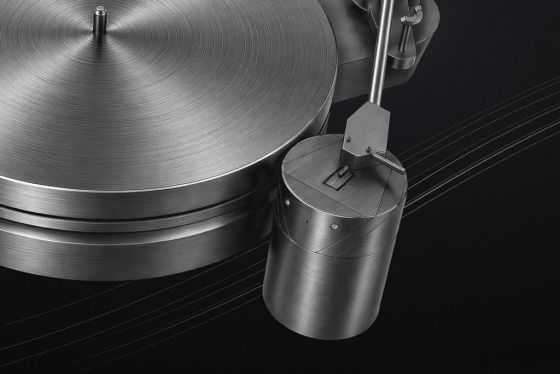
Some pieces of audio equipment have long since transcended their original purpose to become genuine pop culture icons. The Technics SL-1200 is one of the finest examples. Introduced in 1972 as an advanced turntable for discerning music enthusiasts, it eventually became an essential tool for DJs and a permanent fixture in nightclubs around the world. Its unmistakable appearance, remarkably durable construction, and direct-drive mechanism played a major role in the development of DJ culture, while successive generations established Technics as the benchmark for professional turntables. Now the Japanese manufacturer has unveiled the SL-1210MKX, a new model designed to open another chapter in this remarkable story. Developed in collaboration with professional DJs and sound engineers, the latest version promises improved vibration resistance, more precise pitch control, and a range of refinements tailored to the demands of the most challenging performance environments.
JBL Pulse 6

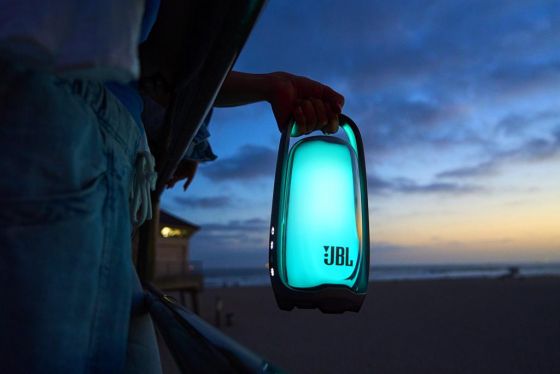
JBL has introduced a new generation of one of its most distinctive wireless speakers. The Pulse 6 is the latest version of a portable device that does more than just play music - it also doubles as an eye-catching lamp, displaying colorful animations synchronized with the rhythm of your favorite tracks. Compared to its predecessor, the new model features an upgraded acoustic system, AI Sound Boost technology, Bluetooth 6.0 connectivity, and an expanded lighting system that now extends to the integrated carrying handle. There are also several practical improvements, including support for lossless audio playback via USB-C, the ability to connect multiple speakers using Auracast, and an IP68-rated enclosure designed to withstand dust and water. With these upgrades, JBL aims to make the Pulse 6 an even more versatile combination of portable speaker, party accessory, and decorative lighting.

Triangle Borea BR05

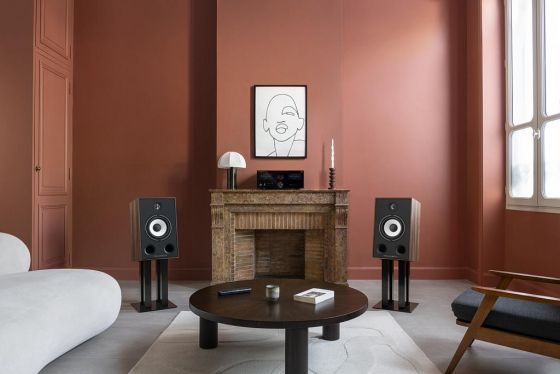
Retro-inspired hi-fi equipment is enjoying something of a renaissance. Manufacturers are increasingly revisiting designs from decades past, and few things evoke the golden age of stereo quite like a pair of large standmount speakers with generously sized woofers. French manufacturer Triangle has embraced this idea with the BR05, the latest addition to its popular Borea range. These two-way speakers feature a 21-cm (8.3-inch) midwoofer, dual bass-reflex ports, and cabinets standing almost half a meter tall. According to Triangle, this combination delivers the scale and bass extension more commonly associated with floorstanding speakers while retaining the distinctive appeal of traditional large standmounts. The Borea BR05 also offers two placement options, allowing owners to use either the supplied angled bases or specially designed speaker stands.

PLS Labs Free Your Cartridge

Throughout history, humanity has devoted an extraordinary amount of effort to making life easier. We invented the wheel, the steam engine, electricity, computers, and the Internet. The audio industry has followed a similar path. Once upon a time, listening to music meant winding up a gramophone by hand. Later, all you had to do was put a record on a turntable. Today, almost any recording ever made is just a few taps away on a smartphone. You might think we've finally reached a point where listening to music couldn't possibly get any easier. Fortunately, there are still people who find such simplicity deeply unsatisfying. Instead of sending music directly from a streamer to an amplifier, they'd rather convert the electrical signal into mechanical vibrations, feed those vibrations into a phono cartridge, and then convert them back into an electrical signal. Does that sound completely ridiculous? Perhaps. But that's essentially the idea behind Free Your Cartridge, a new technology developed by PLS Labs (Pure Laminar Stream Laboratories).

Sony NW-WM1ZM3 i NW-WM1AM3

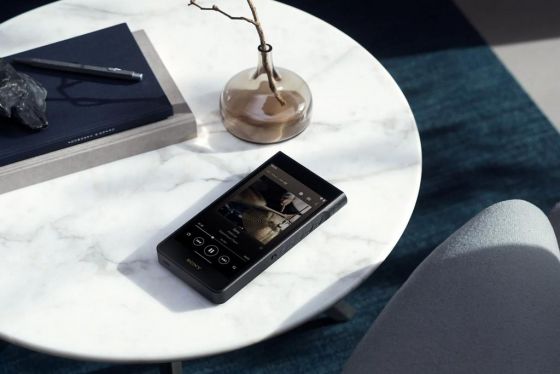
If there's one thing Sony has demonstrated over the years, it's that the Walkman is remarkably difficult to kill. The original portable cassette player changed the way people listened to music, turning what had previously been a largely stationary activity into something they could enjoy almost anywhere. Back then, the priorities were fairly straightforward: reasonable sound quality, compact dimensions, long battery life, and enough room in your bag for a few favorite tapes. Nearly half a century later, the world looks very different. For most people, a smartphone and a pair of wireless earbuds provide everything they could possibly need, with millions of recordings available at the touch of a screen. Yet Sony continues to develop dedicated portable music players, including some that cost more than an entire high-end stereo system. The latest examples are the NW-WM1ZM3 and NW-WM1AM3, two new members of the company's prestigious Signature Series. Both feature upgraded S-Master HX digital amplifiers, extensively redesigned power supplies, sophisticated noise-reduction measures, and larger 5.5-inch touchscreens. They also support high-resolution audio, modern streaming services, and advanced signal processing. But their real purpose is something rather more specific: to convince demanding listeners that a dedicated music player can still offer something…

iFi Audio iCAN Phantom 1.5

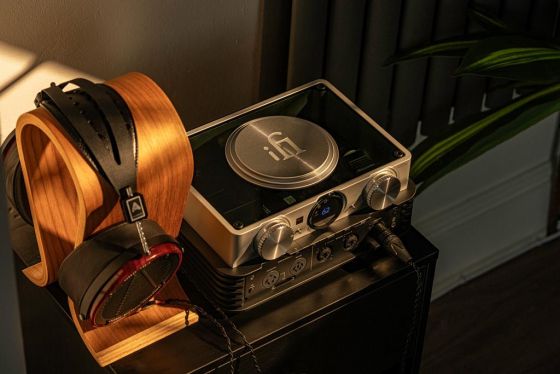
Building a serious headphone collection can get complicated remarkably quickly. A pair of sensitive in-ear monitors might work beautifully with a small portable DAC, but plug them into a powerful desktop amplifier and suddenly there's audible hiss in the background. Planar magnetic headphones present a different challenge, often demanding considerably more current than their size would suggest. And if you decide to explore electrostatic headphones, you're entering another world altogether, complete with specialized amplification and high-voltage requirements. Before long, what started as a relatively simple listening setup can turn into a collection of amplifiers, power supplies, and cables, each serving a slightly different purpose. iFi Audio believes there's a better way. Its new iCAN Phantom 1.5 is an updated version of the company's flagship analog headphone amplifier and preamplifier, designed to accommodate practically every type of headphone from a single chassis. The original iCAN Phantom arrived in 2023 as the successor to the Pro iCAN Signature, bringing together several technologies that would normally require separate components. The 1.5 edition doesn't reinvent that concept, but introduces a series of refinements aimed at making this exceptionally versatile amplifier easier to configure, operate, and live with.

QED Performance

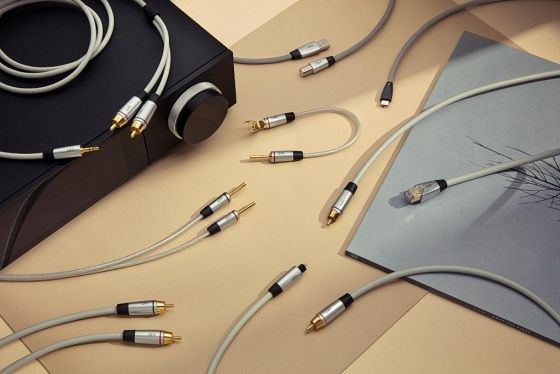
There was a time when connecting a hi-fi system was a fairly straightforward business. You needed a pair of speaker cables, an interconnect between your source and amplifier, and perhaps a few additional wires if you happened to own a particularly elaborate setup. These days, things are rather different. A typical system might include a streamer connected through Ethernet, a DAC receiving music over USB, an optical connection to the television, a coaxial digital transport, an active subwoofer, and perhaps even a good old 3.5 mm headphone jack, which has somehow survived repeated predictions of its imminent extinction. With so many different connections to consider, buying the right cables can become almost as complicated as choosing the equipment itself. British cable specialist QED is hoping to make things a little easier with a comprehensive overhaul of its popular Performance series. The refreshed lineup now consists of 13 models covering practically every common analog and digital connection found in modern audio and home theater systems. The biggest additions are an entirely new speaker cable, matching bi-wire links, and four USB cable configurations, bringing the range up to date with the increasingly diverse ways people listen to music.

JBL Quantum 520

Gaming headsets have come a long way from the days when their main selling points were oversized earcups, an enormous microphone, and enough colored LEDs to illuminate an entire room. These days, manufacturers are paying considerably more attention to sound quality, spatial accuracy, wireless performance, and the ability to use the same headphones for activities other than gaming. JBL has been particularly active in this area, gradually expanding its Quantum series with models aimed at different types of players and budgets. The latest addition is the Quantum 520, a full-size wireless gaming headset that combines 50 mm dynamic drivers, JBL Quantum Spatial Sound, a detachable directional microphone, and three connection options. Users can choose between low-latency 2.4 GHz wireless transmission, Bluetooth 5.4, and wired USB-C audio, making the Quantum 520 suitable for everything from competitive gaming to listening to music on a smartphone. Hi-Res Audio support, extensive customization through JBL QuantumENGINE, and up to 37 hours of battery life complete a surprisingly versatile package.

Unison Research Unico DS

Unison Research has always been associated with vacuum tubes, elegant Italian craftsmanship, and a certain old-school approach to music reproduction. Yet the company has never been particularly interested in treating tradition and technological progress as opposing forces. Its latest creation, the Unico DS, is perhaps the clearest expression of that philosophy to date. This flagship digital source combines a network streamer, CD transport, and sophisticated DAC with a fully balanced, Class A tube output stage. At its heart are an ESS SABRE ES9038Q2M converter, advanced digital signal processing, and a proprietary technology called F.D.F. (Frequency-Dependent Feedback). Rather than producing yet another streamer whose main selling point is a slick smartphone app, Unison Research has set out to build a serious source component for high-end stereo systems. The idea is to bring together the precision, transparency, and dynamic capabilities of modern digital audio with the natural presentation and tonal richness that have long defined the company's tube amplifiers.

Technics EAH-A1000

Developing a successful pair of wireless headphones is one thing. Taking technology originally designed for tiny in-ear monitors and adapting it to a full-size over-ear model is something else entirely. That's precisely what Technics has done with the EAH-A1000, its new flagship wireless headphones and the long-awaited successor to the EAH-A800. Rather than simply updating the styling, improving noise cancellation, and adding a few features to keep up with the competition, the Japanese manufacturer has gone back to the drawing board. The centerpiece is an entirely new 40 mm Magnetic Fluid Driver, incorporating technology previously used in the company's EAH-TZ700 in-ear monitors and EAH-AZ100 wireless earbuds. The driver combines magnetic fluid stabilization with a carbon fiber diaphragm and a suspension design derived from Technics' high-end loudspeakers. Add adaptive active noise cancellation, advanced spatial audio capabilities, three-device Bluetooth multipoint, and a completely redesigned headband, and the result looks like a considerably more ambitious product than a conventional generational update.

We use cookies to improve our website and your experience when using it. To find out more about the cookies we use and how to delete them, please see our Privacy Policy.