Displaying items by tag: dac - StereoLife Magazine

FiiO M33

FiiO has expanded its lineup with the M33, a portable digital audio player built around the company's proprietary R2R ladder DAC architecture, a solution previously associated mainly with stationary designs. The new DAP combines this classic digital-to-analog conversion topology with an Android 13 platform and a fully developed headphone amplification stage, positioning the M33 as a mobile source for listeners seeking a more analog-leaning presentation without sacrificing modern functionality. "M33 represents our vision of bringing the magic of analog sound into the user's pocket. By implementing our proprietary R2R architecture, we achieved a level of naturalness and fluidity that cannot be replicated by conventional methods. This is a product for those who look for emotion and authenticity in music." - explains James Chung, Product Director at FiiO.

From Transformers to Tube Amplifiers - The Story of Fezz Audio

If someone were to say that the headquarters of one of the most interesting and fastest-growing manufacturers of tube amplifiers and hi-fi components was based not in Munich, Glasgow, or Tokyo, but in a tiny village near Białystok, Poland, many audiophiles would probably raise an eyebrow. This is, after all, the heart of Podlasie - a region that Poles themselves tend to see as beautiful, picturesque, and somewhat removed from the country's main industrial centers and, at least in popular jokes, a little behind the curve of modern life. Internet memes reinforce the stereotype - people are supposedly still discovering electricity there, throwing spears at airplanes, and rolling up the asphalt from the roads at night. A quick search brings up images of R2D2 and C3PO turned into a moonshine still, a long sausage wrapped around a cable reel labeled "Podlasie Fiber Optic", and Fred Flintstone's car presented as a local taxi. And yet it is precisely here, among forests, lakes, and open countryside, that a company emerged, first with small, simple, affordable tube amplifiers, and now delivers beautifully engineered, thoughtfully designed, thoroughly modern components to music lovers in more than thirty countries worldwide.

Écoute TH1

Écoute Audio has introduced the TH1, a pair of high-end wireless headphones built around a signal architecture more typical of a compact hi-fi system than a conventional Bluetooth design. Instead of relying on an integrated system-on-chip solution that combines decoding, processing and amplification in a single platform, the TH1 use a discrete dual-mono topology with a dedicated DAC stage, a tube preamplifier and separate Class A/B amplification for each channel. The result is a product positioned not simply as another premium portable headset but as a wearable extension of traditional hi-fi design logic.

Ferrum Wandla GoldenSound Edition Gen 2

Ferrum has introduced the Wandla GoldenSound Edition Gen 2, an updated version of its DAC and preamplifier platform developed in collaboration with GoldenSound. Building on the EISA award-winning Wandla architecture and the earlier GoldenSound Edition variant, the new model focuses on expanded user control over tonal balance, spatial presentation and harmonic character through redesigned versions of three key processing tools - Impact+, Tube Mode and Spatial Enhancement - all refined using Ferrum's Sweet Spot Tuning approach.

Matrix Audio ND-1

Matrix Audio has introduced the ND-1, a new digital-to-analogue converter in the company's N Series, conceived as a dedicated source component for advanced stereo systems and headphone-based desktop setups. Rather than treating the DAC as one function inside a wider all-in-one platform, Matrix Audio is positioning the ND-1 as a focused, purist design built around one core objective - high-performance digital decoding with a degree of tonal flexibility that remains relatively unusual in this category. Officially unveiled as part of the complete N Series line-up in March 2026, the ND-1 joins the NT-1 digital audio transport and the NA-1 headphone amplifier to form what Matrix describes as a premium desktop separates system.

Fezz Audio Titania MK2, Titania Power Amplifier MK2 & Mira Ceti MK2

Fezz Audio has refreshed its Evolution series with three updated tube amplifiers - the Titania MK2 integrated amplifier, the Titania Power Amplifier MK2 stereo power amplifier and the Mira Ceti MK2 single-ended Class A design - marking a broader technical step forward rather than a routine generational update. Based in Poland and closely linked to transformer specialist Toroidy, the company has built its reputation on combining traditional tube topologies with modern usability, and the latest MK2 versions clearly continue that approach. All three amplifiers introduce redesigned signal paths, revised driver stages and upgraded operating stability, while sharing a common set of practical improvements including automatic bias control, electronic tube protection systems, optimized warm-up sequences and support for FEBS expansion modules. Together, these changes position the new Evolution models as more mature and more system-flexible successors intended to retain the musical character of classic tube amplifiers while reducing the complexity typically associated with everyday ownership.

Fezz Audio Titania MK2

In the world of audio equipment, it is not hard to find stories that sound compelling on paper, only to lose their charm the moment they collide with reality. Someone has an interesting idea, solid technical backing, a clear vision, even the right moment to enter the market, and yet after two or three years all that remains are a few mentions in the archives of specialist websites and a handful of products remembered by their owners with a certain fondness, but little real conviction. With Fezz Audio, things were different from the very beginning. Of course, one could look at the brand with caution, as it was entering an industry that loves a good new story on the one hand, but remains deeply conservative and distrustful on the other. When somebody appears on that scene with an original tube amplifier, many music lovers inevitably ask whether it really makes sense. Is this merely another attempt to offer something that looks familiar, glows in the dark and is meant to lure customers with promises of magical sound, without necessarily being backed up by a mature design?

Simplicity, lightness, and a focus on streaming sound quality - JPLAY

In the age of streaming and digital audio files, one might think that listening to music has never been simpler. In practice, however, especially for more demanding users, it remains a surprisingly complicated business, particularly when we want to combine the convenience of using a smartphone with the capabilities of more advanced audio equipment. When it comes to managing music playback, we usually have two options. The first is to use the app provided by the streaming service itself - quick and intuitive, but offering only basic functionality. Better control over sound or more advanced options are out of the question, and on top of that our player must be compatible with a given app and hold the right certification for it to appear on the list of available output devices at all. The second option is to turn to external software such as Audirvana, Roon or apps supplied by hardware manufacturers such as BluOS, Lumin or Auralic. This is where the trouble begins as well. Either something important is missing, or the app turns out to be clumsy and unstable, or it is excellent, refined and versatile, but expensive. What is missing is a single standard and a common language. Every company goes its own way - some build their own closed ecosystems, others support already existing platforms, and some seem to be waiting, although it is not entirely clear for what. As a result, the user has to improvise and navigate between all these options, which often ends with the use of several different apps. One streamer appears in the streaming service app, another does not. One supports all the popular standards, while with another the wait for certification has already dragged on for a year, and nobody knows whether customers will ever get it. One proprietary app turns out to be polished, another is irritating at every turn. And yet it was all supposed to be so elegant... Streamers, DACs and all-in-one systems are still evolving relatively quickly, but when it comes to apps, the last real breakthrough was Roon, which arrived on the scene ten years ago. That software has also continued to evolve, though perhaps not as quickly as some would like. Meanwhile, a very serious rival has emerged right under our noses. Meet JPLAY.

Michi Prestige X430 & Q430

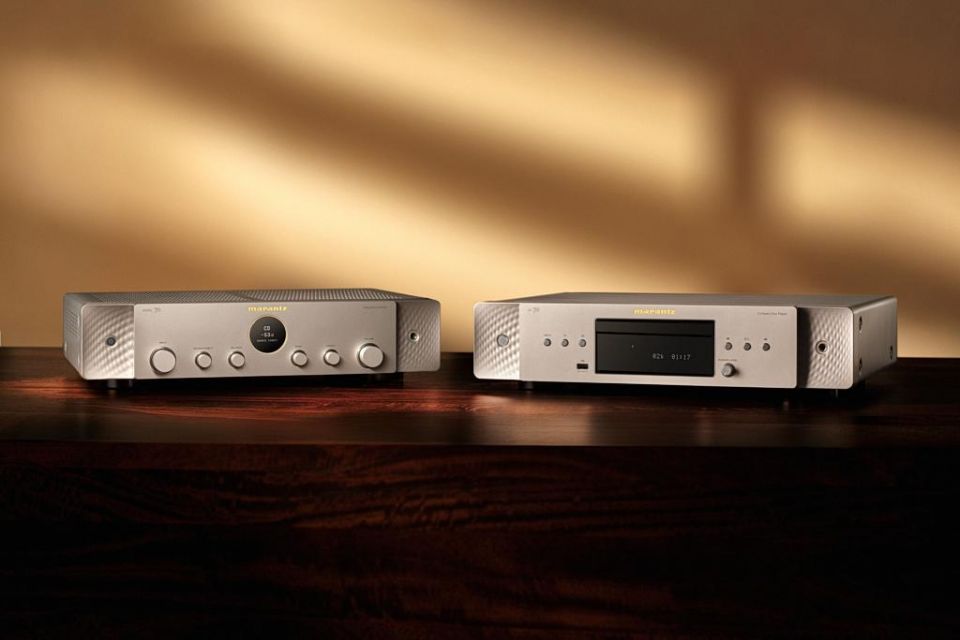
Michi is Rotel's luxury sub-brand, positioned from the outset as the more ambitious and more overtly audiophile branch of the company's catalogue. Its components have typically stood out for their carefully judged industrial design, high power output, refined internal architecture and a strong emphasis on build quality, so the arrival of the new Prestige Series feels like a logical next step in the brand's development. With this new range, Michi appears to be opening the door to a broader group of listeners. Two components join the portfolio at launch - the X430 integrated amplifier and the Q430 CD player. Both are presented as products that bring together the engineering discipline, visual sophistication and key technologies associated with more expensive Michi designs, but at a lower entry point. That sends a fairly clear message about where the brand wants to go next - preserving its high-end identity while creating a more realistic way in for listeners who may previously have admired the Michi catalogue from a distance rather than from a buying position.

Snowsky Echo

FiiO has introduced the Echo, also known as the Snowsky Echo, a compact high-resolution portable music player designed as a deliberately simple alternative to smartphones for offline listening. The device reflects a broader return to dedicated music players focused on distraction-free playback, combining styling inspired by classic cassette Walkman-style devices with a modern dual-DAC audio architecture. It is aimed at listeners who want access to hi-res audio on the move without relying on streaming apps or multifunction mobile platforms.

We use cookies to improve our website and your experience when using it. To find out more about the cookies we use and how to delete them, please see our Privacy Policy.