
- News
- Posted
Arcam A50 Signature & CD25
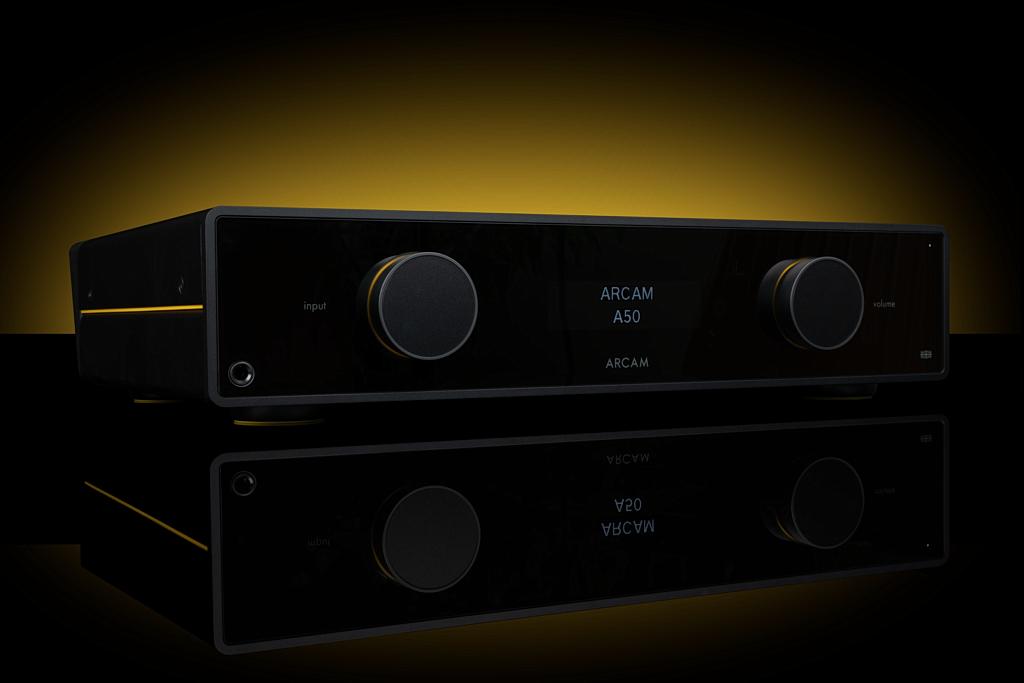
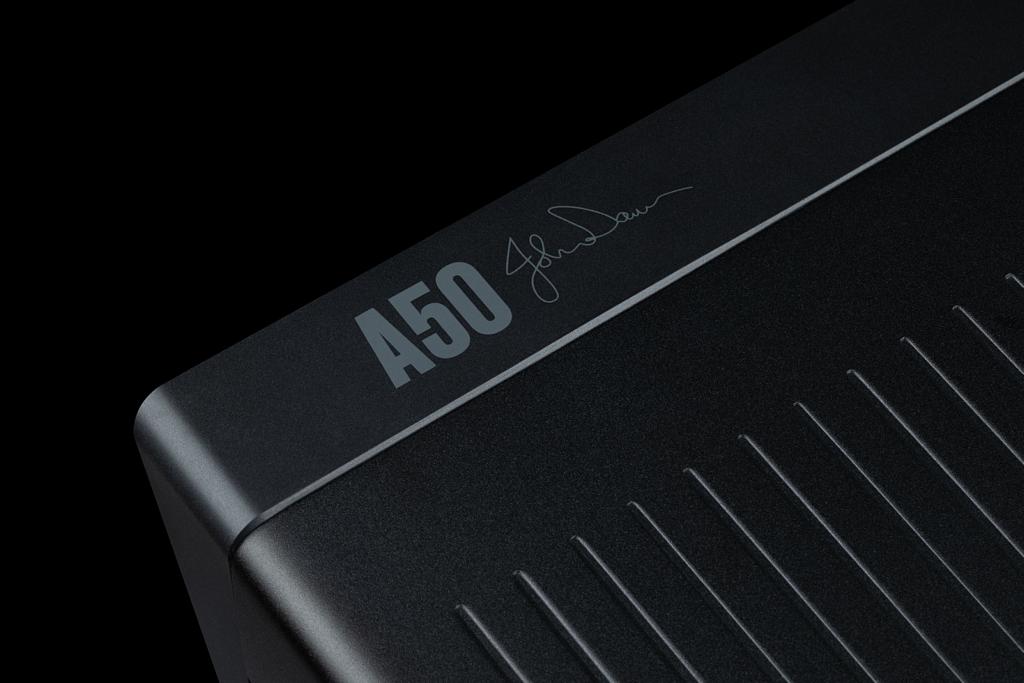
In 2026, Arcam celebrates its 50th anniversary. The British company's story began in Cambridge, where two engineering students and friends, John Dawson and Chris Evans, combined their interest in music with their technical expertise to establish Amplification and Recording Cambridge, later known as A&R Cambridge. Its first major product was the A60 integrated amplifier, introduced in September 1976. It not only gave the fledgling company a successful start, but also established the direction it would follow for decades to come. Although Arcam's catalogue eventually expanded to include disc players, digital-to-analogue converters, streamers and sophisticated home cinema electronics, amplifiers remained at the heart of the company's identity. To mark its golden anniversary, Arcam has introduced two new components positioned at the top of the Radia range - the A50 Signature integrated amplifier and the CD25 compact disc player.
The two models made their debut at High End 2026 and are neither limited-edition versions of existing products nor exercises in retro styling. Instead, Arcam has treated the anniversary as an opportunity to demonstrate where it intends to go next. Company co-founder John Dawson was involved in the development of the A50 Signature, but rather than encouraging the engineering team to recreate one of Arcam's classic amplifiers, he reportedly reminded them that the anniversary model should reflect the way people listen to music today. The result is the A50 Signature, described by its manufacturer as the most advanced and best-sounding integrated amplifier in Arcam's history. Rather than a specially modified version of an existing Radia model, it is intended to serve as a new reference design, incorporating the most sophisticated implementation yet of the company's Class G technology. It is also the first Arcam integrated amplifier to use a full dual-mono architecture, making the two channels considerably more independent than the use of separate circuit boards alone might suggest.
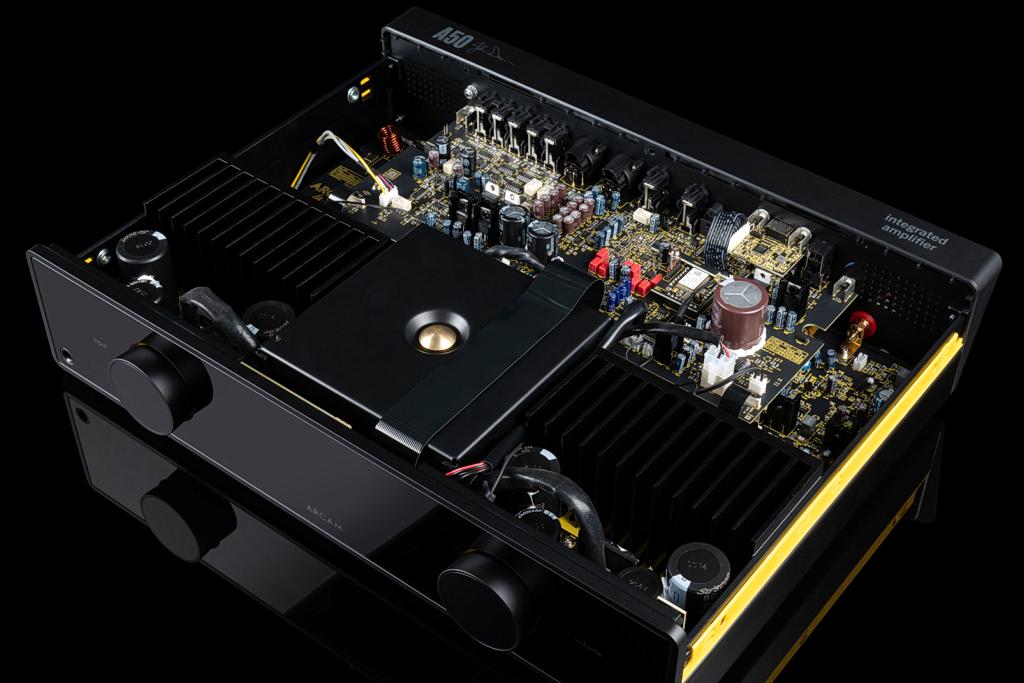
Each channel has its own transformer windings, dedicated voltage regulation, energy-storage capacitors, rail-switching stage and output-section heatsink. This extensive separation of the left and right channels is intended to reduce interference, lower the noise floor and improve channel separation, resulting in a more precise and stable stereo image. The independent power supplies should also provide greater dynamic freedom, as a sudden demand for current in one channel should have less influence on the operation of the other. Arcam's Class G topology is designed to combine the sonic qualities associated with amplifiers operating at a high bias current with the power and efficiency required to drive more demanding loudspeakers. During quieter passages, the output stage operates from lower-voltage power rails. When the signal demands more power, additional rails are brought into operation. The amplifier therefore avoids dissipating large quantities of energy as heat at all times, while retaining sufficient headroom for sudden dynamic peaks. The A50 Signature delivers 2 x 150 W into 8 Ω and 2 x 220 W into 4 Ω, with the manufacturer quoting total harmonic distortion of 0.002% at 80% of rated power.
The anniversary model has been conceived as the centrepiece of a complete contemporary stereo system, so its facilities extend well beyond a handful of line-level inputs and loudspeaker terminals. Analogue sources can be connected through three pairs of RCA inputs or a balanced XLR input. The built-in Class A phono stage supports both moving-magnet and moving-coil cartridges, meaning that owners of more ambitious turntables should not immediately need to invest in a separate phono preamplifier. The volume control, preamplifier and digital sections are also said to be newly developed, ensuring that they are capable of matching the performance of the dual-mono power amplifier. At the heart of the digital-to-analogue converter is an ESS ES9039Q2M chip operating in a differential configuration and partnered with an ESS reference voltage regulator. The USB-C input supports PCM signals at resolutions of up to 32-bit/384 kHz, while the optical and coaxial inputs accept sampling rates of up to 192 kHz.
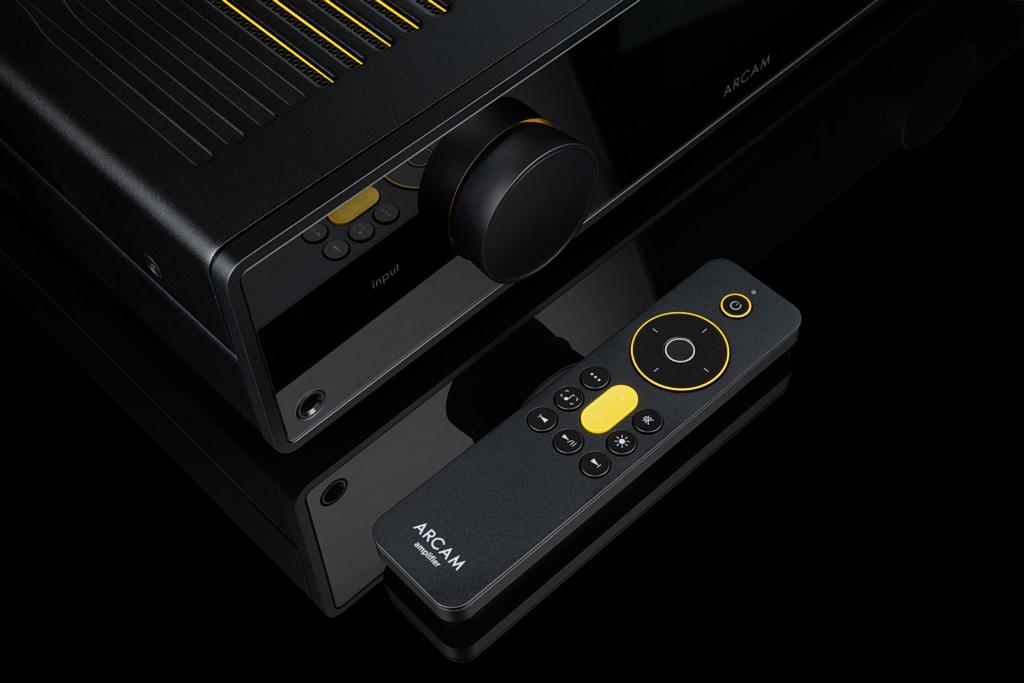
The rear panel also features an HDMI eARC/ARC connection, allowing the amplifier to be linked directly to a television. The A50 Signature can therefore serve as the centre of a traditional hi-fi system while also replacing a soundbar or AV receiver in a living room where the same pair of loudspeakers is used for music and films. The feature set is completed by two-way Bluetooth 5.4, with support for aptX, aptX HD and aptX Lossless, as well as Snapdragon Sound, LE Audio and Auracast. The amplifier can not only receive music from a smartphone, tablet or computer, but also transmit audio to compatible wireless headphones. Traditionalists are provided with a conventional headphone output designed for models with impedances ranging from 16 Ω to 2 kΩ. The A50 Signature also includes RS232, trigger input and output connections and a service USB port, making it easier to integrate into more elaborate installations. The amplifier measures 431 x 344 x 99 mm and weighs 12 kg.
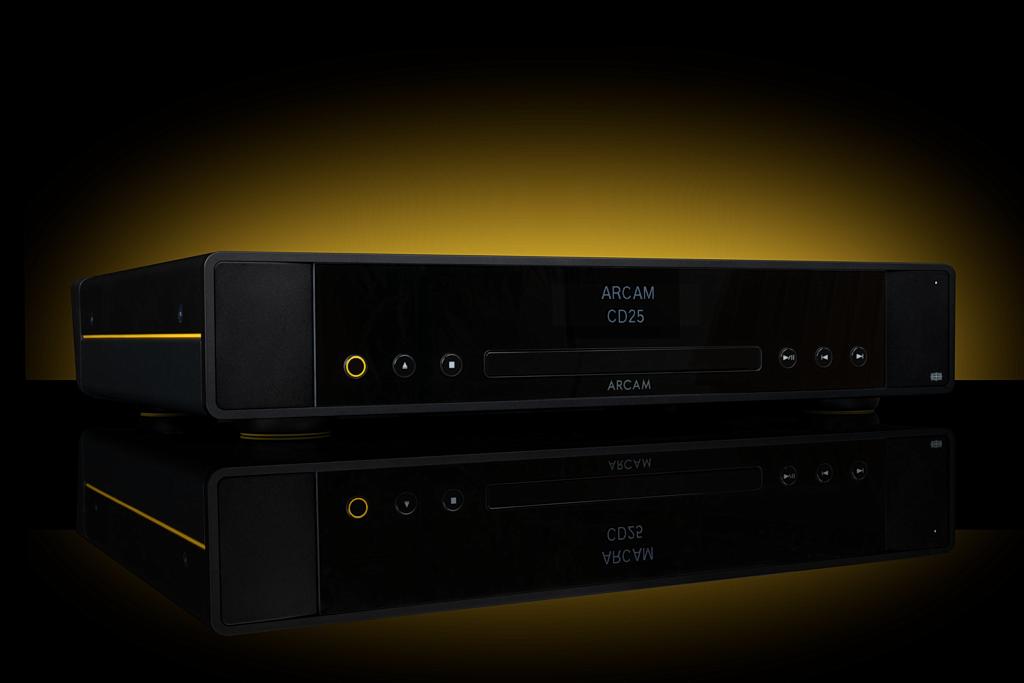
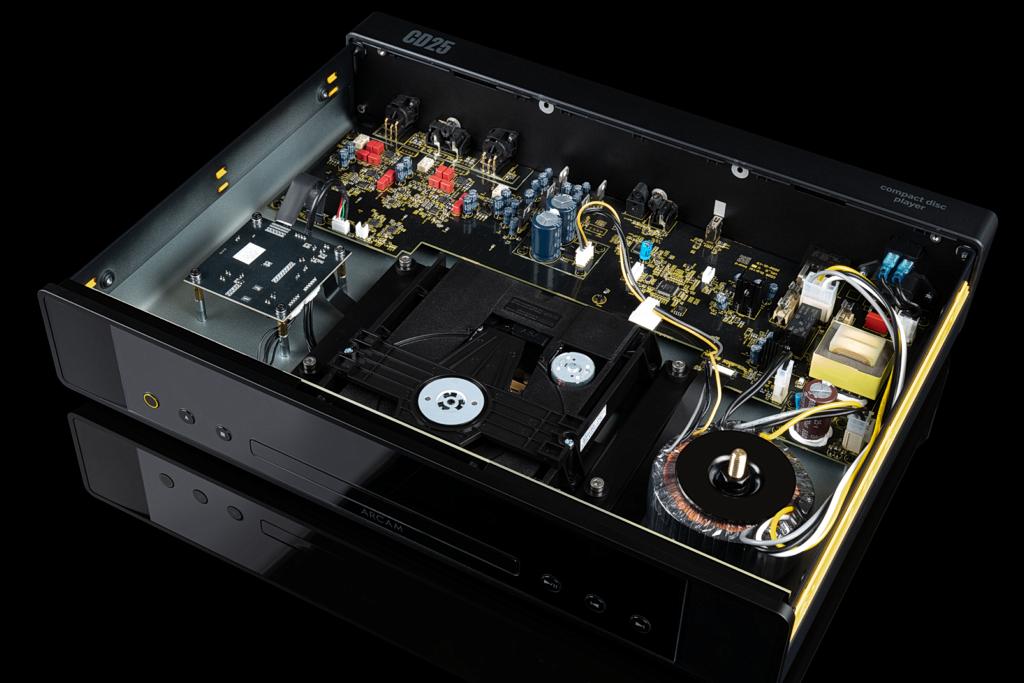
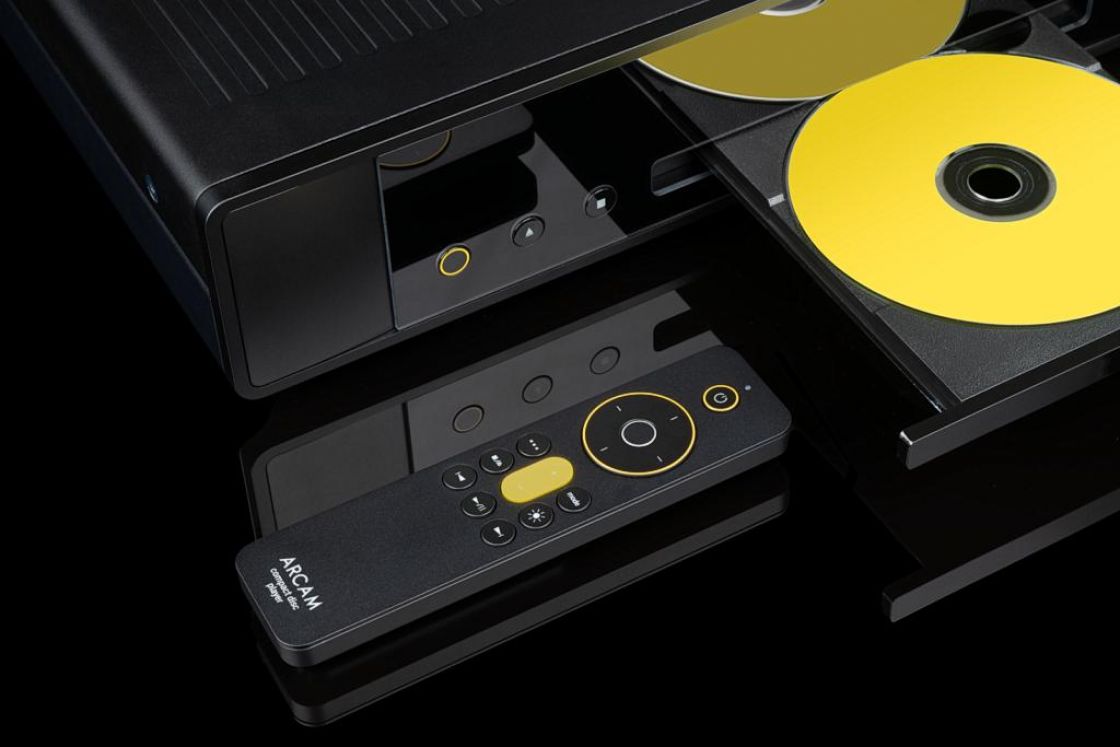
The partner for the anniversary amplifier is the CD25, a new reference compact disc player for the Radia range. Its arrival serves as a reminder that physical media continue to occupy an important place in the hi-fi market, and that many music lovers have no intention of abandoning collections assembled over several decades. Arcam also has considerable experience in this area. Its first compact disc player was the Delta 70, introduced in 1986, and in the years that followed the company developed not only CD sources, but also DVD and Blu-ray players and standalone digital-to-analogue converters. The CD25 is the first Arcam component since the FMJ D33 DAC to use a dual-mono digital-to-analogue stage, and the company's first disc player to incorporate ESS Hyperstream IV technology. It employs two ESS ES9039Q2M chips, each independently processing one channel in balanced mode. They are accompanied by ESS reference voltage regulators and a linear power supply built around a toroidal transformer.
As in the amplifier, the separation of the two channels is intended to reduce noise and crosstalk while improving precision, dynamics and stereo imaging. Arcam also emphasises that the player's final voicing was carried out using blind listening tests, combining laboratory measurements with subjective evaluation of the complete product. Considerable attention has also been paid to its mechanical construction. The disc mechanism is mounted on an internally damped structure designed to minimise the effect of vibration on data retrieval. The CD25 supports CD Audio, CD-R and CD-RW discs, while data discs can contain WAV, FLAC, MP3 and AAC files. WAV and FLAC material can be played at resolutions of up to 24-bit/96 kHz. The player offers unbalanced RCA and balanced XLR analogue outputs, together with optical and coaxial digital outputs. It can therefore operate either as a complete CD player or as a transport connected to an external digital-to-analogue converter. Maximum output voltage is quoted as 2.2 V RMS through RCA and 4.4 V RMS through XLR. The CD25 measures 431 x 329 x 84 mm and weighs 6.5 kg.
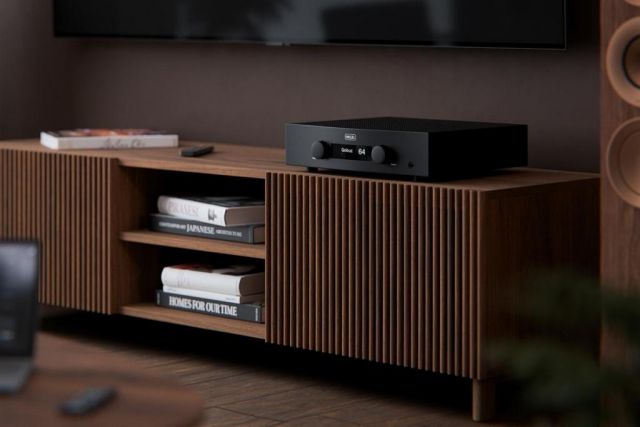
Both components follow the established visual language of the Radia range, combining black metal cabinets with glass front panels and clear OLED displays. Arcam has therefore resisted the temptation to emphasise their anniversary status with gold badges, wooden side panels or other decorative touches. The A50 Signature and CD25 are intended to look like natural extensions of the current line-up, albeit ones operating at a distinctly higher technical and price level. Together they form a visually and functionally coherent system, although users are not restricted to an all-Arcam configuration. The CD25's RCA and XLR outputs allow it to be partnered with other amplifiers, while the A50 Signature can be used with the company's ST5 and ST25 streamers, a turntable, a television or virtually any external digital source. The Arcam A50 Signature and CD25 are scheduled to arrive at authorised retailers in the third quarter of 2026. The A50 Signature is priced at €2,799/$2,999/£2,499, while the CD25 will cost €1,599/$1,799/£1,499. Info and pictures by Arcam.