Displaying items by tag: amplifier - StereoLife Magazine

iFi Audio iDSD Phantom

iFi Audio is launching the iDSD Phantom as the most advanced product in its history, a single-box flagship that combines a reference DAC, network streamer and powerful headphone amplifier. The new model is aimed at listeners who want a system voiced as close as possible to studio monitoring, but wrapped in a form that integrates into a domestic setup. Rather than a minor upgrade to the earlier Pro iDSD, the Phantom is built on a substantially reworked platform that revisits everything from the digital core and streaming engine to the analogue output stages, power supply and user interface, with the stated goal of delivering the most refined listening experience the company has created so far.

Cambridge Audio L/R Series

Cambridge Audio is entering a new territory, bringing its experience in building amplifiers, streamers and all-in-one systems into the world of active loudspeaker sets. The British brand has unveiled the L/R Series, a family of advanced active stereo systems designed to replace a traditional separates system and combine loudspeakers, amplification and streaming in a single, tidy package. The three models, L/R X, L/R M and L/R S, target the same part of the market that has so far been strongly represented by brands such as KEF and Sonos, offering users a fully fledged stereo system with built-in amplification, straightforward wireless connectivity and sound that is intended to work equally well for nearfield listening, in a larger living room and even as part of a setup for film soundtracks and immersive Dolby Atmos material.

EVE Audio EXO

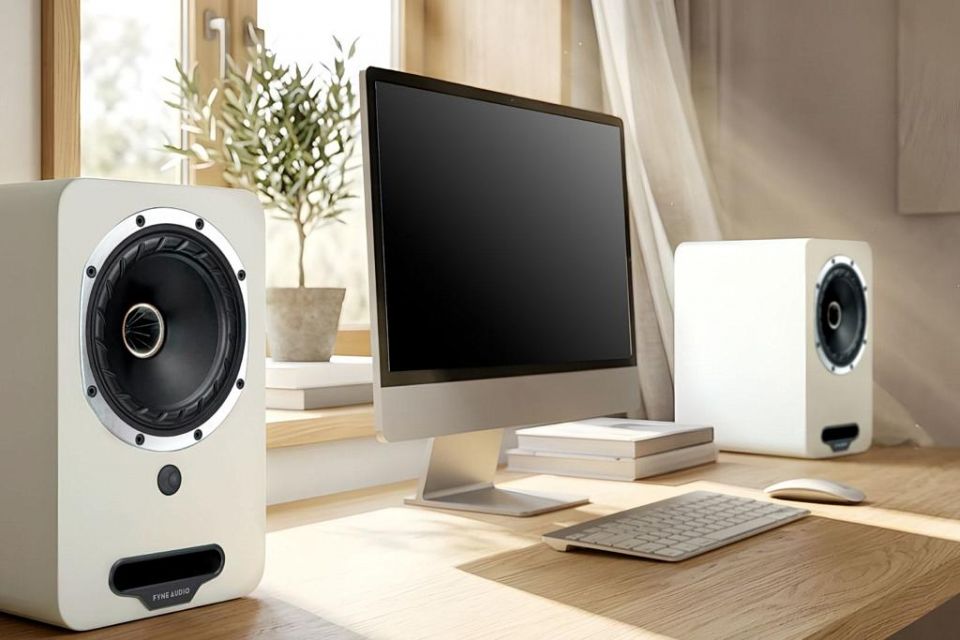
EVE Audio has introduced a new generation of nearfield monitors with the EXO Series, a family of compact loudspeakers designed to combine advanced acoustic engineering with straightforward, hands-on control. Consisting of the EXO 24, EXO 25, EXO 27 and EXO 28, the range is intended to bring EVE's trademark precision and translation to a wide spectrum of users, from home producers and musicians to engineers working in more demanding project and professional studios. The focus is on monitors that sound honest, integrate naturally into modern hybrid workflows and are easy to set up and tune in a variety of rooms.

Fezz Audio Luna

When Fezz Audio, then a small, unknown domestic manufacturer, unveiled its first amplifier ten years ago, very few people believed it stood a chance. Yes, the company was connected to a respected producer of transformers used by prestigious audio brands, but as its own label it simply did not exist in the consciousness of audiophiles. At launch, Fezz brought only a single product to market. It was not a compact digital-to-analog converter, not a lavishly equipped solid-state integrated, but a modest tube integrated that, from the customer's perspective, distinguished itself mainly with its reasonable price and a handful of available color finishes. How was this oddity ever supposed to shake up the tightly sealed hi-fi world? And yet, within just a few months, Silver Luna was on everyone's lips. Reviewers and music lovers quickly took to it, drawn by its honest, fully tube-based sound and its raw, minimalist, slightly industrial styling. It was a straightforward, sensible piece of gear with no gimmicks, no cosmetic frills, no wooden ornaments - just engineering focused on doing one job well. It turned out you really could build tube amplifiers in Europe that didn't cost as much as a new car.

Erik Wiederholtz - Perlisten

Perlisten entered the hi-fi market in a way that surprised many - suddenly, yet with clear ambition. Its debut was far from accidental, led by seasoned engineers and managers with decades of experience in transducers, measurement systems, and loudspeaker design. Co-founder and president Dan Roemer brings over 25 years of industry expertise, including work with the NHT research group, MITek Corporation, and projects in the automotive and aerospace sectors. Lars Johansen, with more than 30 years in audio, has contributed to brands like JBL, Harman Kardon, Klipsch, and Jamo, and later served as partner and president of Miller & Kreisel, supplying solutions for recording studios and premium home theatres. Since its formal launch in 2016, Perlisten has aimed to deliver top-tier products, reflected in its pricing. The introduction of the more accessible A-Series marked a shift, opening the brand to a wider audience. Interest continues to grow, yet many enthusiasts remain unaware of the company's origins, the people behind it, and its long-term objectives. This is why I decided to speak with someone who has been with Perlisten from the start and understands every stage of its development - from early concepts and factory selection to launches and subsequent product lines. Erik Wiederholtz, Perlisten's Technical Director, is an acoustics specialist with experience in transducer modelling, dynamic speakers, MEMS digital microphones, hearing aids, headphones, and small speakers. Our conversation, I believe, will shed light on the company's foundations and help readers understand what Perlisten represents.

Hegel H150

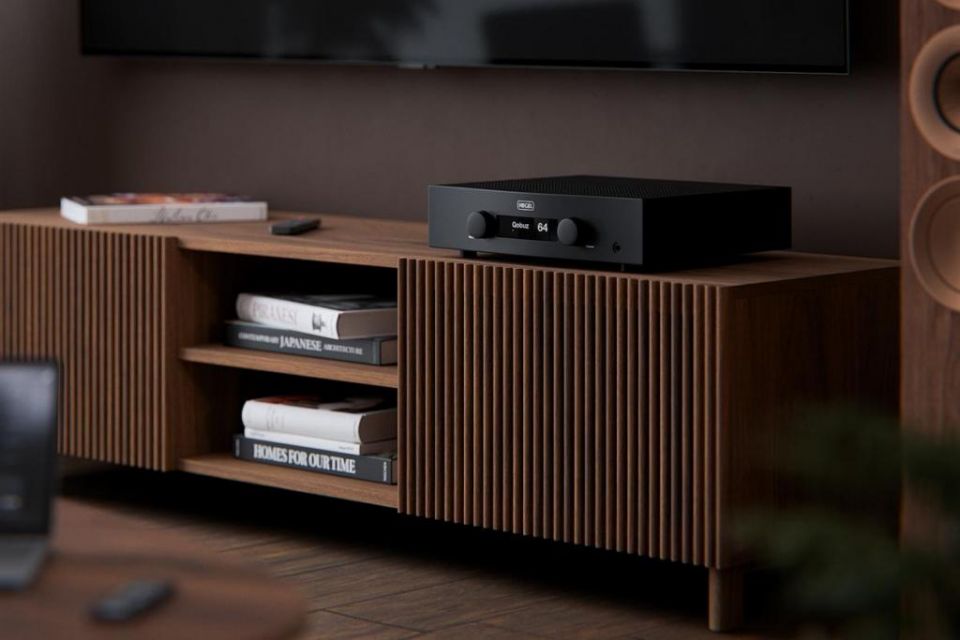
Hegel has announced the launch of the H150 streaming amplifier - an all-in-one hi-fi solution designed to combine versatility, musical refinement and ease of use in a compact, elegantly built chassis. Positioned as the successor to the H120, the H150 bridges the gap between affordability and audiophile performance, offering much of the same technology found in Hegel's flagship models, including the company's advanced streaming platform, app control and patented SoundEngine 2 amplification. Nicknamed 'The Prodigy', the H150 embodies Hegel's philosophy that true excellence should be accessible. While sitting at the entry point of the Norwegian manufacturer's integrated range, it demonstrates the sonic maturity and control more often associated with far costlier components. Delivering 2 x 75 watts into 8 ohms, it is capable of driving demanding loudspeakers with confidence, combining precision, scale and authority that far exceed expectations for its size and price.

Lyngdorf TDAI-2210

Lyngdorf Audio has announced the launch of its latest digital streaming amplifier, the TDAI-2210 - a model that bridges the gap between the compact TDAI-1120 and the flagship TDAI-3400, offering a balance of versatility, performance and refinement. The new amplifier features an elegant colour touchscreen interface, next-generation digital amplification, and the company's acclaimed RoomPerfect room calibration technology. The TDAI-2210 represents Lyngdorf's continuing evolution of digital amplification design. With multiple digital inputs, including USB-C and HDMI 2.1, analogue connections, optional modular expansion, and integrated music streaming, the amplifier is engineered to adapt to any system configuration. Delivering 2 x 210 watts into 4 ohms, it has the power and control to drive even the most demanding loudspeakers with ease.

Fabio Serblin - Serblin & Son

Designing and building audio equipment can be so contagious that entire families get involved. Children raised in the spirit of musical passion often inherit the talent of their parents and relatives. One such case is the Serblin family. When audiophiles hear this name, the first association comes immediately - Franco, the legendary speaker designer. He was the son of a Croatian navy soldier who emigrated with his wife from Istria to Italy. His first recognisable work was so original that it simply had to attract the attention of music lovers. We are, of course, talking about the device known as the Snail Project, consisting of a subwoofer and satellite speakers protruding from it like the eyes of a snail. Three years later, Franco founded Sonus Faber - and here we could write a separate article. After years of creating speakers that became icons of Italian audio, he returned to even more boutique craftsmanship, creating equipment bearing his own name. The second thread of the family history leads to the Serblin & Son brand. And here's a surprise - it's not Franco's son behind it, but his nephew, Fabio. He was already familiar with electronics in the 1980s - he co-created, among other things, the Sonus Faber Quid integrated amplifier, and then went his own way, establishing a company called Fase Evoluzione Audio, making amplifiers, separate systems, and CD players. At some point, the trail goes cold, and Fase Evoluzione Audio disappears from the market for many years. Fabio Serblin returned to building amplifiers in 2019, founding Serblin & Son. Its first product was the Frankie amplifier, named in tribute to his uncle. And so the mystery is solved - the Serblin name continues to lead us towards sound, only this time it tells the story through electronics.

Marantz 10 Series

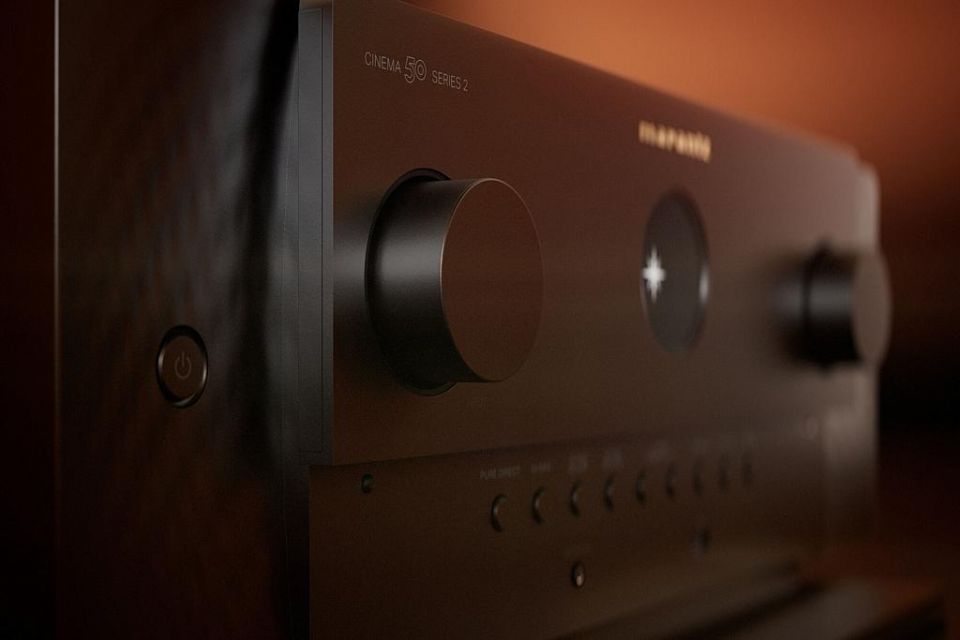
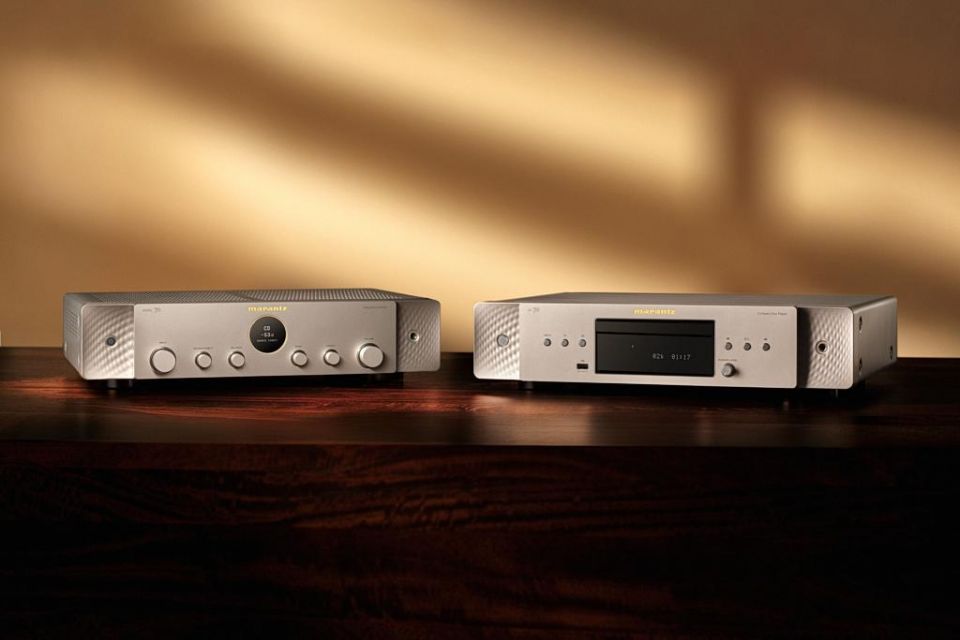
Marantz, one of the most revered names in audio for over 70 years, introduced the new 10 Series Collection of three reference-quality stereo products. Comprising the Model 10 Reference Integrated Amplifier, the SACD 10 Reference SACD player and the Link 10n Reference Network Audio Player, the 10 Series Collection represents a new statement in high-end audio design and performance for Marantz, and is the first time the brand has released a new range reference high-end stereo components since 2016.

Developed over five years of extensive collaboration between all departments of the engineering team at the renowned Shirakawa Audio Works in Japan, the new 10 Series components embody unparalleled heritage, performance and contemporary luxury design. Built to the most demanding of standards, the design of each product is inspired by some of the most iconic hi-fi components in Marantz's storied history - yet at the same time, the engineering inside ensures that each component is both truly contemporary and ready to make the most of hi-fi's digital future.

The first product to be released from the new 10 Series Collection is the Model 10 Reference Integrated Amplifier, the most powerful one-box amplifier Marantz has ever made. Model 10 is built around a newly designed dual-mono symmetrical amplifier topology and uses a completely new copper-plated, triple-layered chassis with a compartmentalized design structure designed to provide complete engineering separation of each critical internal function. Two internal compartments plus strategically placed shields isolate high and low power circuits from each other and prevent internal interference from limiting performance.

The Model 10 powerplant is newly engineered. In partnership with Purifi, Marantz developed a new amplifier, two of which are used to achieve dual-mono operation. It operates as a fully balanced amplifier from input to output, with individual power supplies for each amplifier channel and all line-level input circuitry powered by a separate linear power supply unit. Distortion is astonishingly low - 0.05% THD across the entire audio band at full power and an order of magnitude better at half-rated power - while up to 30A of peak current means exceptional dynamic range, plus frequency response that is immune to load impedance.

Driving the novel amplifier section is an all-new preamplifier design based around the latest generation of Marantz's HDAM analogue circuitry. Designed to deliver the optimum combination of speed of response and transparency of signal, HDAM is a proprietary Marantz technology first introduced in the PM-99SE amplifier of 1992. The latest incarnation is the highest performing yet, ensuring the Model 10 has all the musicality for which Marantz amplifiers are rightly renowned.

Of course, as a reference-class integrated amplifier, Model 10 has a commensurately substantial power output, with 250W into 8 ohm speaker loads, rising to 500W with 4 ohm designs. If even more power is required, owners can opt to add a second Model 10 to create a superlative biamplified stereo system using Marantz's proprietary F.C.B.S (Floating Control Bus System) to link and control two amplifiers seamlessly. Up to four Model 10s can be connected together if needed.

Even the smallest details of Model 10's design have been engineered with the utmost care and attention. Its porthole-style OLED display screen references the form of classic Marantz products of the past yet its thoroughly contemporary specification can switch from displaying volume level to selected input to a VU Meter mode, if desired. Brightness and display timeout options can also be adjusted. For those that prefer tactile interaction with their hi-fi, the Model 10 features CNC machined spun-finished aluminum control knobs for volume and input selection, each with individual bearings for a smooth feel. Even the remote handset is unique to Model 10, featuring a teal-colored aluminum top surface for added heft and premium feel.

Internal detailing is every bit as quality-focused. Model 10's exquisite design features a unique mesh-covered grille section rippled with Marantz's iconic rhythmic design pattern and illuminated from within. The result is an amplifier like no other, one ready to invite the listener in with the warmth of both its design and its musical sound. The end result, in terms of attention to detail and clarity of layout, is every bit as exquisite as it sounds.

This distinct top section is complemented by lavish componentry elsewhere in the construction of Model 10. Its solid aluminum side panels are almost 16mm thick, providing an ultra-low-resonance structure. At the front of the amplifier, the special hairline finish on the extruded aluminum control surface is perfectly complemented by discreet LED lighting embedded around the assembly complete with 20 steps of adjustment over its levels of illumination.

Model 10 includes an extensive array of analogue inputs, including two XLR balanced ins, three RCA analogue ins and a high-quality phono stage, complete with both MM and three impedance options for broad MC compatibility. Preamplifier outputs are also provided, again in both XLR and RCA. Uniquely, Model 10 can also be configured to run solely as a power amplifier, bypassing its internal preamplifier, when partnered with its sibling in the new 10 Series Collection, the Link 10n Reference Network Audio Player. Naturally, selectable speaker A/B outputs are also included, alongside a very high-quality headphone output.

Shortly after Model 10 launches, it will be joined by first the SACD 10, a statement-quality SACD player built to the same exacting standards as its amplifier sibling, and then the Link 10n Reference Network Audio Player. At the heart of Link 10n is HEOS - a powerful and versatile digital audio engine that equips this reference model with an unusually comprehensive feature complement. Discerning listeners can stream high resolution from Tidal at up to the highest provided resolution of 192 kHz/24 bit. Music stored locally on USB or network servers can be played back at up to 384 kHz/32 bit and DSD 4X bit-perfect with no down sampling or conversion. An ever-growing list of other services and technologies are supported as well including AirPlay 2, Spotify Connect, Tidal Connect, Bluetooth, TuneIn, Deezer, Pandora and more meaning HEOS makes it simple to find what you love to listen to. Further, Link 10n can play with up to 32 other HEOS Built-In devices including home theater and stereo electronics, powered speakers, and sound bars in a home to create a diverse and entertaining whole-home audio system in which devices can be grouped to stream your favorite playlist in sync, or played separately. Introducing the first product in the new 10 Series Collection, the Model 10 integrated amplifier will be available soon from selected retailers at $15,000. Info and photos by Marantz.

Marantz 10 Series

Marantz 10 Series

Marantz 10 Series

Marantz 10 Series

Marantz 10 Series

Marantz 10 Series

Marantz 10 Series

Q Acoustics Q SUB Series

British audio specialist, Q Acoustics, introduces its new trio of high-performance active subwoofers, Q SUB series. Whether as part of a Q Acoustics home cinema set-up, adding effortless bass extension to your existing 7.2, 5.1, or 2.1 system, or intensifying the low end on your powered and active speakers, these new models will deliver the drama to movies and music. Whatever the size of your home cinema room or the power of your system, Q Acoustics has the right-sized model to fill your space with powerful, impactful, but nuanced and controlled bass. The new subwoofer family consists of the 8-inch Q SUB80, the 10-inch Q SUB100, and a 12-inch model, Q SUB120. On board Digital Signal Processing (DSP) technology ensures easy but comprehensive system and room integration and setting optimisation for a class-leading, distortion-free performance.

We use cookies to improve our website and your experience when using it. To find out more about the cookies we use and how to delete them, please see our Privacy Policy.