
- News
- Posted
Noble Audio Iris
While much of the high-end IEM market seems determined to fit ever more drivers and technologies into increasingly elaborate shells, Noble Audio has decided to move in the opposite direction. Iris is a new universal in-ear monitor built around a single 10.2 mm dynamic driver, with the entire acoustic architecture developed to make that one transducer cover the full frequency range as coherently as possible. It is an interesting change of pace for a company whose catalog contains plenty of ambitious multi-driver designs, and Noble makes the philosophy unusually clear - one driver, one vision. Rather than competing through sheer driver count, Iris focuses on simplicity, consistency and the particular qualities that have kept single dynamic driver earphones relevant despite increasingly complex alternatives.
The central component is a custom 10.2 mm dynamic driver using a three-layer PU and PEEK diaphragm with an additional coating. It works with a dual neodymium iron boron magnet system and was designed to combine controlled low-frequency texture with clear mids and highs while preserving the natural continuity that is one of the main attractions of a full-range single-driver design. Noble links the concept to the driver used in FoKus Amadeus, although Iris scales the transducer up for greater authority and expression. According to the company, the resulting design is intended to deliver extended bass and treble without losing the immediacy and coherent character associated with a single diaphragm reproducing the entire musical spectrum.
Using only one driver removes the need to divide the audio spectrum between several different transducer types, but it also places greater demands on both the driver and the acoustic environment surrounding it. Noble addresses the latter with a triple sound chamber structure built into the shell. By controlling airflow and the acoustic load behind the diaphragm, the three-chamber arrangement is intended to improve driver control, imaging and spatial organization without sacrificing the immediacy of the single-driver concept. Noble describes the intended presentation as focused, coherent and naturally connected, with vocals occupying a convincing position and instruments forming a unified whole rather than sounding as though different parts of the spectrum are being handled by separate acoustic systems.
That approach makes Iris an interesting counterpoint to many contemporary premium IEMs. Multi-driver designs allow engineers to assign bass, midrange and treble reproduction to specialized transducers, sometimes combining dynamic drivers, balanced armatures, planar magnetic units, electrostatic tweeters or piezoelectric elements in a single shell. The advantages can be considerable, but such architectures also introduce challenges involving crossover design, phase behavior and the integration of drivers with fundamentally different operating principles. Iris deliberately avoids that route. One diaphragm is responsible for everything, so there are no electrical or acoustic crossover points between different transducers. The trade-off is that this single driver has to perform convincingly across the entire audible range - precisely the challenge around which Noble has built the project.
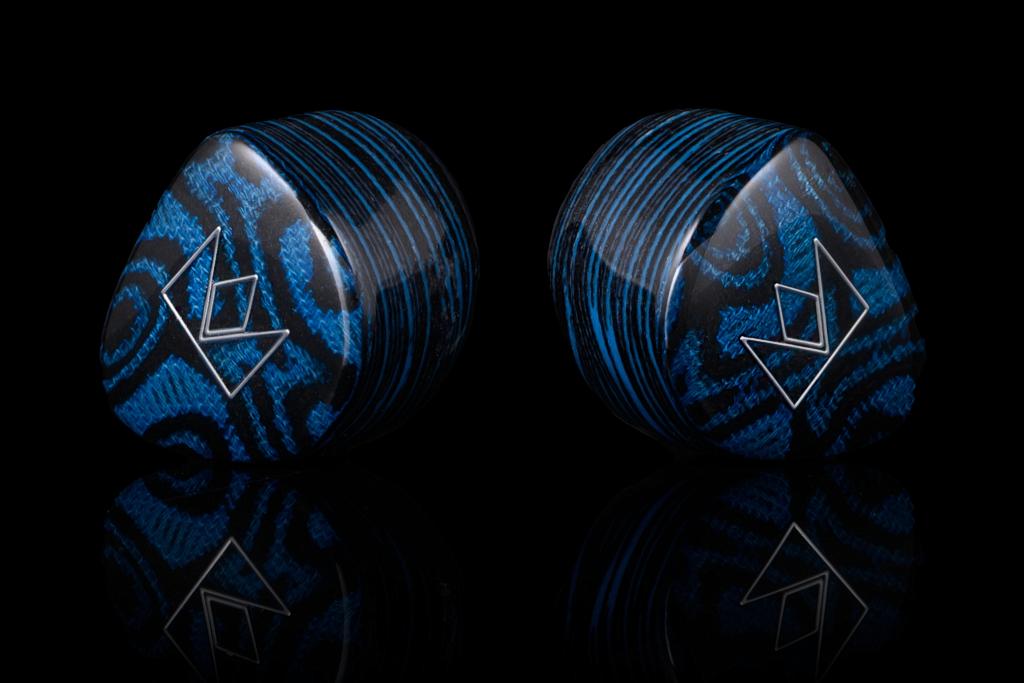
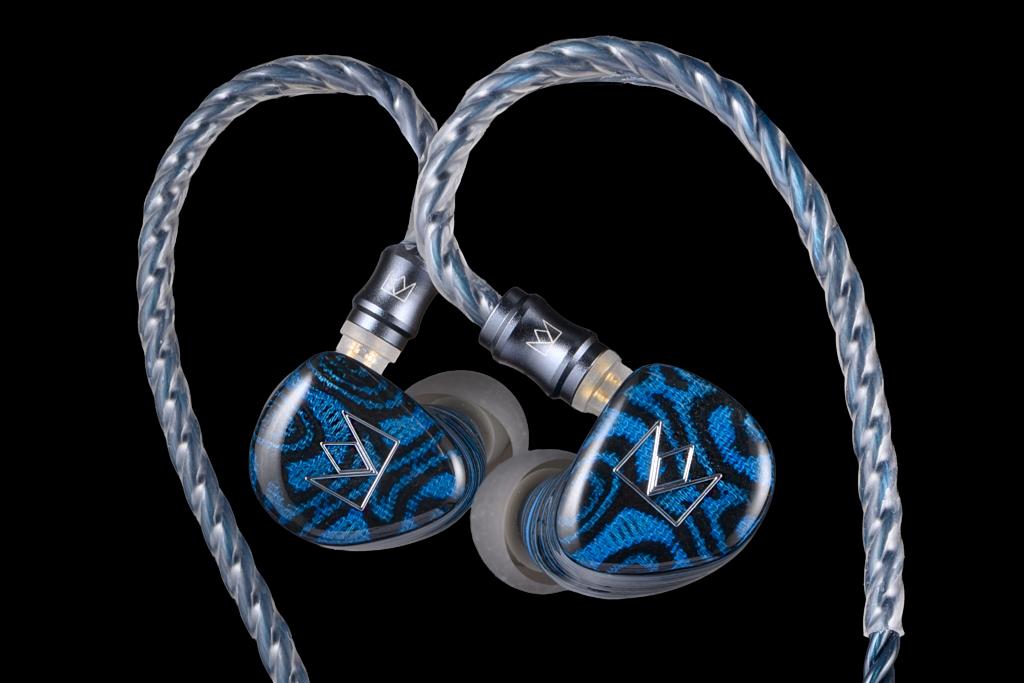
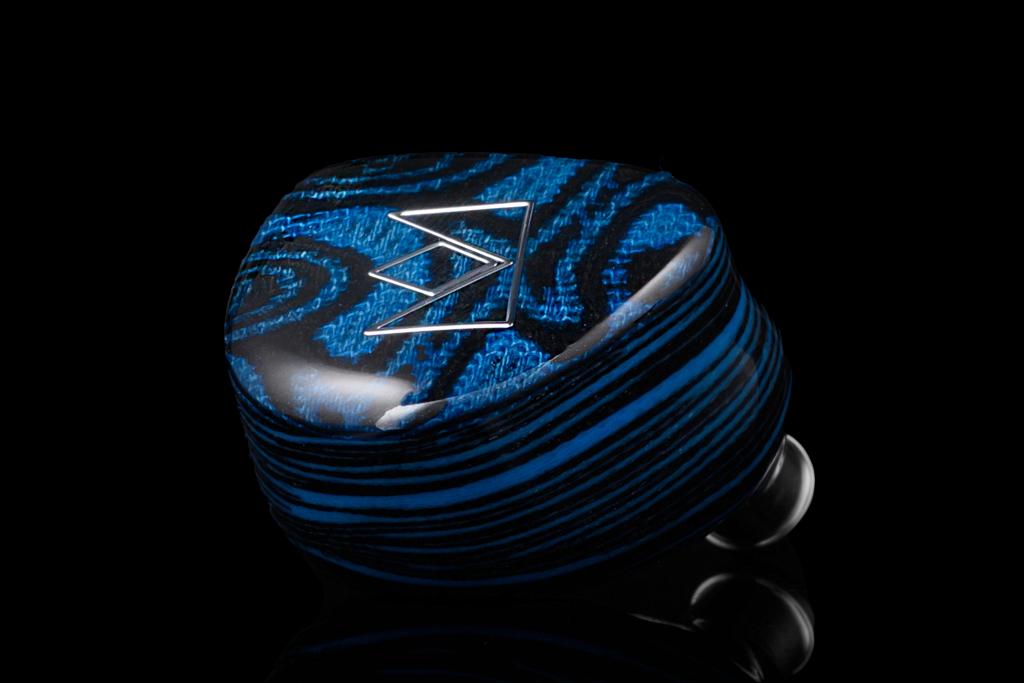
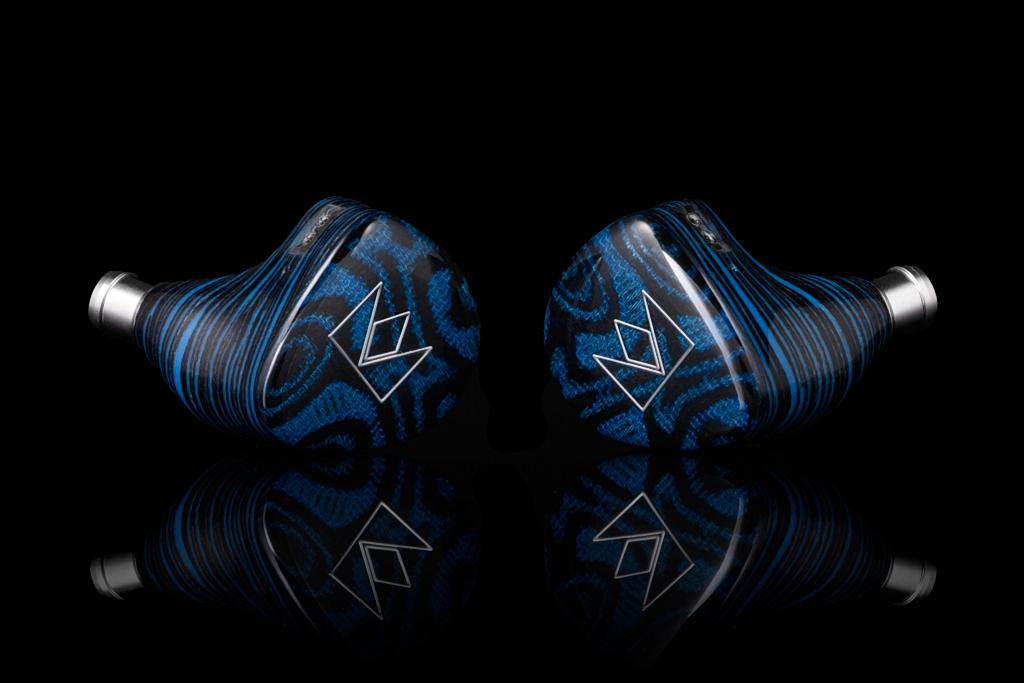
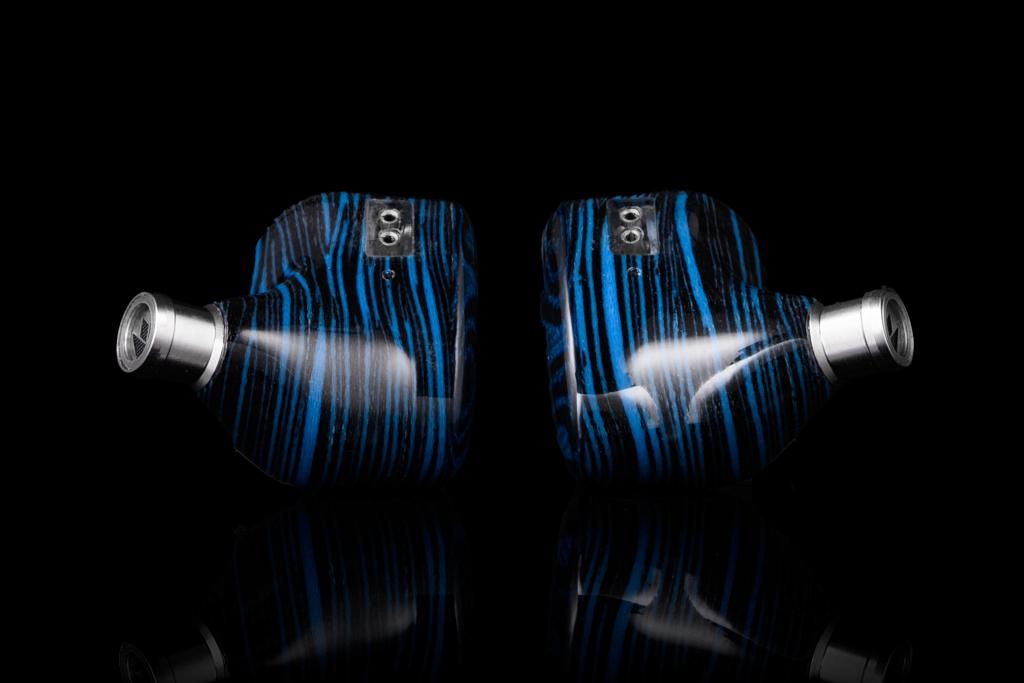
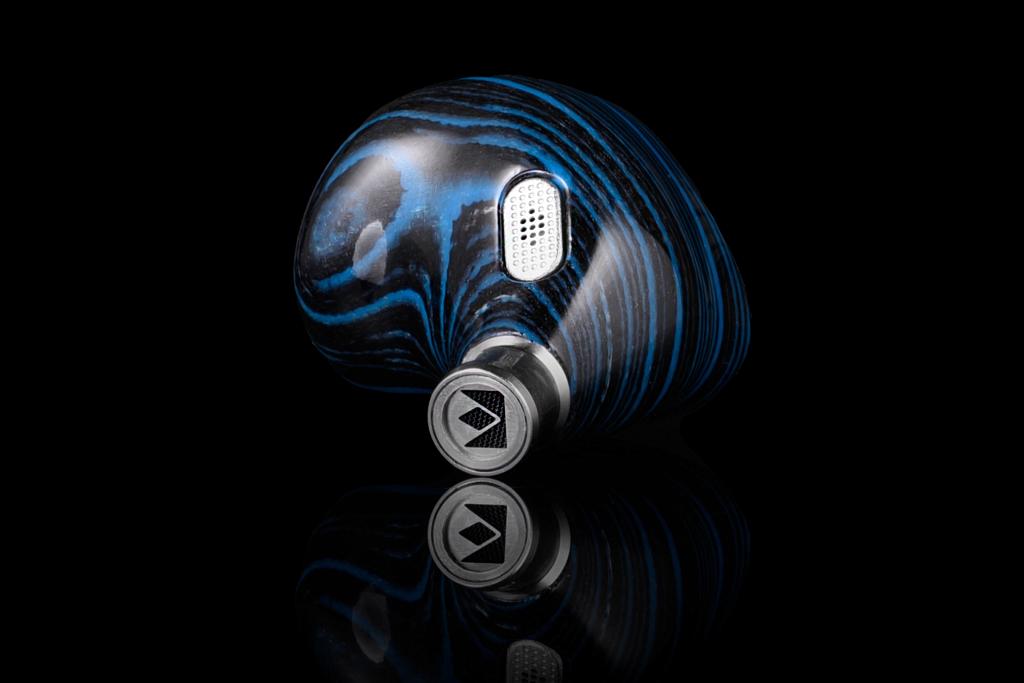
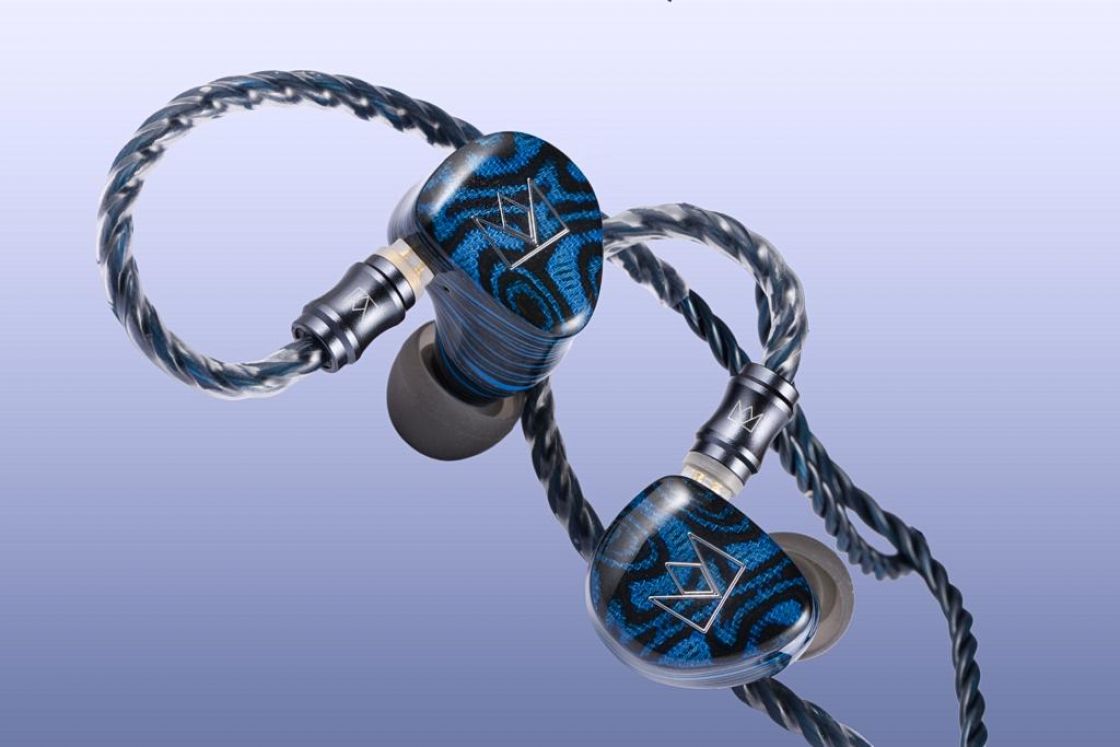
The housings are another important part of Iris' identity. Noble uses custom blue Micarta shells machined on CNC equipment, with the color and pattern drawing a subtle connection to the iris flower. Micarta is a composite material traditionally produced by combining layers of fabric or paper with resin under pressure, giving it considerable mechanical strength as well as a distinctive layered appearance. Here it provides a more organic visual character than conventional machined aluminum or molded acrylic, while still allowing Noble to manufacture the shell with the precision expected from a premium universal IEM. The launch images show dark blue earpieces crossed by lighter flowing patterns, with the company's crown motif integrated into the faceplates.
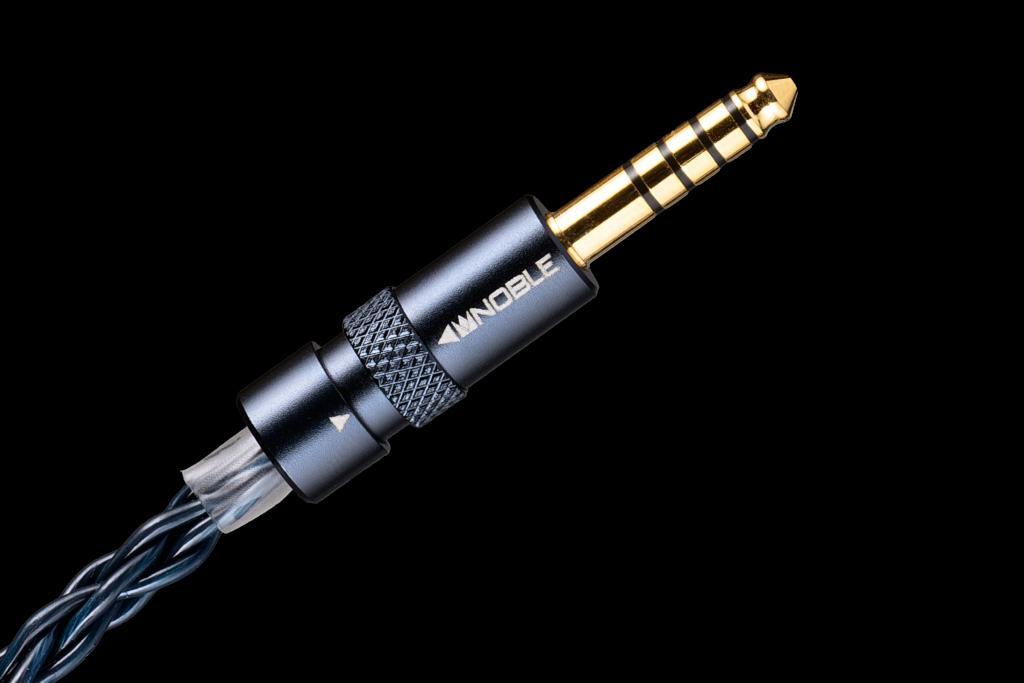
Electrically, Iris should be relatively easy to accommodate in both portable and desktop systems. Impedance is rated at 34 Ω and sensitivity at 113 dB ±3 dB at 1 kHz, so there is no obvious requirement for unusually powerful amplification. The supplied cable is terminated through an interchangeable plug system offering both 3.5 mm single-ended and 4.4 mm balanced connections. This makes it possible to move between conventional headphone outputs and increasingly common balanced outputs on portable DACs, headphone amplifiers and digital audio players without replacing the entire cable.
Noble's original launch material specifies an 8-core OCC cable, a frequency response of 10 Hz-40 kHz and rated power of 20 mW. More important than the numbers themselves is the broader positioning of the product. Iris is not presented as an exercise in maximum technical complexity. Instead, Noble is using a relatively traditional transducer principle and surrounding it with carefully developed mechanical and acoustic engineering. In a market where a long list of driver abbreviations can sometimes become a selling point in itself, that makes Iris refreshingly straightforward - although there is clearly nothing particularly simple about developing a single driver capable of doing the work normally divided among several specialized units.
This also fits Noble Audio particularly well. The company has plenty of experience with sophisticated multi-driver configurations, so a return to a single dynamic transducer does not look like an attempt to simplify production or reach a lower price category. It is better understood as an alternative design philosophy within the same premium lineup. For listeners who value tonal continuity, directness and the sense that the entire frequency range comes from one acoustic source, Iris offers something deliberately different from hybrids built around increasingly complicated arrays of drivers. Iris launched globally on July 7 and is available through Noble Audio and selected retailers. The announced price is $699/€749/£649. Info and pictures by Noble Audio.