
- News
- Posted
Soul Note A-0, A-1 & A-2 ver.2
In the hi-fi industry, a new generation of amplifiers is generally expected to deliver more of everything. More power, more features, better specifications, and, inevitably, a higher price. Manufacturers love being able to announce that their latest model produces another twenty or thirty watts per channel, even if the actual benefits are considerably less obvious than the numbers might suggest. Soulnote has never been particularly interested in playing that game. The Japanese company has now introduced substantially revised versions of three of its most important integrated amplifiers, the A-0, A-1, and A-2, each carrying the ver.2 designation. Their familiar names and understated appearance might suggest relatively modest updates, but the changes go considerably deeper than a few upgraded components. All three have received revised output stages, bias circuits, and power supplies, while the more expensive models incorporate technologies developed for the flagship A-3. Most surprisingly, the new A-2 ver.2 actually produces less power than its predecessor. This isn't a cost-cutting measure or a technical setback. Soulnote has deliberately traded some maximum output voltage for greater instantaneous current delivery, believing that the result will be a more capable amplifier when connected to demanding loudspeakers. It's a decision that tells us quite a lot about the company's approach to audio engineering.
To understand why Soulnote has taken this direction, it's worth looking back at the origins of the three amplifiers. The original A-0 and A-1 appeared in 2016, followed by the A-2 in 2017. Their introduction coincided with an important turning point in the company's history, when Hideki Kato became Soulnote's chief engineer and assumed responsibility for virtually every aspect of product development. That included not only circuit design but also product planning, mechanical engineering, sound quality assessment, and the final configuration of each component. Under his direction, Soulnote developed an increasingly recognizable identity, combining discrete amplification circuits without negative feedback, unconventional mechanical construction, and an almost obsessive interest in transient behavior and the interaction between different parts of an audio system. These amplifiers helped establish the foundations for the company's subsequent development, eventually leading to the considerably more ambitious Series 3 components. The new versions are therefore not a complete reinvention of the original designs. Instead, they represent the accumulated experience of almost a decade spent refining the same underlying philosophy.
One of the most distinctive aspects of that philosophy is Soulnote's attitude toward measurements. Like any serious audio manufacturer, the company pays close attention to the electrical behavior of its products. What makes its approach unusual is the belief that optimizing an amplifier for conventional specifications does not necessarily lead to the most convincing musical performance. In particular, Soulnote questions the assumption that ever-lower distortion figures, higher damping factors, and increasing amounts of negative feedback must automatically result in better sound. Its engineers prefer extremely fast, fully discrete circuits operating without global negative feedback, accepting that some measured parameters may look less impressive than those of competing designs. Mechanical behavior receives similarly unconventional treatment. Instead of making every component as rigid and heavily damped as possible, Soulnote attempts to control where vibrations travel and how resonances develop within the chassis. Whether every aspect of this approach produces the audible benefits claimed by the manufacturer is open to investigation, but there is no denying that the resulting products are rather different from most modern integrated amplifiers.
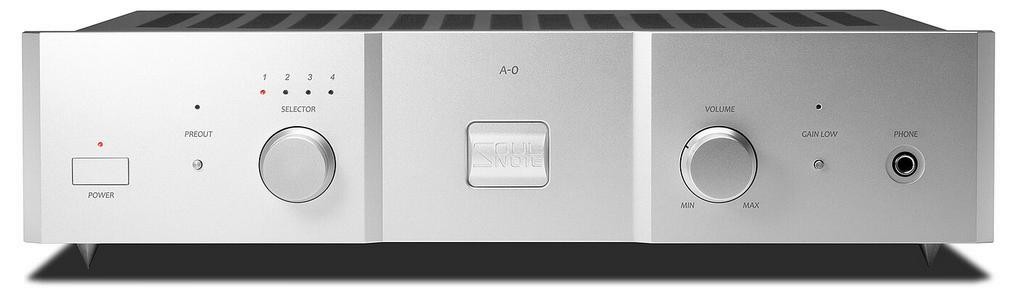
The smallest member of the revised family, the A-0 ver.2, is perhaps the clearest expression of this thinking. At a time when even affordable integrated amplifiers frequently include digital inputs, streaming platforms, Bluetooth, smartphone applications, and elaborate displays, Soulnote offers a full-size component delivering just 10 watts per channel into 8 ohms. It doesn't even come with a remote control. At first glance, that might sound like an unusually poor collection of features for a relatively expensive product. But the A-0 isn't intended to compete with conventional budget amplifiers. It is a deliberately minimalist design aimed at listeners who don't need substantial output power and are willing to choose their loudspeakers accordingly. Its circuitry is almost startlingly simple: essentially a power amplifier with an input selector and volume control. There is no global negative feedback, no unnecessarily elaborate signal processing, and no attempt to compensate for modest power through additional functionality. The A-0 exists because Soulnote believes that a carefully optimized, low-power amplifier can deliver certain qualities that become more difficult to preserve as the circuit grows in complexity.
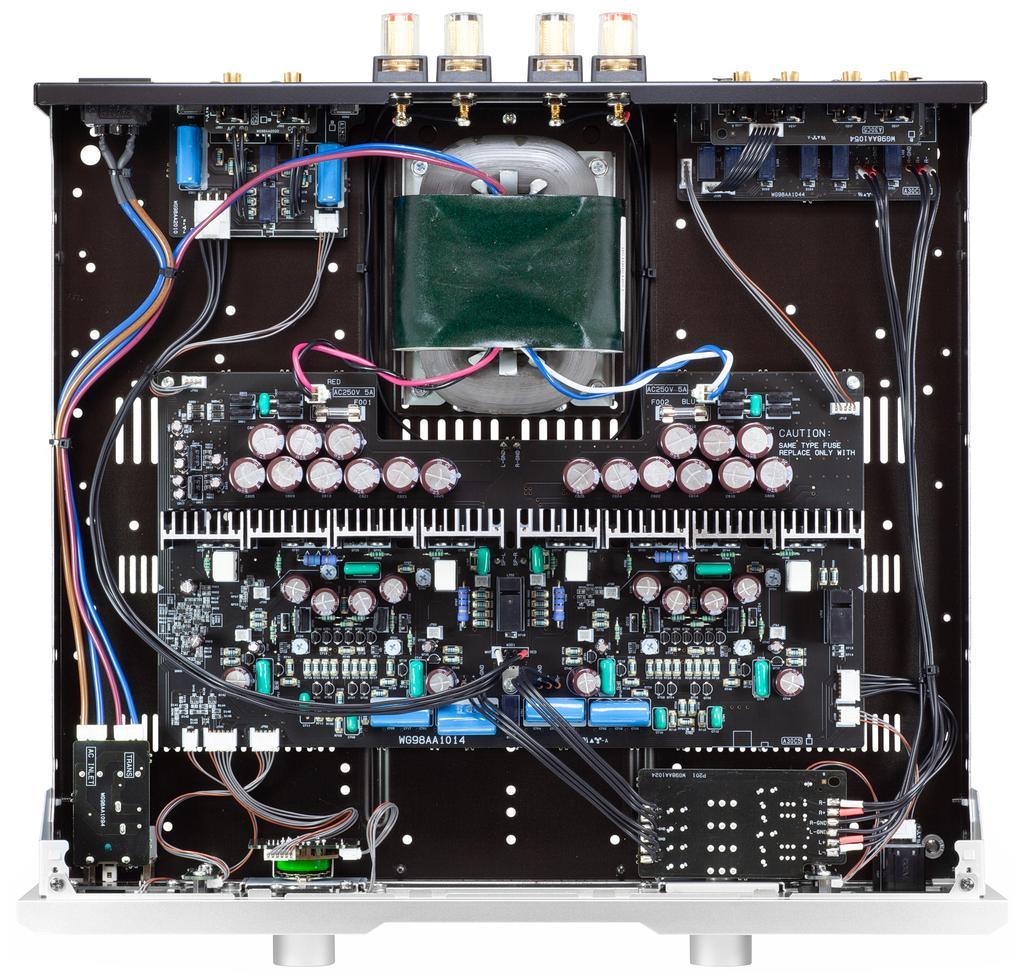
The output stage uses a single complementary push-pull pair of TO-220 transistors, chosen for their low collector-base capacitance and excellent high-frequency characteristics. A four-stage Darlington arrangement provides the necessary drive, while a newly developed bias circuit replaces the LED-based solution used in the previous generation. According to Soulnote, these changes improve signal-to-noise performance and the amplifier's ability to reproduce subtle changes in musical dynamics, even at relatively low listening levels. The company is particularly keen to emphasize that limiting the output to 10 watts is an essential part of the design rather than an unfortunate compromise. Higher power would require a different output stage and potentially larger or more numerous transistors, introducing additional electrical characteristics that the engineers would rather avoid. Whether that trade-off makes sense depends heavily on the intended system. Ten watts will never turn an inefficient loudspeaker into a concert-level powerhouse, and speaker matching will be crucial. But with sufficiently sensitive speakers in an appropriately sized room, the available power may be more than adequate.
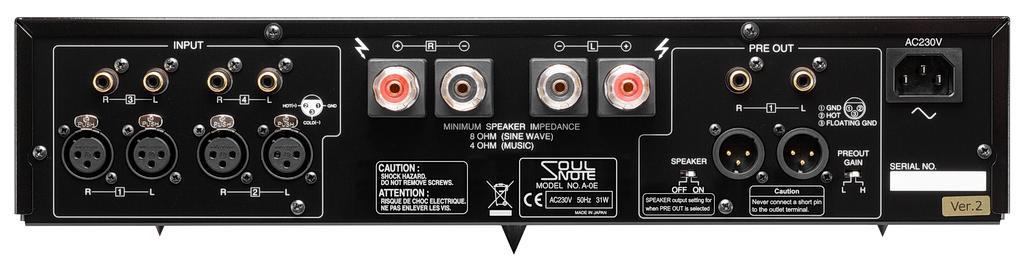
Interestingly, the A-0 ver.2 is also considerably more versatile than its purist appearance might suggest. Soulnote has redesigned the preamplifier output section, introducing a choice between Low and High operating modes. The Low setting provides an attenuated output suitable for conventional preamplifier applications, while High takes its signal directly from the power amplifier output. Users can also decide whether the speaker terminals remain active when the pre-out connections are in use. This creates several possible system configurations, including arrangements involving external amplification or additional audio components. RCA preamp outputs are now accompanied by XLR connectors, giving the smallest Soulnote integrated amplifier connection options that might normally be associated with substantially more expensive equipment. The company has also retained a surprisingly powerful headphone section, rated at 3 watts per channel into 32 ohms. That's a substantial figure for a device whose speaker outputs are limited to 10 watts per channel, and it suggests that the A-0 ver.2 could be an interesting proposition for listeners who divide their time between efficient loudspeakers and demanding headphones.
The mechanical construction is equally unconventional. Soulnote deliberately avoids fastening the top cover tightly to the main chassis, arguing that allowing the enclosure to behave in a more controlled, less heavily damped manner produces a more open and natural presentation. The amplifier also employs the company's Direct Mechanical Earth concept, with one of its three supporting feet positioned beneath the power transformer. The idea is to provide a direct path for transformer vibrations to escape through the supporting structure rather than allowing them to spread throughout the chassis. The entire component rests on three spike feet, an arrangement intended to define the mechanical reference points precisely and avoid the instability associated with four-point support. These ideas may appear unusual to anyone accustomed to amplifiers built around massive, heavily damped enclosures, but they have become an important part of Soulnote's design identity. Measuring 430 x 109 x 418 mm (16.9 x 4.3 x 16.5 inches) and weighing 8 kg (17.6 lb), the A-0 ver.2 is certainly not a miniature desktop amplifier. It's a substantial piece of hi-fi equipment that simply happens to produce relatively little power.
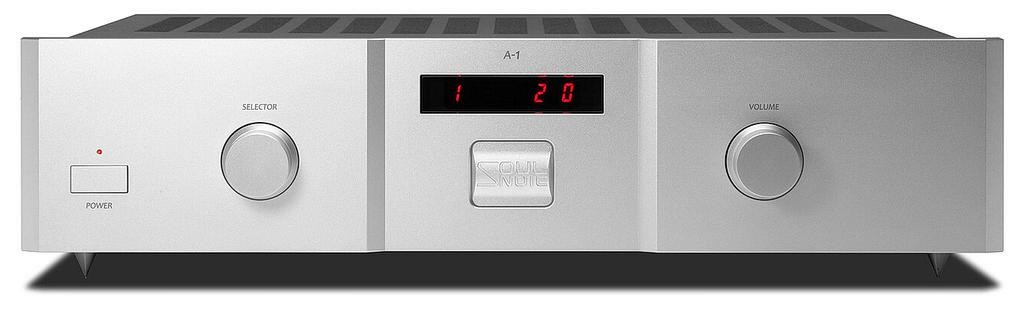
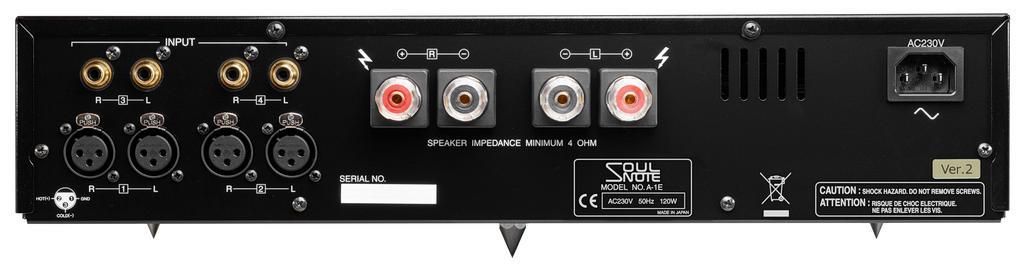
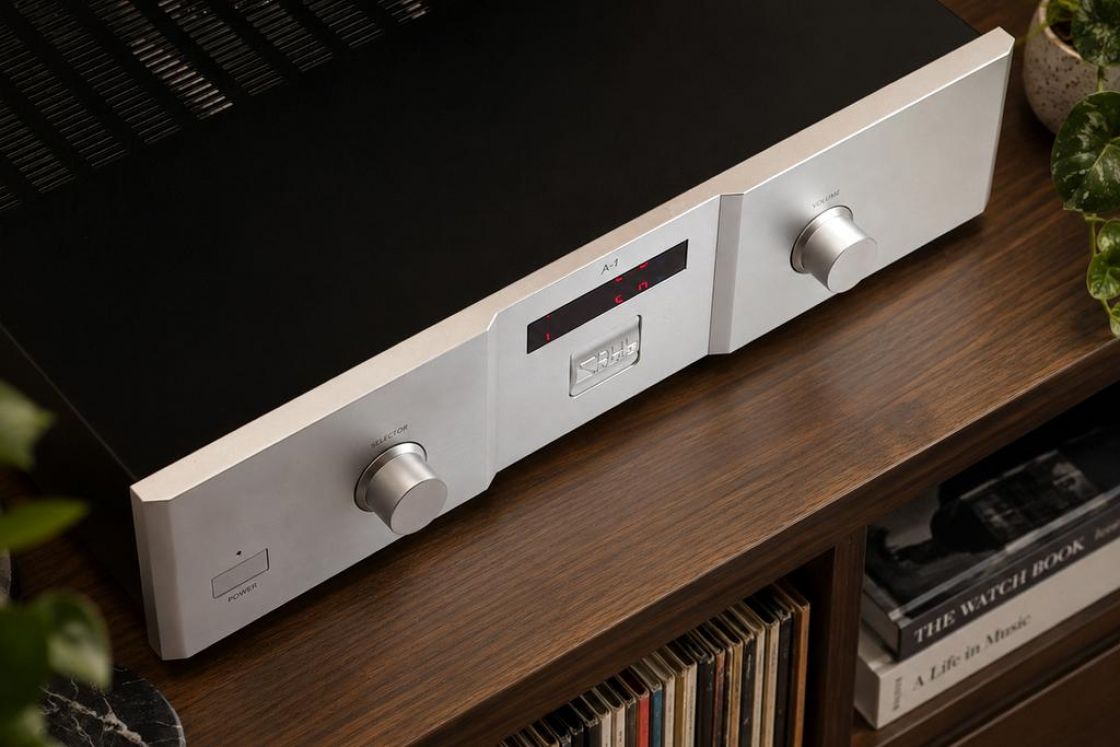
The A-1 ver.2 occupies what will probably be the most appealing position in the lineup for many listeners. The original A-1 was reportedly Soulnote's best-selling integrated amplifier in certain markets, and it's easy to understand why. It offered much of the company's distinctive engineering philosophy in a relatively compact enclosure, but with enough power to partner a considerably wider range of loudspeakers than the A-0. The revised model builds on that formula rather than attempting to transform it into something completely different. Output is rated at 40 watts per channel into 8 ohms, doubling to 80 watts into 4 ohms. Those are hardly spectacular figures by modern standards, but they're perfectly respectable for a serious integrated amplifier and, more importantly, place the A-1 in a category where sensible loudspeaker matching becomes considerably easier. Someone who appreciates Soulnote's minimalist approach but doesn't want to build an entire system around a 10-watt amplifier will almost certainly find this model more accommodating.
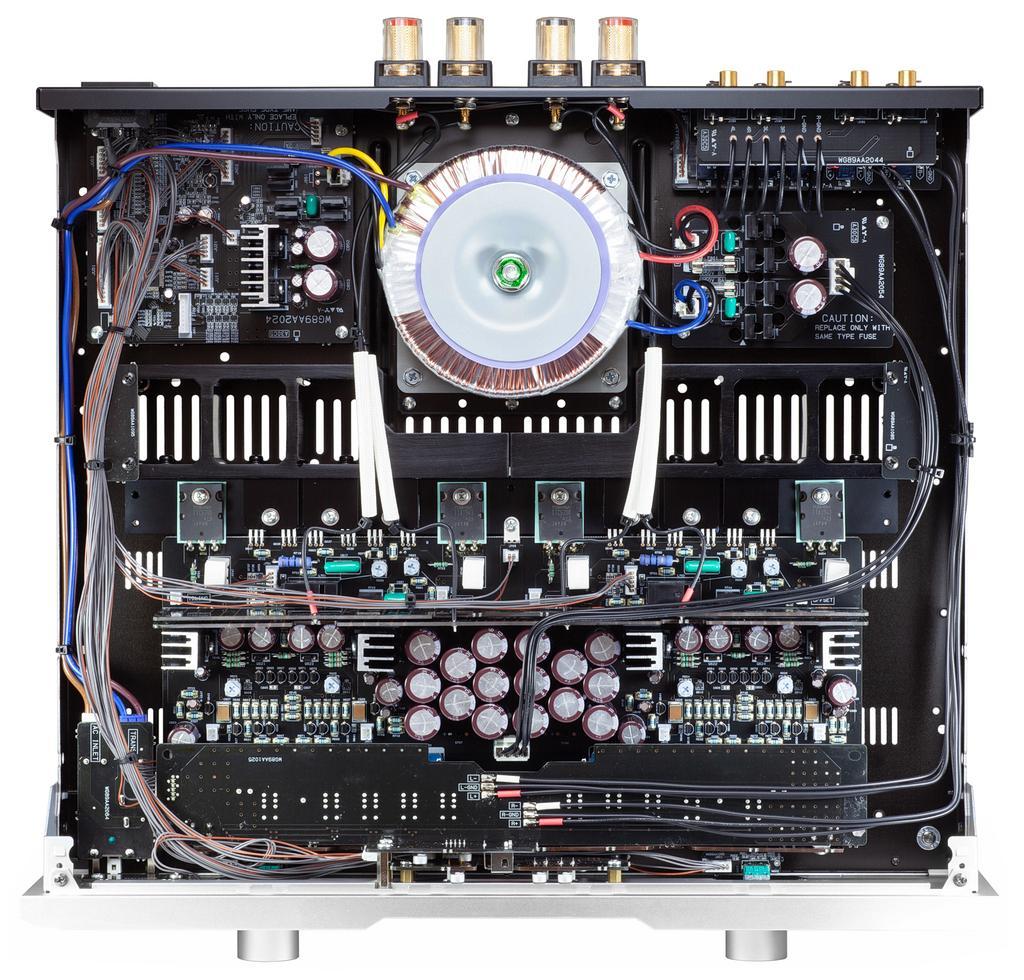
The A-1 ver.2 retains a single push-pull output configuration, but the smaller TO-220 devices of the A-0 give way to larger TO-3P power transistors. These operate within a four-stage Darlington circuit, while the bias arrangement and power supply have both been redesigned. At the center of the latter is a new, non-impregnated toroidal transformer. This is another example of Soulnote choosing a less conventional solution for reasons connected to its listening-based development process. Many manufacturers impregnate transformers to reduce mechanical vibration and audible hum, but Soulnote prefers a construction that behaves differently under mechanical stress. The engineers have also deliberately limited the transformer's secondary voltage rather than maximizing the available output power. The objective is to improve the supply's ability to deliver current when the connected loudspeakers present a difficult load. Modern speakers can have impedance characteristics that vary substantially with frequency, and an amplifier's ability to deliver current into lower impedances may be more important than an impressive output rating measured under relatively straightforward laboratory conditions.
Of course, it would be an oversimplification to suggest that current delivery alone determines how well an amplifier controls loudspeakers. Output impedance, stability, thermal behavior, power supply regulation, and the characteristics of the speakers themselves all play important roles. Nevertheless, Soulnote's priorities are clear. The company is less interested in producing the largest possible wattage figure than in maintaining the amplifier's responsiveness when the electrical demands become more complicated. This approach runs throughout the revised range, but the A-1 ver.2 arguably represents its most practical expression. Its 40-watt rating should be sufficient for a wide variety of domestic systems, while the redesigned output stage and power supply are intended to preserve the speed and dynamic behavior that Soulnote considers central to its sound.
Another important improvement is the introduction of a balanced, relay-switched resistor attenuator. Instead of passing the audio signal through a conventional volume potentiometer, the A-1 ver.2 uses carefully selected resistors switched by relays to establish the desired level. This approach allows precise control over the attenuation and helps maintain consistent balance between the left and right channels, particularly at low volumes. Anyone who has used an older amplifier with a conventional potentiometer may be familiar with the problem of one channel becoming slightly louder than the other when listening quietly. A properly implemented relay attenuator avoids that issue while offering repeatable settings and potentially excellent channel tracking. Soulnote also attributes improvements in transparency and spatial precision to the arrangement, although those are naturally claims that require listening comparisons. The new model offers two XLR inputs, making it better suited to systems built around balanced digital sources and other high-end components.
The mechanical structure follows the same principles found elsewhere in Soulnote's catalog. The position of the transformer, supporting feet, and chassis elements has been chosen to control vibration and resonance rather than simply maximize rigidity. The company considers the distribution of mechanical energy important enough to influence the layout of the amplifier itself, even when doing so makes manufacturing more complicated. The result is a component that may look relatively conventional from the outside but contains a number of unusual construction details. The A-1 ver.2 measures the same 430 x 109 x 418 mm (16.9 x 4.3 x 16.5 inches) as the smaller model, although its weight rises to 10 kg (22 lb). With its more powerful output stage, balanced connections, sophisticated volume control, and revised power supply, it looks like the most straightforward choice for someone who wants to experience Soulnote's philosophy without accepting the more demanding limitations of the A-0.
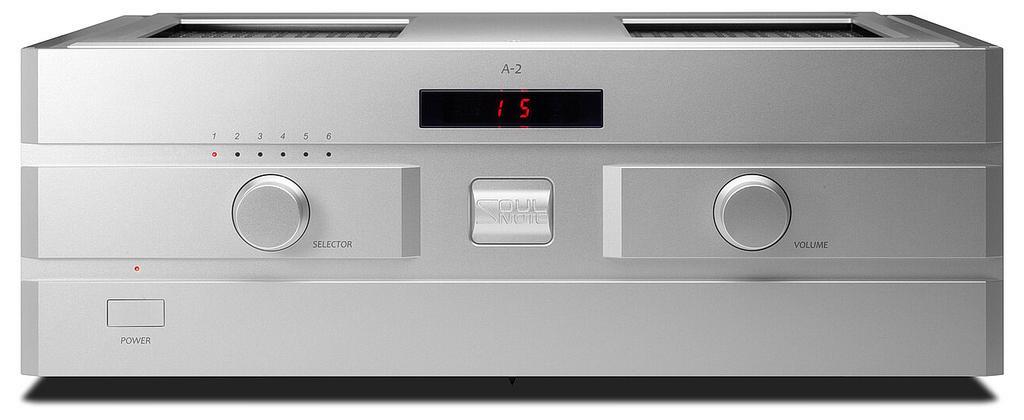
The A-2 ver.2 is where things become particularly interesting. This is the largest and most ambitious of the three revised integrated amplifiers, and the model that benefits most directly from technologies developed for the flagship A-3. Yet one of its most prominent specifications appears to have moved in the wrong direction. The original A-2 delivered 100 watts per channel into 8 ohms and 200 watts into 4 ohms. The new version is rated at 80 and 160 watts, respectively. In an industry where manufacturers often compete to announce ever-higher output figures, voluntarily reducing power is an unusual decision. Soulnote, however, makes no attempt to hide it. The engineers deliberately lowered the supply voltage, preferring an arrangement designed to deliver current more effectively under demanding load conditions. In their view, the ability to respond immediately when a loudspeaker's impedance falls is more valuable than another twenty watts on the specification sheet.
The output stage has also undergone a substantial redesign. The A-2 ver.2 employs a parallel push-pull configuration using the same high-speed, high-power TO-3P transistors found in the A-3. These devices are carefully matched according to their hFE characteristics, a parameter describing a transistor's current gain. Matching is particularly important in parallel output arrangements, where differences between individual devices can lead to unequal current sharing and variations in operating behavior. Soulnote claims that precise selection helps prevent the loss of clarity and coherence it associates with less carefully implemented parallel push-pull circuits. The company has gone further by using the same type of TO-3P transistors in the driver stage, which operates with a relatively high standing current. This allows the drivers to respond rapidly to changes in the output stage's current requirements and compensate for variations in transistor behavior under dynamic conditions. According to Soulnote, the redesigned driver stage represents one of the most significant improvements over the original A-2.
The amplifier retains the four-stage Darlington configuration found throughout the family, but the voltage amplification and bias circuits have also been substantially revised. The emphasis remains on maintaining a fast, direct signal path without global negative feedback, while giving the output transistors sufficient drive to respond to demanding musical passages. Soulnote's engineers clearly regard the interaction between the driver and output stages as crucial, particularly when a complex loudspeaker load forces the amplifier to deliver rapidly changing amounts of current. This is a more sophisticated argument than simply claiming that an amplifier sounds better because it contains larger transformers or more expensive transistors. The company is attempting to optimize the electrical behavior of the entire amplification chain, even when that means abandoning familiar approaches or accepting less impressive headline specifications.
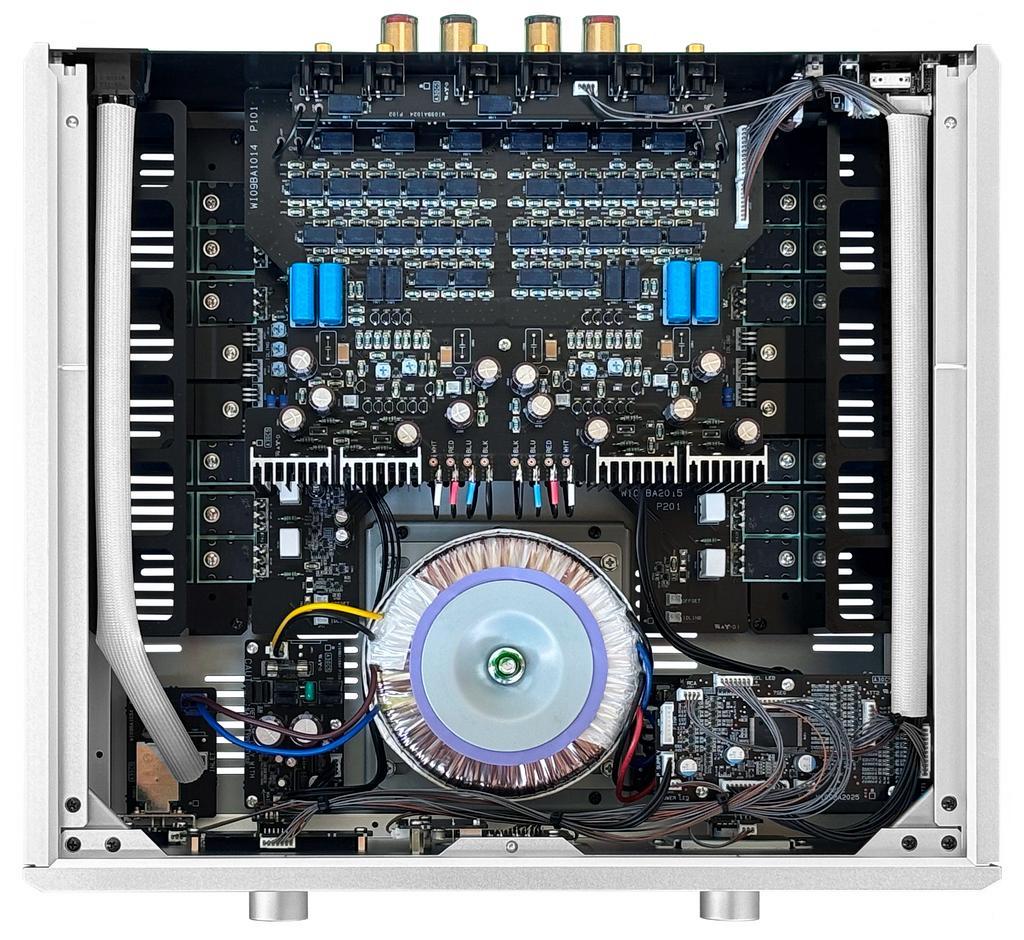
The A-2 ver.2 also receives the balanced relay-switched attenuator introduced in the smaller A-1, but the internal construction is considerably more elaborate. The input connections, source selector, volume attenuation circuitry, and voltage amplification stage are concentrated on a single multilayer circuit board. This arrangement minimizes the number of separate connectors and internal cables, shortening the signal path and reducing the number of potential contact points. Soulnote has also incorporated a 70-micrometer-thick internal copper layer that functions as a broad current-carrying bus for the power supply and output stage. Rather than relying exclusively on conventional traces and plug-in connectors, several internal connections are made by soldering wires directly to the circuit boards. The objective is to reduce unnecessary electrical resistance and contact interfaces while allowing current to flow through carefully defined paths. These are details that most owners will never see, but they demonstrate the extent to which the engineers have reconsidered the original design.
Even the heat sinks have received special attention. Rather than using ordinary blocks of finned aluminum, Soulnote employs a chimney-like structure designed to encourage natural airflow while controlling mechanical vibration. The intention is to provide effective cooling without introducing unnecessary resonances into the chassis. This may sound like an unusually elaborate concern for an amplifier's thermal management system, but it follows the same logic that governs the company's transformer mounting, circuit board supports, and deliberately unsecured top covers. Mechanical construction is treated as part of the audio design rather than something to be finalized after the electronic circuitry is complete. The A-2 ver.2 is therefore an interesting example of how Soulnote's philosophy becomes more elaborate as the available budget increases. What begins as a relatively simple set of ideas in the A-0 develops into a much more sophisticated combination of electrical and mechanical engineering.
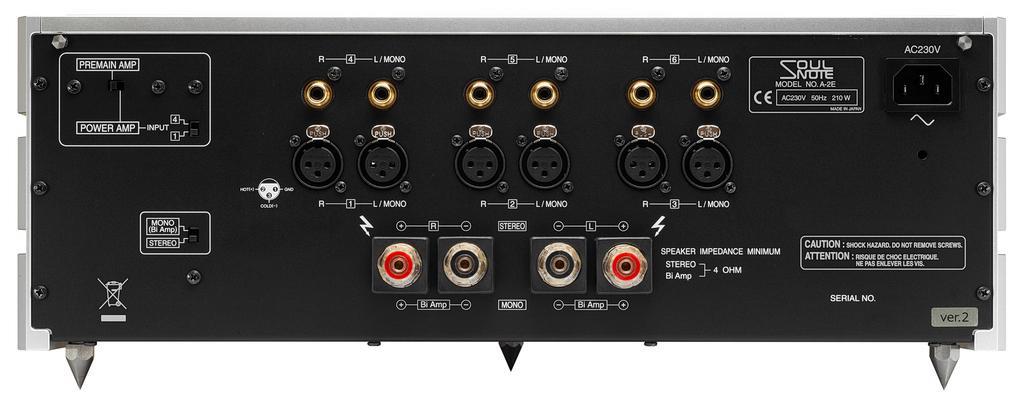
The larger model also offers greater flexibility in system configuration. In addition to operating as a conventional stereo integrated amplifier, the A-2 ver.2 can function as a dedicated power amplifier, bypassing its source selector and volume control. In this mode, power to the microcontroller is interrupted, reducing a potential source of electrical interference and allowing the audio signal to take a more direct route to the amplification circuitry. Both RCA and XLR connections remain available for use with an external preamplifier. Soulnote also provides mono and bi-amping configurations, giving owners several possible ways to integrate the amplifier into more elaborate systems. This is particularly useful for listeners who may eventually want to move toward separate preamplification or experiment with alternative loudspeaker-driving arrangements. At 430 x 162 x 423 mm (16.9 x 6.4 x 16.7 inches) and approximately 20 kg (44 lb), the A-2 ver.2 is a substantial component, considerably taller and heavier than its smaller siblings.
One of the more interesting aspects of the revised lineup is how clearly the three amplifiers now occupy different positions within the same design philosophy. The A-0 ver.2 remains the uncompromising minimalist, built for listeners who value circuit simplicity enough to accept a 10-watt output rating and the absence of remote control. The A-1 ver.2 is the more practical all-rounder, providing enough power for a wider selection of loudspeakers while introducing a more sophisticated volume control and improved connectivity. The A-2 ver.2 moves into genuinely ambitious high-end territory, borrowing output devices and driver-stage concepts from the flagship A-3 while offering greater current delivery, extensive mechanical refinement, and several operating modes. The progression isn't simply a matter of adding more watts as the price increases. Each model represents a different balance between simplicity, power, flexibility, and the technologies that Soulnote believes are most important to musical reproduction.
It's also refreshing to see a manufacturer willing to explain why a newer product might have a less impressive specification than the one it replaces. Whether the A-2 ver.2 actually performs better with difficult loudspeakers will ultimately have to be established through measurements and listening comparisons. There is no universal rule stating that lower supply voltage automatically results in superior current delivery or greater musical realism. Much depends on the complete circuit design and the loads being driven. Nevertheless, Soulnote's decision highlights a genuine engineering trade-off that often gets lost in marketing material. An amplifier isn't judged solely by its ability to produce a particular voltage across a fixed resistor. Its behavior with real loudspeakers, whose impedance and phase characteristics can vary dramatically with frequency, is a much more complicated matter. By concentrating on output-stage drive capability and transient current delivery, the company is addressing aspects of amplifier performance that a simple watts-per-channel figure cannot fully describe.
Taken together, these three models make it clear that the ver.2 designation represents far more than a cosmetic refresh. Soulnote has revisited the fundamental architecture of its integrated amplifiers, incorporating ideas developed over nearly a decade and extending technologies from its flagship equipment into more accessible products. The combination of discrete, feedback-free circuitry, carefully engineered power supplies, unusual mechanical construction, and a willingness to sacrifice headline specifications remains distinctive in a market increasingly dominated by multifunctional amplifiers with extensive digital features. There are no streaming platforms, touchscreens, room correction systems, or smartphone applications here. These are traditional analog integrated amplifiers, designed primarily to accept an audio signal and deliver it to loudspeakers with as little unnecessary processing as possible. Whether that approach is right for everyone is another question. But for enthusiasts who already have their preferred sources and value the amplifier as a dedicated component, Soulnote's revised lineup offers three unusually focused alternatives.
All three models are available in Premium Silver and Premium Black finishes. The Soulnote A-0 ver.2 is priced at $2,929 in the United States, €2,690 in Europe, and £2,499 in the United Kingdom. The A-1 ver.2 costs $4,845, €4,490, and £3,900, respectively, while the A-2 ver.2 is available for $9,390, €8,490, and £6,900. Info and photos by Soul Note.