Julian Lin

Julian Lin

A headphone enthusiast and a devoted explorer of modern audio, Julian Lin is drawn to everything that lives between classic hi-fi and the digital world. Desktop setups, portable players, and DACs are his natural territory. He enjoys modern solutions, but never treats convenience as an excuse for mediocre performance. In his world, a good system does not need to occupy half a room to be interesting.

Klipsch ProMedia Lumina

Klipsch has introduced the ProMedia Lumina, a new 2.1-channel desktop speaker system that updates one of the company's longest-running multimedia audio platforms with revised acoustics, expanded connectivity, and integrated lighting control. Positioned as the successor to earlier ProMedia configurations first introduced in 1999, the Lumina version adapts the concept for contemporary desktop environments used for gaming, content creation, remote work, and everyday listening. The original ProMedia series established a distinctive position in the compact speaker category by incorporating horn-loaded high-frequency drivers, a feature rarely found in desktop audio systems. The new ProMedia Lumina continues this approach with updated MicroTractrix horn technology, now implemented in a wider geometry intended to improve dispersion and maintain clarity in nearfield listening conditions. Each satellite speaker uses a two-way configuration with a 3-inch midrange driver designed to support dynamic output and intelligibility across mixed-use scenarios ranging from voice communication to music playback and gaming.

Grell OAE2

Grell is preparing a broader international rollout of the OAE2, an open-back headphone developed by Axel Grell and positioned as a research-led alternative to more conventional audiophile designs. What makes the OAE2 interesting is that it does not present itself as just another open-back headphone chasing width, sparkle, or exaggerated spaciousness. Grell's concept is based on a front-oriented acoustic layout intended to interact more deliberately with the outer ear, preserving some of the localization cues we normally associate with loudspeaker listening rather than feeding sound straight into the ear canal in the usual headphone fashion. The company describes this approach through its Front-sided Sound Field Modulation system, positioning the OAE2 as a headphone meant to sound more externalized, more stable, and closer in perspective to nearfield monitors than to a typical 'in-head' presentation.

Sivga SV021 Pro

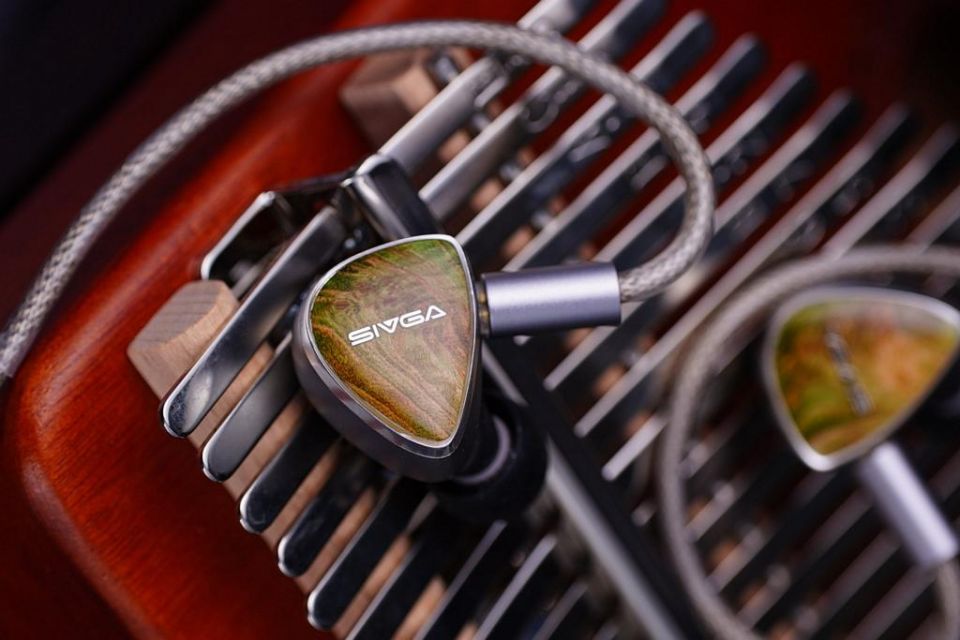
Sivga has introduced the SV021 Pro, a new closed-back headphone that builds on one of the company's better-known dynamic designs while aiming to improve resolution, comfort, and material quality without abandoning the easygoing character that helped the original model find an audience among home listeners. Positioned as the successor to the SV021, the new version appears to focus less on reinventing the formula than on refining it, with a newly developed 50 mm driver, updated construction, and a continued emphasis on natural materials and long-session usability.

FiiO SP5

FiiO is expanding its range of active desktop speakers with the SP5, a pair of nearfield monitors aimed at users looking for something more substantial than typical computer speakers. This is a product designed not only as a desk-based work tool, but also as a compact listening system for music in a domestic setting. Even the way FiiO presents the model makes it clear that this is not meant to be another basic speaker set placed next to a monitor, but an attempt to combine studio-style functionality with a sound that should appeal to demanding listeners.

Fostex TH910 & TH919

Fostex is bringing the next generation of its flagship dynamic headphones in the form of the TH910 and TH919. These two models build on the legacy of the TH900 series, combining Japanese craftsmanship with a new version of the BioDyna driver and a revised, lighter mechanical structure. They are aimed at demanding music lovers and professional users who expect not only striking design, but also a carefully developed sound with a clear sense of the Japanese audio tradition still intact. The TH910 is the closed-back version, focused on isolation and a more intimate presentation, while the TH919 is an open-back design created to deliver a more natural and spacious sound field.

We use cookies to improve our website and your experience when using it. To find out more about the cookies we use and how to delete them, please see our Privacy Policy.