Tomasz Karasiński

Tomasz Karasiński

Trained as an aviation engineer, working as a professional journalist with a passion for good music. In his free time, he designs websites, takes photos of airplanes, and indulges his passion for shooting sports. Likes both cheap and expensive gear, tube and solid state amps, large and small speakers, digital and analogue sources. Doesn't like crap.

Meze Strada

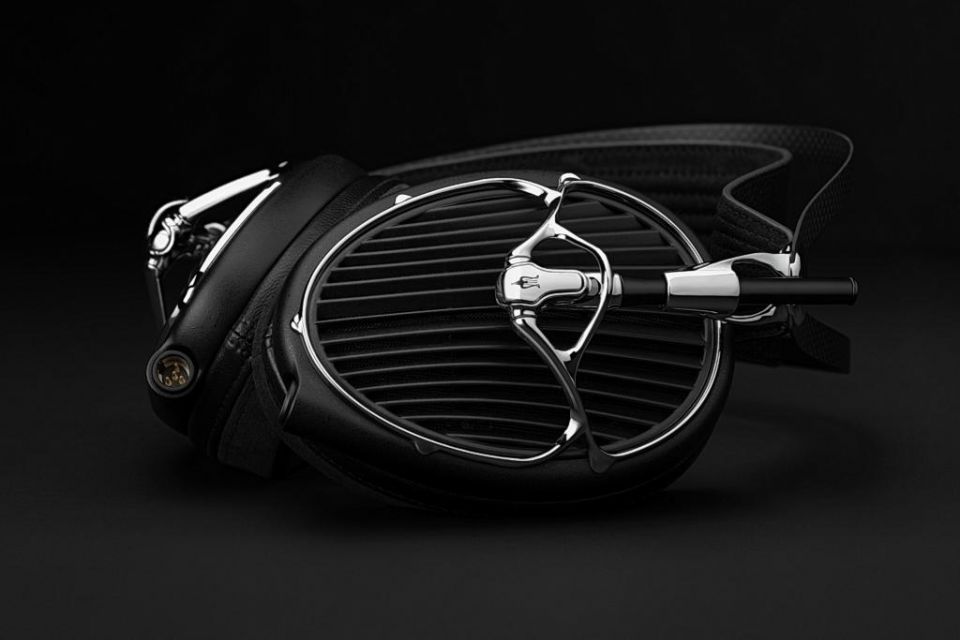
In a surprisingly short period of time, Meze Audio has managed to move from the margins of the market to the center of the premium headphone conversation. The Romanian brand, founded by industrial designer Antonio Meze, built its reputation on a combination of unmistakable design, carefully considered ergonomics, and a warm, natural, easy-to-like sound. Its first major hit, and the model that really changed everything for what was still a tiny workshop at the time, was, of course, the 99 Classics. Over the years, that headphone evolved into several versions and an entire family of related models. The more affordable 99 Neo followed, along with the 12 Classics and 11 Neo in-ear monitors, but that was still only the beginning. Not long after that, the Romanian company stopped playing cautiously and stepped into the world of high-end planar magnetic headphones with models such as the Empyrean, Elite, and Liric. It was a very good decision. The workshop from Baia Mare, already associated with well-made, distinctive headphones thanks to the 99 Classics, suddenly began to be viewed as one of the true leaders in the field, mentioned alongside giants such as Sennheiser, Audeze, and Focal. After several years of building that image with remarkable consistency, Meze Audio became the kind of brand even less experienced music lovers can recognize from the shape of the ear cups alone.

From Transformers to Tube Amplifiers - The Story of Fezz Audio

If someone were to say that the headquarters of one of the most interesting and fastest-growing manufacturers of tube amplifiers and hi-fi components was based not in Munich, Glasgow, or Tokyo, but in a tiny village near Białystok, Poland, many audiophiles would probably raise an eyebrow. This is, after all, the heart of Podlasie - a region that Poles themselves tend to see as beautiful, picturesque, and somewhat removed from the country's main industrial centers and, at least in popular jokes, a little behind the curve of modern life. Internet memes reinforce the stereotype - people are supposedly still discovering electricity there, throwing spears at airplanes, and rolling up the asphalt from the roads at night. A quick search brings up images of R2D2 and C3PO turned into a moonshine still, a long sausage wrapped around a cable reel labeled "Podlasie Fiber Optic", and Fred Flintstone's car presented as a local taxi. And yet it is precisely here, among forests, lakes, and open countryside, that a company emerged, first with small, simple, affordable tube amplifiers, and now delivers beautifully engineered, thoughtfully designed, thoroughly modern components to music lovers in more than thirty countries worldwide.

Audiomica Laboratory Consequence

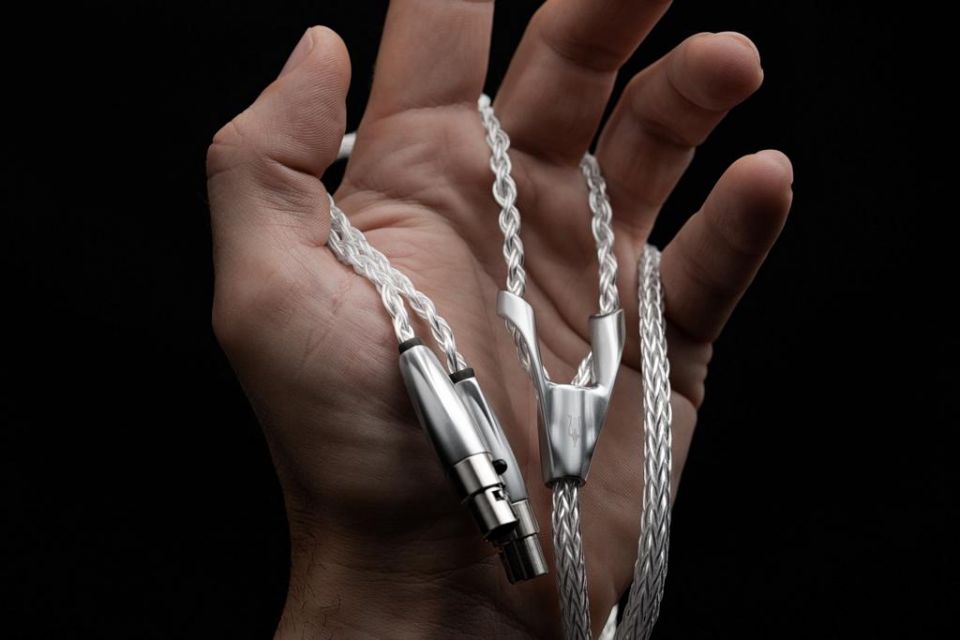
The moment comes in every audiophile's life. After enough experimenting with speakers, amplifiers, and source components, once the system finally starts sounding genuinely good, a question begins to nag at us - should we be paying more attention to cables? Some people agree completely, arguing that cables are just as much a part of the signal path as an amplifier or speakers. Others laugh the whole idea off and insist that anyone who believes in cable differences simply should have paid more attention in physics class. In truth, there is only one way to find out - try it and decide for yourself. If we hear no difference, there are really only three logical explanations. The first is that our system still is not revealing enough to expose those nuances, or that the cables we borrowed for comparison, despite their prettier plugs and more upscale appearance, are not actually much different from what we already use. The second is that our hearing is not quite as sensitive as we would like to think, and what others describe as a night-and-day transformation is, for us, barely there at all. The third is that cables have no effect on sound whatsoever and serve only to improve the owner's mood and the manufacturer's cash flow.

Ophidian Skye

Ophidian has introduced the Skye, a new floorstanding loudspeaker that expands the British manufacturer's S-series with a model intended to combine full-range performance, compact domestic proportions, and a more traditional furniture-grade finish. Designed and assembled in the UK, the new speaker joins the standmount Seren as the second entry in this mid-priced range, giving Ophidian a floorstander for listeners who want deeper bass and greater scale without moving into the company's higher-tier Incanto and Voodoo lines.

Écoute TH1

Écoute Audio has introduced the TH1, a pair of high-end wireless headphones built around a signal architecture more typical of a compact hi-fi system than a conventional Bluetooth design. Instead of relying on an integrated system-on-chip solution that combines decoding, processing and amplification in a single platform, the TH1 use a discrete dual-mono topology with a dedicated DAC stage, a tube preamplifier and separate Class A/B amplification for each channel. The result is a product positioned not simply as another premium portable headset but as a wearable extension of traditional hi-fi design logic.

Mission 778CDT

Mission has expanded its compact 778 Series with the introduction of the 778CDT, a dedicated CD transport designed to complete the lineup alongside the 778X integrated amplifier and the recently announced 778S music streamer. The new model is aimed at listeners who still rely on physical digital media and want a purpose-built transport that can make the most of an external DAC or an amplifier with digital inputs, rather than a conventional all-in-one CD player. In that sense, the 778CDT is not just a matching accessory for the rest of the series, but a sign that Mission sees continued value in CD playback as part of a modern hi-fi system.

Ferrum Wandla GoldenSound Edition Gen 2

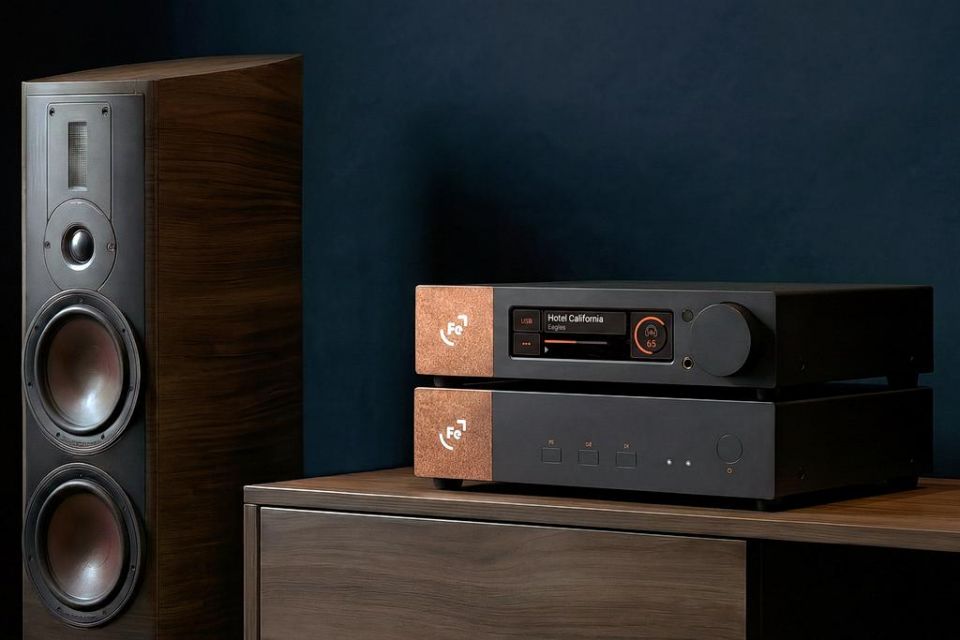
Ferrum has introduced the Wandla GoldenSound Edition Gen 2, an updated version of its DAC and preamplifier platform developed in collaboration with GoldenSound. Building on the EISA award-winning Wandla architecture and the earlier GoldenSound Edition variant, the new model focuses on expanded user control over tonal balance, spatial presentation and harmonic character through redesigned versions of three key processing tools - Impact+, Tube Mode and Spatial Enhancement - all refined using Ferrum's Sweet Spot Tuning approach.

Matrix Audio ND-1

Matrix Audio has introduced the ND-1, a new digital-to-analogue converter in the company's N Series, conceived as a dedicated source component for advanced stereo systems and headphone-based desktop setups. Rather than treating the DAC as one function inside a wider all-in-one platform, Matrix Audio is positioning the ND-1 as a focused, purist design built around one core objective - high-performance digital decoding with a degree of tonal flexibility that remains relatively unusual in this category. Officially unveiled as part of the complete N Series line-up in March 2026, the ND-1 joins the NT-1 digital audio transport and the NA-1 headphone amplifier to form what Matrix describes as a premium desktop separates system.

Fezz Audio Titania MK2, Titania Power Amplifier MK2 & Mira Ceti MK2

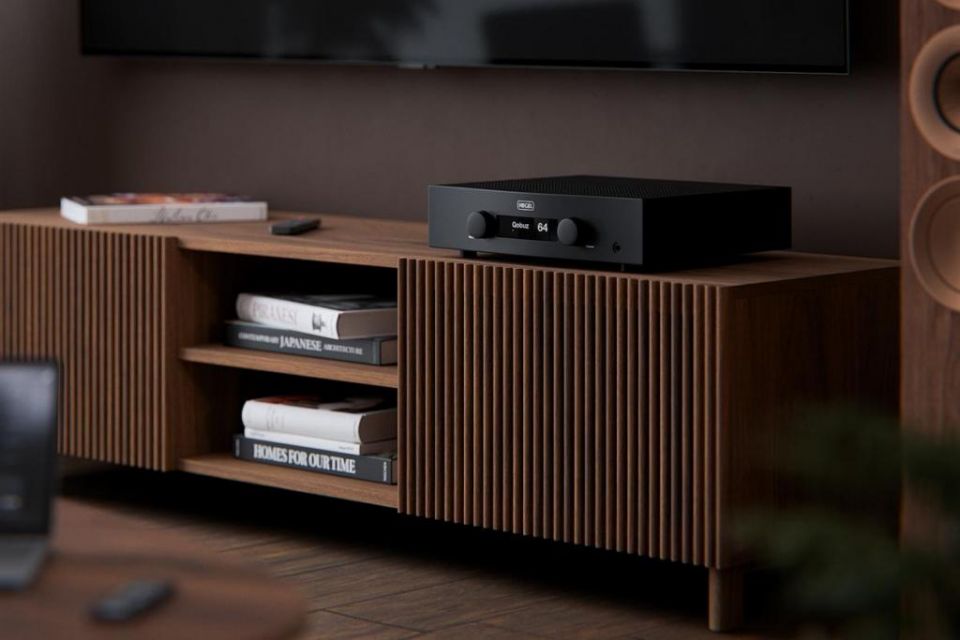
Fezz Audio has refreshed its Evolution series with three updated tube amplifiers - the Titania MK2 integrated amplifier, the Titania Power Amplifier MK2 stereo power amplifier and the Mira Ceti MK2 single-ended Class A design - marking a broader technical step forward rather than a routine generational update. Based in Poland and closely linked to transformer specialist Toroidy, the company has built its reputation on combining traditional tube topologies with modern usability, and the latest MK2 versions clearly continue that approach. All three amplifiers introduce redesigned signal paths, revised driver stages and upgraded operating stability, while sharing a common set of practical improvements including automatic bias control, electronic tube protection systems, optimized warm-up sequences and support for FEBS expansion modules. Together, these changes position the new Evolution models as more mature and more system-flexible successors intended to retain the musical character of classic tube amplifiers while reducing the complexity typically associated with everyday ownership.

Fezz Audio Titania MK2

In the world of audio equipment, it is not hard to find stories that sound compelling on paper, only to lose their charm the moment they collide with reality. Someone has an interesting idea, solid technical backing, a clear vision, even the right moment to enter the market, and yet after two or three years all that remains are a few mentions in the archives of specialist websites and a handful of products remembered by their owners with a certain fondness, but little real conviction. With Fezz Audio, things were different from the very beginning. Of course, one could look at the brand with caution, as it was entering an industry that loves a good new story on the one hand, but remains deeply conservative and distrustful on the other. When somebody appears on that scene with an original tube amplifier, many music lovers inevitably ask whether it really makes sense. Is this merely another attempt to offer something that looks familiar, glows in the dark and is meant to lure customers with promises of magical sound, without necessarily being backed up by a mature design?

We use cookies to improve our website and your experience when using it. To find out more about the cookies we use and how to delete them, please see our Privacy Policy.