Displaying items by tag: uk - StereoLife Magazine

Naim Muso Utopia

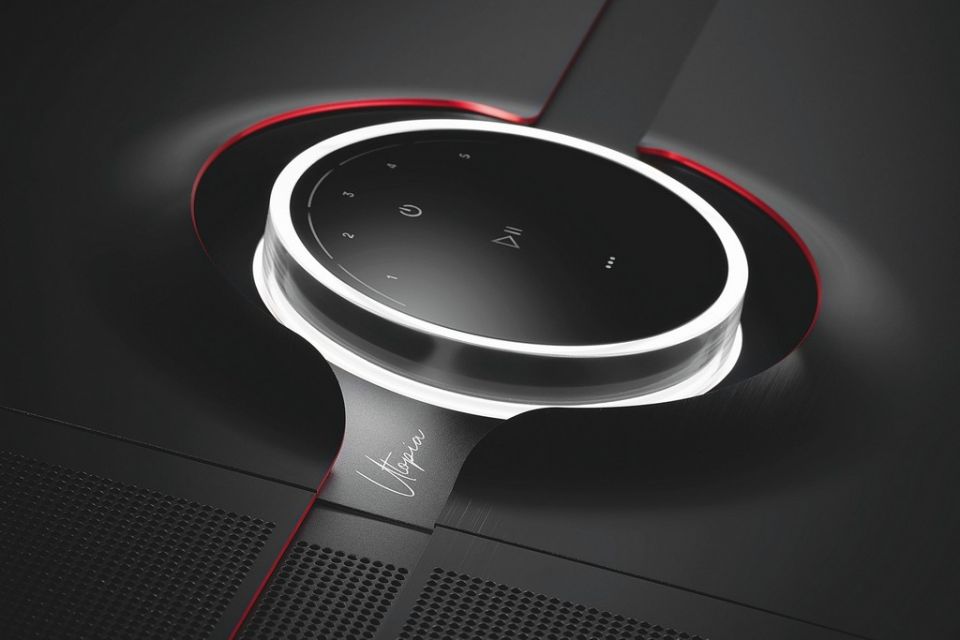
In the world of high-end audio, there has always been a fairly clear division of labor. If you want to listen to music seriously, you buy an amplifier, a network player, and a decent pair of speakers. If movie sound is the priority, you put together a home theater system with an AV receiver, a subwoofer, and speakers dotted around the couch. And if convenience, good looks, and a minimum of boxes matter more than anything else, you buy a soundbar or a wireless speaker and accept that you're making a compromise on sound quality. Or at least that's how the thinking went for years. The trouble is, audio manufacturers seem to have stopped playing by those rules. Increasingly, they're offering products that refuse to stay in their designated categories, promising to take the place of several components in a home entertainment system. Most of the time, the promise is more impressive than the result. It's easy enough to give a soundbar streaming capabilities or add an HDMI socket to a Bluetooth speaker. Getting that same box to sound like a proper stereo system is another matter entirely. Occasionally, though, engineers approach the challenge with rather more ambition. They're not content to assume that powerful bass, clear dialogue, and the ability to stream a playlist from a phone are all anyone could possibly want. That's when things get interesting, and even die-hard audiophiles may find themselves questioning a few long-held beliefs. Suddenly, we have compact wireless speakers that can hold their own against imposing floorstanders, or a beautiful amplifier slim enough to hang on a wall that can embarrass high-end integrated amps and 100-pound power amplifiers. Could the new Naim Muso Utopia be another of these rule-breakers?
iFi Audio iCAN Phantom 1.5

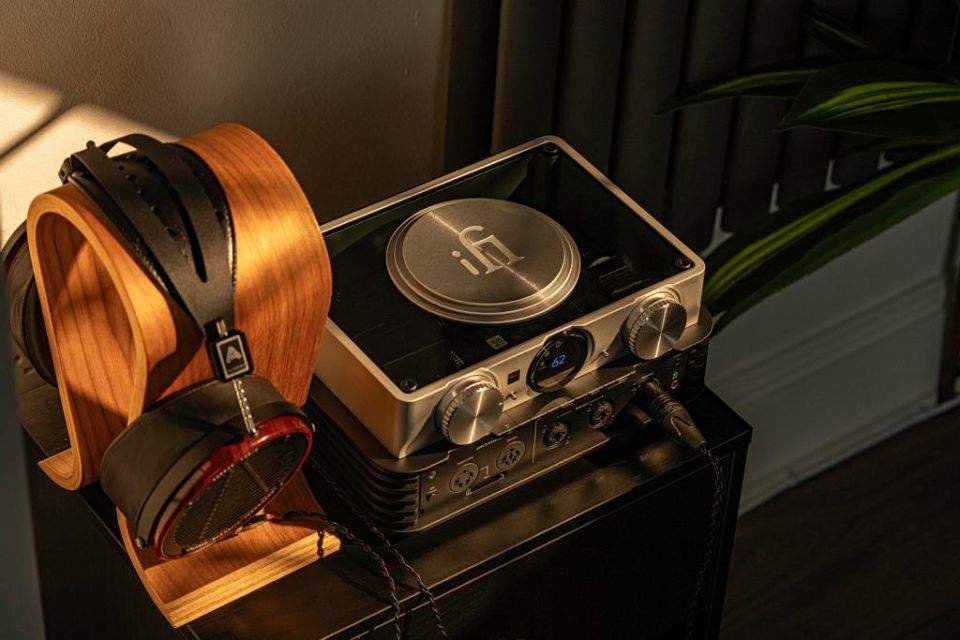
Building a serious headphone collection can get complicated remarkably quickly. A pair of sensitive in-ear monitors might work beautifully with a small portable DAC, but plug them into a powerful desktop amplifier and suddenly there's audible hiss in the background. Planar magnetic headphones present a different challenge, often demanding considerably more current than their size would suggest. And if you decide to explore electrostatic headphones, you're entering another world altogether, complete with specialized amplification and high-voltage requirements. Before long, what started as a relatively simple listening setup can turn into a collection of amplifiers, power supplies, and cables, each serving a slightly different purpose. iFi Audio believes there's a better way. Its new iCAN Phantom 1.5 is an updated version of the company's flagship analog headphone amplifier and preamplifier, designed to accommodate practically every type of headphone from a single chassis. The original iCAN Phantom arrived in 2023 as the successor to the Pro iCAN Signature, bringing together several technologies that would normally require separate components. The 1.5 edition doesn't reinvent that concept, but introduces a series of refinements aimed at making this exceptionally versatile amplifier easier to configure, operate, and live with.

QED Performance

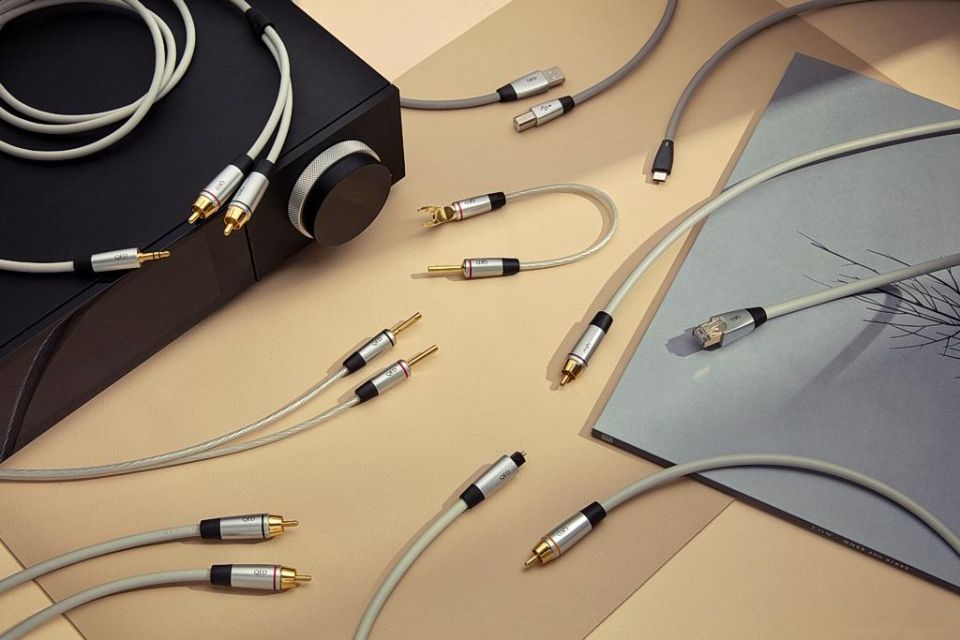
There was a time when connecting a hi-fi system was a fairly straightforward business. You needed a pair of speaker cables, an interconnect between your source and amplifier, and perhaps a few additional wires if you happened to own a particularly elaborate setup. These days, things are rather different. A typical system might include a streamer connected through Ethernet, a DAC receiving music over USB, an optical connection to the television, a coaxial digital transport, an active subwoofer, and perhaps even a good old 3.5 mm headphone jack, which has somehow survived repeated predictions of its imminent extinction. With so many different connections to consider, buying the right cables can become almost as complicated as choosing the equipment itself. British cable specialist QED is hoping to make things a little easier with a comprehensive overhaul of its popular Performance series. The refreshed lineup now consists of 13 models covering practically every common analog and digital connection found in modern audio and home theater systems. The biggest additions are an entirely new speaker cable, matching bi-wire links, and four USB cable configurations, bringing the range up to date with the increasingly diverse ways people listen to music.

iFi Audio iDSD GR 2 MT

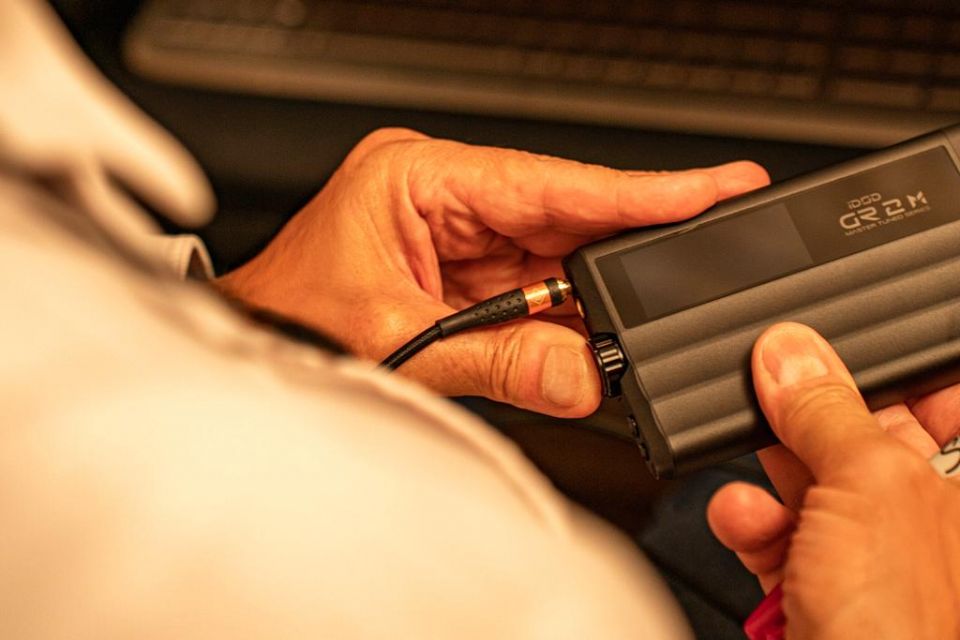
It hasn't been long since the launch of the iDSD GR 2, but iFi Audio has already prepared a special version of its latest portable DAC and headphone amplifier. The iDSD GR 2 MT, with the final letters standing for "Master Tuned," was developed in collaboration with Steve Levine, the British record producer whose credits include Culture Club, The Beach Boys, Gary Moore, and Motörhead. This is not, however, the usual kind of special edition where the differences amount to a new finish, a celebrity signature, and a few additional menu options. For the GR 2 MT, iFi has upgraded several components in the analog signal path, replaced the circuit board material, and introduced two exclusive digital filters developed with Levine. The starting point remains the standard iDSD GR 2, introduced in June 2026 as the successor to the popular xDSD Gryphon. Rather than treating it as a modest update, iFi approached the GR 2 as a substantially new design, introducing a revised DAC architecture, fully balanced amplification, a color OLED touchscreen, and support for the latest wireless audio technologies. At the heart of its digital section is the Burr-Brown PCM1795, a current-output DAC chip that gave the company's engineers considerable freedom in designing the analog circuitry that follows it.

Nothing Headphone (1) Pro

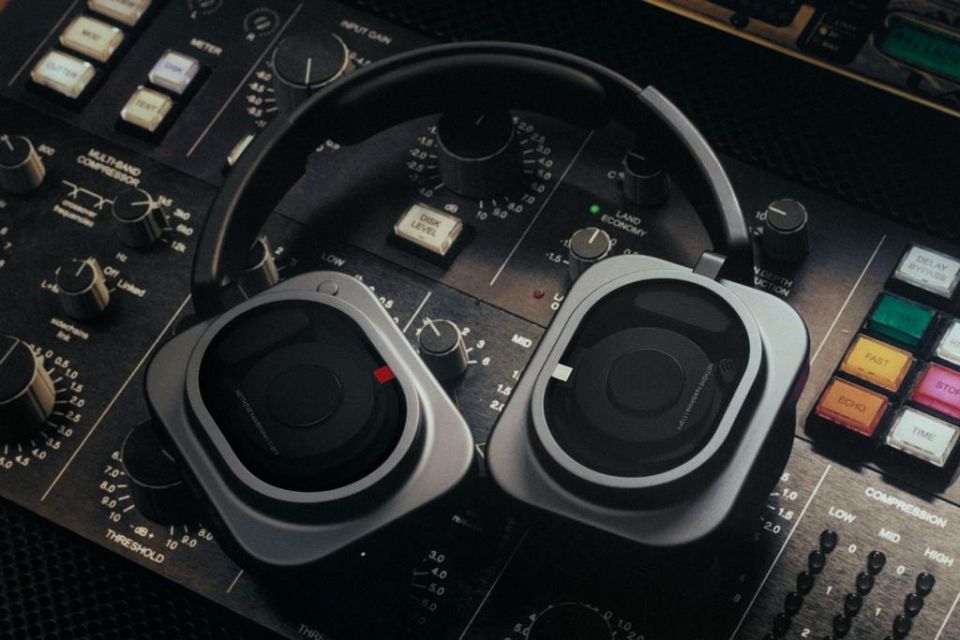
Nothing has never been particularly interested in making products that look like everyone else's. From transparent smartphones to earbuds that resemble tiny pieces of industrial machinery, the London-based company has built much of its identity around doing things differently, sometimes simply for the pleasure of standing out. Its latest flagship headphones, however, suggest that the brand is becoming increasingly ambitious about what happens inside those distinctive enclosures. The new Headphone (1) Pro retains the partly transparent design introduced with the original Headphone (1), but the real changes are hidden beneath the surface. Instead of relying on a single dynamic driver in each earcup, Nothing has developed an unusual three-driver arrangement that includes a miniature solid-state xMEMS tweeter. There are also extensive sound customization options, a dedicated Flat EQ mode, tuning developed in collaboration with London's Metropolis Studios, adaptive active noise cancellation, and spatial audio with head tracking. It's a surprisingly elaborate combination for a company that only entered the full-size headphone market relatively recently, and one that clearly aims to challenge more established players in the premium wireless category.

iFi Audio UP Play & UP Play Max

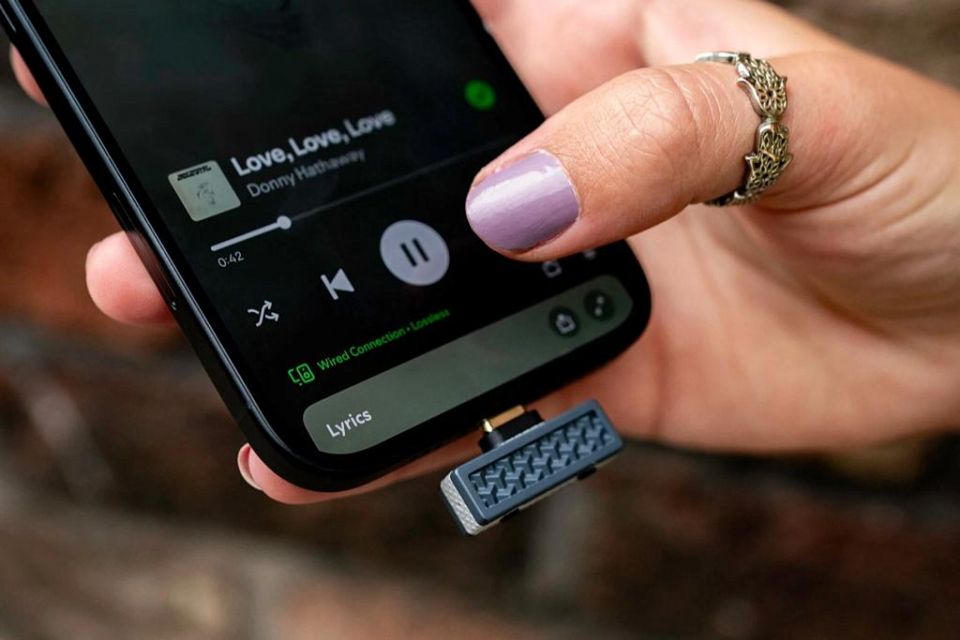
You can spend a small fortune on wireless headphones, carefully compare their drivers, tuning, noise cancellation, and battery life, and eventually settle on a model that supports some of the most advanced Bluetooth codecs available. Then you connect it to your phone and discover that half those capabilities are essentially useless. The headphones may support LDAC, aptX Adaptive, or even aptX Lossless, but that doesn't necessarily mean your smartphone can transmit audio using any of them. iPhone owners know this problem particularly well, since Apple continues to rely on AAC and SBC for Bluetooth audio, regardless of how sophisticated the connected headphones might be. iFi Audio believes the solution doesn't have to involve buying a different phone. Its new UP Play and UP Play Max are miniature USB-C Bluetooth transmitters designed to take over wireless audio duties from the source device, effectively bypassing its built-in codec limitations. Neither is a conventional DAC or headphone amplifier. Instead, these tiny accessories give smartphones, tablets, computers, and compatible gaming devices access to Bluetooth formats they might otherwise be unable to use. The standard UP Play supports LDAC and several members of the aptX family, while the more advanced UP Play Max adds aptX Lossless and promises future support for Auracast.

KEF LS Luxe

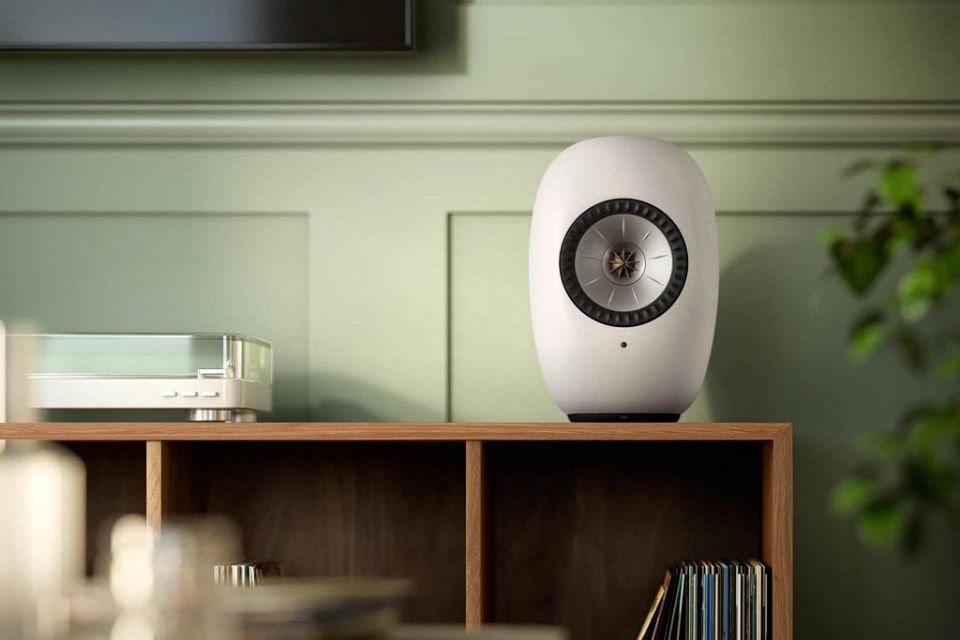
For years, KEF has been steadily developing the concept of a complete stereo system contained within a pair of active speakers. The history of this part of the company's lineup goes back much further than the rise of music streaming. Its symbolic starting point is the LS3/5a monitor, developed by the BBC in the 1970s using KEF drivers. The company returned to that tradition for its 50th anniversary with the passive LS50, followed several years later by the active LS50 Wireless. Subsequent generations of the LS50 Wireless, the smaller LSX systems and the slim LS60 Wireless floorstanders established an entire family of products in which the amplification, digital-to-analog conversion, streamer and digital crossover are designed from the outset as a single system. The latest and most luxurious expression of this idea is the LS Luxe, an active stand-mounted system positioned above the LS50 Wireless II while remaining considerably more compact than the floorstanding LS60 Wireless.

Arcam A50 Signature & CD25

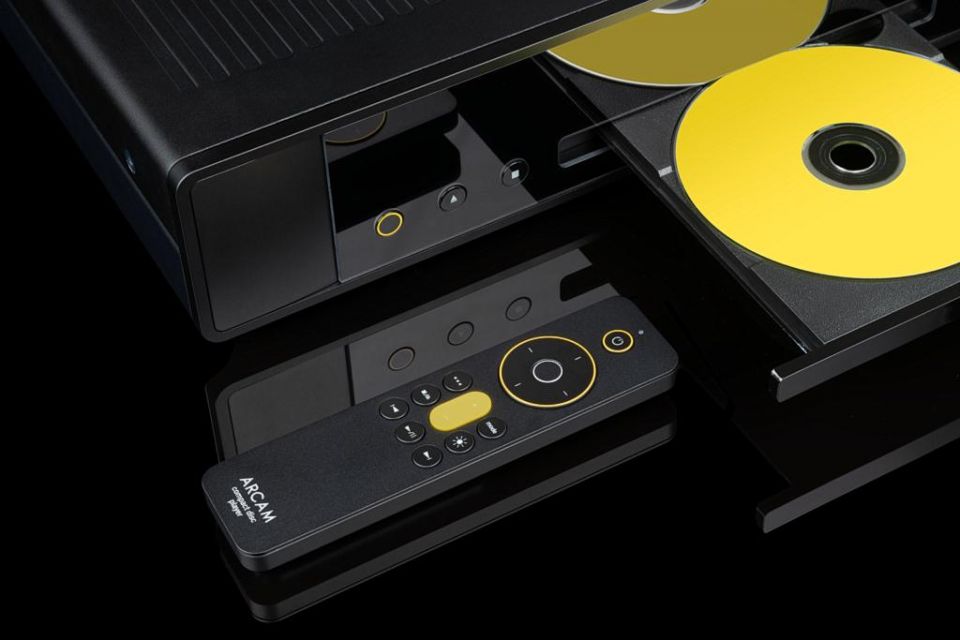
In 2026, Arcam celebrates its 50th anniversary. The British company's story began in Cambridge, where two engineering students and friends, John Dawson and Chris Evans, combined their interest in music with their technical expertise to establish Amplification and Recording Cambridge, later known as A&R Cambridge. Its first major product was the A60 integrated amplifier, introduced in September 1976. It not only gave the fledgling company a successful start, but also established the direction it would follow for decades to come. Although Arcam's catalogue eventually expanded to include disc players, digital-to-analogue converters, streamers and sophisticated home cinema electronics, amplifiers remained at the heart of the company's identity. To mark its golden anniversary, Arcam has introduced two new components positioned at the top of the Radia range - the A50 Signature integrated amplifier and the CD25 compact disc player.

Wharfedale Aura

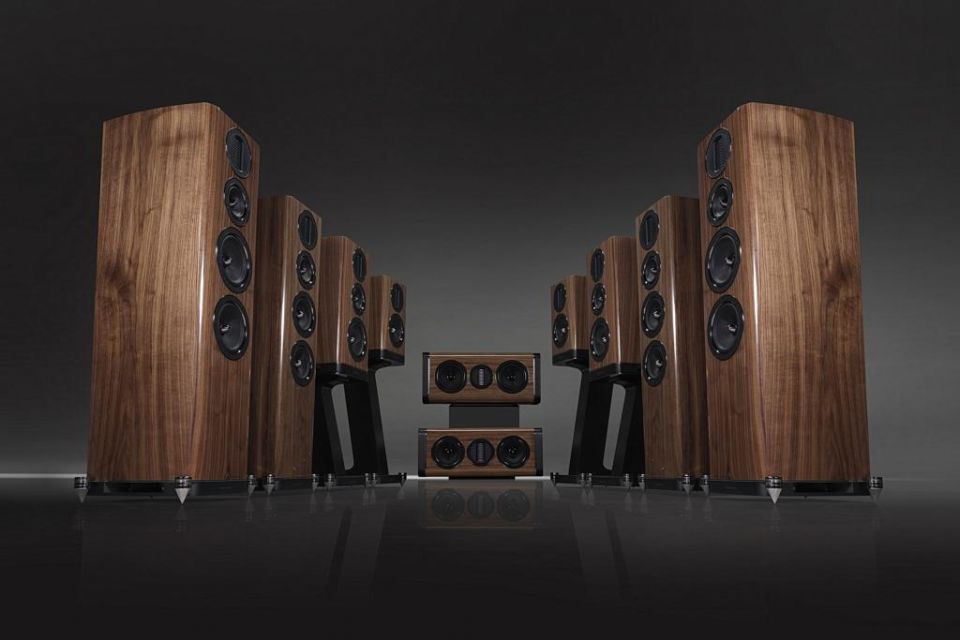
Wharfedale is one of those manufacturers that knows how to spread its ideas across several price levels without turning the more affordable ranges into stripped-down, characterless versions of its flagship designs. The Aura series is a particularly good example. It borrows heavily from technologies developed for the top-of-the-line Elysian range, but packages them in speakers aimed at a much broader audience. In terms of overall size, the Aura models remain relatively close to the popular Evo family, yet their drivers, cabinets, crossovers and bass-reflex systems have all been developed with Wharfedale's more ambitious designs in mind. This is not just a single pair of speakers, either, but a complete lineup capable of forming the basis of anything from a traditional stereo system to a full multichannel home theater. The range consists of two stand-mount models, the Aura 1 and Aura 2, two floorstanders, the Aura 3 and Aura 4, and two center-channel speakers, the Aura CS and Aura C. In other words, buyers can start with a relatively compact setup for a living room or office, move all the way up to a substantial three-way floorstander, or build a tonally consistent system for both music and movies.

Q Acoustics 3040c

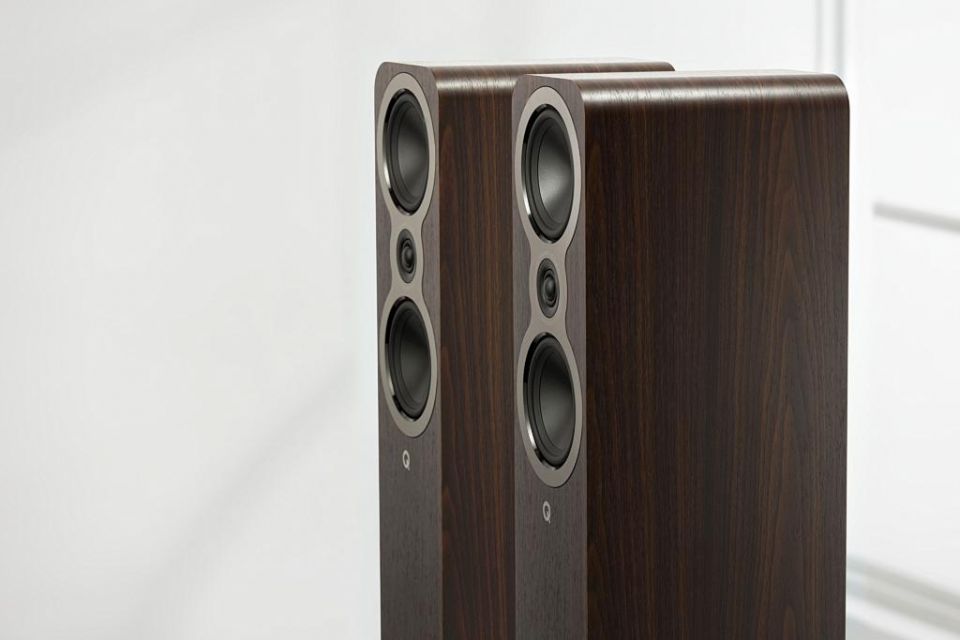
Q Acoustics has spent the last two years filling out the latest generation of its most affordable loudspeaker family, but one obvious model was missing. When 3000c debuted at High End Munich 2024, the range included three standmounts, the large 3050c floorstander and a center-channel speaker, leaving a substantial gap between 3030c and 3050c. That space is now occupied by 3040c - a slim floorstanding speaker created for listeners who want the scale and bass extension of a tower without giving up as much floor space as a conventional design demands. Q Acoustics says the idea came partly from feedback from its own community, and 3040c now completes the 3000c family as a smaller alternative to 3050c rather than a replacement for it.

We use cookies to improve our website and your experience when using it. To find out more about the cookies we use and how to delete them, please see our Privacy Policy.