
- News
- Posted
Klipsch The Fives II, The Sevens II & The Nines II
Klipsch is celebrating its 80th anniversary with a major overhaul of one of the most recognizable parts of its powered-speaker lineup. The Fives II, The Sevens II and The Nines II retain the familiar three-step hierarchy of the previous generation, but little else has simply been carried over. All three models combine Klipsch's horn-loaded acoustic design with a completely new electronics platform developed by Onkyo engineers in Osaka, while adding built-in network streaming, HDMI 2.1, Dolby Atmos and a much broader range of system functions. The new generation was first shown at CES 2026 and has since reached stores in the US, UK and Europe.
The partnership with Onkyo is much more substantial than simply adding a few digital inputs. Inside each pair is an electronics platform based on AVR architecture, giving the speakers the processing capabilities normally associated with a separate home theater receiver. HDMI 2.1 input and eARC output allow a television, game console or other video source to become part of the system while supporting 4K/120 video, VRR, ALLM and HDR pass-through. Dolby Atmos decoding is standard across the range, although naturally these remain two-speaker systems rather than conventional multichannel Atmos installations with physical height speakers. Klipsch instead uses processing to create a more immersive presentation from the stereo pair.
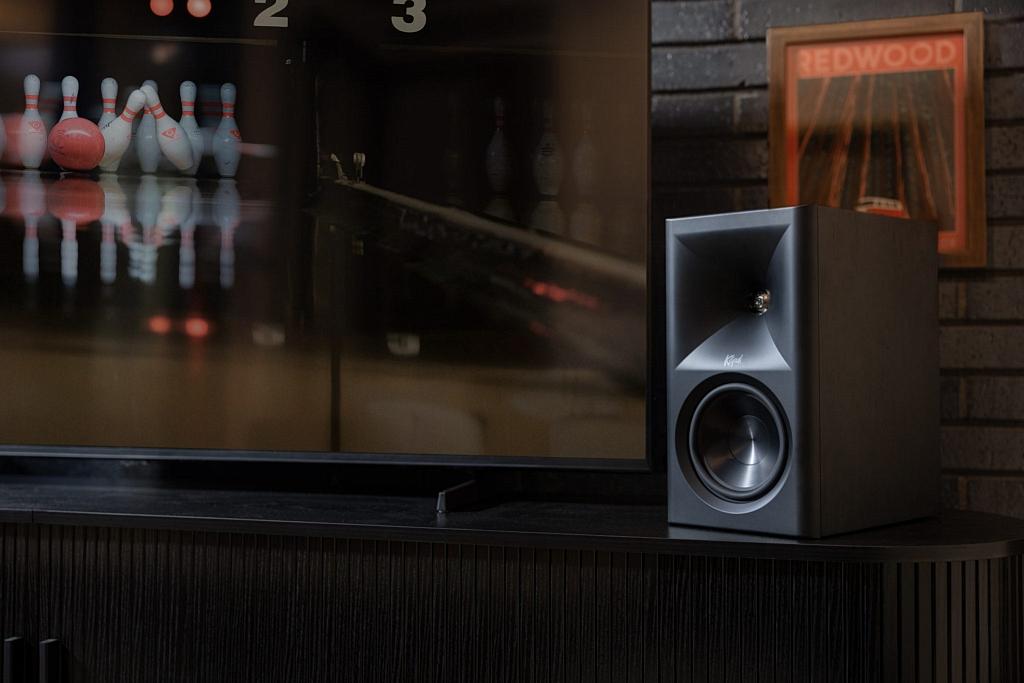
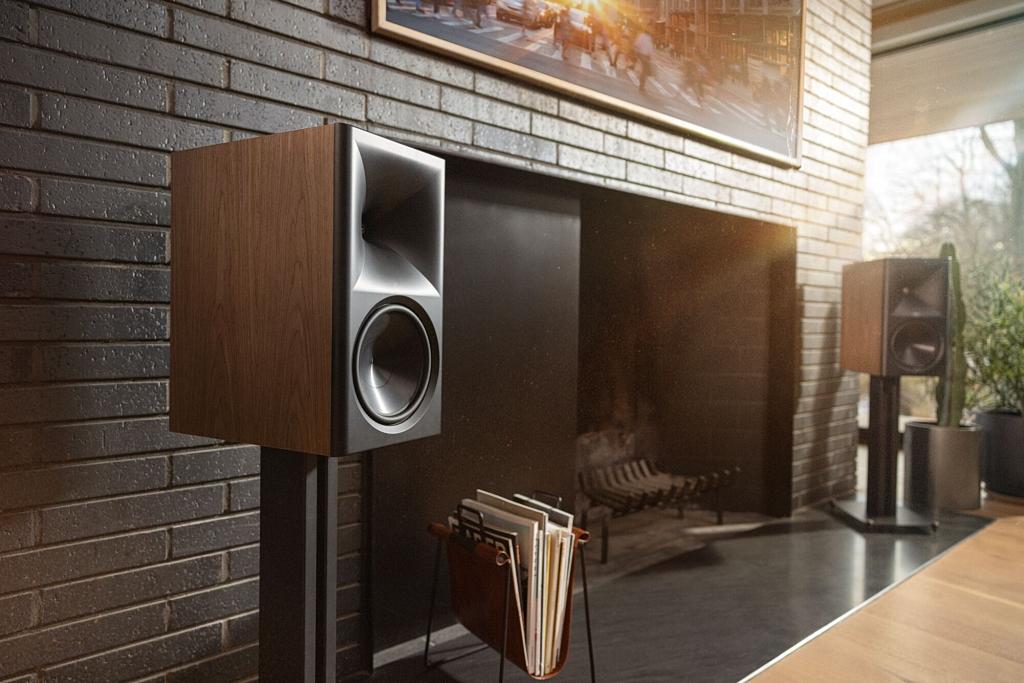
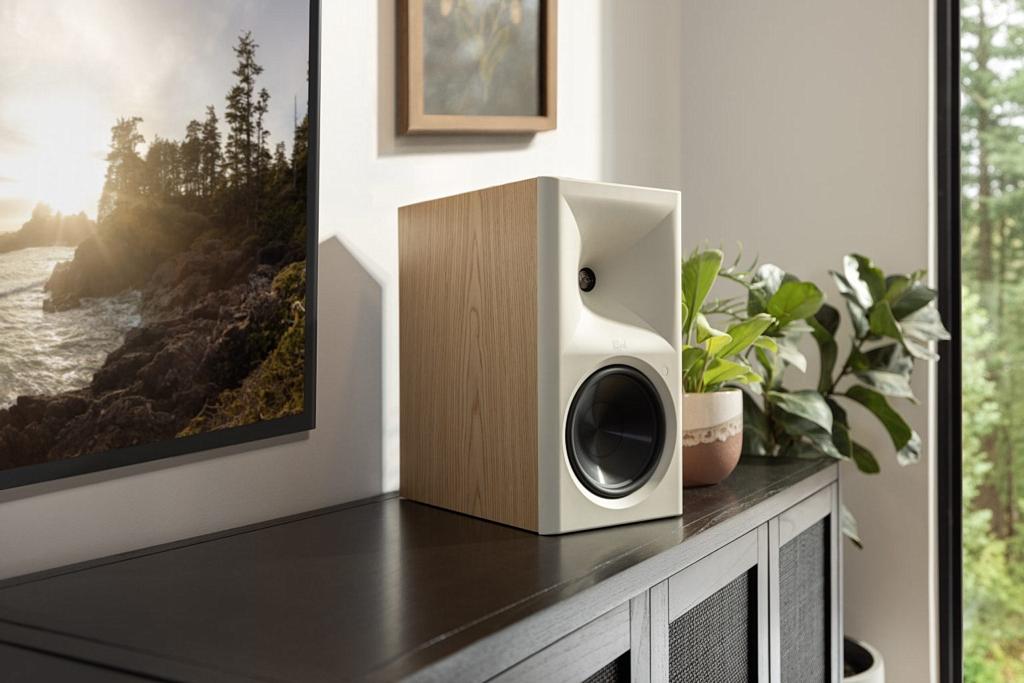
The acoustic side has been reworked as well. All three models use a new one-piece BMC front baffle, whose denser and more rigid structure is intended to reduce unwanted resonance. Its rounded edges also reduce diffraction and help maintain a more consistent response away from the central listening position. The familiar Klipsch formula remains at the center of the design - a 1-inch titanium LTS tweeter works with a Tractrix horn, while the bass and midrange are handled by Jet Cerametallic woofers sized according to the model. The Fives II uses a 5.25-inch unit, The Sevens II moves up to 6.5 inches and The Nines II gets a substantial 8-inch driver.
The Fives II is the smallest and simplest member of the family, but the difference is now more about scale and a few advanced features than basic connectivity. Its 5.25-inch Jet Cerametallic woofer is paired with the horn-loaded titanium tweeter in a bi-amplified system rated at 180 W. The quoted frequency response extends from 50 Hz to 25 kHz. Unlike the two larger models, the left and right speakers remain connected by cable and there is no Dirac Live room correction, but Dolby Atmos, network streaming, HDMI 2.1 and the new Onkyo electronics are all present. That makes The Fives II particularly interesting for smaller living rooms, desktop systems or anyone looking for something closer to a traditional stereo pair than a soundbar without adding an amplifier or streamer.
The Sevens II takes a significant step upward. Its 6.5-inch woofer extends the specified response down to 39 Hz, while total amplification rises to 200 W. More importantly, this is where Dirac Live Room Correction enters the picture. A Limited Bandwidth license and measurement microphone are included, allowing the speakers to analyze the listening environment and compensate for some of the acoustic problems introduced by the room. Calibration is managed through the Klipsch Connect Plus ecosystem rather than requiring manual adjustment of individual filters. The Sevens II also adds an optional wireless connection between the primary and secondary speakers. Owners can retain a conventional cable connection for playback up to 24-bit/96 kHz or remove the inter-speaker cable and operate wirelessly at up to 48 kHz.
The Nines II sits at the top of the range and pushes the same concept into considerably larger-speaker territory. An 8-inch Jet Cerametallic woofer helps extend the frequency response to 31 Hz, while the amplifier section delivers 240 W. Dirac Live and optional wireless left-right operation carry over from The Sevens II, but Klipsch adds DTS:X and DTS Virtual:X alongside Dolby Atmos. The flagship model also gains balanced XLR inputs, giving it an unusual second life as a potential monitor system in a studio or other installation where professional-style connectivity is useful. With a quoted maximum output of 107 dB SPL at one meter, The Nines II is clearly intended for larger rooms and higher playback levels than its smaller siblings.
What really separates the new generation from the original Fives, Sevens and Nines, however, is the extent to which these are now complete network audio systems. Google Cast, Apple AirPlay 2, Spotify Connect, Tidal Connect and Qobuz Connect are built in, while the speakers are also Roon Ready. Hi-res playback is supported up to 24-bit/96 kHz through compatible wired sources. Ethernet is available for network connection in addition to Wi-Fi, so owners are not limited to Bluetooth when they want to play music without adding an external streamer.
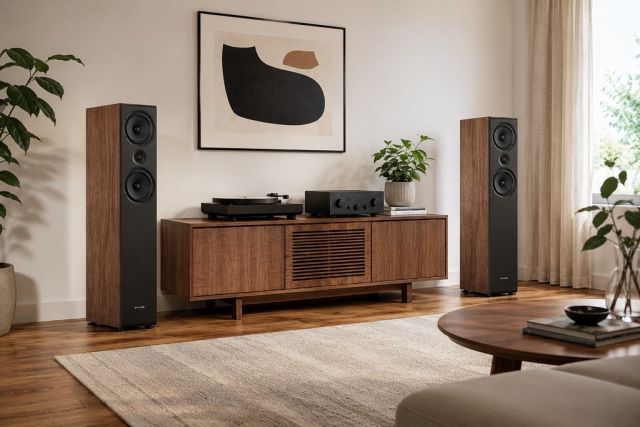
Klipsch has not forgotten more traditional sources either. All three models provide HDMI, optical digital, USB-C audio, analog RCA and a dedicated turntable input with a built-in phono preamplifier, together with a subwoofer output. The Sevens II and The Nines II add coaxial digital input, while The Nines II goes further with its balanced XLR connections. This mixture makes the speakers unusually flexible - the same pair can handle a TV through HDMI eARC, a turntable without an external phono stage, a computer through USB-C and streaming services directly over the network.
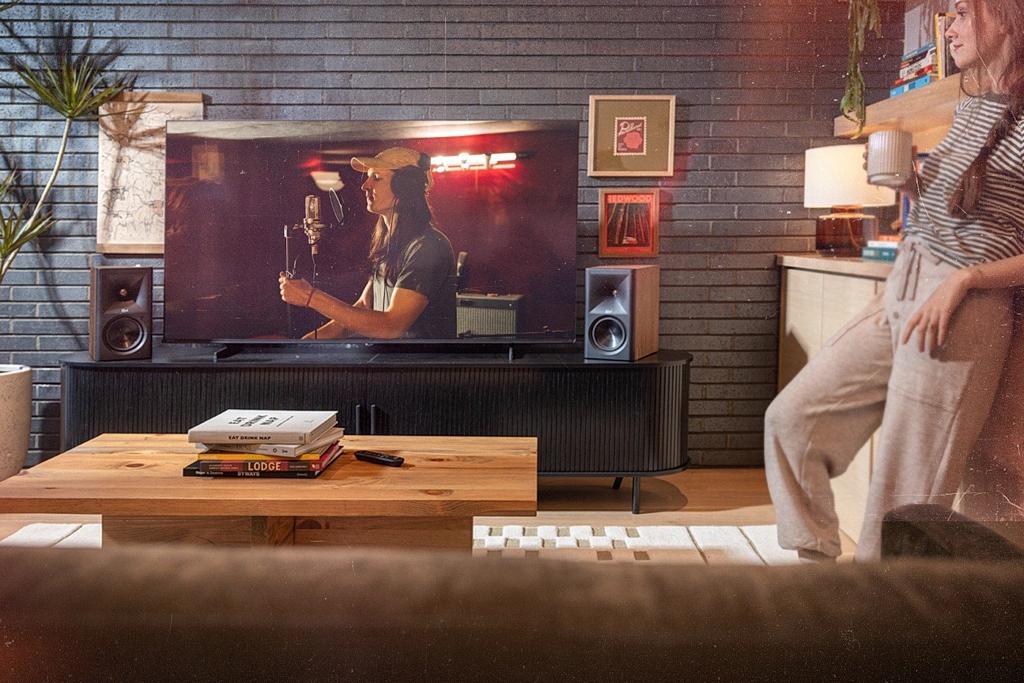
Gaming is another area where the Onkyo platform changes the character of the range. The HDMI 2.1 implementation supports 4K/120, Variable Refresh Rate and Auto Low Latency Mode, allowing a modern console to pass its video signal through the speakers without giving up features expected from a current television or gaming display. In other words, Klipsch is no longer presenting these simply as powered hi-fi speakers that happen to accept TV audio. They are designed to sit at the center of a modern entertainment setup and cover territory traditionally divided between a stereo system, streamer and AV receiver.
Day-to-day operation has also been updated. Each model uses a redesigned top panel with metal controls for volume and source selection, while the supplied remote is now backlit. Klipsch Connect Plus provides access to source management, presets and the My Input function, with room calibration added on The Sevens II and The Nines II. It is a useful acknowledgement that an all-in-one system should not force its owner to reach for a phone every time the volume needs changing.
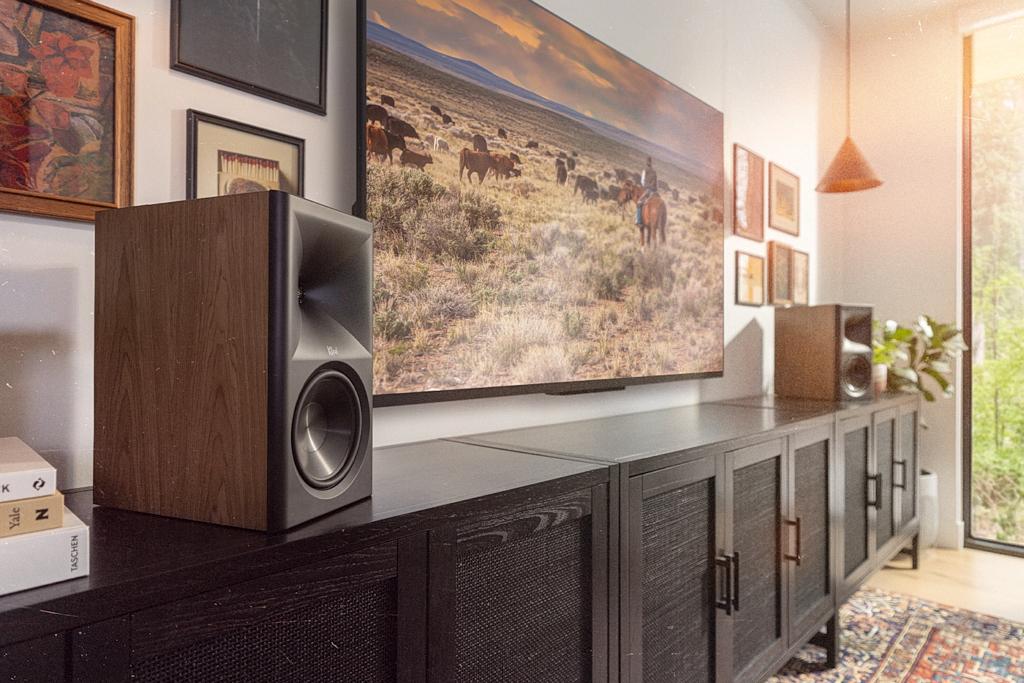
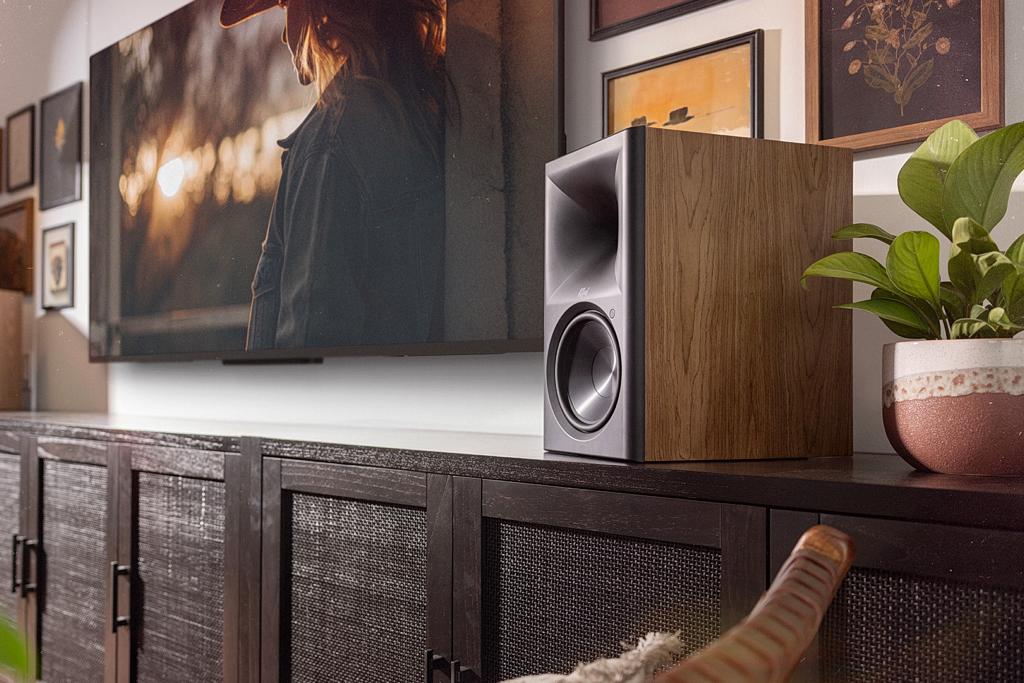
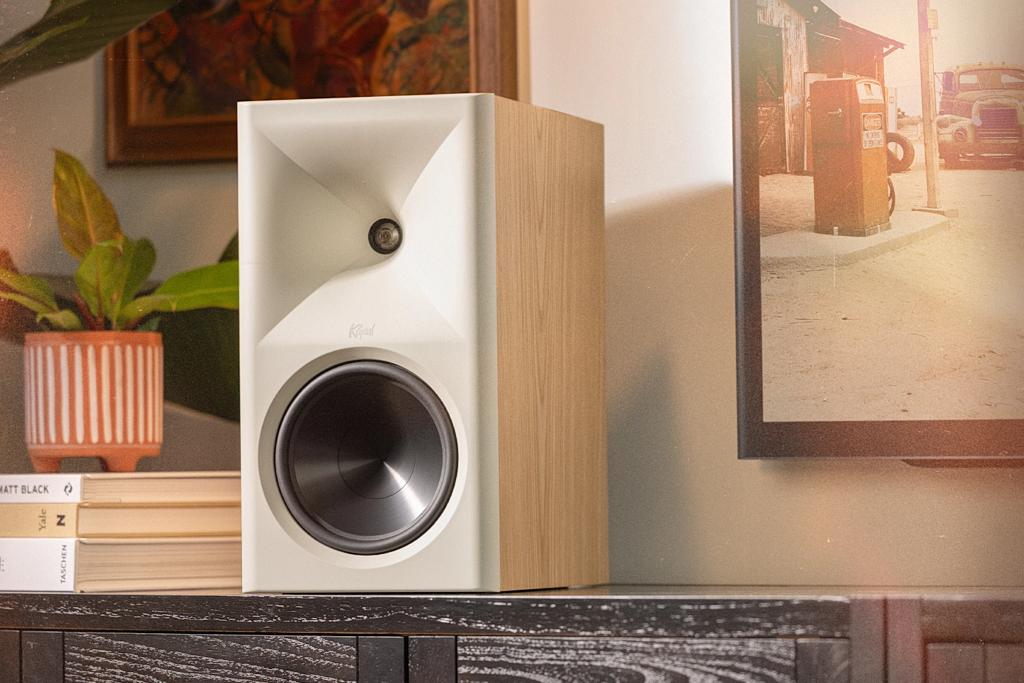
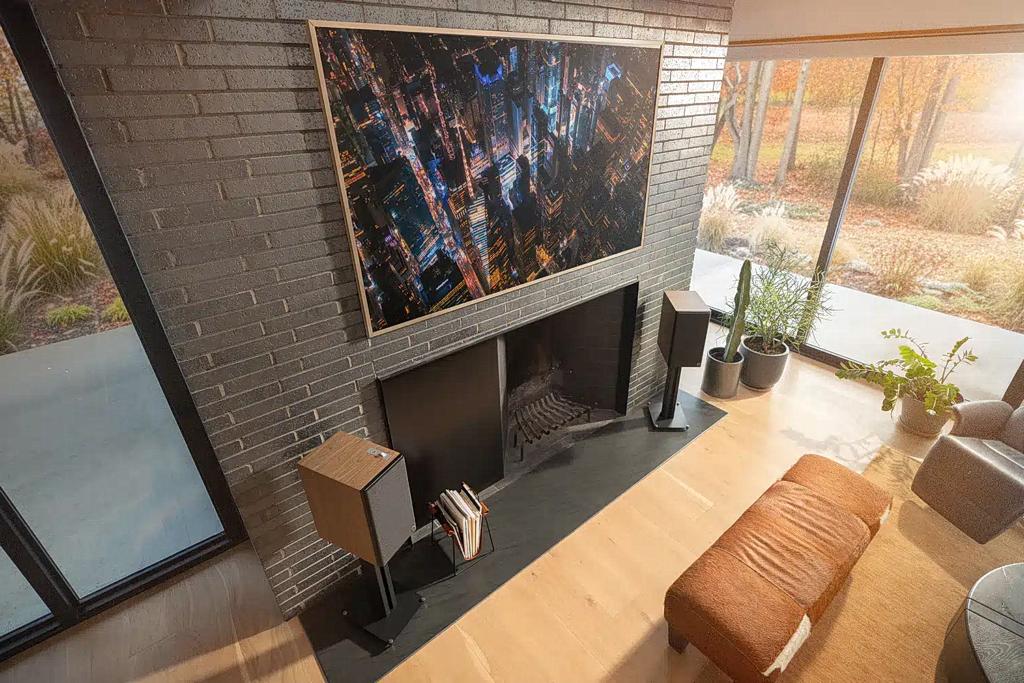
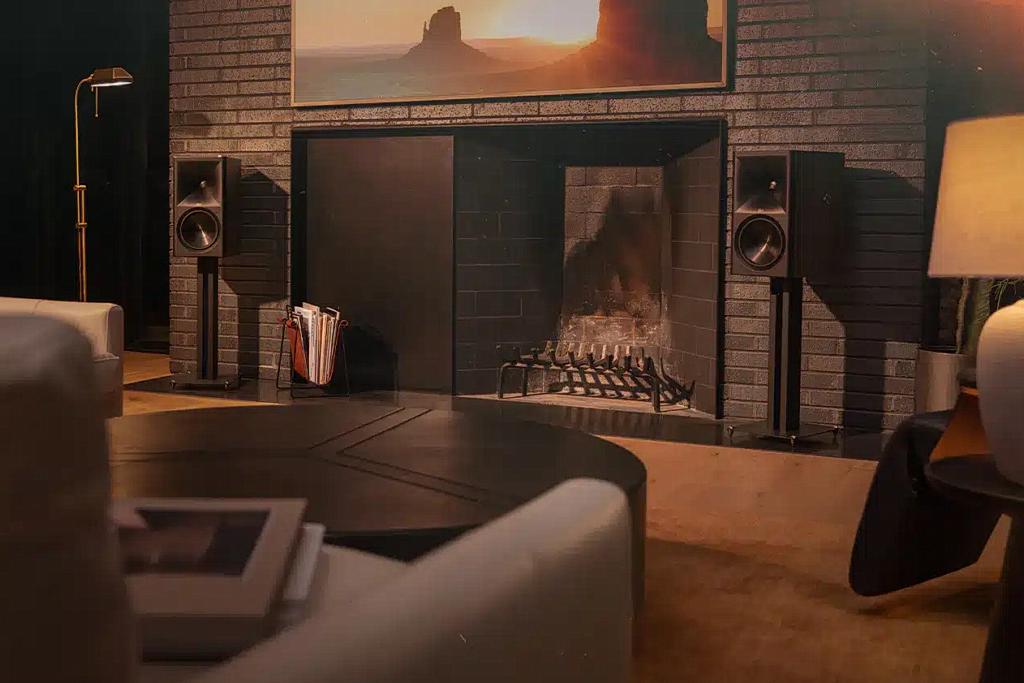
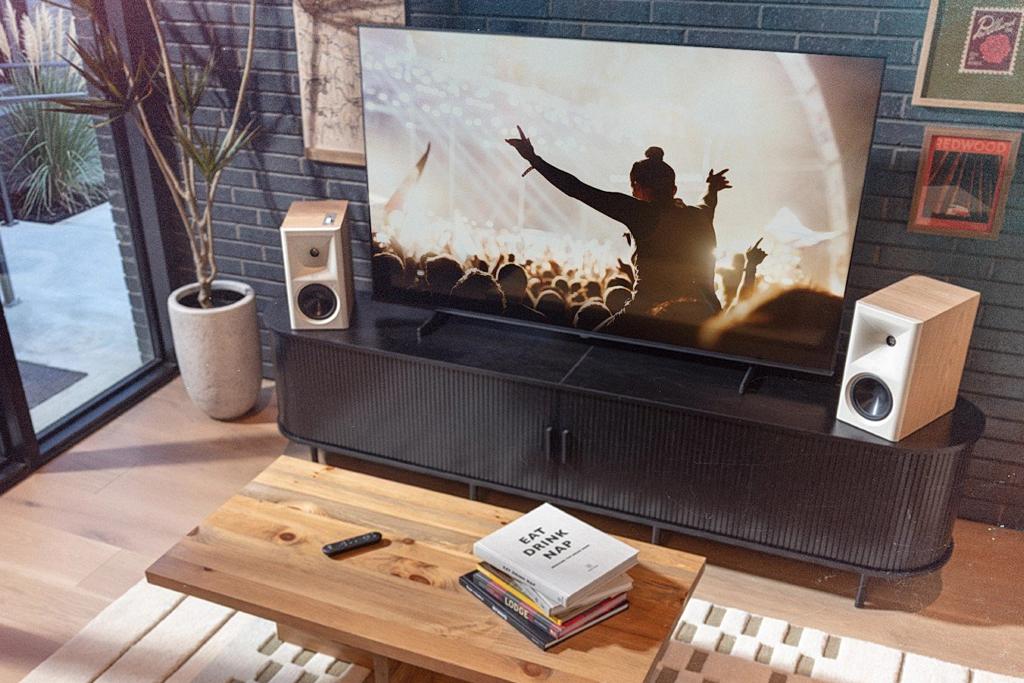
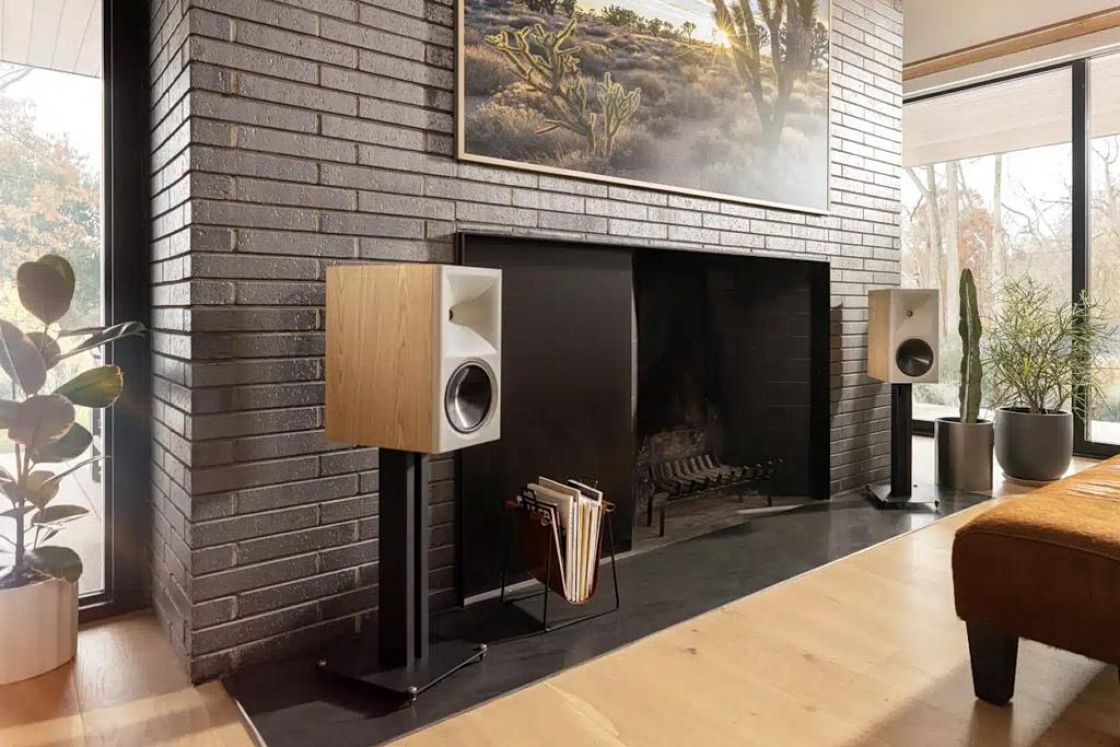
Visually, Klipsch has resisted any radical departure from the retro-influenced appearance of the original models. Walnut and dark Ebony finishes remain, joined by a more distinctive Red Oak veneer paired with a white front baffle. That version gives the speakers a noticeably lighter and more contemporary appearance without hiding their Klipsch identity. Matching KS stands are available separately, with the smaller The Fives II intended for KS-28 stands and the larger models compatible with KS-24.
The second generation is therefore much more than a routine refresh. The original models were attractive largely because they condensed a traditional stereo setup into two cabinets. Their successors go considerably further, absorbing functions from streamers, AV receivers, phono stages and room-correction processors while retaining the basic appeal of a proper stereo pair. The differences between the three sizes are also sensibly defined - The Fives II emphasizes compactness, The Sevens II adds room correction and wireless stereo operation, while The Nines II brings greater scale, deeper bass, DTS:X and professional-style connectivity. All three models are available now. The Fives II is priced at $1,399/€1,399/£1,189, The Sevens II at $1,999/€1,999/£1,799, and The Nines II at $2,399/€2,499/£2,249 per pair. Info and pictures by Klipsch.