Displaying items by tag: stereo - StereoLife Magazine

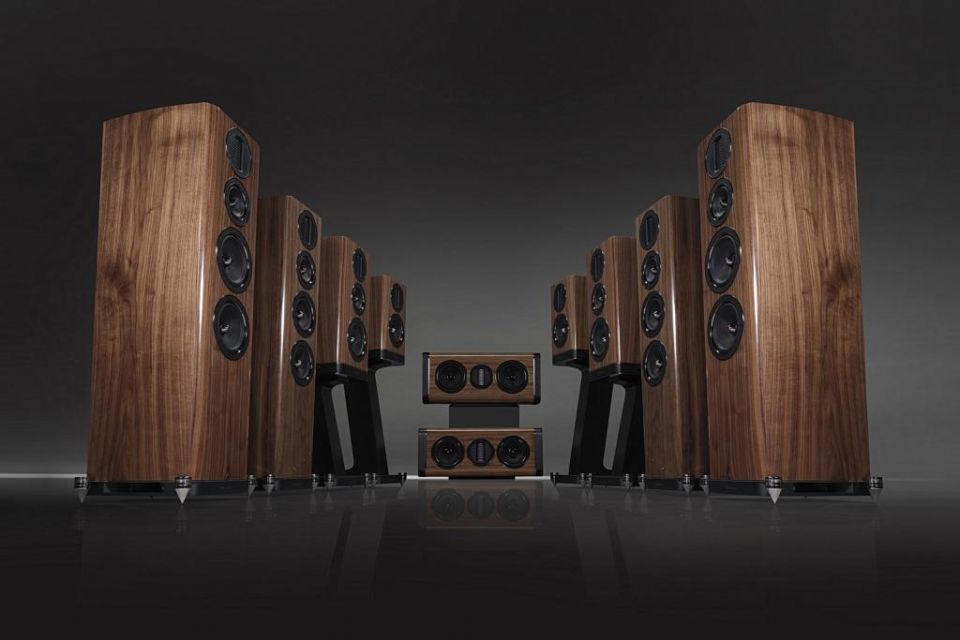
Vienna Acoustics Mozart SE Signature

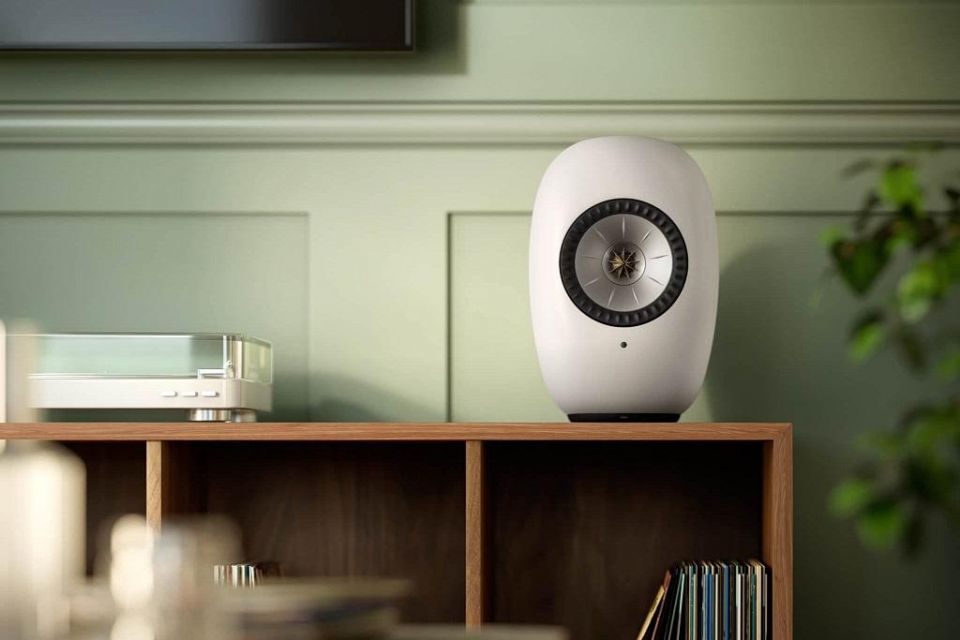
In the world of loudspeakers, some designs command respect through advanced engineering, exotic materials and impressive specifications. Others do not look like spaceships, make no use of materials seemingly borrowed from z science-fiction film, and yet win people over with beautiful, musical sound and the simple fact that one can imagine living with them every day. Vienna Acoustics belongs firmly to the second group. The Austrian manufacturer has never built its identity around simulations, calculations and graphs alone, focusing instead on what makes its products appealing to the eye and the ear. The company was founded in 1989 by Peter Gansterer and Peter Haferl, whose goal was to bring together two worlds - solid engineering and the kind of aesthetics usually associated with fine furniture. Based in Rust, a small town in Austria's Burgenland region, the company now employs around 40 people. Among audiophiles, it is known for distinctive loudspeakers with exceptional cabinet work. Its catalog is dominated by models designed for stereo systems, and the names chosen for individual models will feel familiar to any music lover. Liszt Reference, Beethoven Concert Grand Reference, Haydn SE Signature, Mozart SE Signature - there is clearly a theme here. The last of these is the latest incarnation of one of the most important floorstanders in Vienna Acoustics' history, and also a very good example of just how differently hi-fi can be understood.

Avid Velsonic

Avid HiFi has introduced the Velsonic, a new reference-level phono preamplifier positioned as the flagship of the company's analog electronics lineup and its first completely new phono stage platform since 2012. Developed and manufactured at Avid's Cambridgeshire facility, the Velsonic replaces both the Pulsare II and Pellere models while carrying forward circuit concepts derived from the company's Reference Pre-Amplifier, signaling a broader refresh of its upper-tier analog architecture. Rather than pursuing a hybrid or digitally assisted topology, the Velsonic follows a strictly analog design philosophy built around a fully dual-mono signal path from input to output. Separate channel layouts are intended to maximize channel separation and reduce crosstalk, while the absence of digital control circuitry reflects Avid's long-standing preference for preserving signal purity in low-level phono applications. According to the manufacturer, particular attention has been paid to minimizing noise throughout the gain structure, an area especially critical in high-resolution MC cartridge systems.

Klipsch ProMedia Lumina

Klipsch has introduced the ProMedia Lumina, a new 2.1-channel desktop speaker system that updates one of the company's longest-running multimedia audio platforms with revised acoustics, expanded connectivity, and integrated lighting control. Positioned as the successor to earlier ProMedia configurations first introduced in 1999, the Lumina version adapts the concept for contemporary desktop environments used for gaming, content creation, remote work, and everyday listening. The original ProMedia series established a distinctive position in the compact speaker category by incorporating horn-loaded high-frequency drivers, a feature rarely found in desktop audio systems. The new ProMedia Lumina continues this approach with updated MicroTractrix horn technology, now implemented in a wider geometry intended to improve dispersion and maintain clarity in nearfield listening conditions. Each satellite speaker uses a two-way configuration with a 3-inch midrange driver designed to support dynamic output and intelligibility across mixed-use scenarios ranging from voice communication to music playback and gaming.

Ø Audio Ymir

Ø Audio has introduced the Ymir, a new reference floorstanding loudspeaker that marks a decisive shift in the company's design direction and stands apart from earlier models such as the Icon 12 and Verdande. Described by the manufacturer as a clean-sheet development rather than an evolution of existing platforms, the Ymir combines a large-format compression-driver architecture with a newly engineered bass system and an unusually rigid cabinet structure intended to deliver high sensitivity and controlled directivity in real-world listening rooms rather than only optimized demonstration environments.

Matrix Audio NA-1

Matrix Audio has introduced the NA-1, a flagship headphone amplifier from the company's new N Series, designed as the central element of ambitious desktop and stationary systems for demanding users of both dynamic and planar headphones. The unit is a fully analog design operating in pure Class A and built entirely from discrete components. According to the manufacturer, it combines high output power with low noise and precise signal control. The amplifier delivers up to 20 W in balanced mode, making it suitable not only for low-sensitivity planar headphones but also for highly sensitive in-ear monitors. As Cao Yang, CEO of Matrix Audio, explains, "NA-1 represents the culmination of our efforts to create the ideal amplifier. We focused on removing every barrier between the listener and the music. With its fully balanced Class A architecture and powerful power supply, NA-1 handles the most demanding loads with the ease and refinement expected by serious audiophiles."

Grado Classic Series

Grado Labs has introduced the Classic Series, a newly defined structure within its headphone portfolio that brings together several of the company's most recognizable open-back models under a single lineup while incorporating the latest X2 driver platform across the range. The move formalizes the role of these long-standing designs within Grado's evolving product architecture, positioning the Classic Series alongside the Signature Line and Wireless Series as one of the three pillars of the manufacturer's current headphone catalog.

FiiO M33

FiiO has expanded its lineup with the M33, a portable digital audio player built around the company's proprietary R2R ladder DAC architecture, a solution previously associated mainly with stationary designs. The new DAP combines this classic digital-to-analog conversion topology with an Android 13 platform and a fully developed headphone amplification stage, positioning the M33 as a mobile source for listeners seeking a more analog-leaning presentation without sacrificing modern functionality. "M33 represents our vision of bringing the magic of analog sound into the user's pocket. By implementing our proprietary R2R architecture, we achieved a level of naturalness and fluidity that cannot be replicated by conventional methods. This is a product for those who look for emotion and authenticity in music." - explains James Chung, Product Director at FiiO.

From Transformers to Tube Amplifiers - The Story of Fezz Audio

If someone were to say that the headquarters of one of the most interesting and fastest-growing manufacturers of tube amplifiers and hi-fi components was based not in Munich, Glasgow, or Tokyo, but in a tiny village near Białystok, Poland, many audiophiles would probably raise an eyebrow. This is, after all, the heart of Podlasie - a region that Poles themselves tend to see as beautiful, picturesque, and somewhat removed from the country's main industrial centers and, at least in popular jokes, a little behind the curve of modern life. Internet memes reinforce the stereotype - people are supposedly still discovering electricity there, throwing spears at airplanes, and rolling up the asphalt from the roads at night. A quick search brings up images of R2D2 and C3PO turned into a moonshine still, a long sausage wrapped around a cable reel labeled "Podlasie Fiber Optic", and Fred Flintstone's car presented as a local taxi. And yet it is precisely here, among forests, lakes, and open countryside, that a company emerged, first with small, simple, affordable tube amplifiers, and now delivers beautifully engineered, thoughtfully designed, thoroughly modern components to music lovers in more than thirty countries worldwide.

Grell OAE2

Grell is preparing a broader international rollout of the OAE2, an open-back headphone developed by Axel Grell and positioned as a research-led alternative to more conventional audiophile designs. What makes the OAE2 interesting is that it does not present itself as just another open-back headphone chasing width, sparkle, or exaggerated spaciousness. Grell's concept is based on a front-oriented acoustic layout intended to interact more deliberately with the outer ear, preserving some of the localization cues we normally associate with loudspeaker listening rather than feeding sound straight into the ear canal in the usual headphone fashion. The company describes this approach through its Front-sided Sound Field Modulation system, positioning the OAE2 as a headphone meant to sound more externalized, more stable, and closer in perspective to nearfield monitors than to a typical 'in-head' presentation.

Quad Platina CDT

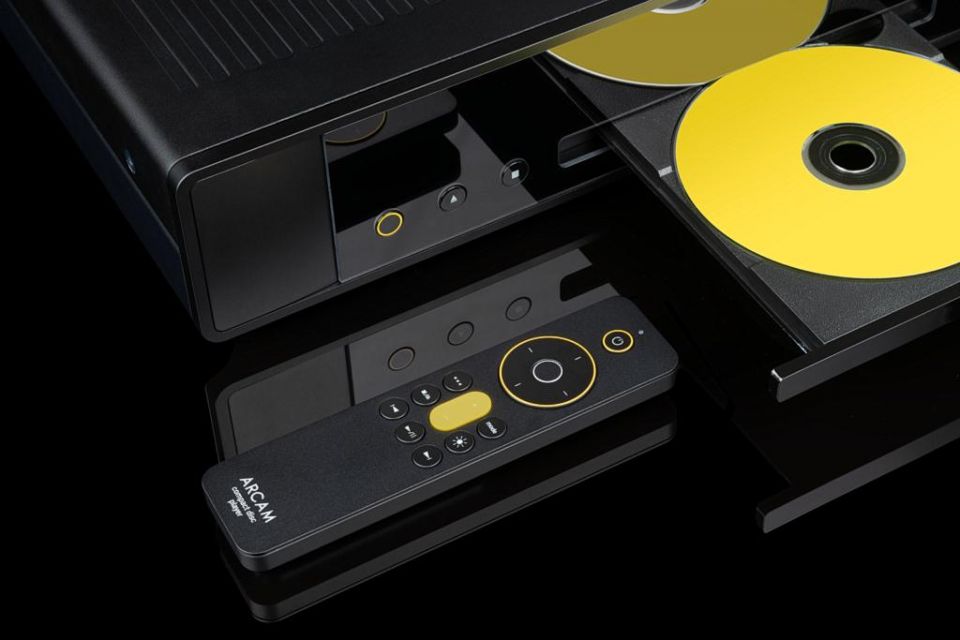
Quad has expanded its flagship Platina electronics series with the introduction of the Platina CDT, a dedicated CD transport designed to complete the company's current top-tier component lineup alongside the Platina Integrated amplifier and Platina Stream network player. Positioned as the digital transport partner within this range, the new model reflects continued interest in high-quality optical-disc playback among listeners who rely on external DAC stages and want a purpose-built source component engineered specifically for accurate data retrieval rather than integrated conversion.

We use cookies to improve our website and your experience when using it. To find out more about the cookies we use and how to delete them, please see our Privacy Policy.