
- Articles
- Posted
Songs Without Singers - How Algorithms Replaced the Artists
In 1997, Radiohead released their album OK Computer. It was a record that not only startled the band's loyal followers but also anyone who happened to hear it. It explored themes of technology, alienation, and social unrest in a rapidly shifting world, and it's often read as a darkly prophetic commentary on the dehumanizing influence of the digital age - a message that, almost thirty years later, still feels unnervingly precise. The lyrics, often delivered in a weary, detached voice, paint a grim, inevitable future where people lose themselves in virtual realities. They trace the moment when tools meant to serve us quietly begin to own us, turning convenience into dependence. The album became legendary for its unorthodox production and haunting, atmospheric sound, both of which heightened its sense of unease and disorientation.
I often return to this record, but later, when I'm caught up in daily routines, the algorithm of my streaming service takes over. It feeds me more of what it thinks I want, and before long I feel as if I've stepped into the very world Radiohead warned about. After fifteen minutes, I'm struck by déjà vu - everything sounds familiar, built from the same blueprint. I open the playlist and realize I don't recognize a single artist. And then comes a question that would have sounded like science fiction not long ago: Are these real musicians, or am I listening to products - assembled by algorithms, audio libraries, and faceless companies that know us better than we know ourselves? If streaming was meant to open new worlds, why do we so often find ourselves wandering the same narrow hallway, where the same songs drip from the speakers, only under different names? Is this just harmless fun, powered by AI song generators churning out "lo-fi for concentration" or "alt-rock with a touch of melancholy" in half a minute, or are we watching the rise of an entire ecosystem designed to mass-produce sound and weave it into our habits faster than we can even ask who's behind it?
In the late 1970s, ABC Television reported on a supposedly up-and-coming British rock group called Spinal Tap. At the time, no one batted an eye - tales about eccentric rock stars were practically a genre of their own - but the stories of David Hubbins, Nigel Tufnel, and Derek Smalls stood out. The band was said to be the loudest in England, thanks to their custom-modified Marshall amplifiers. While ordinary amps stopped at "ten", Spinal Tap's famously went to eleven - one louder. The phrase quickly slipped into popular slang, meaning roughly the same as "floor it" or "turn it all the way up."
In 1984, the mockumentary "This Is Spinal Tap" premiered. Its director claimed he wanted to give audiences an inside look at his favorite band. The film even included fake "archival footage" charting their supposed rise to fame. Along with their "electrifying" music, Spinal Tap became known for their absurd misfortunes: a drummer who died in a freak gardening accident, another who choked on someone else's vomit, and another who spontaneously combusted onstage. Eddie Van Halen and Glenn Danzig allegedly remarked after seeing the film that it felt uncomfortably close to their own experiences. There was just one catch: the band never existed. Spinal Tap was the creation of three comedians - Christopher Guest, Michael McKean, and Harry Shearer.
But when the truth came out, the joke didn't die - it came alive. The parody had captured the music industry's ego and mythology so perfectly that the fictional band crossed over into reality, releasing albums, touring festivals, and even appearing in mainstream media. The satire became the story. The fiction became fact. Today, though, reality is beginning to look like a parody.

A little over three months ago, a wave of online buzz surrounded a mysterious new band called The Velvet Sundown. Within just a few weeks, the group had amassed an astonishing half a million monthly listeners - yet left behind almost no trace of their existence, save for a few AI-slick photos and a vague, boilerplate bio. Their debut album, Floating on Echoes, appeared on streaming services in early June, followed barely two weeks later by a sophomore release titled Dust and Silence. That's a staggering pace for any real band - let alone one that might not exist.
Their social media presence was limited to "photos" that clearly bore the fingerprints of AI generation, including a tongue-in-cheek recreation of The Beatles' "Abbey Road" cover. Even their music betrayed its synthetic roots - perfectly average, eerily polished, and emotionally hollow. You could easily imagine such "masterpieces" being assembled in an app like Suno, which, for just eight dollars a month, lets you generate up to five hundred tracks. So if The Velvet Sundown managed to release two albums in just over a fortnight, that was practically restraint - they could've dropped dozens.
And what did listeners think? Nothing. I'd wager most had no clue the band wasn't real - that it was simply a mirage conjured by artificial intelligence. Their skyrocketing play counts were driven not by fans but by algorithms and playlists. Featured on "Discover Weekly" charts, The Velvet Sundown spread like wildfire, its popularity detonating like a digital supernova. The illusion was so convincing that a fake spokesperson - Andrew Frelon - briefly emerged and even fooled a few media outlets before the hoax unraveled.
Despite headlines claiming the band had "made a fortune", the math quickly deflated the hype: a million streams translate to only a few thousand dollars. But the real question remains - does that even matter? Shouldn't listeners be told when they're hearing AI instead of flesh-and-blood musicians? Could they even tell the difference? And if they could, would they care?
If you trace this madness back to its source, most arrows point to Johan Röhr, a Swedish composer unmasked by the newspaper Dagens Nyheter. He's the man behind hundreds of instrumental miniatures released under a maze of aliases, tucked inside Spotify's Peaceful Piano and Relaxing Focus playlists. For years, Röhr's computer-crafted pieces have crept through the platform like digital ivy, quietly blanketing the mood-music landscape.
By some industry estimates, Röhr's catalog has racked up around fifteen billion streams - more than many global superstars. His secret? Language models. He runs a mood factory - AI-composed music engineered for maximum algorithmic compatibility. It's sound designed not to inspire, but to blend in - to drip softly in the background, one drop at a time, billions of times over. Compared to that, The Velvet Sundown looks almost quaint. Amateurs, really.
Another striking example of AI's growing influence on the streaming economy is Heart on My Sleeve - a track generated by a TikTok user known as Ghostwriter977, which blended Drake's voice with music eerily reminiscent of The Weeknd. The song was eventually removed by Universal Music Group, but not before it had gone viral on TikTok and accumulated millions of plays across Spotify, Apple Music, and other platforms. Algorithms created the song, and other algorithms propelled it to fame.
What's most unsettling is how seamless the loop has become. Music is now being created through a simple prompt - something anyone can type into an app - and the resulting tracks are then boosted by the very recommendation engines built to promote them. One algorithm makes the sound, another delivers the audience, and voilà - numbers skyrocket with almost no human involvement.
Have the platforms responded? Technically, yes - but mostly when fraud gets too obvious to ignore. When AI-generated tracks start siphoning millions in royalties through bot-driven streams, services crack down, but the larger issue remains. AI content is multiplying faster than any moderation system can keep up with. Most listeners have no idea they're hearing something created in a digital lab, and most platforms see little reason to warn them.
Deezer, to its credit, has begun labeling such recordings as "AI-generated" and stripping them from personalized recommendations. But Spotify, the industry's largest player, has yet to follow suit. That means any of us could stumble across a "synthetic" artist in our weekly mixes and never know they're fake. Welcome to the new music economy - where we first generate a song, then generate demand, and finally, generate profit.
The economics are ruthless. Follow the money, and the logic becomes chillingly clear: AI-generated content is good business for streaming platforms. The biggest profits would come if they simply produced the music themselves. After all, if no real artists are involved, there's no need to share revenue or pay licensing fees.
And here's a thought experiment: if you already own a catalog of AI music and see it performing well on your platform, why not quietly upload it elsewhere - to your competitors' services? The result would be a bizarre ecosystem where the same handful of corporations flood one another's libraries with synthetic tracks, like mushroom hunters trading baskets of plastic fungi.

According to the French daily "Le Monde", this industrial-scale music production involves not only AI "composers" but also financial mechanisms that favor low-cost catalogs, which platforms happily promote in mood playlists. Deezer went a step further by admitting publicly that roughly eighteen percent of daily uploads were AI-generated. The company began flagging such material, removing it from recommendation systems and cutting off payments.
In 2023, Spotify followed suit - purging tens of thousands of AI tracks created with the Boomy app. "Wired" magazine later reported on a full-blown criminal case in the U.S., where bots from so-called "stream farms" were used to funnel millions of dollars through fake plays of AI-generated songs.
Suddenly, the real stakes of this race come into focus - it's not about artistic discovery but about monetizing microtransactions. If anyone once thought they could make a fortune off "generator music", they're probably too late; streaming giants have already started closing the taps. And yet, most of them still seem willing to turn a blind eye to parts of this artificial flood - acting as if they have no idea where the water's coming from.

How does it all work? The key to success is data - mountains of it - and our willingness to give it away. Artificial intelligence thrives on information, and we supply it voluntarily by searching for artists, replaying songs, skipping tracks we dislike, curating playlists, and letting the algorithm observe. The service then layers its own predictive systems on top, and the result is a feedback loop of eerily precise musical suggestions that, before long, begin to narrow rather than expand.
These algorithms blend several core techniques to map our tastes: collaborative filtering ("people like you also like…"), text and metadata analysis, and audio signal analysis. Some apps even extend this logic further - factoring in our listening history, time of day, device type, and even local weather. Spotify itself openly admits that such variables strongly influence which songs it predicts we'll pick next.
And what parameters does the machine actually read? Brace yourself for some of the platform's own vocabulary: danceability, speechiness (the balance between speech and singing), instrumentalness (the likelihood of no vocals), liveness (indicators of a live recording), loudness (average volume), acousticness, key, and time signature. The algorithm even performs deep structural analysis - breaking songs into segments, mapping volume curves, and measuring transitions. The result is a digital fingerprint of every track, far beyond simple BPM counts. It's the story of our musical taste, written in numbers.
Given that knowledge - and multiplied by millions of users - can the system generate music we're guaranteed to enjoy? Absolutely. This is where the next layer enters: generation. Platforms like Udio, Suno, and Stable Audio have been trained on millions of recordings (a practice now facing lawsuits) and can assemble complete songs from a short text prompt - melody, structure, vocals, and all. When these two layers converge on a single platform - one to create and the other to recommend - a full-fledged music factory emerges. One side manufactures content, the other manufactures context and audience. We could easily reach a point where every listener receives a personalized, private catalog - music crafted uniquely for them and for no one else. Each of us sealed in our own perfectly tuned sonic bubble. George Orwell would've applauded the efficiency.
Users of streaming platforms have long complained that what's sold as "discovery" often feels like déjà vu. Today, "new music" frequently sounds like a remix of something we've already heard, and the "For You" playlists feel more like "For Someone Exactly Like You." Critics argue that these mechanisms reinforce habits instead of challenging them - they reward predictability and rarely push us toward the unfamiliar. Add to this the tsunami of AI-generated content designed to match our moods, and what we get is a perfectly curated backdrop for life - excellent for work, ideal for running, but terrible for genuine discovery or emotional depth. The paradox of streaming is cruelly simple: it has all the tools to expand our horizons but every incentive to keep them narrow.
As listeners, we really face two choices. Either we accept that our favorite music app has become a self-stocking supermarket, feeding us whatever sits conveniently at eye level, or we start to actively resist the machine - clicking outside our comfort zones, seeking out living, breathing artists, supporting those who take creative risks, and demanding transparency. Maybe it's time we treat playlists the way we treat groceries - check the labels, know what we're consuming, and insist that "AI-generated" be as visible as "contains nuts."
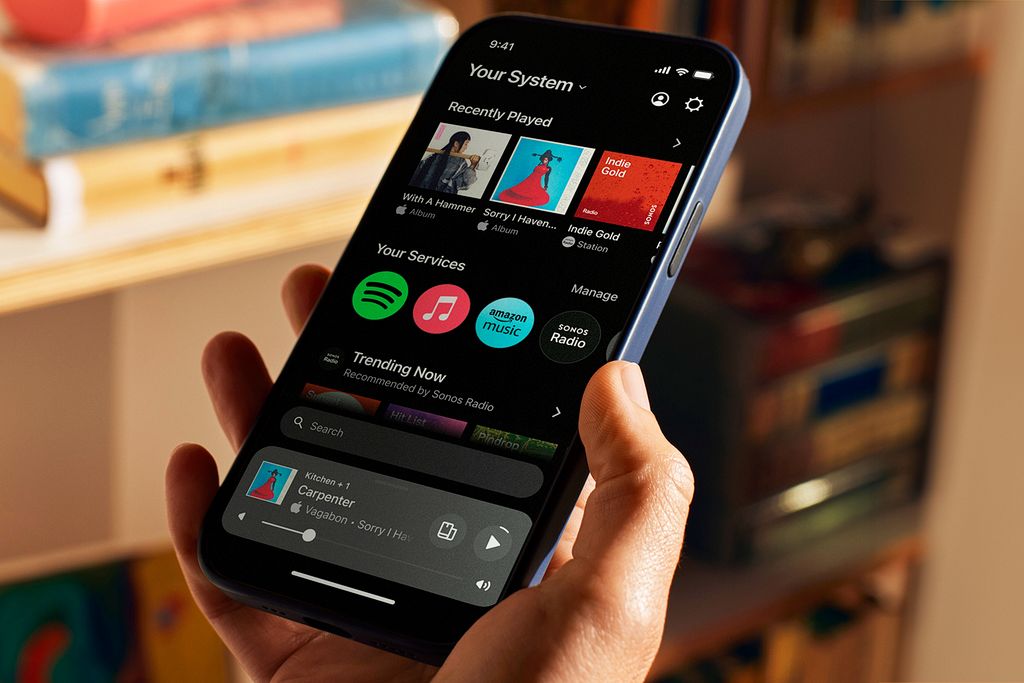
From the listener's point of view, can we actually tell AI apart from human creation? For now, Spotify offers no universal "AI-generated" label, leaving most users completely in the dark. Deezer is rolling out tagging and detection tools, and even user guides now advise a sort of musical detective work: check whether the artist exists outside the platform - do they play live shows, give interviews, post behind-the-scenes clips, maintain social media?
In short, is there anything beyond a generic avatar and a three-sentence bio? If not, you likely have your answer. It sounds absurd, but it's pushing us back toward something deeply human - context. Music has always been more than sound; it's about intention, authorship, and place. Why it was made, who made it, and where it can be heard live. Without a person, there is no story. Without a story, only sound remains.
At this point, another question arises: why even be a musician when AI can instantly generate a ballad in D major, drop in a chorus "in the style of Billie Eilish", and add vocals that sound "like Ed Sheeran, only sadder"? Why spend years learning to play an instrument or read sheet music - or even bother making remixes - when a neural network can conjure a symphony in seconds, tailor-made to our emotional prompt?
This shift could affect not just working musicians, who risk being replaced by machines, but also children, who may no longer see a point in learning music at all. If a computer can do everything faster, why endure years of practice, sore fingers, and scales? The system rewards background noise and instant gratification. Try telling a teenager that to produce something only slightly better than what AI can whip up in half a minute, they'll need to dedicate years mastering an instrument. If they respond by leaping with joy and begging you to enroll them in music school immediately, something's definitely off. You might even want to install a hidden camera and check what they're doing to the cat when no one's looking.
The algorithm can generate correct results, but it rarely generates meaning. And meaning is exactly the thing that numbers and view counts can never capture. Such a "musician" will never perform live, sign an autograph, or tell us the story behind a song. But does that matter? Maybe not - at least not when we're just listening at home or on the way to work. Still, look at the crowds packed into stadiums for global stars, or even the full rooms at small local gigs. These people aren't there just for sound - they've already heard the songs a thousand times. They're there for the connection, the human presence, the moment. They want to see their favorite artists, to share an unrepeatable experience.
Has AI already surpassed humans in reach and numbers? Globally, not yet - but in certain corners of the catalog, absolutely. Not because artificial intelligence creates better music, but because algorithms love repetition and we love convenience. There is, however, a faint light at the end of this tunnel. This phenomenon isn't limited to music. Record-breaking view counts on YouTube often come from AI-generated videos looping endlessly - fireplaces, rainfall, purring cats. People play them to relax, to read, or to fall asleep. But if you asked for their favorite video, they'd almost never name one of these digital lullabies.
AI-generated music can be pleasant too. I listen to it myself sometimes, fully aware of what it is. These artificial soundscapes serve a purpose - they fill silence when I want something calm, something that doesn't intrude. The problem is, I can rarely tell the tracks apart. I don't remember their titles, I don't know the "artists", and the glossy AI-made covers all blur together into one shapeless mass. Just as fruit purée in a plastic pouch can't replace a meal, the output of artificial intelligence - no matter how refined - can't replace real art. My favorite music, the kind I reach for when I want to listen for real and feel something tangible, is still made by humans. Sorry, computer.