Displaying items by tag: qobuz - StereoLife Magazine

Simplicity, lightness, and a focus on streaming sound quality - JPLAY

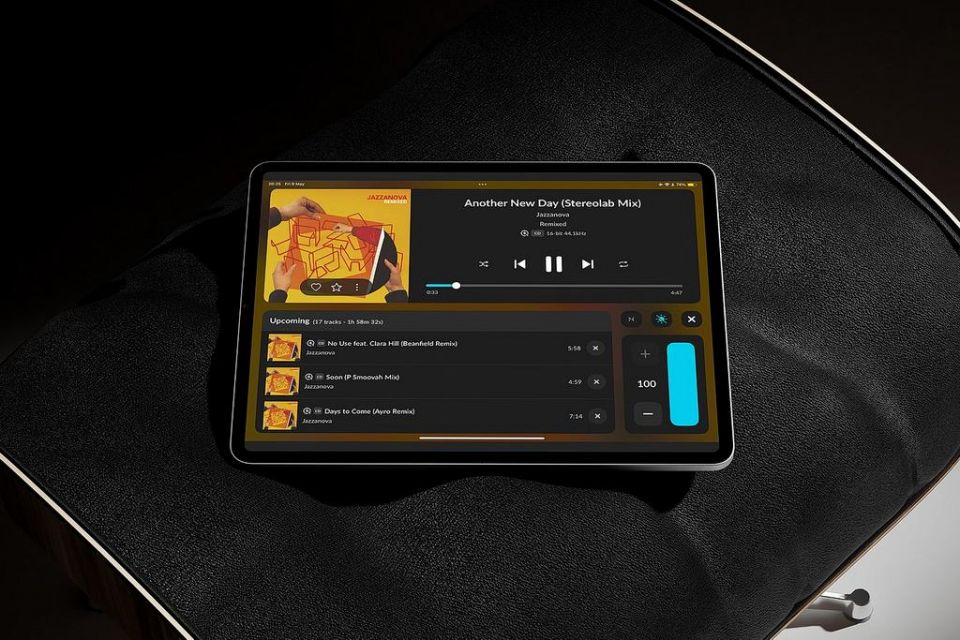
In the age of streaming and digital audio files, one might think that listening to music has never been simpler. In practice, however, especially for more demanding users, it remains a surprisingly complicated business, particularly when we want to combine the convenience of using a smartphone with the capabilities of more advanced audio equipment. When it comes to managing music playback, we usually have two options. The first is to use the app provided by the streaming service itself - quick and intuitive, but offering only basic functionality. Better control over sound or more advanced options are out of the question, and on top of that our player must be compatible with a given app and hold the right certification for it to appear on the list of available output devices at all. The second option is to turn to external software such as Audirvana, Roon or apps supplied by hardware manufacturers such as BluOS, Lumin or Auralic. This is where the trouble begins as well. Either something important is missing, or the app turns out to be clumsy and unstable, or it is excellent, refined and versatile, but expensive. What is missing is a single standard and a common language. Every company goes its own way - some build their own closed ecosystems, others support already existing platforms, and some seem to be waiting, although it is not entirely clear for what. As a result, the user has to improvise and navigate between all these options, which often ends with the use of several different apps. One streamer appears in the streaming service app, another does not. One supports all the popular standards, while with another the wait for certification has already dragged on for a year, and nobody knows whether customers will ever get it. One proprietary app turns out to be polished, another is irritating at every turn. And yet it was all supposed to be so elegant... Streamers, DACs and all-in-one systems are still evolving relatively quickly, but when it comes to apps, the last real breakthrough was Roon, which arrived on the scene ten years ago. That software has also continued to evolve, though perhaps not as quickly as some would like. Meanwhile, a very serious rival has emerged right under our noses. Meet JPLAY.

JPLAY x HighResAudio

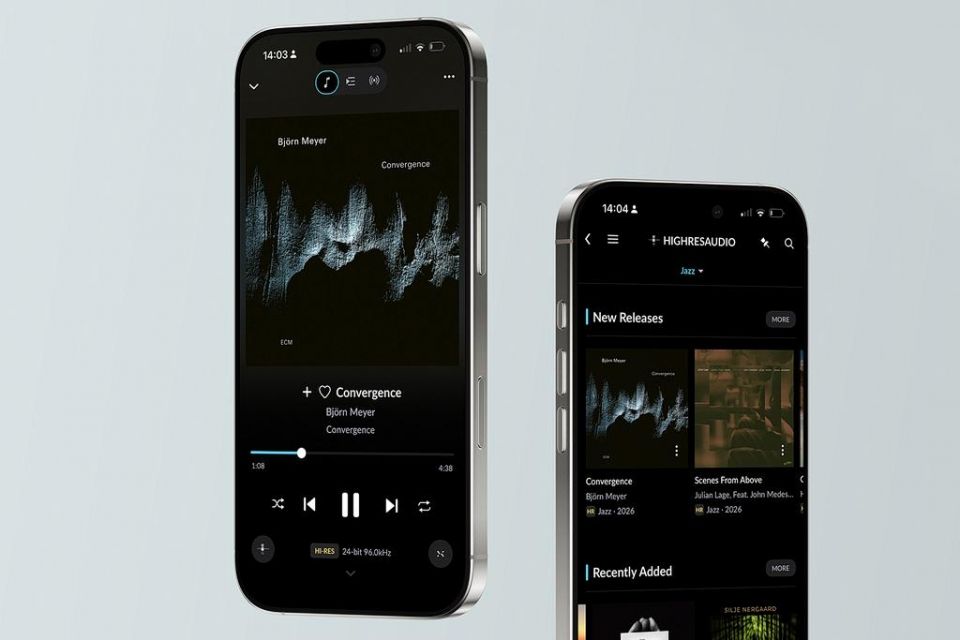
JPLAY has added HighResAudio as its third integrated streaming service alongside TIDAL and Qobuz, further strengthening its position as a playback application focused on high-quality audio and multi-source library management within a single interface. The new partner service specialises in studio-quality hi-resolution recordings, offering lossless streaming up to 24-bit/192 kHz together with access to a virtual storage space for purchased music. This combination may be particularly appealing to listeners who treat high-resolution files as a primary listening format rather than simply an extension of conventional streaming. Integration with HighResAudio is already available in the latest version of the JPLAY app. After signing in to a HighResAudio account from within JPLAY, users gain access to the platform's full streaming catalogue and can browse it in the same unified environment used for other supported services.

Songs Without Singers: How Algorithms Replaced the Artists

In 1997, Radiohead released their album OK Computer. It was a record that not only startled the band's loyal followers but also anyone who happened to hear it. It explored themes of technology, alienation, and social unrest in a rapidly shifting world, and it's often read as a darkly prophetic commentary on the dehumanizing influence of the digital age - a message that, almost thirty years later, still feels unnervingly precise. The lyrics, often delivered in a weary, detached voice, paint a grim, inevitable future where people lose themselves in virtual realities. They trace the moment when tools meant to serve us quietly begin to own us, turning convenience into dependence. The album became legendary for its unorthodox production and haunting, atmospheric sound, both of which heightened its sense of unease and disorientation.

Primare Allt-i-Ett

Primare has unveiled its new all-in-one audio system, the Allt-i-Ett - a complete high-end solution combining a network player, amplifier and loudspeakers within a single elegant enclosure. Designed to deliver premium performance with Scandinavian simplicity, the Allt-i-Ett embodies the Swedish manufacturer's minimalist approach to audio engineering. Its name, meaning 'all-in-one' in Swedish, reflects both the concept and the company's philosophy of bringing outstanding sound quality to as many listeners as possible, without the need for multiple components. At its core, the Allt-i-Ett delivers a powerful 300-watt peak output supported by advanced digital signal processing and a versatile range of connection options. The system is designed for both convenience and fidelity, offering easy integration into any modern living space. It caters equally to those who want a refined, plug-and-play system and to experienced audiophiles seeking a high-performance secondary setup.

Bryston BR-20

Bryston is one of the companies that use a very logical naming scheme for their products. Thus, amplifier symbols usually contain the letter "B", DACs start with "BDA", network players - "BDP", home theater processors - "SP" and preamplifiers - "BP". They are supplemented with numbers, which may indicate their output power (the B135² integrated amplifier delivers 135W per channel into 8 ohms) or inform us which generation of a given model we are dealing with (the BHA-1 is the first headphone amplifier from the Canadian factory, and the BDP-3 already had two predecessors - BDP-1 and BDP-2). Devices that cannot be assigned to any of the existing categories are scarce. So when Bryston decided to break the current pattern and release a preamplifier that should have been called the BP-18³ (because it is the successor to the BP-17³) but was given the BR-20 symbol, it was clear that this was no accident. The reason for this sudden change turned out to be, unfortunately, very sad. The Canadians wanted to honor their colleague and long-time company president, Brian Russel, who died in his sleep of a heart attack last year. At the time, Bryston's team was putting the finishing touches on the device, which was to be named BP-18³. Members of the design team and executives knew that this model could be a real revelation to many audiophiles - even those using very elaborate, expensive stereo systems. Thus, at the end of 2020, Bryston revealed the new two-channel preamplifier - BR-20.

We use cookies to improve our website and your experience when using it. To find out more about the cookies we use and how to delete them, please see our Privacy Policy.