Displaying items by tag: tweeter - StereoLife Magazine

Naim Muso Utopia

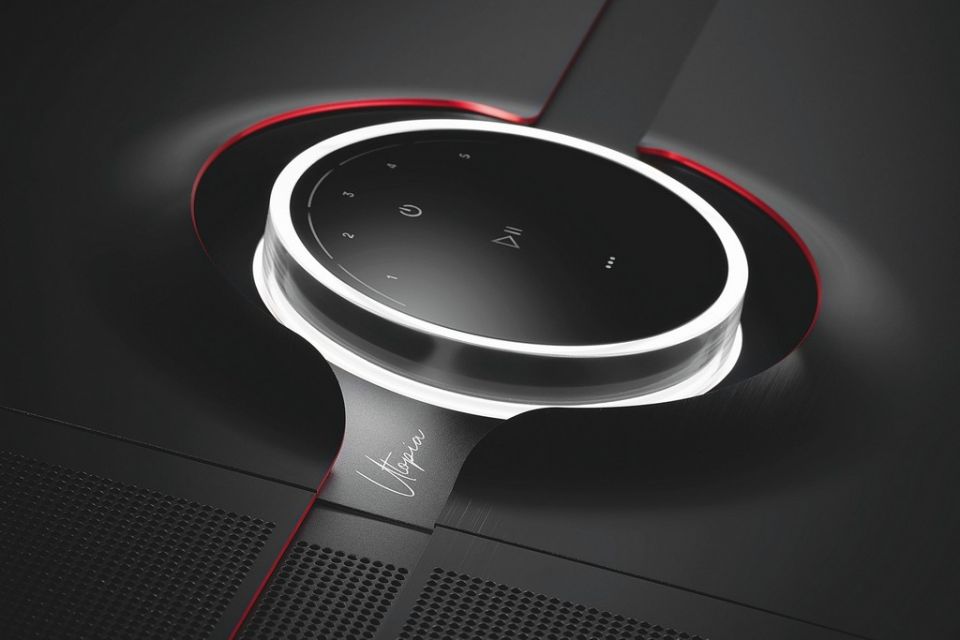
In the world of high-end audio, there has always been a fairly clear division of labor. If you want to listen to music seriously, you buy an amplifier, a network player, and a decent pair of speakers. If movie sound is the priority, you put together a home theater system with an AV receiver, a subwoofer, and speakers dotted around the couch. And if convenience, good looks, and a minimum of boxes matter more than anything else, you buy a soundbar or a wireless speaker and accept that you're making a compromise on sound quality. Or at least that's how the thinking went for years. The trouble is, audio manufacturers seem to have stopped playing by those rules. Increasingly, they're offering products that refuse to stay in their designated categories, promising to take the place of several components in a home entertainment system. Most of the time, the promise is more impressive than the result. It's easy enough to give a soundbar streaming capabilities or add an HDMI socket to a Bluetooth speaker. Getting that same box to sound like a proper stereo system is another matter entirely. Occasionally, though, engineers approach the challenge with rather more ambition. They're not content to assume that powerful bass, clear dialogue, and the ability to stream a playlist from a phone are all anyone could possibly want. That's when things get interesting, and even die-hard audiophiles may find themselves questioning a few long-held beliefs. Suddenly, we have compact wireless speakers that can hold their own against imposing floorstanders, or a beautiful amplifier slim enough to hang on a wall that can embarrass high-end integrated amps and 100-pound power amplifiers. Could the new Naim Muso Utopia be another of these rule-breakers?
Triangle Borea BR05

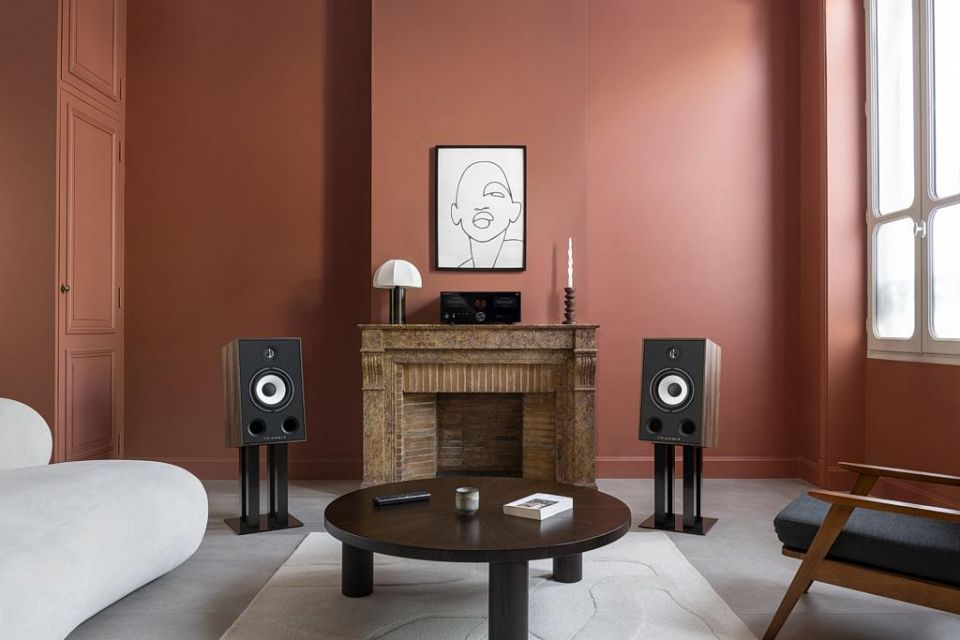
Retro-inspired hi-fi equipment is enjoying something of a renaissance. Manufacturers are increasingly revisiting designs from decades past, and few things evoke the golden age of stereo quite like a pair of large standmount speakers with generously sized woofers. French manufacturer Triangle has embraced this idea with the BR05, the latest addition to its popular Borea range. These two-way speakers feature a 21-cm (8.3-inch) midwoofer, dual bass-reflex ports, and cabinets standing almost half a meter tall. According to Triangle, this combination delivers the scale and bass extension more commonly associated with floorstanding speakers while retaining the distinctive appeal of traditional large standmounts. The Borea BR05 also offers two placement options, allowing owners to use either the supplied angled bases or specially designed speaker stands.

JBL L150 Classic

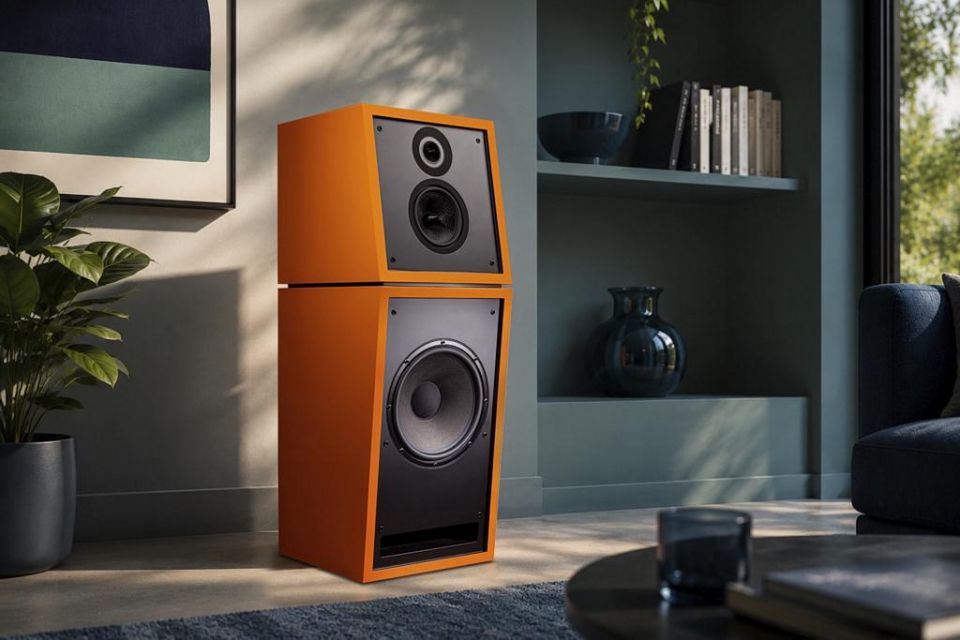
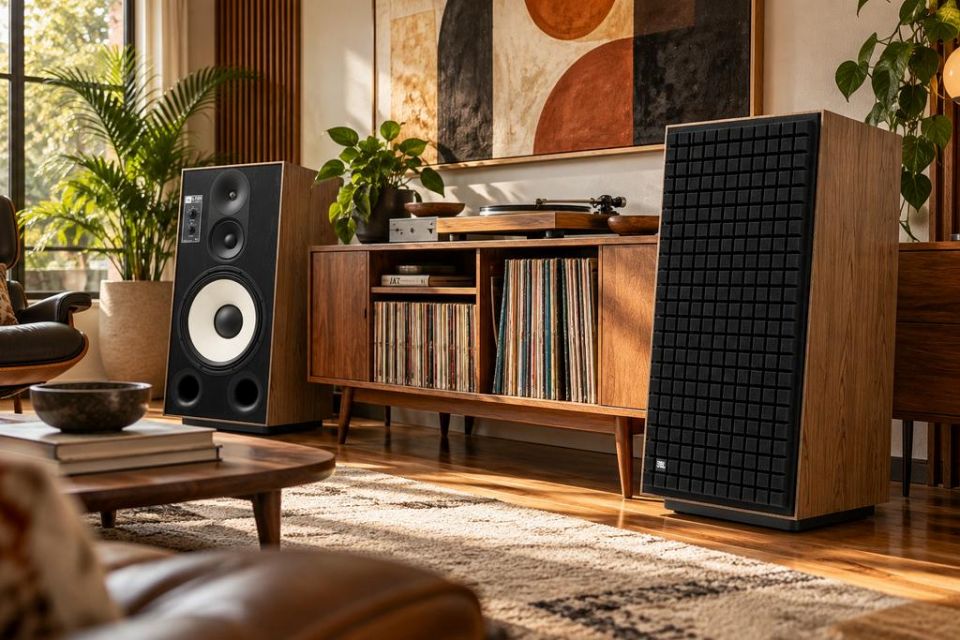
For all the changes the hi-fi industry has gone through over the past few decades, there's something undeniably appealing about a pair of enormous American loudspeakers with big woofers, wide cabinets, and absolutely no interest in blending discreetly into the living room. JBL knows this better than most. The company has spent recent years bringing its most recognizable designs back to life, combining the unmistakable styling of its 1970s classics with modern drivers and acoustic engineering. Now it's taking that philosophy to a whole new level. The newly announced L150 Classic is the largest and most ambitious model in the current Classic series, featuring a massive 15-inch woofer, a dedicated midrange driver, and a titanium dome tweeter, all housed in a substantial three-way enclosure finished in natural walnut veneer. Each speaker weighs approximately 115 pounds, and the famous Quadrex foam grille is present and correct. But perhaps the biggest surprise is where JBL has decided to unveil its latest creation. Instead of choosing an audio show in the United States, Germany, or Japan, the American manufacturer will give the L150 Classic its world premiere at Audio Video Show 2026 in Warsaw, Poland, on October 23-25. Visitors will be the first people anywhere to see the new speakers in person and, more importantly, hear what they can do.

Davis Acoustics Renoir Evolution

The growing popularity of small tube amplifiers comes with one fundamental problem - not all modern loudspeakers are particularly interested in working with them. Increasingly elaborate driver configurations, relatively low sensitivity, and demanding impedance curves mean that a handful of watts is not always enough, even when the specifications suggest that everything should work reasonably well. The Davis Acoustics Renoir Evolution takes precisely the opposite approach. These are imposing three-way floorstanding speakers equipped with massive 12-inch woofers and weighing approximately 220 lb each, yet they offer a sensitivity of 94 dB and a nominal impedance of 8 ohms, with a minimum of just 5 ohms. The French manufacturer therefore openly suggests that its new speakers should work extremely well with low-powered amplifiers, including single-ended designs based on 300B triodes, which typically deliver around 8-10 watts per channel. In other words, the Renoir Evolution promises the scale and authority of a large, full-range loudspeaker without forcing its owner to invest in an equally enormous solid-state power amplifier.

Harman Kardon Fit & Flow

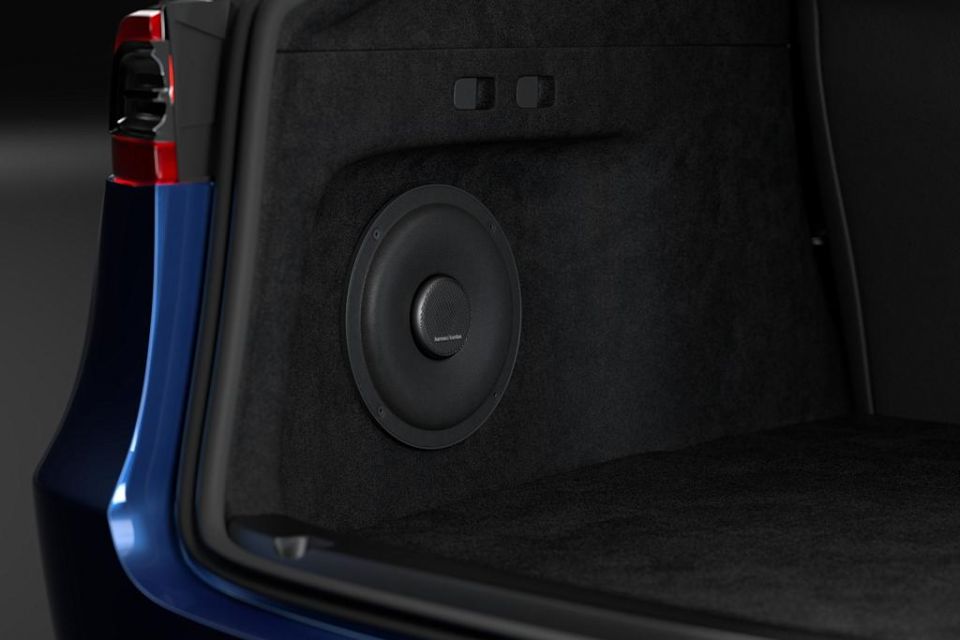
You don't have to be a hi-fi enthusiast to know Harman Kardon. In fact, there's a good chance you've encountered the brand without ever setting foot in an audio store. Its logo has adorned the speaker grilles of countless cars over the years, with BMW being perhaps the most recognizable example of a partnership that has lasted more than three decades. Harman Kardon systems can also be found in vehicles from Mini, Volvo, Subaru, Kia, Hyundai, and several brands belonging to the Stellantis group. For most drivers, however, getting that distinctive badge on their speaker grilles has traditionally involved one important decision: ordering the appropriate audio package when buying the car. Miss that opportunity, and upgrading the sound system usually meant turning to a completely different manufacturer. Harman Kardon is now making that choice a little less permanent. Its expanding aftermarket car audio lineup includes two speaker families, Fit and Flow, along with the compact Flow 80 and Feel 700 subwoofers. Together, they offer everything from relatively straightforward replacements for factory speakers to the components needed for a more ambitious custom installation.

Nothing Headphone (1) Pro

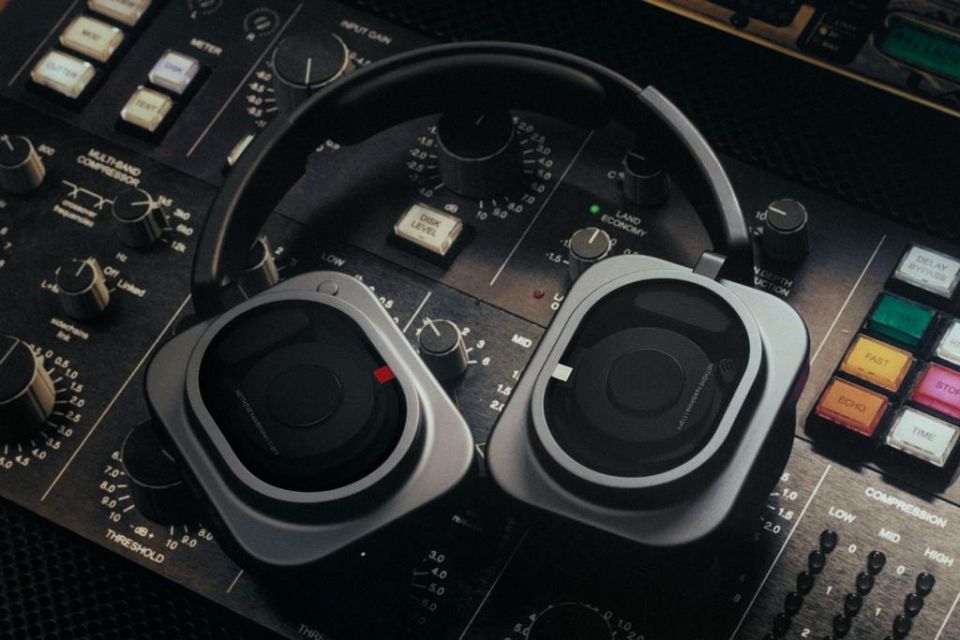
Nothing has never been particularly interested in making products that look like everyone else's. From transparent smartphones to earbuds that resemble tiny pieces of industrial machinery, the London-based company has built much of its identity around doing things differently, sometimes simply for the pleasure of standing out. Its latest flagship headphones, however, suggest that the brand is becoming increasingly ambitious about what happens inside those distinctive enclosures. The new Headphone (1) Pro retains the partly transparent design introduced with the original Headphone (1), but the real changes are hidden beneath the surface. Instead of relying on a single dynamic driver in each earcup, Nothing has developed an unusual three-driver arrangement that includes a miniature solid-state xMEMS tweeter. There are also extensive sound customization options, a dedicated Flat EQ mode, tuning developed in collaboration with London's Metropolis Studios, adaptive active noise cancellation, and spatial audio with head tracking. It's a surprisingly elaborate combination for a company that only entered the full-size headphone market relatively recently, and one that clearly aims to challenge more established players in the premium wireless category.

Pylon Audio Opal 23 mkII

Most stereo equipment manufacturers would like us to associate their brands with the products at the very top of their catalogs - the finest, most visually striking models, packed with the most advanced technology. When we buy an affordable pair of bookshelf speakers bearing the shiny Bowers & Wilkins logo, we're supposed to picture the Nautilus or those imposing 801 D3s standing in London's legendary Abbey Road Studios. When we pick up a pair of audiophile headphones from Sennheiser, we're meant to feel as though we're getting a little taste of the Orpheus. Marketing and human psychology have always worked this way. Yet while flagship products shape a brand's image, the vast majority of sales come from the entry-level and midrange segments. Basic economics and the distribution of household incomes tell us everything we need to know about that. The interesting thing is that, at least in my opinion, the best way to judge a company's capabilities and the talent of its engineers is to look at the products rolling off its production lines in the greatest numbers. With an unlimited budget, after all, almost anything is possible - seven-foot-tall speakers with space-age drivers suspended in a silver framework, a million-watt amplifier that unfolds like a futuristic sculpture, or cables as thick as a fully grown python that most people would laugh at. Things become considerably more interesting when we introduce some serious constraints, particularly the most important one - money. That's when we discover who can make intelligent engineering decisions and who can't.

Q Acoustics 3040c

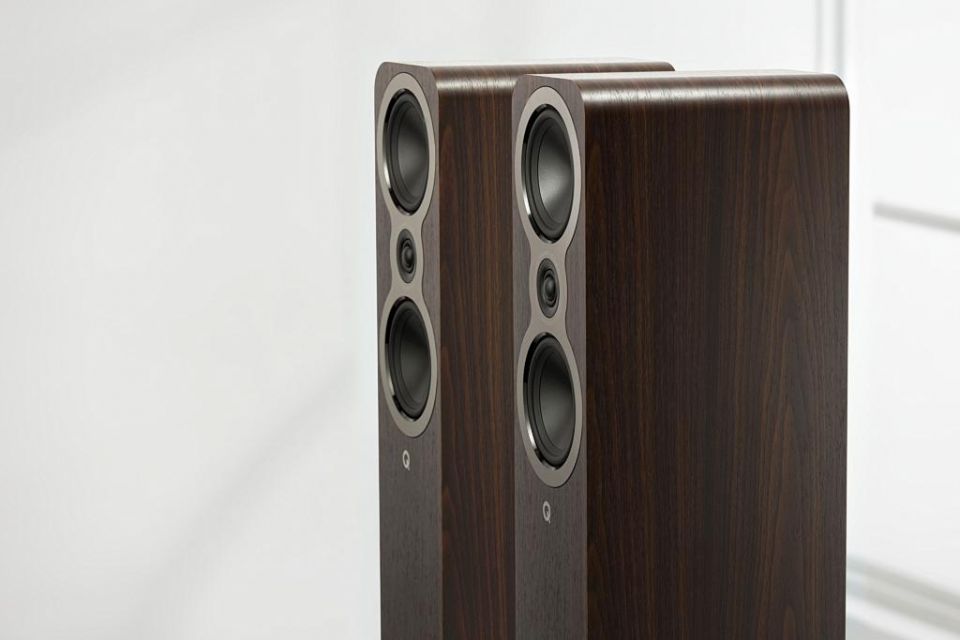
Q Acoustics has spent the last two years filling out the latest generation of its most affordable loudspeaker family, but one obvious model was missing. When 3000c debuted at High End Munich 2024, the range included three standmounts, the large 3050c floorstander and a center-channel speaker, leaving a substantial gap between 3030c and 3050c. That space is now occupied by 3040c - a slim floorstanding speaker created for listeners who want the scale and bass extension of a tower without giving up as much floor space as a conventional design demands. Q Acoustics says the idea came partly from feedback from its own community, and 3040c now completes the 3000c family as a smaller alternative to 3050c rather than a replacement for it.

Focal Scala Utopia Evo M

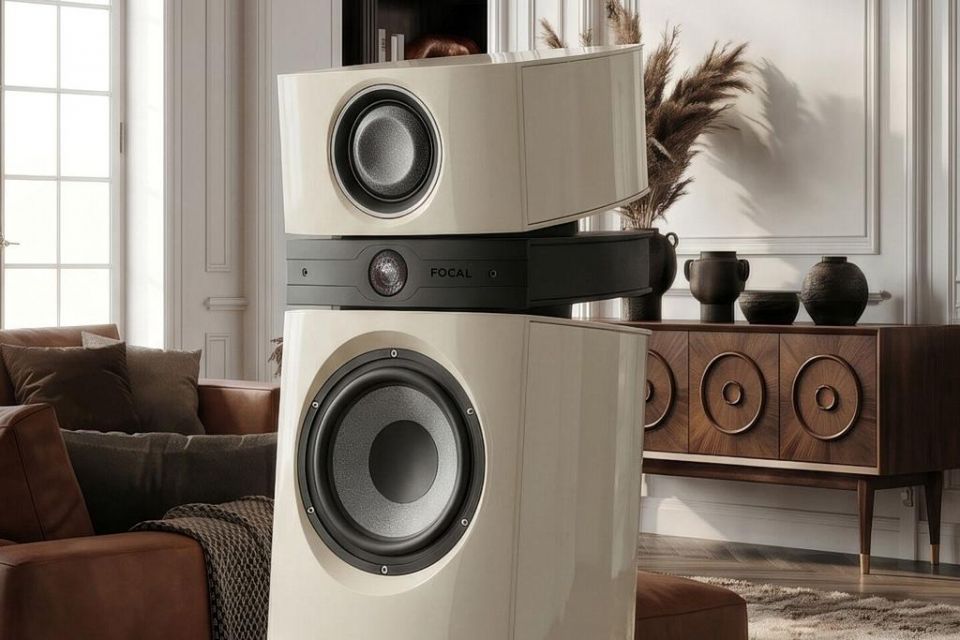
Focal has unveiled the Scala Utopia Evo M, a new version of one of the most recognisable loudspeakers in its flagship range. The French manufacturer has retained the three-way configuration, distinctive curved silhouette and general proportions of the previous Scala, but replaced all of its principal drivers and developed a new crossover network to integrate them. The most significant change is the introduction of the PRISM tweeter, which takes the place of the pure-beryllium inverted dome used in the earlier model. It is joined by a 13 cm midrange driver with a W-cone and M-shaped profile, as well as a completely redesigned 27 cm woofer equipped with a dual-ferrite magnet system.

Pylon Audio Opal 23 mkII

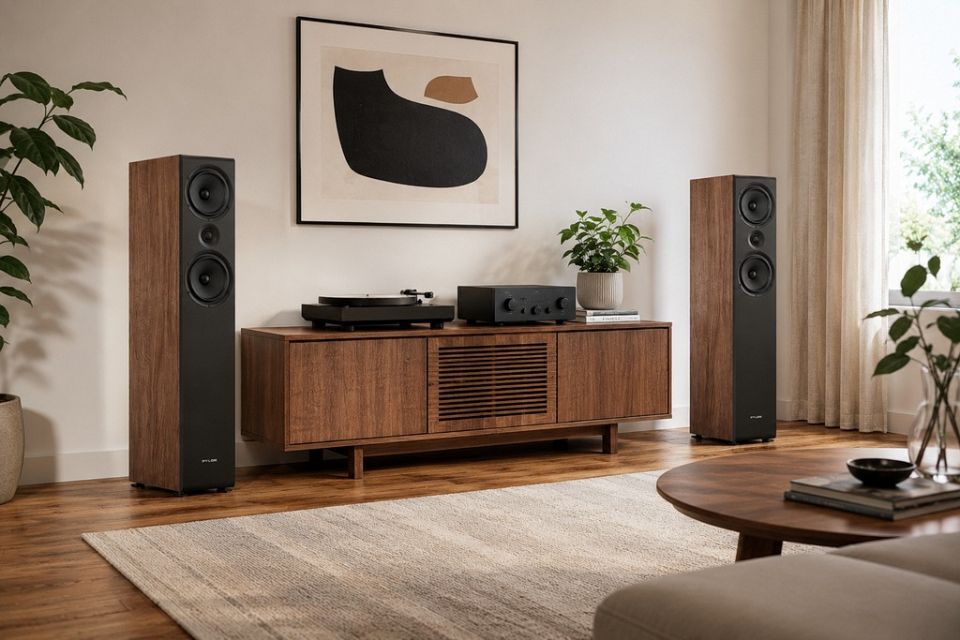
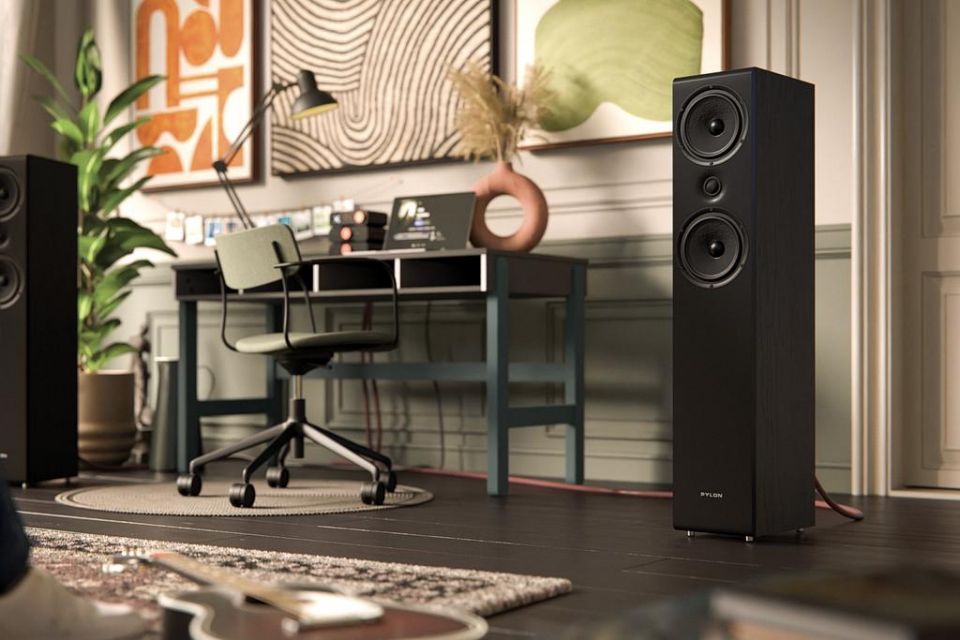
Pylon Audio has introduced the Opal 23 mkII, a new version of one of its best-known floorstanding loudspeakers. The model develops a concept that has been part of the Polish manufacturer's catalog for years - a full-size, reasonably priced loudspeaker designed not for a narrow group of specialists, but for listeners who want solid engineering, room-filling sound and enough versatility to work in a normal domestic system. The original Opal series occupied an important place in Pylon Audio's lineup precisely because it offered this kind of balance. It was not an exotic or overtly audiophile design, but a practical loudspeaker for people building their first or second serious stereo system. With the mkII generation, Pylon has not attempted to replace that idea with something completely different. Instead, the company has retained the overall format and visual identity of the original model while redesigning the drivers, crossover, cabinet tuning and resonance-control measures.

We use cookies to improve our website and your experience when using it. To find out more about the cookies we use and how to delete them, please see our Privacy Policy.