Displaying items by tag: stereo - StereoLife Magazine

Ferrum Wandla GoldenSound Edition Gen 2

Ferrum has introduced the Wandla GoldenSound Edition Gen 2, an updated version of its DAC and preamplifier platform developed in collaboration with GoldenSound. Building on the EISA award-winning Wandla architecture and the earlier GoldenSound Edition variant, the new model focuses on expanded user control over tonal balance, spatial presentation and harmonic character through redesigned versions of three key processing tools - Impact+, Tube Mode and Spatial Enhancement - all refined using Ferrum's Sweet Spot Tuning approach.

Audio Pro x Sheraton Stockholm

Sheraton Stockholm is preparing to reopen in May after an extensive renovation programme that has already transformed all 463 guest rooms and is now moving into its final stage in the hotel's shared spaces. As part of that overhaul, the property has chosen to equip every room with Audio Pro C5 MkII wireless speakers, integrating the Swedish brand's compact multi-room model into a broader interior concept built around local design, craftsmanship and long-term quality. Opened in 1971, the hotel has long been one of the Swedish capital's landmark hospitality addresses, and the current refurbishment is intended not simply as a technical update, but as a repositioning towards a more lifestyle-oriented, boutique character while retaining the standards associated with the Sheraton name.

Matrix Audio ND-1

Matrix Audio has introduced the ND-1, a new digital-to-analogue converter in the company's N Series, conceived as a dedicated source component for advanced stereo systems and headphone-based desktop setups. Rather than treating the DAC as one function inside a wider all-in-one platform, Matrix Audio is positioning the ND-1 as a focused, purist design built around one core objective - high-performance digital decoding with a degree of tonal flexibility that remains relatively unusual in this category. Officially unveiled as part of the complete N Series line-up in March 2026, the ND-1 joins the NT-1 digital audio transport and the NA-1 headphone amplifier to form what Matrix describes as a premium desktop separates system.

Rose One

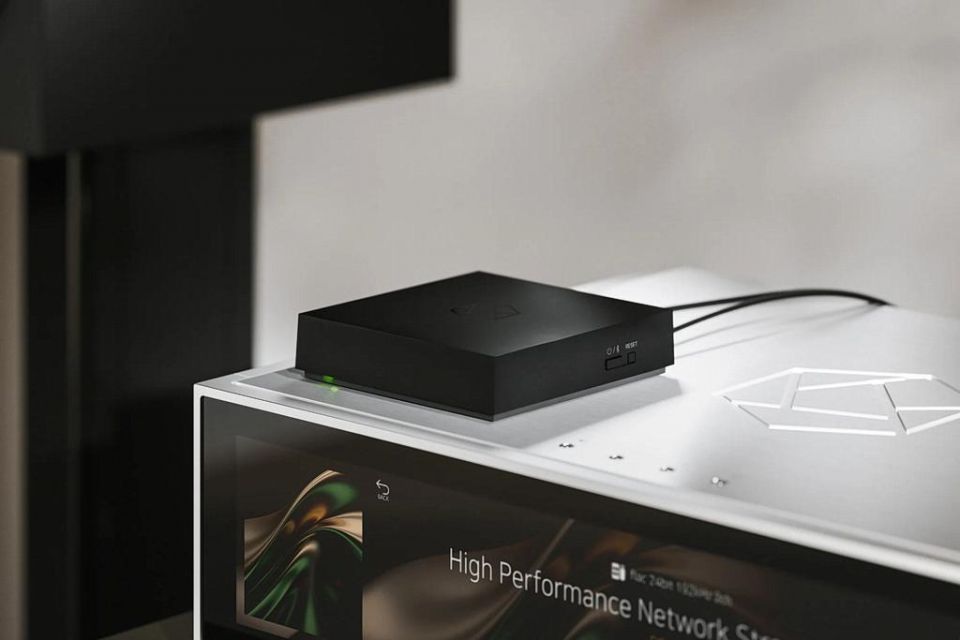
HiFi Rose has introduced Rose One, a new control application designed to become the central interface for the company's entire product ecosystem and, at the same time, a clear departure from the earlier strategy of developing successive variations of its existing software platform. Rather than a conventional update, Rose One is presented as a completely new environment built from the ground up as a unified hybrid application for Android, iOS, Windows and macOS. According to the manufacturer, the app was launched globally on April 1 and from the outset was intended to deliver a consistent user experience regardless of the device used to control the system.

Harman Kardon Luna 2

Harman Kardon has introduced the Luna 2, a compact wireless speaker that continues the brand's familiar way of approaching the lifestyle audio segment. Instead of presenting another purely technical Bluetooth speaker built around ruggedness or raw output figures, the company is clearly aiming at a product that can function as part of the home environment first and as a portable speaker second. The new model is intended for everyday listening in spaces such as the living room, kitchen, terrace or garden, combining a small footprint with a more refined visual identity and a feature set that goes beyond simple Bluetooth playback.

Fezz Audio Titania MK2, Titania Power Amplifier MK2 & Mira Ceti MK2

Fezz Audio has refreshed its Evolution series with three updated tube amplifiers - the Titania MK2 integrated amplifier, the Titania Power Amplifier MK2 stereo power amplifier and the Mira Ceti MK2 single-ended Class A design - marking a broader technical step forward rather than a routine generational update. Based in Poland and closely linked to transformer specialist Toroidy, the company has built its reputation on combining traditional tube topologies with modern usability, and the latest MK2 versions clearly continue that approach. All three amplifiers introduce redesigned signal paths, revised driver stages and upgraded operating stability, while sharing a common set of practical improvements including automatic bias control, electronic tube protection systems, optimized warm-up sequences and support for FEBS expansion modules. Together, these changes position the new Evolution models as more mature and more system-flexible successors intended to retain the musical character of classic tube amplifiers while reducing the complexity typically associated with everyday ownership.

Fezz Audio Titania MK2

In the world of audio equipment, it is not hard to find stories that sound compelling on paper, only to lose their charm the moment they collide with reality. Someone has an interesting idea, solid technical backing, a clear vision, even the right moment to enter the market, and yet after two or three years all that remains are a few mentions in the archives of specialist websites and a handful of products remembered by their owners with a certain fondness, but little real conviction. With Fezz Audio, things were different from the very beginning. Of course, one could look at the brand with caution, as it was entering an industry that loves a good new story on the one hand, but remains deeply conservative and distrustful on the other. When somebody appears on that scene with an original tube amplifier, many music lovers inevitably ask whether it really makes sense. Is this merely another attempt to offer something that looks familiar, glows in the dark and is meant to lure customers with promises of magical sound, without necessarily being backed up by a mature design?

Simplicity, lightness, and a focus on streaming sound quality - JPLAY

In the age of streaming and digital audio files, one might think that listening to music has never been simpler. In practice, however, especially for more demanding users, it remains a surprisingly complicated business, particularly when we want to combine the convenience of using a smartphone with the capabilities of more advanced audio equipment. When it comes to managing music playback, we usually have two options. The first is to use the app provided by the streaming service itself - quick and intuitive, but offering only basic functionality. Better control over sound or more advanced options are out of the question, and on top of that our player must be compatible with a given app and hold the right certification for it to appear on the list of available output devices at all. The second option is to turn to external software such as Audirvana, Roon or apps supplied by hardware manufacturers such as BluOS, Lumin or Auralic. This is where the trouble begins as well. Either something important is missing, or the app turns out to be clumsy and unstable, or it is excellent, refined and versatile, but expensive. What is missing is a single standard and a common language. Every company goes its own way - some build their own closed ecosystems, others support already existing platforms, and some seem to be waiting, although it is not entirely clear for what. As a result, the user has to improvise and navigate between all these options, which often ends with the use of several different apps. One streamer appears in the streaming service app, another does not. One supports all the popular standards, while with another the wait for certification has already dragged on for a year, and nobody knows whether customers will ever get it. One proprietary app turns out to be polished, another is irritating at every turn. And yet it was all supposed to be so elegant... Streamers, DACs and all-in-one systems are still evolving relatively quickly, but when it comes to apps, the last real breakthrough was Roon, which arrived on the scene ten years ago. That software has also continued to evolve, though perhaps not as quickly as some would like. Meanwhile, a very serious rival has emerged right under our noses. Meet JPLAY.

FiiO SP5

FiiO is expanding its range of active desktop speakers with the SP5, a pair of nearfield monitors aimed at users looking for something more substantial than typical computer speakers. This is a product designed not only as a desk-based work tool, but also as a compact listening system for music in a domestic setting. Even the way FiiO presents the model makes it clear that this is not meant to be another basic speaker set placed next to a monitor, but an attempt to combine studio-style functionality with a sound that should appeal to demanding listeners.

Denon Home 200, 400 & 600

Denon is expanding its wireless Denon Home family with three new speakers - the Home 200, Home 400 and Home 600. The company presents them as the next step in its premium home multi-room system, combining wireless operation, HEOS integration and a more refined approach to industrial design. The Denon Home line has become one of the more important pillars of the brand's current portfolio, and the new models are intended to broaden it both in terms of scale and functionality. As Denon explains, the project began not only with questions about power, drivers and connectivity, but also with a more practical one - how a speaker should function in a real living space. That is why the new models use seamless fabrics, anodised aluminium, smooth finishes, soft silicone elements and simple geometric forms designed to blend more naturally into modern interiors.

We use cookies to improve our website and your experience when using it. To find out more about the cookies we use and how to delete them, please see our Privacy Policy.