Displaying items by tag: poland - StereoLife Magazine

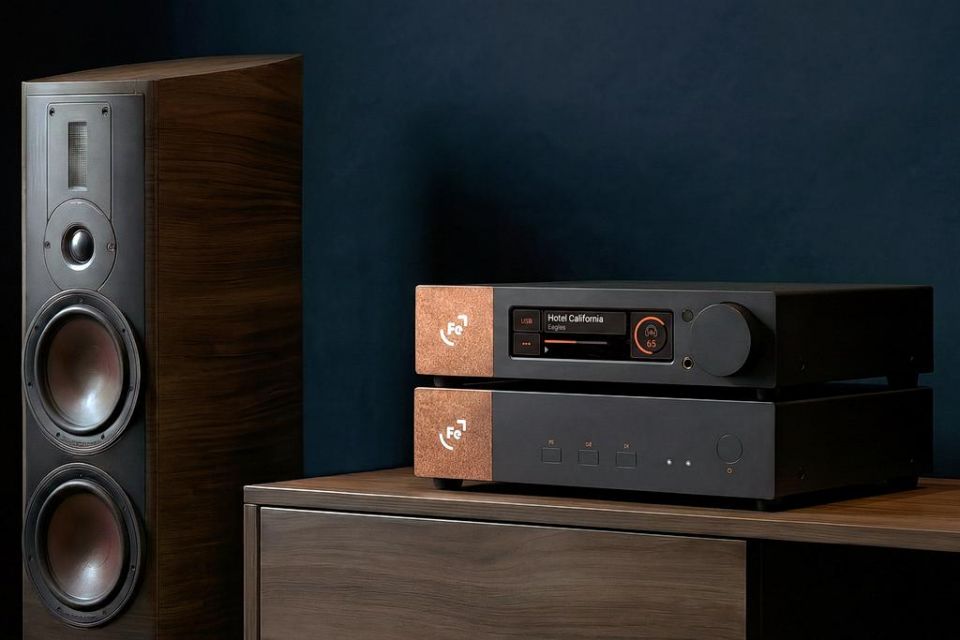
Fezz Audio Titania MK2, Titania Power Amplifier MK2 & Mira Ceti MK2

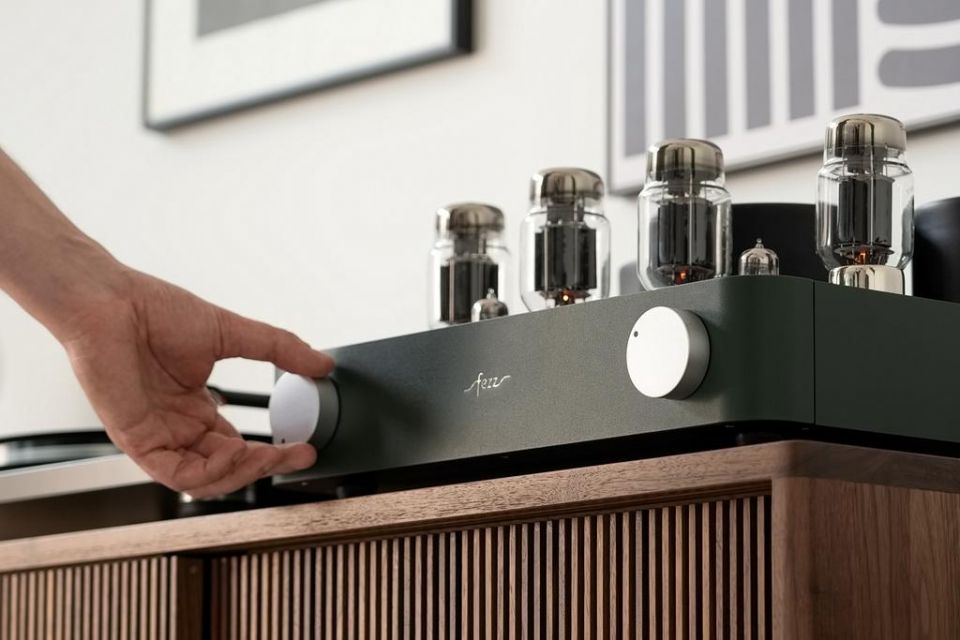
Fezz Audio has refreshed its Evolution series with three updated tube amplifiers - the Titania MK2 integrated amplifier, the Titania Power Amplifier MK2 stereo power amplifier and the Mira Ceti MK2 single-ended Class A design - marking a broader technical step forward rather than a routine generational update. Based in Poland and closely linked to transformer specialist Toroidy, the company has built its reputation on combining traditional tube topologies with modern usability, and the latest MK2 versions clearly continue that approach. All three amplifiers introduce redesigned signal paths, revised driver stages and upgraded operating stability, while sharing a common set of practical improvements including automatic bias control, electronic tube protection systems, optimized warm-up sequences and support for FEBS expansion modules. Together, these changes position the new Evolution models as more mature and more system-flexible successors intended to retain the musical character of classic tube amplifiers while reducing the complexity typically associated with everyday ownership.

Fezz Audio Titania MK2

In the world of audio equipment, it is not hard to find stories that sound compelling on paper, only to lose their charm the moment they collide with reality. Someone has an interesting idea, solid technical backing, a clear vision, even the right moment to enter the market, and yet after two or three years all that remains are a few mentions in the archives of specialist websites and a handful of products remembered by their owners with a certain fondness, but little real conviction. With Fezz Audio, things were different from the very beginning. Of course, one could look at the brand with caution, as it was entering an industry that loves a good new story on the one hand, but remains deeply conservative and distrustful on the other. When somebody appears on that scene with an original tube amplifier, many music lovers inevitably ask whether it really makes sense. Is this merely another attempt to offer something that looks familiar, glows in the dark and is meant to lure customers with promises of magical sound, without necessarily being backed up by a mature design?

Simplicity, lightness, and a focus on streaming sound quality - JPLAY

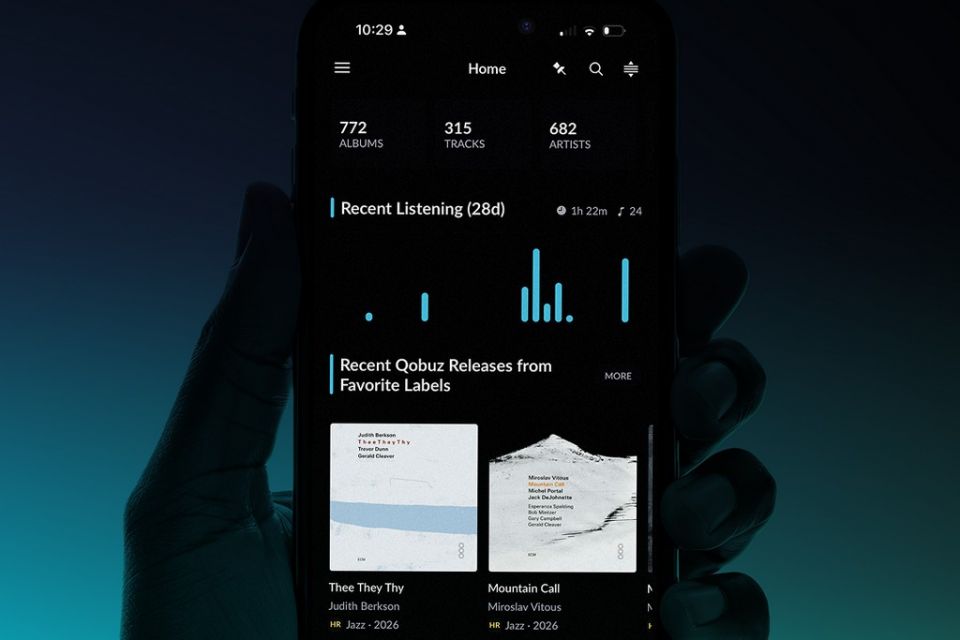
In the age of streaming and digital audio files, one might think that listening to music has never been simpler. In practice, however, especially for more demanding users, it remains a surprisingly complicated business, particularly when we want to combine the convenience of using a smartphone with the capabilities of more advanced audio equipment. When it comes to managing music playback, we usually have two options. The first is to use the app provided by the streaming service itself - quick and intuitive, but offering only basic functionality. Better control over sound or more advanced options are out of the question, and on top of that our player must be compatible with a given app and hold the right certification for it to appear on the list of available output devices at all. The second option is to turn to external software such as Audirvana, Roon or apps supplied by hardware manufacturers such as BluOS, Lumin or Auralic. This is where the trouble begins as well. Either something important is missing, or the app turns out to be clumsy and unstable, or it is excellent, refined and versatile, but expensive. What is missing is a single standard and a common language. Every company goes its own way - some build their own closed ecosystems, others support already existing platforms, and some seem to be waiting, although it is not entirely clear for what. As a result, the user has to improvise and navigate between all these options, which often ends with the use of several different apps. One streamer appears in the streaming service app, another does not. One supports all the popular standards, while with another the wait for certification has already dragged on for a year, and nobody knows whether customers will ever get it. One proprietary app turns out to be polished, another is irritating at every turn. And yet it was all supposed to be so elegant... Streamers, DACs and all-in-one systems are still evolving relatively quickly, but when it comes to apps, the last real breakthrough was Roon, which arrived on the scene ten years ago. That software has also continued to evolve, though perhaps not as quickly as some would like. Meanwhile, a very serious rival has emerged right under our noses. Meet JPLAY.

JPLAY x HighResAudio

JPLAY has added HighResAudio as its third integrated streaming service alongside TIDAL and Qobuz, further strengthening its position as a playback application focused on high-quality audio and multi-source library management within a single interface. The new partner service specialises in studio-quality hi-resolution recordings, offering lossless streaming up to 24-bit/192 kHz together with access to a virtual storage space for purchased music. This combination may be particularly appealing to listeners who treat high-resolution files as a primary listening format rather than simply an extension of conventional streaming. Integration with HighResAudio is already available in the latest version of the JPLAY app. After signing in to a HighResAudio account from within JPLAY, users gain access to the platform's full streaming catalogue and can browse it in the same unified environment used for other supported services.

Fezz Audio Luna

When Fezz Audio, then a small, unknown domestic manufacturer, unveiled its first amplifier ten years ago, very few people believed it stood a chance. Yes, the company was connected to a respected producer of transformers used by prestigious audio brands, but as its own label it simply did not exist in the consciousness of audiophiles. At launch, Fezz brought only a single product to market. It was not a compact digital-to-analog converter, not a lavishly equipped solid-state integrated, but a modest tube integrated that, from the customer's perspective, distinguished itself mainly with its reasonable price and a handful of available color finishes. How was this oddity ever supposed to shake up the tightly sealed hi-fi world? And yet, within just a few months, Silver Luna was on everyone's lips. Reviewers and music lovers quickly took to it, drawn by its honest, fully tube-based sound and its raw, minimalist, slightly industrial styling. It was a straightforward, sensible piece of gear with no gimmicks, no cosmetic frills, no wooden ornaments - just engineering focused on doing one job well. It turned out you really could build tube amplifiers in Europe that didn't cost as much as a new car.

Melodika SBP

Melodika expands its Sky Blue range with a new power cable, the SBP, designed for users who value clean, stable power delivery in audio and video systems. As the company explains, high-quality power supply is often a crucial yet underestimated element influencing the final sound performance. The SBP has therefore been engineered as a solid, technically sound solution for demanding hi-fi enthusiasts seeking to minimise electrical interference and ensure long-term reliability.

Melodika is a Polish manufacturer of cables and hi-fi loudspeakers, established in 2010. The company follows a pragmatic, no-nonsense design philosophy focused on real engineering and audible results rather than marketing gimmicks. Its product portfolio includes speaker, signal and power cables, as well as installation wiring and accessories, all developed and assembled in Poland. Melodika's mission is to deliver high-quality sound at reasonable prices - a goal consistently recognised by numerous awards and positive reviews from both Polish and international audio experts.

At its core, the SBP uses three 2.5 mm² conductors made from high-purity, oxygen-free copper (OFC) of 4N grade (99.99 % purity). This material guarantees excellent conductivity, low resistance (around 7.75 Ω/km) and minimal oxidation over time. The cable features a double-shielded design - an 85 % coverage OFC braid combined with a Mylar foil - effectively suppressing electromagnetic and radio-frequency interference from neighbouring devices or cables. This makes the SBP suitable not only for advanced home hi-fi systems but also for professional or industrial environments where power stability and noise suppression are critical.

To ensure durability and safety, the SBP incorporates a triple-layer insulation system. Its inner dielectric layers provide a high insulation resistance of over 200 MΩ/km, while the outer jacket, made of modified PVC, offers enhanced mechanical, thermal and chemical protection. Such construction allows for flexible use, including in-wall installations and demanding operating conditions. New, gold-plated connectors further improve contact stability and corrosion resistance, ensuring a secure connection and long-term performance. The cable has successfully passed a 4000 V voltage test, confirming its robust insulation and high safety margin.

Melodika offers the SBP in eight lengths ranging from 0.5 m to 5 m, priced between €132 and €239. Each version comes with a 5-year manufacturer's warranty. Thanks to its solid construction, wide compatibility and noise-reducing properties, the SBP can be used not only in audio and home cinema systems but also in measurement, laboratory or medical equipment where clean and stable power is essential. Info and photos by Melodika.

Melodika SBP

Melodika SBP

Melodika SBP

Melodika SBP

Audiomica Laboratory 4-all-in-1 & 4-all-in-1 PRO

The official history of Audiomica Laboratory brand began in 2005, but its founder, Łukasz Mika, had planned this step several years earlier. As someone who always loved music and was fascinated by the equipment used to reproduce it, he eventually decided to explore the topic of cabling and its impact on the sound of his stereo system. What initially seemed like a harmless curiosity completely captivated him. The differences were clear, and observing them brought Łukasz immense joy. However, what intrigued him even more was the question of why this happened - what factors and design aspects made one cable produce phenomenal sound while another lacked that magic?

Audiomica Laboratory 4-all-in-1

The Audiomica 4-all-in-1 cable set is a unique proposition for a comprehensive connection solution for all-in-one audio systems (integrated amplifiers with network streamers). The dedicated set is a response to the growing popularity of such equipment and the demand of customers who recognize the need to optimize and improve their listening experiences. The cables have been constructed based on high-quality materials, refined details, and the use of proven company processes and technologies. Their conducting base is made of high-purity, oxygen-free tinned copper.

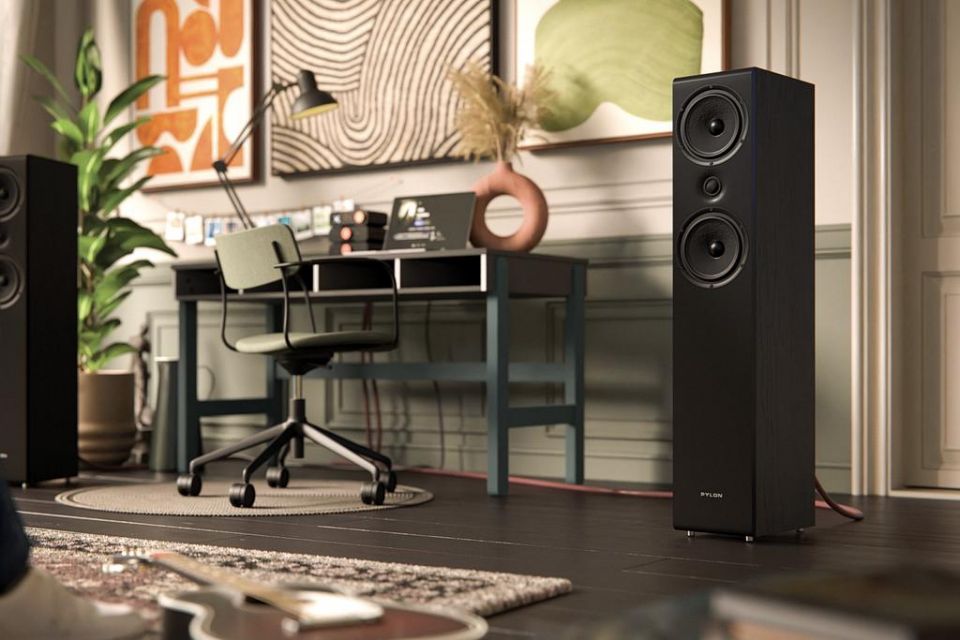
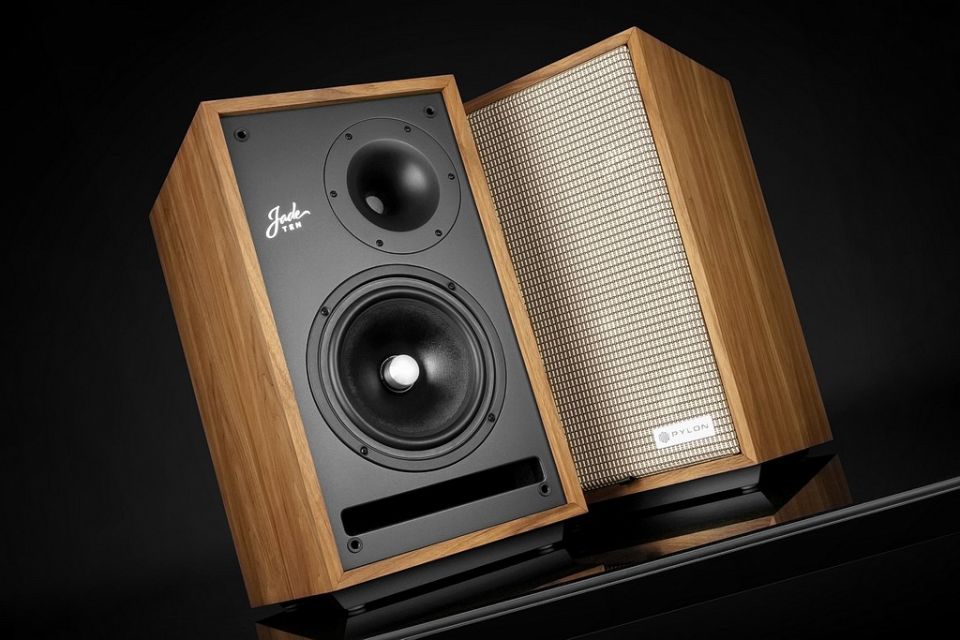
Pylon Audio Diamond Monitor 18 mkII

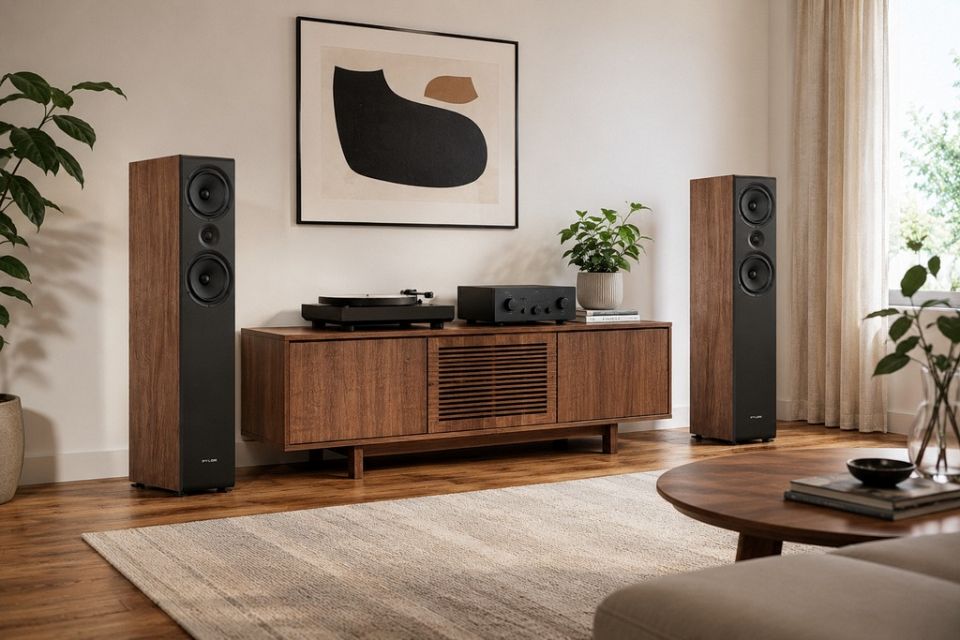
Manufacturers of hi-fi equipment like to brag about their peak performance, but in any company's product lineup, the key role is played by the models that simply sell best. They are the ones that provide funds for further development and indicate what ideas appeal most to customers. Recently, Pylon Audio has been working hard on high-end loudspeakers. Over the past few years, the Polish manufacturer's catalog has included speakers from the Jasper series, including six models, the powerful Amber mkIIs, the old-school Jade 20s, which just got a bigger brother, and the Emeralds 25s. However, diamonds dominate the sales statistics, and I'm not surprised at all. The models in this series offer everything music lovers seek - a discreet and modest design, high-quality craftsmanship, versatile sound, seamless compatibility with a wide range of electronics, a rich variety of color options, and an affordable price. It may not be a piece of equipment that relies on exceptional technical solutions and surprises its owner daily, but it is hard to identify any clear drawbacks. If only we do not save too much on electronics and choose a model that fits the size and acoustics of our listening room, we will get speakers that can do everything. Will the new generation of the Diamond series continue the story? For this to happen, the Polish designers had to meet only one condition - not to spoil anything. And they claim to have even improved this and that. Is it true?

Melodika MDUAC

The latest cable from the Polish brand Melodika is now available for sale. The high-quality USB cable enables a secure and reliable connection between two devices equipped with USB A and USB C sockets. By replacing the factory-supplied cable of your audio equipment, such as a digital-to-analog converter (DAC) with the Melodika MDUAC cable, you can easily and quickly improve the quality of the transmitted signal. Correct impedance results in low jitter, eliminates timing faults, and distortions in digital signal that might otherwise have occurred.

We use cookies to improve our website and your experience when using it. To find out more about the cookies we use and how to delete them, please see our Privacy Policy.