Displaying items by tag: usb - StereoLife Magazine

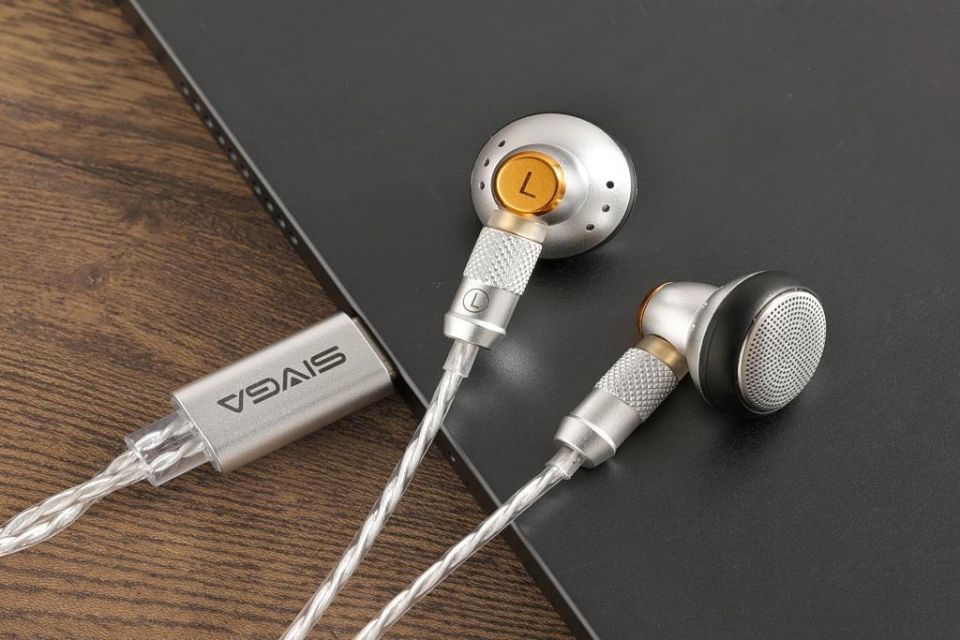
Sivga M260

Wired earbuds have become a small counter-trend in a market dominated by true wireless models. For some users, the appeal is simple - no battery, no pairing, no latency, no codec confusion and no fear that the product will become useless once the cells wear out. Sivga's M260 fits neatly into that space. It is a retro-inspired hi-fi earbud designed for music, commuting, gaming and everyday use, combining a classic open earbud shape with a modern detachable cable system and an optional USB-C version with its own DAC and microphone.

We Are Rewind Freddie

We Are Rewind is a French audio brand focused on reviving cassette culture through modernized portable players and accessories. Its products combine analog nostalgia with contemporary usability, giving listeners a way to enjoy physical media while keeping practical features such as Bluetooth connectivity, rechargeable batteries and modern design refinements. Now We Are Rewind has launched Freddie, a new pair of wireless headphones inspired by the portable audio culture of the 1980s. Also known as EQ-002, the model has been designed to complement the company's WE-001 cassette players, but it can also be used with smartphones, tablets, computers and other Bluetooth sources. The idea is simple - a lightweight retro-style headphone that visually belongs next to a cassette player, but behaves like a modern everyday wireless model.

Matrix Audio MS-1c

Matrix Audio continues to develop its M Series, the company's most advanced line of digital sources, but its latest model is not simply another product aimed only at users looking for a full, no-compromise flagship. The MS-1c is intended as a more accessible entry point into this family, retaining many of the solutions known from the MS-1, but presenting them in the form of a network player that can work both as a standalone analog source and as a digital transport for an external DAC. In practice, this makes it a device for listeners who want to build a modern system based on streaming, a local file library and high-quality digital-to-analog conversion, but do not necessarily need the most elaborate model in the catalog. "The MS-1c is a response to the needs of audiophiles who are looking for the highest-quality digital source, but also value simplicity and functionality. Inheriting solutions from our flagship MS-1, the MS-1c offers the same level of precision and musicality while remaining a more accessible solution for those building their dream hi-fi system." - said Cao Yang, CEO of Matrix Audio.

Kanto Audio Yu4, Yu6, Tuk & Tuk Grand

Kanto Audio has introduced a redesigned generation of its speaker lineup, led by the new Tuk Grand flagship and accompanied by updated versions of the company's Yu4, Yu6, and Tuk models. The refreshed range represents a broader acoustic and industrial design revision across both powered and passive variants. Originally launched in 2014, the Yu series helped establish Kanto Audio's reputation for compact, accessible loudspeakers combining integrated amplification with modern connectivity. The Tuk followed in 2019 as a more performance-oriented model positioned closer to the hi-fi segment. With the introduction of the Tuk Grand and the redesign of the existing families, the company is now extending that concept with larger enclosures, revised driver integration, updated electronics, and a new visual direction intended to align more closely with contemporary interiors.

Schiit Eitr 2

Schiit Audio has introduced the Eitr 2, a compact digital-to-digital converter designed to improve signal integrity when using computers, tablets, or smartphones as audio sources in high-performance playback systems. Building on the concept of the original Eitr released in 2017, the new version expands connectivity with AES/EBU output, introduces support for the company's Forkbeard control platform, and replaces the earlier USB interface with Schiit's proprietary Unison USB architecture. Rather than acting as a conventional converter, the Eitr 2 operates as a signal-conditioning stage between a USB source and an external DAC. Incoming USB audio is reclocked and regenerated before being transmitted through transformer-isolated AES/EBU and coaxial outputs or via optical TOSLINK, with support for PCM signals up to 24-bit/192 kHz. The inclusion of a balanced AES interface is particularly notable at this price level, as it is typically reserved for professional or higher-end consumer equipment.

Musical Fidelity M6xi

Musical Fidelity has introduced the M6xi, a new integrated amplifier that updates one of the company's longest-running high-power platforms with expanded digital connectivity and broader system-integration capabilities while preserving the core analog architecture that defined the earlier M6si. Rather than replacing the established concept behind the M6 series, the new model represents part of Musical Fidelity's wider "xi" generation refresh, which brings HDMI ARC, USB-C audio connectivity, and improved installation flexibility across several amplifier lines including the M2, M3, and M5 models.

Klipsch ProMedia Lumina

Klipsch has introduced the ProMedia Lumina, a new 2.1-channel desktop speaker system that updates one of the company's longest-running multimedia audio platforms with revised acoustics, expanded connectivity, and integrated lighting control. Positioned as the successor to earlier ProMedia configurations first introduced in 1999, the Lumina version adapts the concept for contemporary desktop environments used for gaming, content creation, remote work, and everyday listening. The original ProMedia series established a distinctive position in the compact speaker category by incorporating horn-loaded high-frequency drivers, a feature rarely found in desktop audio systems. The new ProMedia Lumina continues this approach with updated MicroTractrix horn technology, now implemented in a wider geometry intended to improve dispersion and maintain clarity in nearfield listening conditions. Each satellite speaker uses a two-way configuration with a 3-inch midrange driver designed to support dynamic output and intelligibility across mixed-use scenarios ranging from voice communication to music playback and gaming.

Audiomica Laboratory Consequence

The moment comes in every audiophile's life. After enough experimenting with speakers, amplifiers, and source components, once the system finally starts sounding genuinely good, a question begins to nag at us - should we be paying more attention to cables? Some people agree completely, arguing that cables are just as much a part of the signal path as an amplifier or speakers. Others laugh the whole idea off and insist that anyone who believes in cable differences simply should have paid more attention in physics class. In truth, there is only one way to find out - try it and decide for yourself. If we hear no difference, there are really only three logical explanations. The first is that our system still is not revealing enough to expose those nuances, or that the cables we borrowed for comparison, despite their prettier plugs and more upscale appearance, are not actually much different from what we already use. The second is that our hearing is not quite as sensitive as we would like to think, and what others describe as a night-and-day transformation is, for us, barely there at all. The third is that cables have no effect on sound whatsoever and serve only to improve the owner's mood and the manufacturer's cash flow.

iFi Audio GO link 2

iFi Audio has introduced the GO link 2, a new version of its compact USB dongle DAC designed for users who want a quick and effective way to improve the sound quality of a laptop or smartphone without rebuilding an entire system. The idea is to retain everything that made the first generation successful while delivering a more noticeable step forward in both measured performance and day-to-day functionality. Like its predecessor, the GO link 2 bypasses the basic integrated audio stages found in most computers and mobile devices, taking over the digital-to-analogue conversion process itself so that even an ordinary notebook or phone can become a genuinely usable source for more demanding headphones.

Final Audio Design ZE300

Final Audio Design has introduced the ZE300, an ultra compact noise-cancelling true wireless earphone created for everyday listening in the smallest form factor the company has produced so far. Each earpiece weighs 4 g and the design draws on Final's Cotsubu series, coming in 20 percent smaller than the ZE3000 SV to offer a secure, barely there fit that is particularly suitable for smaller ears and extended wear. The ZE300 is aimed at users who want a light, discreet earphone for music, podcasts, video and day to day use, with an emphasis on comfort, clarity and versatility rather than showy styling.

We use cookies to improve our website and your experience when using it. To find out more about the cookies we use and how to delete them, please see our Privacy Policy.