Displaying items by tag: poland - StereoLife Magazine

Audio Video Show Warsaw 2026

Had we told international hi-fi enthusiasts fifteen or twenty years ago that one of the world's largest and most important audio shows would one day take place in Warsaw, many would probably have found it hard to believe. Back then, Poland was hardly known as a major market for luxury audio equipment, and the country's own hi-fi manufacturers were only beginning to establish themselves internationally. Yet Audio Video Show, whose history dates back to the 1990s, kept growing almost without interruption, attracting an ever-increasing number of manufacturers, distributors, journalists, and music lovers. What began as a relatively small exhibition in the rooms of a Warsaw hotel has evolved into an event that can hold its own against the biggest audio shows anywhere in the world. The 28th edition occupied no fewer than 196 demonstration rooms across three venues - the PGE Narodowy stadium and the Radisson Blu Sobieski and Golden Tulip hotels. Nearly 700 brands were represented, and more than fifteen thousand people attended. Perhaps even more impressive is the fact that all of this happened over just three days, October 23-25, 2026.
Fezz Audio Lybra MK2

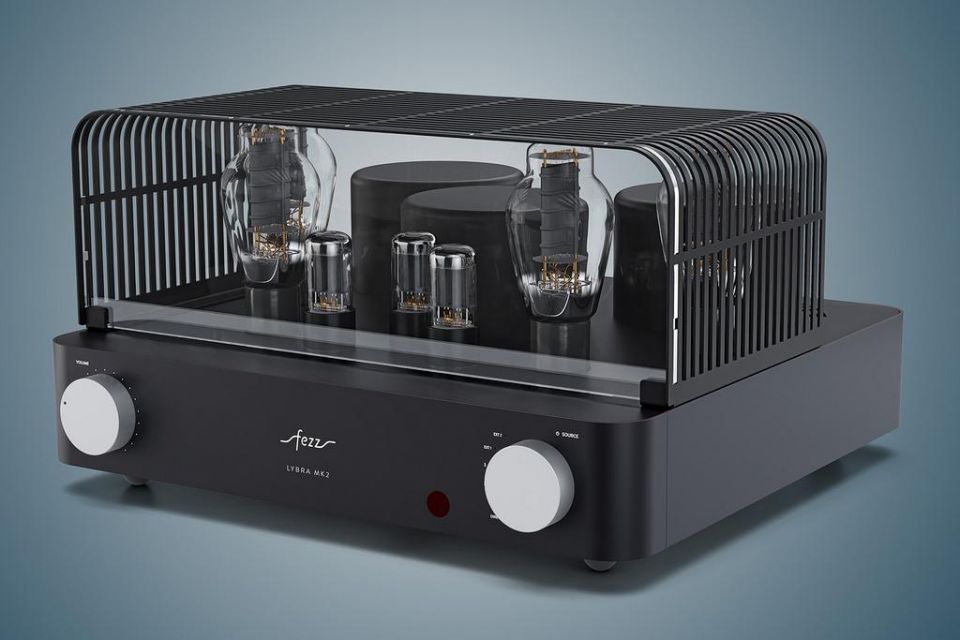
Fezz Audio continues to refresh its product lineup, introducing another amplifier bearing the MK2 designation. This time, the Polish manufacturer has turned its attention to the Lybra, one of its most sophisticated integrated amplifiers and a design built around the legendary 300B triode. The original model occupied a special place in the company's catalog, combining the distinctive sonic character of directly heated triodes with enough power to drive a somewhat wider range of loudspeakers than most conventional single-ended amplifiers. The new Lybra MK2 retains that fundamental concept but introduces a redesigned signal path, expanded connectivity, and several practical improvements intended to make living with a tube amplifier almost as convenient as owning a modern solid-state integrated. Alongside the new integrated model, Fezz Audio is also offering the Lybra Mono Power Amplifier, a monoblock designed for enthusiasts who prefer separate preamplification and power amplification components.

Pylon Audio Opal 23 mkII

Most stereo equipment manufacturers would like us to associate their brands with the products at the very top of their catalogs - the finest, most visually striking models, packed with the most advanced technology. When we buy an affordable pair of bookshelf speakers bearing the shiny Bowers & Wilkins logo, we're supposed to picture the Nautilus or those imposing 801 D3s standing in London's legendary Abbey Road Studios. When we pick up a pair of audiophile headphones from Sennheiser, we're meant to feel as though we're getting a little taste of the Orpheus. Marketing and human psychology have always worked this way. Yet while flagship products shape a brand's image, the vast majority of sales come from the entry-level and midrange segments. Basic economics and the distribution of household incomes tell us everything we need to know about that. The interesting thing is that, at least in my opinion, the best way to judge a company's capabilities and the talent of its engineers is to look at the products rolling off its production lines in the greatest numbers. With an unlimited budget, after all, almost anything is possible - seven-foot-tall speakers with space-age drivers suspended in a silver framework, a million-watt amplifier that unfolds like a futuristic sculpture, or cables as thick as a fully grown python that most people would laugh at. Things become considerably more interesting when we introduce some serious constraints, particularly the most important one - money. That's when we discover who can make intelligent engineering decisions and who can't.

Marcin Ostapowicz - JPLAY

Digital audio has come a long way in recent years. There was a time when all you needed was a computer, a modest collection of files on a hard drive and a DAC connected over USB. Today, we have music servers, network transports, dedicated operating systems, control apps, streaming services and an entire infrastructure that some audiophiles take just as seriously as their amplifiers or speakers. For a long time, I found myself somewhere between those two worlds. I was eager to try anything that promised a better way to listen to files, seeing it not just as a matter of convenience but as a chance to get around some of the limitations of CD. I extensively modified my PC to make it quiet and efficient, and just about every DAC from a familiar hi-fi brand found its way onto my desk: the Meridian Explorer, Primare DAC30, Hegel HD25, Atoll HD100, iFi Audio iDSD Micro and Marantz HD-DAC1. Back then, this was seen as a harmless eccentricity. For most audiophiles, the only serious source of music was a CD player, but that began to change quickly. Today, streaming is a galaxy of its own, with streamers, servers, dedicated operating systems, control apps, streaming services, specialist power supplies and even LAN cables with prices that can make your head spin. For some people, streaming is simply a more convenient way to listen to music. For others, it is another area where they can spend hours searching for small improvements. But even the most ambitious system needs one more key component: software for playing music. You can use one of the free apps, download the one supplied by your streamer’s manufacturer or switch between them depending on where you want to access your music. Or you can bring all of that together with a specialist app such as JPLAY.

Ferrum Broen

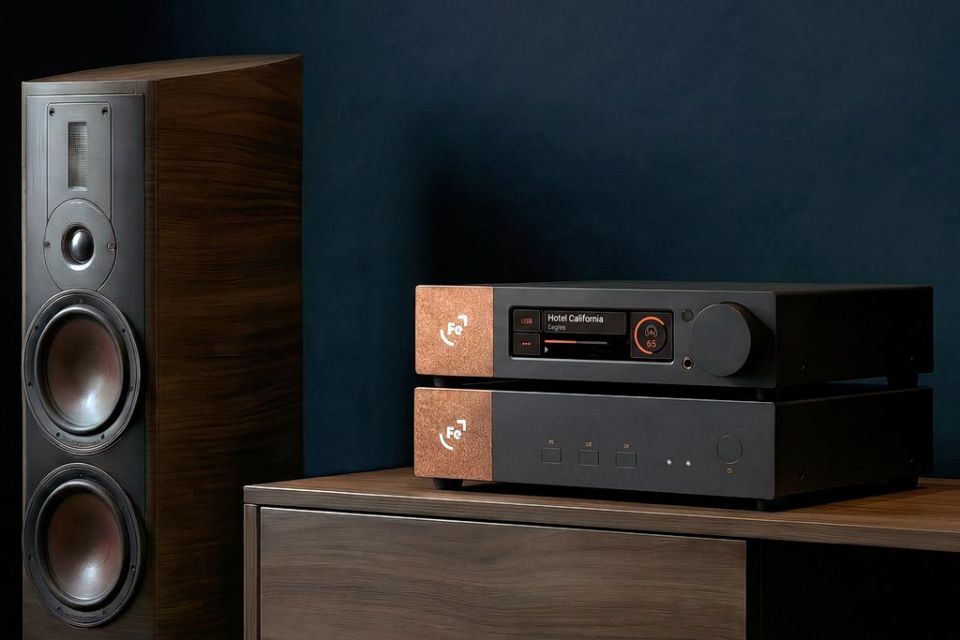
Ferrum has spent the last few years building a compact ecosystem around digital conversion, headphone amplification and power management, but one obvious piece has been missing - a network transport of its own. That gap is now filled by Broen, the Polish company's first dedicated streaming product and a natural partner for the Wandla DAC family and Hypsos power supply. The model was previewed at the Audio Video Show in Warsaw and the Paris Audio Video Show in late 2025, but has now reached its final production form. Its name means "bridge" in Danish, which neatly summarizes the concept - Broen is designed as a digital gateway between streaming services, local music libraries and an external DAC rather than another all-in-one streamer with conversion and analog circuitry squeezed into the same chassis.

Pylon Audio Opal 23 mkII

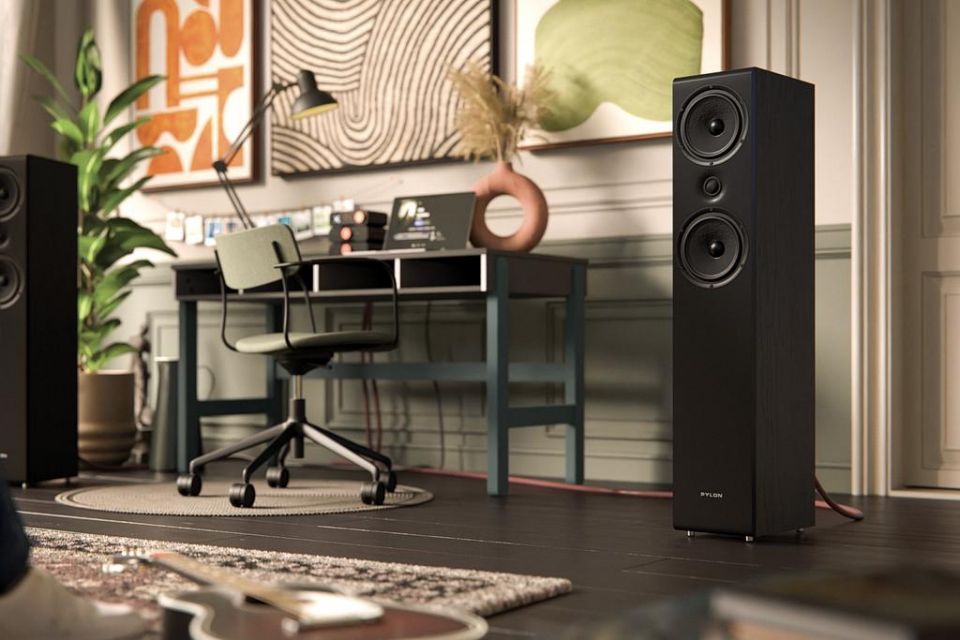
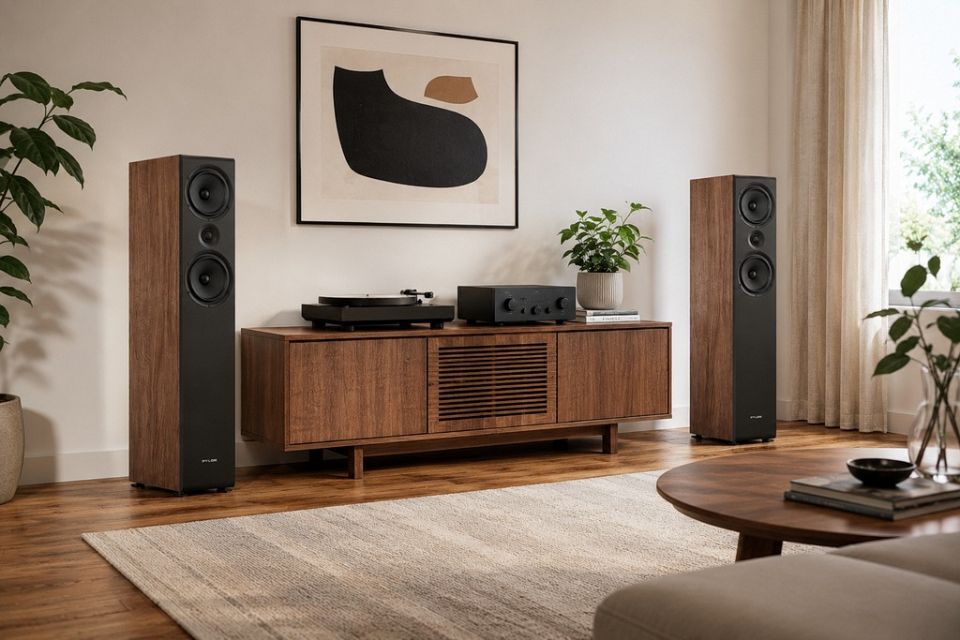
Pylon Audio has introduced the Opal 23 mkII, a new version of one of its best-known floorstanding loudspeakers. The model develops a concept that has been part of the Polish manufacturer's catalog for years - a full-size, reasonably priced loudspeaker designed not for a narrow group of specialists, but for listeners who want solid engineering, room-filling sound and enough versatility to work in a normal domestic system. The original Opal series occupied an important place in Pylon Audio's lineup precisely because it offered this kind of balance. It was not an exotic or overtly audiophile design, but a practical loudspeaker for people building their first or second serious stereo system. With the mkII generation, Pylon has not attempted to replace that idea with something completely different. Instead, the company has retained the overall format and visual identity of the original model while redesigning the drivers, crossover, cabinet tuning and resonance-control measures.

Indiana Line Lira 2, Lira 5 &Lira 7

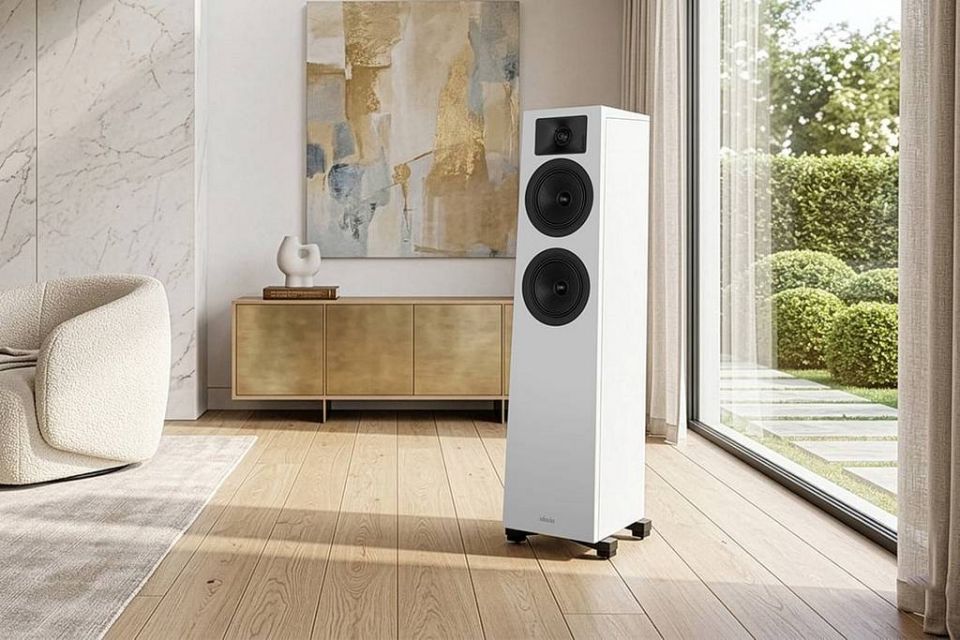
Indiana Line is expanding its Lira series, the highest loudspeaker line in its catalog, with three new models designed to make both stereo and home cinema systems easier to configure. The new additions are the compact Lira 2 standmount speaker, the slim Lira 5 floorstander and the Lira 7 center channel speaker. Together, they extend the range not only in terms of size and application, but also by allowing users to build a complete system based on the same design principles and a consistent sonic character. In practice, this means the Lira series can now be used for a smaller listening-room setup, a more discreet stereo system or a full multichannel installation in which the front and surround channels follow the same engineering philosophy.

Pylon Audio Jade 10

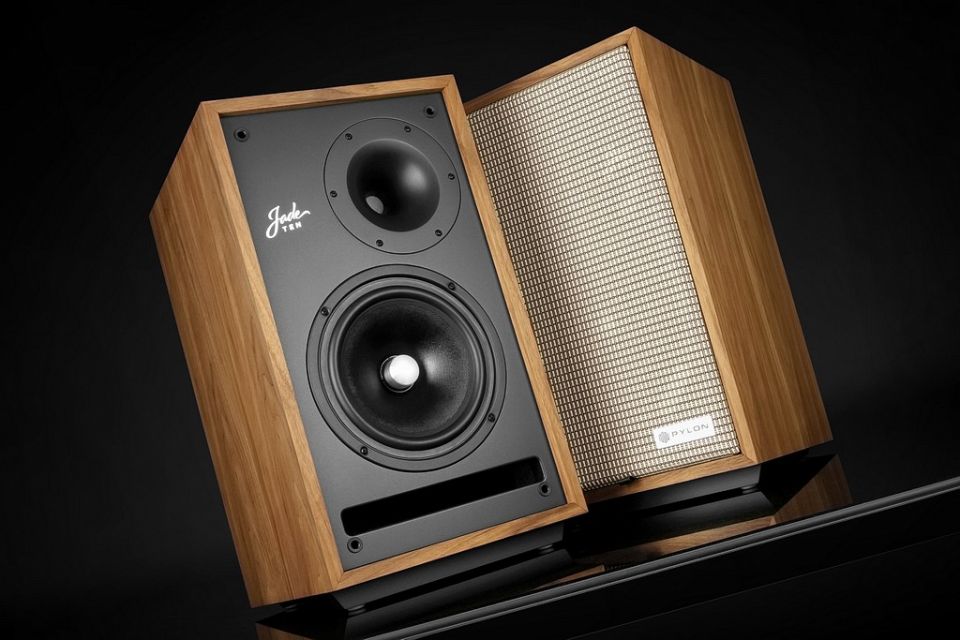
Poland means different things to different people. For some, it brings to mind mountains, lakes, forests, turbulent history, beautiful cities, pierogi, kielbasa and stuffed cabbage. For others, it is a modern, entrepreneurial country - energetic, ambitious and full of people who, after decades of catching up, no longer feel the need to prove anything to anyone. They simply get on with it. They build companies, invest, design, manufacture and enter markets that, not all that long ago, seemed completely out of reach. You can see it in technology, industry, services and design, but also in far more specialized fields, including audio. Surprising as it may sound, Poland is home to well over a hundred manufacturers of audio devices, accessories and components - from large, increasingly recognizable brands to tiny, highly specialized, sometimes almost one-person workshops making unusual loudspeakers, amplifiers, cables, power distributors, isolation platforms, feet, supports and objects whose purpose sometimes has to be explained even to people who have followed this hobby for years. Some of these companies have long since stopped being curiosities for local patriots and have become serious players on the international stage. Fezz Audio tube amplifiers, J.Sikora and Muarah turntables, Mytek converters and digital devices, Lampizator's eccentric creations, Albedo and Audiomica Laboratory cables, JCAT network accessories, Enerra and Gigawatt power strips and conditioners - these are only the most obvious examples. When it comes to loudspeakers, however, the undisputed leader is Pylon Audio.

Blindead 23 - Deuterium

If I were putting together a list of the ten best Polish metal releases of this millennium, "Affliction XXIX II MXMVI" would be one of the first titles I would reach for. Blindead's third full-length is probably the greatest thing that ever happened to Polish post-metal. It was also the record that began my own history with the band. Only later did I work my way back to their first two releases, and then waited, with high expectations, for "Absence" and "Ascension". I love both of those records, although there is no denying that by then, Blindead had already become something slightly different. Later, of course, I was also skeptical about "Niewiosna", but over time I came around to it as well. For a long while, then, I kept waiting for a successor that would not necessarily recreate the old formula, but would at least remind us why so many listeners fell in love with Blindead in its most suffocating, monumental, post-metal form. Instead, in 2022, the group announced that it was coming to an end.

Qualio Quanteen

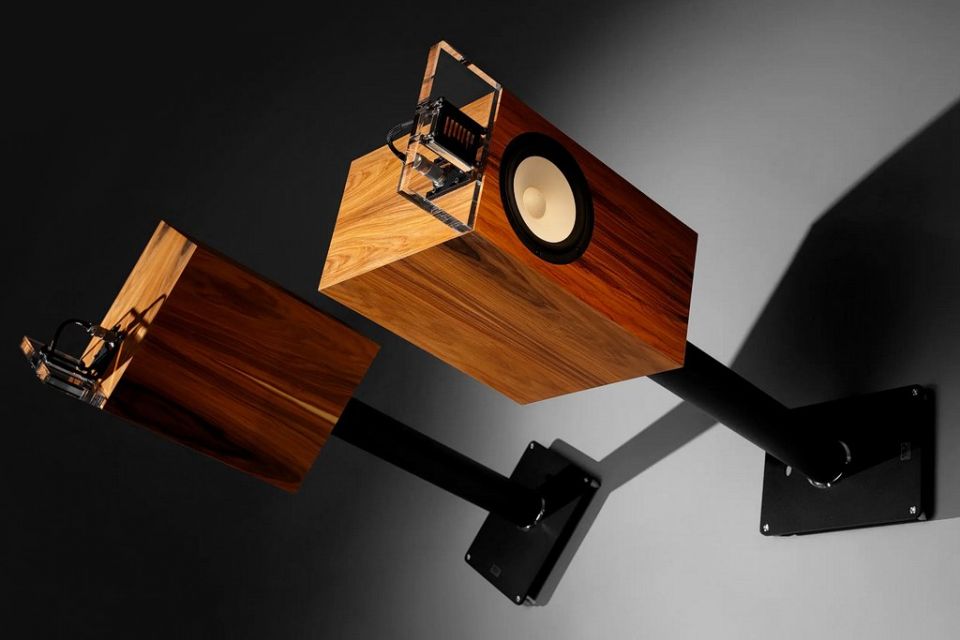
Polish manufacturer of unusual loudspeakers, Qualio, has introduced the Quanteen, its first bookshelf speaker and one of the more interesting attempts to bring the open-baffle concept into a format that is easier to integrate into a smaller listening room. The brand, previously associated mainly with unconventional open-baffle loudspeakers, has prepared a model for listeners looking for a spatial, natural and unforced presentation without having to place large floorstanding speakers in the room. The Quanteen is therefore a monitor only in name and size, because its architecture clearly departs from the usual two-way speaker enclosed in a conventional box. It is a compact semi-open design in which the midrange and treble section operates as a dipole, radiating sound both forward and backward. According to the manufacturer, this solution is responsible for the three-dimensional, holographic soundstage, the reduction of colorations introduced by traditional cabinets and the greater sense of freedom usually associated with larger open-baffle loudspeakers.

We use cookies to improve our website and your experience when using it. To find out more about the cookies we use and how to delete them, please see our Privacy Policy.