Displaying items by tag: phonostage - StereoLife Magazine

The Art of Choosing Your First Turntable

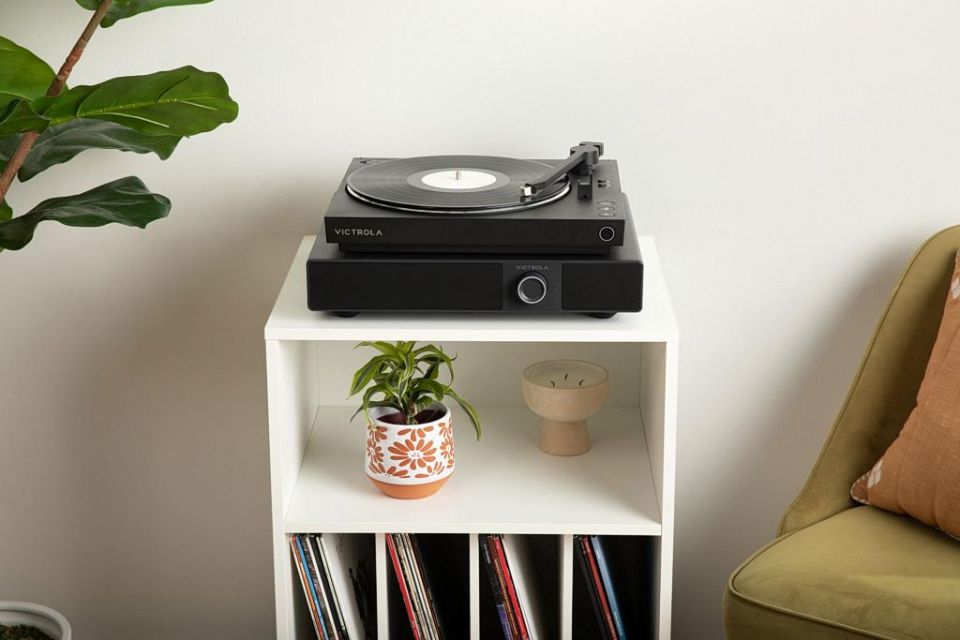
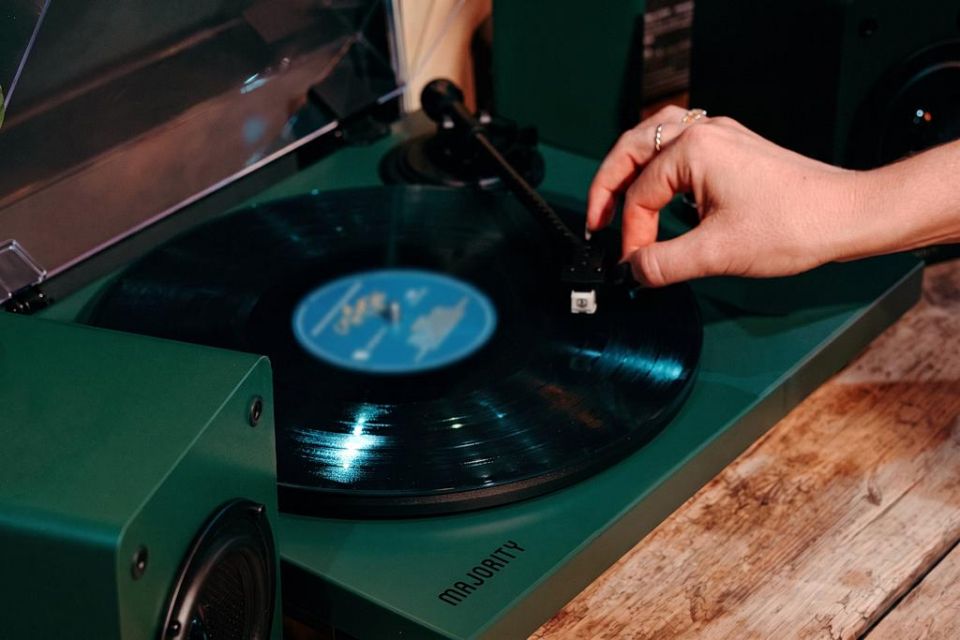
The decision has been made - we are buying a turntable. Everyone around us seems to be talking about the beauty of analog sound, so sooner or later we decide to begin our own vinyl adventure. Common sense may object a little, because what exactly is the point? Records are delicate, they have to be handled with care, and every twenty minutes or so you need to get up and turn the disc over if you want to hear the rest of the album. How does that make any sense in an age when a phone can give us access to millions of tracks, let us skip from one to another with a single tap, or simply keep playing for hours without any effort on our part? Users of streaming services could probably listen until retirement age and still not discover even a small fraction of the music available to them. So who actually needs a turntable?

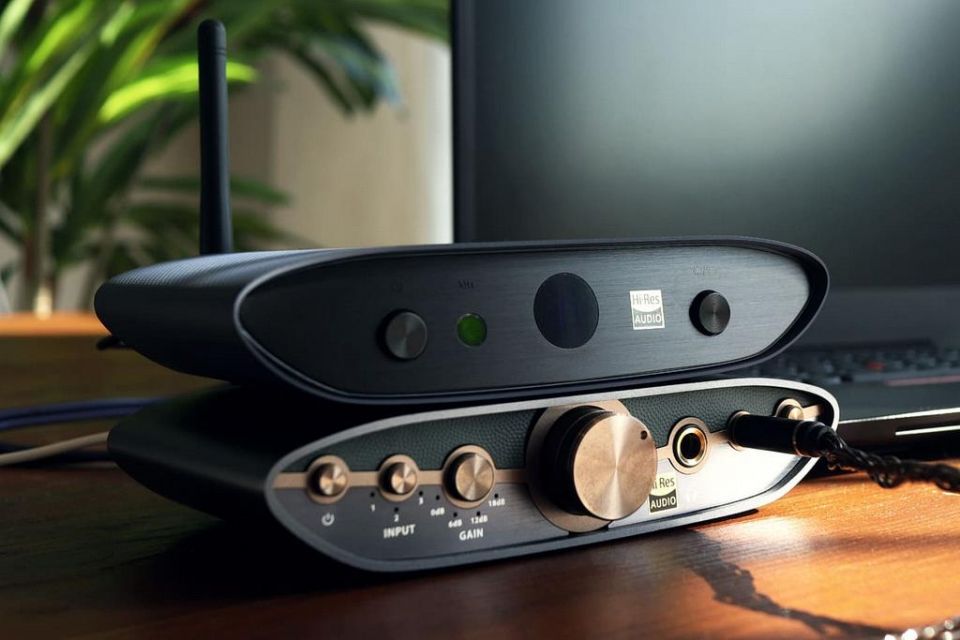
iFi Audio ZEN Air DAC 2, ZEN Air Phono 2 & ZEN Air Blue 2

iFi Audio has refreshed one of its most accessible product families with three new ZEN Air 2 devices, each designed to solve a different and very common problem in everyday music listening. The ZEN Air DAC 2 is a compact digital-to-analog converter with a headphone amplifier, aimed primarily at people who listen from a computer, play games, watch movies or work at a laptop and want a clear upgrade over a standard audio output without building a large system. The ZEN Air Phono 2 is a phono preamplifier for MM and MC cartridges, allowing a turntable to be connected to an amplifier, active speakers or another component that lacks a suitable phono input. The ZEN Air Blue 2 serves a different purpose again. It is a Bluetooth receiver that allows a traditional amplifier, stereo system or pair of active speakers to gain wireless playback from a phone, tablet or computer. Together, the three models form a simple, affordable and compact route to upgrading an existing system without replacing its core components. In other words, iFi is not offering one universal box that tries to do everything, but three specialized tools - one for headphones, one for vinyl and one for Bluetooth streaming - each aimed at one of the most familiar weak points in home audio.

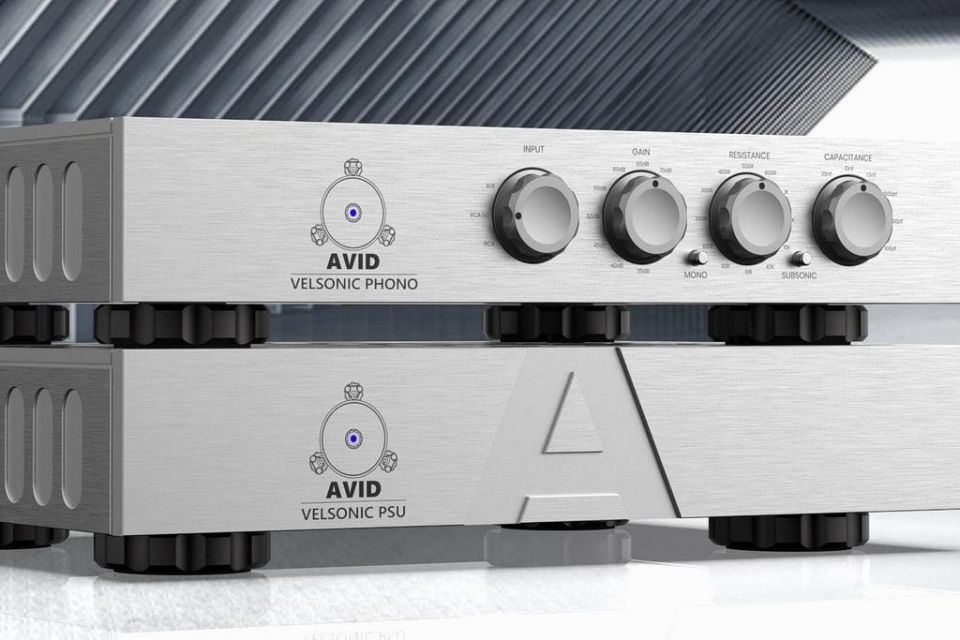
Avid Velsonic

Avid HiFi has introduced the Velsonic, a new reference-level phono preamplifier positioned as the flagship of the company's analog electronics lineup and its first completely new phono stage platform since 2012. Developed and manufactured at Avid's Cambridgeshire facility, the Velsonic replaces both the Pulsare II and Pellere models while carrying forward circuit concepts derived from the company's Reference Pre-Amplifier, signaling a broader refresh of its upper-tier analog architecture. Rather than pursuing a hybrid or digitally assisted topology, the Velsonic follows a strictly analog design philosophy built around a fully dual-mono signal path from input to output. Separate channel layouts are intended to maximize channel separation and reduce crosstalk, while the absence of digital control circuitry reflects Avid's long-standing preference for preserving signal purity in low-level phono applications. According to the manufacturer, particular attention has been paid to minimizing noise throughout the gain structure, an area especially critical in high-resolution MC cartridge systems.

From Transformers to Tube Amplifiers - The Story of Fezz Audio

If someone were to say that the headquarters of one of the most interesting and fastest-growing manufacturers of tube amplifiers and hi-fi components was based not in Munich, Glasgow, or Tokyo, but in a tiny village near Białystok, Poland, many audiophiles would probably raise an eyebrow. This is, after all, the heart of Podlasie - a region that Poles themselves tend to see as beautiful, picturesque, and somewhat removed from the country's main industrial centers and, at least in popular jokes, a little behind the curve of modern life. Internet memes reinforce the stereotype - people are supposedly still discovering electricity there, throwing spears at airplanes, and rolling up the asphalt from the roads at night. A quick search brings up images of R2D2 and C3PO turned into a moonshine still, a long sausage wrapped around a cable reel labeled "Podlasie Fiber Optic", and Fred Flintstone's car presented as a local taxi. And yet it is precisely here, among forests, lakes, and open countryside, that a company emerged, first with small, simple, affordable tube amplifiers, and now delivers beautifully engineered, thoughtfully designed, thoroughly modern components to music lovers in more than thirty countries worldwide.

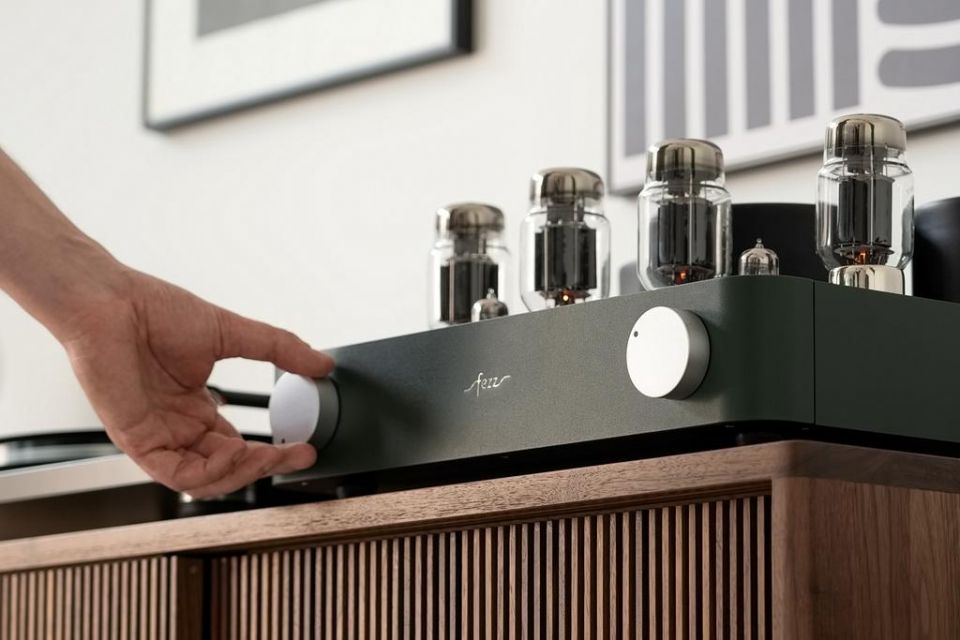
Fezz Audio Titania MK2, Titania Power Amplifier MK2 & Mira Ceti MK2

Fezz Audio has refreshed its Evolution series with three updated tube amplifiers - the Titania MK2 integrated amplifier, the Titania Power Amplifier MK2 stereo power amplifier and the Mira Ceti MK2 single-ended Class A design - marking a broader technical step forward rather than a routine generational update. Based in Poland and closely linked to transformer specialist Toroidy, the company has built its reputation on combining traditional tube topologies with modern usability, and the latest MK2 versions clearly continue that approach. All three amplifiers introduce redesigned signal paths, revised driver stages and upgraded operating stability, while sharing a common set of practical improvements including automatic bias control, electronic tube protection systems, optimized warm-up sequences and support for FEBS expansion modules. Together, these changes position the new Evolution models as more mature and more system-flexible successors intended to retain the musical character of classic tube amplifiers while reducing the complexity typically associated with everyday ownership.

Fezz Audio Titania MK2

In the world of audio equipment, it is not hard to find stories that sound compelling on paper, only to lose their charm the moment they collide with reality. Someone has an interesting idea, solid technical backing, a clear vision, even the right moment to enter the market, and yet after two or three years all that remains are a few mentions in the archives of specialist websites and a handful of products remembered by their owners with a certain fondness, but little real conviction. With Fezz Audio, things were different from the very beginning. Of course, one could look at the brand with caution, as it was entering an industry that loves a good new story on the one hand, but remains deeply conservative and distrustful on the other. When somebody appears on that scene with an original tube amplifier, many music lovers inevitably ask whether it really makes sense. Is this merely another attempt to offer something that looks familiar, glows in the dark and is meant to lure customers with promises of magical sound, without necessarily being backed up by a mature design?

Fezz Audio Luna

When Fezz Audio, then a small, unknown domestic manufacturer, unveiled its first amplifier ten years ago, very few people believed it stood a chance. Yes, the company was connected to a respected producer of transformers used by prestigious audio brands, but as its own label it simply did not exist in the consciousness of audiophiles. At launch, Fezz brought only a single product to market. It was not a compact digital-to-analog converter, not a lavishly equipped solid-state integrated, but a modest tube integrated that, from the customer's perspective, distinguished itself mainly with its reasonable price and a handful of available color finishes. How was this oddity ever supposed to shake up the tightly sealed hi-fi world? And yet, within just a few months, Silver Luna was on everyone's lips. Reviewers and music lovers quickly took to it, drawn by its honest, fully tube-based sound and its raw, minimalist, slightly industrial styling. It was a straightforward, sensible piece of gear with no gimmicks, no cosmetic frills, no wooden ornaments - just engineering focused on doing one job well. It turned out you really could build tube amplifiers in Europe that didn't cost as much as a new car.

Naim NSS 333, NAC 332, NAP 350, NVC TT & NPX TT

Joining the 200 Series launched earlier this year, the New Classic 300 Series elements combine perfectly to create a truly bespoke, high-quality system. Featuring cutting-edge innovation, sleek style and Designed and developed by Naim engineers in exceptional sound quality, the 300 Series products England, the New Classic products are at the forefront of innovation and technology, dedicated to the pursuit of incredible sound.

Naim NSC 222, NAP 250, NPX 300 & NVC 331

Naim Audio launched in 1973 with a simple aim - to experience music replayed in its truest and purest possible form. That meant pushing the boundaries of what is viable, applying an obsessive attention to detail in the pursuit of musical authenticity. Half a century on, its end goal still starts with the music that moves us; an unwavering line from the first Naim products to the creation of the New Classic range: the NSC 222 streaming pre-amplifier; an allnew iteration of the iconic NAP 250 power amplifier; the NPX 300 power supply upgrade. Each boasts more features - including balanced connections - without sacrificing sound quality. Designed and engineered by specialists in England, the New Classic range is handcrafted with care and built to last. Sophisticated yet simple to use, these timeless products aim to bring you years of listening pleasure. There are also a range of ways to integrate these new products with existing Naim models.

Over a Century of Spinning - A History of Dual

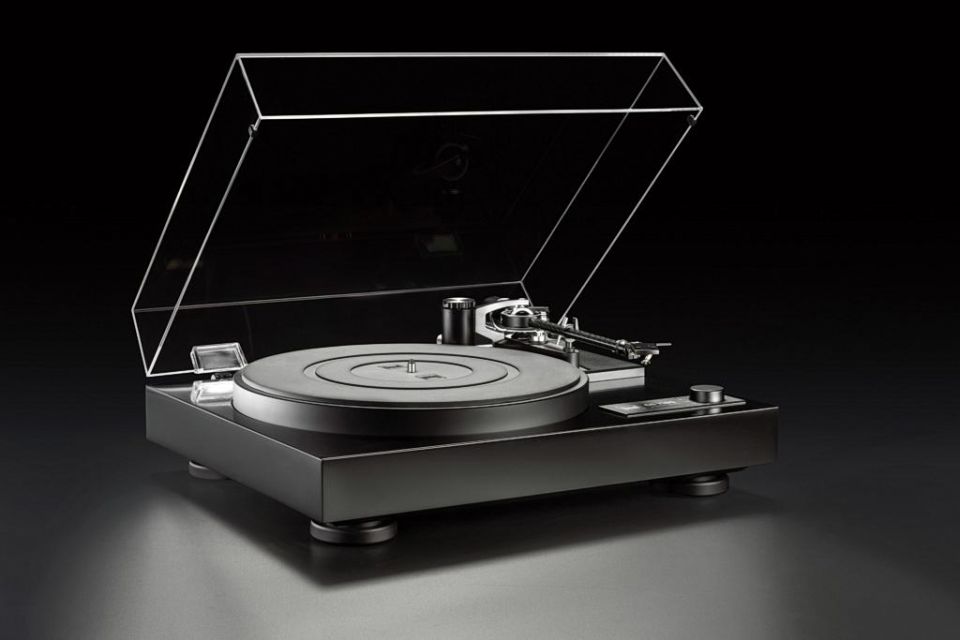
Dual is one of the brands highly regarded by audiophiles, vinyl enthusiasts in particular. And there's a good reason for that. The German manufacturer has produced so many outstanding turntables that it's hard to count them all. A well-preserved or restored Dual can be connected to any stereo system, even an expensive one, and not only will it look great, but with an appropriate cartridge, it should also sound so good that new, mid-range turntables will hide under the sofa with shame. Until recently, if you wanted to buy a Dual product, you would have to be patient, search through popular auction services and find a professional who could bring old electronics to factory condition. Fortunately, today Dual's products are not only museum pieces, decorations in trendy cafes, or turntables for connoisseurs who can appreciate the quality of their craft and sound. After the reactivation of the company, you can now purchase them again in audio stores. How did it come about? Is it something more than a short, one-time spurt? And why did so many vinyl fans get goosebumps just hearing that Dual was back in business? To find out, we decided to look at the company's history and find out what makes it so unique.

We use cookies to improve our website and your experience when using it. To find out more about the cookies we use and how to delete them, please see our Privacy Policy.