Tomasz Karasiński

Tomasz Karasiński

Trained as an aviation engineer, working as a professional journalist with a passion for good music. In his free time, he designs websites, takes photos of airplanes, and indulges his passion for shooting sports. Likes both cheap and expensive gear, tube and solid state amps, large and small speakers, digital and analogue sources. Doesn't like crap.

Naim Muso Utopia

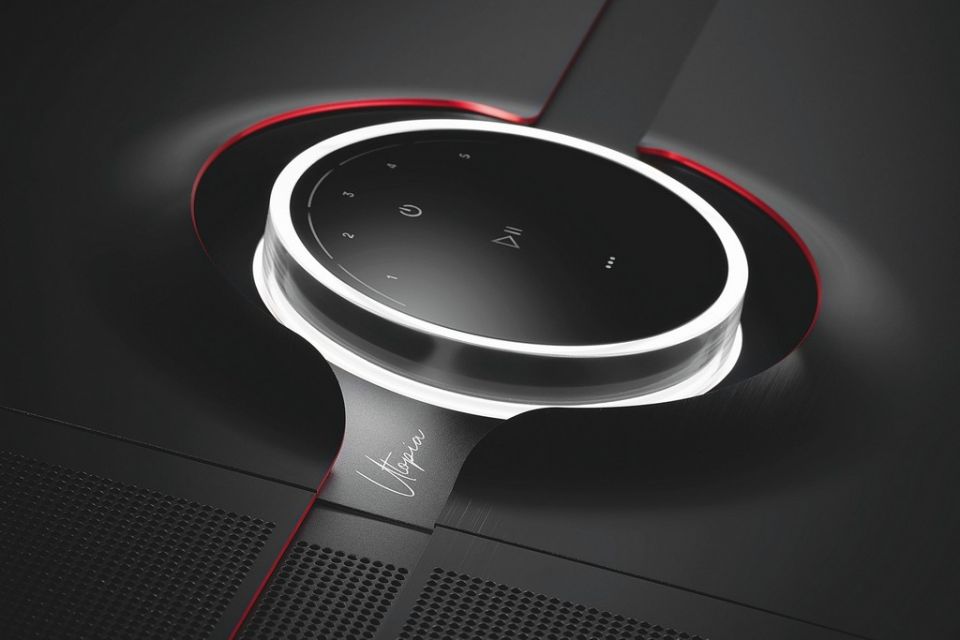
In the world of high-end audio, there has always been a fairly clear division of labor. If you want to listen to music seriously, you buy an amplifier, a network player, and a decent pair of speakers. If movie sound is the priority, you put together a home theater system with an AV receiver, a subwoofer, and speakers dotted around the couch. And if convenience, good looks, and a minimum of boxes matter more than anything else, you buy a soundbar or a wireless speaker and accept that you're making a compromise on sound quality. Or at least that's how the thinking went for years. The trouble is, audio manufacturers seem to have stopped playing by those rules. Increasingly, they're offering products that refuse to stay in their designated categories, promising to take the place of several components in a home entertainment system. Most of the time, the promise is more impressive than the result. It's easy enough to give a soundbar streaming capabilities or add an HDMI socket to a Bluetooth speaker. Getting that same box to sound like a proper stereo system is another matter entirely. Occasionally, though, engineers approach the challenge with rather more ambition. They're not content to assume that powerful bass, clear dialogue, and the ability to stream a playlist from a phone are all anyone could possibly want. That's when things get interesting, and even die-hard audiophiles may find themselves questioning a few long-held beliefs. Suddenly, we have compact wireless speakers that can hold their own against imposing floorstanders, or a beautiful amplifier slim enough to hang on a wall that can embarrass high-end integrated amps and 100-pound power amplifiers. Could the new Naim Muso Utopia be another of these rule-breakers?

Audio Video Show Warsaw 2026

Had we told international hi-fi enthusiasts fifteen or twenty years ago that one of the world's largest and most important audio shows would one day take place in Warsaw, many would probably have found it hard to believe. Back then, Poland was hardly known as a major market for luxury audio equipment, and the country's own hi-fi manufacturers were only beginning to establish themselves internationally. Yet Audio Video Show, whose history dates back to the 1990s, kept growing almost without interruption, attracting an ever-increasing number of manufacturers, distributors, journalists, and music lovers. What began as a relatively small exhibition in the rooms of a Warsaw hotel has evolved into an event that can hold its own against the biggest audio shows anywhere in the world. The 28th edition occupied no fewer than 196 demonstration rooms across three venues - the PGE Narodowy stadium and the Radisson Blu Sobieski and Golden Tulip hotels. Nearly 700 brands were represented, and more than fifteen thousand people attended. Perhaps even more impressive is the fact that all of this happened over just three days, October 23-25, 2026.

PLS Labs Free Your Cartridge

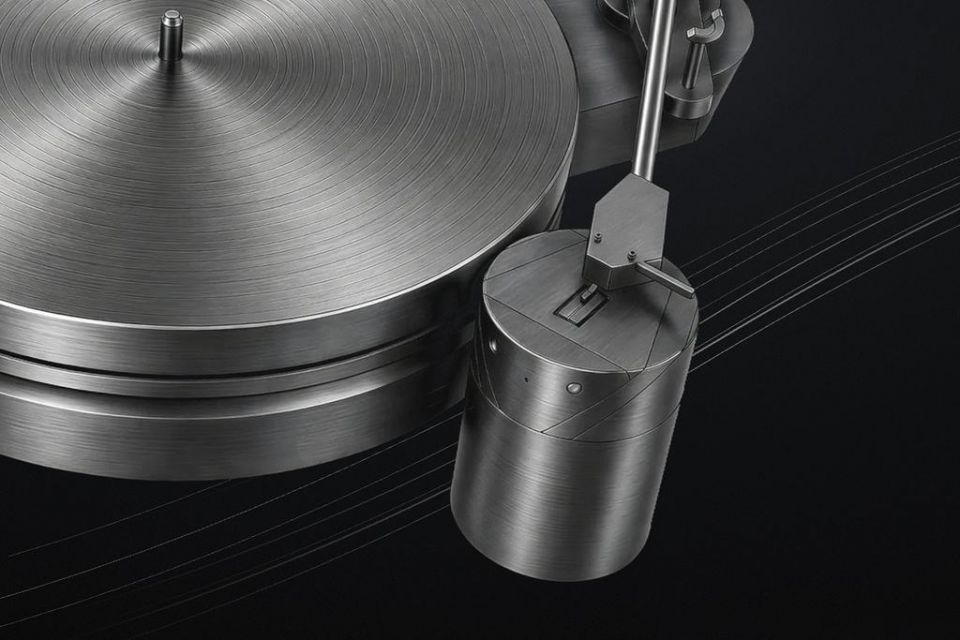
Throughout history, humanity has devoted an extraordinary amount of effort to making life easier. We invented the wheel, the steam engine, electricity, computers, and the Internet. The audio industry has followed a similar path. Once upon a time, listening to music meant winding up a gramophone by hand. Later, all you had to do was put a record on a turntable. Today, almost any recording ever made is just a few taps away on a smartphone. You might think we've finally reached a point where listening to music couldn't possibly get any easier. Fortunately, there are still people who find such simplicity deeply unsatisfying. Instead of sending music directly from a streamer to an amplifier, they'd rather convert the electrical signal into mechanical vibrations, feed those vibrations into a phono cartridge, and then convert them back into an electrical signal. Does that sound completely ridiculous? Perhaps. But that's essentially the idea behind Free Your Cartridge, a new technology developed by PLS Labs (Pure Laminar Stream Laboratories).

iFi Audio iCAN Phantom 1.5

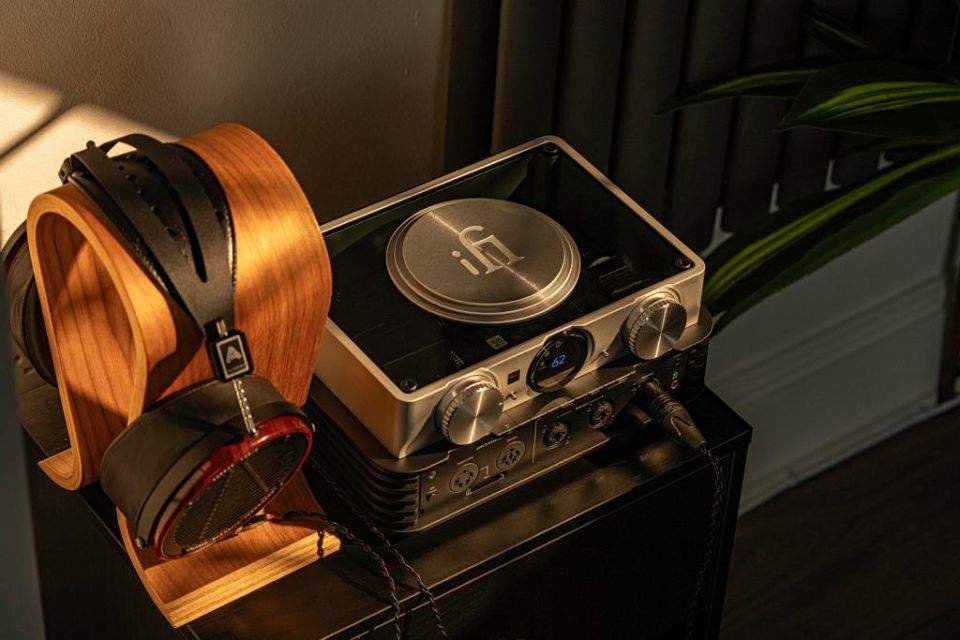
Building a serious headphone collection can get complicated remarkably quickly. A pair of sensitive in-ear monitors might work beautifully with a small portable DAC, but plug them into a powerful desktop amplifier and suddenly there's audible hiss in the background. Planar magnetic headphones present a different challenge, often demanding considerably more current than their size would suggest. And if you decide to explore electrostatic headphones, you're entering another world altogether, complete with specialized amplification and high-voltage requirements. Before long, what started as a relatively simple listening setup can turn into a collection of amplifiers, power supplies, and cables, each serving a slightly different purpose. iFi Audio believes there's a better way. Its new iCAN Phantom 1.5 is an updated version of the company's flagship analog headphone amplifier and preamplifier, designed to accommodate practically every type of headphone from a single chassis. The original iCAN Phantom arrived in 2023 as the successor to the Pro iCAN Signature, bringing together several technologies that would normally require separate components. The 1.5 edition doesn't reinvent that concept, but introduces a series of refinements aimed at making this exceptionally versatile amplifier easier to configure, operate, and live with.

QED Performance

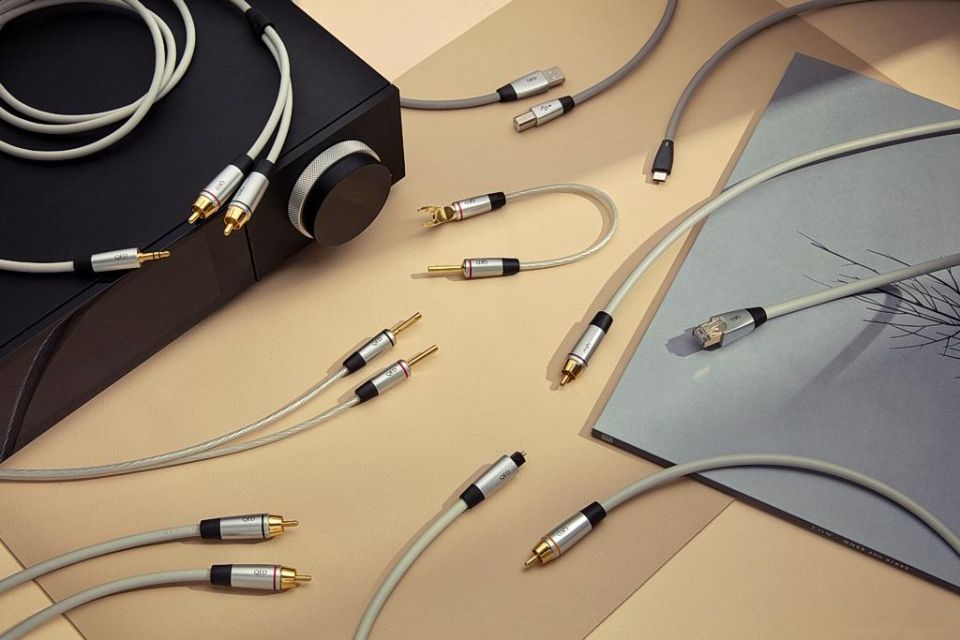
There was a time when connecting a hi-fi system was a fairly straightforward business. You needed a pair of speaker cables, an interconnect between your source and amplifier, and perhaps a few additional wires if you happened to own a particularly elaborate setup. These days, things are rather different. A typical system might include a streamer connected through Ethernet, a DAC receiving music over USB, an optical connection to the television, a coaxial digital transport, an active subwoofer, and perhaps even a good old 3.5 mm headphone jack, which has somehow survived repeated predictions of its imminent extinction. With so many different connections to consider, buying the right cables can become almost as complicated as choosing the equipment itself. British cable specialist QED is hoping to make things a little easier with a comprehensive overhaul of its popular Performance series. The refreshed lineup now consists of 13 models covering practically every common analog and digital connection found in modern audio and home theater systems. The biggest additions are an entirely new speaker cable, matching bi-wire links, and four USB cable configurations, bringing the range up to date with the increasingly diverse ways people listen to music.

Unison Research Unico DS

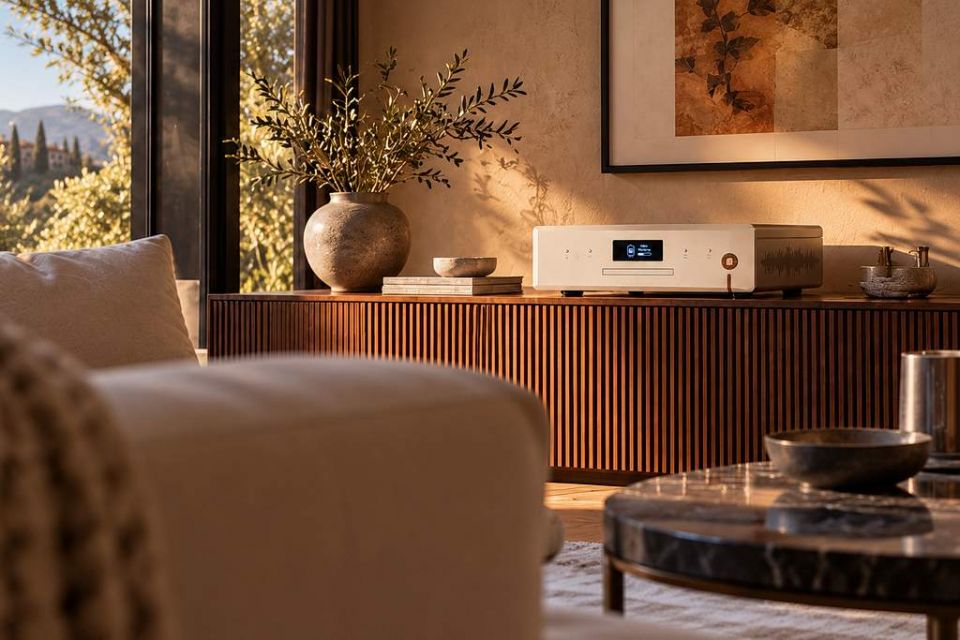
Unison Research has always been associated with vacuum tubes, elegant Italian craftsmanship, and a certain old-school approach to music reproduction. Yet the company has never been particularly interested in treating tradition and technological progress as opposing forces. Its latest creation, the Unico DS, is perhaps the clearest expression of that philosophy to date. This flagship digital source combines a network streamer, CD transport, and sophisticated DAC with a fully balanced, Class A tube output stage. At its heart are an ESS SABRE ES9038Q2M converter, advanced digital signal processing, and a proprietary technology called F.D.F. (Frequency-Dependent Feedback). Rather than producing yet another streamer whose main selling point is a slick smartphone app, Unison Research has set out to build a serious source component for high-end stereo systems. The idea is to bring together the precision, transparency, and dynamic capabilities of modern digital audio with the natural presentation and tonal richness that have long defined the company's tube amplifiers.

Canor Crius H5S

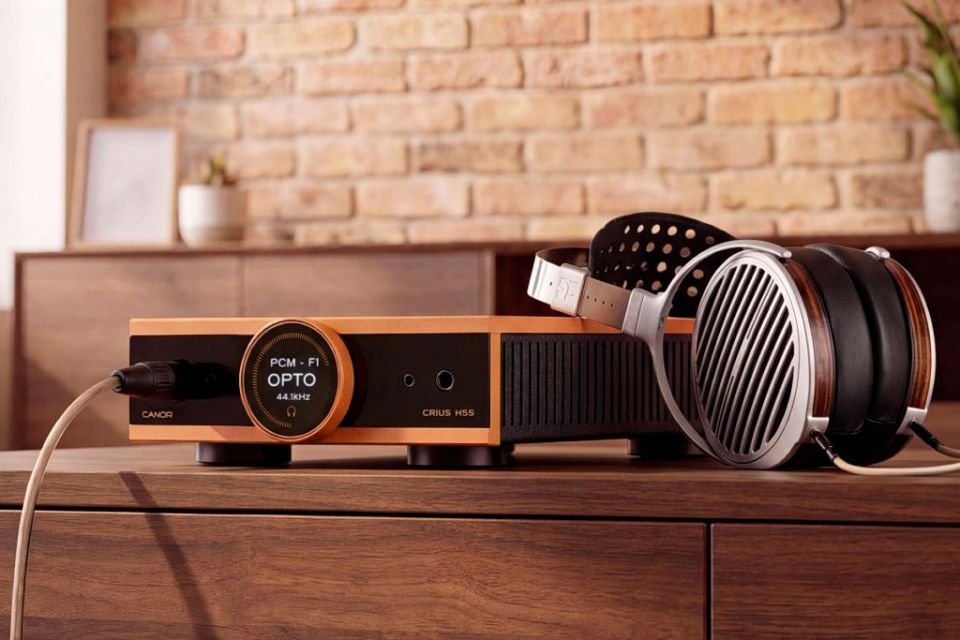
For many years, Canor built its reputation primarily on tube-based audio equipment, but the Slovak manufacturer has recently been expanding its solid-state offerings with increasing confidence. The latest example of this strategy is the Crius H5S, a compact headphone amplifier, digital-to-analog converter, and preamplifier combined in a single chassis. The new model marks the debut of the Essential Line, a series intended to bring engineering solutions developed for Canor's more expensive components into smaller, more versatile, and more affordable products. Although the Crius H5S has been designed primarily for owners of high-quality headphones, it can also serve as the control center of a compact stereo system, feeding a separate power amplifier or active speakers.

JBL L150 Classic

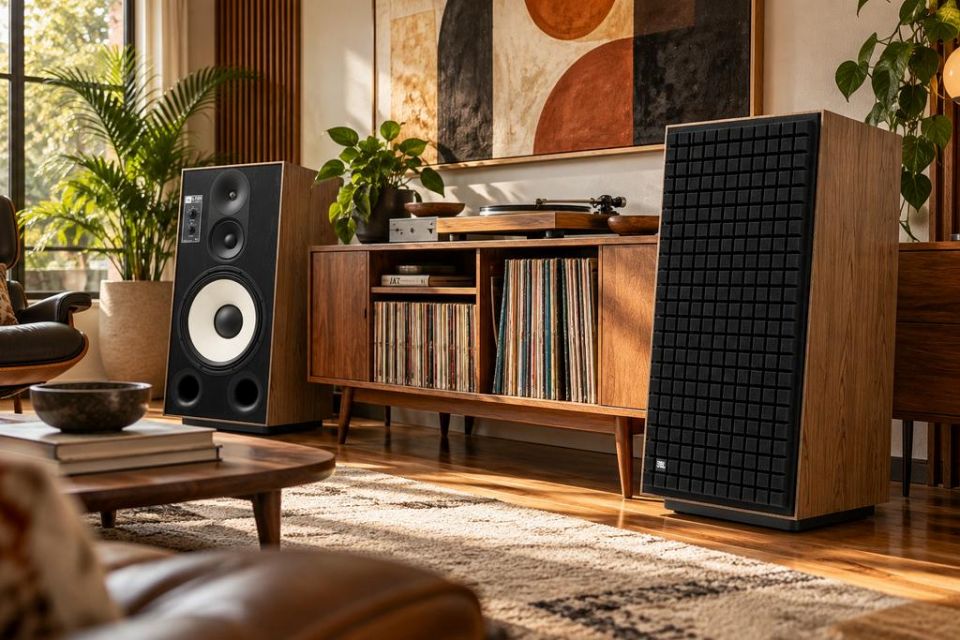
For all the changes the hi-fi industry has gone through over the past few decades, there's something undeniably appealing about a pair of enormous American loudspeakers with big woofers, wide cabinets, and absolutely no interest in blending discreetly into the living room. JBL knows this better than most. The company has spent recent years bringing its most recognizable designs back to life, combining the unmistakable styling of its 1970s classics with modern drivers and acoustic engineering. Now it's taking that philosophy to a whole new level. The newly announced L150 Classic is the largest and most ambitious model in the current Classic series, featuring a massive 15-inch woofer, a dedicated midrange driver, and a titanium dome tweeter, all housed in a substantial three-way enclosure finished in natural walnut veneer. Each speaker weighs approximately 115 pounds, and the famous Quadrex foam grille is present and correct. But perhaps the biggest surprise is where JBL has decided to unveil its latest creation. Instead of choosing an audio show in the United States, Germany, or Japan, the American manufacturer will give the L150 Classic its world premiere at Audio Video Show 2026 in Warsaw, Poland, on October 23-25. Visitors will be the first people anywhere to see the new speakers in person and, more importantly, hear what they can do.

Davis Acoustics Renoir Evolution

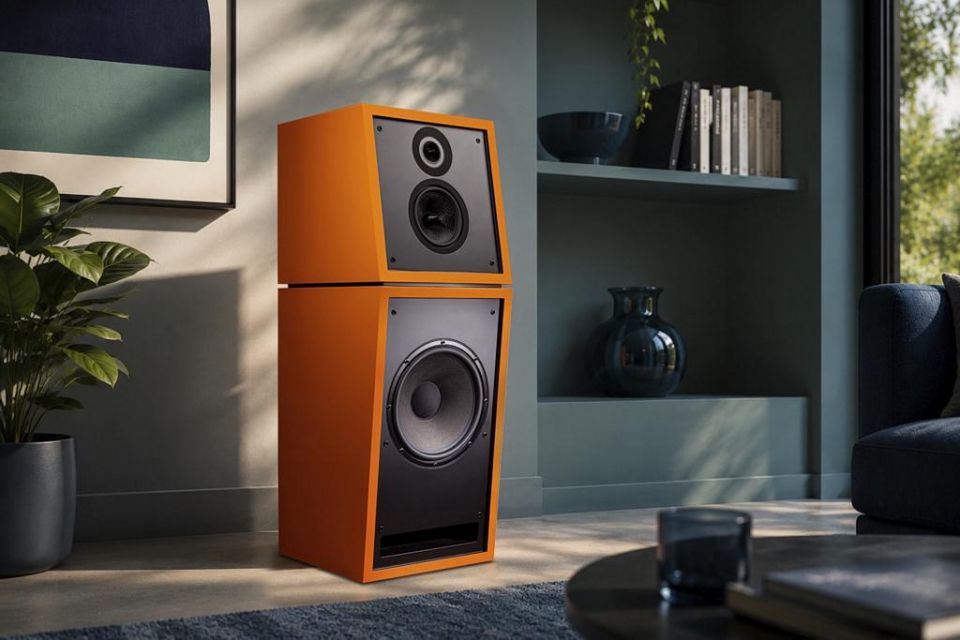
The growing popularity of small tube amplifiers comes with one fundamental problem - not all modern loudspeakers are particularly interested in working with them. Increasingly elaborate driver configurations, relatively low sensitivity, and demanding impedance curves mean that a handful of watts is not always enough, even when the specifications suggest that everything should work reasonably well. The Davis Acoustics Renoir Evolution takes precisely the opposite approach. These are imposing three-way floorstanding speakers equipped with massive 12-inch woofers and weighing approximately 220 lb each, yet they offer a sensitivity of 94 dB and a nominal impedance of 8 ohms, with a minimum of just 5 ohms. The French manufacturer therefore openly suggests that its new speakers should work extremely well with low-powered amplifiers, including single-ended designs based on 300B triodes, which typically deliver around 8-10 watts per channel. In other words, the Renoir Evolution promises the scale and authority of a large, full-range loudspeaker without forcing its owner to invest in an equally enormous solid-state power amplifier.

Fezz Audio Lybra MK2

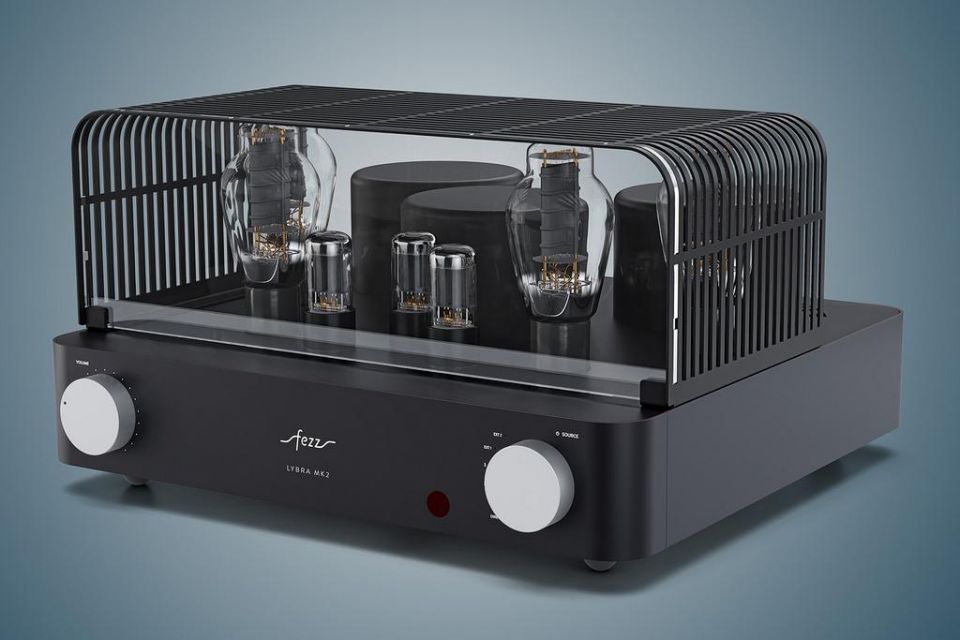
Fezz Audio continues to refresh its product lineup, introducing another amplifier bearing the MK2 designation. This time, the Polish manufacturer has turned its attention to the Lybra, one of its most sophisticated integrated amplifiers and a design built around the legendary 300B triode. The original model occupied a special place in the company's catalog, combining the distinctive sonic character of directly heated triodes with enough power to drive a somewhat wider range of loudspeakers than most conventional single-ended amplifiers. The new Lybra MK2 retains that fundamental concept but introduces a redesigned signal path, expanded connectivity, and several practical improvements intended to make living with a tube amplifier almost as convenient as owning a modern solid-state integrated. Alongside the new integrated model, Fezz Audio is also offering the Lybra Mono Power Amplifier, a monoblock designed for enthusiasts who prefer separate preamplification and power amplification components.

We use cookies to improve our website and your experience when using it. To find out more about the cookies we use and how to delete them, please see our Privacy Policy.