
- News
- Posted
PLS Labs Free Your Cartridge
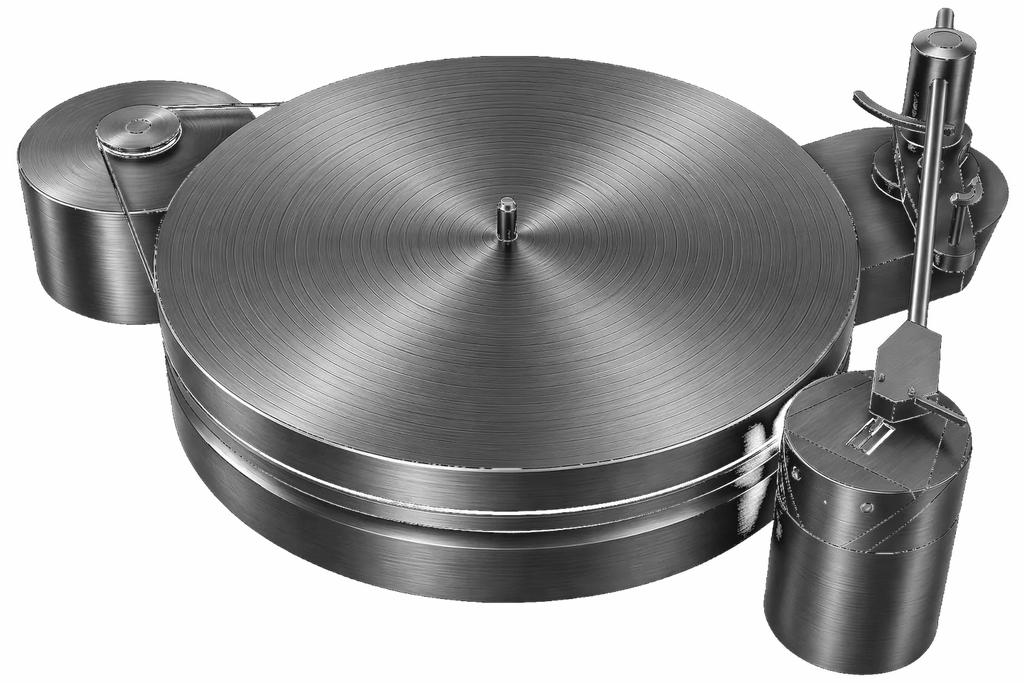
Throughout history, humanity has devoted an extraordinary amount of effort to making life easier. We invented the wheel, the steam engine, electricity, computers, and the Internet. The audio industry has followed a similar path. Once upon a time, listening to music meant winding up a gramophone by hand. Later, all you had to do was put a record on a turntable. Today, almost any recording ever made is just a few taps away on a smartphone. You might think we've finally reached a point where listening to music couldn't possibly get any easier. Fortunately, there are still people who find such simplicity deeply unsatisfying. Instead of sending music directly from a streamer to an amplifier, they'd rather convert the electrical signal into mechanical vibrations, feed those vibrations into a phono cartridge, and then convert them back into an electrical signal. Does that sound completely ridiculous? Perhaps. But that's essentially the idea behind Free Your Cartridge, a new technology developed by PLS Labs (Pure Laminar Stream Laboratories).
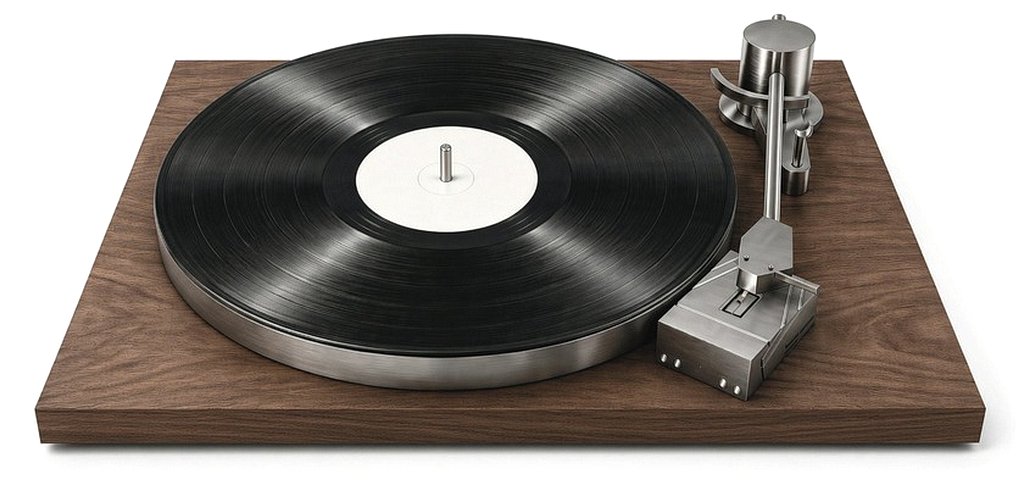
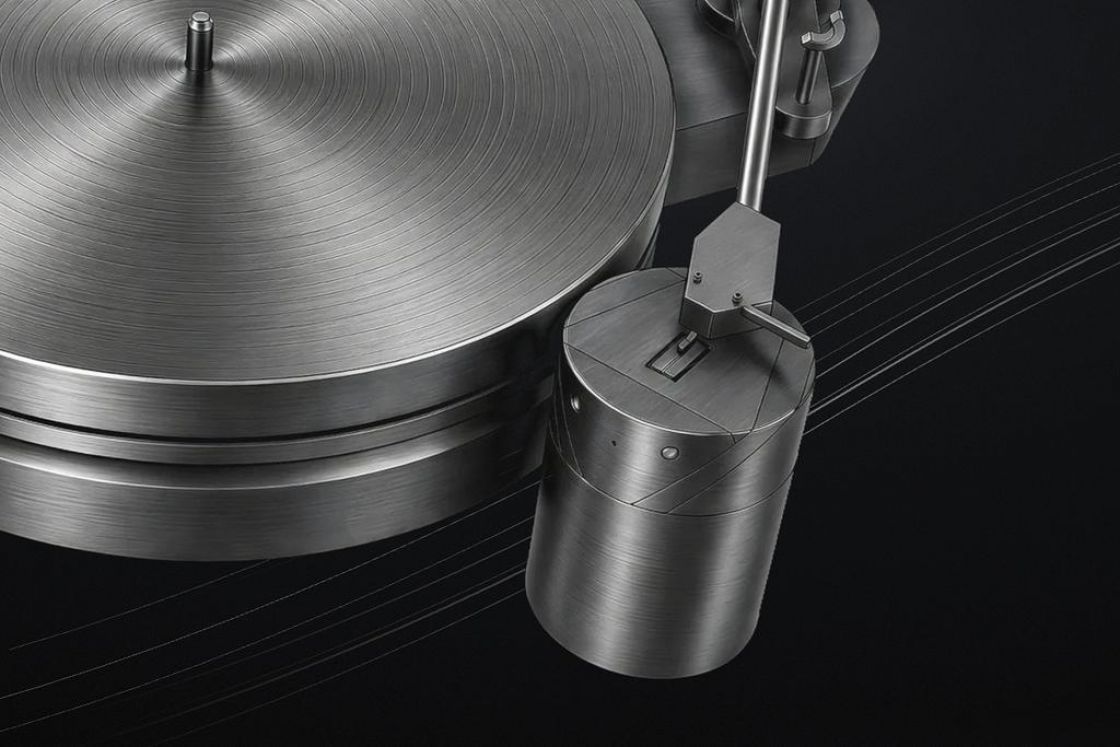
To appreciate the sheer brilliance of this invention, we should probably start with a quick reminder of how a record player works. You place a vinyl record on a rotating platter, lower the tonearm, and a tiny diamond stylus begins following the microscopic undulations of the groove. Those movements are transmitted through the cartridge's mechanical assembly, which converts them into an electrical signal. The signal then travels through a phono preamplifier, an amplifier, and eventually the loudspeakers. It's a process that has been around for decades, and millions of music lovers appreciate it for its distinctive sound, physical interaction, and the entire ritual associated with playing records. The engineers at PLS Labs, however, have decided to remove one rather important element from the equation: the record itself. Instead of following a groove containing musical information, the stylus receives mechanical vibrations generated by a specialized device fed by a digital source. Yes, you read that correctly. The idea is to listen to TIDAL, Qobuz, or Spotify through a phono cartridge. Because why connect a streamer directly to an amplifier when you could involve a turntable, a cartridge, a phono stage, and an additional machine pretending to be a record groove?
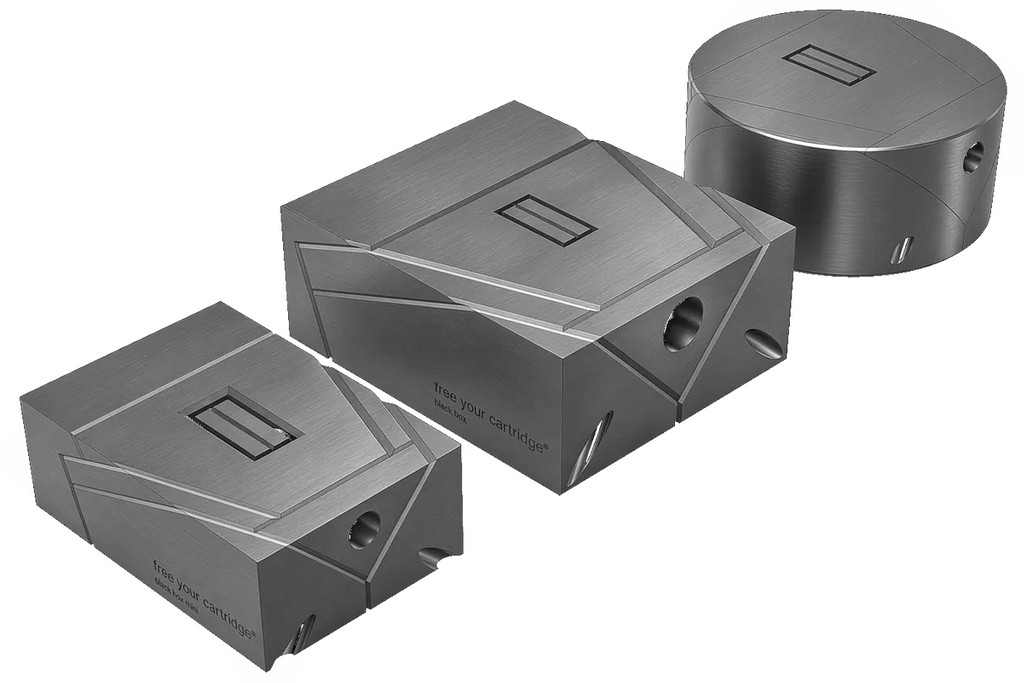
Let's examine this remarkable journey in a little more detail. First, we have a digital audio signal that needs to be converted into analog form. At this point, an ordinary person would connect the DAC's output to an amplifier, sit down, and enjoy the music. But where's the fun in that? We're only getting started! Instead of proceeding directly to the amplifier, the analog signal enters a special mechanical vibration generator. This device moves the stylus in accordance with the musical waveform, effectively simulating the physical information that would normally be retrieved from a vinyl groove. The cartridge then performs its usual electromechanical trick, converting those movements back into an electrical signal. From there, everything continues through the conventional phono preamplifier and the rest of the audio system. In other words, PLS Labs has developed an elaborate process whose most obvious achievement is returning the signal to roughly where it started, except with considerably more hardware involved. Imagine applying the same philosophy to a car. Instead of using the engine to drive the wheels, we'd install an additional motor connected to a crank that turns the pedals of a bicycle, which would then somehow propel the car. Naturally, this would be done to preserve the unmistakable character of cycling. Genius!
According to PLS Labs, the purpose of Free Your Cartridge is not to replace conventional turntables or vinyl records, but to expand the capabilities of an existing analog playback system. Owners can keep their favorite tonearms, cartridges, phono preamplifiers, and other carefully selected components while using them to reproduce music from digital files and streaming services. The company argues that the main advantage is preserving the individual sonic character of a particular cartridge and phono stage without requiring a physical record. And now we're getting somewhere. If you've spent several thousand dollars on a moving-coil cartridge, perhaps you experience a certain psychological discomfort whenever you listen to a streamer while your expensive diamond stylus sits around doing absolutely nothing. Thanks to Free Your Cartridge, you can finally put it to work all day, even when you can't be bothered to take an LP off the shelf. PLS Labs has apparently found a solution to a problem nobody previously realized they had. Possibly because that problem didn't actually exist.
But wait, there's more. The manufacturer doesn't merely describe Free Your Cartridge as a way to make a turntable system more versatile. It also presents the technology as a potential improvement in sound quality. The reasoning starts with the familiar limitations of the vinyl format. Preparing music for cutting onto a lacquer master requires engineers to consider signal levels, bass content, sibilance, stereo width, and the physical limitations of the groove. Elliptical equalization, filters, and various other tools may be necessary to make sure the recording can be cut and played back without exceeding the capabilities of the mechanical system. Then there are the familiar complications of tonearm geometry, stylus alignment, tracking distortion, mechanical resonances, pressing imperfections, and the declining linear groove velocity as the stylus approaches the center of the record. In short, an impressive collection of technical headaches that record enthusiasts have learned to live with and turntable engineers have spent decades trying to minimize. PLS Labs argues that replacing the vinyl record with a precisely controlled vibration generator can eliminate many of these problems. And to be fair, there's a certain logic to that. If you remove the vinyl record from a turntable, you also eliminate the problems caused by playing a vinyl record. Who would have thought?
The list of claimed benefits is extensive. Surface noise disappears because there's no vinyl surface. Pops and clicks caused by dirt or damage vanish because there's no groove to get dirty or damaged. Pressing defects and off-center records are no longer an issue, and some of the restrictions associated with cutting a record can be avoided. The manufacturer even mentions something called an "energy tsunami," apparently an undesirable phenomenon associated with conventional vinyl playback. We have to admit that the term sounds sufficiently alarming to make us wonder whether listening to records should involve wearing a life jacket. Fortunately, Free Your Cartridge is here to rescue us from all these dangers, promising cleaner sound, lower distortion, and an improved signal-to-noise ratio. There is, however, one tiny question that remains unanswered. Couldn't we achieve many of these benefits simply by playing music directly through a good streamer and DAC? At least in the materials we've received, the manufacturer doesn't really address that possibility. Perhaps the answer is too obvious. Or perhaps the whole point is to preserve the fascinating ritual of making digital music travel through as many unnecessary stages as humanly possible.
Another claimed advantage is a substantial increase in stylus life. When playing a conventional record, the diamond tip remains in contact with the moving groove, gradually wearing down through friction. PLS Labs points out that a typical stylus may last around 1,000 hours, although actual longevity depends on the stylus profile, cartridge design, tracking force, record condition, and numerous other factors. With Free Your Cartridge, there is no conventional sliding contact between a stylus and a rotating vinyl groove. The stylus is moved by the vibration generator, so the wear associated with traditional playback should be considerably reduced. This is undoubtedly wonderful news for everyone who has dreamed of using an expensive phono cartridge to play music from the Internet but worried about wearing out the stylus in the process. There is, of course, an even simpler way to prevent stylus wear while streaming music. You could just not use the stylus. Apparently, however, that would be a little too straightforward, perhaps even a violation of the audiophile code of honor.
PLS Labs also highlights access to a practically unlimited music library. Streaming services offer enormous catalogs, including countless recordings that have never been released on vinyl. With the new technology, turntable owners can supposedly enjoy those recordings through their favorite cartridges, even when no corresponding physical record exists. The manufacturer mentions access to more than 250 million tracks and the ability to reproduce virtually any legally available audio material. That's certainly an attractive proposition. Imagine finally being able to listen to the latest album by your favorite artist without waiting for a vinyl release, while still involving your entire expensive analog playback chain. Admittedly, you could access exactly the same music through a conventional network player, but that would deprive you of the satisfying feeling that you're participating in an elaborate electromechanical experiment. And isn't that what we've all been missing during our evening listening sessions?
One aspect of Free Your Cartridge that its creators seem particularly proud of is the nature of the signal path. After the initial digital-to-analog conversion, the audio undergoes two additional analog processes: electrical-to-mechanical conversion and mechanical-to-electrical conversion. The final result, appearing at the cartridge output, is an analog electrical signal. The company presents this as one of the technology's most important advantages. It's probably worth pointing out that virtually every conventional digital-to-analog converter also produces an analog electrical signal at its output, including models costing a tiny fraction of what a serious phono cartridge might set you back. But we understand. In high-end audio, the destination isn't always the most important part of the journey. Sometimes, the route itself is what matters. And if that route can involve a precision mechanical assembly, a delicate stylus suspension, an elaborate magnetic generator system, and an additional phono preamplifier, who are we to deny anyone the pleasure?
To be fair, there is at least one aspect of the project that sounds genuinely interesting from an engineering perspective. PLS Labs has developed a feedback-based calibration procedure intended to control the amplitude-frequency and phase-frequency response of the entire playback chain, including the vibration generator, cartridge, and phono equalization stage. The company also claims that the system can compensate for mechanical resonances within the assembly. These are legitimate technical considerations. A phono cartridge is far from an ideal transducer, and its behavior depends on the design of its moving system, suspension compliance, effective tonearm mass, electrical loading, and other factors. A sufficiently sophisticated calibration system could therefore help correct some of the irregularities introduced by such an elaborate conversion process. In other words, the engineers have apparently developed a complex correction system to solve problems that wouldn't have existed if they hadn't decided to route music from a streamer through a phono cartridge in the first place. One has to admire that level of determination. First, create an entirely new set of difficulties. Then develop advanced technology to overcome them. It's the audiophile equivalent of digging a hole in your backyard and inventing a revolutionary ladder to climb out of it.
The manufacturer says Free Your Cartridge will be compatible with a wide range of existing turntables, allowing owners of traditional analog systems to expand their functionality without replacing the equipment they already own. The technology is not intended to eliminate conventional vinyl playback, but to provide an additional way of using the cartridge and phono stage. PLS Labs is also planning a professional studio version, described as a kind of "analog plugin" for mono, stereo, and multichannel applications. Now that's an intriguing prospect. Imagine a recording engineer sitting in front of a state-of-the-art workstation, surrounded by powerful computers, sophisticated converters, and the finest audio software money can buy. Having assembled this extraordinary collection of technology, the engineer decides to route the signal through a device that physically vibrates a turntable stylus, only to recover it with a cartridge and phono preamplifier. Of course, recording studios have long used analog outboard equipment to introduce particular sonic characteristics, harmonic coloration, or other deliberate effects. But replacing a conventional analog processor with a mechanical simulation of a vinyl groove is an exceptionally extravagant approach. It's a little like a photographer printing a digital image, scanning the print, and then proudly announcing that the result has acquired the unique character of paper and scanner technology.
Still, the studio application may actually offer a more convincing justification for the concept than the domestic one. Producers and engineers routinely employ techniques that make little sense from a purely technical standpoint but produce results they find musically interesting. Tape saturation, tube distortion, transformer coloration, and various forms of analog processing are all examples of characteristics that might technically be described as imperfections but are frequently used for creative purposes. If the Free Your Cartridge system can reproduce the specific behavior of a phono cartridge in a consistent, controllable manner, perhaps it could become another tool for adding a particular flavor to a recording. That doesn't necessarily mean the result will be more accurate, and accuracy may not even be the objective. But at least in this context, sending a signal through an unusual electromechanical process has a plausible creative purpose. Whether that purpose justifies the cost and complexity is something else entirely.
For now, many important questions remain unanswered. PLS Labs has not disclosed a complete technical specification, physical dimensions, connection options, detailed cartridge and tonearm requirements, or the precise procedure for integrating the device into an existing turntable system. We also don't know how calibration will work in practice or how complicated everyday operation might become. Perhaps most importantly, it remains unclear how the technology handles different cartridge types, how RIAA equalization is incorporated into the process, and whether the entire arrangement offers any measurable or audible advantages over a conventional DAC connected directly to an amplifier. These are not insignificant details. After all, if we're going to replace a straightforward signal path with an elaborate mechanical contraption, it would be nice to establish that the result isn't actually worse than what we'd get from plugging in a pair of RCA cables.
Of course, we can't completely rule out the possibility that the engineers at PLS Labs have discovered something the rest of us don't yet understand. Perhaps sending digital music through a mechanical transducer and phono cartridge introduces some particularly attractive characteristics. Maybe it adds a certain warmth, a specific kind of harmonic texture, or a softness that listeners find pleasing. The history of high-end audio is full of equipment that performs less than perfectly from a strictly technical perspective but has earned a devoted following precisely because of its sonic character. Tube amplifiers are perhaps the most obvious example, although there are countless others. If Free Your Cartridge can deliver a consistently enjoyable and distinctive sound, it may well find an audience. We just can't help wondering whether that audience couldn't achieve something similar through considerably simpler means.
And perhaps that's the real fascination of this invention. It represents the sort of thinking that makes the high-end audio industry simultaneously wonderful, inventive, and occasionally completely insane. Most technological progress is about finding shorter, faster, more efficient ways to achieve a particular goal. In audiophilia, however, the process sometimes moves in the opposite direction. We add components, introduce additional conversion stages, explore increasingly elaborate signal paths, and occasionally spend extraordinary amounts of money recreating imperfections that engineers worked for decades to eliminate. Sometimes the results are genuinely remarkable. Sometimes they are simply different. And sometimes, as in this case, the idea is so gloriously improbable that it deserves attention regardless of whether anyone actually needs it. Info and photos by PLS Labs.