Displaying items by tag: bluetooth - StereoLife Magazine

Naim Muso Utopia

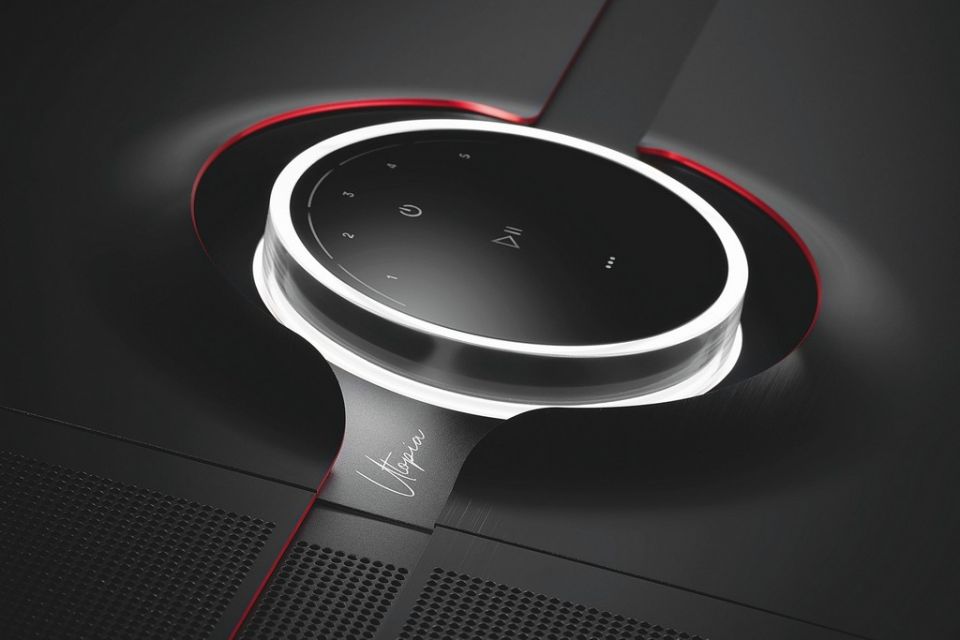
In the world of high-end audio, there has always been a fairly clear division of labor. If you want to listen to music seriously, you buy an amplifier, a network player, and a decent pair of speakers. If movie sound is the priority, you put together a home theater system with an AV receiver, a subwoofer, and speakers dotted around the couch. And if convenience, good looks, and a minimum of boxes matter more than anything else, you buy a soundbar or a wireless speaker and accept that you're making a compromise on sound quality. Or at least that's how the thinking went for years. The trouble is, audio manufacturers seem to have stopped playing by those rules. Increasingly, they're offering products that refuse to stay in their designated categories, promising to take the place of several components in a home entertainment system. Most of the time, the promise is more impressive than the result. It's easy enough to give a soundbar streaming capabilities or add an HDMI socket to a Bluetooth speaker. Getting that same box to sound like a proper stereo system is another matter entirely. Occasionally, though, engineers approach the challenge with rather more ambition. They're not content to assume that powerful bass, clear dialogue, and the ability to stream a playlist from a phone are all anyone could possibly want. That's when things get interesting, and even die-hard audiophiles may find themselves questioning a few long-held beliefs. Suddenly, we have compact wireless speakers that can hold their own against imposing floorstanders, or a beautiful amplifier slim enough to hang on a wall that can embarrass high-end integrated amps and 100-pound power amplifiers. Could the new Naim Muso Utopia be another of these rule-breakers?

JBL Pulse 6

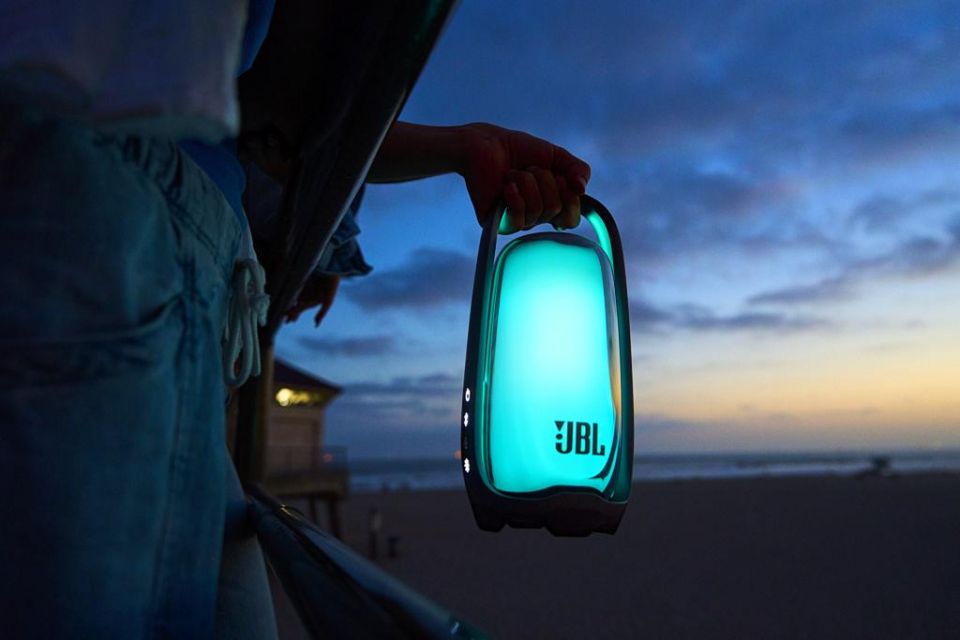
JBL has introduced a new generation of one of its most distinctive wireless speakers. The Pulse 6 is the latest version of a portable device that does more than just play music - it also doubles as an eye-catching lamp, displaying colorful animations synchronized with the rhythm of your favorite tracks. Compared to its predecessor, the new model features an upgraded acoustic system, AI Sound Boost technology, Bluetooth 6.0 connectivity, and an expanded lighting system that now extends to the integrated carrying handle. There are also several practical improvements, including support for lossless audio playback via USB-C, the ability to connect multiple speakers using Auracast, and an IP68-rated enclosure designed to withstand dust and water. With these upgrades, JBL aims to make the Pulse 6 an even more versatile combination of portable speaker, party accessory, and decorative lighting.

JBL Quantum 520

Gaming headsets have come a long way from the days when their main selling points were oversized earcups, an enormous microphone, and enough colored LEDs to illuminate an entire room. These days, manufacturers are paying considerably more attention to sound quality, spatial accuracy, wireless performance, and the ability to use the same headphones for activities other than gaming. JBL has been particularly active in this area, gradually expanding its Quantum series with models aimed at different types of players and budgets. The latest addition is the Quantum 520, a full-size wireless gaming headset that combines 50 mm dynamic drivers, JBL Quantum Spatial Sound, a detachable directional microphone, and three connection options. Users can choose between low-latency 2.4 GHz wireless transmission, Bluetooth 5.4, and wired USB-C audio, making the Quantum 520 suitable for everything from competitive gaming to listening to music on a smartphone. Hi-Res Audio support, extensive customization through JBL QuantumENGINE, and up to 37 hours of battery life complete a surprisingly versatile package.

Technics EAH-A1000

Developing a successful pair of wireless headphones is one thing. Taking technology originally designed for tiny in-ear monitors and adapting it to a full-size over-ear model is something else entirely. That's precisely what Technics has done with the EAH-A1000, its new flagship wireless headphones and the long-awaited successor to the EAH-A800. Rather than simply updating the styling, improving noise cancellation, and adding a few features to keep up with the competition, the Japanese manufacturer has gone back to the drawing board. The centerpiece is an entirely new 40 mm Magnetic Fluid Driver, incorporating technology previously used in the company's EAH-TZ700 in-ear monitors and EAH-AZ100 wireless earbuds. The driver combines magnetic fluid stabilization with a carbon fiber diaphragm and a suspension design derived from Technics' high-end loudspeakers. Add adaptive active noise cancellation, advanced spatial audio capabilities, three-device Bluetooth multipoint, and a completely redesigned headband, and the result looks like a considerably more ambitious product than a conventional generational update.

Yamaha R200A

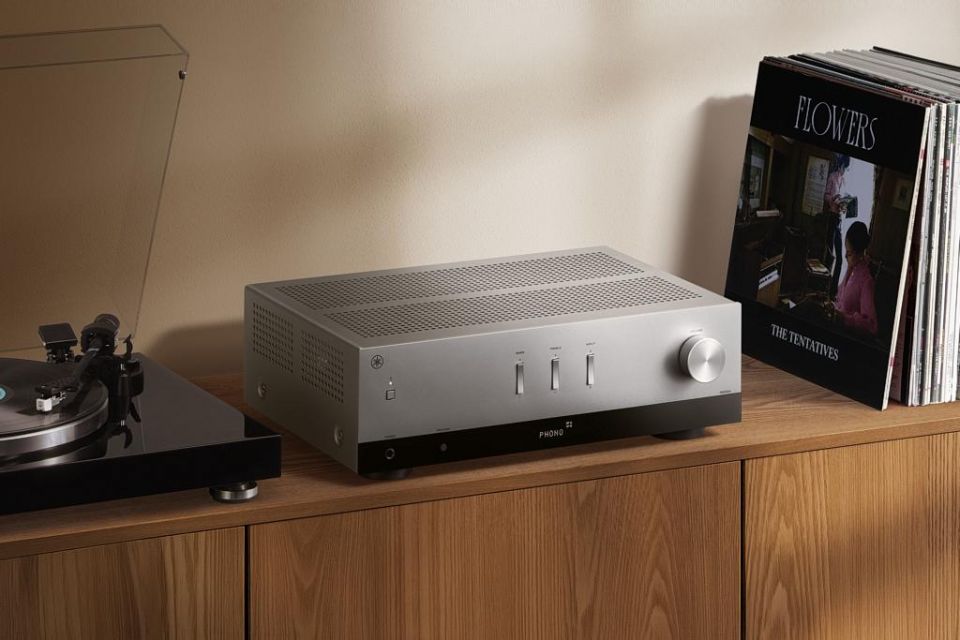
Not every stereo receiver needs to be a miniature computer. Over the past few years, even relatively inexpensive hi-fi components have acquired features that were once reserved for considerably more sophisticated equipment. Built-in streaming platforms, wireless networking, HDMI connections, music services, smartphone apps, and increasingly elaborate digital processing have become almost standard. There's nothing wrong with any of that, of course, but it does raise an interesting question. What if someone simply wants to build a conventional stereo system, connect a turntable or CD player, and listen to music without having to configure another device on their home network? Yamaha's new R200A is designed for precisely that kind of listener. It's a full-size, two-channel stereo receiver offering 100 watts per channel, a dedicated phono input, several analog connections, conventional radio tuners, and Bluetooth. There is no Wi-Fi, no MusicCast, no HDMI, and not a single digital audio input. Even the USB port on the rear panel is reserved exclusively for firmware updates. In other words, this is a stereo receiver in the traditional sense of the term: an integrated amplifier with a built-in radio tuner, intended to form the foundation of a straightforward hi-fi system.

Denon DP-500BT

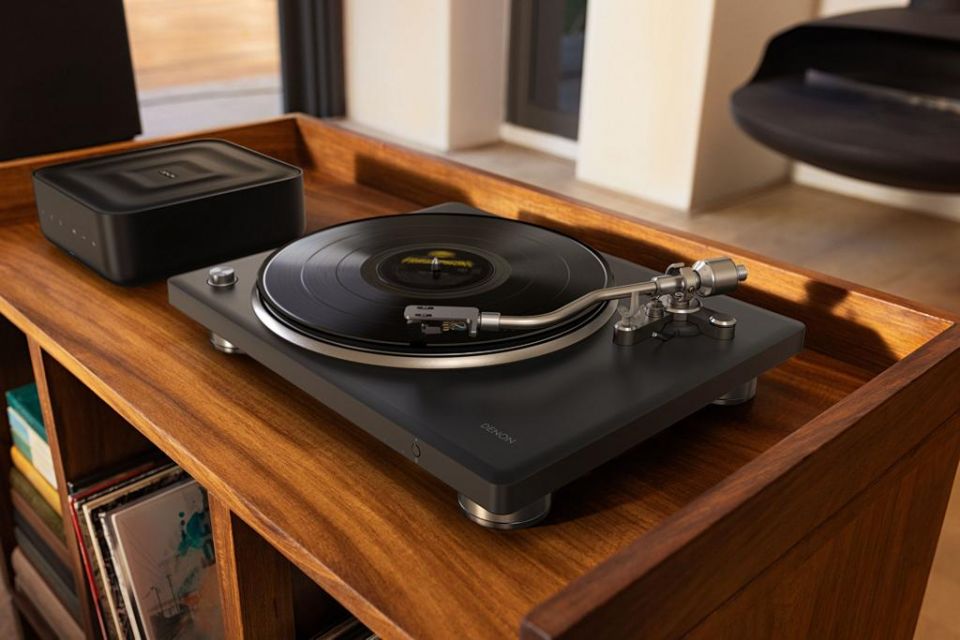
The vinyl revival shows no signs of slowing down, and audio manufacturers are increasingly looking for ways to combine traditional record playback with the conveniences we have come to expect from modern music systems. One of the simplest approaches is to equip a turntable with a Bluetooth transmitter, allowing listeners to enjoy their records without being tied to a conventional stereo setup. This is precisely the idea behind Denon's new DP-500BT. The latest addition to the Japanese company's turntable lineup is a semi-automatic, belt-driven design featuring an S-shaped tonearm, a factory-installed moving-magnet cartridge, and a built-in phono preamplifier. Its most distinctive additional feature, however, is the ability to transmit music wirelessly to compatible headphones, speakers, and other Bluetooth-enabled devices.

Panasonic SC-PMX112 & SC-PM302

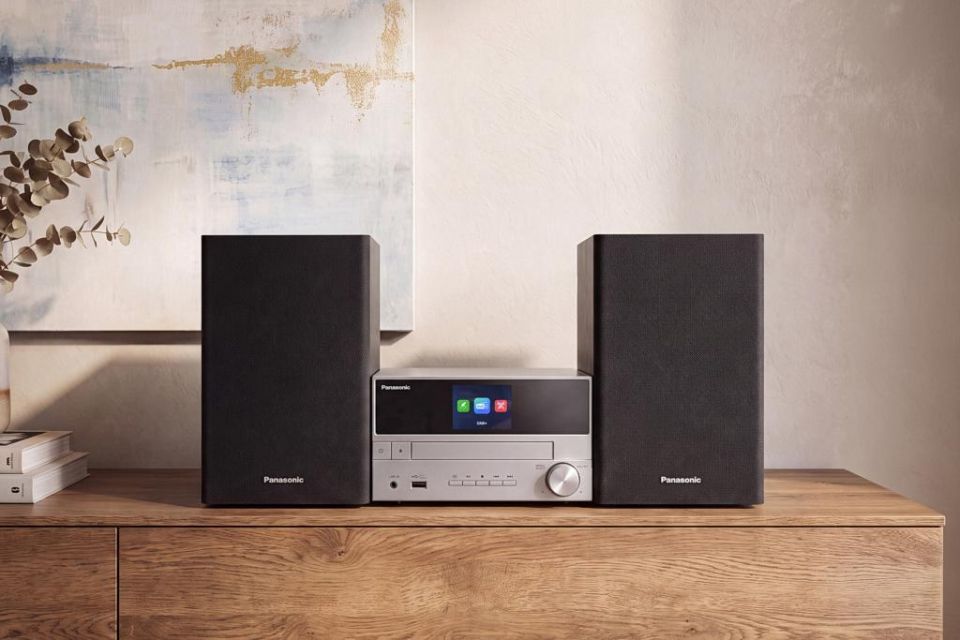
For years, we've been told that the future of home audio belongs to wireless speakers, streaming services, and devices controlled entirely through smartphone apps. And yet, somehow, the traditional micro hi-fi system refuses to disappear. It's not particularly difficult to understand why. For plenty of music lovers, a compact stereo with a built-in CD player, radio tuner, and two separate speakers remains one of the simplest and most practical ways to enjoy music at home. No complicated setup, no need to assemble a collection of separate components, and no requirement to reach for a phone every time you want to hear something. Panasonic clearly believes there's still a market for this kind of equipment, as the Japanese manufacturer has just introduced two new micro systems, the SC-PMX112 and SC-PM302. The former is a more sophisticated, 180-watt model with internet radio, Spotify Connect, and two-way speakers, while the latter offers a simpler, more affordable 60-watt alternative for listeners who are perfectly happy with CDs, radio, and Bluetooth streaming. Both retain the familiar micro hi-fi format while introducing a few welcome modern touches, including color displays and USB playback.

iFi Audio UP Play & UP Play Max

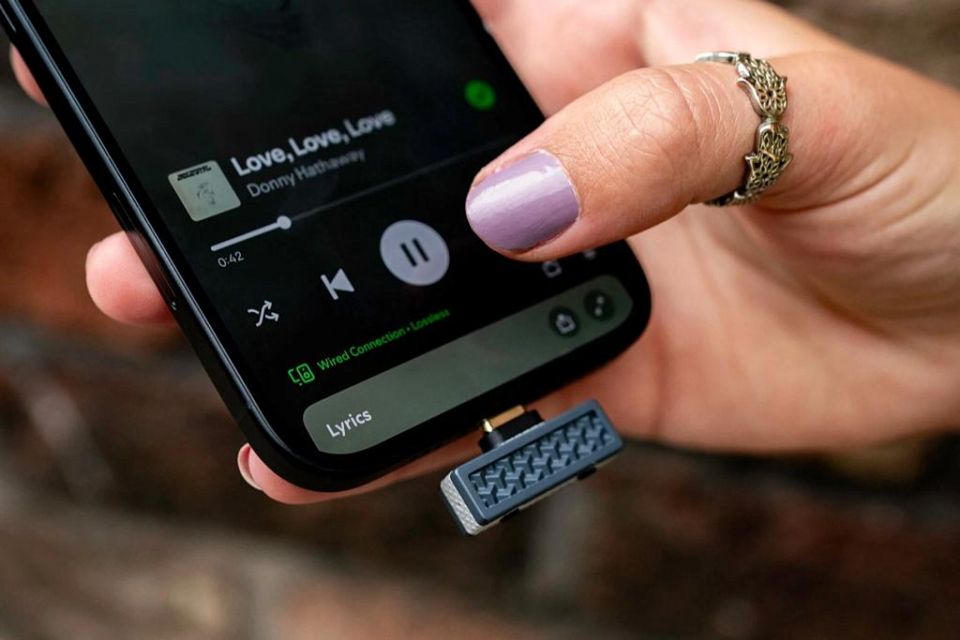
You can spend a small fortune on wireless headphones, carefully compare their drivers, tuning, noise cancellation, and battery life, and eventually settle on a model that supports some of the most advanced Bluetooth codecs available. Then you connect it to your phone and discover that half those capabilities are essentially useless. The headphones may support LDAC, aptX Adaptive, or even aptX Lossless, but that doesn't necessarily mean your smartphone can transmit audio using any of them. iPhone owners know this problem particularly well, since Apple continues to rely on AAC and SBC for Bluetooth audio, regardless of how sophisticated the connected headphones might be. iFi Audio believes the solution doesn't have to involve buying a different phone. Its new UP Play and UP Play Max are miniature USB-C Bluetooth transmitters designed to take over wireless audio duties from the source device, effectively bypassing its built-in codec limitations. Neither is a conventional DAC or headphone amplifier. Instead, these tiny accessories give smartphones, tablets, computers, and compatible gaming devices access to Bluetooth formats they might otherwise be unable to use. The standard UP Play supports LDAC and several members of the aptX family, while the more advanced UP Play Max adds aptX Lossless and promises future support for Auracast.

Sennheiser Momentum 5 Wireless

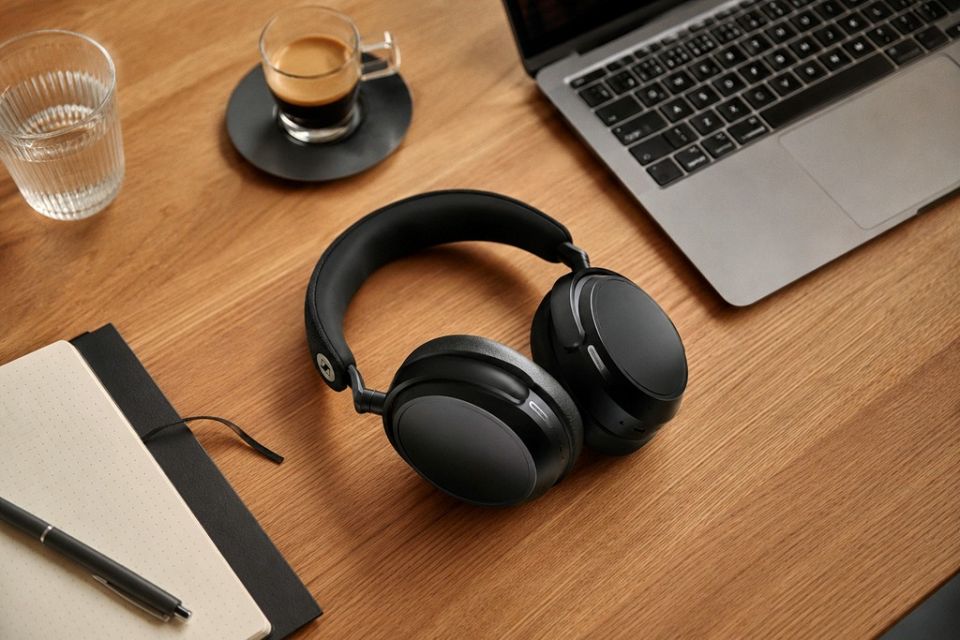
Some audio products come around so predictably that you could almost use them to mark the passing of time. A new smartphone every year. A new DAC every couple of years. An amplifier gets refreshed every three, usually gaining a slightly larger display, an updated streaming board, and a few extra connections along the way. Wireless headphones live on an even shorter clock because the electronics inside them age far faster than the parts that actually make sound. A good driver can remain perfectly competitive for a decade or more, and there is no reason a well-designed enclosure should suddenly become obsolete, but one new codec, a better ANC system, another Bluetooth revision, or a much better app can make a three- or four-year-old model feel surprisingly old. That makes the four-year gap between the Momentum 4 Wireless and their successor unusually long for this market. In 2022, Bluetooth 5.2 with aptX Adaptive was a serious selling point, 60 hours of battery life sounded borderline ridiculous, and manufacturers were still putting the word "adaptive" in front of noise cancellation as though that alone settled the matter. Today, expectations are much higher. Buyers want ANC that can deal with conversation as well as engine rumble, a transparency mode that sounds natural, seamless switching between devices, the best possible wireless audio quality, regular firmware updates, and an app designed for people rather than engineers. Sennheiser has not been standing still either. Since the Momentum 4 appeared, the company has launched the Accentum Wireless, expanded its true-wireless range, and - most importantly from an audiophile point of view - introduced the HDB 630, a model designed to bring some of the philosophy behind the HD 600 family into a modern wireless package. So the Momentum 5 Wireless are entering a very different world. They have tougher competition outside the company and, for the first time, a clearly defined rival within Sennheiser's own lineup.

Fyne Audio Cubitt 5

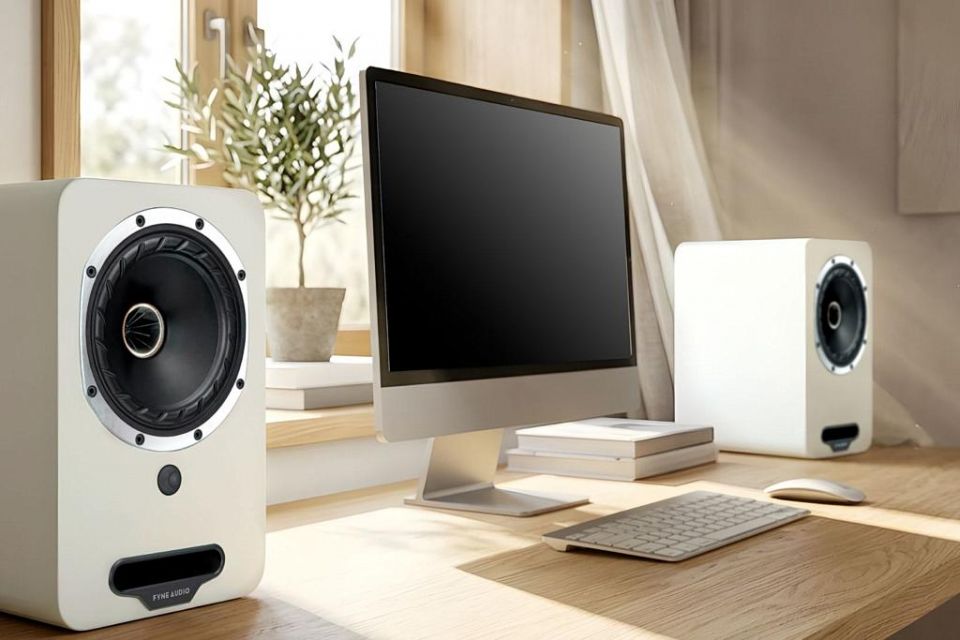
Fyne Audio has spent almost a decade building its reputation around conventional passive loudspeakers, from relatively affordable bookshelf models to imposing high-end designs made in Scotland. Cubitt 5 marks a rather important change of direction. It is the company's first fully active loudspeaker system, combining amplification, digital processing, wireless connectivity and a phono stage with one of Fyne's most recognizable technologies - the IsoFlare point-source driver. First shown publicly at the Shanghai AV Show in May and subsequently presented in Europe at High End Vienna, Cubitt 5 has now made its North American debut.

We use cookies to improve our website and your experience when using it. To find out more about the cookies we use and how to delete them, please see our Privacy Policy.