
- News
- Posted
AudioQuest DragonFly Copper
AudioQuest DragonFly is one of those products that hardly needs an introduction. The original model appeared in 2012 and helped turn the USB dongle DAC from a niche computer-audio accessory into a genuinely mainstream hi-fi product, with more than 300,000 DragonFlys sold worldwide since then. Black and Red followed in 2016, Cobalt arrived three years later, and then the series went quiet for almost seven years. Copper finally breaks that silence. Rather than simply updating Cobalt with a different finish, AudioQuest has substantially reworked the internal architecture, giving its latest DAC-preamp-headphone amplifier more output power, lower current consumption and a new copper-plated enclosure intended to improve RF noise dissipation.
The most important change is the new 32-bit ESS Sabre ES9218, which integrates the DAC and headphone amplifier into a single chip. According to DragonFly designer Gordon Rankin, one of the main requests from existing users was greater headphone-driving capability, and the new ESS solution allowed AudioQuest to deliver twice the output power of any previous DragonFly. At the same time, Copper draws around 25% less current than its predecessors, an important consideration for a device frequently powered directly from a smartphone or tablet. AudioQuest also says distortion has been reduced significantly through careful component selection and extensive revisions to the circuit-board layout.
Interestingly, part of the redesign was triggered by circumstances outside AudioQuest's control. Development originally began under the codename Ruby and was intended to continue the MQA support offered by earlier models. The project was delayed by the pandemic and later affected by component availability, while the decline of MQA changed the technical brief completely. Removing MQA rendering reduced the processing load, allowing AudioQuest to use a less power-hungry processor and rethink much of the internal design. Rankin describes Copper as essentially a restart rather than a straightforward continuation of Cobalt.
That decision also explains why AudioQuest has resisted joining the specification race around extremely high PCM sampling rates. Copper remains a USB Audio Class device supporting up to 24-bit/96 kHz, with native operation at 44.1, 48, 88.2 and 96 kHz. Rankin argues that moving to High Speed USB and formats such as 32-bit/384 kHz would substantially increase current draw, heat and processing demands - particularly undesirable in something designed to run from a phone. Staying with Full Speed USB also means Copper remains driverless on compatible systems and preserves the simple plug-and-play operation that has always been central to DragonFly.
Volume control follows the established DragonFly formula. Copper does not have buttons or a physical volume knob, relying instead on the connected phone, tablet or computer. Behind the scenes, however, it uses its own 64-step, 64-bit bit-perfect digital volume control, with the host device effectively commanding the level inside DragonFly. Copper can therefore work directly with wired headphones, feed powered speakers or operate as a source for a conventional amplifier or preamplifier. In fixed-output mode it can also function much like a compact standalone DAC in a full-size audio system.
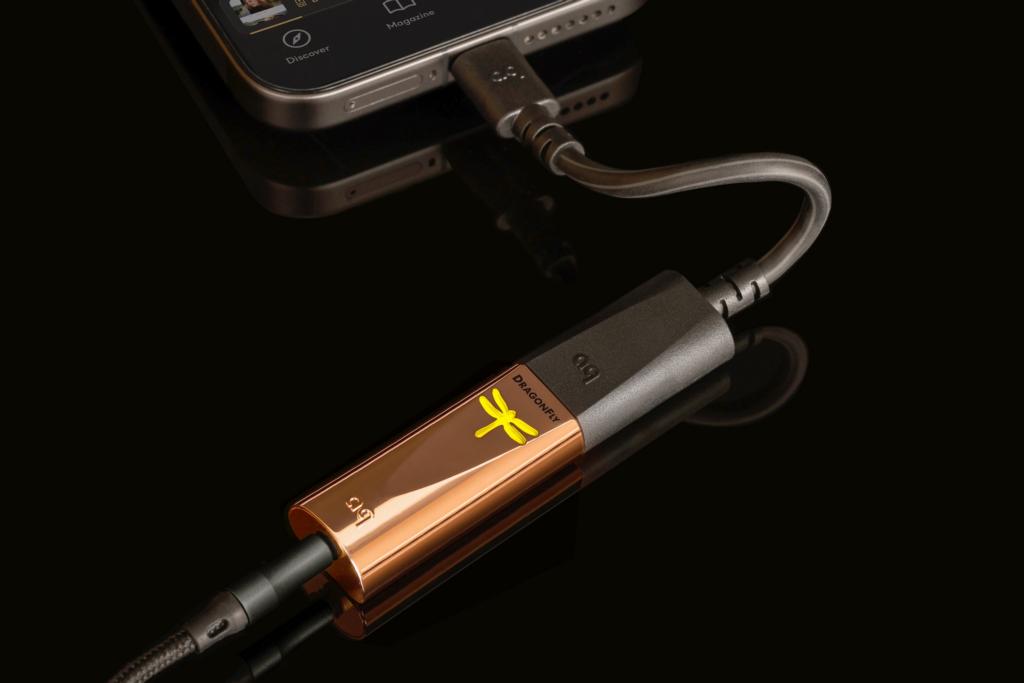
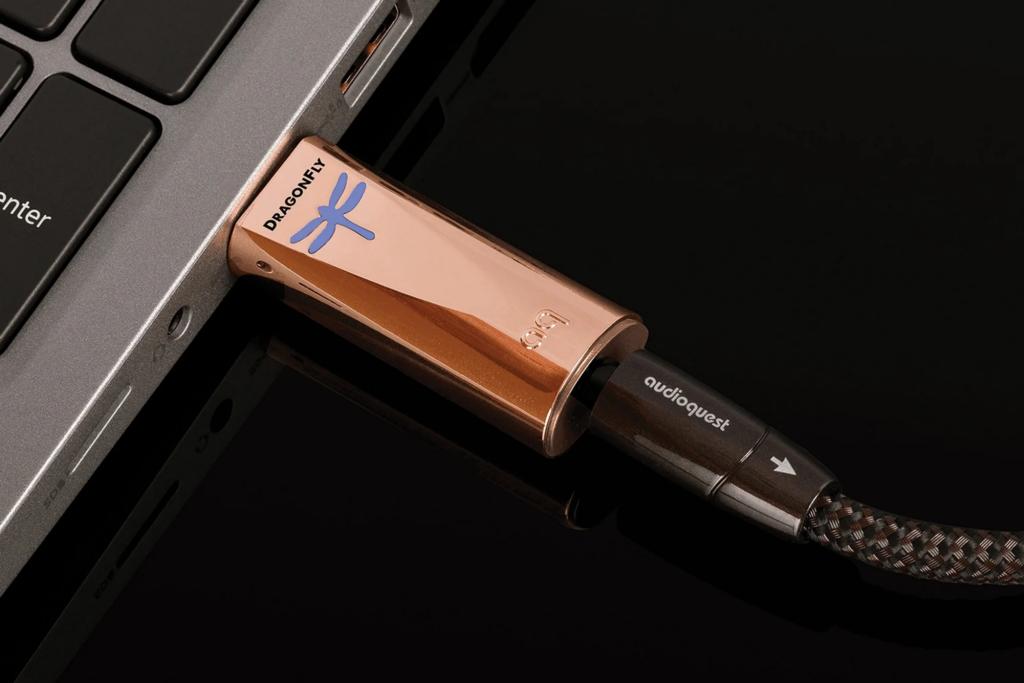
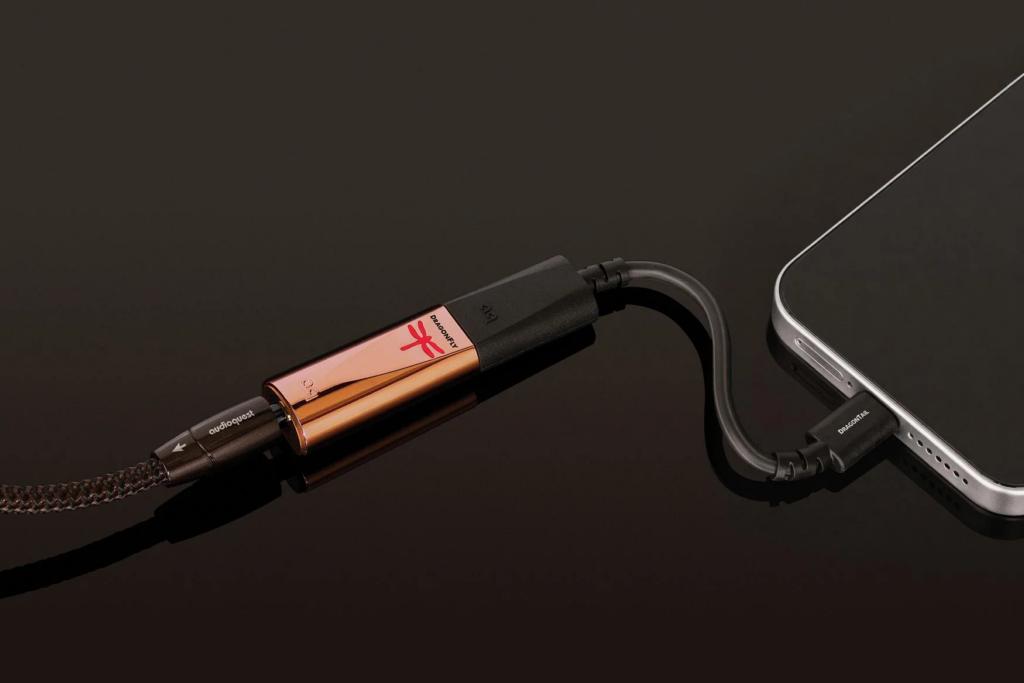
The familiar USB-stick format remains, but one practical detail has changed. Copper still has a native USB-A connector, although it now comes with a DragonTail USB-A-to-USB-C adapter already fitted. Removing the adapter allows direct connection to older computers and streamers with USB-A ports, while leaving it attached makes Copper suitable for the USB-C sockets now found on most phones, tablets and laptops. AudioQuest has also abandoned the removable protective cap used on older DragonFlys - partly because owners had a habit of losing it and partly because the company considered the bundled DragonTail a more useful accessory.
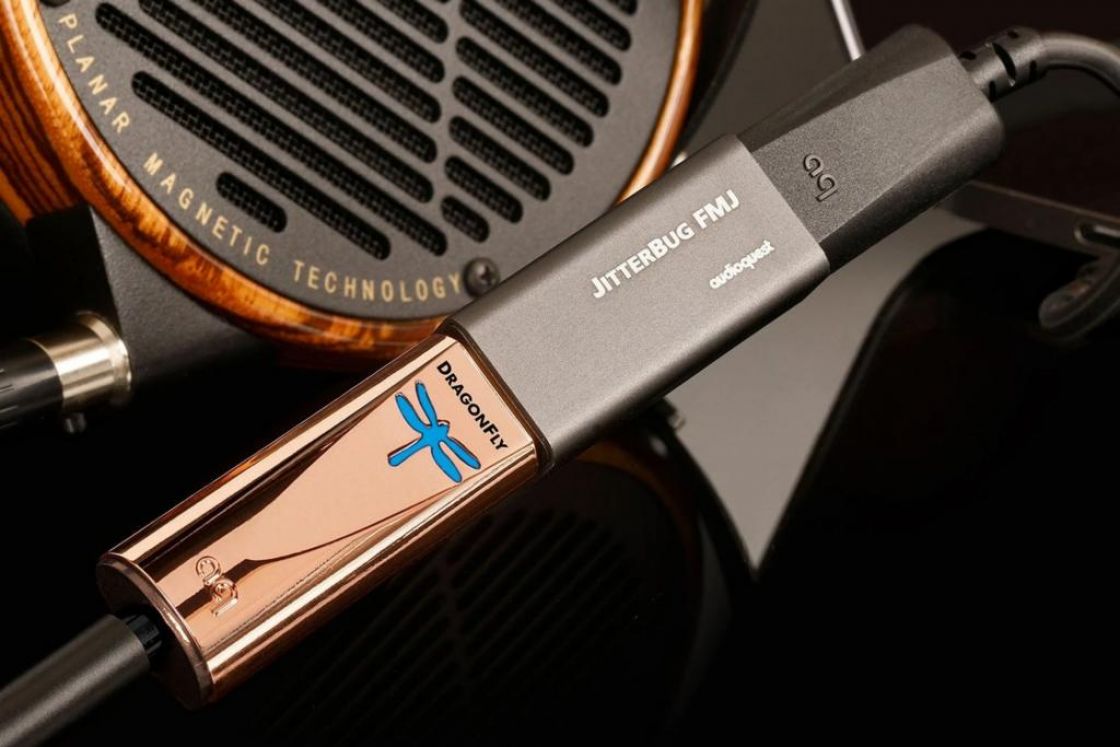
The most immediately visible change is, naturally, the case. Copper uses a high-conductivity copper-plated enclosure rather than the finishes employed on Black, Red and Cobalt. AudioQuest says the choice was not primarily cosmetic. The idea came from the conductive barrels used in the company's Mythical Creatures interconnects, where copper is employed to drain induced radio-frequency energy. According to AudioQuest engineering director Garth Powell, direct copper plating provides more effective RF dissipation than materials such as polymer, brass, zinc or aluminum. The appearance therefore followed the engineering decision rather than the other way around - and once the enclosure had been chosen, the Copper name was an obvious fit.
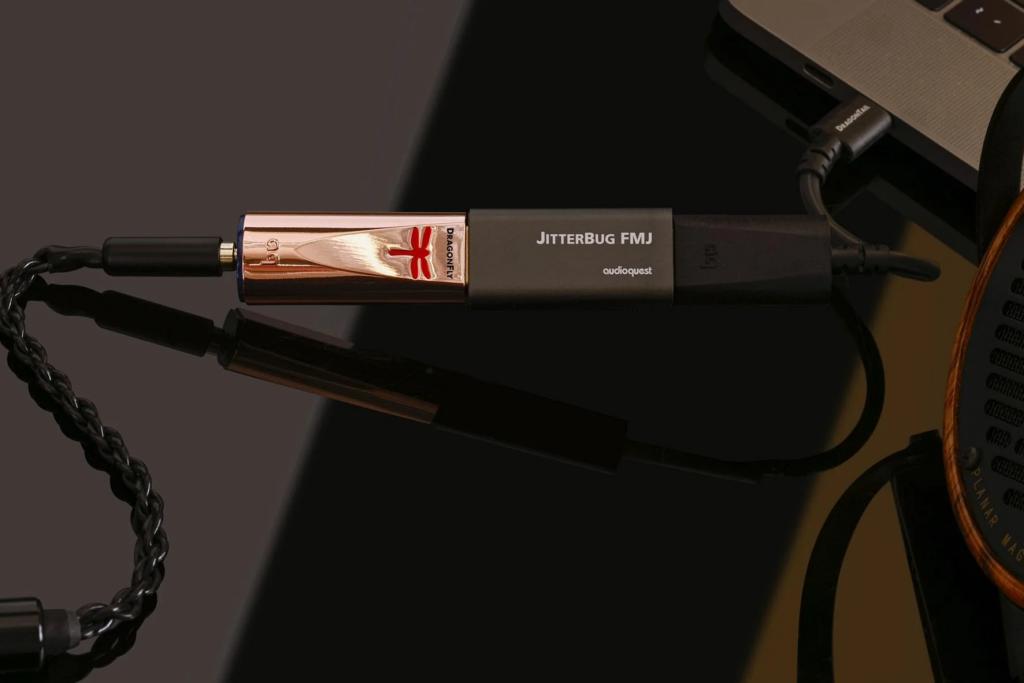
Copper also differs from Cobalt in its relationship with AudioQuest's JitterBug USB noise filter. Cobalt already incorporated some similar filtering internally, so AudioQuest did not universally recommend putting the two devices in series. Copper was designed differently and can be used with JitterBug if further USB noise reduction is desired. AudioQuest describes Copper itself as the quietest DragonFly it has produced so far.
What has not changed is the basic appeal of the concept. DragonFly Copper is still small enough to disappear into a laptop bag or pocket, requires no separate battery and can move between a computer, smartphone, headphones and a conventional hi-fi system with almost no setup. The difference is that AudioQuest has used the long gap since Cobalt to concentrate on the areas that matter most in everyday portable use rather than simply adding more format logos - more headphone power, lower power consumption, lower noise and easier USB-C integration. Copper therefore looks less like an exercise in chasing specifications and more like a thorough modernization of a product whose basic format was already unusually successful. DragonFly Copper is available now, priced at $249€249/£229. AudioQuest supplies a DragonTail USB-A-to-USB-C adapter in the box. Info and pictures by AudioQuest.