
- News
- Posted
Focal Scala Utopia Evo M
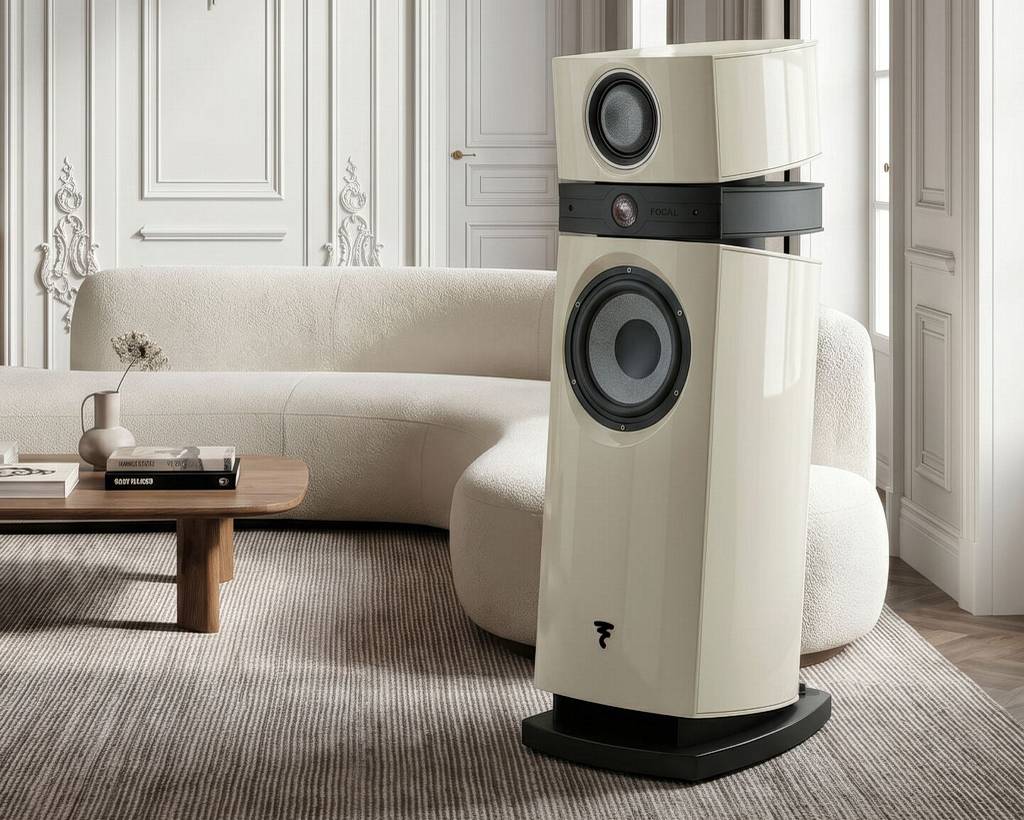
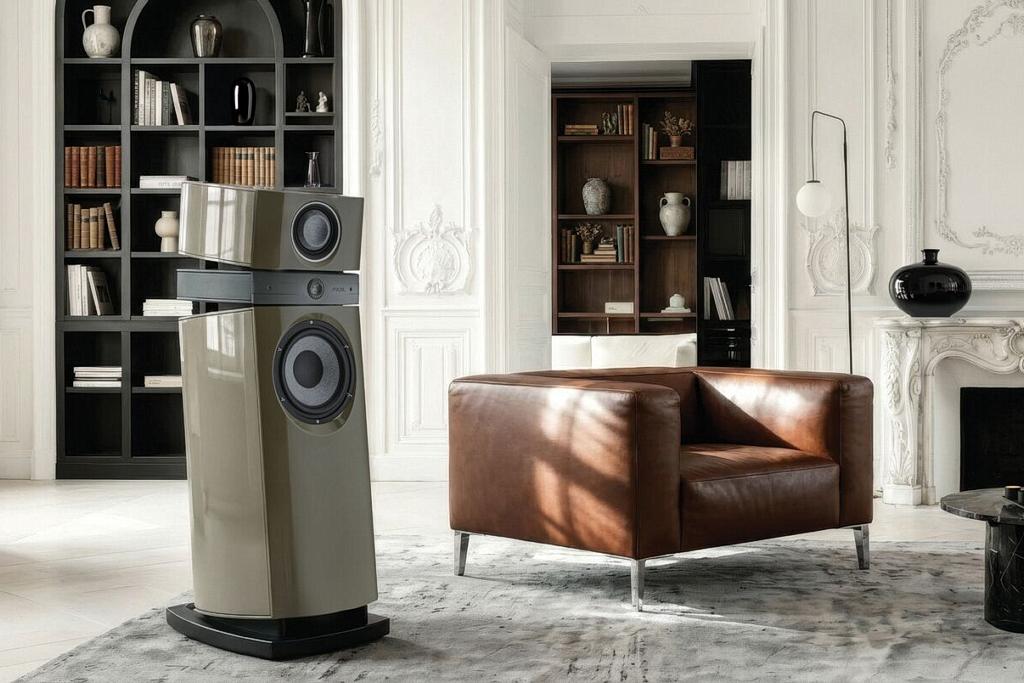
Focal has unveiled the Scala Utopia Evo M, a new version of one of the most recognisable loudspeakers in its flagship range. The French manufacturer has retained the three-way configuration, distinctive curved silhouette and general proportions of the previous Scala, but replaced all of its principal drivers and developed a new crossover network to integrate them. The most significant change is the introduction of the PRISM tweeter, which takes the place of the pure-beryllium inverted dome used in the earlier model. It is joined by a 13 cm midrange driver with a W-cone and M-shaped profile, as well as a completely redesigned 27 cm woofer equipped with a dual-ferrite magnet system.
Scala has always occupied a particularly interesting position in Focal's catalogue. It is not the largest member of the Utopia family, but for years it has served as a comparatively compact alternative to the imposing Maestro and Grande Utopia models. "Compact", of course, is a relative term in this part of the market. Each enclosure stands 124.7 cm tall, measures 39.3 cm wide and 67 cm deep, and weighs 85 kg. The Scala Utopia Evo appeared in 2017 as part of the revised Utopia III Evo generation, gaining technologies including TMD suspension, the NIC magnetic circuit and the option of bi-amplification. The new Scala Utopia Evo M retains its predecessor's dimensions and weight, so this is not an entirely new loudspeaker built from the ground up, but rather a far-reaching development of an established architecture.
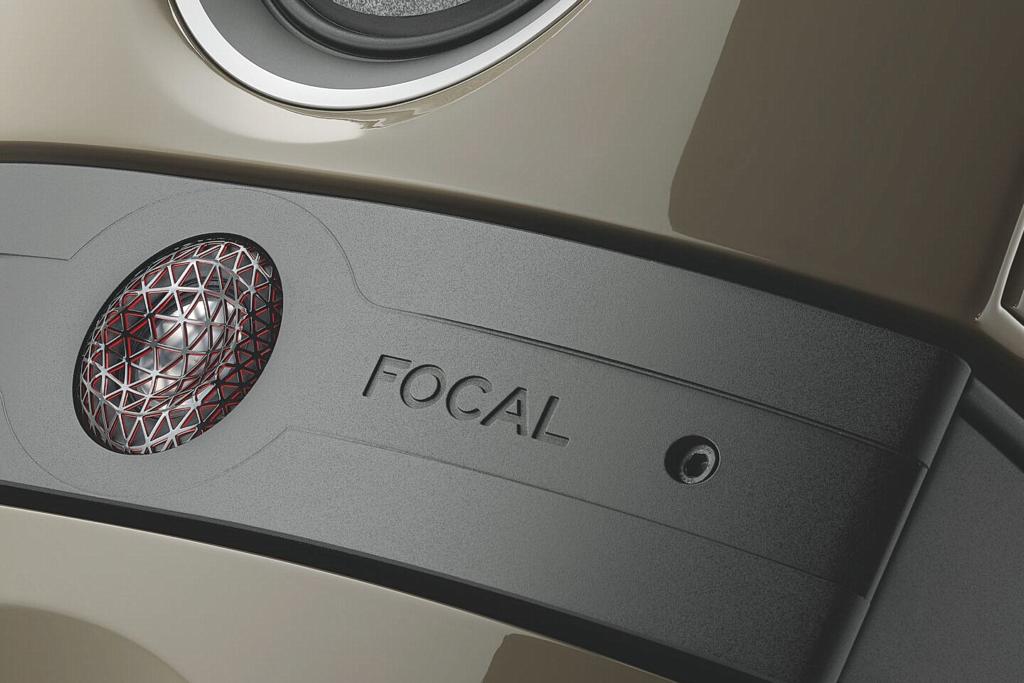
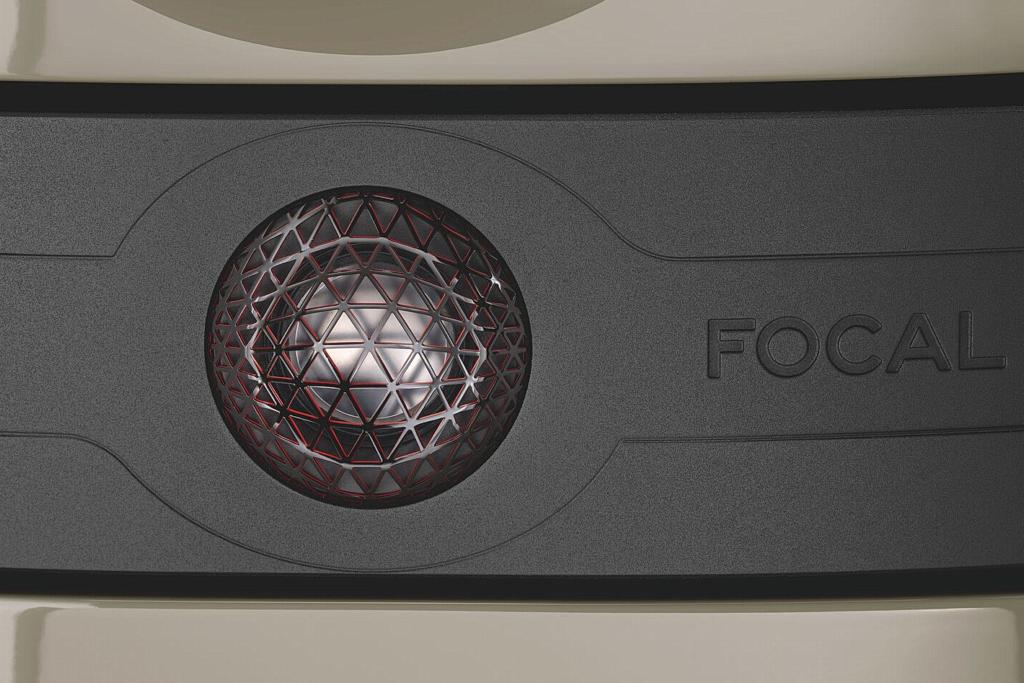
The most consequential departure is the move away from pure beryllium, a material that has played a central role in the technical identity of Focal's finest loudspeakers for many years. The previous Scala employed a 27 mm IAL2 inverted dome capable, according to the manufacturer, of operating up to 40 kHz. In the new model, it has been replaced by a 27 mm PRISM tweeter, once again using an inverted dome and an M-shaped profile. The IAL2 loading arrangement has been retained, reducing the tweeter's resonant frequency to 528 Hz, but the diaphragm itself is now a multilayer composite structure rather than a component formed from a single metal.
PRISM stands for Photon-Refined Intelligent Structured Membrane. The technology is said to be the result of more than 15 years of research and combines two distinct processes - photonic microstructuring of the diaphragm and the application of a carbon-based coating. The internal structure, partly inspired by the construction of a dragonfly's wings, reinforces the membrane only where additional stiffness is required, helping to keep its overall mass low. The external layer further increases rigidity. Focal claims that PRISM surpasses beryllium in this respect while maintaining a favourable balance between mass, stiffness and damping.
The objective was not merely to create a stronger dome. In a conventional tweeter, the properties of the material and the geometry of the diaphragm largely determine the shape of its frequency response. PRISM's microstructure can instead be tailored for a specific application, meaning that the membrane does not necessarily have to look or behave identically in every driver. Focal also says that the higher break-up frequency and rapid decay of resonances improve clarity and reduce the masking of low-level information. The technology made its debut in the active Diva Alta Utopia, but the Scala Utopia Evo M is its first application in a conventional passive loudspeaker of this class.
The midrange section has also been thoroughly revised. The outgoing Scala Utopia Evo used a 16.5 cm Power Flower driver with a W-cone and NIC motor system, designed to stabilise the magnetic field and reduce distortion caused by changes in voice-coil inductance. Its replacement is a smaller 13 cm unit with a W-cone and M-shaped profile, derived from the drivers developed for Focal's professional Utopia Main monitors. The diaphragm has been additionally reinforced, while the motor employs a neodymium magnet and an 80 mm voice coil intended to improve centring, power handling and dynamic stability.
The W-cone uses a sandwich construction, with a lightweight foam core positioned between two thin layers of glass fibre. By adjusting the thickness of the individual layers, Focal's engineers can control the diaphragm's mass, rigidity and damping. The M-shaped profile eliminates the need for a separate dust cap because the central section of the cone is itself formed into a shape resembling the letter M. Focal attributes lower harmonic distortion, wider dispersion and improved power handling to this geometry.
The driver also incorporates TMD suspension. Two toroidal masses act in a manner comparable to the tuned mass dampers used in tall buildings, stabilising the surround and reducing its unwanted movement, particularly in the 1-2 kHz region. Rather than altering the cone itself, the solution addresses resonances generated by the suspension, which can otherwise introduce colouration in the most sensitive part of the midrange.
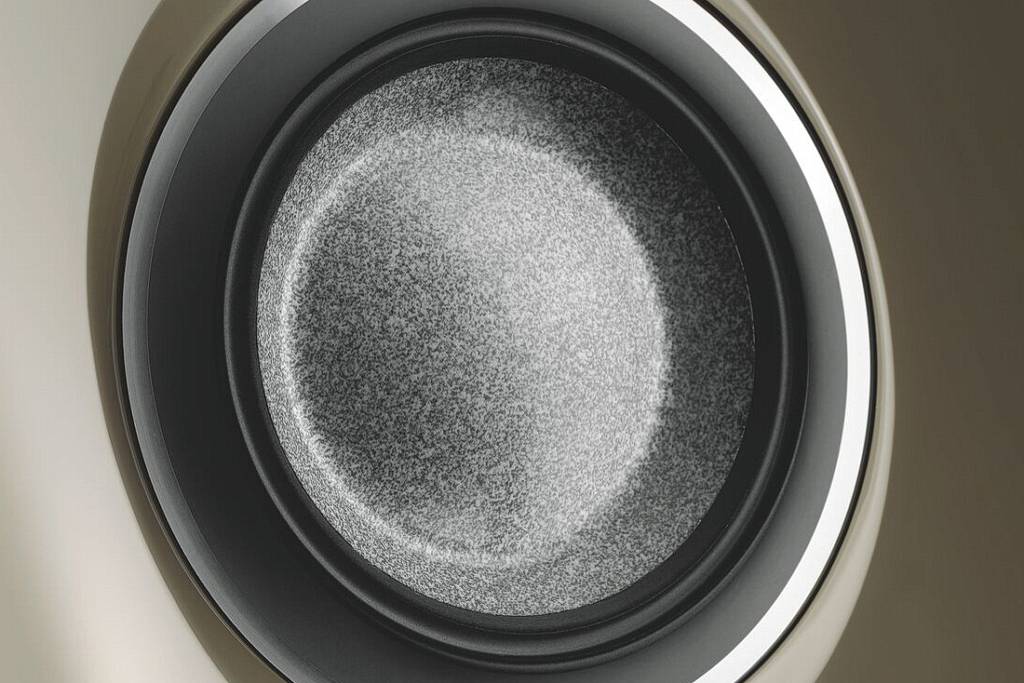
The 27 cm woofer is new as well, although its diameter and basic W-cone construction remain unchanged. It now uses a powerful motor incorporating two 16 cm ferrite magnets, together with a more precisely laser-cut diaphragm. The revised assembly is intended to provide better control at high excursion and allow the loudspeaker to reproduce modern recordings with deep, powerful bass without compressing large dynamic peaks. The woofer works into a substantial laminar-flow bass-reflex port designed to reduce turbulence noise and distortion at high playback levels.
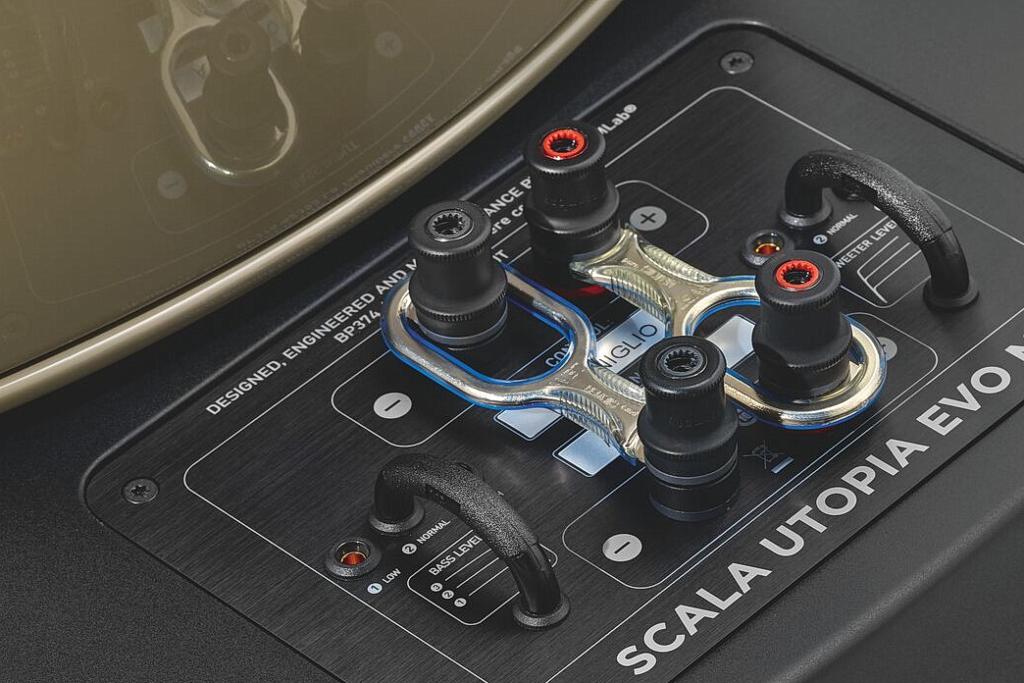
All three drivers are integrated by a revised OPC+ crossover network. The crossover points are now set at 230 Hz and 2.8 kHz, compared with 220 Hz and 2.4 kHz in the previous model. The listener can adjust the low-, mid- and high-frequency balance to suit the room, loudspeaker placement and personal preference. Bass and treble can each be altered by ±1 dB. This is not an electronic equalisation system, but a set of configurable links that changes the behaviour of individual sections of the passive crossover.
Focal has also paid considerable attention to components that remain out of sight during normal use. Internal wiring with cross-sectional areas of 8 mm² and 4 mm² is used for the bass and midrange-treble sections respectively, while the rear panel carries four insulated WBT terminals. The Scala Utopia Evo M can therefore be used with bi-wiring or bi-amplification. In a system of this calibre, that option is more than a theoretical extra, allowing separate power amplifiers to drive the woofer and the remaining drivers while retaining the loudspeaker's passive crossover network.
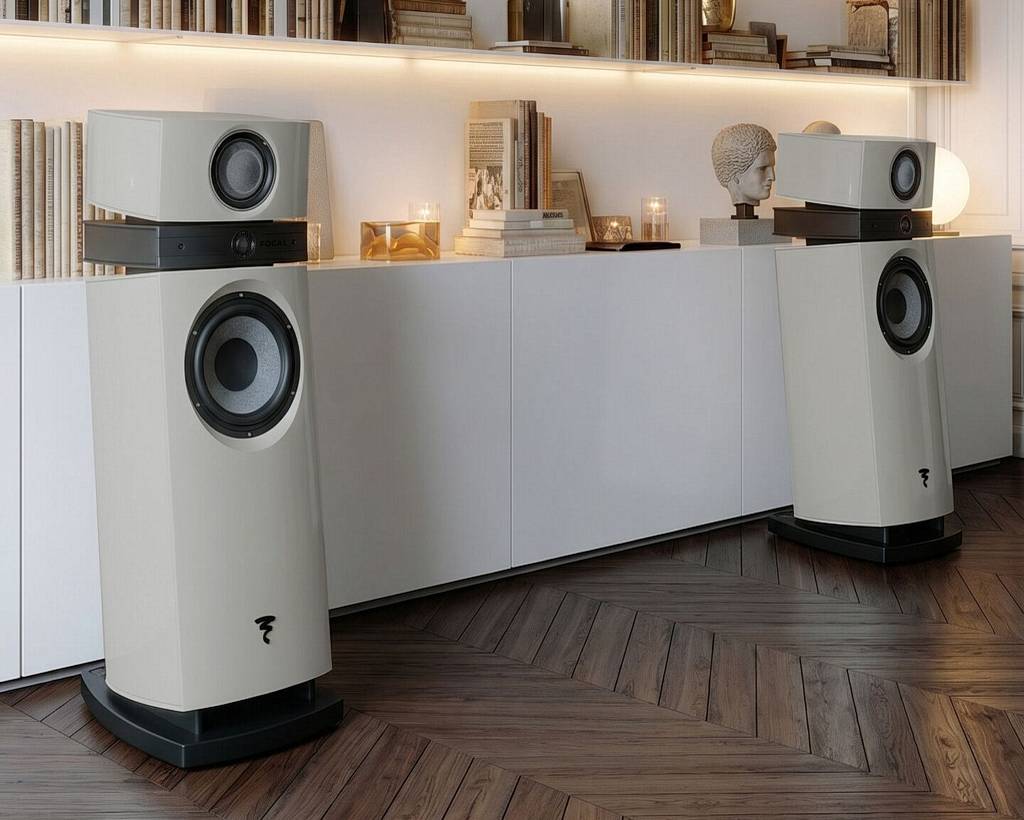
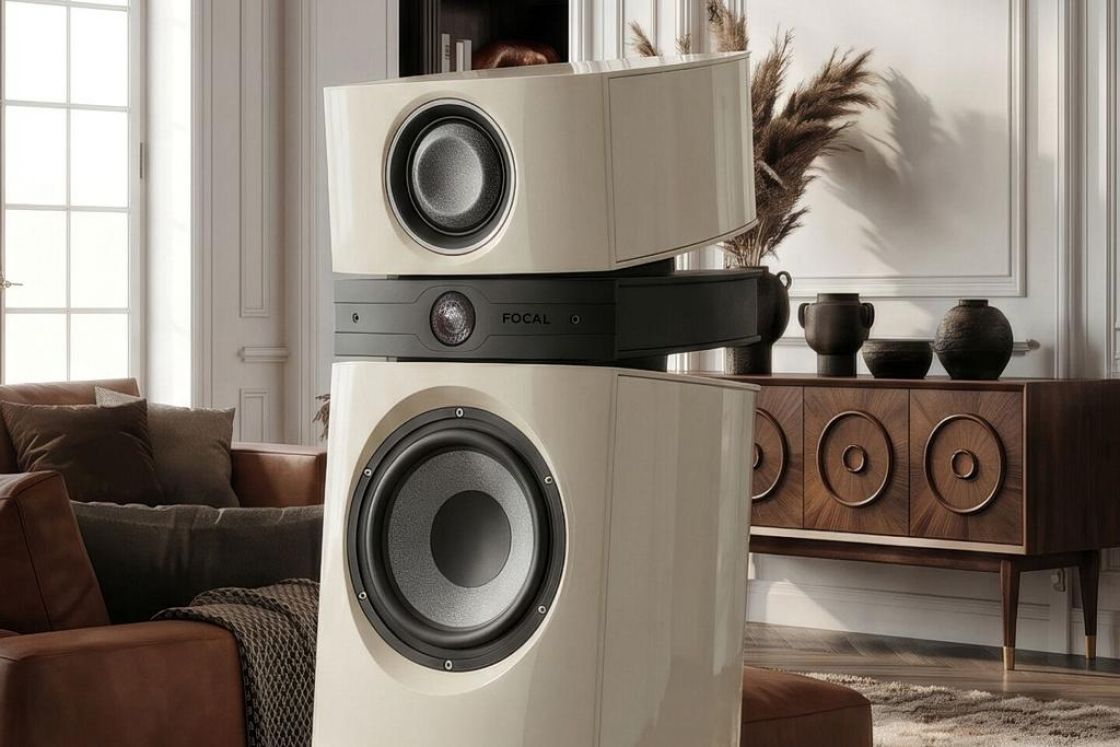
The enclosure continues to employ Focal's Focus Time geometry. Instead of placing the drivers on a single flat baffle, the company mounts them in separate modules set at different angles. Together, these sections form the loudspeaker's characteristic curved spine, directing the acoustic axes of all three drivers towards the listening position. The arrangement is intended to align their output in time and improve phase coherence without resorting to digital correction. The Scala's sculptural appearance is therefore not purely decorative, but follows directly from its acoustic design.
Mechanical stability is addressed through the Gamma Structure concept. The enclosure is built from high-density MDF panels, reaching a thickness of up to 6 cm in selected areas. Internal bracing is positioned according to vibration mapping of the cabinet walls, with the aim of preventing the enclosure itself from radiating audible energy. The wooden elements are manufactured and assembled at Focal Ebénisterie Bourgogne in Burgundy, while the drivers are designed and produced at the company's facilities in Saint-Étienne.
The previous Scala's cabinet was assembled from more than 30 individual wooden parts, illustrating why Focal presents the model not only as an industrial product but also as an example of French luxury craftsmanship. The new version will be offered in five finishes. The lacquered options are Black High Gloss, Off White High Gloss and Warm Taupe High Gloss. Two natural-wood variants will also be available - Light Walnut with a pale front panel and Dark Walnut combined with a Sepia Brown baffle. The metal base, exposed segmented construction and rounded side panels remain, ensuring that the Scala Utopia Evo M is immediately recognisable as a member of the Utopia family.
Interestingly, the main published specifications remain almost identical to those of the Scala Utopia Evo. The quoted frequency response is 27 Hz-40 kHz, with a low-frequency extension of 24 Hz at -6 dB, while sensitivity remains at 92 dB. Focal has therefore resisted the temptation to create a more impressive specification sheet by shifting the frequency limits by a few hertz. The development work is instead focused on distortion, dispersion, resonance behaviour, power handling and the integration of the new drivers.
Impedance has changed, however. The previous Scala was rated at a nominal 8 Ω with a minimum of 3.2 Ω, while the Scala Utopia Evo M is specified at 6 Ω nominally and 3 Ω at its lowest point. Its high sensitivity suggests that extreme power will not be necessary to achieve substantial volume, but the impedance dip means that the amplifier should offer strong current delivery and remain stable into demanding loads. Focal recommends amplification rated between 50 and 500 W per channel.
The manufacturer naturally points towards Naim electronics, particularly components from the 200 and 300 Series as well as the Uniti Nova PE. The close relationship between the two brands makes such recommendations predictable, but the Scala Utopia Evo M is not designed exclusively for Naim systems and can be partnered with suitably capable amplification from other manufacturers.
The Scala Utopia Evo M is therefore less a visual reinvention than a comprehensive technological update hidden inside one of Focal's most recognisable forms. Its enclosure architecture and fundamental proportions remain familiar, but the tweeter, midrange driver, woofer and crossover have all been reconsidered. The arrival of PRISM is particularly important because it suggests that Focal is beginning to move beyond pure beryllium at the very top of its range, replacing it not with a cheaper substitute but with a material whose behaviour can be more precisely engineered for a particular application. European pricing is set at €40,000 per pair for the lacquered finishes and €44,000 for the natural-wood versions. Deliveries are expected to begin in August 2026. Info and photos by Focal.