
- News
- Posted
Unison Research Unico DS
Unison Research has always been associated with vacuum tubes, elegant Italian craftsmanship, and a certain old-school approach to music reproduction. Yet the company has never been particularly interested in treating tradition and technological progress as opposing forces. Its latest creation, the Unico DS, is perhaps the clearest expression of that philosophy to date. This flagship digital source combines a network streamer, CD transport, and sophisticated DAC with a fully balanced, Class A tube output stage. At its heart are an ESS SABRE ES9038Q2M converter, advanced digital signal processing, and a proprietary technology called F.D.F. (Frequency-Dependent Feedback). Rather than producing yet another streamer whose main selling point is a slick smartphone app, Unison Research has set out to build a serious source component for high-end stereo systems. The idea is to bring together the precision, transparency, and dynamic capabilities of modern digital audio with the natural presentation and tonal richness that have long defined the company's tube amplifiers.
Founded in 1987 by a group of Italian audio enthusiasts led by Giovanni Maria Sacchetti, Unison Research built its reputation on an unusually personal approach to amplifier design. Sacchetti, an electronics engineer with a passion for music, initially divided his time between teaching and developing audio equipment. His first integrated amplifier was the Triode 20, but it was the Simply Two that truly put the company on the international hi-fi map. Over the following decades, Unison Research expanded its lineup to include a wide range of tube integrated amplifiers, preamplifiers, and power amplifiers, eventually embracing hybrid designs that combined vacuum tubes with solid-state circuitry. This approach became the foundation of the Unico series, now one of the most important families in the company's catalog. The latest generation, including the Unico PRE preamplifier and Unico DM power amplifier, introduced a substantially updated design language, and the new Unico DS follows suit. It has clearly been conceived as the ideal digital companion for these components, although there is no reason it couldn't serve just as effectively in a system built around electronics from other manufacturers.
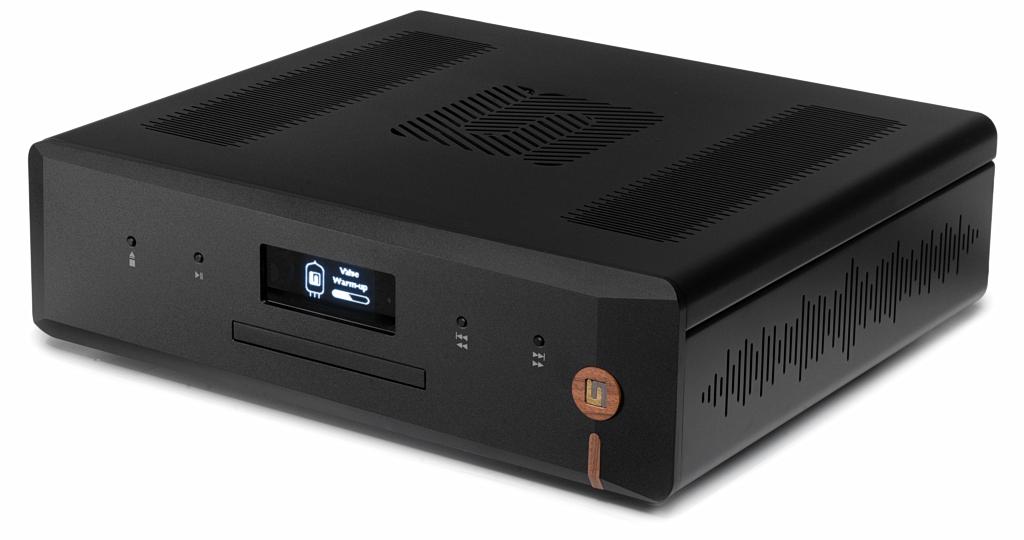
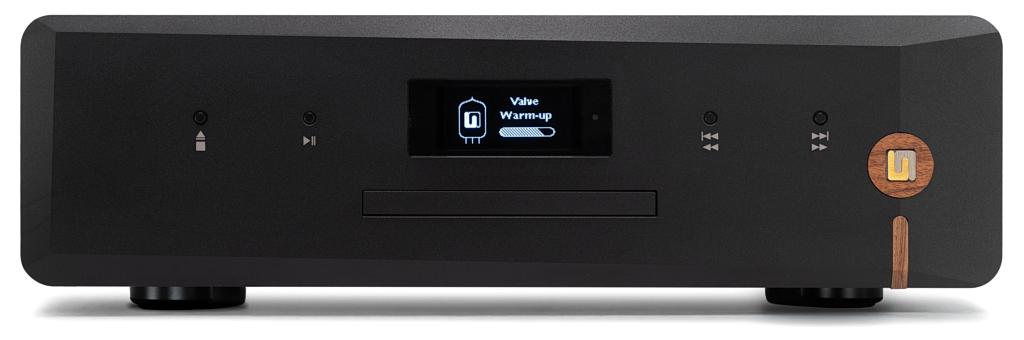
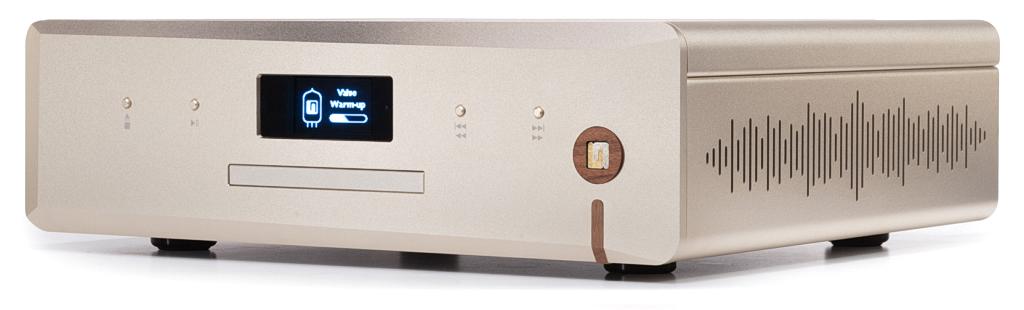
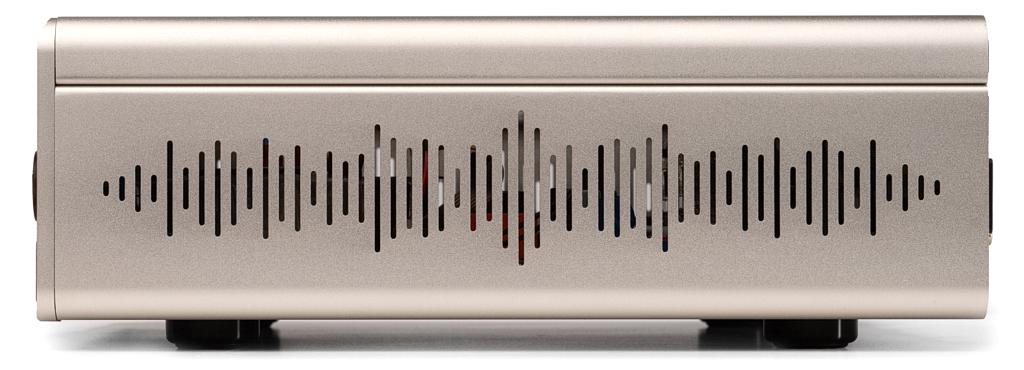
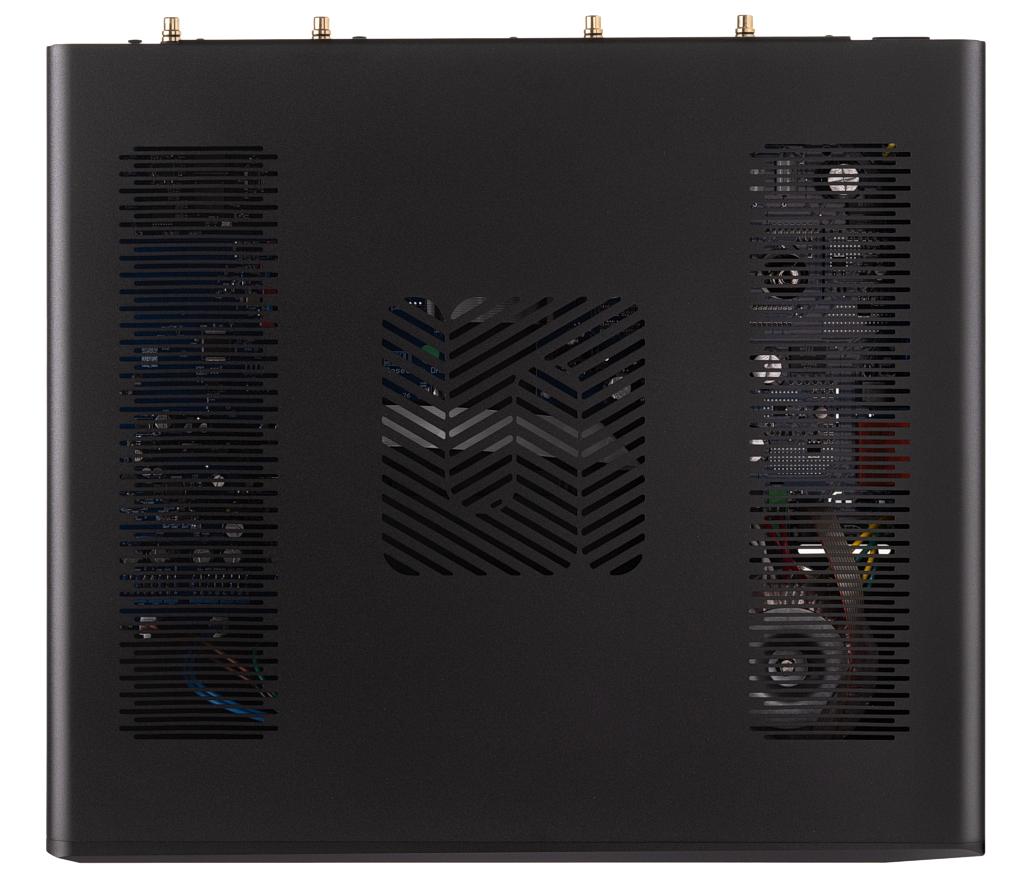
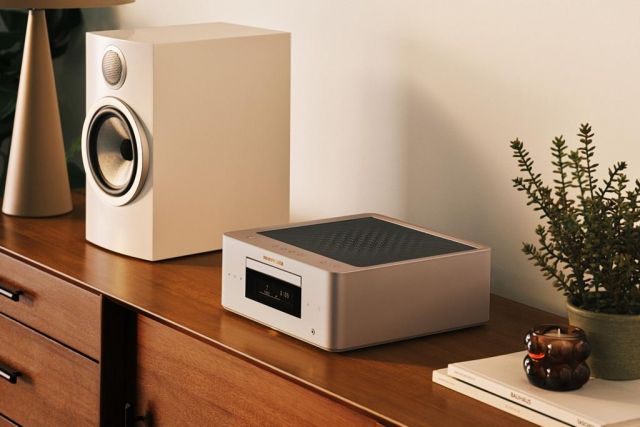
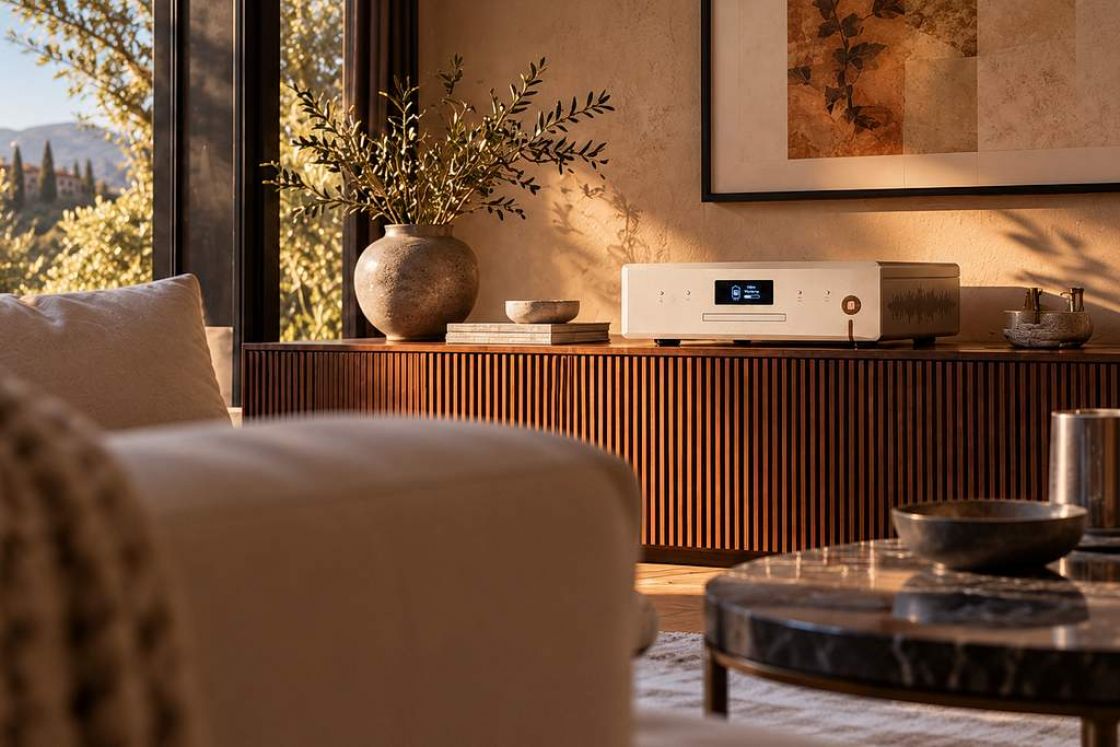
Visually, the Unico DS represents a significant departure from the company's earlier digital components. Gone is much of the familiar styling in favor of a cleaner, more contemporary appearance. The front panel is machined from a solid, 15-mm-thick block of aluminum, while the top cover is made from 2-mm aluminum sheet. Wooden accents reference the original Unico logo, providing a subtle connection to the company's heritage without making the player look like something designed several decades ago. Another distinctive detail is the Unison Research emblem, which doubles as the power button and helps keep the front panel remarkably uncluttered. A small OLED display sits above the CD drawer, with four dedicated buttons providing basic transport controls. More extensive operation is handled by the supplied remote. Two finishes are available, Midnight Black and Velvet Gold. Measuring 17.7 x 16.9 x 5.5 inches (450 x 430 x 140 mm) and weighing approximately 22 pounds (10 kg), the Unico DS is very much a full-size hi-fi component rather than a compact streaming accessory. It is designed to look and feel like a substantial piece of equipment, particularly when paired with the matching Unico electronics.
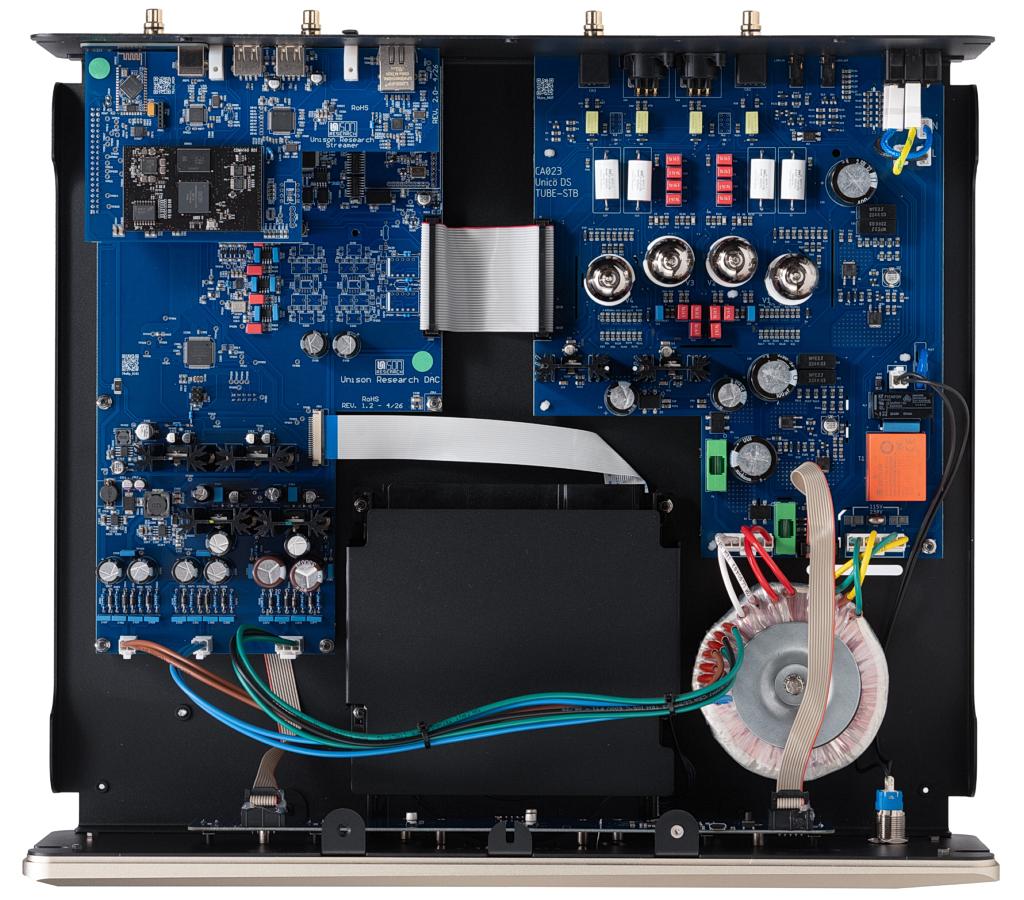
The real attraction, however, lies beneath the aluminum chassis. The Unico DS uses a fully balanced analog output stage built around four vacuum tubes operating in Class A. Two Gold Lion ECC83/12AX7 dual triodes handle the input stage in a differential configuration, while a pair of Gold Lion ECC82/12AU7 tubes takes care of the final amplification stage. The latter were selected for their electrical characteristics and ability to provide the necessary drive for the analog outputs. According to Unison Research, the arrangement is intended to retain the precision of the digital conversion process while introducing the natural tonal qualities associated with properly engineered tube amplification. Importantly, this is not simply a decorative tube buffer inserted between an off-the-shelf DAC and the output sockets. The company has developed a complete analog circuit, with the individual stages carefully matched and optimized to deliver the desired electrical performance and sonic characteristics. In other words, the tubes are an integral part of the design rather than an afterthought intended to give the specification sheet a little extra audiophile appeal.
One of the most interesting aspects of this circuit is Unison Research's new F.D.F. technology, short for Frequency-Dependent Feedback. Negative feedback is hardly a new concept in amplifier design. Engineers have been using it for decades to control gain, reduce distortion, improve stability, and influence other aspects of circuit behavior. What makes the Italian company's approach different is that the amount of feedback changes according to the frequency of the audio signal. At low frequencies, the circuit applies more feedback to improve bass control, damping, and overall stability. As the frequency rises, the amount of feedback decreases, allowing the upper ranges to retain greater openness, transparency, and natural harmonic character. Unison Research believes this approach helps reconcile qualities that often require compromises in conventional designs, combining precision and transient speed with the smoothness and tonal complexity associated with tube amplification. Naturally, the actual sonic results will depend on the implementation as a whole, but the engineering philosophy is certainly more interesting than simply using tubes as a convenient means of making a digital source sound warmer.
The digital section is equally ambitious. Conversion is handled by an ESS SABRE ES9038Q2M DAC, a highly regarded chip known for its low noise, low distortion, and wide dynamic range. To extract the best possible performance from it, Unison Research has equipped the circuitry with five independent low-noise voltage regulators, each providing a dedicated supply to different sections of the converter. This arrangement is intended to reduce interference between the digital and analog circuitry while maintaining stable operating conditions regardless of the incoming signal. Current-to-voltage conversion is performed by Analog Devices AD8599 operational amplifiers, while a dedicated FPGA handles digital signal routing and processing. Two independent low-jitter oscillators provide the clock references, minimizing timing errors before the signal reaches the conversion stage. Users can also choose between seven digital filters, making it possible to experiment with the DAC's behavior and fine-tune its presentation according to personal taste. The published specifications are impressive, with a signal-to-noise ratio of 120 dB, an XLR output noise level of just 5 µV RMS, and distortion rated at 0.001%. Maximum output voltage is specified at 2.5 V through the RCA connections and 5 V through the balanced XLR outputs.
Of course, the Unico DS is much more than a DAC with an elaborate tube output stage. It is designed to handle practically every form of digital music playback a modern audiophile might want. Its built-in streaming platform supports Spotify Connect, TIDAL Connect, and Qobuz Connect, and the player is also Roon Ready certified. For listeners already invested in the Roon ecosystem, this provides access to advanced library management, seamless integration of locally stored music with streaming catalogs, and extensive information about albums, artists, and recordings. DLNA and UPnP support also make it possible to stream music from dedicated servers, NAS drives, and other compatible devices on a home network. Control is available through the mConnect Control app for Android and iOS, which handles source selection, playback, network settings, and firmware updates. Network connectivity is provided by a wired Ethernet connection, while wireless operation requires an optional USB Wi-Fi adapter. This last detail is worth keeping in mind: Wi-Fi is not built in as standard, so anyone planning an entirely wireless installation will need to budget for the additional accessory.
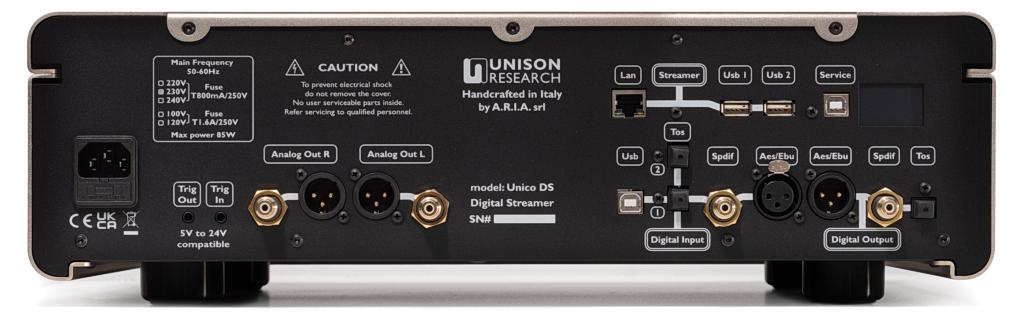
The extensive connectivity makes the Unico DS equally useful as a standalone DAC for computers and other digital sources. A USB-B input supports PCM files at sampling rates up to 768 kHz, as well as native DSD up to DSD256 and DSD over PCM (DoP) up to DSD128. There are also AES/EBU, coaxial S/PDIF, and two optical Toslink inputs. The AES/EBU and coaxial connections accept signals up to 192 kHz, while the optical inputs are limited to 96 kHz. Two additional USB ports allow music to be played directly from external storage devices, and Bluetooth is included for convenient wireless playback from compatible sources. On the output side, the player provides digital AES/EBU, coaxial S/PDIF, and Toslink connections, allowing it to function as a dedicated digital transport feeding an external converter. For conventional analog connections, there are both RCA and balanced XLR outputs, the latter making full use of the sophisticated tube output stage. Trigger input and output connections complete the package, allowing the Unico DS to power up and shut down in coordination with other compatible components.
Then there is the CD transport, a feature that might seem almost anachronistic in a premium network player launched in 2026. Yet for a company with Unison Research's background, its inclusion makes perfect sense. Streaming has undoubtedly changed how people discover and listen to music, but countless enthusiasts still own substantial CD collections, and many have no intention of abandoning them. Some simply enjoy the experience of choosing a physical album, while others have recordings, masterings, or special editions that aren't necessarily available through their favorite streaming services. With the Unico DS, they can continue enjoying those discs without buying a separate transport, DAC, and network player. Everything is brought together in one carefully engineered component, with the same analog output circuitry available to the various digital sources. There is something appealing about a product that treats a CD collection and a streaming subscription as equally legitimate ways of enjoying music rather than expecting the owner to choose between them.
Unison Research is clearly not trying to compete with inexpensive all-in-one streaming systems, nor is it chasing the trend toward ever-smaller digital components. The Unico DS is intended for listeners who value substantial construction, sophisticated analog circuitry, and the flexibility to build a high-end stereo system around a carefully chosen source. In that sense, it is a natural extension of the company's long-standing philosophy. For decades, Unison Research has demonstrated that vacuum tubes can coexist with modern solid-state technology. With the Unico DS, it takes that idea a step further, placing tubes at the heart of a digital source that is equally comfortable playing a favorite CD, accessing a music library on a server, or streaming a new release from the cloud. The Unison Research Unico DS is priced at €6,999 in Europe, equivalent to approximately $7,860 or £5,890 at current exchange rates. Official US and UK retail pricing has yet to be confirmed. Info and photos by Unison Research.