
- News
- Posted
Matrix Audio MS-1c
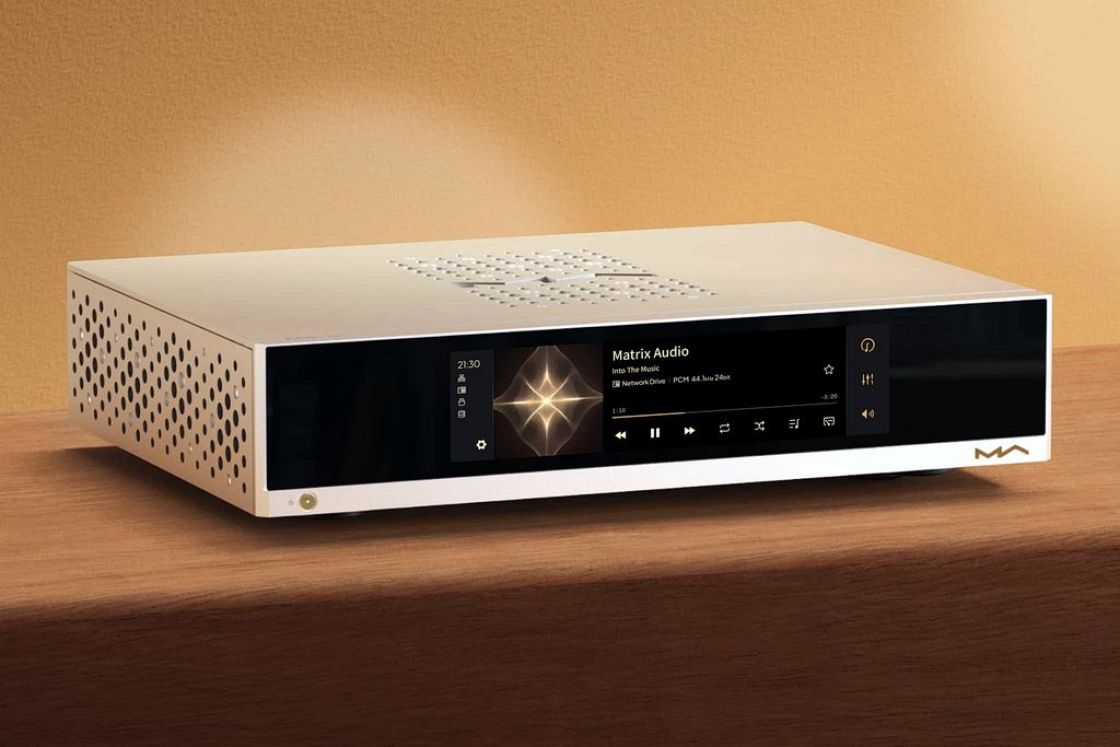
Matrix Audio continues to develop its M Series, the company's most advanced line of digital sources, but its latest model is not simply another product aimed only at users looking for a full, no-compromise flagship. The MS-1c is intended as a more accessible entry point into this family, retaining many of the solutions known from the MS-1, but presenting them in the form of a network player that can work both as a standalone analog source and as a digital transport for an external DAC. In practice, this makes it a device for listeners who want to build a modern system based on streaming, a local file library and high-quality digital-to-analog conversion, but do not necessarily need the most elaborate model in the catalog. "The MS-1c is a response to the needs of audiophiles who are looking for the highest-quality digital source, but also value simplicity and functionality. Inheriting solutions from our flagship MS-1, the MS-1c offers the same level of precision and musicality while remaining a more accessible solution for those building their dream hi-fi system." - said Cao Yang, CEO of Matrix Audio.
The new player is based on Matrix Audio's proprietary MA Player platform, built on Linux architecture and developed specifically for high-resolution audio playback. This is an important distinction, because the MS-1c is not a conventional computer placed in an elegant enclosure, but a closed, specialized audio device with its own system environment, control app and set of network protocols. The manufacturer lists support for Roon Ready, DLNA/UPnP, AirPlay 2, Spotify Connect and Tidal Connect, giving users several different ways to use the device - from playing files over a local network, through direct playback from streaming apps, to integration with a more complex Roon-based system. Control is handled through the MA Remote app, which allows the user to manage a music library and streaming services from a smartphone or tablet.
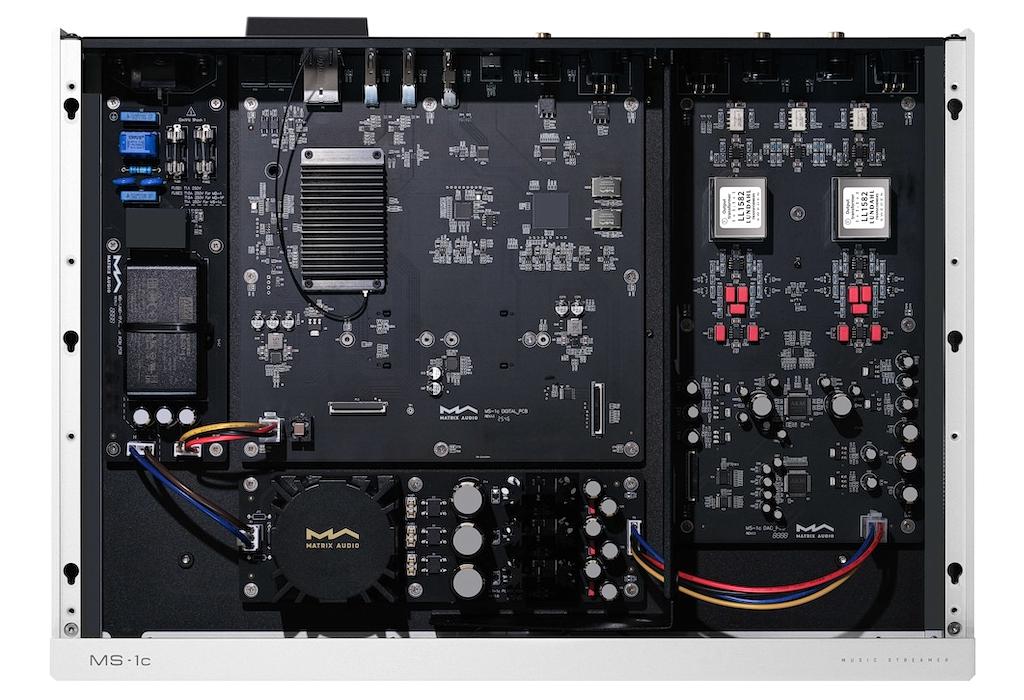
The most important element of the digital-to-analog section is the AKM Velvet Sound architecture, built around the AK4191 signal processor and AK4499EX converter. This is a high-end solution, because AKM separates the digital processing section from the actual digital-to-analog conversion stage. From the user's perspective, this is not merely a technical detail for a specification table, but an indication that Matrix Audio has treated the MS-1c as a serious DAC integrated with a streamer, rather than a simple network player with an analog output added as an afterthought. The manufacturer specifies a dynamic range of up to 125 dB and emphasizes the natural, warm tonal character associated with the M Series. 'There is no room for compromise in the MS-1c. The use of top AKM chips combined with our proprietary digital filtering algorithms allowed us to achieve a sound that is both analytical and emotionally engaging,' said a Matrix Audio representative.
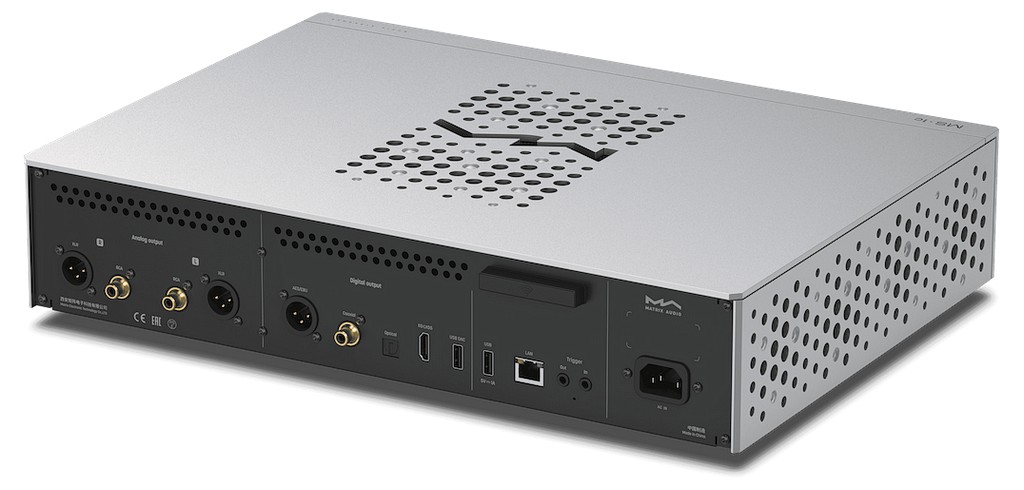
The MS-1c can play several roles in a system, and one of its greatest practical strengths is its broad range of outputs. The user gets RCA and XLR analog outputs, allowing the player to be connected directly to an integrated amplifier, preamplifier or active loudspeakers. Alongside these, there is a full set of digital outputs - AES/EBU, S/PDIF, Toslink, IIS-LVDS and USB Audio. This will be especially important for users who already own a favorite external DAC or plan to expand their system later. The MS-1c can therefore operate as a complete analog source with its own AKM-based DAC, but also as a high-quality network transport. That flexibility matters over the long term, because it allows the device to be used in both a relatively simple domestic setup and a more complex audiophile system.
An interesting feature is the NVMe SSD slot, which allows users to store a local music collection directly inside the device. This will be appreciated mainly by listeners who own hi-res file libraries and do not want to run a separate NAS server. In practice, the MS-1c can become a central music storage device, streamer and DAC in one. At a time when many network players focus almost entirely on streaming services, the option to install an NVMe drive feels more audiophile in spirit and less dependent on external infrastructure. It also makes the system cleaner, reducing the number of additional devices, cables and network configurations.
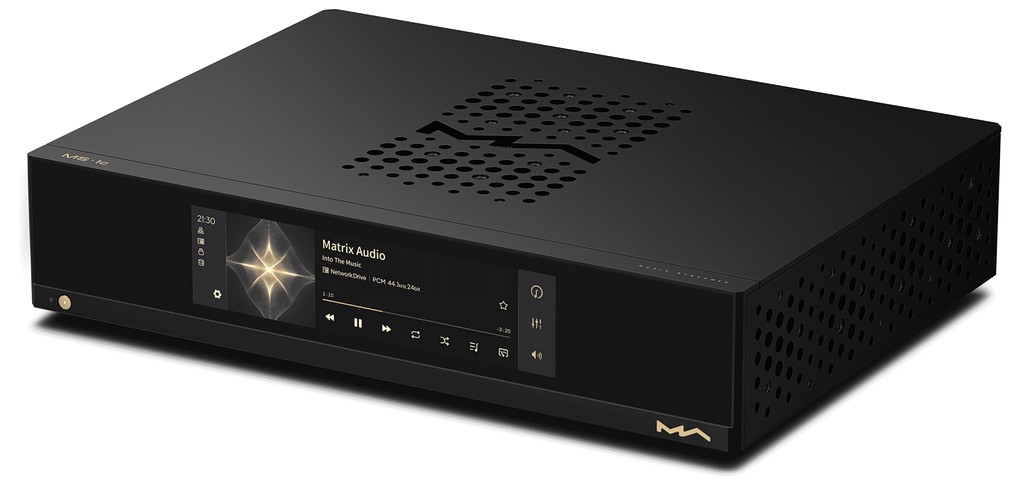
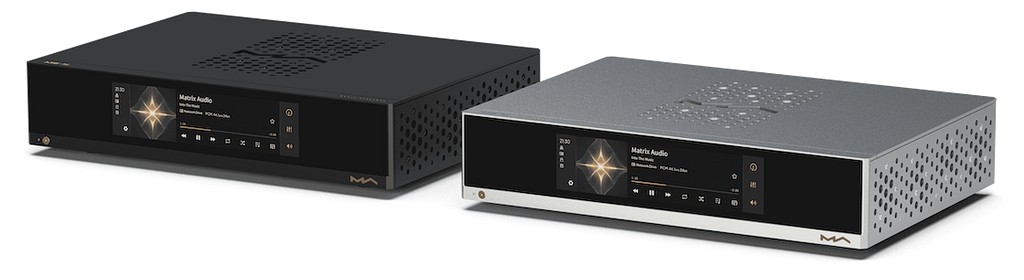
The enclosure is made from thick aluminum panels, which in a device of this kind matters not only aesthetically, but also structurally. A rigid metal chassis helps isolate the electronics from interference and provides the right working conditions for sensitive digital and analog circuits. On the front, Matrix Audio has placed a large display showing album artwork and signal parameters. In a network player, this is a genuinely useful feature, especially when the device sits in a traditional hi-fi system and is not treated purely as a black box controlled from a phone. The press materials indicate that the MS-1c retains the minimalist visual language of the M Series, with a bright chassis, black front panel and the characteristic wide screen.
The MS-1c also reflects Matrix Audio's broader approach to digital audio, in which the software platform, clocking, power supply and mechanical construction are treated as part of one complete source rather than as separate features. In addition to its MA Player operating system, the device uses a dual femtosecond clock architecture and FPGA processing designed to reduce jitter and improve data reconstruction accuracy. The analog stage also includes Lundahl transformer coupling, giving users a choice of output character and underlining the idea that the MS-1c is meant to offer more than a purely functional streaming front end. The Matrix Audio MS-1c is available in silver and black. International pricing is €5799/£4995/$5499. Info and photos by Matrix Audio.