
- News
- Posted
Schiit Eitr 2
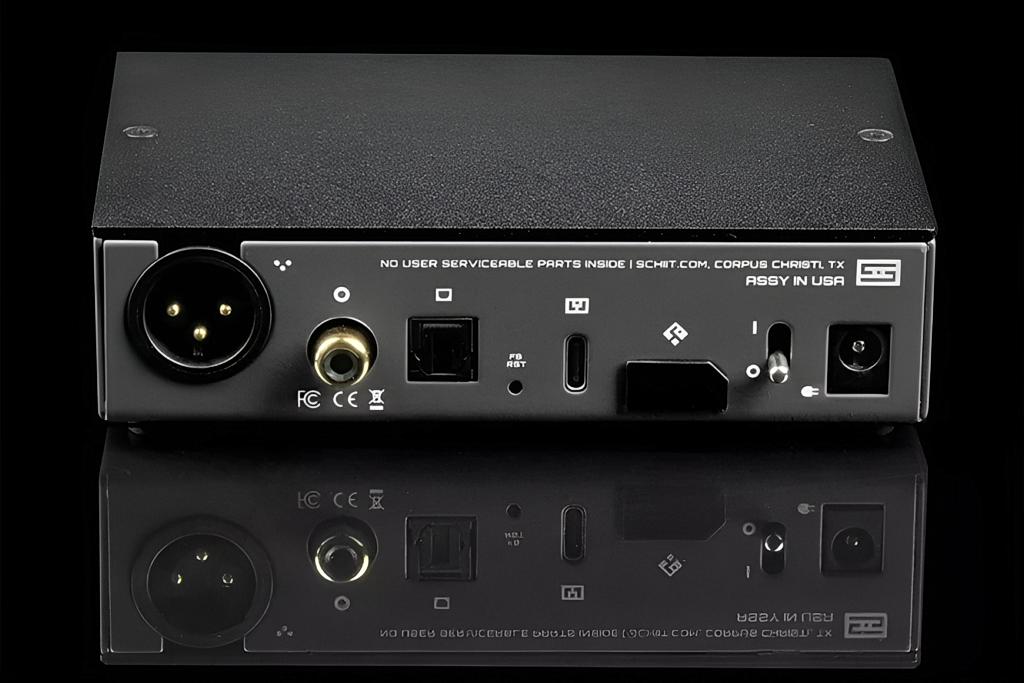
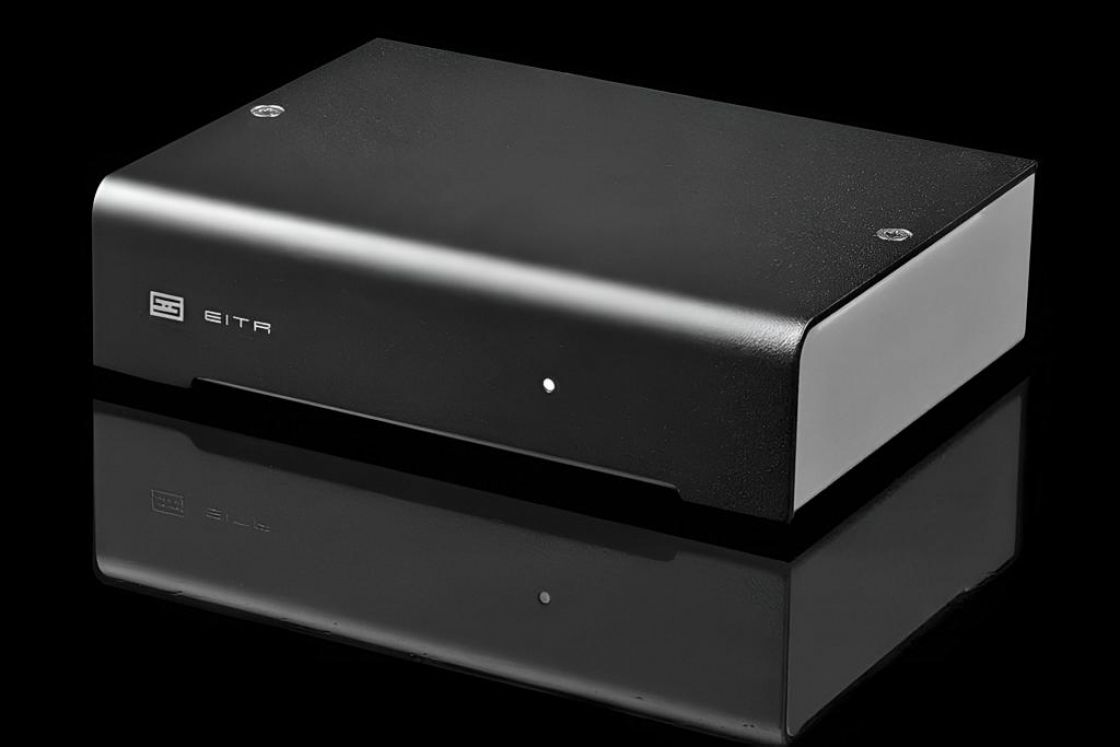
Schiit Audio has introduced the Eitr 2, a compact digital-to-digital converter designed to improve signal integrity when using computers, tablets, or smartphones as audio sources in high-performance playback systems. Building on the concept of the original Eitr released in 2017, the new version expands connectivity with AES/EBU output, introduces support for the company's Forkbeard control platform, and replaces the earlier USB interface with Schiit's proprietary Unison USB architecture. Rather than acting as a conventional converter, the Eitr 2 operates as a signal-conditioning stage between a USB source and an external DAC. Incoming USB audio is reclocked and regenerated before being transmitted through transformer-isolated AES/EBU and coaxial outputs or via optical TOSLINK, with support for PCM signals up to 24-bit/192 kHz. The inclusion of a balanced AES interface is particularly notable at this price level, as it is typically reserved for professional or higher-end consumer equipment.
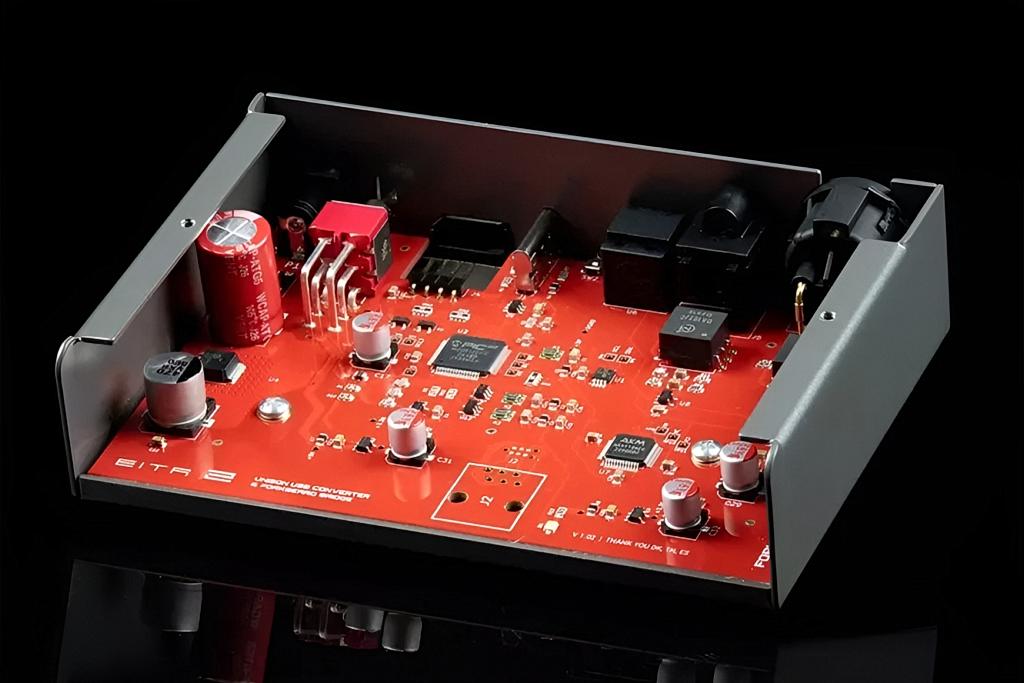
At the center of the design is the Unison USB input stage, a proprietary implementation based on a dedicated microcontroller platform rather than off-the-shelf receiver chips. Developed specifically for audio transmission, the interface is intended to improve timing stability and reduce noise introduced by general-purpose computing hardware at the earliest stage of the signal path. In practical terms, the device is aimed at systems where S/PDIF or AES inputs outperform direct USB connections on older or non-optimized DACs. Compared with the original Eitr, the new model is also designed as a more flexible system component rather than a simple format converter. In addition to supporting multiple simultaneous digital outputs, it can serve as a central USB bridge for several DACs at once, distributing the same reclocked signal across coaxial, AES, and optical interfaces.
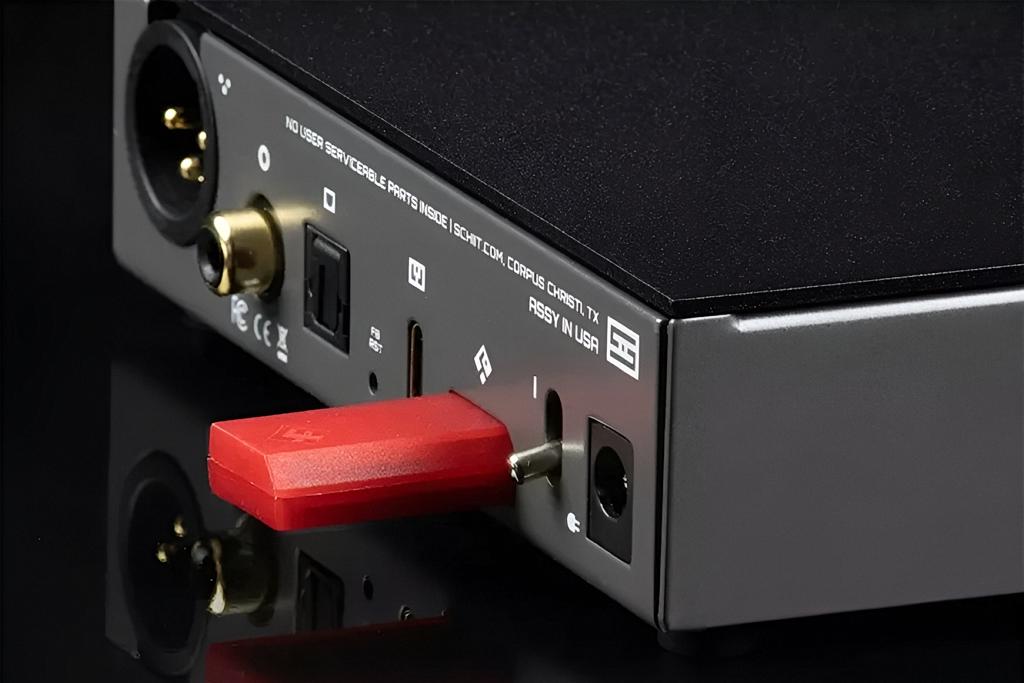
A defining feature of the new generation is compatibility with Schiit's optional Forkbeard module. When installed, the platform adds app-based control via iOS or Android devices and enables volume adjustment, balance control, parametric equalization, loudness contouring, and input selection without requiring pairing procedures or user accounts. With Forkbeard active, virtually any connected DAC can operate as a digitally controlled preamplifier, allowing direct connection to a power amplifier in simplified system architectures. Powering options reflect the same practical approach. The Eitr 2 can operate entirely from USB bus power, but it also supports an external low-noise Linear Override supply using a 6 VAC wall adapter. When the external supply is connected, the device reports zero current draw over USB, which can be advantageous when used with battery-powered mobile sources.
The converter complies with the USB Audio Class 2 standard and supports modern operating systems across macOS, Windows, Linux, and mobile platforms, while legacy environments such as Windows XP and Windows 7 are not supported. Physically, the chassis measures approximately 5 x 3.5 x 1.25 inches and weighs about one pound, reflecting its intended role as a compact desktop interface rather than a full-size digital transport. As with other Schiit components, the Eitr 2 is designed and assembled in the United States, with circuit boards produced at the company's Corpus Christi facility in Texas and chassis fabrication carried out in California before final testing and verification.
The Schiit Audio Eitr 2 is available in two configurations - a converter-only version priced at $99 and a Digital Preamp version with the Forkbeard module priced at $149. Positioned as an alternative to more complex streamer interfaces or USB reclocking systems, the device is intended primarily for listeners who rely on computer-based playback but want improved signal stability and system control without introducing additional network-audio infrastructure. Info and photos by Schiit Audio.