
- News
- Posted
iFi Audio iCAN Phantom 1.5
Building a serious headphone collection can get complicated remarkably quickly. A pair of sensitive in-ear monitors might work beautifully with a small portable DAC, but plug them into a powerful desktop amplifier and suddenly there's audible hiss in the background. Planar magnetic headphones present a different challenge, often demanding considerably more current than their size would suggest. And if you decide to explore electrostatic headphones, you're entering another world altogether, complete with specialized amplification and high-voltage requirements. Before long, what started as a relatively simple listening setup can turn into a collection of amplifiers, power supplies, and cables, each serving a slightly different purpose. iFi Audio believes there's a better way. Its new iCAN Phantom 1.5 is an updated version of the company's flagship analog headphone amplifier and preamplifier, designed to accommodate practically every type of headphone from a single chassis. The original iCAN Phantom arrived in 2023 as the successor to the Pro iCAN Signature, bringing together several technologies that would normally require separate components. The 1.5 edition doesn't reinvent that concept, but introduces a series of refinements aimed at making this exceptionally versatile amplifier easier to configure, operate, and live with.
Power certainly isn't something the Phantom lacks. Into a 16-ohm load, its balanced outputs can deliver more than 15 watts of maximum power, with continuous RMS output exceeding 6.25 watts. The single-ended outputs are hardly modest either, offering more than 5.76 watts of maximum output and 4.5 watts RMS into the same impedance. When faced with high-impedance headphones, the amplifier can produce more than 27 volts from its balanced outputs into 600 ohms. Those are serious numbers, particularly for a headphone amplifier, and they give the Phantom plenty of headroom for demanding planar magnetic designs. But supplying enormous amounts of power is only half the challenge when you're trying to build an amplifier for almost every headphone imaginable. The other half is making sure it can behave appropriately with models that need very little power at all. To address this, iFi has revised the gain settings. Where the original Phantom offered 0, 9, and 18 dB, the new model provides 0, 12, and 24 dB. The IEMatch system, designed to reduce output level and background noise with extremely sensitive earphones, has also been improved. It now offers attenuation of up to 12 dB through the single-ended connection and 24 dB through the balanced output. In other words, the same amplifier that's capable of driving some of the most demanding headphones on the market can also be adjusted for delicate in-ear monitors without turning volume control into a nerve-racking exercise.
Another characteristic that sets the Phantom apart from conventional headphone amplifiers is its ability to change the way its input stage operates. Three modes are available: Solid-State, Tube, and Tube+. The first uses a fully discrete Class A circuit built around J-FET transistors, while the second routes the signal through an entirely separate Class A tube stage featuring a carefully selected and computer-matched pair of General Electric 5670 tubes. Tube+ takes the concept further by modifying the circuit's feedback characteristics, reducing loop gain and negative feedback to emphasize the harmonic qualities traditionally associated with tube amplification. These are not simply three digital sound presets or different equalizer curves. The Phantom contains separate solid-state and tube input circuits, allowing listeners to select genuinely different amplification topologies. According to iFi, Solid-State is intended to emphasize speed, control, and precision, while Tube offers a smoother, more fluid presentation. Tube+ moves further toward the warmer, richer character associated with classic tube equipment. Whether someone prefers the directness of solid-state amplification or the more relaxed personality of tubes, the Phantom offers the opportunity to experiment without buying another amplifier.
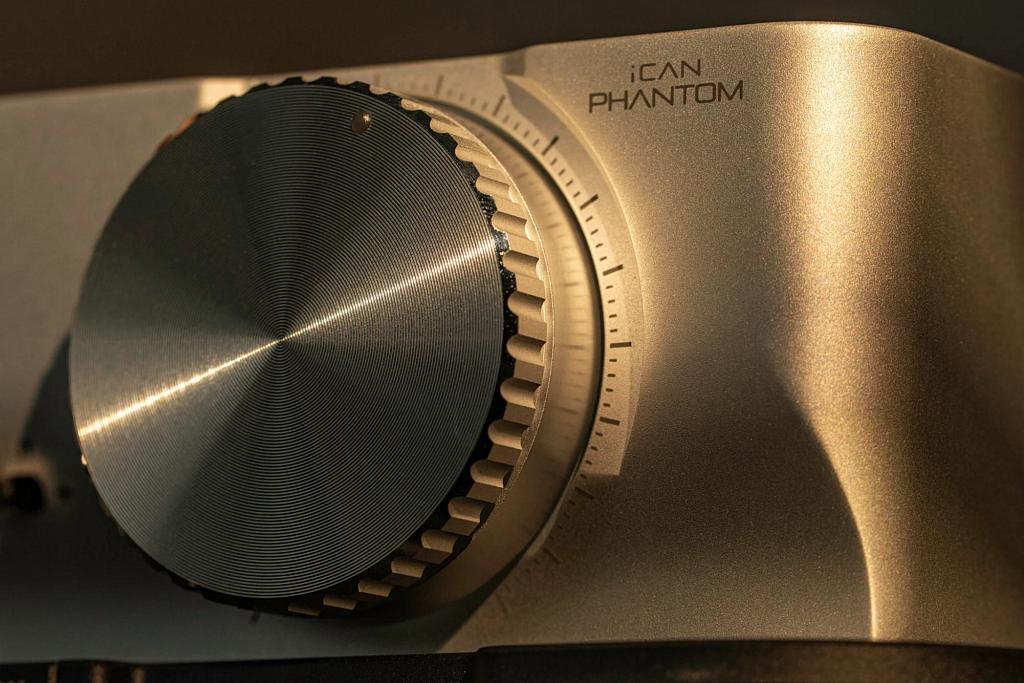
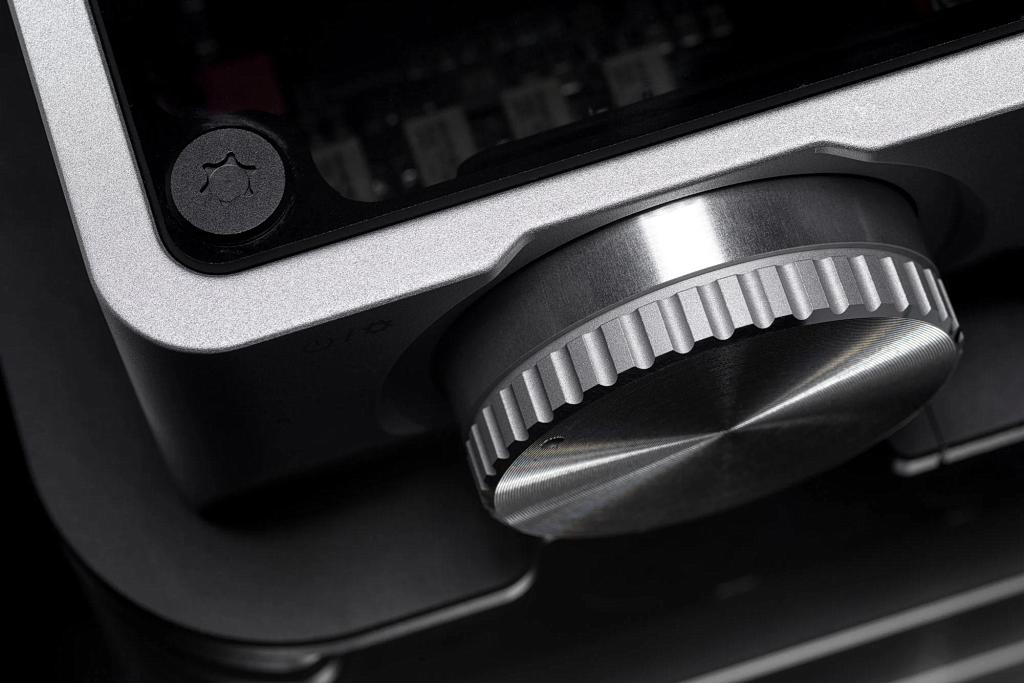
The underlying circuitry is equally ambitious. iFi uses what it calls a True Differential Balanced architecture, with the left and right channels and their positive and negative signal paths handled by four independent amplification circuits. The idea is to maintain a fully balanced signal path from input to output, rather than merely providing balanced connectors on an otherwise conventional circuit. This arrangement works alongside the company's PureWave Pro technology and a motorized ALPS volume potentiometer manufactured in Japan. In the 1.5 edition, the volume control mechanism has received additional damping to make adjustments smoother and more precise. It's a relatively small change, but one that owners are likely to appreciate every time they reach for the knob. The amplifier's technical specifications are impressive, with a frequency response extending from 0.5 Hz to 500 kHz (-3 dB) and a claimed signal-to-noise ratio exceeding 145 dB in balanced mode. Of course, few people are buying a reference headphone amplifier because they want to reproduce a 500 kHz signal. What matters is the engineering behind those numbers and the manufacturer's attempt to keep noise and unwanted distortion well below the threshold where they could interfere with the listening experience.
If switching between transistor and tube amplification isn't enough, iFi has included two additional ways to shape the sound without converting it into the digital domain. XBass Pro provides three levels of low-frequency enhancement, allowing users to add some weight to headphones with a relatively lean balance or recordings that could benefit from a stronger bass foundation. XSpace Pro addresses a different issue altogether: the peculiar spatial presentation of headphone listening. Unlike loudspeakers, which allow sound from both channels to interact naturally in the room and reach both ears, headphones deliver each channel almost exclusively to its corresponding ear. XSpace Pro uses analog circuitry to modify that presentation, attempting to create a more open, speaker-like soundstage. It also offers three levels of adjustment. Both systems operate in real time and remain entirely analog, consistent with the Phantom's fundamental design philosophy. There is no internal DAC, no digital signal processing, and no need to convert an analog source into digital information just to make the sound a little warmer or more spacious.
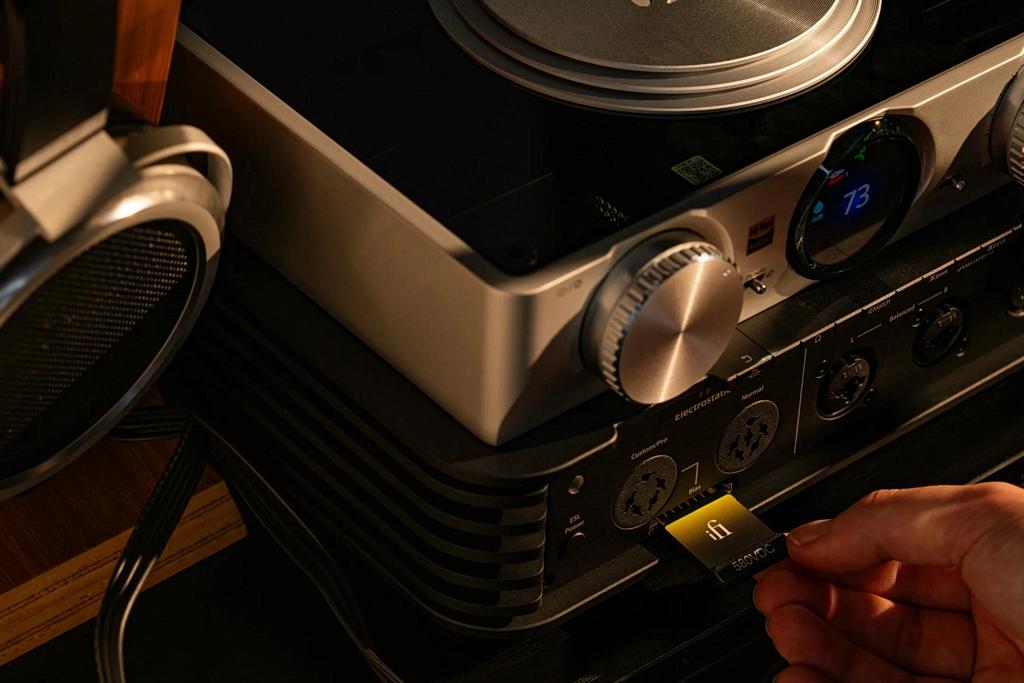
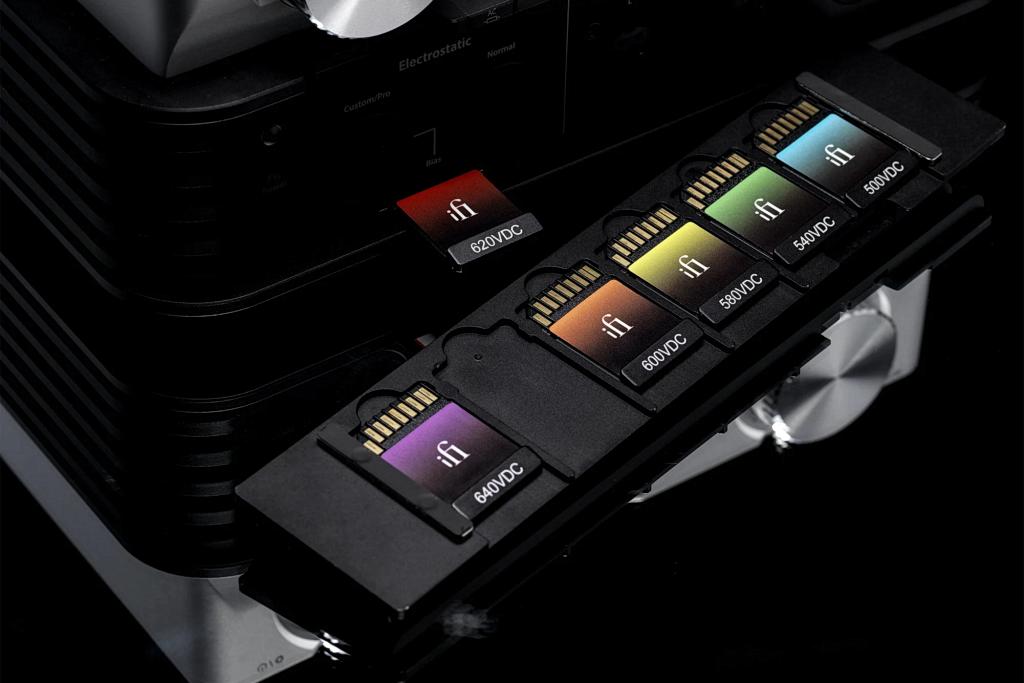
Perhaps the most extraordinary feature of the Phantom, however, is one that relatively few headphone enthusiasts will ever need. Built into the amplifier is iFi's iESL electrostatic energizer, eliminating the separate high-voltage device normally required to drive electrostatic headphones. These designs operate on a completely different principle from conventional dynamic or planar magnetic headphones, using an extremely thin diaphragm suspended between charged electrodes. They require specialized amplification and an appropriate bias voltage, which means they cannot simply be plugged into a conventional headphone output. The Phantom handles these requirements internally, allowing electrostatic headphones to join the same system as conventional designs. Its Custom/Pro output supports selectable bias voltages between 500 and 640 V, with the appropriate setting determined by interchangeable, individually calibrated bias cards. These are labeled for compatible headphone models, making it easier to select the correct operating voltage. A separate Normal output provides 230 V for older electrostatic designs. Additional adjustments for AC termination and impedance allow users to fine-tune the amplifier's interaction with their headphones. This is an unusually sophisticated level of control, especially considering that the same device can also accommodate ordinary dynamic headphones and highly sensitive IEMs.
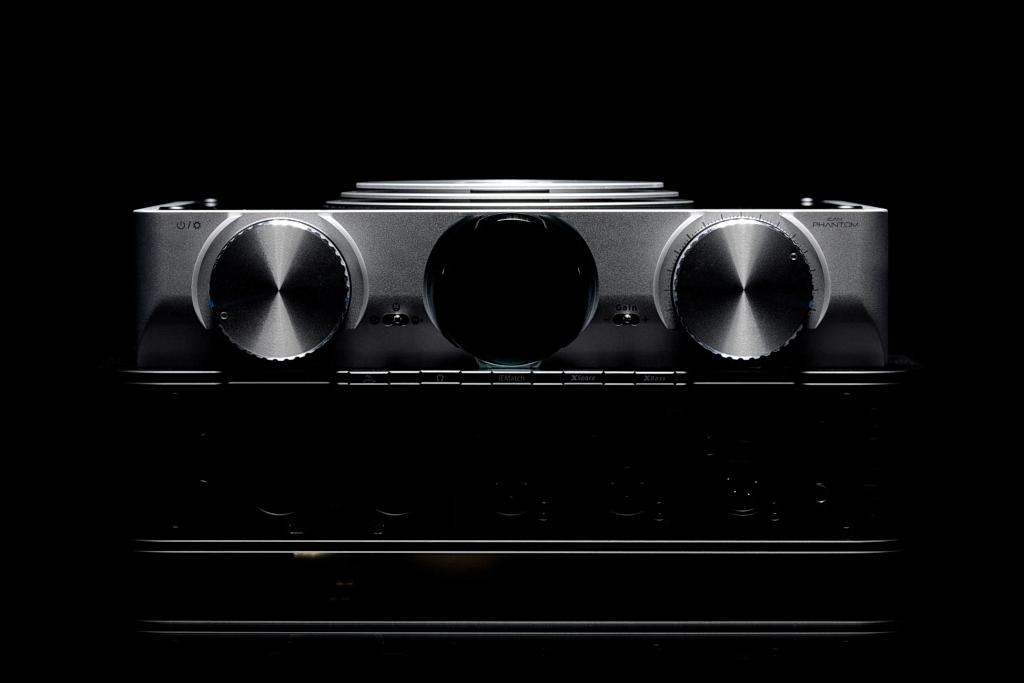
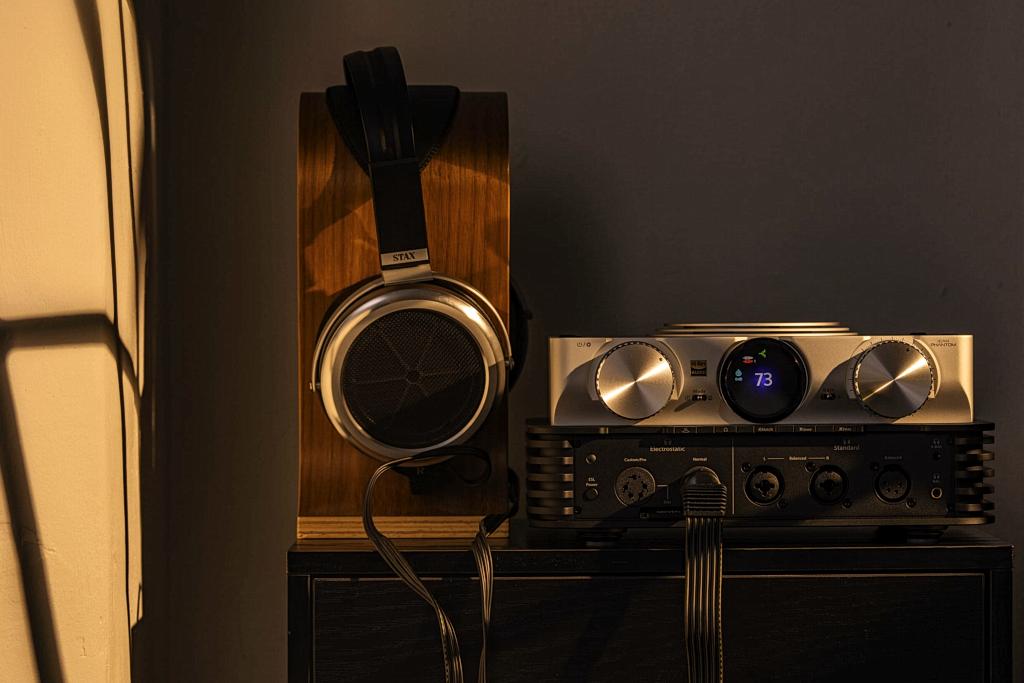
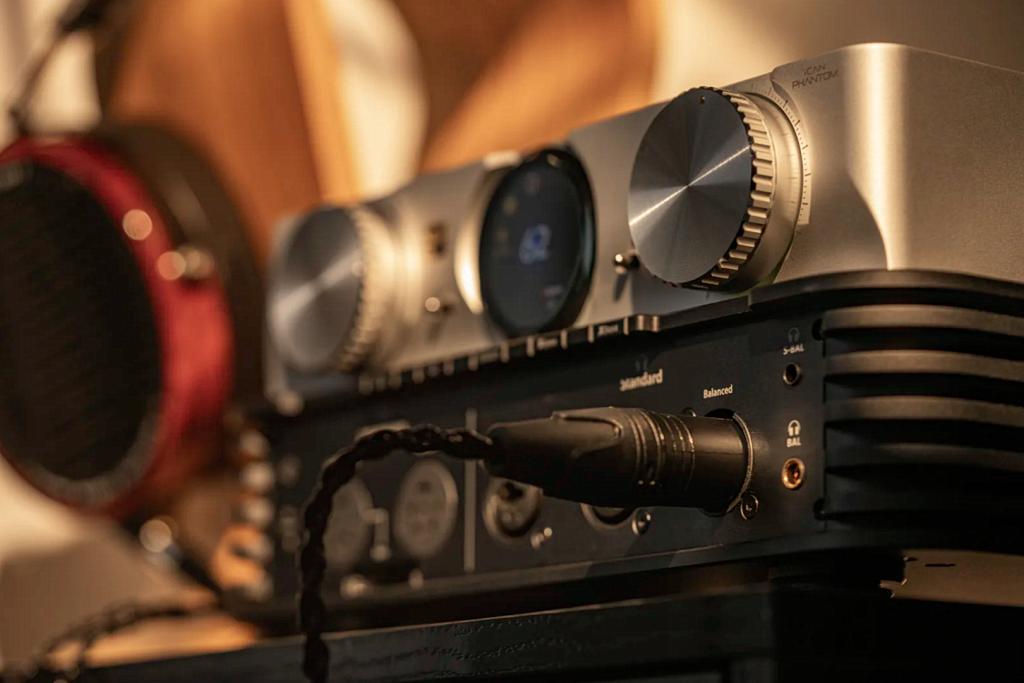
With the 1.5 revision, iFi has devoted considerable attention to features that might initially seem less exciting than the amplifier's unusual circuitry. The front-panel VU meter display has been updated, while the user interface has been redesigned to provide a more consistent experience across the company's flagship products. The motorized volume control and other rotary mechanisms now offer a smoother, more substantial feel, thanks to additional damping. An anti-fingerprint coating has also been applied to the smoked glass covering the upper section of the chassis. Anyone who owns audio equipment with a large, glossy surface will understand the appeal of that particular improvement. The Phantom retains its distinctive two-level appearance, almost resembling two separate components stacked together, although the enclosure is actually a single aluminum structure. The lower section accommodates the various headphone connections, while the upper level houses the main controls and color OLED display. Despite its considerable capabilities, the amplifier measures just 256 x 185 x 120 mm (10.1 x 7.3 x 4.7 inches) and weighs 4.2 kg (9.3 lb). It is certainly substantial by headphone amplifier standards, but considerably less cumbersome than assembling several specialized amplifiers and an electrostatic energizer into one system.
Another important improvement concerns remote operation. The iCAN Phantom 1.5 supports iFi Nexis, the company's connected control platform, which turns a smartphone into something considerably more capable than a traditional remote control. At first, the idea of using an app with a completely analog amplifier might seem contradictory, particularly when the entire product has been designed to keep digital processing out of the music signal. But that's precisely the distinction iFi is making. Nexis doesn't stream music to the Phantom or process the audio. Instead, it provides access to the amplifier's settings, allowing users to make adjustments from their listening position. The app can also be used for diagnostics, firmware updates delivered over the network, restoring factory settings, and assigning a custom name to the device. One of the more interesting additions in the 1.5 version is tube health monitoring, which allows owners to keep track of the condition of the internal General Electric 5670 tubes. Their specified service life exceeds 10,000 hours, and when replacement eventually becomes necessary, they can be accessed by removing the smoked glass panel on top of the amplifier. For a device intended to remain at the center of a serious headphone system for many years, these maintenance features make considerable sense.
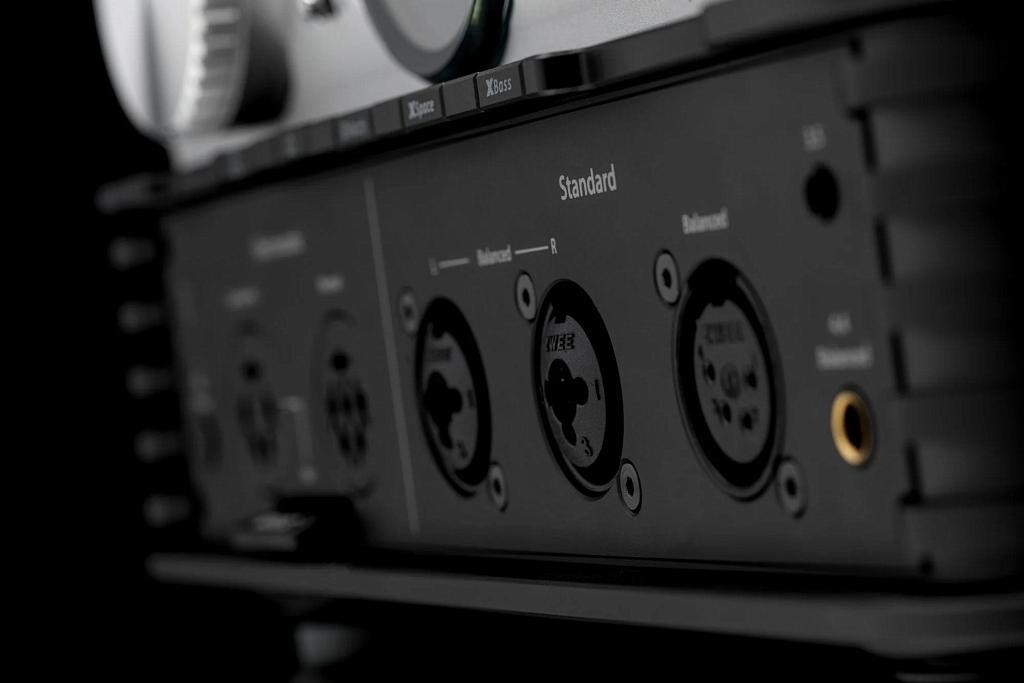
The Phantom isn't limited to headphone listening, either. It also functions as a fully capable stereo preamplifier, with RCA and balanced XLR outputs on the rear panel. That means it can serve as the control center for a conventional stereo system using active speakers or a separate power amplifier. In this configuration, the user still has access to the Phantom's selectable tube and solid-state input stages, making it possible to experiment with the character of the system without changing any other components. Headphone connectivity is equally comprehensive, with balanced 4-pin XLR and 4.4 mm outputs alongside conventional 6.3 mm connections and dedicated electrostatic headphone sockets. The idea is straightforward: rather than requiring owners to build separate systems for different headphones, the Phantom attempts to accommodate all of them while also remaining useful when the listening session moves from headphones to loudspeakers.
In a market filled with increasingly specialized headphone amplifiers, the iCAN Phantom 1.5 is an unusually ambitious proposition. Most manufacturers focus on perfecting one particular application, whether that's driving sensitive in-ear monitors, supplying enormous amounts of current to planar magnetic headphones, or building dedicated high-voltage amplifiers for electrostatic designs. iFi has chosen to bring all three categories together, then added selectable amplification stages, analog sound-shaping circuits, extensive connectivity, and remote operation. Inevitably, that makes the Phantom a relatively complex and expensive piece of equipment. Someone who owns a single pair of conventional headphones could probably find a much simpler amplifier that meets their needs perfectly well. But for enthusiasts with large and varied headphone collections, the appeal is obvious. Instead of buying another amplifier every time a new pair of headphones presents a different electrical challenge, they can keep one component at the heart of the system and adapt it accordingly.
The original Phantom was already one of the most unusual headphone amplifiers available, and the new edition concentrates on making that concept more flexible and enjoyable to use rather than replacing it with something fundamentally different. Greater gain adjustment, improved IEMatch attenuation, refined controls, a redesigned interface, and expanded Nexis functionality may not sound as dramatic as doubling the power output or introducing an entirely new amplification topology, but they're precisely the changes that can make a sophisticated component more satisfying to own. The iFi Audio iCAN Phantom 1.5 is available through the manufacturer's website and selected dealers, with retail prices of $3,749 in the United States, €3,749 in Europe, and £3,749 in the United Kingdom. Info and photos by iFi Audio.