
- News
- Posted
Luxman D-100 Centennial
For Luxman, the physical disc has never been treated as a format from the past. The new D-100 Centennial, created to mark the Japanese company's 100th anniversary, shows how far the brand is still willing to take SACD and CD playback while also turning the player into a reference-class DAC for modern high-resolution sources. As the successor to the D-10X, it is not merely an anniversary edition with a special nameplate, but a comprehensively redesigned flagship source component with a new disc transport, renewed digital processing, an updated analog output stage and the latest version of Luxman's LIFES feedback engine.
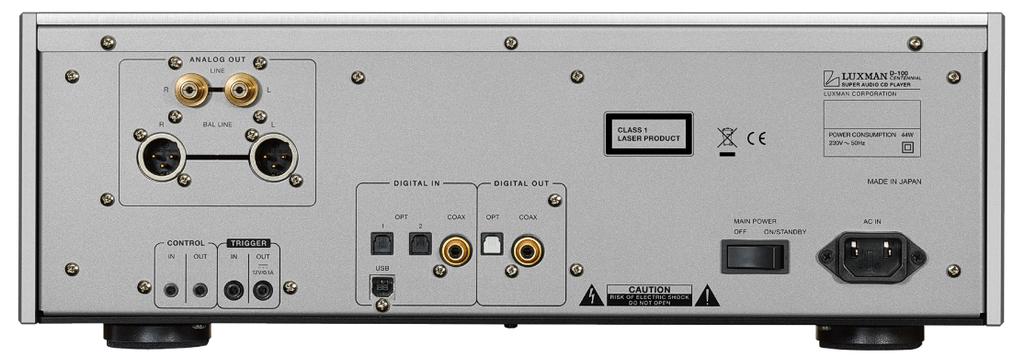
The D-100 Centennial is designed as both a high-end disc player and a reference-class DAC. It supports two-channel SACD and CD playback, while its USB input accepts PCM files up to 768 kHz/32-bit and DSD up to 22.5 MHz/1-bit. Coaxial and optical digital inputs support PCM up to 192 kHz, as well as 2.8 MHz DSD via DoP. This means the new Luxman is not only aimed at listeners with large SACD and CD collections, but also at users who want a flagship digital hub for a network transport, computer or other digital source.
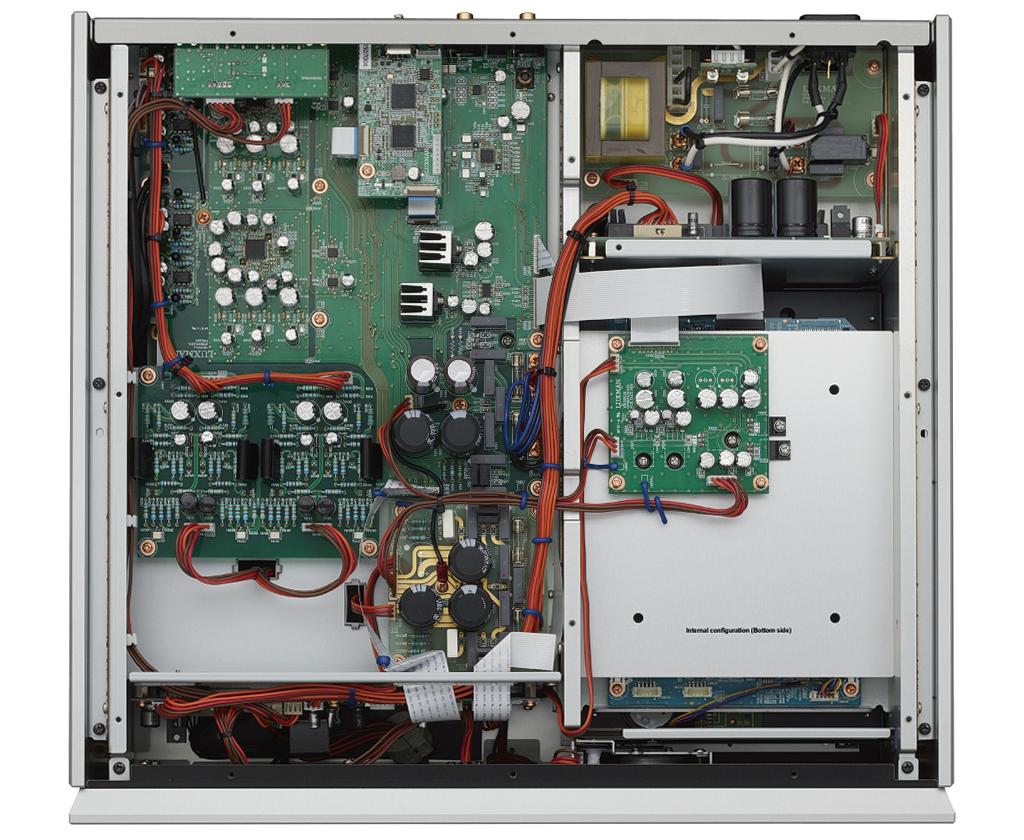
A major part of the redesign is the new LxDTM-i transport, short for Luxman original Disc Transport Mechanism - improved. The mechanism is built around a rigid box structure, with 8-mm aluminum side frames, a 5-mm steel top plate and a newly added 8-mm aluminum base plate. Luxman has integrated the transport directly with the main chassis, increasing rigidity and improving isolation from external vibration. The transport retains the left-side layout used in the D-10X, leaving more internal space for the analog output stage and helping keep the signal path short. The disc tray also includes a dust-proof shutter and is designed for quiet, smooth operation.
The digital section uses two ROHM BD34302EKV DAC chips in a dual-mono configuration. These are described as ROHM's latest top-grade MUS-IC devices, and Luxman combines them with its own analog circuit design rather than treating the DAC chip as the whole story. The USB input can work with network transports such as Luxman's NT-07, as well as Windows PCs and Macs. Users may also install Luxman's dedicated driver software to enable Bulk Pet transfer, available in four modes, which is designed to equalize processing load during USB transmission and improve sound quality.
Filtering options are also provided. The DAC's internal filters allow three different filter settings for PCM playback and two for DSD playback, giving users some control over tonal balance and transient behavior without altering the fundamental architecture of the player. For legacy digital sources, the coaxial and optical inputs extend the D-100 Centennial's role beyond disc playback, allowing it to serve as a standalone digital-to-analog converter in a larger system.
The analog output stage is another key area of development. The D-100 Centennial is the first Luxman disc player to incorporate the company's renewed LIFES amplification feedback engine in version 1.1 form. LIFES, or Luxman Integrated Feedback Engine System, grew out of the company's long-running ODNF technology, which feeds back only distortion components generated during amplification. The aim is to combine strong measured performance with the natural musical character associated with non-feedback circuits. In the D-100 Centennial, Luxman has further reduced distortion by parallel-connecting the input stage of the differential detection amplifier, creating what it calls LIFES version 1.1.
Clocking has also been upgraded. The player uses two newly developed clock circuits combining ultra-low phase-noise oscillator ICs with large crystal oscillators. For USB input, asynchronous communication is managed by a dedicated DSP, while S/PDIF input uses Luxman's DAIR system for clock control. By selecting the appropriate low-jitter strategy for each input, the D-100 Centennial is designed to maintain high transmission accuracy across disc, USB and external digital sources.
The power supply follows Luxman's traditional approach to stability and separation. The D-100 Centennial uses a CI-core transformer, independent left/right rectification circuits, regulators and 40,000 µF of high-capacity filter capacitors. Luxman has also used peel-coated circuit boards, chosen to avoid the resistive influence of conventional coating, and OFC internal wiring. These details are typical of the brand's upper-tier components, where mechanical, electrical and layout decisions are treated as part of the sound quality equation rather than secondary construction matters.
The player's measured specifications are suitably ambitious. Total harmonic distortion is listed at 0.0016% for CD, 0.0007% for SACD and 0.0006% via USB. Signal-to-noise ratio is 125 dB for CD, SACD and USB playback. Frequency response is specified as 5 Hz - 20 kHz for CD, coaxial and optical playback, 5 Hz - 38 kHz for SACD and 5 Hz - 58 kHz via USB. Analog output voltage is 2.4 V from both unbalanced and balanced outputs, with output impedance rated at 300 ohms for RCA and 600 ohms for XLR. For SACD and DSD playback, output voltage is 2.3 V.
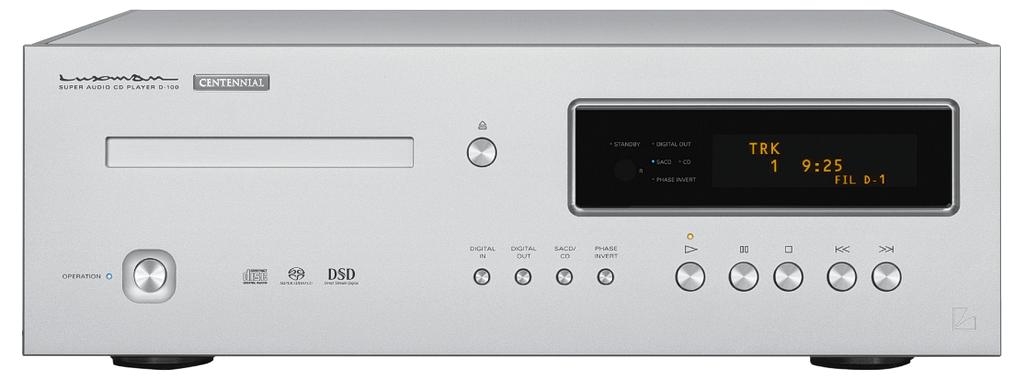
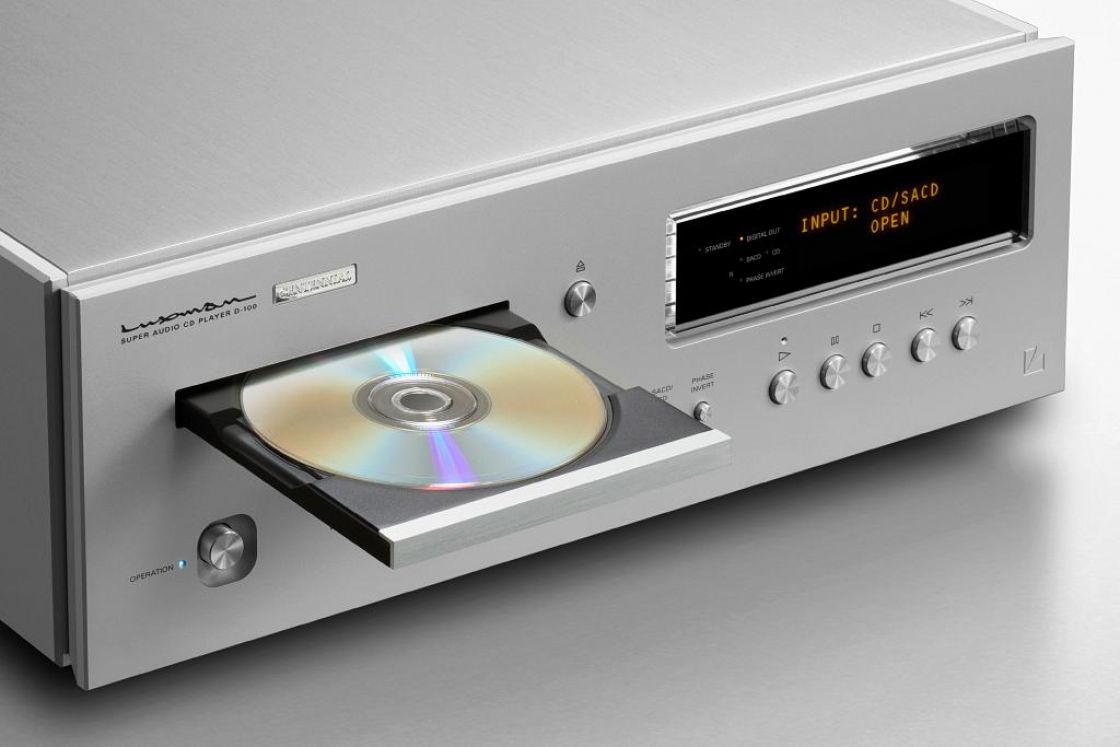
Mechanically and visually, the D-100 Centennial has been designed to match Luxman's current flagship language. The chassis is finished in the company's signature Blaster White and carries an exclusive glossy chrome 'Centennial' nameplate on the front panel. The design includes a thick slanted front panel and a distinctive waistline between the fascia and bonnet, visually linking the player with the C-10X preamplifier and M-10X power amplifier.
The user interface has also been updated. Luxman has fitted a new large high-definition OLED display with an area approximately 70% larger than the display used in the D-10X. It can show track information, elapsed time, source format, filter settings and playback modes, and includes a 4-step dimmer, automatic brightness reduction and a 4x zoom mode for improved visibility from a distance.
Connectivity and mechanical support are handled with the same emphasis on rigidity and long-term use. The analog RCA outputs use Luxman's original high-rigidity terminals with a 22-mm pitch, allowing larger high-end cable plugs to be connected more easily. Balanced outputs use shielded Neutrik XLR terminals. The chassis rests on cast-iron density-gradient insulator legs, designed to reduce the effect of vibration from the supporting surface and suppress unwanted internal resonance. The AC inlet has also been revised by reversing its mounting structure to better support heavy power cables and maintain a stable grip.
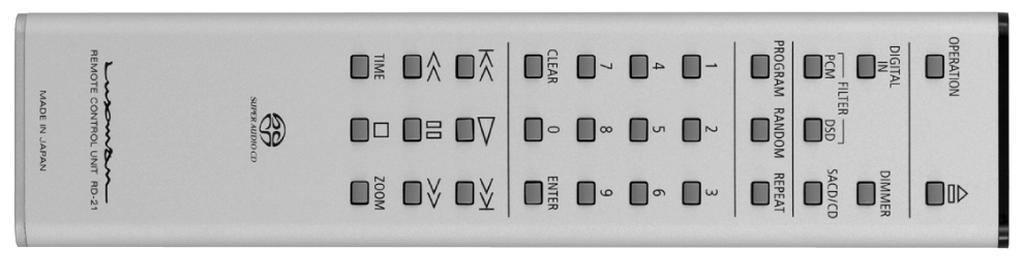
The D-100 Centennial measures 440 x 154 x 420 mm and weighs 25.4 kg. Power consumption is listed at 44 W, and the supplied accessories include the RD-21 aluminum remote control and a power cable. Luxman presents the model as a milestone source component for its centennial year - a flagship disc player and DAC intended to preserve the physical-disc experience while also meeting the expectations of modern high-resolution digital playback. The D-100 Centennial is priced at €19,999/$18,995. Info and photos by Luxman.