
- News
- Posted
Marantz MCR 60n
There's something rather appealing about a hi-fi system that doesn't demand an entire equipment rack, half a dozen power outlets, and a weekend spent figuring out which cable goes where. Compact all-in-one systems have been part of Marantz's catalog for years, but the Japanese manufacturer has never treated them as little more than glorified mini stereos destined for a bedroom shelf. The Melody X M-CR612 was a perfect example. Despite its modest dimensions, it combined a CD player, radio tuner, HEOS streaming platform, and an unusual four-channel amplifier that could drive two pairs of speakers or operate in a bi-amping configuration. It remained on the market for years, becoming something of a favorite among listeners who wanted proper hi-fi functionality without the usual collection of separate components. Replacing it was never going to be easy. With the new MCR 60n DAB, Marantz has kept the things that made the Melody X so appealing while bringing almost everything else up to date. HDMI eARC, a dedicated phono input, a substantially upgraded streaming platform, and even optional Dirac Live room correction have joined the party. What was already a remarkably versatile little stereo system has become something considerably more ambitious.
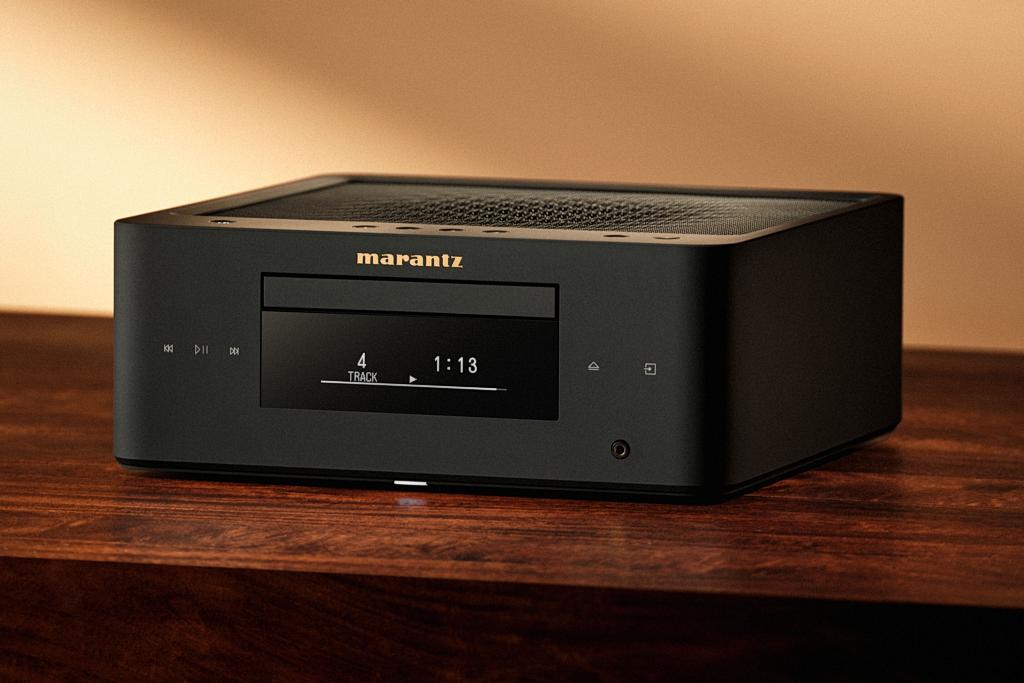
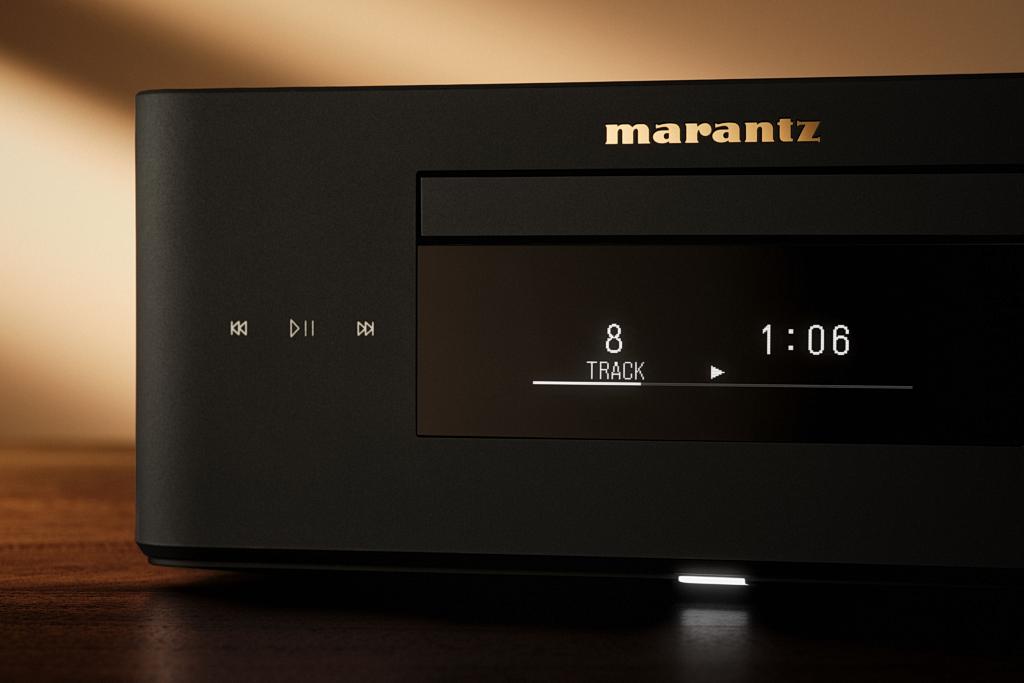
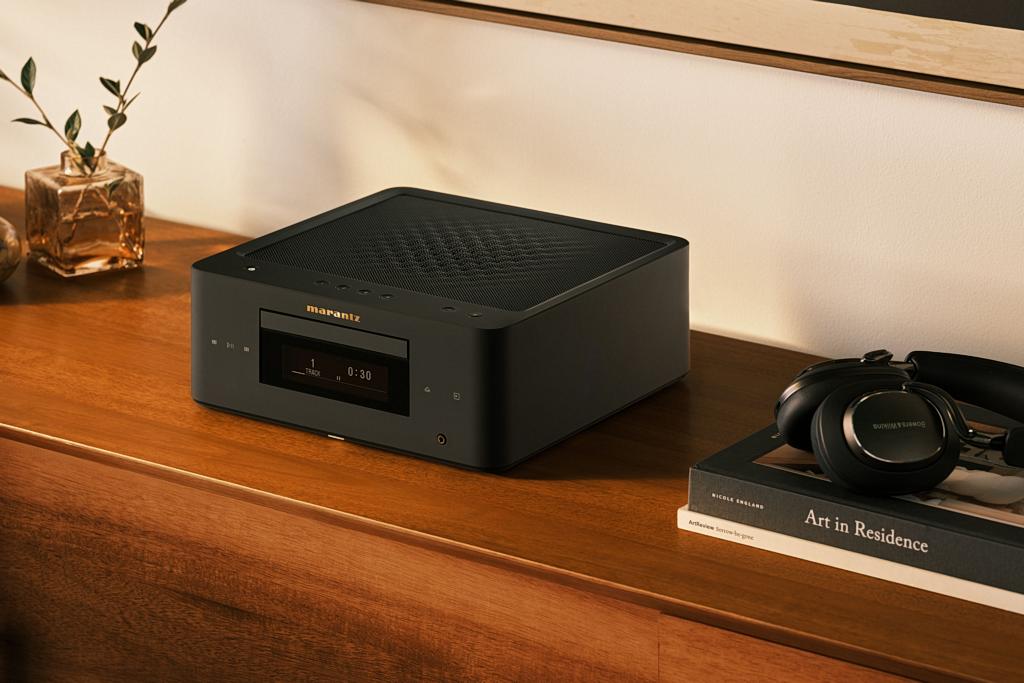
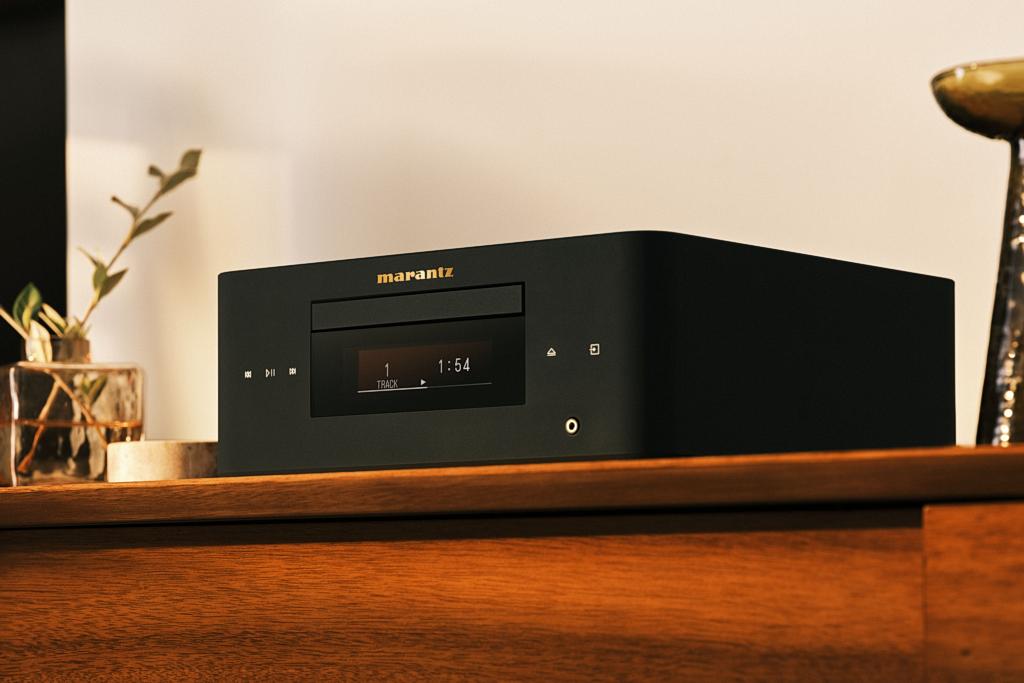
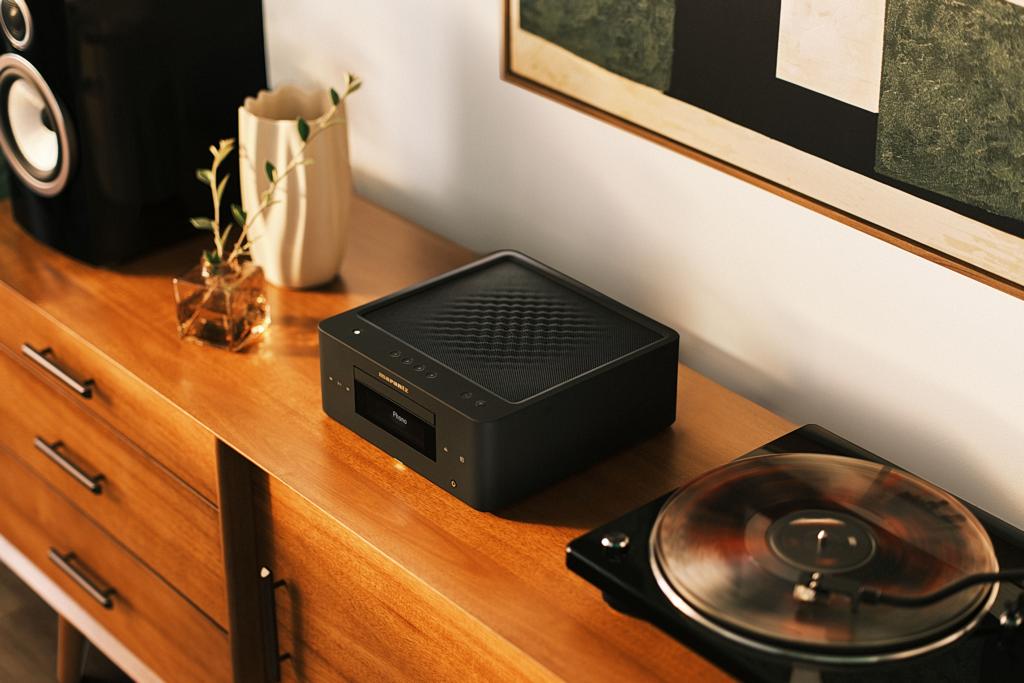
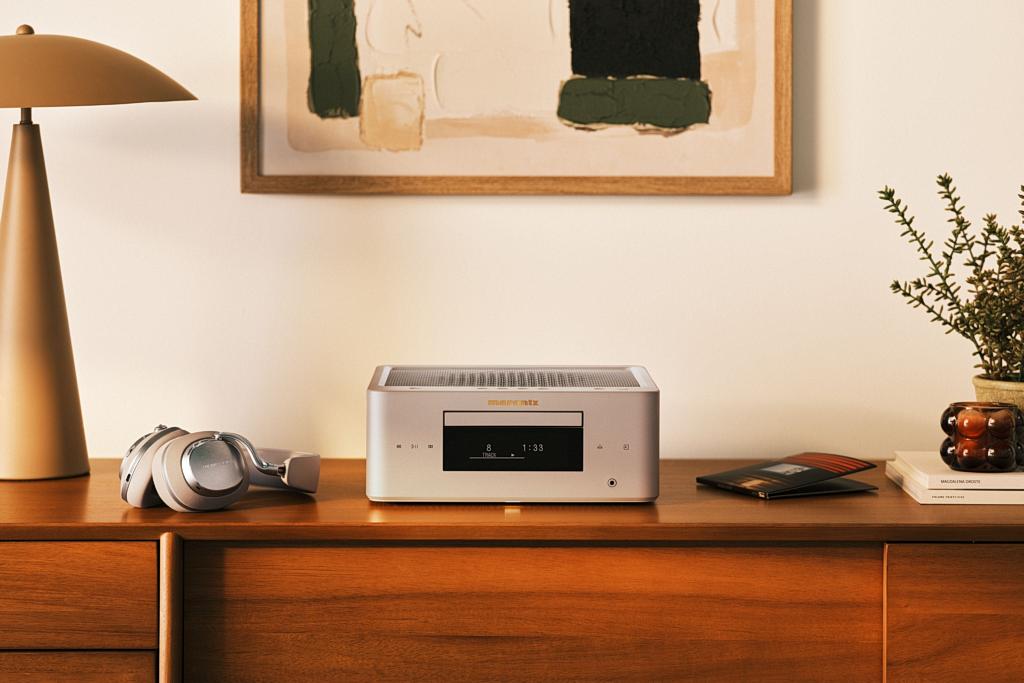
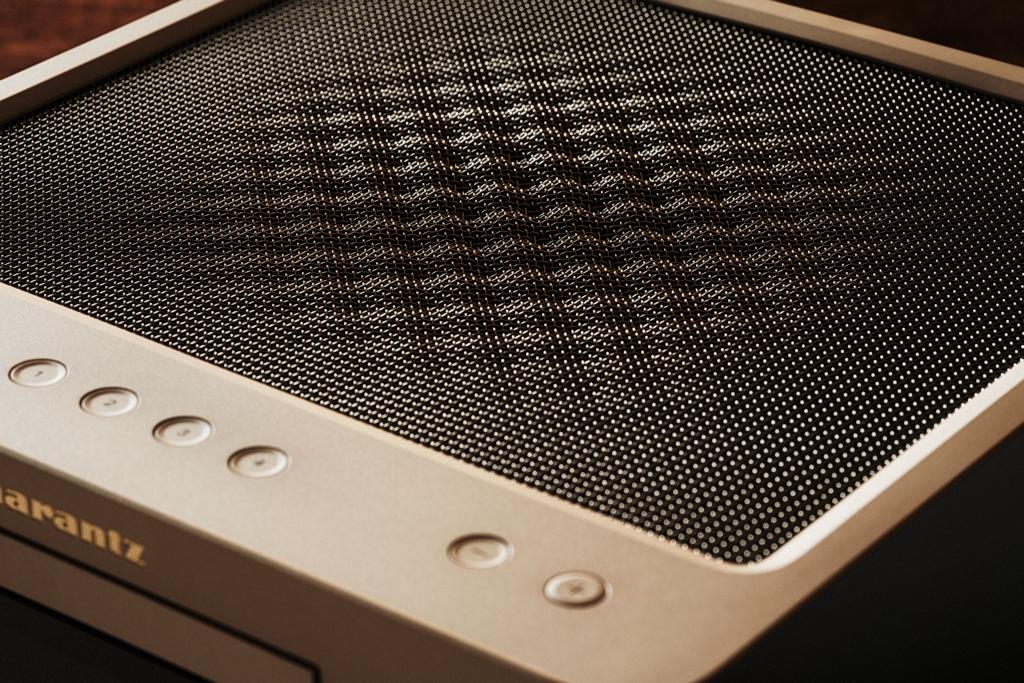
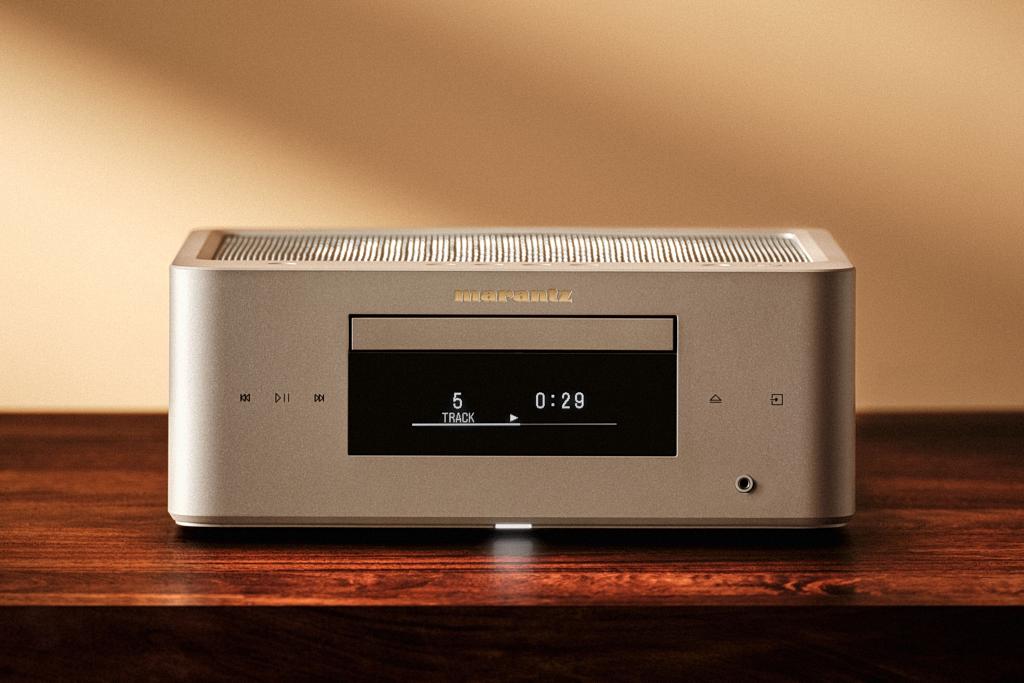
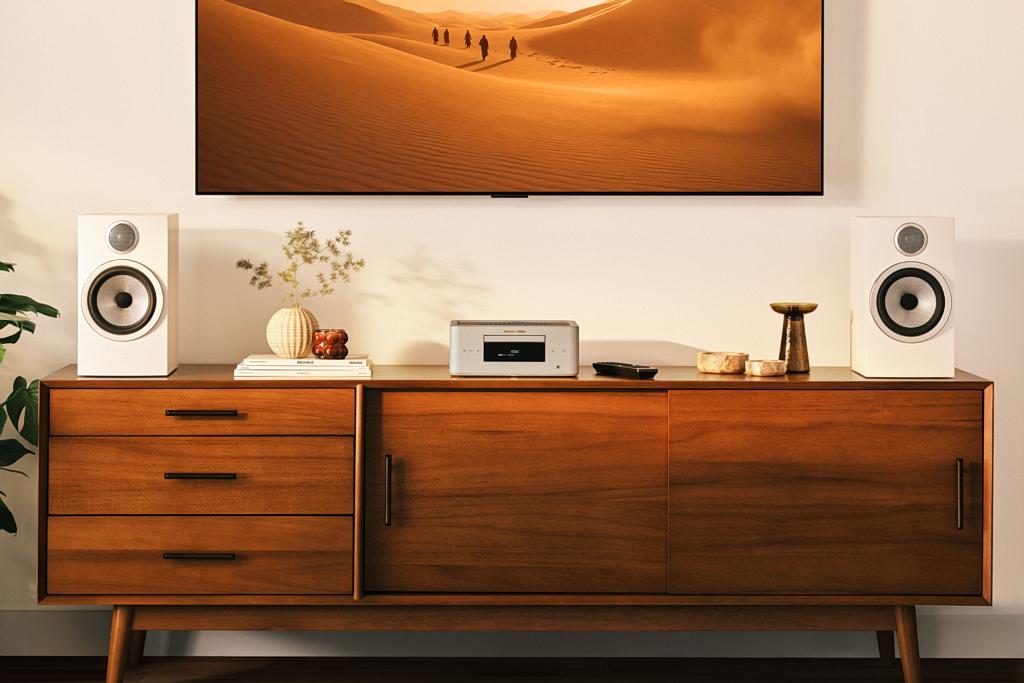
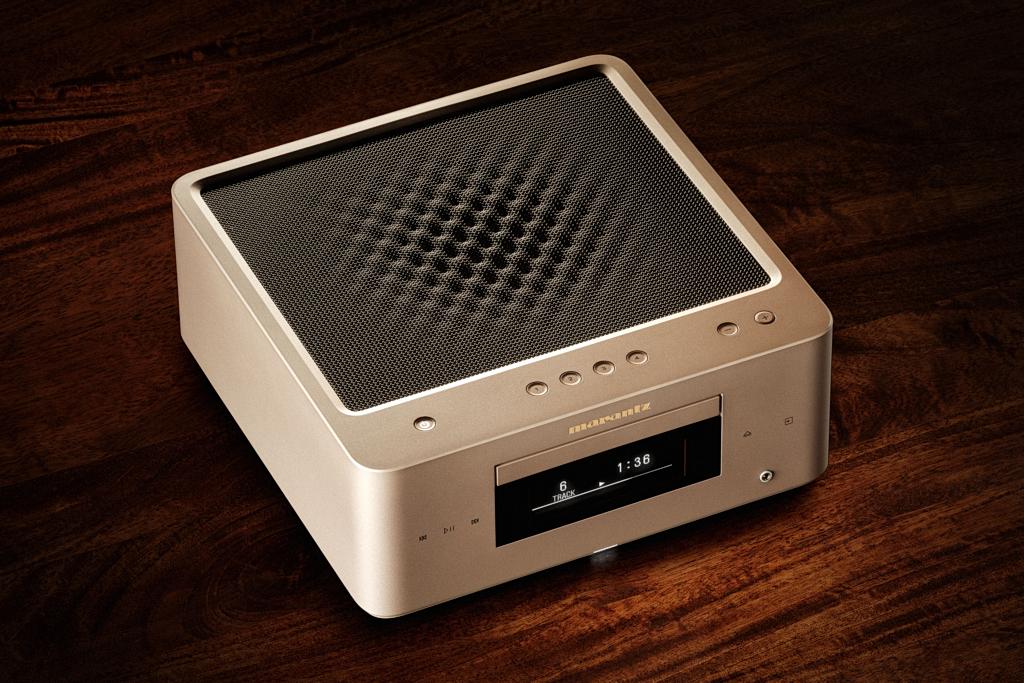
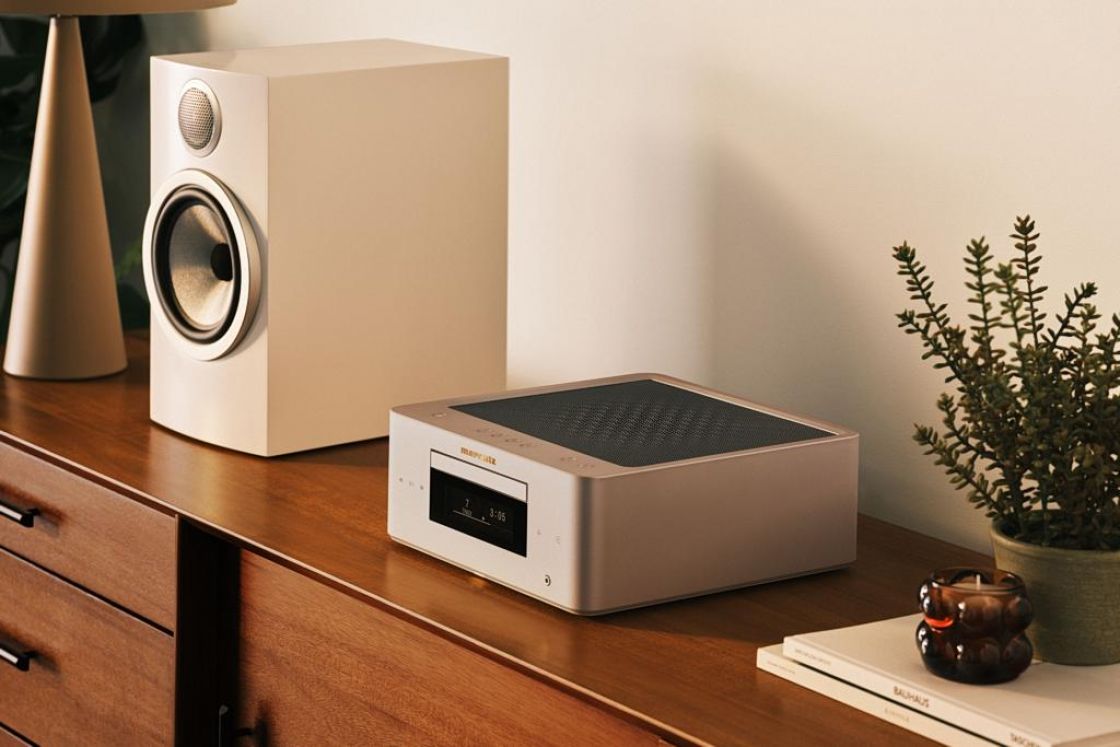
The first thing returning Melody owners will notice is the styling. The M-CR612 still belonged to an earlier generation of Marantz components, with its glossy front panel, rounded edges, and slightly futuristic appearance. The MCR 60n DAB takes a different direction, borrowing its visual language from the company's current full-size hi-fi equipment. The enclosure is cleaner, more angular, and more understated, with a slot-loading CD mechanism, display, discreet operating controls, and headphone output arranged across the front panel. It looks less like a mini system and more like a conventional Marantz component that has somehow been reduced to a fraction of its normal size. Two finishes are available, Matte Black and the company's familiar Champagne Gold. Neither is particularly adventurous, but both fit the restrained aesthetic that Marantz has been developing across its product range. The manufacturer also expects the new model to appeal to listeners who don't have a dedicated listening room. A home office, bedroom, living room, or even a generously sized desk could all provide a suitable home for what is essentially a complete hi-fi system in one small box.
The more significant changes, however, are hidden inside. Marantz has developed a new power supply with greater current delivery and increased headroom, allowing the amplifier to produce 65 watts per channel into 4 ohms. That figure is already respectable for a component of this size, but the really interesting part is that the company has retained the four-channel amplification architecture of the Melody X. Rather than using a conventional two-channel output stage, the MCR 60n DAB allows its amplifier channels to be configured in several different ways. In Bi-Amp mode, separate amplifier channels can drive the high- and low-frequency sections of compatible loudspeakers. Parallel BTL operation provides another option for listeners who want to optimize power delivery and bass control, while the standard configuration allows two pairs of speakers to be connected, with independent volume control for two listening zones. It's a degree of flexibility that remains unusual among compact stereo components, particularly those that also contain a CD player and network streaming hardware.
Marantz says the revised power supply and amplification circuitry should provide better control over demanding speaker loads, more convincing dynamics, and improved authority in the bass. Naturally, the specifications alone cannot tell us how much of an improvement the new model represents over its predecessor, but the changes suggest that sound quality was an important part of the redesign rather than an afterthought. The company has also fitted an upgraded digital-to-analog converter, while the final tuning was carried out under the supervision of its Sound Master. That last detail is worth mentioning because Marantz has long placed considerable emphasis on the subjective listening process during product development. The MCR 60n DAB may be compact and packed with features, but the manufacturer clearly wants it to be judged as a serious music component rather than simply a convenient collection of functions.
Perhaps the biggest change in everyday use becomes apparent when you look at the rear panel. The MCR 60n DAB now features HDMI eARC, allowing it to take over television audio duties without requiring a separate soundbar or AV receiver. Connect the TV with a single HDMI cable, and the Marantz can reproduce sound from movies, television shows, games, and streaming services through a proper pair of stereo speakers. HDMI-CEC support means volume can be adjusted using the television's existing remote, while Dolby Digital and Dolby Digital Plus decoding help maintain compatibility with common TV audio formats. The previous Melody X could also handle television sound, but relied on an optical digital connection. That worked well enough, of course, but HDMI eARC makes integration considerably more convenient. For someone who wants a single pair of good loudspeakers to handle both serious music listening and everyday television viewing, this could be one of the most useful improvements of all.
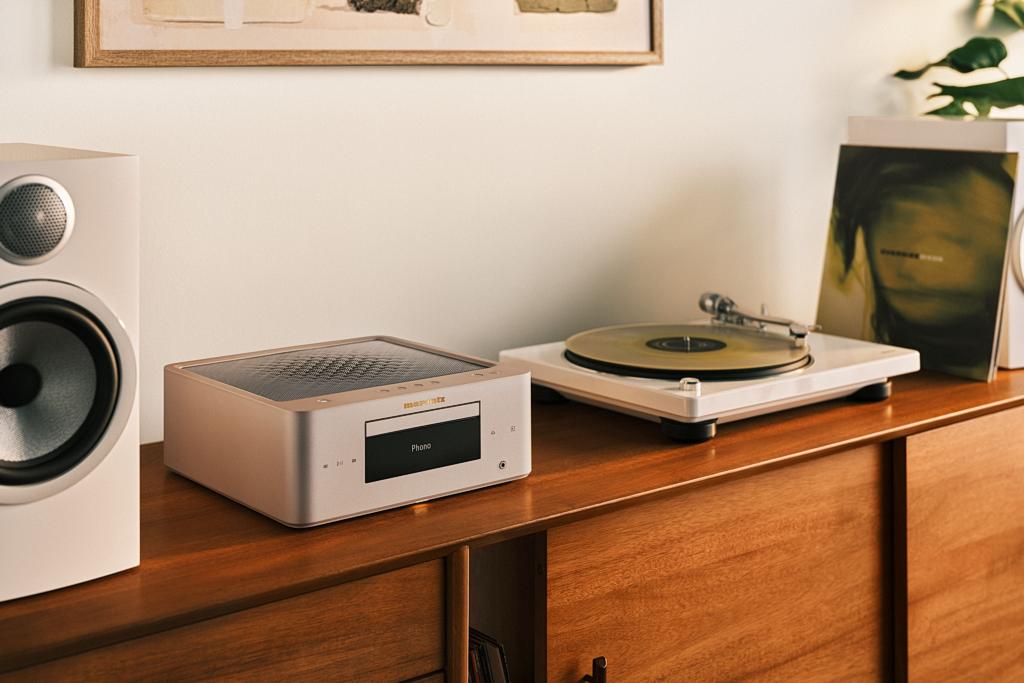
The other important newcomer is a built-in moving-magnet phono stage. This may not sound particularly revolutionary in a traditional integrated amplifier, but in a compact system that already includes a CD player, radio tuner, network streamer, and extensive digital connectivity, it completes a rather attractive picture. Connect a turntable to the MM input, place a CD in the front-loading mechanism, choose something from a streaming service, or switch over to the television through HDMI. Everything is available from the same component, with no external DACs, phono preamplifiers, or additional source selectors required. In fact, apart from a pair of speakers, there is very little else a typical listener would need to buy. This is arguably the best explanation of what Marantz is trying to achieve. The MCR 60n DAB isn't designed around one particular way of enjoying music. It is intended for people whose collections and listening habits span several generations of audio technology, and who don't see any reason why vinyl, CDs, digital files, and streaming subscriptions shouldn't coexist in the same system.
The decision to retain a built-in CD player is especially welcome. Although streaming has transformed the way most people discover and consume music, there are still plenty of listeners with substantial CD collections who have no intention of putting them into storage. And why should they? A good CD player remains a perfectly practical source, particularly when the music someone wants to hear isn't available on their preferred streaming service or has been replaced by a different mastering. With the MCR 60n DAB, Marantz avoids forcing customers to choose between physical media and modern convenience. The disc mechanism is there whenever it's needed, but it doesn't prevent the owner from taking advantage of the latest network audio features. It's a refreshing approach in a market where manufacturers sometimes seem determined to convince everyone that the only acceptable way to listen to music is through a smartphone app.
That doesn't mean Marantz has neglected streaming. Quite the opposite. The MCR 60n DAB features the latest generation of the HEOS platform, bringing access to online music services, internet radio, and multiroom playback. Support includes Spotify Connect, TIDAL Connect, Qobuz Connect, and AirPlay 2, while Roon Ready certification allows the unit to become part of a more sophisticated network-based music library. For listeners with music stored locally, the system supports PCM files up to 32-bit/384 kHz and DSD up to 11.2 MHz. Those figures represent a considerable step forward from the previous Melody X M-CR612, which was limited to 24-bit/192 kHz PCM and DSD 5.6 MHz. Of course, the availability of ever-higher sample rates doesn't automatically mean better sound, and most music collections will never come close to exploiting these limits. Nevertheless, the increased capabilities demonstrate that Marantz has substantially updated the digital platform rather than simply giving the old streaming hardware a new interface. Ethernet and USB connections remain available, and the European DAB version also incorporates a digital radio tuner.
Bluetooth is another area where the new Marantz offers more flexibility than the usual arrangement. As expected, it can receive music wirelessly from a smartphone, tablet, or another compatible device. But it can also transmit audio to Bluetooth headphones, allowing listeners to enjoy music or television sound without disturbing anyone else in the room. Marantz specifically mentions late-night television viewing as one possible application, and it's easy to see the attraction. Instead of switching to a completely different source or listening system, the owner can simply redirect the sound to wireless headphones. Four programmable Smart Select buttons add another layer of convenience, storing combinations of source selection, operating mode, and volume level that can be recalled directly from the remote control. One preset could be reserved for television, another for a favorite radio station, and the remaining two for frequently used music sources. These aren't necessarily the features that make headlines, but they're often the ones that determine whether an elaborate all-in-one system is genuinely pleasant to use every day.
One feature that might have seemed almost unimaginable in a compact CD receiver only a few years ago is Dirac Live room correction. Yet here it is. The MCR 60n DAB supports the well-known acoustic calibration technology as an optional upgrade, allowing owners to compensate for some of the problems introduced by their listening room and speaker placement. It's important to emphasize that Dirac Live is not included free of charge with the unit. An additional license is required to activate the functionality. Once configured, however, the system can analyze the room's acoustic response and apply corrections intended to improve tonal balance, low-frequency behavior, and spatial presentation. This is particularly interesting because room acoustics can have a far greater influence on the final listening experience than many of the relatively small differences enthusiasts spend so much time debating. Even excellent loudspeakers can produce uneven bass when placed in an acoustically difficult room, while reflections and resonances may interfere with clarity and imaging. Dirac Live offers a way to address some of these problems without requiring extensive changes to the room itself.
Until recently, this kind of processing was associated mainly with AV receivers, dedicated DSP units, and more expensive network components. Finding it in a compact system with a built-in CD player would have seemed rather unlikely. The MCR 60n DAB also features a configurable subwoofer output with adjustable crossover settings, making it possible to extend the bass response of smaller speakers while maintaining greater control over how the subwoofer integrates with the main system. That combination could be particularly appealing in the kind of rooms for which this Marantz has been designed. A pair of compact bookshelf speakers and a carefully positioned active subwoofer can deliver surprisingly convincing results, but getting all three components to work together properly is not always straightforward. Having bass management and optional room correction available within the main system considerably simplifies the process.
Marantz has also made sure that buying an MCR 60n DAB doesn't mean committing permanently to its internal power amplifier. Adjustable analog outputs allow the unit to operate as a network preamplifier, feeding a separate power amplifier or a pair of active speakers. This opens up several possible upgrade paths. Someone could begin with the Marantz and a modest pair of passive loudspeakers, then add a subwoofer, experiment with the available amplifier configurations, or eventually move to more ambitious amplification while retaining the MCR 60n DAB as a CD player, streamer, and central control component. In that sense, the system is considerably less restrictive than the all-in-one label might suggest. Marantz has also rearranged the rear-panel connections to make installation more straightforward and revised the packaging to reduce plastic use in favor of more recyclable paper-based protective materials.
Taken together, these changes make the MCR 60n DAB much more than a Melody X with a new faceplate. The essentials that made its predecessor successful are still present: compact dimensions, a built-in CD player, network streaming, radio reception, and that unusually flexible four-channel amplifier. But the new model addresses several areas where the M-CR612 was beginning to show its age. HDMI eARC makes it a much more natural partner for a modern television. The MM phono input acknowledges that vinyl remains an important part of many music collections. The upgraded HEOS platform brings more extensive streaming capabilities, while Dirac Live introduces a level of acoustic optimization that would once have been associated with far more elaborate systems. And the configurable outputs mean that the whole setup can evolve without necessarily replacing the central component.
Perhaps the most attractive thing about the new Marantz is that it doesn't force listeners into a particular category. It can be a traditional stereo system for someone with hundreds of CDs, a modern streaming amplifier for someone who rarely touches physical media, the centerpiece of a compact vinyl setup, or a convenient way to give television sound the benefit of proper hi-fi speakers. It can live in a dedicated listening room or spend its entire working life on a shelf in an office. There is nothing especially radical about any of those applications individually. What makes the MCR 60n DAB interesting is that it accommodates all of them without turning the system into a complicated collection of boxes. Marantz has essentially taken the familiar idea of a compact stereo receiver and asked what such a component should be capable of in 2026. The answer is impressively comprehensive.
The Marantz MCR 60n DAB is available through authorized European dealers in Matte Black and Champagne Gold finishes, with suggested retail prices of €900 in Europe and £800 in the United Kingdom. The North American version, designated MCR 60n and supplied without the DAB tuner, is available in Matte Black for $1,000. Info and photos by Marantz.