
- News
- Posted
Rose One
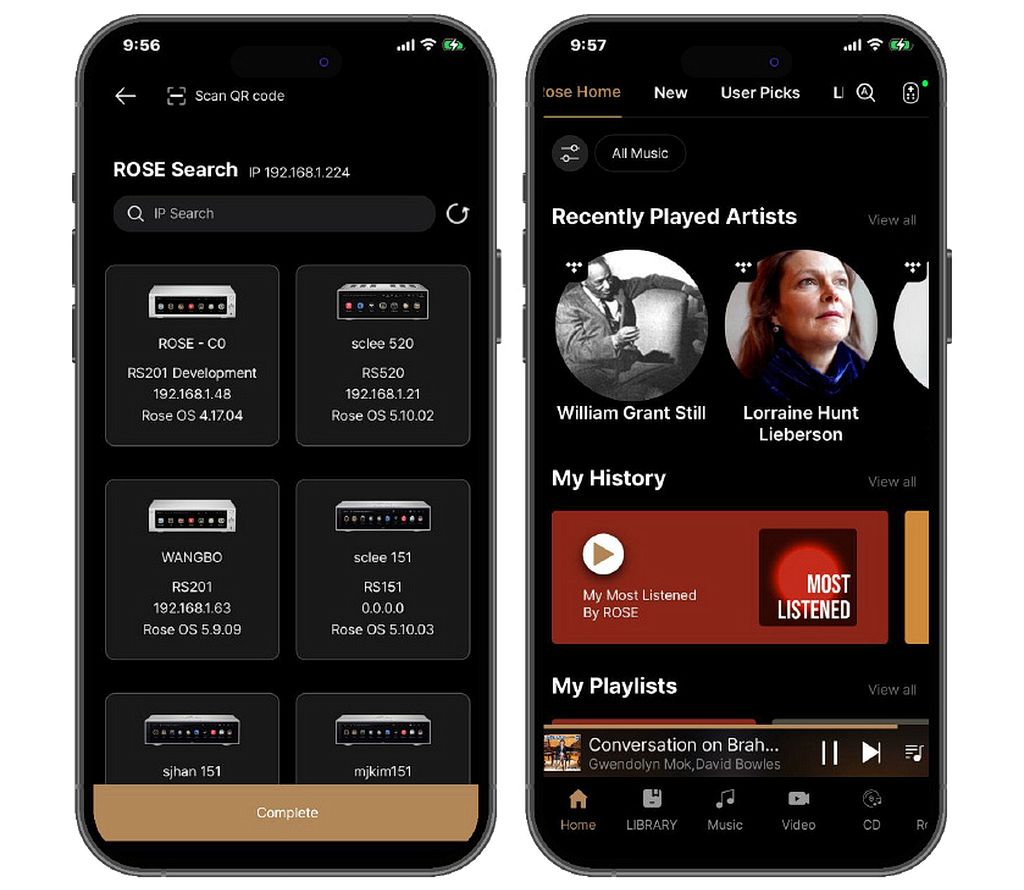
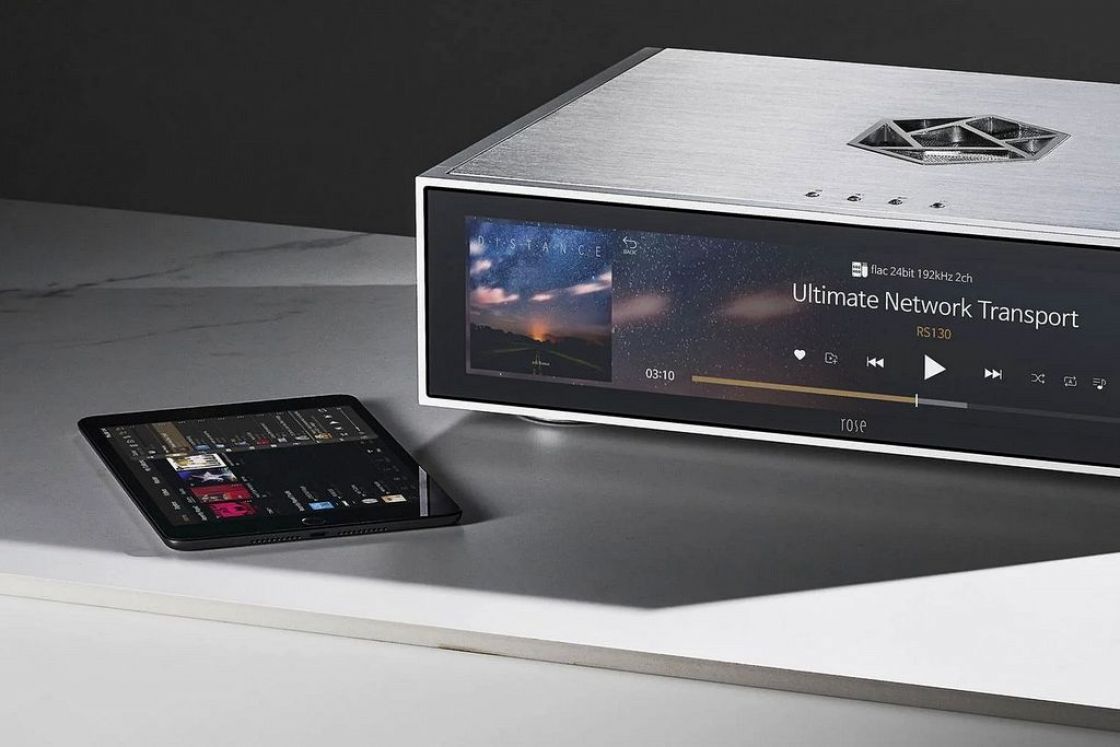
HiFi Rose has introduced Rose One, a new control application designed to become the central interface for the company's entire product ecosystem and, at the same time, a clear departure from the earlier strategy of developing successive variations of its existing software platform. Rather than a conventional update, Rose One is presented as a completely new environment built from the ground up as a unified hybrid application for Android, iOS, Windows and macOS. According to the manufacturer, the app was launched globally on April 1 and from the outset was intended to deliver a consistent user experience regardless of the device used to control the system.
From a user perspective, that consistency is the most important change. In the world of network audio and streaming platforms it is still common for mobile, tablet and desktop control apps to differ not only in appearance but also in functionality, navigation logic and access to settings. HiFi Rose's goal with Rose One is to eliminate those differences by introducing a single interface architecture shared across all supported platforms. In practice, this should translate into fewer configuration steps, reduced risk of confusion when switching devices and a more predictable workflow in everyday use of the company's streamers and network players.
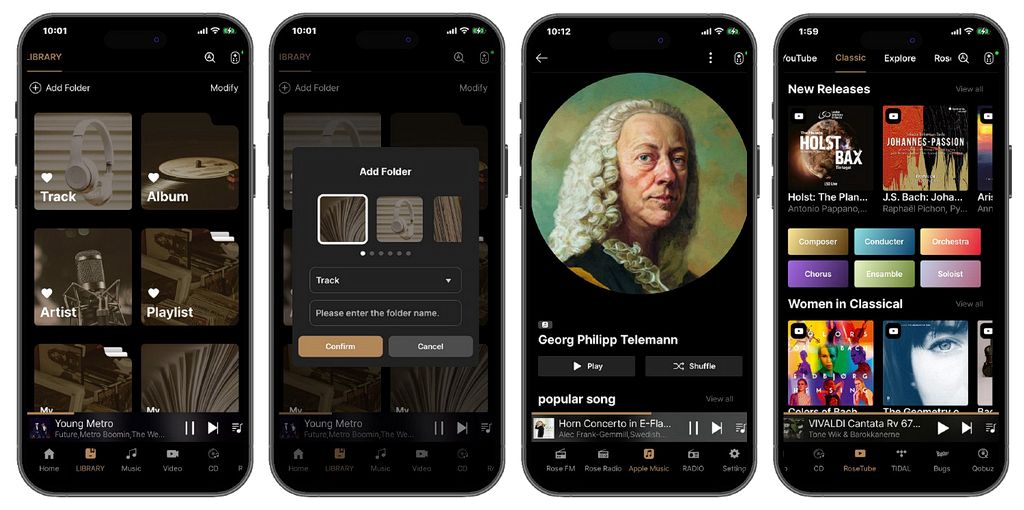
The application has also been redesigned to improve access to music itself rather than simply refreshing the visual layer. HiFi Rose describes a new home screen layout, a clearer library structure and faster access to key content areas covering both locally stored files and streaming services. The intention is not cosmetic change for its own sake, but a broader restructuring of the navigation environment so users can reach albums, playlists or signal sources without moving through multiple layers of menus. The same approach is visible in the redesigned playback screen, where album artwork and music-related information are given greater prominence while secondary interface elements are reduced.
Another important aspect of Rose One is the integration of multiple content sources within a single control environment. HiFi Rose has long positioned its devices as multimedia hubs combining streaming services, local libraries and video playback functions, and the new application appears intended to make that concept more coherent in daily operation. According to the manufacturer, users can manage services such as TIDAL and Qobuz alongside personal music collections and additional video content without switching between separate applications or control schemes. For owners of the company's network streamers and integrated playback devices, this type of consolidation may prove as significant as the visual redesign itself.
HiFi Rose also highlights improvements aimed at listeners with large classical music libraries, a category that many streaming control platforms still handle only partially. Traditional album-based navigation often proves too limited when organizing repertoire by composer, work and individual performance. Rose One introduces additional tools intended to support that structure more effectively, allowing users to browse classical catalogs in ways closer to how the material is typically curated and explored by dedicated listeners.
At the same time, the transition to the new platform is intended to remain gradual rather than disruptive. During the migration period, existing control applications will continue to operate alongside Rose One, while user accounts and music libraries are expected to transfer automatically without requiring a complete system reconfiguration. This suggests that HiFi Rose is treating the launch not as a replacement event but as the beginning of a longer transition toward a unified software environment.
Seen in a broader context, Rose One looks like an attempt to address one of the most critical yet often underestimated elements of modern streaming-based audio systems. Even technically advanced hardware can lose much of its appeal if the control interface remains fragmented or inconsistent. By introducing a single platform spanning mobile and desktop devices, HiFi Rose appears to be signaling that the next stage in the development of its ecosystem will depend as much on software integration as on hardware innovation. With a desktop beta released in March and the global rollout announced in early April 2026, the company is clearly positioning Rose One as the foundation of its future control architecture.
HiFi Rose is a South Korean manufacturer specializing in network streamers, digital source components and integrated multimedia playback devices built around its proprietary Rose OS platform. The company's products are known for combining high-resolution audio support with touchscreen-based interfaces and extended video playback capabilities, forming a unified ecosystem designed for both stereo listening and broader digital media use. Info and photos by HiFi Rose.