- Reviews
- Posted
Naim Muso Utopia
In the world of high-end audio, there has always been a fairly clear division of labor. If you want to listen to music seriously, you buy an amplifier, a network player, and a decent pair of speakers. If movie sound is the priority, you put together a home theater system with an AV receiver, a subwoofer, and speakers dotted around the couch. And if convenience, good looks, and a minimum of boxes matter more than anything else, you buy a soundbar or a wireless speaker and accept that you're making a compromise on sound quality. Or at least that's how the thinking went for years. The trouble is, audio manufacturers seem to have stopped playing by those rules. Increasingly, they're offering products that refuse to stay in their designated categories, promising to take the place of several components in a home entertainment system. Most of the time, the promise is more impressive than the result. It's easy enough to give a soundbar streaming capabilities or add an HDMI socket to a Bluetooth speaker. Getting that same box to sound like a proper stereo system is another matter entirely. Occasionally, though, engineers approach the challenge with rather more ambition. They're not content to assume that powerful bass, clear dialogue, and the ability to stream a playlist from a phone are all anyone could possibly want. That's when things get interesting, and even die-hard audiophiles may find themselves questioning a few long-held beliefs. Suddenly, we have compact wireless speakers that can hold their own against imposing floorstanders, or a beautiful amplifier slim enough to hang on a wall that can embarrass high-end integrated amps and 100-pound power amplifiers. Could the new Naim Muso Utopia be another of these rule-breakers?
Naim's story is a fascinating one, not least because the company has never been particularly interested in doing things the conventional way. Founded in 1973 by Julian Vereker, a larger-than-life personality with little patience for industry convention, Naim built its reputation on equipment that did things differently. Its amplifiers employed solutions that weren't always popular with competitors, and were often even less popular with installers or owners of other brands' components. DIN connectors, separate power supplies, a distinctive approach to circuit design, even particular rules about cable routing - getting into Naim could feel a little like joining a private club. You got electronics with an unmistakable character, but you also had to play by the manufacturer's rules. Naim enthusiasts were convinced the trade-off was worth it. The company's amplifiers became known for their speed, dynamics, rhythmic drive, and uncanny ability to pull the listener into a performance. They weren't necessarily ruler-flat in their neutrality (quite deliberately, in fact), and their power figures rarely looked especially intimidating on paper (even if they often sounded far more muscular in practice). Match one with the right speakers, however, and the music could have so much energy that sitting still became difficult. Naim wasn't trying to make electronics that merely ticked every box on a technical checklist. Measurements and absolute faithfulness to the recording weren't the only things that mattered. The goal was to make you feel part of the musical event, rather than leave you staring at a stack of expensive boxes politely tinkling away while pretending there was a live performance in your room.
For a long time, Naim looked likely to follow that philosophy in its product design as well. Amplifiers, preamps, power amps, and external power supplies formed an ever more elaborate ecosystem, and an upgrade often meant finding room for yet another black box on the rack. Meanwhile, the rest of the world was moving on. Network players arrived, music streaming took off, and an increasing number of people decided that building a six-component shrine in the living room wasn't what they wanted from hi-fi. They just wanted to listen to music. Ideally straight away, without waiting for tubes to warm up, switching inputs, powering up a succession of components, or trying to work out why their computer had stopped recognizing the DAC. Naim responded much sooner than many of its competitors. In 2009 it introduced the original Uniti, combining a CD player, network playback, and an integrated amplifier. Five years later came the first Muso. That's when the real shake-up began.
I remember seeing the first photos of the Muso and being drawn to the design more than anything else. The elegant aluminum cabinet, transparent base, striking heat sink, and huge illuminated control dial looked terrific. What I found harder to believe was that a company best known for making amplifiers for the most committed audiophiles had suddenly produced an all-in-one speaker that would amount to much more than a luxury kitchen radio. I wasn't alone. Some thought the Muso too expensive and eccentric, others dismissed it as insufficiently audiophile. It turned out, however, that an enormous number of people occupied the ground between those two camps and saw nothing wrong with combining genuinely good sound with convenience and modern features. The Muso was a hit. A smaller sibling, the Muso Qb, followed, and the second-generation Muso arrived in 2019. Reviewing that model, I wrote that Naim had finally managed to bring some of the character of its traditional electronics to a single-box speaker. The bass was quicker, the midrange clearer and more tangible, and the music had regained the energy I felt was missing from the original. No, the Muso 2nd Generation couldn't create the stereo image of two properly positioned speakers, but as an everyday music system and a way to upgrade TV sound, it was excellent. So excellent, in fact, that I kept it in my living room, right between a pair of full-size speakers driven by a considerably more serious amplifier.
Meanwhile, something even more consequential had taken place. In 2011 Naim joined forces with Focal, the French loudspeaker, headphone, and driver specialist whose roots go back to 1979. The two brands became part of the same group, a marriage that made plenty of sense from an engineering perspective. Naim knew amplification, sources, and control electronics inside out, while Focal had spent decades developing proprietary diaphragms, motor systems, and acoustic technologies. In time, products began to emerge that were difficult to attribute entirely to either company. The Focal Diva Utopia, a pair of luxury active wireless speakers incorporating Naim electronics and streaming technology, is a perfect example. Then came the Muso Hekla, a powerful 15-driver, Dolby Atmos-equipped all-in-one system developed jointly by engineers in Salisbury and Saint-Étienne. The Hekla made it clear that the two brands no longer intended to stick exclusively to conventional stereo or keep the Muso family alive with minor updates. The ambition had grown - a single enclosure capable of filling an entire living room with sound without losing sight of the musical values behind it.
The Muso Utopia takes that concept further, but there's a symbolic dimension to its arrival as well. This is the first Naim product to carry the Utopia name, previously associated with Focal's most ambitious designs. In the French company's lineup, Utopia is reserved for its flagships, whether loudspeakers or headphones. Now a soundbar has been admitted to the club. Sacrilege? As an audiophile, I admit I had mixed feelings. Then again, the name made me all the more curious. If nothing else, it shows just how far the partnership between Naim and Focal has come. From the outside, you might almost think their design departments had merged. Perhaps we'll soon get a range of Naim loudspeakers that bear an uncanny resemblance to restyled Sopras. Or a massive, high-end 16-channel AV processor and amplifier wearing a Focal badge? Oh, wait, that last one has already happened (Astral 16). Joking aside, putting a name associated with Focal's very best products on a Naim soundbar is an intriguing move. Perhaps it's meant to signal just how high the company has set its sights. And it's doing so in a category many traditional hi-fi enthusiasts still regard with suspicion, if not outright contempt. This should be interesting.


Design and functionality
At first glance, the Muso Utopia looks like a close relative of the Hekla and a distant descendant of the original Muso. The distinctive geometric styling is still there, as are the substantial aluminum housing and the enormous circular control dial on top. Rather than merely scaling up the familiar compact network-speaker concept, though, Naim has made something altogether more imposing. The Utopia measures a full meter across, stands 11.8 cm high, and extends 29.5 cm from front to back. At 14.1 kg, it weighs almost as much as some perfectly respectable floorstanders. This is not a product likely to disappear unnoticed beneath your television. In fact, calling it a soundbar feels slightly misleading, given that most soundbars are long, slim strips designed to fit discreetly under a screen or on a wall. The Muso Utopia is a broad, substantial block, with enough room for properly sized drivers, a rigid cabinet, and some useful internal acoustic volume. Nobody has tried to make it impossibly thin. Quite the opposite - Naim seems to have decided that if one unit is going to replace an entire sound system, it should be given the space it needs to do the job.
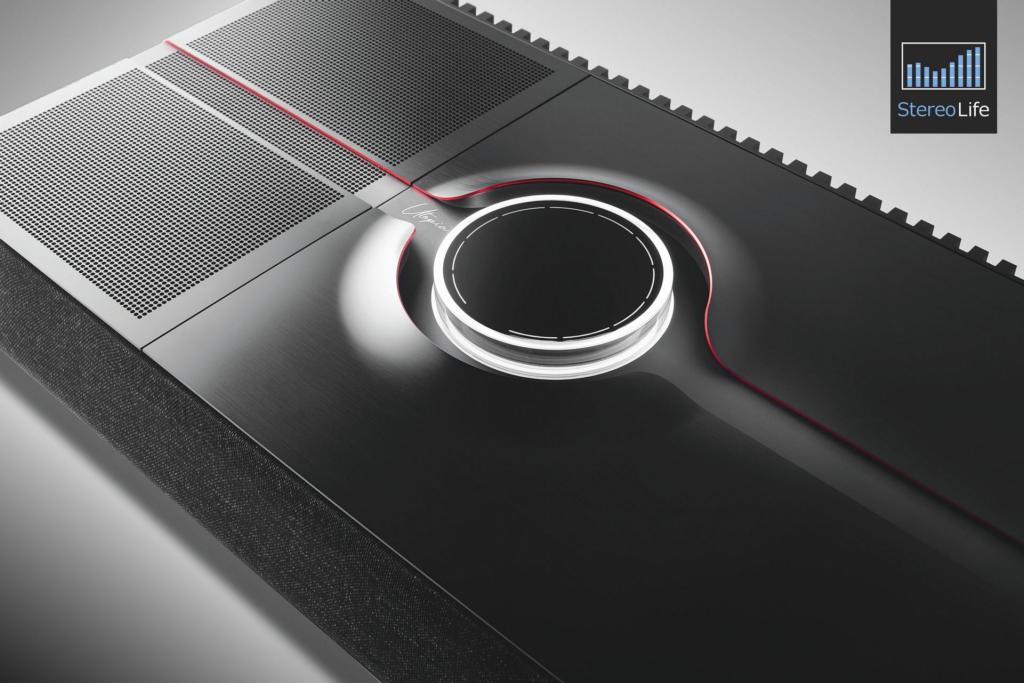
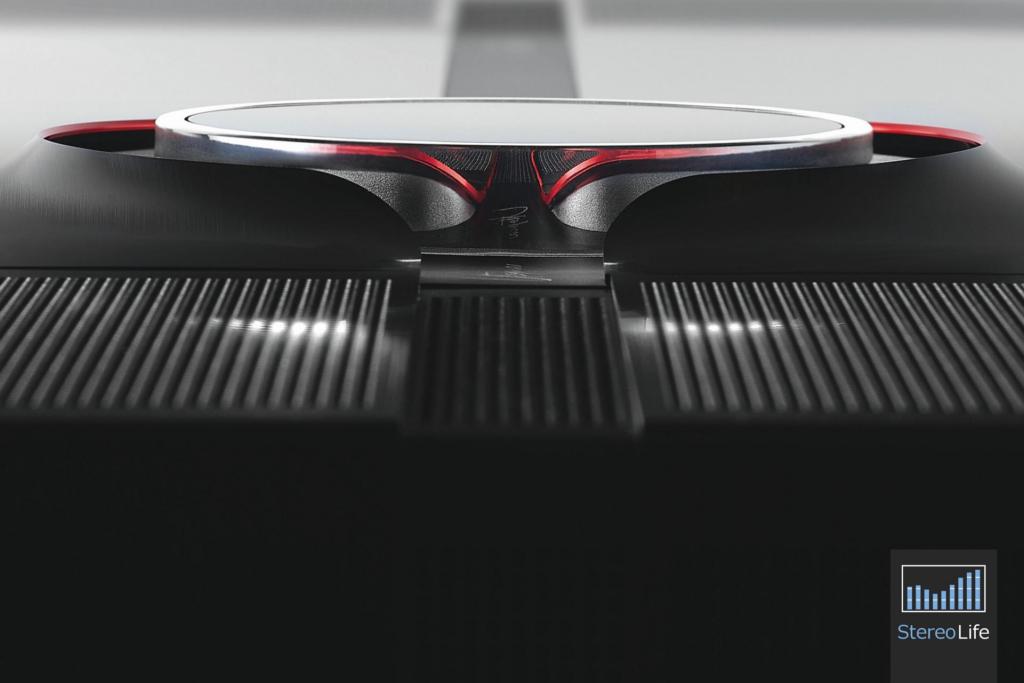
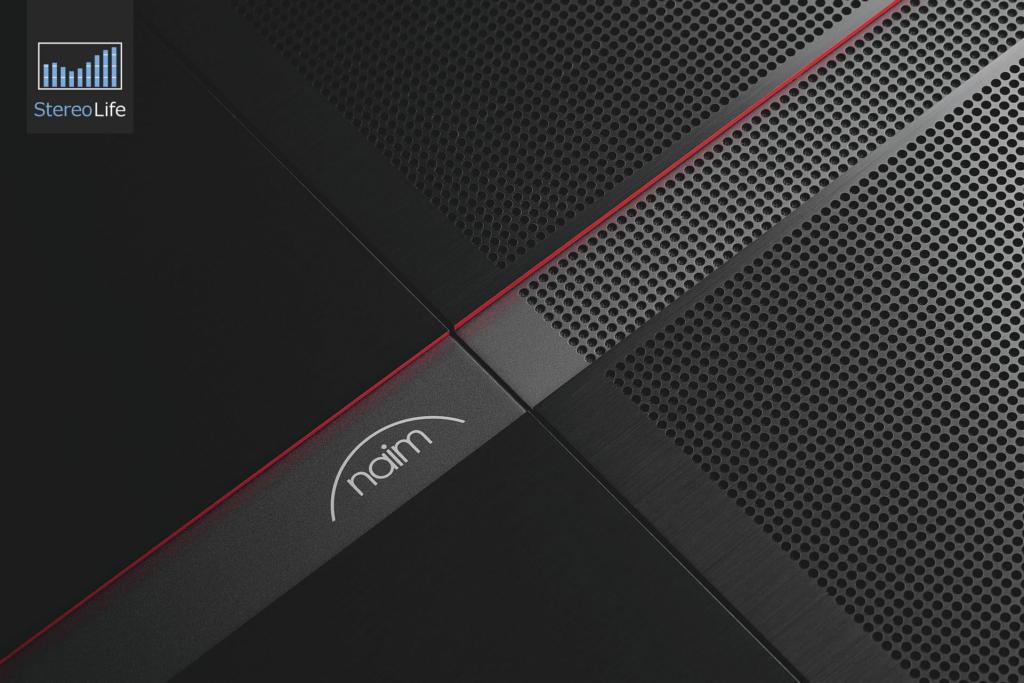
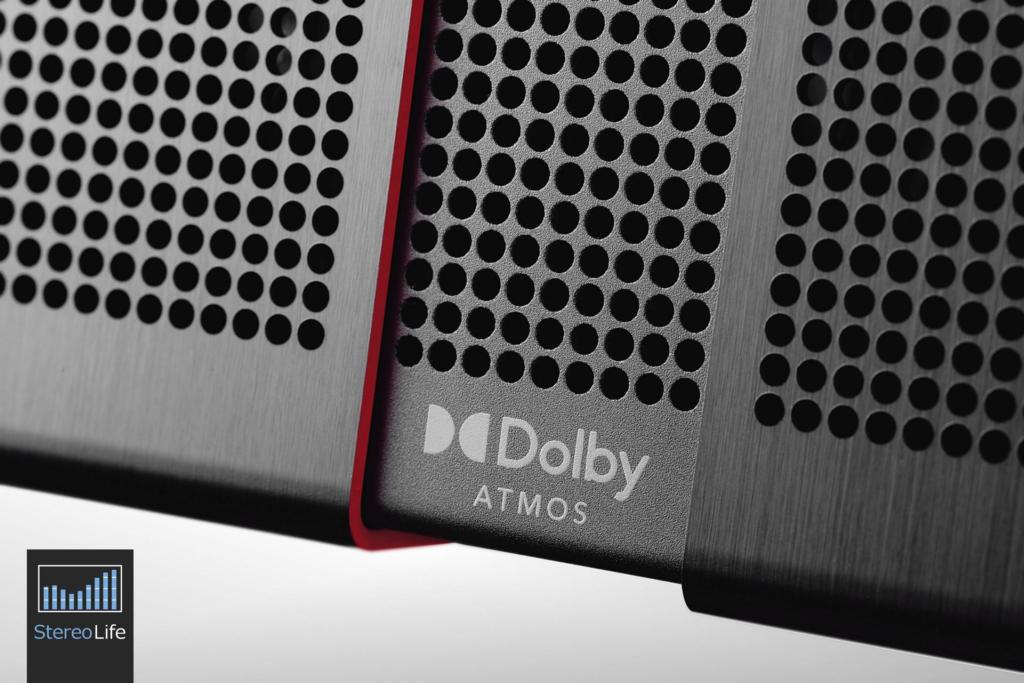
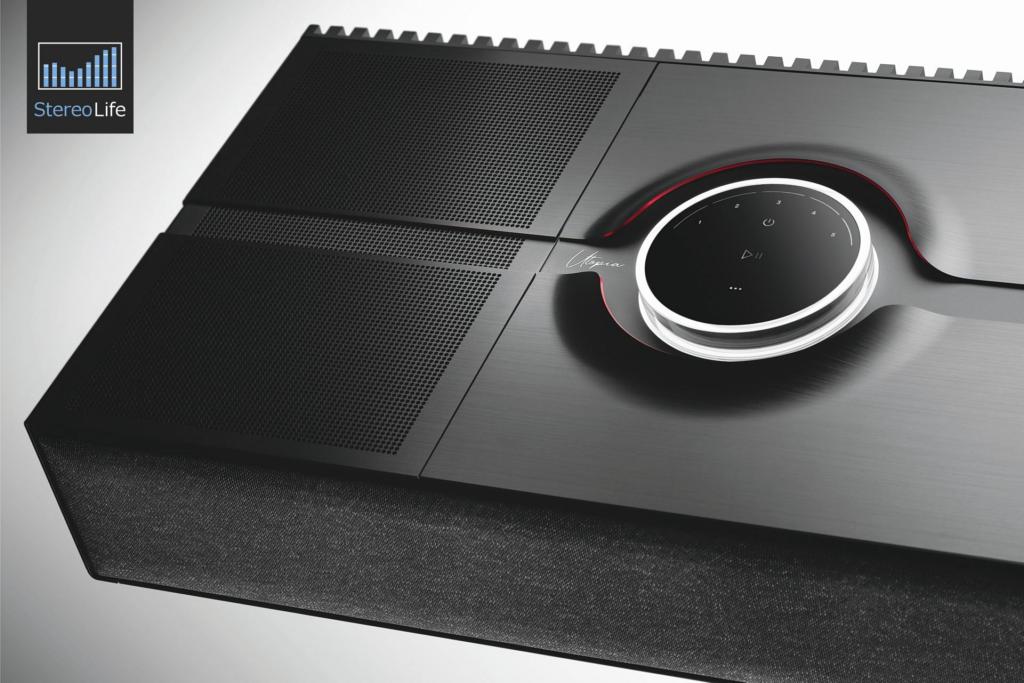
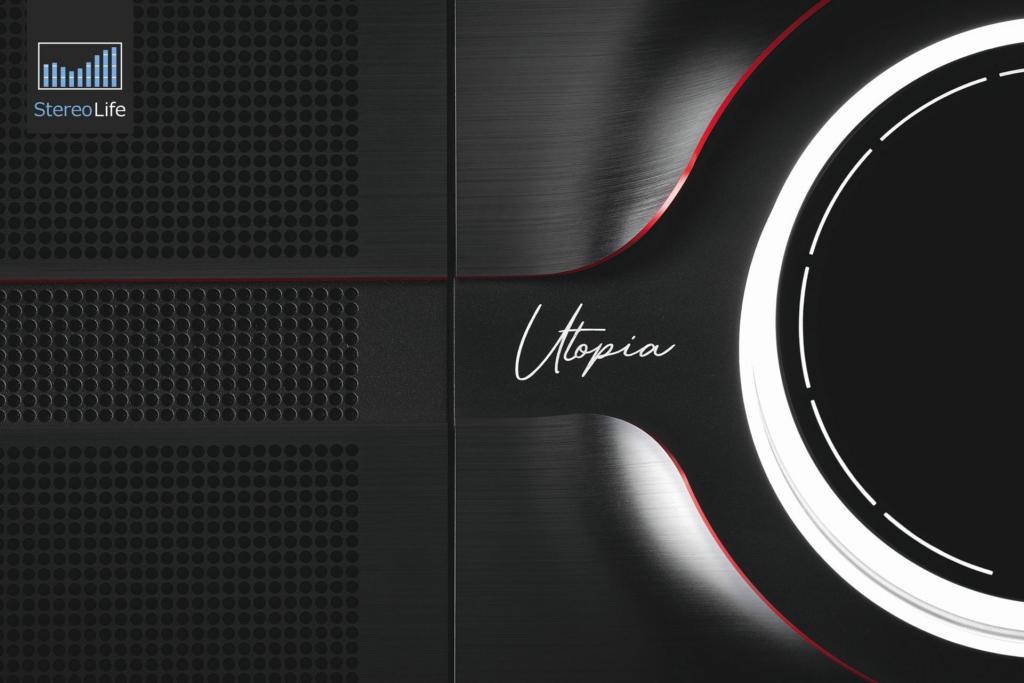
The black anodized aluminum housing is beautifully finished, with a fine red accent running along it as a nod to the Utopia family. That small touch lends it an extra air of exclusivity, but the designers have wisely stopped there. You won't find an enormous logo, chrome rings, or glossy panels that look fabulous in promotional photos but turn into dust and fingerprint collectors at home. The emphasis is on clean lines, dark materials, and carefully restrained details. A fabric grille covers the seven front-facing drivers and can be removed to reveal the array beneath, although the system looks equally attractive with the drivers hidden. And those seven are only part of the story. The Utopia has another eight full-range drivers behind metal grilles on the sides and top of the cabinet. They're there to help create a much wider, more enveloping soundfield. Despite the premium materials and sheer size, the design is surprisingly understated. Unlike some high-end loudspeakers, it doesn't seem desperate to tell every visitor how much it cost. Depending on the room and your taste, it can be either a striking centerpiece or an elegant piece of equipment that blends into its surroundings.
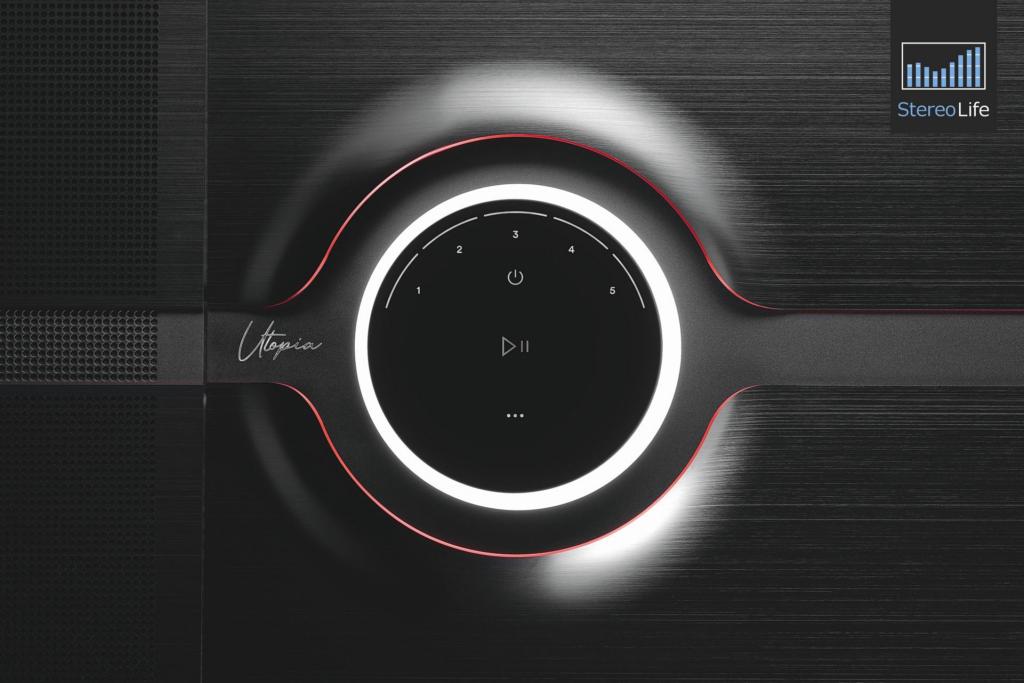
Of course, the star of the show is still that control dial. On the original Muso it was as much a visual attraction as a practical feature, the kind of thing that tempts even someone with no interest in audio to walk over and have a play. Naim refined the idea over successive generations, combining a large rotary volume control with a touch interface and proximity sensor. The Utopia follows the same formula. Turn the outer ring to adjust the volum, use the center to access the main controls. The illumination wakes when your hand approaches, so there's no need for a glowing panel to distract you in a dark room. That might sound trivial, but it matters on a product that's meant to accompany movie nights. There's nothing particularly luxurious about a dazzling display pulling your attention away from the screen. More fundamentally, it's nice to have a substantial physical control at all. In an age when manufacturers seem determined to put every last function in a phone app, being able to walk up to a device and adjust the volume with one instinctive gesture feels almost indulgent. I say that as a Muso 2nd Generation owner. Silly as it sounds, even though I can change the volume from my phone whenever I like, I still regularly get up just to turn that huge dial. Naim must have spent a fortune developing it, but the money wasn't wasted. It remains a pleasure to use and gives the whole product a remarkably satisfying sense of occasion.
The Utopia's size does mean you can't simply put it wherever you please. A width of one meter isn't necessarily a deal-breaker, especially if your TV is 65 or 75 inches across. The depth is a different story. At almost 30 cm, this thing will swallow a considerable portion of a typical media console. If the television has a broad, low-profile stand, or you already have a set-top box, amplifier, or turntable on the furniture beneath it, finding room for everything could be tricky. Put the Utopia directly in front of the TV and you risk blocking the bottom of the picture. As with other large soundbars, installation calls for a little forethought. Unless, of course, your television is wall-mounted above a sufficiently generous cabinet. That's exactly the arrangement in my living room, so accommodating the Muso Utopia was easy enough. I just shifted my amplifier slightly and removed a decorative object from the other end of the console. Plenty of people won't be so lucky, though, and one of the supposed attractions of a one-box system is that it should make furnishing the living room simpler, not more complicated. Here, you might find yourself rearranging the furniture before hearing a single note. Then again, this is hardly your average supermarket soundbar.
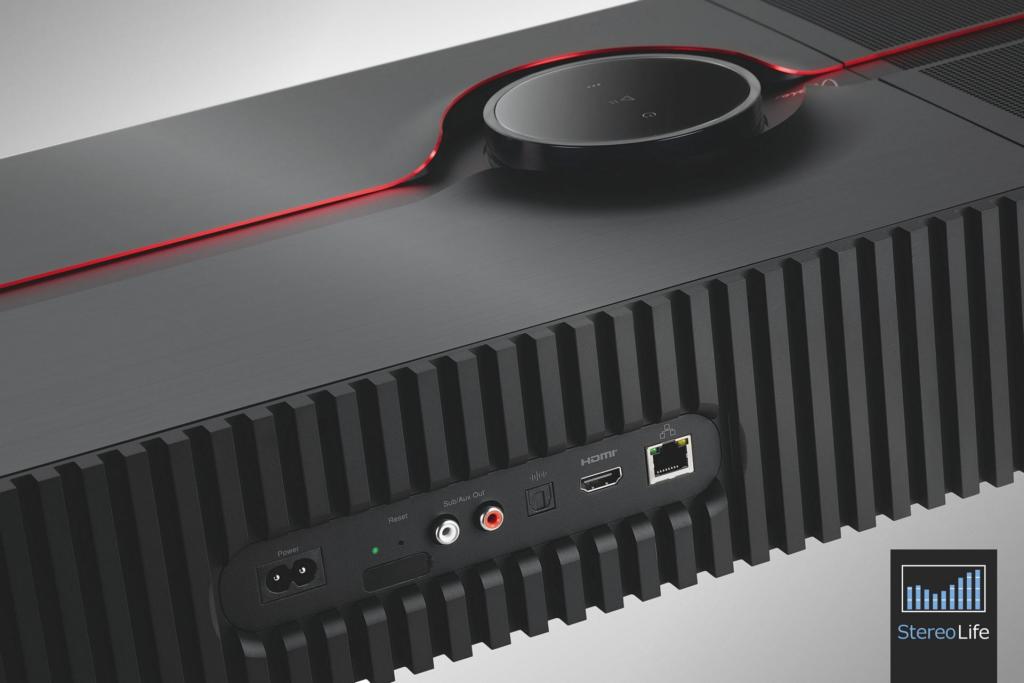
As for connections, the Muso Utopia is thoroughly up to date, although not quite as flexible as you might expect at this price. For movie fans, the key socket is HDMI eARC, which accepts audio from a TV, including multichannel formats. HDMI CEC means the TV remote can also control the Naim's volume, a welcome convenience given that there is no separate remote in the box. That omission isn't a major inconvenience when listening to music, since most people choose tracks on a phone or tablet anyway. But on a product costing this much, it's still a little surprising. Not everyone wants to reach for their phone every time they need to change something, and some listeners make a point of putting their mobile devices away when the music starts. Still, with the big control dial, the TV remote, and the app all available, I can't call it a serious failing.
Elsewhere, there's an optical digital input, an Ethernet socket, and an RCA output for an external subwoofer. That's pretty much it for physical connectivity. No extra HDMI inputs to pass a signal through from a console or Blu-ray player, no analog input for a turntable fitted with an external phono stage, not even a conventional line input for a CD player. On an inexpensive streaming speaker, you could shrug and move on. On something billed as a potential replacement for an entire hi-fi system, it's more of a consideration. The Utopia is extremely well equipped for digital sources and network services, but it isn't a universal hub for every component you might own. You could connect a CD player via optical, provided it has a suitable output. A turntable is another matter. In most homes, the console, set-top box, and Blu-ray player will be hooked up to the TV, which will then pass the sound on to the Naim, and that's a perfectly sensible arrangement. It works, however, only if the television supports the formats you need and can pass them through eARC. Otherwise, the weakest link in your shiny new sound system may turn out to be the TV rather than the soundbar.
Streaming, unsurprisingly, is home turf for Naim. The Muso Utopia runs on the Pulse platform, drawing on the company's long experience with network audio. Spotify Connect, Tidal Connect, Qobuz Connect, Apple AirPlay, Google Cast, Presto Music, internet radio, and playback from a local network via UPnP are all on the menu. So is a broad selection of lossless and high-resolution formats - WAV up to 32-bit/384 kHz, FLAC, AIFF, and ALAC up to 24-bit/384 kHz, and DSD128. In practical terms, most owners can simply play music from their preferred streaming service or network storage without worrying about compatibility or converting files. You can work through the Focal & Naim app, stream directly from Tidal or Qobuz, or incorporate the Utopia into a larger multiroom setup. Bluetooth is included too, although the specification is decidedly unadventurous - version 5.1, with SBC and AAC. There's no confirmed aptX HD, aptX Adaptive, or LDAC support. I wouldn't lose sleep over it, since Wi-Fi and direct streaming make considerably more sense at home, but it's an odd limitation in a product this ambitious. Also worth bearing in mind - accepting a high-resolution file doesn't necessarily mean preserving its native resolution all the way through the signal-processing chain.
The Focal & Naim app has been evolving for years and is now central to the whole ecosystem. It handles source selection, playback, streaming services, sound settings, firmware updates, and the configuration of devices in different rooms. According to the manufacturer, you can synchronize up to 32 compatible Focal and Naim streamers. That's rather more than the average household is likely to need, but it does underline that the Utopia doesn't have to operate in isolation. Other network-enabled components from the two brands can be brought under the same app. One distinction is worth making, though - multiroom playback isn't the same thing as building a traditional home theater with separate rear speakers. Playing synchronized music throughout the house is one thing, assigning discrete surround channels to different speakers is quite another. No such surround expansion capability has been confirmed for the Utopia. You can add a powered subwoofer, but if a full Dolby Atmos installation with physical speakers around the room is your goal, you'll need a different approach.
The Utopia's ability to create a sense of space is, naturally, one of its headline attractions. Naim specifies Dolby Atmos in a 7.1.2 configuration alongside its own Sphere processing, which uses directional sound control and techniques designed to reduce crosstalk between the signals reaching your ears. That doesn't mean seven tiny speakers, a subwoofer, and a pair of ceiling channels have somehow been packed into the cabinet. What you actually have is an array of 15 physical drivers under processor control, working to reconstruct a particular acoustic field. Some sounds travel directly to the listener. Others are directed toward the walls or ceiling so that they reach the listening position after reflecting at the right angle and with the right delay. The intention is to make effects appear beside you, above you, or even a little behind you. There's nothing entirely new about the principle. Yamaha explored it years ago with its digital sound projectors, Sennheiser developed its own version for the Ambeo Soundbar, and spatial algorithms are now common throughout the soundbar market. What distinguishes the Utopia is the marriage of that processing with a serious array of high-quality drivers and amplification designed to deliver substantial dynamic headroom.
There are six principal listening modes - Dolby Movie, Dolby Music, Sphere Music, Sphere Movie, Sphere Gaming, and Sphere Podcast. Night mode is also available, taming dynamic swings and low-frequency energy so you don't annoy the rest of the household or the neighbors. Dolby and Sphere aren't simply different EQ presets. They take different approaches to processing and presenting the sound. Sphere makes use of beamforming, for example, adjusting the phase and level of the signal sent to each driver to control the direction in which sound is projected. It also employs crosstalk cancellation, designed to reduce how much of the signal meant for one ear reaches the other, thereby helping control the apparent location of sounds. On paper, both techniques are highly appealing when you're trying to produce an expansive soundstage from drivers squeezed into the same enclosure. In a real room, however, their effectiveness depends on the acoustics and where you're sitting. That's a limitation shared by any system attempting to reproduce a three-dimensional soundfield without actually placing speakers around the couch.
Then there's ADAPT, short for Adaptive Acoustic Personal Tuning, which is intended to tailor the Utopia's performance to the room. Interestingly, Focal hasn't gone with the usual microphone-based calibration routine. Instead, you tell the app how far the system is from the walls, ceiling, and listening position, and the algorithm uses those measurements to configure the processing. It's refreshingly straightforward - no special equipment, no loud test tones, no sequence of microphone measurements. Of course, knowing the geometry of a room isn't the same as knowing its acoustics. Two rooms can have identical dimensions and sound completely different. One might have floor-to-ceiling windows, stone flooring, and a handful of designer chairs, the other, thick rugs, curtains, and walls lined with bookshelves. ADAPT isn't a substitute for a full measurement-based room correction system that analyzes what actually happens at the listening position. That doesn't mean it's pointless. Accurate information about the room's layout can still help the system steer sounds more effectively and improve the relationship between its virtual channels.
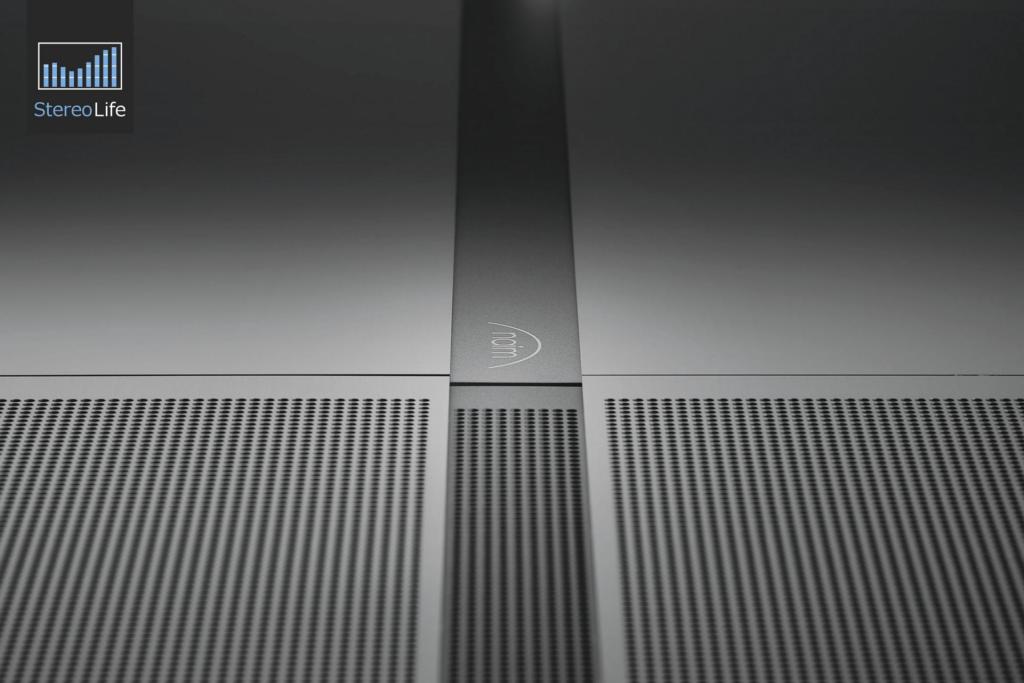
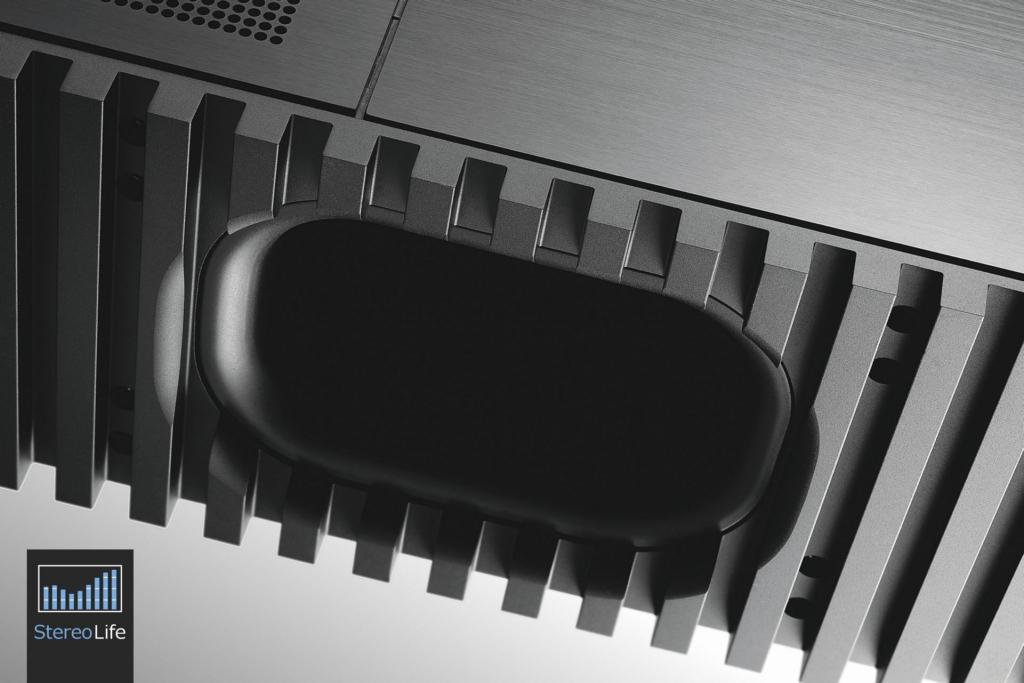
Ultimately, though, none of those individual features makes quite the same impression as the Utopia's sheer presence and build quality. By soundbar standards, this thing is a beast, a powerhouse, practically the emperor of the galaxy. It's huge, imposing, and packed with drivers, amplifiers, processors, and beautifully executed design touches. Spend some time with it and you begin to wonder whether it still belongs in the soundbar category at all. Make it slightly larger, add a purpose-built stand with shelves for a cable box, game console, or CD player, and you'd have a magnificent piece of audio furniture - an entire entertainment console with 15 drivers and a combined 720 W of amplification built in. The materials and workmanship are as good as you'd expect. Naim set a high standard with the original Muso, and every model since has nudged it a little higher. Here, the size makes that attention to detail even more impressive. It's one thing to handle a beautifully made pair of headphones or a compact amplifier that feels like electronic jewelry. It's quite another to see the same precision applied to a cabinet a meter wide. Just look at the close-up photos - the heat sinks, the drivers behind the grille, the bass-reflex port. Gorgeous.
Naturally, audiophiles will wonder whether the whole idea makes sense. Spend the same amount of money on a conventional system and you could have a fine pair of loudspeakers, an amplifier, a streamer, perhaps even a turntable. Place the speakers a sensible distance apart and you'd have real stereo imaging rather than a soundfield assembled by 15 drivers and a DSP. For a dedicated music listener, that is an enormous advantage. I won't argue otherwise. But here's the point - a great many potential buyers would never consider assembling a system like that in the first place. They want a single-box solution because that's what fits their space, and they have no interest in rearranging their lives around separate components. If they spend most evenings watching TV or streaming shows, and listen to music casually while moving around the house rather than sitting in one carefully chosen spot, the case for 'proper stereo imaging' simply doesn't resonate. If what they want is a soundbar, they're happy to spend serious money, and they expect it to be substantial and unmistakably luxurious, the Muso Utopia is a very difficult proposition to beat.
Is it flawless from a functional standpoint? Of course not. An analog input, a few additional HDMI sockets, and a dedicated remote would all have been welcome. Some buyers will also miss more sophisticated Bluetooth codecs or the option to add physical surround speakers. Then again, expecting a product that replaces an entire collection of components to do absolutely everything would be unreasonable. What the Utopia does offer is sophisticated streaming, high-resolution playback, an extensive choice of spatial modes, straightforward TV integration, and some ability to tailor the presentation to the room, without requiring a separate amp, DAC, network player, speakers, or AV receiver. Whether that trade-off makes sense depends entirely on what you need. If your system must accommodate a turntable, a tape deck, a CD player, and assorted other sources, conventional stereo remains much more flexible. If most of your music comes from streaming and you like settling down with a movie after work, the Utopia starts to look very tempting indeed. Assuming, that is, the sound can live up to the engineering ambition.

Sound performance
This brings us to what has been the most important question all along. The Muso Utopia is expensive, technically impressive, and exceptionally versatile, but can it actually make music sound good? I don't mean the kind of listening where you put on a favorite playlist, get on with your day, and realize half an hour later that the sound hasn't been annoying you. Plenty of far cheaper speakers can manage that. I mean sitting down, choosing an album, and wanting to hear everything it has to offer - the dynamics, the character of the instruments, the natural quality of voices, the smallest shifts in tempo, the sense of space. In that situation, the convenience features are beside the point. What matters is whether the system can make you feel something. And that, historically, is where most soundbars have fallen short of a proper stereo. Not because the people designing them don't know what they're doing, or because the technology is somehow inadequate. They simply have different priorities. A soundbar is expected to improve the TV's audio, make dialogue intelligible, and deliver excitement during a movie. Music is a bonus, sometimes a very enjoyable one, but still a bonus.
I remember running into precisely this issue when I reviewed the Sennheiser Ambeo Soundbar. Its engineers had created an extraordinarily sophisticated, powerful system capable of producing a hugely convincing cinematic soundfield. Switch to conventional music playback, though, and some of the magic evaporated. The presentation was still punchy, full-bodied, and dynamic, but it lacked the naturalness that lets two well-placed speakers disappear and leave a three-dimensional stage in front of the listener. It wasn't simply a question of width. The sound was either too tightly confined or artificially stretched in a way that never felt completely believable. For movies, that was hardly a problem, drawing you into the action on the screen was the whole point. Music asks for something different. Unless the recording engineer intended it, nobody wants a piano that suddenly stretches from wall to wall or a singer materializing somewhere above their right shoulder.
Naim comes at this from a somewhat different background. The Muso 2nd Generation had already shown that a single-box speaker could take music seriously. Its stereo image was inevitably limited, but it made up ground with a clean, open midrange, quick bass, impressive clarity, and that unmistakable Naim sense of rhythm. Most importantly, music never felt like an afterthought to a collection of special effects. You could listen to entire albums, pick up on the small details, follow individual instruments, and never feel that the speaker was desperately pretending to be something much bigger. The Muso Utopia is considerably more complex, however. It has a larger and far more elaborate driver array, new transducers, 15 channels of amplification, and sophisticated spatial processing. That gives the engineers more tools to play with, but it also creates a danger - that the spectacle might become more important than faithful music reproduction. In that respect, the Utopia has a tougher assignment than any of its predecessors.
The first thing that struck me when I started listening was the sheer scale of the presentation. Hardly a shock, I suppose. The Utopia is designed to serve rooms of up to around 50 square meters, and I have little doubt that it can fill a space that size without sounding pushed. This is one of the things that separates it from more conventional soundbars. With many inexpensive models, the initial wow factor comes from boosted bass and sparkling treble. Turn up the volume, though, and the limitations quickly become obvious. The bottom end starts to lose its grip, the midrange turns aggressive, and instead of expanding, the presentation simply gets louder. The Utopia's extensive amplification and array of drivers give it far greater breathing room. The result is a sound that seems almost implausibly large for a single enclosure. This isn't just about how loud it can go. It's about music opening up and filling the room, instead of remaining stubbornly anchored to a box beneath the TV.
Dynamics are another highlight. Naim has always placed great importance on this aspect of sound, even when the published power ratings of its traditional amplifiers were modest. It was the speed of their response, the attack of a transient, and their ability to keep a performance alive even when the music was relatively quiet that made them special. The Muso Utopia has plenty to offer in that department, but reducing it to a headline figure of 720 W would miss the point. Every driver receives a signal tailored to its particular job, while the DSP controls its level and operating range. This means the individual sections can work within parameters chosen specifically for them rather than being bound by the usual compromises of a passive crossover. Once the initial astonishment at the sheer power wears off, you begin to notice that the small details haven't been buried beneath that enormous wall of sound. I know comparing a soundbar with an audiophile system made up of a streamer, preamp, power amp, and two external power supplies is a bit of a stretch, but the spirit of old-school Naim is unmistakably alive somewhere inside this long black box. And that's important. The ability to hit hard doesn't, by itself, make a system good. It also needs to trace the tiny dynamic differences from one note to the next while delivering a sudden attack without flinching. The Utopia can do both.
Then there's the bass, which is bound to attract the most attention. Three oval woofers, each driven by its own amplifier, are responsible for delivering weight and low-frequency extension. Naim quotes a response down to 30 Hz, with the lower limit reaching 25 Hz at -6 dB. Those are seriously ambitious figures for a box less than five inches tall. In fact, you have to wonder how it's possible, because plenty of sizable powered subwoofers would be happy to claim numbers like that. But after spending time with the system, I came away convinced that Naim was after more than an impressive specification sheet. Many soundbars only hint at the very lowest frequencies, creating an illusion of power by pumping up the upper bass instead. It's an effective trick for television - explosions, engines, and movie scores all gain instant heft. Listen to music for a while, however, and it can become tiring. An acoustic double bass starts taking on the character of an electric bass, every kick drum sounds vaguely alike, and low-register instruments lose their individual identities. A properly engineered system needs to do more than reach a particular frequency on paper. It should let one bass note sound different from the next, and it should deliver power without surrendering control. The Muso Utopia gets that right. Its low end has real authority and can give even the most demanding movie scenes a tremendous sense of scale, yet it doesn't swamp the midrange or make the rest of the system sound strained. Something can suddenly hit like a ton of bricks while everything around it carries on completely unfazed. Needless to say, that's just as impressive with a film or TV series as it is with music. If you're dreaming of a home theater with a great picture and thrilling sound, but have absolutely no desire to open up the walls or bolt speakers to the ceiling, a good TV and a Muso Utopia could be all you need. Expect goosebumps.
All right, what about stereo imaging? This is where every single-box system runs into the same fundamental problem. No matter how clever the drivers or amplifiers, the physical sound sources are packed together. With a traditional stereo, two speakers are usually positioned six to ten feet apart, with their placement relative to the walls and listening seat carefully adjusted. Done properly, the result is more than a wide soundstage - you also get convincing depth, precise placement of instruments, and the wonderful illusion that the music exists independently of the speakers themselves. A soundbar designer has only one cabinet's width to work with. Side-firing drivers, wall reflections, and advanced processing can extend the presentation, but that's a very different way of generating a soundstage. It isn't necessarily inferior for every purpose, but it isn't the same thing as natural imaging from two separate speakers. The Muso Utopia can project a soundfield far beyond the edges of its cabinet. Its side- and upward-firing drivers are so effective that some listeners may instinctively look around the room for speakers that aren't there. But we need to separate two different abilitie - creating a convincing cinematic environment and reproducing a stereo music recording as the people who made it intended. At the first, the Utopia is outstanding. At the second, speaking as someone who loves traditional stereo systems, it doesn't quite get there. Then again, I doubt Naim set out to build a one-box speaker that would make devotees of tube amps and BBC-style monitors abandon everything they believe in. The aim seems to have been a soundbar that can't perform miracles with natural stereo imaging but comes surprisingly close, in other areas, to the performance of full-size hi-fi systems costing considerably more.
Before moving on, there's one more thing to say about room acoustics. The Utopia's spatial presentation relies to a significant extent on surfaces that can reflect sound. Every loudspeaker interacts with the room, of course, but with conventional stereo we generally try to control the more troublesome reflections. Here, some reflections are part of the design. A living room with a cathedral-height ceiling, an open-plan kitchen on one side, and floor-to-ceiling glass on the other may therefore be a much tougher environment than an ordinary rectangular room in an apartment. ADAPT can help the system account for room geometry, but it can't bounce sound off a wall that isn't there. Two people with identical Utopias might consequently describe the surround effects in completely different terms. One could hear sounds clearly appearing to the sides and overhead, the other might hear little more than an extraordinarily broad stage across the front of the room. That doesn't mean either unit is faulty. Different rooms produce different results. Consider this a friendly warning to anyone expecting a giant, electronics-packed soundbar to work its magic equally well in every space. It will certainly try to adapt, but if your room has the echo of a Gothic cathedral, no DSP algorithm is going to fix it completely. Then again, I suspect some new Utopia owners would enjoy even that exaggerated 'concert hall' effect. In the end, it's all about what Naim has always cared about most - putting a big grin on the listener's face. Making you feel as though you're part of a live musical or cinematic event without having to leave home. And this soundbar can absolutely do that. No, it isn't an audiophile component in the traditional sense, but it's so gloriously, ridiculously, off-the-charts impressive that it's hard not to fall for it.

Build quality and technical details
The Naim Muso Utopia is the most sophisticated single-box audio system the British company has produced to date. Its aluminum cabinet, measuring 100 x 11.8 x 29.5 cm, houses 15 drivers, each with its own amplifier channel. The combined output is rated at 720 W, with a mixture of Class D and Class AB amplification. The fully active architecture gives the DSP precise control over each driver, eliminating the need for conventional passive crossovers and allowing frequency response, timing, phase, and signal level to be adjusted independently. The processor also manages overload protection, power distribution, and spatial audio processing. In other words, it isn't simply sending music to 15 speakers and hoping for the best.
Seven of the drivers are mounted on the front. Three are oval 6 x 3-inch woofers, each fed by an 84 W amplifier. An oval diaphragm provides a useful radiating area without demanding a tall cabinet, making it a sensible choice when the enclosure's shape rules out a conventional large circular woofer. Diaphragm area isn't the whole story, of course. Maximum excursion, stiffness, the motor system, suspension behavior, and the available internal volume all affect bass performance. Still, a generous radiating surface is a good place to start. Here, all three woofers operate under DSP control, allowing Naim to shape their response and manage unwanted distortion at higher volume levels.
Alongside them sit two 2.75-inch midrange units with Focal's W diaphragms in an M-shaped profile. W-cone construction is among the French company's signature technologies. The idea is to use a carefully engineered multilayer structure to combine low weight, high stiffness, and effective damping, three qualities that can be difficult to reconcile in a conventional diaphragm. Lightweight, rigid materials may develop pronounced resonances, while materials with excellent damping properties aren't always sufficiently stiff. By assigning different roles to different layers, a composite structure can strike a more favorable balance. Focal has spent years refining this approach in its advanced loudspeakers. In the Utopia, the M-shaped profile is intended to provide further control over diaphragm movement and dispersion. That matters particularly in a system where the drivers are mounted close together and their acoustic interaction needs to be managed very carefully.
The two tweeters use Focal's PRISM technology, short for Photon-Refined Intelligent Structured Membrane. This is a new approach based on a specially shaped, multilayer composite diaphragm. An amorphous carbon coating forms part of the structure, while its fine-scale geometry is designed to balance mass, stiffness, and damping. Among the inspirations cited by the engineers are natural structures such as dragonfly wings, where very low weight is combined with substantial strength and strategically distributed reinforcement. In a tweeter, the objective is to suppress unwanted resonances and provide closer control over its behavior. Focal positions PRISM as a further step in its development beyond beryllium-based diaphragm technologies. As ever, though, comparing materials in isolation doesn't tell you everything about a driver. The shape of the diaphragm, suspension, motor assembly, and integration with neighboring drivers are equally important.
Interestingly, the tweeters are the only units driven by Class AB amplifiers, each rated at 24 W. Everything else is powered by Class D. This arrangement combines the efficiency and relatively low heat output of Class D in the sections demanding substantial power with a different amplifier topology for the high frequencies. That shouldn't be taken as evidence that one class is inherently superior to the other. It simply shows that the engineers chose different solutions for different jobs. The two midrange drivers have 42 W each, as do all eight full-range units. Add up the 15 channels and you arrive at the quoted 720 W. That figure describes the total rated amplifier output, not the power continuously drawn from the wall. Naim lists consumption during normal operation at 220 W, falling below 0.5 W in standby and below 2 W in network standby.
The other eight drivers are distributed across the cabinet's sides and top. All are 1.5 x 2.75-inch full-range units, with two facing outward on each side and four firing upward. Their main role is to generate the spatial effects. Since the DSP controls them independently, their output can be directed through carefully managed interference patterns and reflections from the surrounding walls and ceiling. The goal is to create the impression of a 7.1.2 speaker layout without installing a single additional speaker. This is also where beamforming and crosstalk cancellation come into play. Beamforming shapes the direction in which acoustic energy is projected, while crosstalk cancellation attempts to keep the signals intended for one ear from reaching the other in ways that undermine spatial precision. Both techniques demand very accurate control over timing, phase, and level, so their effectiveness depends on the DSP's capabilities and, just as importantly, the geometry of the room.
The digital side is built around Naim's Pulse platform, which handles streaming, network communication, and integration with Sphere spatial processing. Support extends to Dolby Digital, Dolby Digital Plus, Dolby TrueHD, and Dolby MAT multichannel formats, as well as selected multichannel FLAC and WAV files and Dolby Atmos material supplied by compatible streaming services. Wi-Fi 6 provides wireless network connectivity, with Ethernet available for anyone who prefers a cable. Bluetooth is version 5.1, with SBC and AAC listed in the official specifications. Software updates are delivered through the Focal & Naim app, so the company can fix issues and expand functionality after purchase. That's particularly significant with a system like this, where software governs not only the streaming interface but also the spatial processing, listening modes, and the interaction of the various driver groups.
Naim specifies a frequency response of 30 Hz to 20 kHz within ±3 dB, with a lower limit of 25 Hz at -6 dB. Maximum output is quoted at 109 dB SPL, measured as a peak at one meter. These are impressive numbers for a single cabinet of this size, although it would be unwise to compare them directly with conventional full-size loudspeaker specifications without knowing the exact measurement conditions. I'd be particularly interested to see how the bass response changes with playback level, since active systems often employ protection and limiting that restrict the lowest frequencies when pushed hard. Naim hasn't published a complete set of independent measurements or detailed data for every driver, so some aspects of the system's behavior remain undocumented.
All of this is packed into a rigid aluminum enclosure that does more than look good. Its structure has important mechanical and thermal functions - the distinctive heat sink helps dissipate heat from the electronics, while the substantial cabinet keeps unwanted vibration from the woofers in check. At 14.1 kg, the Utopia is an altogether more serious piece of hardware than the average soundbar. It's also important that the system was designed to stand on its own, without requiring a separate subwoofer or additional speakers. From an engineering perspective, the achievement isn't merely how much hardware Naim has fitted into one box, but how well it all works together. Fifteen drivers, 15 amplifier channels, the DSP, and a sophisticated network platform must function as a single, carefully tuned system. That's the fundamental difference between the Muso Utopia and a conventional stereo. With the latter, you choose the components and can change the combination as you please. With the Utopia, Focal and Naim's engineers have made all the major decisions for you.

System configuration
Audiovector QR5, Equilibrium Nano, Pylon Audio Jade 10, Fezz Audio Titania MK2, Hegel H20, Octavio AMP, Unison Research Triode 25, Auralic Aries G1, Auralic Vega G1, Clearaudio Concept, Cambridge Audio CP2, FiiO BTR13, FiiO M21, Marantz HD-DAC1, Silent Angel M1T, Apple AirPods Max, Baseus Inspire XH1, Beyerdynamic DT 270 PRO, Beyerdynamic DT 30 IE, Beyerdynamic DT 770 PRO, Beyerdynamic DT 990 PRO, Bowers & Wilkins P5, Bowers & Wilkins Px8 S2, Denon AH-MM400, Final Audio Design A8000, Grado SR60, HiFiMAN Edition X, Koss Porta Pro, Meze 99 Classics, Musical Fidelity MF-100, Sennheiser HD 600, Sennheiser Momentum M2 AEi, Sennheiser Momentum On-Ear, Sennheiser Momentum True Wireless 5, Sennheiser Urbanite XL, Sonus Faber Pryma, Sony WF-1000XM3, Yamaha HPH-150, Albedo Geo, AudioQuest Cinnamon, AudioQuest NRG-2, Cardas Clear Reflection, Equilibrium Pure IC Ultimate, Fidata HFU2, KBL Sound Red Corona, Melodika Purple Rain, Tellurium Q Ultra Blue II, Tellurium Q Ultra Silver II, Van den Hul CS-122 Hybrid, Enerr One 6S DCB, Enerr Tablette 6S, Enerr Transcenda Ultimate, Silent Angel N8, Custom Design RS 202, Pro-Ject Wallmount It 1, Vicoustic ViCloud VMT, Vicoustic VicWallpaper VMT, Apple iPhone 15 Pro, Asus Zenbook UX31A, Xiaomi 15T Pro.
Verdict
For this kind of money, you can put together a seriously good stereo. Proper loudspeakers, an amplifier, a streamer, a starter turntable, even some decent cables and a respectable power strip. But what use is that to someone who doesn't want a pair of speakers and a collection of boxes taking over the living room? That's exactly the person the Muso Utopia was made for. Someone with a sizable space to fill, a large TV mounted on the wall, and a taste for music, movies, and great sound, but absolutely no desire to design the entire room around hi-fi equipment. They want to buy one component, put it under the screen, plug it in, and get on with life. And if a little luxury is within the budget, why settle for a cheap, tacky soundbar with a plastic subwoofer that falls over when the cat rubs against it?
For that buyer, the new Naim is an outstanding choice. It plays on a grand scale, with tremendous dynamics, powerful, beautifully controlled bass, and more than enough presence to fill a genuinely large room. With movies, it delivers an experience that's difficult to believe could come from a single box. Switch to music, and you're reminded that the companies responsible have spent decades building equipment for people who care deeply about how recordings sound. Not everything is perfect, naturally. The Utopia can't reproduce the stereo imaging of two properly positioned speakers, its surround performance depends on the room, and a few additions to the connectivity would be welcome. But those shortcomings needn't be deal-breakers for its intended audience. In fact, I suspect most potential buyers will barely give them a second thought. What matters is that this one-box system looks, feels, and sounds like a genuinely high-end product. The aristocrat of soundbars, if you like.
If I were determined to complain, I could point out that the Muso Utopia is expensive, enormous, and completely unnecessary for anyone who merely wants to improve the sound of their TV. But if you're after a straightforward, still reasonably compact system that looks at home in an elegant living room, delivers cinematic thrills without a separate subwoofer, and plays music at a level beyond most soundbars, it's very hard to ignore. I don't expect it to persuade audiophiles to sell their traditional systems, complete with proper speakers, amplifiers, CD players, streamers, and cables that cost rather more than anyone should admit in public. It might, however, convince someone who has never seriously considered owning a proper hi-fi that listening to music can be an extraordinary pleasure in its own right. And that's perhaps the best reason of all to applaud what Naim has done here.
Technical data
Number of drivers: 15
Driver configuration: 7 front, 4 side, 4 upward-firing
Woofers: 3 x 6 x 3 inches
Midrange drivers: 2 x 2.75 inches, M-profile W diaphragms
Tweeters: 2 x 1 inch, PRISM technology
Full-range drivers: 8 x 1.5 x 2.75 inches
Combined amplifier power: 720 W
Amplifier classes: AB and D
Frequency response: 30 Hz - 20 kHz (+/-3 dB)
Lower frequency limit: 25 Hz (-6 dB)
Maximum sound pressure level: 109 dB
Spatial audio systems: Dolby Atmos 7.1.2, Sphere
Connectivity: Wi-Fi, Ethernet, Bluetooth 5.1, AirPlay, Google Cast, Spotify Connect, Tidal Connect, Qobuz Connect, UPnP
Supported formats: WAV, FLAC, AIFF, ALAC, MP3, AAC, OGG, Opus, DSD64, DSD128
Digital inputs: HDMI eARC, optical
Outputs: RCA subwoofer output
Dimensions (H/W/D): 11.8/100/29.5 cm
Weight: 14.1 kg
Price: $5,499/€4,999/£4,499
Manufacturer: Naim Audio
Sound performance
Editor's rating
8.8Overall9Sound8Functionality10Design10Quality7Price