- News
- Posted
KEF LS Luxe
For years, KEF has been steadily developing the concept of a complete stereo system contained within a pair of active speakers. The history of this part of the company's lineup goes back much further than the rise of music streaming. Its symbolic starting point is the LS3/5a monitor, developed by the BBC in the 1970s using KEF drivers. The company returned to that tradition for its 50th anniversary with the passive LS50, followed several years later by the active LS50 Wireless. Subsequent generations of the LS50 Wireless, the smaller LSX systems and the slim LS60 Wireless floorstanders established an entire family of products in which the amplification, digital-to-analog conversion, streamer and digital crossover are designed from the outset as a single system. The latest and most luxurious expression of this idea is the LS Luxe, an active stand-mounted system positioned above the LS50 Wireless II while remaining considerably more compact than the floorstanding LS60 Wireless.
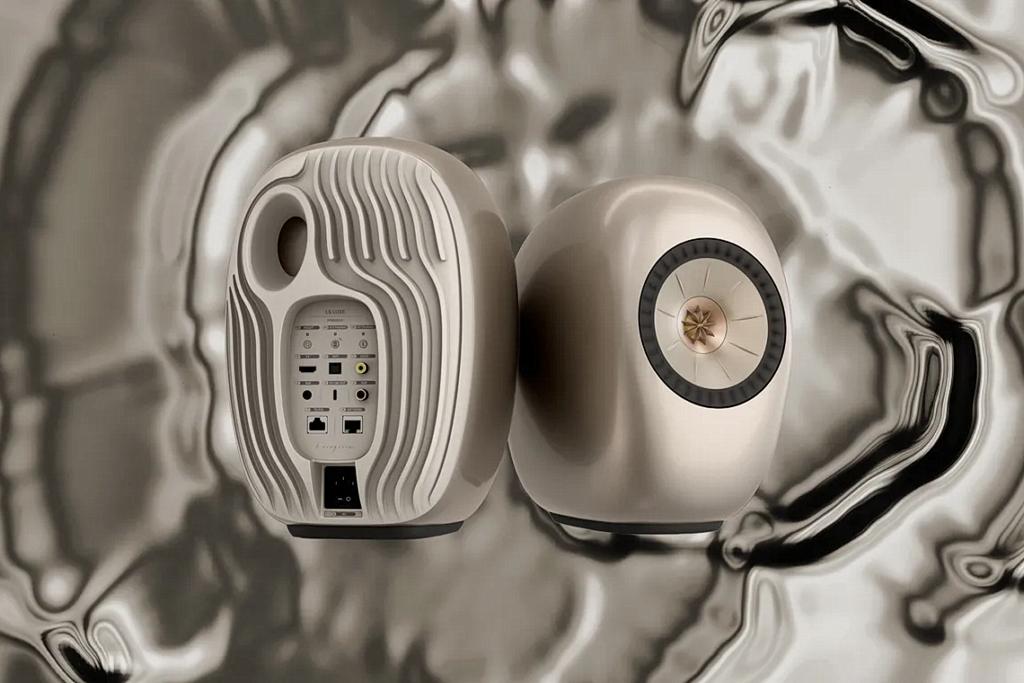
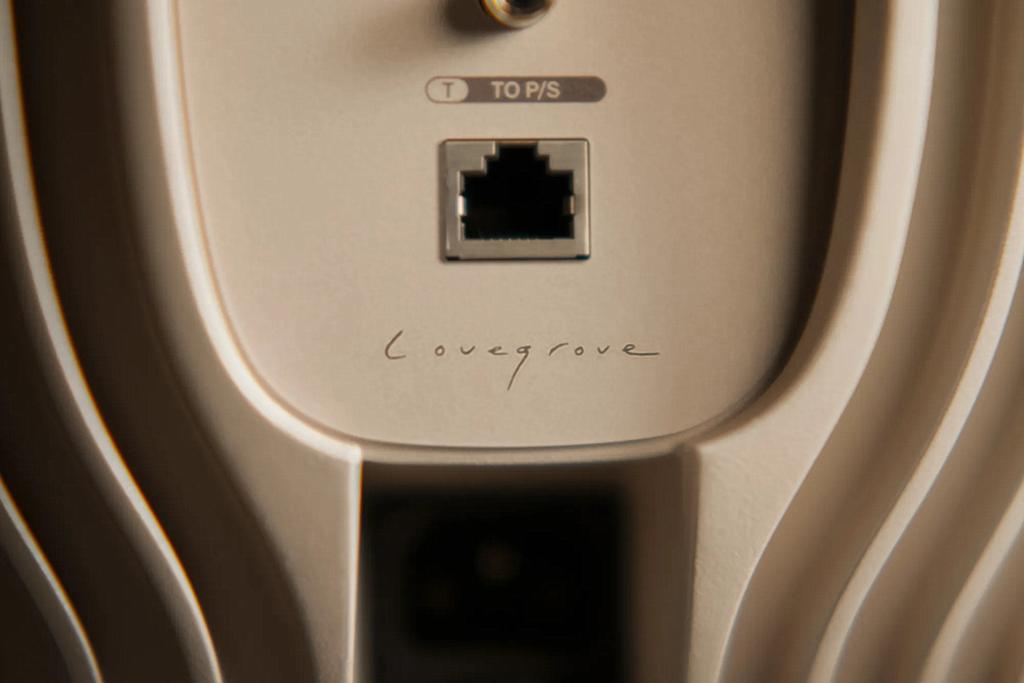
The shape of the new speakers immediately makes it clear that this is not simply a larger and more extensively refined version of the LS50 Wireless II. The enclosures were designed by Ross Lovegrove, the Welsh industrial designer known for organic, flowing forms inspired by structures found in nature. His collaboration with KEF began with the monumental Muon, introduced in 2007 - a two-meter-tall aluminum structure intended to combine uncompromising engineering with the appearance of a modern sculpture. Lovegrove later designed the portable Muo speakers and the Mu headphone family for KEF. The LS Luxe brings the same visual language to a far more accessible and practical system that can be placed in an ordinary living room, connected to a television and controlled from a smartphone.
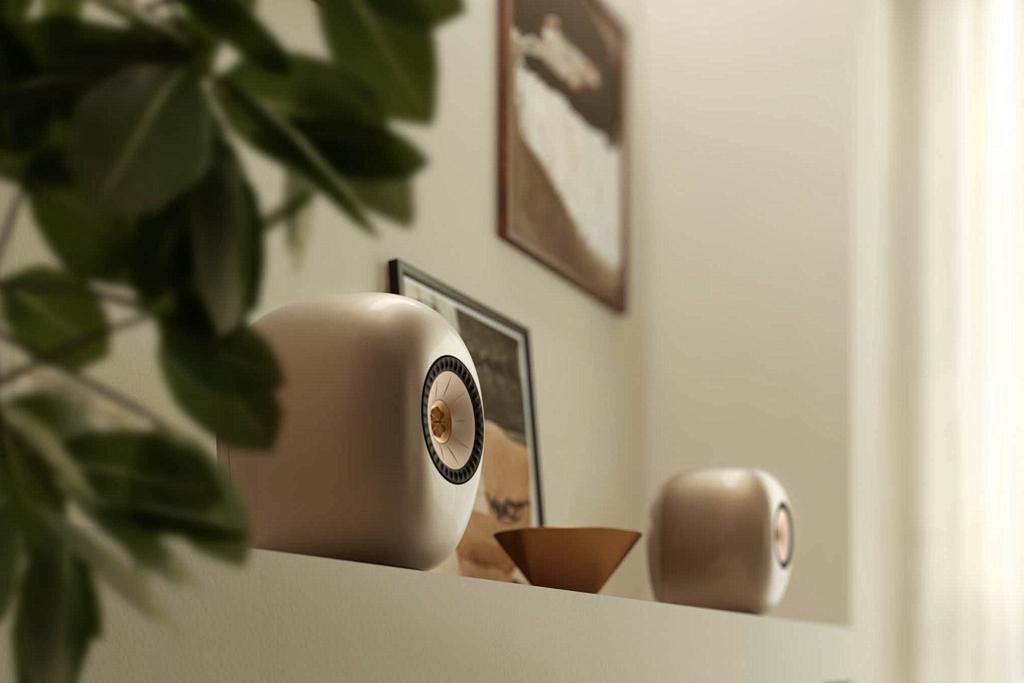
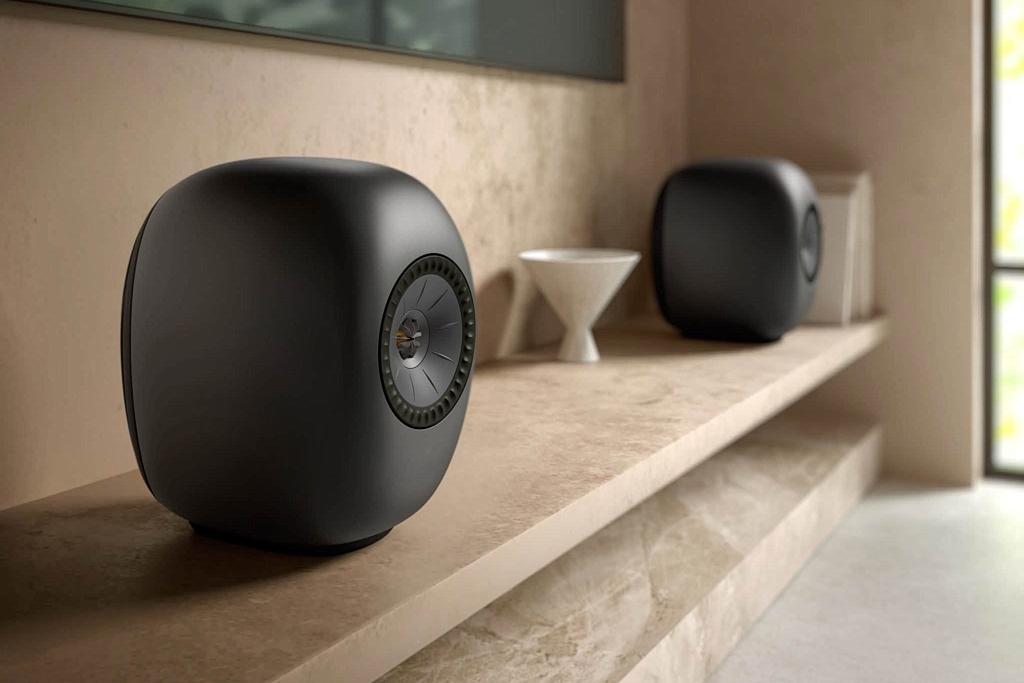
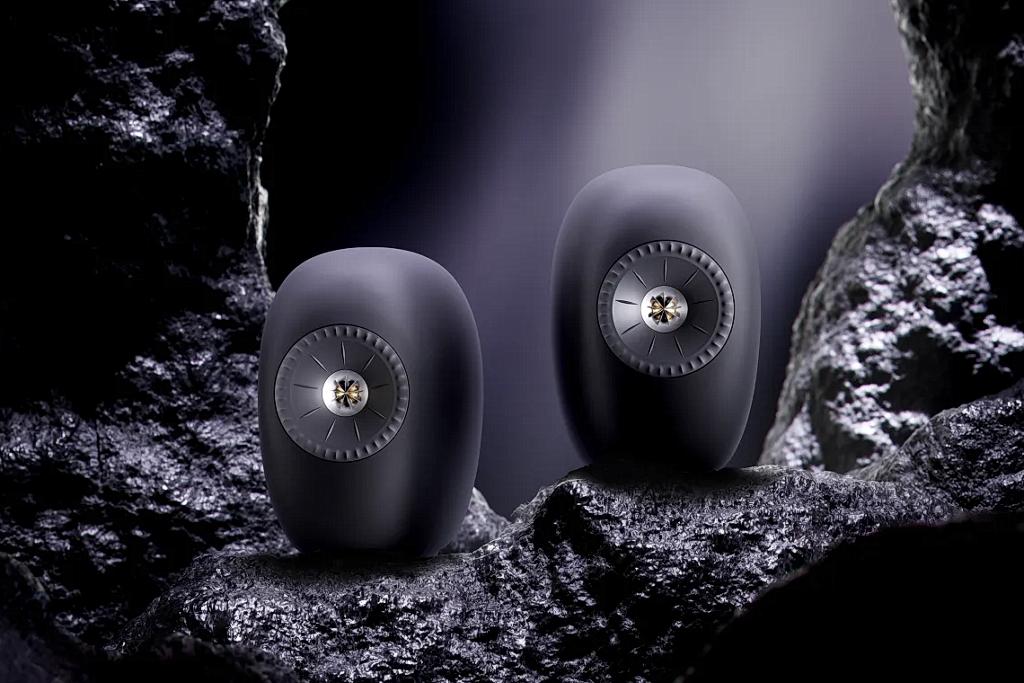
The enclosures are almost entirely free from flat surfaces and sharp edges. Viewed from the side, the rear section appears to flow smoothly into the front baffle, with the driver array positioned in a central recess. This form is not purely an exercise in styling. The curved surfaces are intended to reduce edge diffraction, while the irregular internal shape makes it more difficult for standing waves to form. The cabinets are made from Bulk Molding Compound, or BMC, a composite that allows complex shapes to be created while providing high rigidity and effective resonance control without an elaborate system of conventional internal braces. This allowed KEF's engineers to devote more of the available space to the working volume of the mid/bass driver.
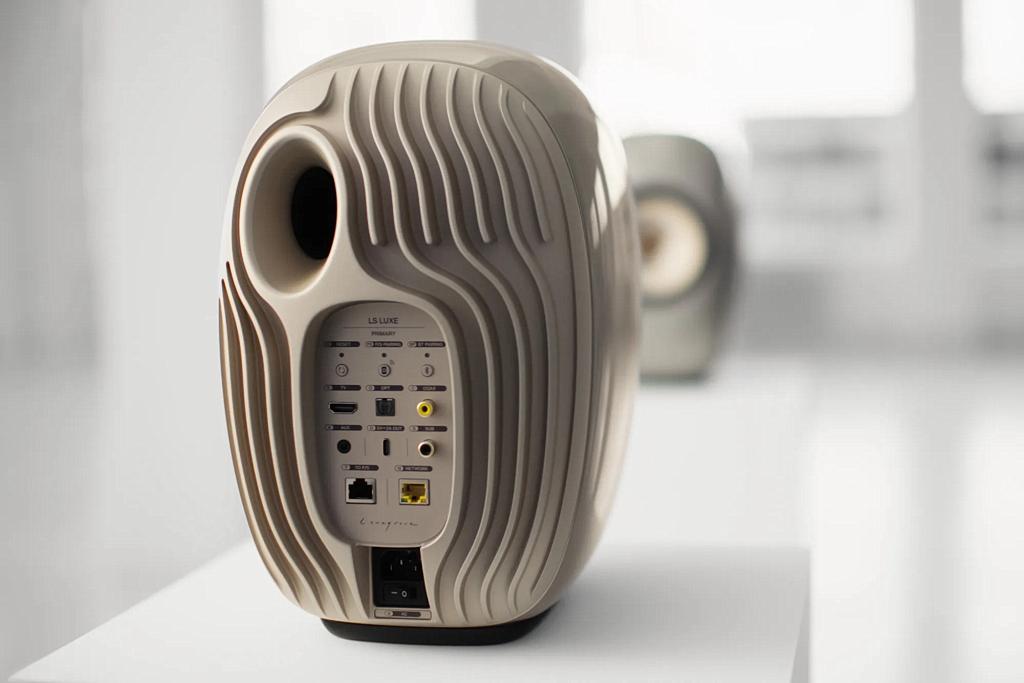
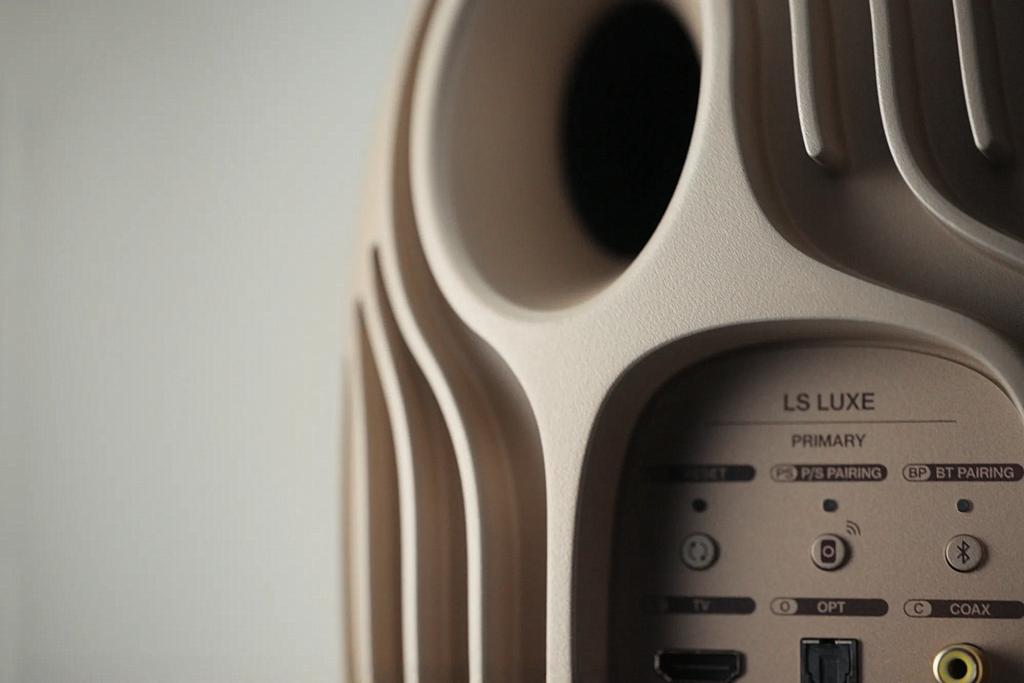
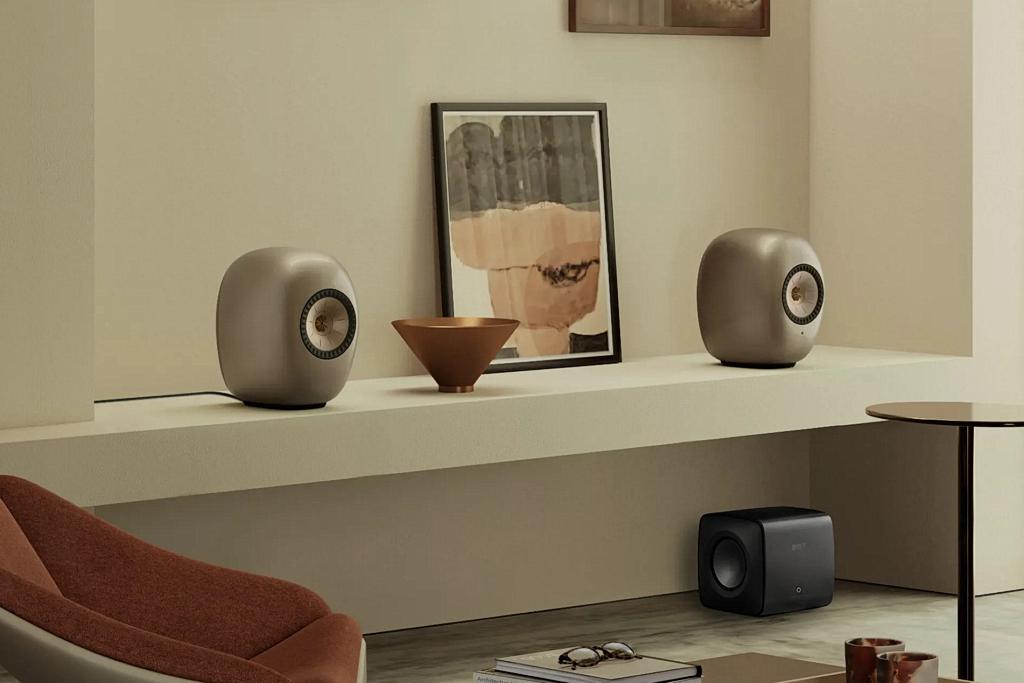
An aluminum heat sink with a complex profile occupies the rear of each speaker. Its shape increases the surface area available for dissipating heat generated by the electronics, which take up a significant proportion of the interior in an active system of this class. Below it is a bass-reflex port using Flexible Port Technology. The port walls are made from a flexible material intended to reduce resonances and turbulence at larger cone excursions. Each enclosure measures 29.8 x 22.3 x 33.6 cm, while the pair weighs 20 kg. The LS Luxe can hardly be described as a miniature desktop speaker. It is only slightly taller than the LS50 Wireless II, but noticeably deeper, heavier and equipped with a larger driver. Three finishes will be offered - Dusk Titanium, Eclipse Black and Mineral White.
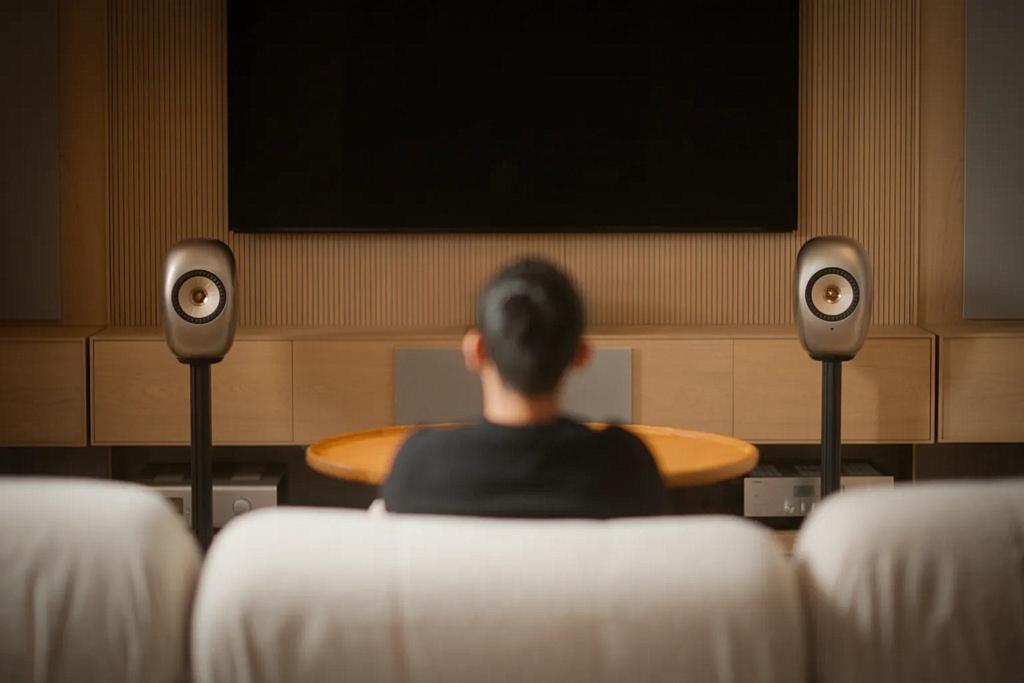
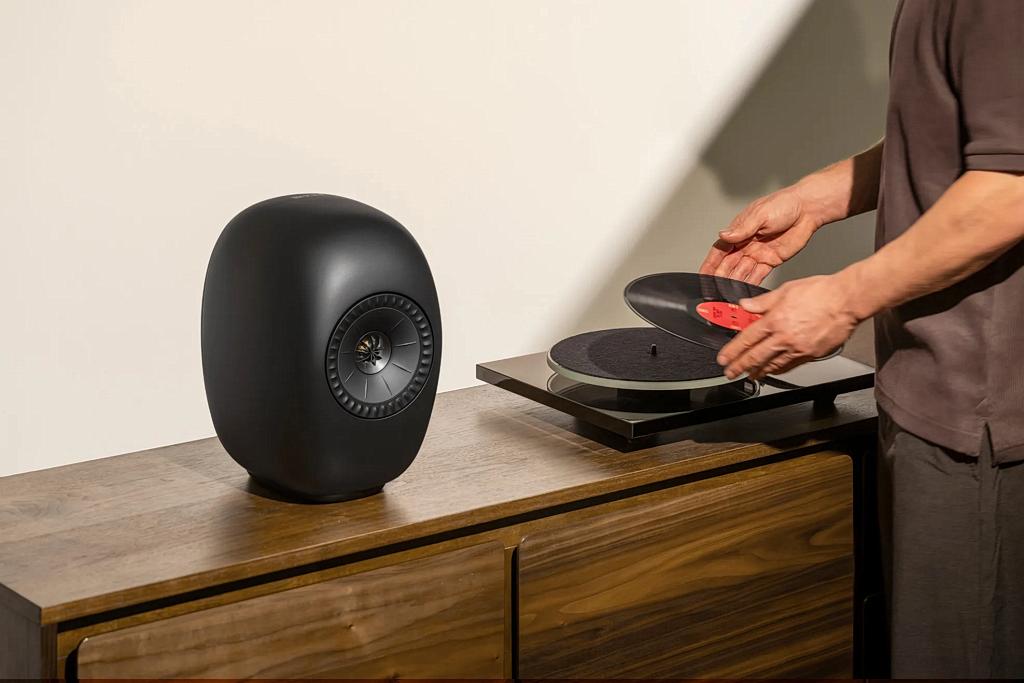
At the heart of each speaker is a 12th-generation Uni-Q driver array. This time, KEF has used a larger 16.5-cm version developed specifically for an active system. The aluminum mid/bass cone surrounds a vented 25-mm tweeter positioned at the acoustic center of the assembly. This allows both frequency ranges to radiate from the same point, improving phase consistency and dispersion. As a result, the soundstage should retain its proportions not only in one precisely defined listening position, but also when the listener moves to the side or several people occupy different positions on a sofa.
The Uni-Q array is mechanically decoupled from the enclosure. A flexible mounting system and an additional damping structure are intended to reduce the transmission of vibrations from the motor assembly to the cabinet walls, thereby lowering coloration. Behind the tweeter is KEF's Metamaterial Absorption Technology. MAT resembles a flat circular maze composed of channels of different lengths, each designed to absorb energy within a particular frequency range. According to KEF, the structure absorbs 99% of the unwanted radiation emitted from the rear of the tweeter dome, preventing it from returning toward the diaphragm and reducing high-frequency distortion.
One of the most important additions is Velocity Control Technology, or VECO. The system first appeared in the XIO soundbar, but the LS Luxe is the first KEF wireless speaker to use it to control a Uni-Q array. A sensor continuously measures the velocity of the moving diaphragm, while a feedback circuit compares its actual behavior with the input signal. When a discrepancy is detected, the electronics immediately apply a correction. The system is intended to reduce distortion, improve bass control and counteract power compression, where an increase in signal level no longer produces a proportional increase in volume and dynamics.
VECO works alongside new current-drive amplifiers. A conventional audio amplifier primarily attempts to maintain a specified output voltage, whereas this design places greater emphasis on precisely controlling the current flowing through the driver's voice coil. According to KEF, the circuit's high output impedance helps maintain more consistent energy delivery to the driver and reduces distortion caused by changes in its operating parameters. Each speaker contains two independent amplifiers. The mid/bass driver is powered by a 280-W Class D stage, while the tweeter receives 100 W from a Class AB amplifier, bringing total system power to 760 W. This is the same figure KEF quotes for the LS50 Wireless II, although the LS Luxe uses larger drivers, a new enclosure, VECO and a different approach to driver control.
The Music Integrity Engine handles crossover duties, frequency-response correction and synchronization between the various sections. Rather than a single filter, it is a collection of DSP algorithms tuned specifically for the drivers, cabinets and amplifiers used in the system. The digital crossover allows the response to be adjusted with a degree of precision that would be difficult to achieve in a conventional passive design, while also helping maintain a similar tonal balance at different listening levels. The specified frequency response is 42 Hz to 28 kHz within -3 dB, while the -6 dB range extends from 35 Hz to 47 kHz. The final figures depend on the equalization settings selected in the app.
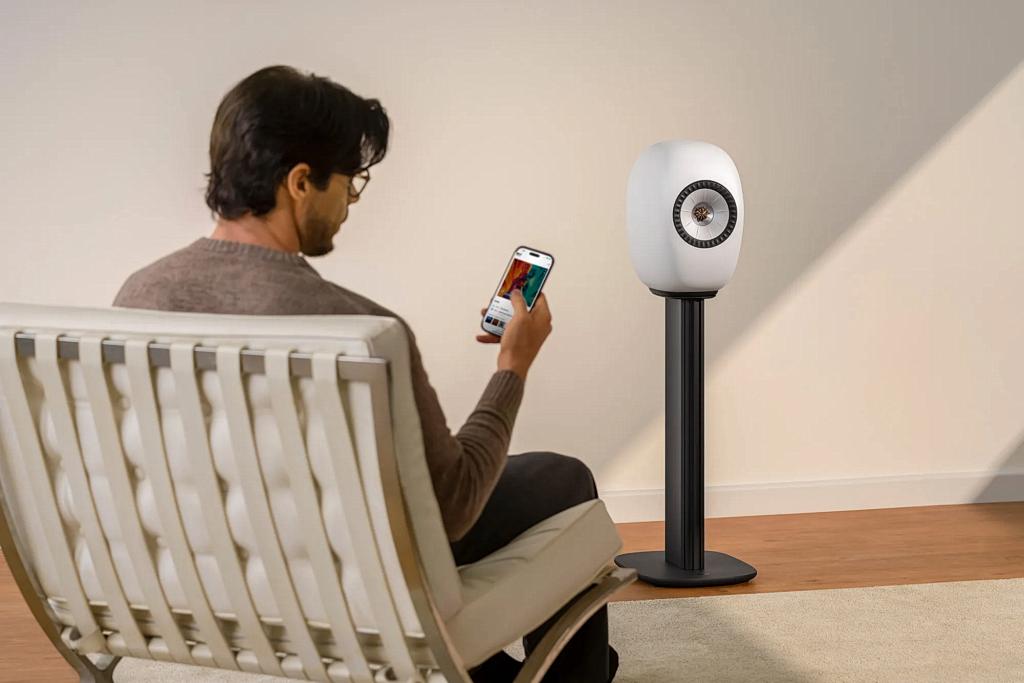
The LS Luxe uses KEF's W2 streaming platform, already familiar from the other models in the LS Wireless range. The KEF Connect app provides access to Spotify Connect, Tidal Connect, Qobuz Connect, Amazon Music, Deezer, internet radio and podcasts. The system also supports AirPlay 2, Google Cast, UPnP, Audirvana and Bluetooth 5.3, allowing music to be streamed from mobile devices, computers and home NAS servers. Supported formats include FLAC, WAV, AIFF, ALAC, AAC, WMA, MP3, M4A, LPCM, Ogg Vorbis and DSD.
Roon Ready certification is scheduled to arrive through a free software update in 2027, which is worth noting for anyone planning to use the LS Luxe with Roon from the outset. Network playback supports files up to 24-bit/384 kHz as well as DSD128, although these signals are not always passed unchanged to both speakers. With a wireless connection between the primary and secondary units, all material is converted to 24-bit/96 kHz PCM. Connecting the speakers by cable raises this to 24-bit/192 kHz. A three-meter interspeaker cable is included, while an optional eight-meter K-Stream cable is available for installations requiring greater placement flexibility. Each speaker also requires its own AC power connection.
The rear panel of the primary speaker carries HDMI eARC, optical, coaxial and 3.5-mm analog inputs, along with Ethernet ports for the network connection and the link to the secondary speaker. HDMI eARC allows system volume to be controlled with a television remote, enabling the LS Luxe to replace a soundbar or conventional home theater system in a living room where music remains the main priority. The optical input accepts signals up to 24-bit/96 kHz, while the coaxial input and HDMI eARC support material up to 24-bit/192 kHz.
The USB-C port is not an audio input. It is used solely to power an additional device, supplying 5 V at up to 2 A. Each speaker also has its own RCA subwoofer output. Users can therefore connect a single subwoofer to the primary speaker or build a system with two subwoofers operating independently with the left and right channels. KEF's KW1 adapter can be used for wireless integration without running long signal cables across the room. This may be particularly useful in a larger space, although the specified extension to 42 Hz suggests that the LS Luxe should be able to operate without additional low-frequency support in many living rooms.
KEF Connect is used for more than selecting music and switching inputs. The user can specify factors such as room size, distance from the walls, the amount of acoustic damping and the way the speakers have been positioned. Room EQ uses this information to adjust the digital filters, while the more advanced menu allows the response and subwoofer integration to be configured manually. Multiroom playback is supported through AirPlay 2 and Google Cast, with Roon scheduled to join the list after the planned update.
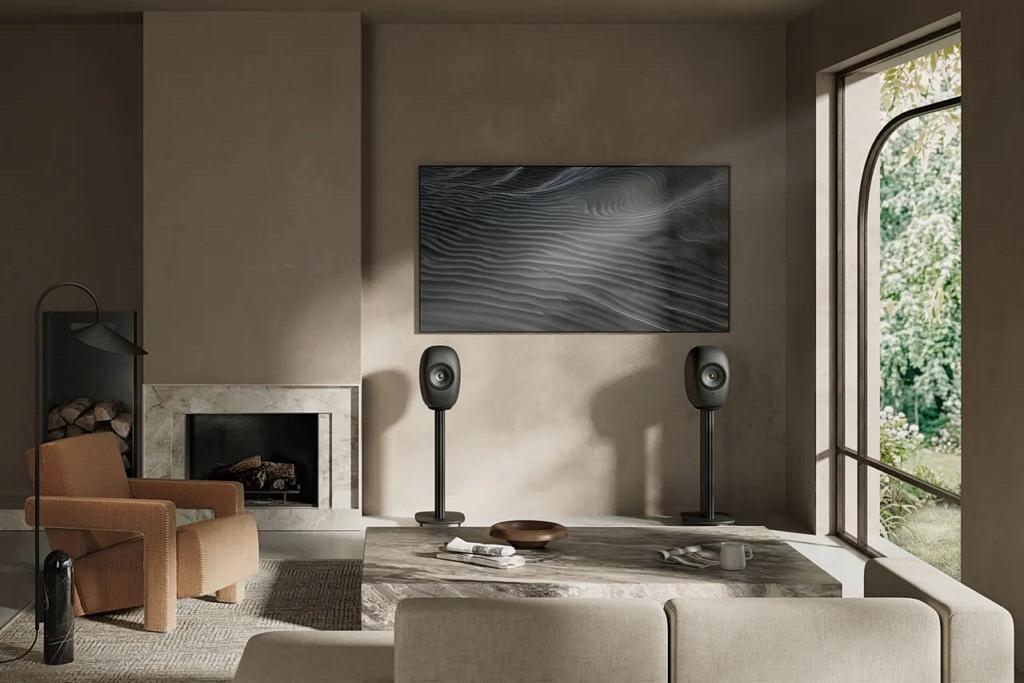
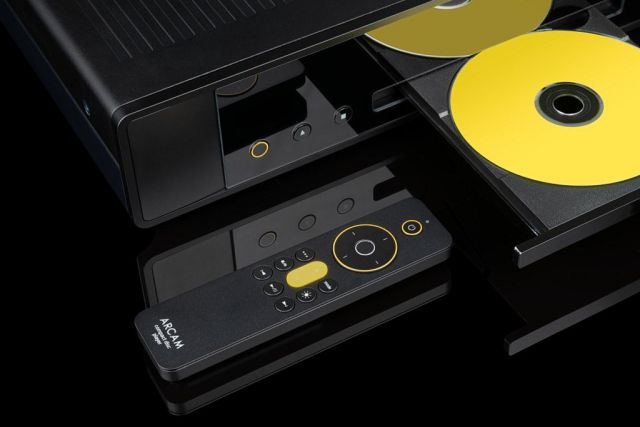
The system comes with a new C3 remote featuring an aluminum top panel, illuminated buttons and a programmable Favorite key. The package also contains power cables, a three-meter interspeaker cable and a two-meter HDMI cable. The optional S-Luxe stands allow the enclosures to be bolted directly to their top plates. Internal cable-routing channels help conceal the wiring so that the complete system retains its clean, sculptural appearance.
The LS Luxe does not replace the LS50 Wireless II, but creates a new tier above it in KEF's active stand-mounted speaker lineup. It uses a larger 16.5-cm Uni-Q array in place of the LS50 Wireless II's 13-cm unit, along with a more advanced enclosure, deeper bass extension, VECO and current-drive amplification. At the same time, it remains a conventional pair of compact speakers, making it an option for listeners who do not want or cannot accommodate the floorstanding LS60 Wireless. KEF says the new system was developed over six years, indicating that the unusual cabinet was not simply wrapped around electronics and drivers carried over from an earlier model. The KEF LS Luxe is priced at €4,000/$4,000/£3,500 per pair, with the dedicated S-Luxe stands and eight-meter K-Stream cable available separately. Info and pictures by KEF.